Maharashtra Board Class 11 Information Technology Important Questions Chapter 2 Introduction to DBMS

Balbharati Maharashtra State Board Class 11 Information Technology Important Questions Chapter 2 Introduction to DBMS Important Questions and Answers.

Maharashtra State Board 11th Information Technology Important Questions Chapter 2 Introduction to DBMS

1. Fill in the Blanks.

Question 1.
A ___________ often abbreviated as DB.
Answer:
Database

Question 2.
___________ is collection of interrelated data.
Answer:
Database

Question 3.
Full for of DBMS is ___________
Answer:
Database Management System

Question 4.
A ___________ is a software for creating and managing databases.
Answer:
Database Management System

Question 5.
The ___________ provides users and programmers with a systematic way to create, retrieve, update and manage data.
Answer:
Database Management System

Maharashtra Board Class 11 Information Technology Important Questions Chapter 2 Introduction to DBMS

Question 6.
___________ holds a fixed-length string (can contain letters, numbers, and special characters).
Answer:
CHAR

Question 7.
___________ holds a variable length string (can contain letters, numbers, and special characters).
Answer:
VARCHAR

Question 8.
___________ can represent numbers with or without the fractional part.
Answer:
DECIMAL

Question 9.
___________ is used for storing integer values.
Answer:
INT

Question 10.
___________ holds the date including day, month and year.
Answer:
DATE

Question 11.
___________ holds time. Format: HH:MM:SS.
Answer:
TIME()

Question 12.
This logical structure of database is known as a ___________
Answer:
Model

Question 13.
___________ define how the data is connected to each other and how they are processed and stored inside the system.
Answer:
Data model

Question 14.
___________ describes the method of storing and retrieving the data.
Answer:
Data model

Question 15.
___________ is the primary data model, which is used widely around the world for data storage and processing.
Answer:
Relational data model

Maharashtra Board Class 11 Information Technology Important Questions Chapter 2 Introduction to DBMS

Question 16.
___________ is simple and has all the properties and capabilities required to process data with storage efficiency.
Answer:
Relational data model

Question 17.
___________ ensures that all operations within the work unit are completed successfully.
Answer:
Atomicity

Question 18.
___________ ensures that the database properly changes states upon a successfully committed transaction.
Answer:
Consistency

Question 19.
___________ enables transactions to operate independently of and transparent to each other.
Answer:
Isolation

Question 20.
___________ ensures that the result or effect of a committed transaction persists in case of a system failure.
Answer:
Durability

Question 21.
RDBMS stands for ___________
Answer:
Relational Database Management System

Question 22.
In ___________ a database is considered as a collection of interrelated data.
Answer:
Relational Database Management System

Question 23.
The ___________ is the basic data storage unit in a Relational database.
Answer:
Table

Question 24.
___________ consists of columns and rows.
Answer:
Table

Maharashtra Board Class 11 Information Technology Important Questions Chapter 2 Introduction to DBMS

Question 25.
A ___________ consists of one or more tables according to which data is stored in a table.
Answer:
Database

Question 26.
___________ designer decides the name of the table and titles of columns.
Answer:
Database

Question 27.
A ___________ is composed of fields and contains all the data about one particular person, company, or item in a database.
Answer:
Record

Question 28.
Record is also called as a ___________
Answer:
Tuple

Question 29.
A column or a combination of columns that can be used to identify one or more rows (tuples) in a table is called a ___________ of the table.
Answer:
Key

Question 30.
The group of one or more columns used to uniquely identify each row of a relation is called its ___________
Answer:
Primary Key

Question 31.
___________ is a field (or collection of fields) in one table that refers to the Primary Key in another table.
Answer:
Foreign Key

Question 32.
___________ link data from individual tables to increase the usefulness of the database.
Answer:
Relationships

Question 33.
A ___________ in the context of databases, is a situation that exists between two relational database tables.
Answer:
Relationship

Maharashtra Board Class 11 Information Technology Important Questions Chapter 2 Introduction to DBMS

Question 34.
In a ___________ relationship, one record in a table is associated with one and only one record in another table.
Answer:
One-to-One

Question 35.
___________ relationships can also be viewed as Many-to-One relationships, depending on which way you look at it.
Answer:
One-to-Many

Question 36.
A ___________ relationship occurs when multiple records in a table are associated with multiple records in another table.
Answer:
Many-to-Many

Question 37.
Full form of SQL is ___________
Answer:
Structured Query Language

Question 38.
___________ is the standard language for Relational Database Management System.
Answer:
Structured Query Language

Question 39.
Full form of DDL is ___________
Answer:
Data Definition Language

Question 40.
___________ statements or commands are used to define and modify the database structure of your tables or schema.
Answer:
Data Definition Language

Question 41.
Full form of DML is ___________
Answer:
Data Manipulation Language

Question 42.
___________ statements or commands are used for managing data within tables.
Answer:
Data Manipulation Language

Maharashtra Board Class 11 Information Technology Important Questions Chapter 2 Introduction to DBMS

Question 43.
Full form of DCL is ___________
Answer:
Data Control Language

Question 44.
___________ is used to control user access in a database.
Answer:
Data Control Language

2. True or False.

Question 1.
A database is often abbreviated as DB.
Answer:
True

Question 2.
Hardware is a collection of interrelated data.
Answer:
False

Question 3.
The full form of DBMS is Database Management System.
Answer:
True

Question 4.
A Database Management System is software for creating and managing databases.
Answer:
True

Maharashtra Board Class 11 Information Technology Important Questions Chapter 2 Introduction to DBMS

Question 5.
Information Technology provides users and programmers with a systematic way to create, retrieve, update and manage data.
Answer:
False

Question 6.
DECIMAL holds a fixed-length string (can contain letters, numbers, and special characters).
Answer:
False

Question 7.
VARCHAR holds a variable-length string (can contain letters, numbers, and special characters).
Answer:
True

Question 8.
CHAR can represent numbers with or without the fractional part.
Answer:
False

Question 9.
INT is used for storing integer values.
Answer:
True

Question 10.
TIME() holds the date including day, month, and year.
Answer:
False

Question 11.
DATE holds time. Format: HH:MM:SS.
Answer:
False

Question 12.
This logical structure of the database is known as a computer.
Answer:
False

Question 13.
Information Technology defines how the data is connected to each other and how they are processed and stored inside the system.
Answer:
False

Maharashtra Board Class 11 Information Technology Important Questions Chapter 2 Introduction to DBMS

Question 14.
The data model describes the method of storing and retrieving the data.
Answer:
True

Question 15.
The relational data model is the primary data model, which is used widely around the world for data storage and processing.
Answer:
True

Question 16.
The relational data model is simple and has all the properties and capabilities required to process data with storage efficiency.
Answer:
True

Question 17.
Consistency ensures that all operations within the work unit are completed successfully.
Answer:
False

Question 18.
Atomicity ensures that the database properly changes states upon a successfully committed transaction.
Answer:
False

Question 19.
Isolation enables transactions to operate independently of and be transparent to each other.
Answer:
True

Question 20.
Durability ensures that the result or effect of a committed transaction persists in case of a system failure.
Answer:
True

Question 21.
RDBMS stands for Relational Database Management System.
Answer:
True

Question 22.
In Relational Database Management System a database is considered as a collection of interrelated data.
Answer:
True

Question 23.
The Table is the basic data storage unit in a Relational database.
Answer:
True

Question 24.
The table consists of columns and rows.
Answer:
True

Question 25.
A record consists of one or more tables according to which data is stored in a table.
Answer:
False

Maharashtra Board Class 11 Information Technology Important Questions Chapter 2 Introduction to DBMS

Question 26.
The record designer decides the name of the table and the titles of columns.
Answer:
False

Question 27.
A Tuple is composed of fields and contains all the data about one particular person, company, or item in a database.
Answer:
False

Question 28.
Record is also called a Tuple.
Answer:
True

Question 29.
A column or a combination of columns that can be used to identify one or more rows (tuples) in a table is called a Key of the table.
Answer:
True

Question 30.
The group of one or more columns used to uniquely identify each row of a relation is called its Primary Key.
Answer:
True

Question 31.
Foreign Key is a field (or collection of fields) in one table that refers to the Primary Key in another table.
Answer:
True

Question 32.
Relationships link data from individual tables to increase the usefulness of the database.
Answer:
True

Question 33.
A Relationship in the context of databases is a situation that exists between two relational database tables.
Answer:
True

Question 34.
In a Many-to-Many relationship, one record in a table is associated with one and only one record in another table.
Answer:
False

Maharashtra Board Class 11 Information Technology Important Questions Chapter 2 Introduction to DBMS

Question 35.
One-to-Many relationships can also be viewed as Many-to-One relationships, depending on which way you look at them.
Answer:
True

Question 36.
A One-to-One relationship occurs when multiple records in a table are associated with multiple records in another table.
Answer:
False

Question 37.
The full form of SQL is Structured Query Language.
Answer:
True

Question 38.
Data Definition Language is the standard language for Relational Database Management System.
Answer:
False

Question 39.
The full form of DDL is Data Definition Language.
Answer:
True

Question 40.
Structured Query Language statements or commands are used to define and modify the database structure of your tables or schema.
Answer:
False

Question 41.
The full form of DML is Data Manipulation Language.
Answer:
True

Question 42.
Data Definition Language statements or commands are used for managing data within tables.
Answer:
False

Question 43.
The full form of DCL is Data Control Language.
Answer:
True

Maharashtra Board Class 11 Information Technology Important Questions Chapter 2 Introduction to DBMS

Question 44.
Data Manipulation Language is used to control user access in a database.
Answer:
False

3. Multiple Choice Question (Single Choice)

Question 1.
A ___________ often abbreviated as DB.
(A) Database
(B) Direct Banking
(C) Data Bank
(D) Direct Bank
Answer:
(A) Database

Question 2.
___________ is a collection of interrelated data.
(A) Database
(B) Direct Banking
(C) Data Bank
(D) Direct Bank
Answer:
(A) Database

Question 3.
Full form of DBMS is ___________
(A) Database Machine System
(B) Direct Banking Management System
(C) Data Bank Management
(D) Database Management System
Answer:
(D) Database Management System

Question 4.
A ___________ is a software for creating and managing databases.
(A) Database
(B) Direct Banking
(C) Data Bank
(D) Database Management System
Answer:
(D) Database Management System

Maharashtra Board Class 11 Information Technology Important Questions Chapter 2 Introduction to DBMS

Question 5.
The ___________ provides users and programmers with a systematic way to create, retrieve, update and manage data.
(A) Database
(B) Direct Banking
(C) Data Bank
(D) Database Management System
Answer:
(D) Database Management System

Question 6.
___________ holds a fixed-length string (can contain letters, numbers, and special characters).
(A) CHAR
(B) VARCHAR
(C) DECIMAL
(D) INT
Answer:
(A) CHAR

Question 7.
___________ holds a variable-length string (can contain letters, numbers, and special characters).
(A) CHAR
(B) VARCHAR
(C) DECIMAL
(D) INT
Answer:
(B) VARCHAR

Question 8.
___________ can represent numbers with or without the fractional part.
(A) CHAR
(B) VARCHAR
(C) DECIMAL
(D) INT
Answer:
(C) DECIMAL

Question 9.
___________ is used for storing integer values.
(A) CHAR
(B) VARCHAR
(C) DECIMAL
(D) INT
Answer:
(D) INT

Question 10.
___________ holds the date including day, month and year.
(A) DATE
(B) TIME()
(C) CHAR
(D) VARCHAR
Answer:
(A) DATE

Maharashtra Board Class 11 Information Technology Important Questions Chapter 2 Introduction to DBMS

Question 11.
___________ holds time. Format: HH:MM:SS.
(A) DATE
(B) TIME()
(C) CHAR
(D) VARCHA
Answer:
(B) TIME()

Question 12.
This logical structure of database is known as a ___________
(A) Model
(B) Data model
(C) Storage and Processing
(D) Relational data model
Answer:
(A) Model

Question 13.
___________ define how the data is connected to each other and how they are processed and stored inside the system.
(A) Model
(B) Data model
(C) Storage and Processing
(D) Relational data model
Answer:
(B) Data model

Question 14.
___________ describes the method of storing and retrieving the data.
(A) Model
(B) Data model
(C) Storage and Processing
(D) Relational data model
Answer:
(B) Data model

Question 15.
___________ is the primary data model, which is used widely around the world for data storage and processing.
(A) Model
(B) Data model
(C) Storage and Processing
(D) Relational data model
Answer:
(D) Relational data model

Maharashtra Board Class 11 Information Technology Important Questions Chapter 2 Introduction to DBMS

Question 16.
___________ is simple and has all the properties and capabilities required to process data with storage efficiency.
(A) Model
(B) Data model
(C) Storage and Processing
(D) Relational data model
Answer:
(D) Relational data model

Question 17.
___________ ensures that all operations within the work unit are completed successfully.
(A) Atomicity
(B) Consistency
(C) Isolation
(D) Durability
Answer:
(A) Atomicity

Question 18.
___________ ensures that the database properly changes states upon a successfully committed transaction.
(A) Atomicity
(B) Consistency
(C) Isolation
(D) Durability
Answer:
(B) Consistency

Question 19.
___________ enables transactions to operate independently of and transparent to each other.
(A) Atomicity
(B) Consistency
(C) Isolation
(D) Durability
Answer:
(C) Isolation

Question 20.
___________ ensures that the result or effect of a committed transaction persists in case of a system failure.
(A) Atomicity
(B) Consistency
(C) Isolation
(D) Durability
Answer:
(D) Durability

Question 21.
RDBMS stands for ___________
(A) Relational Database Management System
(B) Regional Database Management System
(C) Recovery Database Management System
(D) Recovery Database Microsoft System
Answer:
(A) Relational Database Management System

Question 22.
In ___________ a database is considered as a collection of interrelated data.
(A) Relational Database Management System
(B) Regional Database Management System
(C) Recovery Database Management System
(D) Recovery Database Microsoft System
Answer:
(A) Relational Database Management System

Question 23.
The ___________ is the basic data storage unit in a Relational database.
(A) Table
(B) Database
(C) Record
(D) Tuple
Answer:
(A) Table

Maharashtra Board Class 11 Information Technology Important Questions Chapter 2 Introduction to DBMS

Question 24.
___________ consists of columns and rows.
(A) Table
(B) Database
(C) Record
(D) Tuple
Answer:
(A) Table

Question 25.
A ___________ consists of one or more tables according to which data is stored in a table.
(A) Table
(B) Database
(C) Record
(D) Tuple
Answer:
(B) Database

Question 26.
___________ designer decides the name of the table and titles of columns.
(A) Table
(B) Database
(C) Record
(D) Tuple
Answer:
(B) Database

Question 27.
A ___________ is composed of fields and contains all the data about one particular person, company, or item in a database
(A) Table
(B) Database
(C) Record
(D) Tuple
Answer:
(C) Record

Question 28.
Record is also called as a ___________
(A) Table
(B) Database
(C) Record
(D) Tuple
Answer:
(D) Tuple

Question 29.
A column or a combination of columns that can be used to identify one or more rows (tuples) in a table is called a ___________ of the table.
(A) Key
(B) Primary Key
(C) Foreign Key
(D) Table
Answer:
(A) Key

Question 30.
The group of one or more columns used to uniquely identify each row of a relation is called its ___________
(A) Key
(B) Primary Key
(C) Foreign Key
(D) Table
Answer:
(B) Primary Key

Maharashtra Board Class 11 Information Technology Important Questions Chapter 2 Introduction to DBMS

Question 31.
___________ is a field (or collection of fields) in one table that refers to the Primary Key in another table.
(A) Key
(B) Primary Key
(C) Foreign Key
(D) Table
Answer:
(C) Foreign Key

Question 32.
___________ link data from individual tables to increase the usefulness of the database.
(A) Relationships
(B) Primary Key
(C) Foreign Key
(D) Table
Answer:
(A) Relationships

Question 33.
A ___________ in the context of databases, is a situation that exists between two relational database tables.
(A) Relationship
(B) Primary Key
(C) Foreign Key
(D) Table
Answer:
(A) Relationship

Question 34.
In a ___________ relationship, one record in a table is associated with one and only one record in another table.
(A) One-to-One
(B) One-to-Many
(C) Many-to-Many
(D) Database
Answer:
(A) One-to-One

Question 35.
___________ relationships can also be viewed as Many-to-One relationships, depending on which way you look at it.
(A) One-to-One
(B) One-to-Many
(C) Many-to-Many
(D) Database
Answer:
(B) One-to-Many

Question 36.
A ___________ relationship occurs when multiple records in a table are associated with multiple records in another table.
(A) One-to-One
(B) One-to-Many
(C) Many-to-Many
(D) Database
Answer:
(C) Many-to-Many

Question 37.
Full form of SQL is ___________
(A) Structured Query Language
(B) Structured Question Language
(C) Sequence Question Language
(D) Simple Query Language
Answer:
(A) Structured Query Language

Maharashtra Board Class 11 Information Technology Important Questions Chapter 2 Introduction to DBMS

Question 38.
___________ is the standard language for Relational Database Management System.
(A) Structured Query Language
(B) Structured Question Language
(C) Sequence Question Language
(D) Simple Query Language
Answer:
(A) Structured Query Language

Question 39.
Full form of DDL is ___________
(A) Data Definition Language
(B) Database Device Language
(C) Device Definition Language
(D) Data Division Language
Answer:
(A) Data Definition Language

Question 40.
___________ statements or commands are used to define and modify the database structure of your tables or schema.
(A) Data Definition Language
(B) Database Device Language
(C) Device Definition Language
(D) Data Division Language
Answer:
(A) Data Definition Language

Question 41.
Full form of DML is ___________
(A) Data Manipulation Language
(B) Data Machine Language
(C) Data Management Language
(D) Device Manipulation Language
Answer:
(A) Data Manipulation Language

Question 42.
___________ statements or commands are used for managing data within tables.
(A) Data Manipulation Language
(B) Data Machine Language
(C) Data Management Language
(D) Device Manipulation Language
Answer:
(A) Data Manipulation Language

Question 43.
Full form of DCL is ___________
(A) Dynamic Control Language
(B) Data Control Language
(C) Data Control List
(D) Dynamic Control List
Answer:
(B) Data Control Language

Question 44.
___________ is used to control user access in a database.
(A) Dynamic Control Language
(B) Data Control Language
(C) Data Control List
(D) Dynamic Control List
Answer:
(B) Data Control Language

4. Multiple Choice Two Correct Answers.

Question 1.
A Database Management System is a software for ___________ and ___________ databases.
(A) Creating
(B) Storing
(C) Retrieving
(D) Managing
(E) Processing
Answer:
(A) Creating, (D) Managing

Maharashtra Board Class 11 Information Technology Important Questions Chapter 2 Introduction to DBMS

Question 2.
Data model describes the method of ___________ and ___________ the data.
(A) Creating
(B) Storing
(C) Retrieving
(D) Managing
(E) Processing
Answer:
(B) Storing, (C) Retrieving

Question 3.
Relational data model is the primary data model, which is used widely around the world for ___________ and ___________
(A) Creating
(B) Storing
(C) Retrieving
(D) Data storage
(E) Processing
Answer:
(D) Data storage, (E) Processing

Question 4.
Relational data model is simple and has all the ___________ and ___________ required to process data with storage efficiency.
(A) Properties
(B) Capabilities
(C) Retrieving
(D) Data storage
(E) Processing
Answer:
(A) Properties, (B) Capabilities

Question 5.
A table consists of information which is stored under different headings, called as ___________ or ___________
(A) Properties
(B) Fields
(C) Capabilities
(D) Retrieving
(E) Columns
Answer:
(B) Fields, (E) Columns

Question 6.
Table consists of ___________ and ___________
(A) Properties
(B) Fields
(C) Capabilities
(D) Columns
(E) Rows
Answer:
(D) Columns, (E) Rows

Question 7.
A Database consists of one or more ___________ according to which ___________ is stored in a table.
(A) Tables
(B) Data
(C) Capabilities
(D) Columns
(E) Rows
Answer:
(A) Tables, (B) Data

Question 8.
Database designer decides the name of the ___________ and ___________ of columns.
(A) Schema
(B) Table
(C) Fields
(D) Titles
(E) Capabilities
Answer:
(B) Table, (D) Titles

Maharashtra Board Class 11 Information Technology Important Questions Chapter 2 Introduction to DBMS

Question 9.
Data Definition Language statements or commands are used to define and modify the database structure of your ___________ or ___________
(A) Table
(B) Schema
(C) Fields
(D) Titles
(E) Capabilities
Answer:
(A) Table, (B) Schema

5. Multiple Choice Three Correct Answers.

Question 1.
Database Management System stores data in such a way that it becomes easier to ___________, ___________ and ___________
(A) Retrieve
(B) Hierarchical
(C) Manipulate
(D) Update Information
(E) Network
Answer:
(A) Retrieve, (C) Manipulate, (D) Update Information

Question 2.
There are different data models like ___________ model, ___________ model and ___________ model.
(A) Network
(B) Hierarchical
(C) Relational
(D) Retrieve
(E) Manipulate
Answer:
(A) Network, (B) Hierarchical, (C) Relational

Question 3.
There are 3 types of relationships in relational database design ___________, ___________ & ___________
(A) Retrieve
(B) Manipulate
(C) One-to-One
(D) One-to-Many (or Many-to-One)
(E) Many-to-Many
Answer:
(C) One-to-One, (D) One-to-Many (or Many-to-One), (E) Many-to-Many

Question 4.
SQL is Structured Query Language, which is a computer language for ___________, ___________ and ___________ data stored in a relational database.
(A) Relational
(B) Storing
(C) Manipulating
(D) Retrieving
(E) Network
Answer:
(B) Storing, (C) Manipulating, (D) Retrieving

6. Match the following.

Question 1.

Column ‘A’ Column ‘B’
(1) Database (A) Raw facts
(2) Data (B) Creating and managing databases
(3) Information (C) Collection of interrelated data
(4) DBMS (D) Processed data

Answer:

Column ‘A’ Column ‘B’
(1) Database (C) Collection of interrelated data
(2) Data (A) Raw facts
(3) Information (D) Processed data
(4) DBMS (B) Creating and managing databases

Question 2.

Column ‘A’ Column ‘B’
(1) Advantages of DBMS (A) Authorised users
(2) Data integrity (B) Data is accurate and consistent
(3) Data Security (C) Reducing Data Redundancy
(4) Backup and Recovery (D) Restores the database

Answer:

Column ‘A’ Column ‘B’
(1) Advantages of DBMS (C) Reducing Data Redundancy
(2) Data integrity (B) Data is accurate and consistent
(3) Data Security (A) Authorised users
(4) Backup and Recovery (D) Restores the database

Question 3.

Column ‘A’ Column ‘B’
(1) CHAR (A) It is used for storing integer values
(2) VARCHAR (B) It can represent numbers
(3) DECIMAL (C) Holds a variable-length string
(4) INT (D) Holds a fixed-length string

Answer:

Column ‘A’ Column ‘B’
(1) CHAR (D) Holds a fixed-length string
(2) VARCHAR (C) Holds a variable-length string
(3) DECIMAL (B) It can represent numbers
(4) INT (A) It is used for storing integer values

Maharashtra Board Class 11 Information Technology Important Questions Chapter 2 Introduction to DBMS

Question 4.

Column ‘A’ Column ‘B’
(1) DATE (A) It holds the date
(2) TIME (B) It holds time
(3) Model (C) Logical structure of database
(4) Relational data model (D) Primary data model

Answer:

Column ‘A’ Column ‘B’
(1) DATE (A) It holds the date
(2) TIME (B) It holds time
(3) Model (C) Logical structure of database
(4) Relational data model (D) Primary data model

Question 5.

Column ‘A’ Column ‘B’
(1) Atomicity (A) Successfully committed transaction
(2) Consistency (B) Completed successfully
(3) Isolation (C) Persists in case of a system failure
(4) Durability (D) Operate independently

Answer:

Column ‘A’ Column ‘B’
(1) Atomicity (B) Completed successfully
(2) Consistency (A) Successfully committed transaction
(3) Isolation (D) Operate independently
(4) Durability (C) Persists in case of a system failure

Question 6.

Column ‘A’ Column ‘B’
(1) RDBMS (A) Storage unit in a Relational database
(2) Table (B) Collection of interrelated data
(3) Database designer (C) Tuple
(4) Record (D) Decides the name of the table and titles of Columns

Answer:

Column ‘A’ Column ‘B’
(1) RDBMS (B) Collection of interrelated data
(2) Table (A) Storage unit in a Relational database
(3) Database designer (D) Decides the name of the table and titles of Columns
(4) Record (C) Tuple

Question 7.

Column ‘A’ Column ‘B’
(1) Primary Key (A) Managing data within tables
(2) Structured Query Language (B) Uniquely identify each row
(3) Data Definition Language (C) Storing, manipulating, and retrieving data
(4) Data Manipulation Language (D) Define and modify the database

Answer:

Column ‘A’ Column ‘B’
(1) Primary Key (B) Uniquely identify each row
(2) Structured Query Language (C) Storing, manipulating, and retrieving data
(3) Data Definition Language (D) Define and modify the database
(4) Data Manipulation Language (A) Managing data within tables

Question 8.

Column ‘A’ Column ‘B’
(1) SELECT (A) Extracts data from a table
(2) UPDATE (B) Updates data in a table
(3) DELETE (C) Deletes data from a table
(4) INSERT INTO (D) Insert data into a table

Answer:

Column ‘A’ Column ‘B’
(1) SELECT (A) Extracts data from a table
(2) UPDATE (B) Updates data in a table
(3) DELETE (C) Deletes data from a table
(4) INSERT INTO (D) Insert data into a table

7. Answer Briefly.

Question 1.
What are Database and DBMS?
Answer:

  1. A Database is often abbreviated as DB.
  2. A database is a collection of interrelated data.
  3. Full form of DBMS is Database Management System
  4. A Database Management System is software for creating and managing databases.
  5. The Database Management System provides users and programmers with a systematic way to create, retrieve, update and manage data.

Question 2.
Discuss the various Data types.
Answer:

  1. CHAR holds a fixed-length string (can contain letters, numbers, and special characters).
  2. VARCHAR holds a variable-length string (can contain letters, numbers, and special characters).
  3. DECIMAL can represent numbers with or without the fractional part.
  4. INT is used for storing integer values.
  5. DATE holds the date including day, month, and year.
  6. TIME() holds time. Format: HH:MM:SS.

Maharashtra Board Class 11 Information Technology Important Questions Chapter 2 Introduction to DBMS

Question 3.
Explain Data Model and Relational Model.
Answer:

  1. This logical structure of the database is known as a Model.
  2. The data model defines how the data is connected to each other and how they are processed and stored inside the system.
  3. The data model describes the method of storing and retrieving the data.
  4. The relational data model is the primary data model, which is used widely around the world for data storage and processing.
  5. The relational data model is simple and has all the properties and capabilities required to process data with storage efficiency.

Question 4.
Write down the Properties of Transactions.
Answer:

  1. Atomicity ensures that all operations within the work unit are completed successfully.
  2. Consistency ensures that the database properly changes states upon a successfully committed transaction.
  3. Isolation enables transactions to operate independently of and be transparent to each other.
  4. Durability ensures that the result or effect of a committed transaction persists in case of a system failure.

Question 5.
Explain the concept of RDBMS.
Answer:

  1. RDBMS stands for Relational Database Management System.
  2. In Relational Database Management System a database is considered as a collection of interrelated data.

Question 6.
Discuss the basic database concept.
Answer:

  1. The Table is the basic data storage unit in a Relational database.
  2. The table consists of columns and rows.
  3. A database consists of one or more tables according to which data is stored in a table.
  4. The database designer decides the name of the table and the titles of columns.
  5. A record is composed of fields and contains all the data about one particular person, company, or item in a database.
  6. Record is also called a Tuple,
  7. A column or a combination of columns that can be used to identify one or more rows (tuples) in a table is called a Key of the table.
  8. The group of one or more columns used to uniquely identify each row of a relation is called its Primary Key.
  9. Foreign Key is a field (or collection of fields) in one table that refers to the Primary Key in another table.

Question 7.
Explain Relationships in the database.
Answer:

  1. Relationships link data from individual tables to increase the usefulness of the database.
  2. A Relationship in the context of databases is a situation that exists between two relational database tables.

Question 8.
Discuss the types of relationships in Relational Database Design.
Answer:

  1. In a One-to-One relationship, one record in a table is associated with one and only one record in another table.
  2. One-to-Many relationships can also be viewed as Many-to-One relationships, depending on which way you look at them.
  3. A Many-to-Many relationship occurs when multiple records in a table are associated with multiple records in another table.

Maharashtra Board Class 11 Information Technology Important Questions Chapter 2 Introduction to DBMS

Question 9.
What is SQL and categories of SQL commands?
Answer:

  1. The full form of SQL is Structured Query Language.
  2. Structured Query Language is the standard language for Relational Database Management Systems.
  3. The full form of DDL is Data Definition Language.
  4. Data Definition Language statements or commands are used to define and modify the database structure of your tables or schema.
  5. The full form of DML is Data Manipulation Language.
  6. Data Manipulation Language statements or commands are used for managing data within tables.
  7. The full form of DCL is Data Control Language.
  8. Data Control Language is used to control user access in a database.

Maharashtra Board Class 11 Information Technology Important Questions Chapter 1 Basics of Information Technology

Balbharati Maharashtra State Board Class 11 Information Technology Important Questions Chapter 1 Basics of Information Technology Important Questions and Answers.

Maharashtra State Board 11th Information Technology Important Questions Chapter 1 Basics of Information Technology

1. Fill in the Blanks.

Question 1.
______________ encompasses all of the technologies that we use in order to create, collect, process, protect and store information.
Answer:
Information Technology

Question 2.
______________ refers to hardware, software (computer programs), and computer networks.
Answer:
Information Technology

Question 3.
Full form of ICT is ______________
Answer:
Information and Communication Technology

Question 4.
______________ concept involves transfer and use of all kinds of information.
Answer:
Information and Communication Technology

Question 5.
______________ is the foundation of economy and a driving force of social changes in the 21st century.
Answer:
Information and Communication Technology

Maharashtra Board Class 11 Information Technology Important Questions Chapter 1 Basics of Information Technology

Question 6.
______________ can be any character, text, word, number or raw facts.
Answer:
Data

Question 7.
______________ is data formatted in a manner that allows it to be utilized by human beings in some significant way.
Answer:
Information

Question 8.
The word Computer is derived from a Latin word ______________
Answer:
Computare

Question 9.
An electronic device which accepts input from the user, processes it according to the instructions given to it and gives the required result in the form of output, is a ______________
Answer:
Computer

Question 10.
A ______________ can process data, images, audio, video and graphics.
Answer:
Computer

Question 11.
______________ accepts data or instructions by way of input.
Answer:
Computer

Question 12.
______________ stores data.
Answer:
Computer

Question 13.
______________ can process data as required by the user.
Answer:
Computer

Question 14.
______________ gives results in the form of output.
Answer:
Computer

Question 15.
______________ controls all operations inside a computer.
Answer:
Computer

Question 16.
______________ is a specification detailing of how a set of software and hardware technology standards interact to form a computer system.
Answer:
Computer Architecture

Maharashtra Board Class 11 Information Technology Important Questions Chapter 1 Basics of Information Technology

Question 17.
______________ refers to how a computer system is designed and how it works.
Answer:
Computer Architecture

Question 18.
______________ helps users to enter data and commands into a computer system.
Answer:
Input unit

Question 19.
The main function of ______________ devices is to direct commands and data into computer.
Answer:
Input

Question 20.
______________ is an input device that enters numbers and characters.
Answer:
Keyboard

Question 21.
A ______________ can be an input device for entering directions and commands.
Answer:
Mouse

Question 22.
Full form of CPU is ______________
Answer:
Central Processing Unit

Question 23.
After receiving data and commands from users, a computer system has to process it according to the instructions provided. Here, it has to rely on a component called the ______________
Answer:
Central Processing Unit

Question 24.
The ______________ further uses these three elements Arithmetic and Logic Unit, Control Unit and Memory Unit.
Answer:
Central Processing Unit

Question 25.
Full form of ALU is ______________
Answer:
Arithmetic and Logic Unit

Question 26.
______________ part of the CPU performs arithmetic operations.
Answer:
Arithmetic and Logic Unit

Question 27.
______________ can even perform logical functions like the comparison of data.
Answer:
Arithmetic and Logic Unit

Maharashtra Board Class 11 Information Technology Important Questions Chapter 1 Basics of Information Technology

Question 28.
______________ is the back bone of computers.
Answer:
Control Unit

Question 29.
______________ is responsible for coordinating tasks between all components of a computer system.
Answer:
Control Unit

Question 30.
The ______________ collects data from input units and sends it to processing units depending on its nature.
Answer:
Control Unit

Question 31.
______________ transmits processed data to output units to facilitate users.
Answer:
Control Unit

Question 32.
Once a user enters data using input devices, the computer system stores this data in its ______________
Answer:
Memory Unit

Question 33.
The ______________ uses a set of pre-programmed instructions to further transmit this data to other parts of the CPU.
Answer:
Memory Unit

Question 34.
______________ is internal memory of the computer.
Answer:
Primary Memory

Question 35.
______________ is also known as main memory.
Answer:
Primary Memory

Question 36.
______________ holds the data and instruction on which computer is currently working.
Answer:
Primary Memory

Question 37.
RAM stands for ______________
Answer:
Random Access Memory

Question 38.
______________ is known as read/write memory.
Answer:
Random Access Memory

Question 39.
______________ is generally referred to as main memory of the computer system.
Answer:
Random Access Memory

Question 40.
______________ is a temporary memory.
Answer:
Random Access Memory

Question 41.
______________ is also called as Volatile Memory.
Answer:
Random Access Memory

Maharashtra Board Class 11 Information Technology Important Questions Chapter 1 Basics of Information Technology

Question 42.
ROM stands for ______________
Answer:
Read Only Memory

Question 43.
______________ is a Permanent Type memory.
Answer:
Read Only Memory

Question 44.
______________ cannot be overwritten by the computer.
Answer:
Read Only Memory

Question 45.
______________ is also called Non-Volatile Memory.
Answer:
Read Only Memory

Question 46.
______________ is an external memory of the computer.
Answer:
Secondary Memory

Question 47.
______________ is used to store the huge amount of different programs and information.
Answer:
Secondary Memory

Question 48.
______________ basically reproduce the data formatted by the computer for user’s benefit.
Answer:
Output Unit

Question 49.
______________ is a binary digit that holds only one of two values.
Answer:
Bit

Question 50.
A group of 4 bits is called a ______________
Answer:
Nibble

Question 51.
A group of 8 bits is called a ______________
Answer:
Byte

Question 52.
A ______________ is the smallest unit, which can represent a data item or a character.
Answer:
Byte

Question 53.
1 Byte is ______________
Answer:
8 Bits

Maharashtra Board Class 11 Information Technology Important Questions Chapter 1 Basics of Information Technology

Question 54.
1 KiloByte (KB) is ______________
Answer:
1,024 Bytes

Question 55.
1 MegaByte (MB) is ______________
Answer:
1,024 KiloBytes

Question 56.
1 GigaByte (GB) is ______________
Answer:
1,024 MegaBytes

Question 57.
1 TeraByte (TB) is ______________
Answer:
1,024 GigaBytes

Question 58.
1 PetaByte (PB) is ______________
Answer:
1,024 TeraBytes

Question 59.
1 ExaByte (EB) is ______________
Answer:
1,024 PetaBytes

Question 60.
______________ comprises of the physical components that a computer system requires to function.
Answer:
Computer hardware

Question 61.
A set of instructions given to the computer is known as a ______________
Answer:
Program

Question 62.
Program or set of programs are called as ______________
Answer:
Software

Question 63.
______________ is a generic term used to describe computer programs.
Answer:
Software

Question 64.
______________ refers to the software which releases code in public domain for anyone to use.
Answer:
Open source software

Question 65.
Full form of FOSS ______________
Answer:
Free Open Source Software Policy

Question 66.
______________ and it enabled them to save some millions of rupees each year in licensing costs.
Answer:
Free Open Source Software Policy

Question 67.
In case of ______________, user has to purchase the software before using it.
Answer:
Closed Source Software

Question 68.
______________ is a program or group of programs designed for end users.
Answer:
Application Software

Maharashtra Board Class 11 Information Technology Important Questions Chapter 1 Basics of Information Technology

Question 69.
______________ is also called end-user programs.
Answer:
Application Software

Question 70.
______________ is a set of instructions required for a computer to work.
Answer:
System Software

Question 71.
______________ is a program that allows different applications and various components of hardware.
Answer:
Linux Operating System

Question 72.
A computer would not be able to function correctly without an ______________
Answer:
Operating System

Question 73.
An ______________ is a software program that empowers the computer hardware to communicate and operate with the computer software.
Answer:
Operating System

Question 74.
The ______________ boots up the computer and makes sure that everything is operational.
Answer:
Operating System

Question 75.
The ______________ is also what runs the cell phone and most of the electronic devices.
Answer:
Operating System

Question 76.
The ______________ usually come preloaded on any computer, tablet, laptop or cell phone that user buy.
Answer:
Operating System

Question 77.
Full form of DOS is ______________
Answer:
Disk Operating System

Question 78.
______________ is a series of operating systems that are designed by Microsoft.
Answer:
Windows

Question 79.
______________ is the most commonly used operating system.
Answer:
Windows

Question 80.
Apple Corporation’s registered operating system is called ______________
Answer:
Mac OS

Question 81.
______________ is an open-source operating system created by Google.
Answer:
Chrome OS

Maharashtra Board Class 11 Information Technology Important Questions Chapter 1 Basics of Information Technology

Question 82.
______________ is an open-source, portable, multi- multiprogramming, operating system.
Answer:
Linux

Question 83.
______________ is a free and open-source operating system for mobile phones provided by Google.
Answer:
Android

Question 84.
______________ is used by Nokia phones. This is closed source OS.
Answer:
Asha

Question 85.
______________ is a closed source operating system for smartphone and tablet devices.
Answer:
Blackberry

Question 86.
______________ is Apple’s closed source operating system for Apple’s iPhone, iPod Touch, iPad and second-generation Apple TVs.
Answer:
Iphone Operating System

Question 87.
______________ Phone is developed by Microsoft as a closed source operating system for mobile phones.
Answer:
Windows

Question 88.
______________ is used as the predominantly backbone of the Internet.
Answer:
Linux

Question 89.
______________ is one of the most popular GNU/Linux distribution.
Answer:
Ubuntu

Question 90.
Full form of GUI is ______________
Answer:
Graphical User Interface

Question 91.
Full form of CLI ______________
Answer:
Command Line Interface

Question 92.
The ______________ is when the user interacts with the computer using images, icons, and dialog boxes.
Answer:
Graphical User Interface

Question 93.
The ______________ option is used for quick search of the application.
Answer:
Search

Question 94.
The ______________ folder is where all the personal documents and settings are stored.
Answer:
Home

Question 95.
The ______________ is when user interacts with the computer using text.
Answer:
Command Line Interface

Question 96.
The ______________ are programs that are run when user types command name.
Answer:
Commands

Question 97.
______________ is Free and Open Source.
Answer:
Linux

Maharashtra Board Class 11 Information Technology Important Questions Chapter 1 Basics of Information Technology

Question 98.
______________ Operating System is free from viruses.
Answer:
Linux

Question 99.
______________ Operating Systems can update themselves.
Answer:
Proprietary

Question 100.
______________ is a collection of software for a Linux distribution on the server.
Answer:
Repositories

Question 101.
The ______________ manager updates the operating system as well as other softwares periodically.
Answer:
Package

Question 102.
______________ is a group of interconnected computers or devices to have communication within themselves.
Answer:
Computer Network

Question 103.
A ______________ consists of a collection of computers, printers and other equipment that is connected together.
Answer:
Computer Network

Question 104.
Full form of LAN is ______________
Answer:
Local Area Network

Question 105.
Full form of MAN is ______________
Answer:
Metropolitan Area Network

Question 106.
Full form of WAN is ______________
Answer:
Wide Area Network

Question 107.
______________ type of network covers the smallest area.
Answer:
Local Area Network

Question 108.
______________ covers an area larger than LAN.
Answer:
Metropolitan Area Network

Question 109.
______________ type of network comprises the largest of all.
Answer:
Wide Area Network

Question 110.
In ______________ usage area is limited to areas such as an office building, home, hospital, schools, etc.
Answer:
Local Area Network

Question 111.
______________ covers a short distance, and so the error and noise are minimized.
Answer:
Local Area Network

Question 112.
______________ type of network is easy to setup.
Answer:
Local Area Network

Question 113.
In ______________ data transmits at a very fast rate as the number of computers linked are limited.
Answer:
Local Area Network

Question 114.
______________ is a less expensive hardware and maintenance cost is also low.
Answer:
Local Area Network

Question 115.
______________ connects two or more separate computers that reside in the same or different cities.
Answer:
Metropolitan Area Network

Question 116.
Full for of ISP is ______________
Answer:
Internet Service Provider

Question 117.
______________ covers a large geographical area and may serve as an ISP.
Answer:
Metropolitan Area Network

Question 118.
______________ type of network is hard to design and maintain.
Answer:
Metropolitan Area Network

Question 119.
______________ is a computer network that extends over a large geographical area.
Answer:
Wide Area Network

Question 120.
In ______________ type of network the technology is high speed and relatively expensive.
Answer:
Wide Area Network

Maharashtra Board Class 11 Information Technology Important Questions Chapter 1 Basics of Information Technology

Question 121.
A Communication medium used for ______________ is Telephone Network or Satellite Link.
Answer:
Wide Area Network

Question 122.
______________ is the design of a computer network.
Answer:
Network Architecture

Question 123.
A ______________ network has no dedicated servers.
Answer:
Peer-to-Peer

Question 124.
______________ type of architecture is most suitable for larger network.
Answer:
Client-Server

Question 125.
A computer which is seeking any resource from another computer is a ______________ computer.
Answer:
Client

Question 126.
If a computer has a resource which is served to another computer, it is a ______________ computer.
Answer:
Server

Question 127.
______________ means connecting computer to any other computer anywhere in the world.
Answer:
Internet

Question 128.
The ______________ is generally defined as a global network connecting millions of computers.
Answer:
Internet

Question 129.
The ______________ is a massive network of networks, a networking infrastructure.
Answer:
Internet

Question 130.
With the help of the ______________, one can easily be in touch with anyone in the whole world by sending electronic mail, by chatting.
Answer:
Internet

Question 131.
It can be said that ______________ provides a very strong connection or network between computers globally.
Answer:
Internet

Question 132.
Full form of ARPANET is ______________
Answer:
Advanced Research Projects Agency Network

Question 133.
The first workable prototype of the internet came in the late 1960’s with the creation of ______________
Answer:
Advanced Research Projects Agency Network

Question 134.
______________ used packet switching to allow multiple computers to communicate on a single network.
Answer:
Advanced Research Projects Agency Network

Question 135.
Full form of TCP/IP is ______________
Answer:
Transmission Control Protocol and Internet Protocol

Question 136.
______________ communications model that set standards for how data could be transmitted between multiple networks.
Answer:
Transmission Control Protocol and Internet Protocol

Question 137.
Full form of WWW is ______________
Answer:
World Wide Web

Question 138.
Tim Berners-Lee invented the ______________
Answer:
World Wide Web

Question 139.
A ______________ is a set of rules that governs the communications between computers on a network.
Answer:
Protocol

Question 140.
______________ breaks down the message into packets and sends them out into the network.
Answer:
Transmission Control Protocol & Internet Protocol

Maharashtra Board Class 11 Information Technology Important Questions Chapter 1 Basics of Information Technology

Question 141.
Full form of DNS is ______________
Answer:
Domain Name System

Question 142.
______________ translates network address into terms understood by humans and vice-versa.
Answer:
Domain Name System

Question 143.
DHCP stands for ______________
Answer:
Dynamic Host Configuration Protocol

Question 144.
______________ can automatically assign internet addresses to computers and users.
Answer:
Dynamic Host Configuration Protocol

Question 145.
FTP stands for ______________
Answer:
File Transfer Protocol

Question 146.
______________ is used to transfer and manipulate files on the internet.
Answer:
File Transfer Protocol

Question 147.
Full form of HTTP is ______________
Answer:
Hyper Text Transfer Protocol

Question 148.
______________ is an internet-based protocol for sending and receiving web pages.
Answer:
Hyper Text Transfer Protocol

Question 149.
Full form of IMAP is ______________
Answer:
Internet Message Access Protocol

Question 150.
______________ is used for receiving e-mail messages from server on the Internet.
Answer:
Internet Message Access Protocol

Question 151.
______________ maintains a copy of all the emails on server.
Answer:
Internet Message Access Protocol

Question 152.
Full form of IRC is ______________
Answer:
Internet Relay Chat

Question 153.
______________ facilitates communication in the form of text.
Answer:
Internet Relay Chat

Question 154.
POP3 stands for ______________
Answer:
Post Office Protocol Version 3

Question 155.
______________ is used for receiving e-mail from remote mail servers.
Answer:
Post Office Protocol Version 3

Question 156.
______________ is used for sending e-mail messages to the Server on the Internet.
Answer:
Simple Mail Transfer Protocol

Question 157.
Full form of ITES is ______________
Answer:
IT Enabled Services

Question 158.
IT Enabled Services (ITES), also called as ______________
Answer:
Web Enabled Services

Question 159.
______________ covers the entire amount of operations which exploit Information Technology for improving efficiency of an organization.
Answer:
IT Enabled Services

Question 160.
______________ can develop interactive websites using knowledge of HTML, PHP and various other programming languages.
Answer:
Web Designer

Question 161.
It is possible to have career as a ______________ with the scripting skills.
Answer:
Software Developer

Question 162.
After getting knowledge about Database management one can work as a ______________
Answer:
Database Manager

Question 163.
______________ are responsible for ensuring that networks are watertight.
Answer:
Information Security Analyst

Question 164.
______________ using computerized accounting software can successfully handle accounting work.
Answer:
Professional Accountant

Question 165.
______________ after getting IT knowledge one can advise and guide others in investing the money in various investment schemes.
Answer:
Financial Advisor

Question 166.
It is possible to become a successful ______________ using one’s own creation and innovation.
Answer:
Animator

Maharashtra Board Class 11 Information Technology Important Questions Chapter 1 Basics of Information Technology

Question 167.
Perhaps one of the trendiest and most fun jobs in the sector, a ______________
Answer:
Games Developer

Question 168.
As a career opportunity, to become an ______________, one should be good in tools such as Kdenlive, Audacity.
Answer:
Audio/Video Editor

Question 169.
______________ is the study and practice of environmentally sustainable computing or IT.
Answer:
Green Computing

Question 170.
The goals of ______________ are similar to green chemistry.
Answer:
Green Computing

Question 171.
______________ is important for all classes of systems, ranging from handheld systems to largescale data centers.
Answer:
Green Computing

Question 172.
Full form of IOT is ______________
Answer:
Internet of Things

Question 173.
The ______________ is the network of physical devices, vehicles, home appliances, and other items embedded with electronics, software, sensors, actuators, and connectivity.
Answer:
Internet of Things

Question 174.
______________ is the delivery of computing services over the internet.
Answer:
Cloud Computing

Question 175.
______________ is the process of examining data sets in order to draw conclusions about the information.
Answer:
Data Analytics

Question 176.
______________ technologies and techniques are widely used in commercial industries to enable organizations to make more-informed business decisions.
Answer:
Data Analytics

Question 177.
______________ is intelligence demonstrated by machines, in contrast to the natural intelligence displayed by humans and other animals.
Answer:
Artificial Intelligence

Question 178.
Computer science defines ______________ research as the study of “intelligent agents”.
Answer:
Artificial Intelligence

Question 179.
______________ is the scientific study of algorithms and statistical models that computer systems use to effectively perform a specific task.
Answer:
Machine Learning

Question 180.
______________ refers to data sets that are too large or complex for traditional data-processing application software.
Answer:
Big Data

Question 181.
______________ is a growing list of records, called blocks, which are linked using cryptography.

Answer:
Blockchain

2. True or False.

Question 1.
Information Technology encompasses all of the technologies that we use in order to create, collect, process, protect and store information.
Answer:
True

Question 2.
Programmers refer to hardware, software (computer programs), and computer networks.
Answer:
False

Question 3.
The full form of ICT is Information and Communication Technology:
Answer:
True

Question 4.
The Computer Science concept involves the transfer and use of all kinds of information.
Answer:
False

Question 5.
Information and Communication Technology is the foundation of the economy and a driving force of social changes in the 21st century.
Answer:
True

Maharashtra Board Class 11 Information Technology Important Questions Chapter 1 Basics of Information Technology

Question 6.
Data can be any character, text, word, number, or raw facts.
Answer:
True

Question 7.
The virus is data formatted in a manner that allows it to be utilized by human beings in some significant way.
Answer:
False

Question 8.
The word Computer is derived from the Latin word Komptom.
Answer:
False

Question 9.
An electronic device that accepts input from the user, processes it according to the instructions given to it, and gives the required result in the form of output, is a Typewriter.
Answer:
False

Question 10.
A computer can process data, images, audio, video, and graphics.
Answer:
True

Question 11.
Computer accepts data or instructions by way of input.
Answer:
True

Question 12.
Computer stores data.
Answer:
True

Question 13.
The computer can process data as required by the user.
Answer:
True

Question 14.
The computer gives results in the form of output.
Answer:
True

Question 15.
Machine controls all operations inside a computer.
Answer:
False

Question 16.
Computer Architecture is a specification detailing how a set of software and hardware technology standards interact to form a computer system.
Answer:
True

Question 17.
Website refers to how a computer system is designed and how it works.
Answer:
False

Question 18.
Storage Unit helps users to enter data and commands into a computer system.
Answer:
False

Question 19.
The main function of hardware devices is to direct commands and data into computers.
Answer:
False

Question 20.
The keyboard is an input device that enters numbers and characters.
Answer:
True

Question 21.
A Mouse can be an input device for entering directions and commands.
Answer:
True

Question 22.
The full form of CPU is Central Processing Unit.
Answer:
True

Question 23.
After receiving data and commands from users, a computer system has to process it according to the instructions provided. Here, it has to rely on a component called the Arithmetic and Logic Unit.
Answer:
False

Question 24.
The Central Processing Unit further uses these three elements Arithmetic and Logic Unit, Control Unit, and Memory Unit.
Answer:
True

Maharashtra Board Class 11 Information Technology Important Questions Chapter 1 Basics of Information Technology

Question 25.
The full form of ALU is the Arithmetic and Logic Unit.
Answer:
True

Question 26.
The Control Unit part of the CPU performs arithmetic operations.
Answer:
False

Question 27.
Arithmetic and Logic Unit can even perform logical functions like the comparison of data.
Answer:
True

Question 28.
The arithmetic and Logic Unit is the backbone of computers.
Answer:
False

Question 29.
The Control unit is responsible for coordinating tasks between all components of a computer system.
Answer:
True

Question 30.
The Control Unit collects data from input units and sends it to processing units depending on its nature.
Answer:
True

Question 31.
Control Unit transmits processed data to output units to facilitate users.
Answer:
True

Question 32.
Once a user enters data using input devices, the computer system stores this data in its Control Unit.
Answer:
False

Question 33.
The memory unit uses a set of pre-programmed instructions to further transmit this data to other parts of the CPU.
Answer:
True

Question 34.
Secondary Memory is the internal memory of the computer.
Answer:
False

Question 35.
Secondary Memory is also known as main memory.
Answer:
False

Question 36.
Secondary Memory holds the data and instructions on which computer is currently working.
Answer:
False

Question 37.
RAM stands for Random Access Memory.
Answer:
True

Question 38.
Random Access Memory is known as reading/write memory.
Answer:
True

Question 39.
Random Access Memory is generally referred to as the main memory of the computer system.
Answer:
True

Question 40.
Random Access Memory is a temporary memory.
Answer:
True

Question 41.
Read-Only Memory is also called Volatile Memory.
Answer:
False

Question 42.
ROM stands for Read-Only Memory.
Answer:
True

Question 43.
Random Access Memory is a Permanent Type of memory.
Answer:
False

Question 44.
Random Access Memory cannot be overwritten by the computer.
Answer:
False

Question 45.
Random Access Memory is also called Non-Volatile Memory.
Answer:
False

Question 46.
Secondary Memory is an external memory of the computer.
Answer:
True

Question 47.
Secondary Memory is used to store a huge amount of different programs and information.
Answer:
True

Question 48.
Does the input Unit basically reproduce the data formatted by the computer for the user’s benefit?
Answer:
False

Question 49.
A bit is a binary digit that holds only one of two values.
Answer:
True

Maharashtra Board Class 11 Information Technology Important Questions Chapter 1 Basics of Information Technology

Question 50.
A group of 4 bits is called a Nibble.
Answer:
True

Question 51.
A group of 8 bits is called a Kilobyte.
Answer:
False

Question 52.
A Byte is the smallest unit, which can represent a data item or a character.
Answer:
True

Question 53.
1 Byte is 8 Bits.
Answer:
True

Question 54.
1 KiloByte (KB) is 1,024 Bytes.
Answer:
True

Question 55.
1 MegaByte (MB) is 1 Terabyte.
Answer:
False

Question 56.
1 GigaByte (GB) is 1024 bites.
Answer:
False

Question 57.
1 TeraByte (TB) is 1,024 GigaBytes.
Answer:
True

Question 58.
1 PetaByte (PB) is 1,024 TeraBytes.
Answer:
True

Question 59.
1 ExaByte (EB) is 1024 Megabytes.
Answer:
False

Question 60.
The program comprises the physical components that a computer system requires to function.
Answer:
False

Question 61.
A set of instructions given to the computer is known as hardware.
Answer:
False

Question 62.
Program or set of programs are called Hardware.
Answer:
False

Question 63.
Hardware is a generic term used to describe computer programs.
Answer:
False

Question 64.
Open-source software refers to the software which releases code in the public domain for anyone to use.
Answer:
True

Question 65.
Full form of FOSS Free Open Source Software Policy.
Answer:
True

Question 66.
Free Open Source Software Policy and it enabled them to save some millions of rupees each year in licensing costs.
Answer:
True

Question 67.
In the case of Closed source software, a user has to purchase the software before using it.
Answer:
True

Question 68.
The machine is a program or group of programs designed for end-users.
Answer:
False

Question 69.
Hardware is also called end-user programs.
Answer:
False

Question 70.
Pen Drive is a set of instructions required for a computer to work.
Answer:
False

Question 71.
Linux Operating system is a program that allows different applications and various components of the hardware.
Answer:
True

Question 72.
A computer would not be able to function correctly without an operating system.
Answer:
True

Question 73.
An operating system is a software program that empowers the computer hardware to communicate and operate with the computer software.
Answer:
True

Question 74.
The operating system boots up the computer and makes sure that everything is operational.
Answer:
True

Question 75.
The operating system is also what runs the cell phone and most electronic devices.
Answer:
True

Question 76.
The operating systems usually come preloaded on any computer, tablet, laptop, or cell phone that the user buys.
Answer:
True

Question 77.
The full form of DOS is Disk Operating System.
Answer:
True

Question 78.
Linux is a series of operating systems that are designed by Microsoft.
Answer:
False

Maharashtra Board Class 11 Information Technology Important Questions Chapter 1 Basics of Information Technology

Question 79.
Windows is the most commonly used operating system.
Answer:
True

Question 80.
Apple Corporation’s registered operating system is called Mac OS.
Answer:
True

Question 81.
Chrome OS is an open-source operating system created by Google.
Answer:
True

Question 82.
Linux is an open-source, portable, multi-multiprogramming, operating system.
Answer:
True

Question 83.
Asha is a free and open-source operating system for mobile phones provided by Google.
Answer:
False

Question 84.
Android is used by Nokia phones. This is a closed source OS.
Answer:
False

Question 85.
Blackberry is a closed source operating system for smartphone and tablet devices.
Answer:
True

Question 86.
Windows is Apple’s closed source operating system for Apple’s iPhone, iPod Touch, iPad, and second-generation Apple TVs.
Answer:
False

Question 87.
IOS Phone is developed by Microsoft as a closed source operating system for mobile phones.
Answer:
False

Question 88.
Linux is used as the predominant backbone of the Internet.
Answer:
True

Question 89.
Ubuntu is one of the most popular GNU/Linux distributions.
Answer:
True

Question 90.
The full form of GUI is Graphical User Interface.
Answer:
True

Question 91.
Full form of CLI Command Line Interface.
Answer:
True

Question 92.
The graphical user interface is when the user interacts with the computer using images, icons, and dialog boxes.
Answer:
True

Question 93.
The Home option is used for a quick search of the application.
Answer:
False

Question 94.
The Search folder is where all the personal documents and settings are stored.
Answer:
False

Question 95.
The Command is when the user interacts with the computer using text.
Answer:
False

Question 96.
The command-line interface is programs that are run when a user types the command name.
Answer:
False

Question 97.
Proprietary is Free and Open Source.
Answer:
False

Question 98.
Linux Operating System is free from viruses.
Answer:
True

Question 99.
Repositories Operating Systems can update themselves.
Answer:
False

Question 100.
The repository is a collection of software for a Linux distribution on the server.
Answer:
True

Question 101.
The Package manager updates the operating system as well as other software periodically.
Answer:
True

Question 102.
Local Area Network is a group of interconnected computers or devices to have communication within themselves.
Answer:
False

Question 103.
A Metropolitan Area Network consists of a collection of computers, printers, and other equipment that is connected together.
Answer:
False

Question 104.
The full form of LAN is the Local Area Network.
Answer:
True

Question 105.
The full form of MAN is Metropolitan Area Network.
Answer:
True

Question 106.
The full form of WAN is a Wide Area Network.
Answer:
True

Question 107.
Wide Area Network type of network covers the smallest area.
Answer:
False

Maharashtra Board Class 11 Information Technology Important Questions Chapter 1 Basics of Information Technology

Question 108.
Metropolitan Area Network covers an area larger than LAN.
Answer:
True

Question 109.
Local Area Network type of network comprises the largest of all.
Answer:
False

Question 110.
In Local Area Network, usage area is limited to areas such as an office building, home, hospital, schools, etc.
Answer:
True

Question 111.
Metropolitan Area Network covers a short distance, and so the error and noise are minimized.
Answer:
False

Question 112.
Local Area Network type of network is easy to set up.
Answer:
True

Question 113.
In Local Area Network data transmits at a very fast rate as the number of computers linked is limited.
Answer:
True

Question 114.
Local Area Network is less expensive hardware and maintenance cost is also low.
Answer:
True

Question 115.
Metropolitan Area Network connects two or more separate computers that reside in the same or different cities.
Answer:
True

Question 116.
Full for of ISP is Internet Service Provider.
Answer:
True

Question 117.
Metropolitan Area Network covers a large geographical area and may serve as an ISP.
Answer:
True

Question 118.
Metropolitan Area Network type of network is hard to design and maintain.3
Answer:
True

Question 119.
A Wide Area Network is a computer network that extends over a large geographical area.
Answer:
True

Question 120.
In the Wide Area Network type of network, the technology is high speed and relatively expensive.
Answer:
True

Question 121.
A Communication medium used for Wide Area networks is Telephone networks or Satellite Link.
Answer:
True

Question 122.
Client-Server is the design of a computer network.
Answer:
False

Question 123.
A Peer-to-Peer network has no dedicated servers.
Answer:
True

Question 124.
Client-Server type of architecture is most suitable for larger networks.
Answer:
True

Question 125.
A computer that is seeking any resource from another computer is a Client computer.
Answer:
False

Question 126.
If a computer has a resource that is served to another computer, it is a client computer.
Answer:
False

Question 127.
Memory means connecting a computer to any other computer anywhere in the world.
Answer:
False

Maharashtra Board Class 11 Information Technology Important Questions Chapter 1 Basics of Information Technology

Question 128.
The Internet is generally defined as a global network connecting millions of computers.
Answer:
True

Question 129.
The Internet is a massive network of networks, a networking infrastructure.
Answer:
True

Question 130.
With the help of the Internet, one can easily be in touch with anyone in the whole world by sending electronic mail, by chatting.
Answer:
True

Question 131.
It can be said that services provide a very strong connection or network between computers globally.
Answer:
False

Question 132.
The full form of ARPANET is Advanced Research Projects Agency Network.
Answer:
True

Question 133.
The first workable prototype of the internet came in the late 1960s with the creation of HTML.
Answer:
False

Question 134.
Packets used packet switching to allow multiple computers to communicate on a single network.
Answer:
False

Question 135.
The full form of TCP/IP is Transmission Control Protocol and Internet Protocol.
Answer:
True

Question 136.
HTML communications model that set standards for how data could be transmitted between multiple networks.
Answer:
False

Question 137.
The full form of WWW is World Wide Web.
Answer:
True

Question 138.
Tim Berners-Lee invented the World Wide Web.
Answer:
True

Question 139.
A DNS is a set of rules that governs the communications between computers on a network. Protocol.
Answer:
False

Question 140.
Transmission Control Protocol & Internet Protocol breaks down the message into packets and sends them out into the network.
Answer:
True

Question 141.
The full form of DNS is Domain Name System.
Answer:
True

Question 142.
Protocol translates network address into terms understood by humans and vice-versa.
Answer:
False

Question 143.
DHCP stands for Dynamic Host Configuration Protocol.
Answer:
True

Question 144.
DNS can automatically assign internet addresses to computers and users.
Answer:
False

Question 145.
FTP stands for File Transfer Protocol.
Answer:
True

Question 146.
HTTP is used to transfer and manipulate files on the internet.
Answer:
False

Maharashtra Board Class 11 Information Technology Important Questions Chapter 1 Basics of Information Technology

Question 147.
The full form of HTTP is HyperText Transfer Protocol.
Answer:
True

Question 148.
HyperText Transfer Protocol is an internet-based protocol for sending and receiving web pages.
Answer:
True

Question 149.
The full form of IMAP is Internet Message Access Protocol.
Answer:
True

Question 150.
FTP is used for receiving e-mail messages from servers on the Internet.
Answer:
False

Question 151.
HTTP maintains a copy of all the emails on the server.
Answer:
False

Question 152.
The full form of IRC is Internet Relay Chat.
Answer:
True

Question 153.
FTP facilitates communication in the form of text.
Answer:
False

Question 154.
POP3 stands for Post Office Protocol Version 3.
Answer:
True

Question 155.
Post Office Protocol Version 3 is used for receiving e-mail from remote mail servers.
Answer:
True

Question 156.
Simple Mail Transfer Protocol is used for sending e-mail messages to the Server on the Internet.
Answer:
True

Question 157.
The full form of ITES is IT Enabled Services.
Answer:
True

Question 158.
IT Enabled Services (ITES), also called as Information Technology.
Answer:
False

Question 159.
IT Enabled Services covers the entire amount of operations that exploit Information Technology for improving the efficiency of an organization.
Answer:
True

Question 160.
Database Manager can develop interactive websites using knowledge of HTML, PHP, and various other programming languages.
Answer:
False

Question 161.
It is possible to have a career as a Financial Advisor with scripting skills.
Answer:
False

Question 162.
After getting knowledge about Database management one can work as a Web Designer.
Answer:
False

Question 163.
Professional Accountant is responsible for ensuring that networks are watertight.
Answer:
False

Question 164.
Information Security Analyst using computerized accounting software can successfully handle accounting work.
Answer:
False

Question 165.
Software developers after getting IT knowledge one can advise and guide others in investing the money in various investment schemes.
Answer:
False

Question 166.
It is possible to become a successful Animator using one’s own creation and innovation.
Answer:
True

Question 167.
Perhaps one of the trendiest and most fun jobs in the sector, a games developer.
Answer:
True

Question 168.
As a career opportunity, to become an Audio/Video Editor, one should be good at tools such as Kdenlive, Audacity.
Answer:
True

Question 169.
Internet of Things is the study and practice of environmentally sustainable computing or IT.
Answer:
False

Maharashtra Board Class 11 Information Technology Important Questions Chapter 1 Basics of Information Technology

Question 170.
The goals of Cloud Computing are similar to green chemistry.
Answer:
False

Question 171.
Green computing is important for all classes of systems, ranging from handheld systems to large-scale data centers.
Answer:
True

Question 172.
The full form of IoT is the Internet of Things.
Answer:
True

Question 173.
Data Analytics is the network of physical devices, vehicles, home appliances, and other items embedded with electronics, software, sensors, actuators, and connectivity.
Answer:
False

Question 174.
Artificial Intelligence is the delivery of computing services over the internet.
Answer:
False

Question 175.
Machine Learning is the process of examining data sets in order to draw conclusions about the information.
Answer:
False

Question 176.
Data analytics technologies and techniques are widely used in commercial industries to enable organizations to make more informed business decisions.
Answer:
True

Question 177.
Artificial Intelligence is intelligence demonstrated by machines, in contrast to the natural intelligence displayed by humans and other animals.
Answer:
True

Question 178.
Computer science defines Blockchain research as the study of “intelligent agents”.
Answer:
False

Question 179.
Machine Learning is the scientific study of algorithms and statistical models that computer systems use to effectively perform a specific task.
Answer:
True

Question 180.
Big Data refers to data sets that are too large or complex for traditional data-processing application software.
Answer:
True

Question 181.
Blockchain is a growing list of records, called blocks, which are linked using cryptography.
Answer:
True

3. Multiple Choice Question (Single Choice)

Question 1.
______________ encompasses all of the technologies that we use in order to create, collect, process, protect and store information.
(A) Information Technology
(B) Hardware
(C) Software
(D) System
Answer:
(A) Information Technology

Question 2.
______________ refers to hardware, software (computer programs), and computer networks.
(A) Hardware
(B) Software
(C) Information Technology
(D) Computer Programs
Answer:
(C) Information Technology

Question 3.
Full form of ICT is ______________
(A) Information and Computer Technology
(B) Internet and Communication Technology
(C) Information and Communication Technology
(D) Information and Carrier Technology
Answer:
(C) Information and Communication Technology

Question 4.
______________ concept involves transfer and use of all kinds of information.
(A) Information and Computer Technology
(B) Internet and Communication Technology
(C) Information and Communication Technology
(D) Information and Carrier Technology
Answer:
(C) Information and Communication Technology

Question 5.
______________ is the foundation of economy and a driving force of social changes in the 21st century.
(A) Information and Computer Technology
(B) Internet and Communication Technology
(C) Information and Communication Technology
(D) Information and Carrier Technology
Answer:
(C) Information and Communication Technology

Maharashtra Board Class 11 Information Technology Important Questions Chapter 1 Basics of Information Technology

Question 6.
______________ can be any character, text, word, number or raw facts.
(A) Character
(B) Data
(C) Text
(D) Facts
Answer:
(B) Data

Question 7.
______________ is data formatted in a manner that allows it to be utilized by human beings in some significant way
(A) Information
(B) Information Technology
(C) System
(D) Programming
Answer:
(A) Information

Question 8.
The word Computer is derived from a Latin word ______________
(A) Computare
(B) Audio
(C) Video
(D) Graphics
Answer:
(A) Computare

Question 9.
An electronic device that accepts input from the user, processes it according to the instructions given to it, and gives the required result in the form of output, is a ______________
(A) Audio
(B) Video
(C) Graphics
(D) Computer
Answer:
(D) Computer

Question 10.
A ______________ can process data, images, audio, video and graphics.
(A) Audio
(B) Video
(C) Graphics
(D) Computer
Answer:
(D) Computer

Question 11.
______________ accepts data or instructions by way of input.
(A) Audio
(B) Video
(C) Graphics
(D) Computer
Answer:
(D) Computer

Question 12.
______________ stores data.
(A) Audio
(B) Video
(C) Graphics
(D) Computer
Answer:
(D) Computer

Question 13.
______________ can process data as required by the user.
(A) Audio
(B) Video
(C) Graphics
(D) Computer
Answer:
(D) Computer

Question 14.
______________ gives results in the form of output.
(A) Audio
(B) Video
(C) Graphics
(D) Computer
Answer:
(D) Computer

Question 15.
______________ controls all operations inside a computer.
(A) Audio
(B) Video
(C) Graphics
(D) Computer
Answer:
(D) Computer

Question 16.
______________ is a specification detailing of how a set of software and hardware technology standards interact to form a computer system.
(A) Computer Architecture
(B) Hardware
(C) Software
(D) System
Answer:
(A) Computer Architecture

Question 17.
______________ refers to how a computer system is designed and how it works.
(A) Computer Architecture
(B) Hardware
(C) Software
(D) System
Answer:
(A) Computer Architecture

Question 18.
______________ helps users to enter data and commands into a computer system.
(A) Keyboard
(B) Mouse
(C) Input Unit
(D) Input
Answer:
(C) Input Unit

Question 19.
The main function of ______________ devices is to direct commands and data into computer.
(A) Keyboard
(B) Mouse
(C) Input Unit
(D) Input
Answer:
(D) Input

Question 20.
______________ is an input device that enters numbers and characters.
(A) Keyboard
(B) Mouse
(C) Input Unit
(D) Input
Answer:
(A) Keyboard

Maharashtra Board Class 11 Information Technology Important Questions Chapter 1 Basics of Information Technology

Question 21.
A ______________ can be an input device for entering directions and commands.
(A) Keyboard
(B) Mouse
(C) Input Unit
(D) Input
Answer:
(B) Mouse

Question 22.
Full full for CPU is ______________
(A) Central Processing Unit
(B) Computer Processing Unit
(C) Central Programmer Unit
(D) Computer Programmer Unit
Answer:
(A) Central Processing Unit

Question 23.
After receiving data and commands from users, a computer system has to process it according to the instructions provided. Here, it has to rely on a component called the ______________
(A) Central Processing Unit
(B) Arithmetic and Logic Unit
(C) Control Unit
(D) Memory Unit
Answer:
(A) Central Processing Unit

Question 24.
The ______________ further uses these three elements Arithmetic and Logic Unit, Control Unit and Memory Unit.
(A) Central Processing Unit
(B) Arithmetic and Logic Unit
(C) Control Unit
(D) Memory unit
Answer:
(A) Central Processing Unit

Question 25.
Full form of ALU is ______________
(A) Asian Learning Unit
(B) Arithmetic and Logic Unit
(C) Arithmetic Learning Unit
(D) Arithmetic Lesson unit
Answer:
(B) Arithmetic and Logic Unit

Question 26.
______________ part of the CPU performs arithmetic operations.
(A) Central Processing Unit
(B) Arithmetic and Logic Unit
(C) Control Unit
(D) Memory unit
Answer:
(B) Arithmetic and Logic Unit

Question 27.
______________ can even perform logical functions like the comparison of data.
(A) Central Processing Unit
(B) Arithmetic and Logic Unit
(C) Control Unit
(D) Memory unit
Answer:
(B) Arithmetic and Logic Unit

Question 28.
______________ is the backbone of computers.
(A) Central Processing Unit
(B) Arithmetic and Logic Unit
(C) Control Unit
(D) Memory Unit
Answer:
(C) Control Unit

Question 29.
______________ responsible for coordinating tasks between all components of a computer system.
(A) Central Processing Unit
(B) Arithmetic and Logic Unit
(C) Control Unit
(D) Memory unit
Answer:
(C) Control Unit

Question 30.
The ______________ collects data from input units and sends it to processing units depending on its nature.
(A) Central Processing Unit
(B) Arithmetic and Logic Unit
(C) Control Unit
(D) Memory Unit
Answer:
(C) Control Unit

Question 31.
______________ transmits processed data to output units to facilitate users.
(A) Central Processing Unit
(B) Arithmetic and Logic Unit
(C) Control Unit
(D) Memory Unit
Answer:
(C) Control Unit

Maharashtra Board Class 11 Information Technology Important Questions Chapter 1 Basics of Information Technology

Question 32.
Once a user enters data using input devices, the computer system stores this data in its ______________
(A) Central Processing Unit
(B) Arithmetic and Logic Unit
(C) Control Unit
(D) Memory unit
Answer:
(D) Memory Unit

Question 33.
The ______________ uses a set of pre-programmed instructions to further transmit this data to other parts of the CPU.
(A) Central Processing Unit
(B) Arithmetic and Logic Unit
(C) Control Unit
(D) Memory Unit
Answer:
(D) Memory Unit

Question 34.
______________ is internal memory of the computer.
(A) Primary memory
(B) Random Access Memory
(C) Read-Only Memory
(D) Secondary Memory
Answer:
(A) Primary memory

Question 35.
______________ is also known as main memory.
(A) Primary memory
(B) Random Access Memory
(C) Read-Only Memory
(D) Secondary Memory
Answer:
(A) Primary memory

Question 36.
______________ holds the data and instruction on which computer is currently working.
(A) Primary memory
(B) Random Access Memory
(C) Read-Only Memory
(D) Secondary Memory
Answer:
(A) Primary Memory

Question 37.
RAM stands for ______________
(A) Random Access Memory
(B) Read Access Memory
(C) Ram Access Memory
(D) Random Access Machine
Answer:
(A) Random Access Memory

Question 38.
______________ is known as read/write memory.
(A) Primary memory
(B) Random Access Memory
(C) Read-Only Memory
(D) Secondary Memory
Answer:
(B) Random Access Memory

Question 39.
______________ is generally referred to as main memory of the computer system.
(A) Primary memory
(B) Random Access Memory
(C) Read-Only Memory
(D) Secondary Memory
Answer:
(B) Random Access Memory

Question 40.
______________ is a temporary memory.
(A) Primary memory
(B) Random Access Memory
(C) Read-Only Memory
(D) Secondary Memory
Answer:
(B) Random Access Memory

Question 41.
______________ is also called as Volatile Memory.
(A) Primary memory
(B) Random Access Memory
(C) Read-Only Memory
(D) Secondary Memory
Answer:
(B) Random Access Memory

Question 42.
ROM stands for ______________
(A) Read-Only Memory
(B) Read Only Machine
(C) Rom Only Memory
(D) Ram Only Memory
Answer:
(A) Read-Only Memory

Question 43.
______________ is a Permanent Type memory.
(A) Primary memory
(B) Random Access Memory
(C) Read-Only Memory
(D) Secondary Memory
Answer:
(C) Read-Only Memory

Question 44.
______________ cannot be overwritten by the computer.
(A) Primary memory
(B) Random Access Memory
(C) Read-Only Memory
(D) Secondary Memory
Answer:
(C) Read-Only Memory

Question 45.
______________ is also called Non-Volatile Memory.
(A) Primary memory
(B) Random Access Memory
(C) Read-Only Memory
(D) Secondary Memory
Answer:
(C) Read-Only Memory

Question 46.
______________ is an external memory of the computer.
(A) Primary memory
(B) Random Access Memory
(C) Read-Only Memory
(D) Secondary Memory
Answer:
(D) Secondary Memory

Question 47.
______________ is used to store the huge amount of different programs and information.
(A) Primary memory
(B) Random Access Memory
(C) Read-Only Memory
(D) Secondary Memory
Answer:
(D) Secondary Memory

Maharashtra Board Class 11 Information Technology Important Questions Chapter 1 Basics of Information Technology

Question 48.
______________ basically reproduce the data formatted by the computer for user’s benefit.
(A) Output unit
(B) Bit
(C) Nibble
(D) Byte
Answer:
(A) Output unit

Question 49.
______________ is a binary digit that holds only one of two values.
(A) Output unit
(B) Bit
(C) Nibble
(D) Byte
Answer:
(B) Bit

Question 50.
A group of 4 bits is called a ______________
(A) Output unit
(B) Bit
(C) Nibble
(D) Byte
Answer:
(C) Nibble

Question 51.
A group of 8 bits is called a ______________
(A) Output unit
(B) Bit
(C) Nibble
(D) Byte
Answer:
(D) Byte

Question 52.
A ______________ is the smallest unit, which can represent a data item or a character.
(A) Output unit
(B) Bit
(C) Nibble
(D) Byte
Answer:
(D) Byte

Question 53.
1 Byte is ______________
(A) 8 Bits
(B) 1,024 Bytes
(C) 1,024 KiloBytes
(D) 1,024 MegaBytes
Answer:
(A) 8 Bits

Question 54.
1 KiloByte (KB) is ______________
(A) 8 Bits
(B) 1,024 Bytes
(C) 1,024 KiloBytes
(D) 1,024 MegaBytes
Answer:
(B) 1,024 Bytes

Question 55.
1 MegaByte (MB) is ______________
(A) 8 Bits
(B) 1,024 Bytes
(C) 1,024 KiloBytes
(D) 1,024 MegaBytes
Answer:
(C) 1,024 KiloBytes

Question 56.
1 GigaByte (GB) is ______________
(A) 8 Bits
(B) 1,024 Bytes
(C) 1,024 KiloBytes
(D) 1,024 MegaBytes
Answer:
(D) 1,024 MegaBytes

Question 57.
1 TeraByte (TB) is ______________
(A) 1,024 GigaBytes
(B) 1,024 TeraBytes
(C) 1,024 PetaBytes
(D) MegaBytes
Answer:
(A) 1,024 GigaBytes

Question 58.
1 PetaByte (PB) is ______________
(A) 1,024 GigaBytes
(B) 1,024 TeraBytes
(C) 1,024 PetaBytes
(D) MegaBytes
Answer:
(B) 1,024 TeraBytes

Question 59.
1 ExaByte (EB) is ______________
(A) 1,024 GigaBytes
(B) 1,024 TeraBytes
(C) 1,024 PetaBytes
(D) MegaBytes
Answer:
(C) 1,024 PetaBytes

Question 60.
______________ comprises of the physical components that a computer system requires to function.
(A) Computer hardware
(B) Program
(C) Software
(D) Open source software
Answer:
(A) Computer hardware

Question 61.
A set of instructions given to the computer is known as a ______________
(A) Computer hardware
(B) Program
(C) Software
(D) Open source software
Answer:
(B) Program

Question 62.
Program or set of programs are called as ______________
(A) Computer hardware
(B) Program
(C) Software
(D) Open source software
Answer:
(C) Software

Question 63.
______________ is a generic term used to describe computer programs.
(A) Computer hardware
(B) Program
(C) Software
(D) Open source software
Answer:
(C) Software

Question 64.
______________ refers to the software which releases code in public domain for anyone to use.
(A) Computer hardware
(B) Program
(C) Software
(D) Open source software
Answer:
(D) Open source software

Question 65.
Full form of FOSS ______________
(A) Free Open Source Software Policy
(B) Free Open System Source Policy
(C) Free Open Source System Policy
(D) First Open Source Software Policy
Answer:
(A) Free Open Source Software Policy

Maharashtra Board Class 11 Information Technology Important Questions Chapter 1 Basics of Information Technology

Question 66.
______________ and it enabled them to save some millions of rupees each year in licensing costs.
(A) Free Open Source Software Policy
(B) Free Open System Source Policy
(C) Free Open Source System Policy
(D) First Open Source Software Policy
Answer:
(A) Free Open Source Software Policy

Question 67.
In case of ______________, user has to purchase the software before using it.
(A) Free Open Source Software Policy
(B) Free Open System Source Policy
(C) Free Open Source System Policy
(D) Closed Source Software
Answer:
(D) Closed Source Software

Question 68.
______________ is a program or group of programs designed for end-users.
(A) Application Software
(B) System Software
(C) Linux Operating system
(D) Operating system
Answer:
(A) Application Software

Question 69.
______________ is also called end-user programs.
(A) Application Software
(B) System Software
(C) Linux Operating system
(D) Operating system
Answer:
(A) Application Software

Question 70.
______________ is a set of instructions required for a computer to work.
(A) Application Software
(B) System Software
(C) Linux Operating system
(D) Operating system
Answer:
(B) System Software

Question 71.
______________ is a program that allows different applications and various components of hardware.
(A) Application Software
(B) System Software
(C) Linux Operating System
(D) Operating system
Answer:
(C) Linux Operating System

Question 72.
A computer would not be able to function correctly without an ______________
(A) Application Software
(B) System Software
(C) Linux Operating System
(D) Operating System
Answer:
(D) Operating System

Question 73.
An ______________ is a software program that empowers the computer hardware to communicate and operate with the computer software.
(A) Application Software
(B) System Software
(C) Linux Operating System
(D) Operating System
Answer:
(D) Operating System

Question 74.
The ______________ boots up the computer and makes sure that everything is operational.
(A) Application Software
(B) System Software
(C) Linux Operating System
(D) Operating System
Answer:
(D) Operating System

Question 75.
The ______________ is also what runs the cell phone and most of the electronic devices.
(A) Application Software
(B) System Software
(C) Linux Operating system
(D) Operating System
Answer:
(D) Operating System

Question 76.
The ______________ usually come preloaded on any computer, tablet, laptop or cell phone that user buy.
(A) Application Software
(B) System Software
(C) Linux Operating System
(D) Operating System
Answer:
(D) Operating System

Question 77.
Full form of DOS is ______________
(A) Disk Operating System
(B) Disk Open System
(C) Dynamic Operating System
(D) Dynamic Open System
Answer:
(A) Disk Operating System

Question 78.
______________ is a series of operating systems that are designed by Microsoft.
(A) Windows
(B) Mac OS
(C) Chrome OS
(D) Linux
Answer:
(A) Windows

Question 79.
______________ is the most commonly used operating system.
(A) Windows
(B) Mac OS
(C) Chrome OS
(D) Linux
Answer:
(A) Windows

Question 80.
Apple Corporation’s registered operating system is called ______________
(A) Windows
(B) Mac OS
(C) Chrome OS
(D) Linux
Answer:
(B) Mac OS

Question 81.
______________ is an open-source operating system created by Google.
(A) Windows
(B) Mac OS
(C) Chrome OS
(D) Linux
Answer:
(C) Chrome OS

Question 82.
______________ is an open-source, portable, multi-multiprogramming, operating system.
(A) Windows
(B) Mac OS
(C) Chrome OS
(D) Linux
Answer:
(D) Linux

Question 83.
______________ is a free and open source operating system for mobile phones provided by Google.
(A) Android
(B) Asha
(C) Blackberry
(D) IOS
Answer:
(A) Android

Question 84.
______________ is used by Nokia phones. This is closed source OS.
(A) Android
(B) Asha
(C) Blackberry
(D) IOS
Answer:
(B) Asha

Question 85.
______________ is a closed source operating system for smartphone and tablet devices.
(A) Android
(B) Asha
(C) Blackberry
(D) IOS
Answer:
(C) Blackberry

Question 86.
______________ is Apple’s closed source operating system for Apple’s iPhone, iPod Touch, iPad and second-generation Apple TVs.
(A) Android
(B) Asha
(C) Blackberry
(D) iPhone Operating System
Answer:
(D) Iphone Operating System

Question 87.
______________ Phone is developed by Microsoft as a closed source operating system for mobile phones.
(A) Windows
(B) Android
(C) Linux
(D) Ubuntu
Answer:
(A) Windows

Maharashtra Board Class 11 Information Technology Important Questions Chapter 1 Basics of Information Technology

Question 88.
______________ is used as the predominantly backbone of the Internet.
(A) Windows
(B) Android
(C) Linux
(D) Ubuntu
Answer:
(C) Linux

Question 89.
______________ is one of the most popular GNU/Linux distribution.
(A) Windows
(B) Android
(C) Linux
(D) Ubuntu
Answer:
(D) Ubuntu

Question 90.
Full form of GUI is ______________
(A) Graphical User Interface
(B) Graphic Using Internet
(C) Game Using Internet
(D) Game User Internet
Answer:
(A) Graphical User Interface

Question 91.
Full form of CLI ______________
(A) Command Line Internet
(B) Command Line Interface
(C) Central Line Interface
(D) Computer Line Interface
Answer:
(B) Command Line Interface

Question 92.
The ______________ is when the user interacts with the computer using images, icons, and dialog boxes.
(A) Graphical User Interface
(B) Command Line Interface
(C) Search
(D) Home
Answer:
(A) Graphical User Interface

Question 93.
The ______________ option is used for quick search of the application.
(A) Graphical User Interface
(B) Command Line Interface
(C) Search
(D) Home
Answer:
(C) Search

Question 94.
The ______________ folder is where all the personal documents and settings are stored.
(A) Graphical User Interface
(B) Command Line Interface
(C) Search
(D) Home
Answer:
(D) Home

Question 95.
The ______________ is when user interacts with the computer using text.
(A) Graphical User Interface
(B) Command Line Interface
(C) Search
(D) Home
Answer:
(B) Command Line Interface

Question 96.
The ______________ are programs that are run when user types command name.
(A) Commands
(B) Graphical User Interface
(C) Search
(D) Home
Answer:
(A) Commands

Question 97.
______________ is Free and Open Source.
(A) Linux
(B) Proprietary
(C) Repositories
(D) Package
Answer:
(A) Linux

Question 98.
______________ Operating System is free from viruses.
(A) Linux
(B) Proprietary
(C) Repositories
(D) Package
Answer:
(A) Linux

Question 99.
______________ Operating Systems can update themselves.
(A) Linux
(B) Proprietary
(C) Repositories
(D) Package
Answer:
(B) Proprietary

Question 100.
______________ is a collection of software for a Linux distribution on the server.
(A) Linux
(B) Proprietary
(C) Repositories
(D) Package
Answer:
(C) Repositories

Question 101.
The ______________ manager updates the operating system as well as other softwares periodically.
(A) Linux
(B) Proprietary
(C) Repositories
(D) Package
Answer:
(D) Package

Question 102.
______________ is a group of interconnected computers or devices to have communication within themselves.
(A) Computer Network
(B) Local Area Network
(C) Wide Area Network
(D) Metropolitan Area Network
Answer:
(A) Computer Network

Question 103.
A ______________ consists of a collection of computers, printers and other equipment that is connected together.
(A) Computer Network
(B) Local Area Network
(C) Wide Area Network
(D) Metropolitan Area Network
Answer:
(A) Computer Network

Question 104.
Full form of LAN is ______________
(A) Local Area Network
(B) Local Access Network
(C) Live Area Network
(D) Live Access Network
Answer:
(A) Local Area Network

Question 105.
Full form of MAN is ______________
(A) Metropolitan Area Network
(B) Metropolitan Access network
(C) Mobile Area Network
(D) Mobile Access Network
Answer:
(A) Metropolitan Area Network

Question 106.
Full form of WAN is ______________
(A) Wide Area Network
(B) World Area Network
(C) Wonder Area Network
(D) Wide Access Network
Answer:
(A) Wide Area Network

Question 107.
______________ type of network covers the smallest area.
(A) Computer Network
(B) Local Area Network
(C) Wide Area Network
(D) Metropolitan Area Network
Answer:
(B) Local Area Network

Maharashtra Board Class 11 Information Technology Important Questions Chapter 1 Basics of Information Technology

Question 108.
______________ covers an area larger than LAN.
(A) Computer Network
(B) Local Area Network
(C) Wide Area Network
(D) Metropolitan Area Network
Answer:
(D) Metropolitan Area Network

Question 109.
______________ type of network comprises the largest of all.
(A) Computer Network
(B) Local Area Network
(C) Wide Area Network
(D) Metropolitan Area Network
Answer:
(C) Wide Area Network

Question 110.
In ______________ usage area is limited to areas such as an office building, home, hospital, schools, etc.
(A) Computer Network
(B) Local Area Network
(C) Wide Area Network
(D) Metropolitan Area Network
Answer:
(B) Local Area Network

Question 111.
______________ covers a short distance, and so the error and noise are minimized.
(A) Computer Network
(B) Local Area Network
(C) Wide Area Network
(D) Metropolitan Area Network
Answer:
(B) Local Area Network

Question 112.
______________ type of network is easy to setup.
(A) Computer Network
(B) Local Area Network
(C) Wide Area Network
(D) Metropolitan Area Network
Answer:
(B) Local Area Network

Question 113.
In ______________ data transmits at a very fast rate as the number of computers linked are limited.
(A) Computer Network
(B) Local Area Network
(C) Wide Area Network
(D) Metropolitan Area Network
Answer:
(B) Local Area Network

Question 114.
______________ is a less expensive hardware and maintenance cost is also low.
(A) Computer Network
(B) Local Area Network
(C) Wide Area Network
(D) Metropolitan Area Network
Answer:
(B) Local Area Network

Question 115.
______________ connects two or more separate computers that reside in the same or different cities.
(A) Computer Network
(B) Local Area Network
(C) Wide Area Network
(D) Metropolitan Area Network
Answer:
(D) Metropolitan Area Network

Question 116.
Full for of ISP is ______________
(A) Internet Service Provider
(B) International Service Provider
(C) Indian Server Provider
(D) Internet Server Provider
Answer:
(A) Internet Service Provider

Question 117.
______________ covers a large geographical area and may serve as an ISP.
(A) Computer Network
(B) Local Area Network
(C) Wide Area Network
(D) Metropolitan Area Network
Answer:
(D) Metropolitan Area Network

Question 118.
______________ type of network is hard to design and maintain.
(A) Computer Network
(B) Local Area Network
(C) Wide Area Network
(D) Metropolitan Area Network
Answer:
(D) Metropolitan Area Network

Question 119.
______________ is a computer network that extends over a large geographical area.
(A) Computer Network
(B) Local Area Network
(C) Wide Area Network
(D) Metropolitan Area Network
Answer:
(C) Wide Area Network

Question 120.
In ______________ type of network the technology is high speed and relatively expensive.
(A) Computer Network
(B) Local Area Network
(C) Wide Area Network
(D) Metropolitan Area Network
Answer:
(C) Wide Area Network

Question 121.
A Communication medium used for ______________ is Telephone Network or Satellite Link.
(A) Computer Network
(B) Local Area Network
(C) Wide Area Network
(D) Metropolitan Area Network
Answer:
(C) Wide Area Network

Question 122.
______________ is the design of a computer network.
(A) Network architecture
(B) Peer-to-Peer
(C) Client-Server
(D) Client
Answer:
(A) Network Architecture

Question 123.
A ______________ network has no dedicated servers.
(A) Network architecture
(B) Peer-to-Peer
(C) Client-Server
(D) Client
Answer:
(B) Peer-to-Peer

Question 124.
______________ type of architecture is most suitable for larger network.
(A) Network architecture
(B) Peer-to-Peer
(C) Client-Server
(D) Client
Answer:
(C) Client-Server

Question 125.
A computer which is seeking any resource from another computer is a ______________ computer.
(A) Network architecture
(B) Peer-to-Peer
(C) Client-Server
(D) Client
Answer:
(D) Client

Maharashtra Board Class 11 Information Technology Important Questions Chapter 1 Basics of Information Technology

Question 126.
If a computer has a resource which is served to another computer, it is a ______________ computer.
(A) Server
(B) Peer-to-Peer
(C) Client-Server
(D) Client
Answer:
(A) Server

Question 127.
______________ means connecting computer to any other computer anywhere in the world.
(A) Internet
(B) Local Area Network
(C) Wide Area Network
(D) Metropolitan Area Network
Answer:
(A) Internet

Question 128.
The ______________ is generally defined as a global network connecting millions of computers.
(A) Internet
(B) Local Area Network
(C) Wide Area Network
(D) Metropolitan Area Network
Answer:
(A) Internet

Question 129.
The ______________ is a massive network of networks, a networking infrastructure.
(A) Internet
(B) Local Area Network
(C) Wide Area Network
(D) Metropolitan Area Network
Answer:
(A) Internet

Question 130.
With the help of the ______________, one can easily be in touch with anyone in the whole world by sending electronic mail, by chatting.
(A) Internet
(B) Local Area Network
(C) Wide Area Network
(D) Metropolitan Area Network
Answer:
(A) Internet

Question 131.
It can be said that ______________ provides a very strong connection or network between computers globally.
(A) Internet
(B) Local Area Network
(C) Wide Area Network
(D) Metropolitan Area Network
Answer:
(A) Internet

Question 132.
Full form of ARPANET is ______________
(A) Advanced Research Projects Agency Network
(B) Advanced Research Project Area Network
(C) Advanced Research Project Access Network
(D) Advance Recovery Project Area Network
Answer:
(A) Advanced Research Projects Agency Network

Question 133.
The first workable prototype of the internet came in the late 1960’s with the creation of ______________
(A) Advanced Research Projects Agency Network
(B) Transmission Control Protocol and Internet Protocol
(C) World Wide Web
(D) Local Area Network
Answer:
(A) Advanced Research Projects Agency Network

Question 134.
______________ used packet switching to allow multiple computers to communicate on a single network.
(A) Advanced Research Projects Agency Network
(B) Transmission Control Protocol and Internet Protocol
(C) World Wide Web
(D) Local Area Network
Answer:
(A) Advanced Research Projects Agency Network

Question 135.
Full form of TCP/IP is ______________
(A) Transmission Control Protocol and Internet Protocol
(B) Transfer Control Protocol and Internet Protocol
(C) Transmission Control Password and Internet Password
(D) Transfer Control Process and Internet Password
Answer:
(A) Transmission Control Protocol and Internet Protocol

Question 136.
______________ communications model that set standards for how data could be transmitted between multiple networks.
(A) Advanced Research Projects Agency Network
(B) Transmission Control Protocol and Internet Protocol
(C) World Wide Web
(D) Local Area Network
Answer:
(B) Transmission Control Protocol and Internet Protocol

Question 137.
Full form of WWW is ______________
(A) World Wide Website
(B) Web Wide World
(C) World Wide Web
(D) Wide Web World
Answer:
(C) World Wide Web

Question 138.
Tim Berners-Lee invented the ______________
(A) Advanced Research Projects Agency Network
(B) Transmission Control Protocol and Internet Protocol
(C) World Wide Web
(D) Local Area Network
Answer:
(C) World Wide Web

Question 139.
A ______________ is a set of rules that governs the communications between computers on a network.
(A) Protocol
(B) Transmission Control Protocol & Internet Protocol
(C) Domain Name System
(D) Dynamic Host Configuration Protocol
Answer:
(A) Protocol

Question 140.
______________ breaks down the message into packets and sends them out into the network.
(A) Protocol
(B) Transmission Control Protocol & Internet Protocol
(C) Domain Name System
(D) Dynamic Host Configuration Protocol
Answer:
(B) Transmission Control Protocol & Internet Protocol

Maharashtra Board Class 11 Information Technology Important Questions Chapter 1 Basics of Information Technology

Question 141.
Full form of DNS is ______________
(A) Domain Name System
(B) Dynamic Name System
(C) Domain Name Service
(D) Dynamic Name Service
Answer:
(A) Domain Name System

Question 142.
______________ translates network address into terms understood by humans and vice-versa.
(A) Protocol
(B) Transmission Control Protocol & Internet Protocol
(C) Domain Name System
(D) Dynamic Host Configuration Protocol
Answer:
(C) Domain Name System

Question 143.
DHCP stands for ______________
(A) Dynamic Host Configuration Protocol
(B) Domain Host Configuration Protocol
(C) Dynamic Host Configuration Process
(D) Domain Host Configuration Process
Answer:
(A) Dynamic Host Configuration Protocol

Question 144.
______________ can automatically assign internet addresses to computers and users.
(A) Protocol
(B) Transmission Control Protocol & Internet Protocol
(C) Domain Name System
(D) Dynamic Host Configuration Protocol
Answer:
(D) Dynamic Host Configuration Protocol

Question 145.
FTP stands for ______________
(A) File Transfer Protocol
(B) File Transfer Process
(C) File Time Pass
(D) File Time Protocol
Answer:
(A) File Transfer Protocol

Question 146.
______________ is used to transfer and manipulate files on the internet.
(A) File Transfer Protocol
(B) HyperText Transfer Protocol
(C) Internet Message Access Protocol
(D) Internet Relay Chat
Answer:
(A) File Transfer Protocol

Question 147.
Full form of HTTP is ______________
(A) Hyper Text Transfer Protocol
(B) Hyper Test Transfer Protocol
(C) Hyper Transfer Text
(D) Hyper Text Transfer Process
Answer:
(A) Hyper Text Transfer Protocol

Question 148.
______________ is an internet-based protocol for sending and receiving web pages.
(A) File Transfer Protocol
(B) Hyper Text Transfer Protocol
(C) Internet Message Access Protocol
(D) Internet Relay Chat
Answer:
(B) Hyper Text Transfer Protocol

Question 149.
Full form of IMAP is ______________
(A) Internet Message Access Protocol
(B) Internet Message Access Process
(C) Internet Message Access Program
(D) Information Message Access Protocol
Answer:
(A) Internet Message Access Protocol

Question 150.
______________ is used for receiving e-mail messages from server on the Internet.
(A) File Transfer Protocol
(B) HyperText Transfer Protocol
(C) Internet Message Access Protocol
(D) Internet Relay Chat
Answer:
(C) Internet Message Access Protocol

Question 151.
______________ maintains a copy of all the emails on server.
(A) File Transfer Protocol
(B) Hyper Text Transfer Protocol
(C) Internet Message Access Protocol
(D) Internet Relay Chat
Answer:
(C) Internet Message Access Protocol

Question 152.
Full form of IRC is ______________
(A) Internet Relay Chat
(B) International Relay Chat
(C) Internet Regional Chat
(D) Internet Random Chat
Answer:
(A) Internet Relay Chat

Question 153.
______________ facilitates communication in the form of text.
(A) File Transfer Protocol
(B) Hyper Text Transfer Protocol
(C) Internet Message Access Protocol
(D) Internet Relay Chat
Answer:
(D) Internet Relay Chat

Question 154.
POP3 stands for ______________
(A) Post Office Protocol Version 3
(B) Post Office Process Version 3
(C) Protocol Office Post Version 3
(D) Process Office Protocol Version 3
Answer:
(A) Post Office Protocol Version 3

Question 155.
______________ is used for receiving e-mail from remote mail servers.
(A) File Transfer Protocol
(B) Hyper Text Transfer Protocol
(C) Internet Message Access Protocol
(D) Post Office Protocol Version 3
Answer:
(D) Post Office Protocol Version 3

Question 156.
______________ is used for sending e-mail messages to the Server on the Internet.
(A) File Transfer Protocol
(B) Hyper Text Transfer Protocol
(C) Internet Message Access Protocol
(D) Simple Mail Transfer Protocol
Answer:
(D) Simple Mail Transfer Protocol

Question 157.
Full form of ITES is ______________
(A) IT Enabled Services
(B) IT Encrypted Service
(C) IT Essential Service
(D) IT Safe Service
Answer:
(A) IT Enabled Services

Maharashtra Board Class 11 Information Technology Important Questions Chapter 1 Basics of Information Technology

Question 158.
IT Enabled Services (ITES), also called as ______________
(A) Web Enabled Services
(B) Word Enabled Services
(C) Wide Enabled Services
(D) Web Engineer Services
Answer:
(A) Web Enabled Services

Question 159.
______________ covers the entire amount of operations which exploit Information Technology for improving efficiency of an organization.
(A) File Transfer Protocol
(B) Hyper Text Transfer Protocol
(C) Internet Message Access Protocol
(D) IT Enabled Services
Answer:
(D) IT Enabled Services

Question 160.
______________ can develop interactive websites using knowledge of HTML, PHP and various
other programming languages.
(A) Web Designer
(B) Software Developer
(C) Database Manager
(D) Information Security Analyst
Answer:
(A) Web Designer

Question 161.
It is possible to have career as a ______________ with the scripting skills.
(A) Web Designer
(B) Software Developer
(C) Database Manager
(D) Information Security Analyst
Answer:
(B) Software Developer

Question 162.
After getting knowledge about Database management one can work as a ______________
(A) Web Designer
(B) Software Developer
(C) Database Manager
(D) Information Security Analyst
Answer:
(C) Database Manager

Question 163.
______________ are responsible for ensuring that networks are watertight.
(A) Web Designer
(B) Software Developer
(C) Database Manager
(D) Information Security Analyst
Answer:
(D) Information Security Analyst

Question 164.
______________ using computerized accounting software can successfully handle accounting work.
(A) Professional Accountant
(B) Financial Advisor
(C) Animator
(D) Games Developer
Answer:
(A) Professional Accountant

Question 165.
______________ after getting IT knowledge one can advise and guide others in investing the money in various investment schemes.
(A) Professional Accountant
(B) Financial Advisor
(C) Animator
(D) Games Developer
Answer:
(B) Financial Advisor

Question 166.
It is possible to become a successful ______________ using one’s own creation and innovation.
(A) Professional Accountant
(B) Financial Advisor
(C) Animator
(D) Games Developer
Answer:
(C) Animator

Question 167.
Perhaps one of the trendiest and most fun jobs in the sector, a ______________
(A) Professional Accountant
(B) Financial Advisor
(C) Animator
(D) Games Developer
Answer:
(D) Games Developer

Question 168.
As a career opportunity, to become an ______________, one should be good in tools such as Kdenlive, Audacity.
(A) Professional Accountant
(B) Financial Advisor
(C) Animator
(D) Audio/Video Editor
Answer:
(D) Audio/Video Editor

Question 169.
______________ is the study and practice of environmentally sustainable computing or IT.
(A) Green Computing
(B) Internet of Things
(C) Cloud Computing
(D) Data Analytics
Answer:
(A) Green Computing

Question 170.
The goals of ______________ are similar to green chemistry
(A) Green Computing
(B) Internet of Things
(C) Cloud Computing
(D) Data Analytics
Answer:
(A) Green Computing

Maharashtra Board Class 11 Information Technology Important Questions Chapter 1 Basics of Information Technology

Question 171.
______________ is important for all classes of systems, ranging from handheld systems to largescale data centers.
(A) Green Computing
(B) Internet of Things
(C) Cloud Computing
(D) Data Analytics
Answer:
(A) Green Computing

Question 172.
Full form of IOT is ______________
(A) Internet of Time
(B) Internet of Things
(C) International of Time
(D) Intelligent of Things
Answer:
(B) Internet of Things

Question 173.
The ______________ is the network of physical devices, vehicles, home appliances, and other items embedded with electronics, software, sensors, actuators, and connectivity.
(A) Green Computing
(B) Internet of Things
(C) Cloud Computing
(D) Data Analytics
Answer:
(B) Internet of Things

Question 174.
______________ is the delivery of computing services over the internet.
(A) Green Computing
(B) Internet of Things
(C) Cloud Computing
(D) Data Analytics
Answer:
(C) Cloud Computing

Question 175.
______________ is the process of examining data sets in order to draw conclusions about the information.
(A) Green Computing
(B) Internet of Things
(C) Cloud Computing
(D) Data Analytics
Answer:
(D) Data Analytics

Question 176.
______________ technologies and techniques are widely used in commercial industries to enable
organizations to make more-informed business decisions.
(A) Green Computing
(B) Internet of Things
(C) Cloud Computing
(D) Data Analytics
Answer:
(D) Data Analytics

Question 177.
______________ is intelligence demonstrated by machines, in contrast to the natural intelligence displayed by humans and other animals.
(A) Artificial Intelligence
(B) Machine Learning
(C) Big Data
(D) Blockchain
Answer:
(A) Artificial Intelligence

Question 178.
Computer science defines ______________ research as the study of “intelligent agents”.
(A) Artificial Intelligence
(B) Machine Learning
(C) Big Data
(D) Blockchain
Answer:
(A) Artificial Intelligence

Question 179.
______________ is the scientific study of algorithms and statistical models that computer systems use to effectively perform a specific task.
(A) Artificial Intelligence
(B) Machine Learning
(C) Big Data
(D) Blockchain
Answer:
(B) Machine Learning

Question 180.
______________ refers to data sets that are too large or complex for traditional data-processing application software.
(A) Artificial Intelligence
(B) Machine Learning
(C) Big Data
(D) Blockchain
Answer:
(C) Big Data

Question 181.
______________ is a growing list of records, called blocks, which are linked using cryptography.

(A) Artificial Intelligence
(B) Machine Learning
(C) Big Data
(D) Blockchain
Answer:
(D) Blockchain

4. Multiple Choice Two Correct Answer.

Question 1.
Computer Architecture is a specification detailing of how a set of ______________ and ______________ technology standards interact to form a computer system
(A) Software
(B) Numbers
(C) Data
(D) Commands
(E) Hardware
Answer:
(A) Software (E) Hardware

Question 2.
Input unit helps users to enter ______________ and ______________ into a computer system.
(A) Software
(B) Numbers
(C) Data
(D) Commands
(E) Hardware
Answer:
(C) Data (D) Commands

Question 3.
The main function of input devices is to ______________ and ______________ into computer.
(A) Software
(B) Numbers
(C) Direct Commands
(D) Data
(E) Hardware
Answer:
(C) Direct Commands (D) Data

Maharashtra Board Class 11 Information Technology Important Questions Chapter 1 Basics of Information Technology

Question 4.
Keyboard is an input device that enters ______________ and ______________
(A) Software
(B) Numbers
(C) Data
(D) Characters
(E) Hardware
Answer:
(B) Numbers (D) Characters

Question 5.
A Mouse can be an input device for entering ______________ and ______________
(A) Directions
(B) Commands
(C) Data
(D) Logical
(E) Comparison
Answer:
(A) Directions (B) Commands

Question 6.
After receiving ______________ and ______________ from users, a computer system has to process it according to the instructions provided. Here, it has to rely on a component called the Central Processing Unit.
(A) Directions
(B) Commands
(C) Data
(D) Logical
(E) Comparison
Answer:
(B) Commands (C) Data

Question 7.
Arithmetic and Logic Unit can even perform ______________ functions like the ______________ of data.
(A) Directions
(B) Commands
(C) Data
(D) Logical
(E) Comparison
Answer:
(D) Logical (E) Comparison

Question 8.
There are two types of memory ______________ & ______________
(A) Primary Memory
(B) Random Access Memory
(C) Secondary Memory
(D) Read Only Memory
(E) Data
Answer:
(A) Primary Memory (C) Secondary Memory

Question 9.
Primary memory is generally of two types ______________ & ______________
(A) Primary Memory
(B) Random Access Memory
(C) Secondary Memory
(D) Read Only Memory
(E) Data
Answer:
(B) Random Access Memory (D) Read Only Memory

Question 10.
Primary Memory holds the ______________ and ______________ on which computer is currently working.
(A) Primary Memory
(B) Instruction
(C) Secondary Memory
(D) Read-Only Memory
(E) Data
Answer:
(B) Instruction (E) Data

Question 11.
______________ and ______________ is often measured in Megabytes (MB) and Gigabytes (GB).
(A) Computer storage
(B) Megabytes (MB)
(C) Memory
(D) Gigabytes (GB)
(E) Data
Answer:
(A) Computer storage (C) Memory

Question 12.
Computer storage and memory is often measured in ______________ and ______________
(A) Computer storage
(B) Megabytes (MB)
(C) Memory
(D) Gigabytes (GB)
(E) Data
Answer:
(B) Megabytes (MB) (D) Gigabytes (GB)

Question 13.
A byte is the smallest unit, which can represent a ______________ item or a ______________
(A) Computer storage
(B) Character
(C) Memory
(D) Gigabytes (GB)
(E) Data
Answer:
(B) Character (E) Data

Question 14.
Computer hardware comprises of the ______________ components that a computer system requires to ______________
(A) Application Software
(B) Physical
(C) System Software
(D) Function
(E) Hardware
Answer:
(B) Physical (D) Function

Question 15.
Computer software can be classified into two types based on its utility ______________ & ______________
(A) Application Software
(B) Physical
(C) System Software
(D) Function
(E) Hardware
Answer:
(A) Application Software (C) System Software

Maharashtra Board Class 11 Information Technology Important Questions Chapter 1 Basics of Information Technology

Question 16.
Linux Operating system is a program that allows different ______________ and various components of ______________
(A) Application
(B) Physical
(C) System Software
(D) Function
(E) Hardware
Answer:
(A) Application (E) Hardware

Question 17.
An operating system is a software program that empowers the ______________ to communicate and operate with the ______________
(A) Application Software
(B) Physical
(C) Computer Hardware
(D) Function
(E) Computer Software
Answer:
(C) Computer Hardware (E) Computer Software

Question 18.
Windows is a series of ______________ that are designed by ______________
(A) Operating Systems
(B) Open-Source Operating
(C) Microsoft
(D) Google
(E) Portable
Answer:
(A) Operating Systems (C) Microsoft

Question 19.
Chrome OS is an ______________ system created by ______________
(A) Operating Systems
(B) Open-Source Operating
(C) Microsoft
(D) Google
(E) Portable
Answer:
(B) Open-Source Operating (D) Google

Question 20.
Linux is an open-source, ______________, ______________, operating system.
(A) Operating Systems
(B) Open-Source Operating
(C) Portable
(D) Google
(E) Multi-User-Multiprogramming
Answer:
(C) Portable (E) Multi-User-Multiprogramming

Question 21.
Android is a free and ______________ for mobile phones provided by ______________
(A) Operating Systems
(B) Open-Source Operating
(C) Multi- Multiprogramming
(D) Google
(E) Portable
Answer:
(B) Open-Source Operating (D) Google

Question 22.
Asha is used by ______________ phones. This is ______________ OS.
(A) Nokia
(B) Microsoft
(C) Closed Source
(D) Multitasking
(E) Multi-User
Answer:
(A) Nokia (C) Closed Source

Question 23.
Blackberry is a closed source operating system for ______________ and ______________
(A) Smartphone
(B) Tablet Devices
(C) Microsoft
(D) Multitasking
(E) Multi-User
Answer:
(A) Smartphone (B)Tablet Devices

Question 24.
Windows Phone is developed by ______________ as a ______________ for mobile phones.
(A) Nokia
(B) Microsoft
(C) Closed Source Operating System
(D) Multitasking
(E) Multi-User
Answer:
(B) Microsoft (C) Closed Source Operating System

Maharashtra Board Class 11 Information Technology Important Questions Chapter 1 Basics of Information Technology

Question 25.
UNIX was trademarked in 1969 by a group of AT&T employees at Bell Labs as a ______________ and ______________ computer operating system.
(A) Smartphone
(B) Tablet Devices
(C) Microsoft
(D) Multitasking
(E) Multi-User
Answer:
(D) Multitasking (E) Multi-User

Question 26.
The Search option is used for ______________ search of the ______________
(A) Quick
(B) Personal
(C) Application
(D) Settings
(E) Software
Answer:
(A) Quick (C) Application

Question 27.
The Home folder is where all the ______________ documents and ______________ are stored.
(A) Quick
(B) Personal
(C) Application
(D) Settings
(E) Software
Answer:
(B) Personal (D) Settings

Question 28.
Repositories is a collection of ______________ for a ______________ distribution on the server.
(A) Quick
(B) Software
(C) Application
(D) Settings
(E) Linux
Answer:
(B) Software (E) Linux

Question 29.
The Package manager updates the ______________ as well as other ______________ periodically.
(A) Operating System
(B) Softwares
(C) Application
(D) Settings
(E) Linux
Answer:
(A) Operating System (B) Softwares

Question 30.
Computer Network is a group of ______________ or ______________ to have communication within themselves.
(A) Interconnected Computers
(B) Devices
(C) High Speed
(D) Relatively Expensive
(E) Telephone Network
Answer:
(A) Interconnected Computers (B) Devices

Question 31.
In Wide Area Network type of network the technology is ______________ and ______________
(A) Interconnected Computers
(B) Devices
(C) High Speed
(D) Relatively Expensive
(E) Telephone Network
Answer:
(C) Highspeed (D) Relatively Expensive

Question 32.
A Communication medium used for WAN is ______________ or ______________
(A) Devices
(B) High Speed
(C) Relatively Expensive
(D) Telephone Network
(E) Satellite Link
Answer:
(D) Telephone Network (E) Satellite Link

Question 33.
Two of the most widely used types of network architecture are ______________ and ______________
(A) Peer-to-Peer
(B) Devices
(C) Client/Server
(D) High Speed
(E) Relatively Expensive
Answer:
(A) Peer-to-Peer (C) Client/Server

Question 34.
There are two types of machines in network, ______________ and ______________
(A) Client
(B) Devices
(C) Server
(D) High Speed
(E) Relatively Expensive
Answer:
(A) Client (C) Server

Question 35.
The first workable prototype of the ______________ came in the late 1960’s with the creation of ______________
(A) Internet
(B) Advanced Research Projects Agency Network
(C) Packet
(D) Single
(E) Network
Answer:
(A) Internet (B) Advanced Research Projects Agency Network

Maharashtra Board Class 11 Information Technology Important Questions Chapter 1 Basics of Information Technology

Question 36.
Advanced Research Projects Agency Network used ______________ switching to allow multiple computers to communicate on a ______________ network.
(A) Internet
(B) Advanced Research Projects Agency Network
(C) Packet
(D) Single
(E) Network
Answer:
(C) Packet (D) Single

Question 37.
Transmission Control Protocol & Internet Protocol breaks down the message into ______________ and sends them out into the ______________
(A) Internet
(B) Advanced Research Projects Agency Network
(C) Packets
(D) Single
(E) Network
Answer:
(C) Packets (E) Network

Question 38.
Dynamic Host Configuration Protocol can automatically assign internet addresses to ______________ and ______________
(A) Computers
(B) Internet
(C) Advanced Research Projects Agency Network
(D) Users
(E) Network
Answer:
(A) Computers (D) Users

Question 39.
File Transfer Protocol is used to ______________ and ______________ files on the internet.
(A) Transfer
(B) Sending
(C) Manipulate
(D) Receiving
(E) HTML
Answer:
(A) Transfer (C) Manipulate

Question 40.
HyperText Transfer Protocol is an internet-based protocol for ______________ and ______________ web pages.
(A) Transfer
(B) Sending
(C) Manipulate
(D) Receiving
(E) HTML
Answer:
(B) Sending (D) Receiving

Question 41.
The outcome of an IT Enabled Service is in two forms ______________ & ______________
(A) Direct Improved Service
(B) Indirect Benefits
(C) Manipulate
(D) Receiving
(E) HTML
Answer:
(A) Direct Improved Service (B) Indirect Benefits

Question 42.
Web Designer can develop interactive websites using knowledge of ______________, ______________ and various other programming languages.
(A) Direct Improved Service
(B) Indirect Benefits
(C) HTML
(D) Receiving
(E) PHP
Answer:
(C) HTML (E) PHP

Question 43.
Professional Accountant using ______________ software can successfully handle ______________ work.
(A) Computerized Accounting
(B) Accounting
(C) HTML
(D) Receiving
(E) PHP
Answer:
(A) Computerized Accounting (B) Accounting

Question 44.
It is possible to become a successful Animator using one’s own ______________ and ______________
(A) Creation
(B) Handheld
(C) Innovation
(D) Data
(E) Algorithms
Answer:
(A) Creation (C) Innovation

Question 45.
Green computing is important for all classes of systems, ranging from ______________ systems to largescale ______________ centers.
(A) Creation
(B) Handheld
(C) Innovation
(D) Data
(E) Algorithms
Answer:
(B) Handheld (D) Data

Question 46.
Machine Learning is the scientific study of ______________ and ______________ models that computer systems use to effectively perform a specific task.
(A) Creation
(B) Handheld
(C) Innovation
(D) Algorithms
(E) Statistical
Answer:
(D) Algorithms (E) Statistical

Question 47.
Blockchain is a growing list of records, called ______________, which are linked using ______________
(A) Blocks
(B) Creation
(C) Handheld
(D) Innovation
(E) Cryptography
Answer:
(A) Blocks (E) Cryptography

5. Multiple Choice Three Correct Answers.

Question 1.
Information technology refers to ______________, ______________, and ______________
(A) Hardware
(B) Input Unit
(C) Output Unit
(D) Software (computer programs)
(E) Computer Networks
Answer:
(A) Hardware (D) Software (computer programs) (E) Computer networks

Question 2.
Computer Architecture is a specification detailing of how a set of ______________ and ______________ technology standards interact to form a ______________
(A) Software
(B) Hardware
(C) Computer System
(D) Input Unit
(E) Output Unit
Answer:
(A) Software (B) Hardware (C) Computer System

Maharashtra Board Class 11 Information Technology Important Questions Chapter 1 Basics of Information Technology

Question 3.
Every computer system has the following three basic components ______________, ______________ & ______________
(A) Data
(B) Commands
(C) Input Unit
(D) Central Processing Unit
(E) Output Unit
Answer:
(C) Input Unit (D) Central Processing Unit (E) Output Unit

Question 4.
Input unit helps users to enter ______________ and ______________ into a ______________
(A) Data
(B) Commands
(C) Input Unit
(D) Central Processing Unit
(E) Computer System
Answer:
(A) Data (B) Commands (E) Computer System

Question 5.
The CPU further uses these three elements ______________, ______________ & ______________
(A) Arithmetic and Logic Unit
(B) Image
(C) Control Unit
(D) Memory Unit
(E) Icons
Answer:
(A) Arithmetic and Logic Unit (C) Control Unit (D) Memory Unit

Question 6.
The graphical user interface is when the user interacts with the computer using ______________ , ______________, and ______________
(A) Images
(B) Icons
(C) Dialog Boxes
(D) Computers
(E) Printers
Answer:
(A) Images (B) Icons (C) Dialog Boxes

Question 7.
A computer network consists of a collection of ______________, ______________ and ______________ that is connected together.
(A) Computers
(B) Printers
(C) Metropolitan Area Network
(D) Wide Area Network
(E) Other equipment
Answer:
(A) Computers (B) Printers (E) Other equipment

Question 8.
______________, ______________ & ______________ are three types of network based on the geographical area they cover.
(A) Local Area Network
(B) Metropolitan Area Network
(C) Wide Area Network
(D) Web enabled services
(E) Remote services
Answer:
(A) Local Area Network (B) Metropolitan Area Network (C) Wide Area Network

Question 9.
IT Enabled Services (ITES), also called ______________ or ______________ or ______________
(A) Local Area Network
(B) Wide Area Network
(C) Web Enabled Services
(D) Remote Services
(E) Tele-Working
Answer:
(C) Web Enabled Services (D) Remote Services (E) Tele-Working

6. Match the following.

Question 1.

Column ‘A’ Column ‘B’
(1) Computer (A) Input device
(2) Keyboard (B) Computare
(3) Arithmetic and Logic Unit (C) Arithmetic Operations
(4) Memory Unit (D) Pre-programmed instructions

Answer:

Column ‘A’ Column ‘B’
(1) Computer (B) Computare
(2) Keyboard (A) Input device
(3) Arithmetic and Logic Unit (C) Arithmetic Operations
(4) Memory Unit (D) Pre-programmed instructions

Question 2.

Column ‘A’ Column ‘B’
(1) Primary Memory (A) Non-Volatile Memory
(2) RAM (B) Volatile Memory
(3) ROM (C) Internal memory
(4) Binary Digit (D) 0 or 1

Answer:

Column ‘A’ Column ‘B’
(1) Primary Memory (C) Internal memory
(2) RAM (B) Volatile Memory
(3) ROM (A) Non-Volatile Memory
(4) Binary Digit (D) 0 or 1

Question 3.

Column ‘A’ Column ‘B’
(1) 4 bits (A) Software
(2) 8 bits (B) Physical components
(3) Computer hardware (C) Byte
(4) Program or set of programs (D) Nibble

Answer:

Column ‘A’ Column ‘B’
(1) 4 bits (D) Nibble
(2) 8 bits (C) Byte
(3) Computer hardware (B) Physical components
(4) Program or set of programs (A) Software

Question 4.

Column ‘A’ Column ‘B’
(1) Open source software (A) Public domain
(2) Closed source software (B) Purchase the software
(3) Applications software (C) Operating system
(4) System Software (D) End-user programs

Answer:

Column ‘A’ Column ‘B’
(1) Open source software (A) Public domain
(2) Closed source software (B) Purchase the software
(3) Applications software (D) End-user programs
(4) System Software (C) Operating system

Question 5.

Column ‘A’ Column ‘B’
(1) Apple Corporation’s (A) Mac OS
(2) Google (B) Android
(3) Asha (C) Nokia Phones
(4) Microsoft (D) Windows Phone

Answer:

Column ‘A’ Column ‘B’
(1) Apple Corporation’s (A) Mac OS
(2) Google (B) Android
(3) Asha (C) Nokia Phones
(4) Microsoft (D) Windows Phone

Maharashtra Board Class 11 Information Technology Important Questions Chapter 1 Basics of Information Technology

Question 6.

Column ‘A’ Column ‘B’
(1) Ubuntu (A) Free from viruses
(2) Linux Operating System (B) GNU/Linux
(3) Repositories (C) Collection of Software

Answer:

Column ‘A’ Column ‘B’
(1) Ubuntu (B) GNU/Linux
(2) Linux Operating System (A) Free from viruses
(3) Repositories (C) Collection of Software

Question 7.

Column ‘A’ Column ‘B’
(1) LAN (A) Covers the smallest area
(2) MAN (B) The largest of all
(3) WAN (C) Covers an area larger than LAN

Answer:

Column ‘A’ Column ‘B’
(1) LAN (A) Covers the smallest area
(2) MAN (C) Covers an area larger than LAN
(3) WAN (B) The largest of all

Question 8.

Column ‘A’ Column ‘B’
(1) Peer-to-Peer Architecture (A) Connecting millions of computers
(2) Client-Server Architecture (B) Client and server
(3) Internet (C) World Wide Web
(4) Tim Berners-Lee (D) Same Status

Answer:

Column ‘A’ Column ‘B’
(1) Peer-to-Peer Architecture (D) Same Status
(2) Client-Server Architecture (B) Client and server
(3) Internet (A) Connecting millions of computers
(4) Tim Berners-Lee (C) World Wide Web

Question 9.

Column ‘A’ Column ‘B’
(1) Domain Name System (A) Sending and receiving web pages
(2) Dynamic Host Configuration Protocol (B) Transfer and manipulate files
(3) File Transfer Protocol (C) Automatically assign internet addresses
(4) HyperText Transfer Protocol (D) Translates Network Address

Answer:

Column ‘A’ Column ‘B’
(1) Domain Name System (D) Translates Network Address
(2) Dynamic Host Configuration Protocol (C) Automatically assign internet addresses
(3) File Transfer Protocol (B) Transfer and manipulate files
(4) HyperText Transfer Protocol (A) Sending and receiving web pages

Question 10.

Column ‘A’ Column ‘B’
(1) Internet Message Access Protocol (A) Receiving e-mail messages from the server
(2) Internet Relay Chat (B) Used for Internet chat
(3) Post Office Protocol Version 3 (C) Receiving an e-mail from remote mail servers
(4) Simple Mail Transfer Protocol (D) Sending e-mail messages to the Server
(5) Transmission Control Protocol & Internet Protocol (E) Breaks down the message into packets

Answer:

Column ‘A’ Column ‘B’
(1) Internet Message Access Protocol (A) Receiving e-mail messages from the server
(2) Internet Relay Chat (B) Used for Internet chat
(3) Post Office Protocol Version 3 (C) Receiving an e-mail from remote mail servers
(4) Simple Mail Transfer Protocol (D) Sending e-mail messages to the Server
(5) Transmission Control Protocol & Internet Protocol (E) Breaks down the message into packets

Question 11.

Column ‘A’ Column ‘B’
(1) IT Enabled Services (ITES) (A) HTML & PHP
(2) Web Designer and Developer (B) Web Enabled Services
(3) Software Developer (C) Scripting Skill
(4) Database Manager (D) SQL Skills

Answer:

Column ‘A’ Column ‘B’
(1) IT Enabled Services (ITES) (B) Web Enabled Services
(2) Web Designer and Developer (A) HTML & PHP
(3) Software Developer (C) Scripting Skill
(4) Database Manager (D) SQL Skills

Question 12.

Column ‘A’ Column ‘B’
(1) Information Security Analyst (A) Networks are watertight
(2) Professional Accountant (B) Handle accounting work
(3) Financial Advisor (C) Investing the money
(4) Animator (D) Creation and innovation

Answer:

Column ‘A’ Column ‘B’
(1) Information Security Analyst (A) Networks are watertight
(2) Professional Accountant (B) Handle accounting work
(3) Financial Advisor (C) Investing the money
(4) Animator (D) Creation and innovation

Question 13.

Column ‘A’ Column ‘B’
(1) Green Computing (A) Computing Services
(2) Internet of Things (IoT) (B) Network of Physical Devices
(3) Cloud Computing (C) Green Chemistry
(4) Data Analytics (D) Examining Data

Answer:

Column ‘A’ Column ‘B’
(1) Green Computing (C) Green Chemistry
(2) Internet of Things (IoT) (B) Network of Physical Devices
(3) Cloud Computing (A) Computing Services
(4) Data Analytics (D) Examining Data

Question 14.

Column ‘A’ Column ‘B’
(1) Artificial Intelligence (A) Blocks
(2) Machine Learning (B) Too large or complex
(3) Big Data (C) Algorithms and Statistical Models
(4) Blockchain (D) Intelligent Agents

Answer:

Column ‘A’ Column ‘B’
(1) Artificial Intelligence (D) Intelligent Agents
(2) Machine Learning (C) Algorithms and Statistical Models
(3) Big Data (B) Too large or complex
(4) Blockchain (A) Blocks

7. Answer Briefly.

Question 1.
Define Information Technology.
Answer:
Information Technology encompasses all of the technologies that we use in order to create, collect, process, protect and store information. Information Technology refers to “hardware, software (computer programs), and computer networks”.

Question 2.
Explain ICT.
Answer:

  • The full form of ICT is Information and Communication Technology.
  • The information and Communication Technology concept involves the transfer and use of all kinds of information.
  • Information and Communication Technology is the foundation of the economy and a driving force of social changes in the 21st century.

Question 3.
What are Data and Information?
Answer:
Data can be any character, text, word, number, or raw facts.
Examples of Data:
Mumbai, 1234, Aditya, MG Road, Maharashtra, 9444444441, 411004

Information is data formatted in a manner that allows it to be utilized by human beings in some significant way.
Examples of Information:
Aditya, 1234, MG Road, Mumbai 400004,
Maharashtra, 944444444114.

Maharashtra Board Class 11 Information Technology Important Questions Chapter 1 Basics of Information Technology

Question 4.
What is Computer and Computer System?
Answer:

  1. The word Computer is derived from the Latin word Computare.
  2. An electronic device that accepts input from the user, processes it according to the instructions given to it, and gives the required result in the form of output, is a Computer.
  3. The computer can process data, images, audio, video, and graphics.
  4. Computer accepts data or instructions by way of input.
  5. Computer stores data.
  6. A computer can process data as required by the user.
  7. The computer gives results in the form of output.
  8. The computer controls all operations inside a computer.

Question 5.
What is Computer Architecture?
Answer:

  1. Computer Architecture is a specification detailing how a set of software and hardware technology standards interact to form a computer system.
  2. Computer Architecture refers to how a computer system is designed and how it works.

Question 6.
Explain Input Unit
Answer:

  1. Input unit helps users to enter data and commands into a computer system.
  2. The main function of input devices is to direct commands and data into the computer.
  3. The keyboard is an input device that enters numbers and characters.
  4. A mouse can be an input device for entering directions and commands.

Question 7.
Briefly explain the CPU and its element.
Answer:

  1. After receiving data and commands from users, a computer system has to process it according to the instructions provided. Here, it has to rely on a component called the Central Processing Unit.
  2. The Central Processing Unit further uses these three elements Arithmetic and Logic Unit, Control Unit, and Memory Unit.
  3. The full form of ALU is the Arithmetic and Logic Unit.
  4. The arithmetic and Logic Unit part of the CPU performs arithmetic operations.
  5. Arithmetic and Logic Unit can even perform logical functions like the comparison of data.
  6. The Control Unit is the backbone of computers.
  7. The Control Unit is responsible for coordinating tasks between all components of a computer system.
  8. The Control Unit collects data from input units and sends it to processing units depending on its nature.
  9. Control Unit transmits processed data to output units to facilitate users.
  10. Once a user enters data using input devices, the computer system stores this data in its Memory unit.
  11. The Memory unit uses a set of pre-programmed instructions to further transmit this data to other parts of the CPU.

Question 8.
Explain the types of memory.
Answer:
There are two types of memory (1) Primary Memory (2) Secondary Memory

  1. Primary Memory is the internal memory of the computer.
  2. Primary Memory is also known as main memory.
  3. Primary Memory holds the data and instructions on which computer is currently working.
  4. RAM stands for Random Access Memory.
  5. Random Access Memory is known as reading/write memory.
  6. Random Access Memory is generally referred to as the main memory of the computer system.
  7. Random Access Memory is a temporary memory.
  8. Random Access Memory is also called Volatile Memory.
  9. Read-Only Memory is a Permanent Type memory.
  10. Read-Only Memory cannot be overwritten by the computer.
  11. Read-Only Memory is also called Non-Volatile Memory.
  12. Secondary Memory is an external memory of the computer.
  13. Secondary Memory is used to store a huge amount of different programs and information.

Question 9.
What is the Output unit and units of memory?
Answer:

  1. Output units basically reproduce the data formatted by the computer for the user’s benefit.
  2. The bit is a binary digit that holds only one of two values.
  3. A group of 4 bits is called a Nibble.
  4. A group of 8 bits is called a Byte.
  5. A Byte is the smallest unit, which can represent a data item or a character.
  6. 1 Byte is 8 Bits.
  7. 1 KiloByte (KB) is 1,024 Bytes.
  8. 1 MegaByte (MB) is 1,024 KiloBytes.
  9. 1 GigaByte (GB) is 1,024 MegaBytes.
  10. 1 TeraByte (TB) is 1,024 GigaBytes.
  11. 1 PetaByte (PB) is 1,024 TeraBytes.
  12. 1 ExaByte (EB) is 1,024 PetaBytes.

Maharashtra Board Class 11 Information Technology Important Questions Chapter 1 Basics of Information Technology

Question 10.
Explain concepts of hardware and software.
Answer:

  1. Computer hardware comprises the physical components that a computer system requires to function.
  2. A set of instructions given to the computer is known as Program.
  3. Program or set of programs are called Software.
  4. Software is a generic term used to describe computer programs.
  5. Open-source software refers to the software which releases code in the public domain for anyone to use.
  6. The full form of FOSS is FOSS Free Open Source Software Policy.
  7. Free Open Source Software Policy and enabled them to save some millions of rupees each year in licensing costs.
  8. In the case of Closed Source Software user has to purchase the software before using it.

Question 11.
Write down the classification of software based on its utility.
Answer:

  1. Application software is a program or group of programs designed for end-users.
  2. Applications software is also called end-user programs.
  3. System Software is a set of instructions required for a computer to work.
  4. Linux Operating system is a program that allows different applications and various components of the hardware.
  5. A computer would not be able to function correctly without an operating system.
  6. An operating system is a software program that empowers the computer hardware to communicate and operate with the computer software.
  7. The operating system boots up the computer and makes sure that everything is operational.
  8. The operating system is also what runs the cell phone and most electronic devices.
  9. The operating systems usually come preloaded on any computer, tablet, laptop, or cell phone that the user buys.

Question 12.
Explain Operating Systems for Personal Computers and Mobile Phones.
Answer:

  1. The full form of DOS is Disk Operating System.
  2. Windows is a series of operating systems that are designed by Microsoft.
  3. Windows is the most commonly used operating system.
  4. Apple Corporation’s registered operating system is called Mac OS.
  5. Chrome OS is an open-source operating system created by Google.
  6. Linux is an open-source, portable, multi- multiprogramming, operating system.
  7. Android is a free and open-source operating system for mobile phones provided by Google.
  8. Asha is used by Nokia phones. This is a closed source OS.
  9. Blackberry is a closed source operating system for smartphone and tablet devices.
  10. IOS is Apple’s closed source operating system for Apple’s iPhone, iPod Touch, iPad, and second-generation Apple TVs.
  11. Windows Phone is developed by Microsoft as a closed source operating system for mobile phones.
  12. Linux is used as the predominant backbone of the Internet.
  13. Ubuntu is one of the most popular GNU/Linux distributions.

Question 13.
Explain GUI and CLI.
Answer:

  1. The full form of GUI is Graphical User Interface.
  2. Full form of CLI Command Line Interface.
  3. The graphical user interface is when the user interacts with the computer using images, icons, and dialog boxes.
  4. The Search option is used for a quick search of the application.
  5. The Home folder is where all the personal documents and settings are stored.
  6. The Command-line interface is when the user interacts with the computer using text.
  7. The Commands are programs that are run when a user types the command name.

Question 14.
Explain the advantages of GNU/Linux.
Answer:

  1. Linux is Free and Open Source.
  2. Linux Operating System is free from viruses.
  3. Proprietary Operating Systems can update themselves.
  4. The repository is a collection of software for a Linux distribution on the server.
  5. The Package manager updates the operating system as well as other software periodically.

Question 15.
Define Computer networks and different types of networks.
Answer:

  1. Computer Network is a group of interconnected computers or devices to have communication within themselves.
  2. A Computer Network consists of a collection of computers, printers, and other equipment that is connected together.
  3. The full form of LAN is the Local Area Network.
  4. The full form of MAN is Metropolitan Area Network.
  5. The full form of WAN is a Wide Area Network.
  6. Local Area Network type of network covers the smallest area.
  7. Metropolitan Area Network covers an area larger than LAN.
  8. Wide Area Network type of network comprises the largest of all.
  9. In Local Area Network, usage area is limited to areas such as an office building, home, hospital, schools, etc.
  10. Local Area Network covers a short distance, and so the error and noise are minimized.
  11. Local Area Network type of network is easy to set up.
  12. In Local Area Network data transmits at a very fast rate as the number of computers linked is limited.
  13. Local Area Network is less expensive hardware and maintenance cost is also low.
  14. Metropolitan Area Network connects two or more separate computers that reside in the same or different cities.
  15. Full for of ISP is Internet Service Provider.
  16. Metropolitan Area Network covers a large geographical area and may serve as an ISP.
  17. Metropolitan Area Network type of network is hard to design and maintain.
  18. A Wide Area Network is a computer network that extends over a large geographical area.
  19. In the Wide Area Network type of network, the technology is high speed and relatively expensive.
  20. A Communication medium used for Wide Area networks is Telephone networks or Satellite Link.

Maharashtra Board Class 11 Information Technology Important Questions Chapter 1 Basics of Information Technology

Question 16.
Explain Network Architecture.
Answer:

  1. Network architecture is the design of a computer network.
  2. A Peer-to-Peer network has no dedicated servers.
  3. Client-Server type of architecture is most suitable for larger networks.
  4. A computer that is seeking any resource from another computer is a Client computer.
  5. If a computer has a resource that is served to another computer, it is a Server computer.

Question 17.
What is Internet?
Answer:

  1. Internet means connecting a computer to any other computer anywhere in the world.
  2. The Internet is generally defined as a global network connecting millions of computers.
  3. The Internet is a massive network of networks, a networking infrastructure.
  4. With the help of the Internet, one can easily be in touch with anyone in the whole world by sending electronic mail, by chatting.
  5. It can be said that the Internet provides a very strong connection or network between computers globally.

Question 18.
Write down the history of the Internet.
Answer:

  1. The full form of ARPANET is Advanced Research Projects Agency Network.
  2. The first workable prototype of the internet came in the late 1960s with the creation of the Advanced Research Projects Agency Network.
  3. Advanced Research Projects Agency Network used packet switching to allow multiple computers to communicate on a single network.
  4. The full form of TCP/ IP is Transmission Control Protocol and Internet Protocol.
  5. Transmission Control Protocol and Internet Protocol communications model that set standards for how data could be transmitted between multiple networks.
  6. The full form of WWW is World Wide Web.
  7. Tim Berners-Lee invented the World Wide Web.

Question 19.
Define Protocol with examples.
Answer:

  1. A Protocol is a set of rules that governs the communications between computers on a network.
  2. Transmission Control Protocol & Internet Protocol breaks down the message into packets and sends them out into the network.
  3. The full form of DNS is Domain Name System.
  4. Domain Name System translates network address into terms understood by humans and vice-versa.
  5. DHCP stands for Dynamic Host Configuration Protocol.
  6. Dynamic Host Configuration Protocol can automatically assign internet addresses to computers and users.
  7. FTP stands for File Transfer Protocol.
  8. File Transfer Protocol is used to transfer and manipulate files on the internet.
  9. The full form of HTTP is HyperText Transfer Protocol.
  10. HyperText Transfer Protocol is an internet-based protocol for sending and receiving web pages.
  11. The full form of IMAP is Internet Message Access Protocol.
  12. Internet Message Access Protocol is used for receiving e-mail messages from servers on the Internet.
  13. Internet Message Access Protocol maintains a copy of all the emails on the server.
  14. The full form of IRC is Internet Relay Chat.
  15. Internet Relay Chat facilitates communication in the form of text.
  16. POP3 stands for Post Office Protocol Version 3.
  17. Post Office Protocol Version 3 is used for receiving e-mail from remote mail servers.
  18. Simple Mail Transfer Protocol is used for sending e-mail messages to the Server on the Internet.

Question 20.
Explain the meaning of ITES.
Answer:

  1. The full form of ITES is IT Enabled Services.
  2. IT Enabled Services (ITES), also called as Web-Enabled Services.
  3. IT Enabled Services covers the entire amount of operations that exploit Information Technology for improving the efficiency of an organization.

Question 21.
Discuss various careers opportunities in IT.
Answer:

  1. Web Designer can develop interactive websites using knowledge of HTML, PHP, and various other programming languages.
  2. It is possible to have a career as a software developer with scripting skills.
  3. After getting knowledge about Database management one can work as a Database Manager.
  4. Information Security Analysts are responsible for ensuring that networks are watertight.
  5. Professional Accountant using computerized accounting software can successfully handle accounting work.
  6. Financial Advisor after getting IT knowledge one can advise and guide others in investing the money in various investment schemes.
  7. It is possible to become a successful Animator using one’s own creation and innovation.
  8. Perhaps one of the trendiest and most fun jobs in the sector, a games developer.
  9. As a career opportunity, to become an Audio / Video Editor one should be good in tools such as Kdenlive, Audacity.

Maharashtra Board Class 11 Information Technology Important Questions Chapter 1 Basics of Information Technology

Question 22.
Write down the recent trends in IT.
Answer:

  1. Green Computing is the study and practice of environmentally sustainable computing or IT.
  2. The goals of green computing are similar to green chemistry.
  3. Green computing is important for all classes of systems, ranging from handheld systems to large-scale data centers.
  4. The full form of IoT is the Internet of Things.
  5. The Internet of Things is the network of physical devices, vehicles, home appliances, and other items embedded with electronics, software, sensors, actuators, and connectivity.
  6. Cloud Computing is the delivery of computing services over the internet.
  7. Data Analytics is the process of examining data sets in order to draw conclusions about the information.
  8. Data Analytics technologies and techniques are widely used in commercial industries to enable organizations to make more informed business decisions.
  9. Artificial Intelligence is intelligence demonstrated by machines, in contrast to the natural intelligence displayed by humans and other animals.
  10. Computer science defines Artificial Intelligence research as the study of “intelligent agents”.
  11. Machine Learning is the scientific study of algorithms and statistical models that computer systems use to effectively perform a specific task.
  12. Big Data refers to data sets that are too large or complex for traditional data-processing application software.
  13. Blockchain is a growing list of records, called blocks, which are linked using cryptography.
Maharashtra Board 12th BK Important Questions Chapter 10 Computer in Accounting

Balbharti Maharashtra State Board 12th Commerce Book Keeping & Accountancy Important Questions Chapter 10 Computer in Accounting Important Questions and Answers.

Maharashtra State Board 12th Commerce BK Important Questions Chapter 10 Computer in Accounting

1. Objective questions:

A. Select the most appropriate alternatives from those given below and rewrite the statements.

Question 1.
Computer, disk drives, monitors, printers, etc. are included in ____________
(a) Software
(b) Hardware
(c) Packages
(d) Personel
Answer:
(b) Hardware

Question 2.
____________ is the set of programme that direct the computer to perform the desired task.
(a) Software
(b) Hardware
(c) Packages
(d) Personel
Answer:
(a) Software

Maharashtra Board 12th BK Important Questions Chapter 10 Computer in Accounting

Question 3.
____________ are critical to the success of any endeavor because people operate the system.
(a) Software
(b) Hardware
(c) Packages
(d) Personel
Answer:
(d) Personel

Question 4.
Customized software is prepared to meet ____________ of the customer.
(a) special requirement
(b) easiness
(c) savings
(d) basic need
Answer:
(a) special requirement

Question 5.
Tailored Software is prepared for the ____________ size business.
(a) small
(b) medium
(c) large
(d) small and medium
Answer:
(c) large

Maharashtra Board 12th BK Important Questions Chapter 10 Computer in Accounting

Question 6.
____________ application can be downloaded and install from the websites.
(a) Ready to use
(b) Customized
(c) Tailored
(d) Free and open source
Answer:
(d) Free and open source

B. Give the word term or phrase which can substitute each of the following statements:

Question 1.
The software which is useful for small scale firms/business.
Answer:
Ready to use Software

Question 2.
Software prepared for multi-users and geographically scattered locations.
Answer:
Tailored Software

Question 3.
Details of bank transactions are maintained in this book.
Answer:
Bank book

Question 4.
The software is prepared for business transaction automation.
Answer:
Accounting Software

Maharashtra Board 12th BK Important Questions Chapter 10 Computer in Accounting

Question 5.
Software used for demo purposes with all major features.
Answer:
Demo Software

Question 6.
Fully functional, safe, and legal software.
Answer:
Legal Software

C. State whether the following statements are true or false with reason:

Question 1.
In Tally, the F7 key is for credit purchase or sales transactions.
Answer:
This statement is False.
In Tally F7 function key is for journal vouchers and it should not be used for credit purchase or sales transactions.

Question 2.
Pirated software is fully functional software.
Answer:
This statement is False.
Pirated software is nearly fully functional software but its use is illegal and risky.
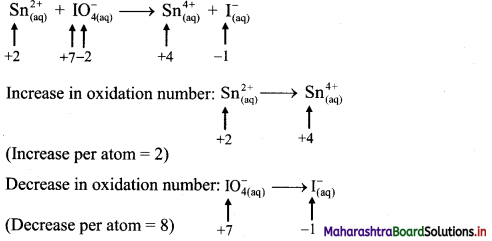
Maharashtra Board 12th BK Important Questions Chapter 10 Computer in Accounting

Question 3.
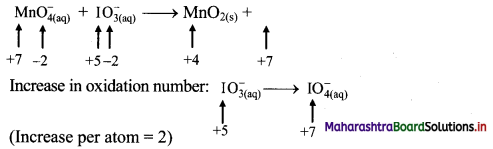
Computerized Accounting is better than manual accounting.
Answer:
This statement is True.
Due to computerized Accounting, firms or businesses can save time, expenses and get the best output within no time which is not possible in manual accounting therefore computerized accounting is better than manual accounting.

Question 4.
In the computerized accounting system, closing balances are carried forward to the next period, automatically.
Answer:
This statement is True.
Just like a manual accounting system, closing balances are not to be carried forward for the next period, in a computerized accounting system. As per the program it is automatically carried forward.

D. Answer in One Sentences:

Question 1.
Write the full form of CAS, MIS, and GAPP.
Answer:
Full form of:
CAS – Computerized Accounting System.
MIS – Management Information System.
GAAP – Generally Accepted Accounting Principles.

Question 2.
Write the components which form Computerized Accounting System.
Answer:
Hardware, Software, and company Personnel are the components that form Computerized Recounting System.

Question 3.
Write the names of equipment that are included in the Hardware.
Answer:
Electronic equipment like computers, hard disks, monitors, printers, and the network that connects with them, etc. are included in Hardware.

Maharashtra Board 12th BK Important Questions Chapter 10 Computer in Accounting

Question 4.
In accounting software, generally which components are used?
Answer:
In accounting software generally, the following components are used:

  1. Creation of Accounting Documents
  2. Recording of Transaction.
  3. Preparation of Trial Balance and Financial Statements.

Question 5.
State the names of Accounting Packages.
Answer:
Ready to use, Customized, Tailored and Free, and open source are the different names of Accounting Packages.

Question 6.
State the names of Accounting Software.
Answer:
Legal/Licensed software, Demo software, and Pirated software are different accounting software.

Maharashtra Board 12th BK Important Questions Chapter 9 Analysis of Financial Statements

Balbharti Maharashtra State Board 12th Commerce Book Keeping & Accountancy Important Questions Chapter 9 Analysis of Financial Statements Important Questions and Answers.

Maharashtra State Board 12th Commerce BK Important Questions Chapter 9 Analysis of Financial Statements

Objective Questions

A. Select the most appropriate alternative from those given below and rewrite the sentences:

Question 1.
The methodical classification of financial statement is called ____________
(a) an interpretation
(b) an analysis
(c) ratio
(d) Profit and Loss A/c
Answer:
(b) an analysis

Question 2.
The short-term deposits are ____________
(a) net cash
(b) cash equivalent
(c) cashflow
(d) cash outflow
Answer:
(b) cash equivalent

Question 3.
Cash proceeds from issue of debentures is a ____________ activity.
(a) financial
(b) non-financial
(c) operating
(d) trading
Answer:
(a) financial

Maharashtra Board 12th BK Important Questions Chapter 9 Analysis of Financial Statements

Question 4.
The relationship between net profit before tax, interest and dividend and capital employed is known from ____________
(a) Current ratio
(b) Quick ratio
(c) ROI
(d) ROCE
Answer:
(c) ROI

Question 5.
Bills receivable is ____________
(a) Liquid asset
(b) Net profit
(c) Current asset
(d) Net loss
Answer:
(c) Current asset

Question 6.
ROCE should be ____________ than ROI.
(a) less
(b) higher
(c) equal
(d) none of these
Answer:
(b) higher

Question 7.
Ideally liquid ratio/quick ratio should be ____________
(a) 1 : 2
(b) 1 : 1
(c) 2 : 1
(d) 1 : 3
Answer:
(b) 1 : 1

Maharashtra Board 12th BK Important Questions Chapter 9 Analysis of Financial Statements

Question 8.
Gross/Net profit ratio expressed in ____________
(a) number
(b) ratio
(c) percentage
(d) words
Answer:
(c) percentage

B. Give one word/term/phrase for each of the following statements.

Question 1.
The tool for analysis of financial statement where individual figures of Balance Sheet are converted into a percentage.
Answer:
Common Size Balance Sheet

Question 2.
The type of activity in cash flow analysis, involving the purchase of fixed assets.
Answer:
Investing Activity

Question 3.
The ratio measures the efficiency of the production department.
Answer:
Gross Profit Ratio

Question 4.
The ratio measures the overall efficiency of the business.
Answer:
Net Profit Ratio

Question 5.
The ratio shows the operational efficiency of the business.
Answer:
Operating Profit Ratio

Maharashtra Board 12th BK Important Questions Chapter 9 Analysis of Financial Statements

Question 6.
The ratio is computed to measure the overall efficiency or profitability of the business.
Answer:
Return On Investment (ROI)

C. Answer in one sentence only.

Question 1.
Define financial statements.
Answer:
The statements which are prepared by the business to find out profitability, efficiency, solvency, growth of the business to judge the financial strength and status are called financial statements.

Question 2.
Who prepares financial statements?
Answer:
The financial statements are prepared by the Profit-making organisations as well as Non-profit concerns or organisations.

Question 3.
State the main tools or techniques of financial analysis.
Answer:
The main tools or techniques of financial analysis are as follows:

  1. Comparative financial statement
  2. Common size statement
  3. Cash flow analysis.

Question 4.
State the primary objective of the cash flow statement.
Answer:
The primary objective of the cash flow statement is to help management in taking decisions and making a plan by providing current information on cash inflow and outflow of any particular period.

Maharashtra Board 12th BK Important Questions Chapter 9 Analysis of Financial Statements

Question 5.
What is Financial Ratio?
Answer:
A financial ratio is a mathematical number that measures the relationship between two accounting figures.

Question 6.
Write the names of the Balance Sheet ratio.
Answer:
Balance Sheet ratios are

  • Current ratio
  • Liquid ratio.

Question 7.
Write the names of the Income Statement ratio.
Answer:
Income Statement ratios are-

  • Gross Profit ratio
  • Net Profit ratio
  • Operating Expense ratio.

Question 8.
Give three examples of current liability.
Answer:
Examples of current liability are Sundry creditors, Bills payable, Bank overdraft, Short-term loans, etc.

Question 9.
Write the names of combined/mixed ratios.
Answer:
Names of combined/mixed ratios are-

  1. Return On Capital Employed (ROCE)
  2. Return On Investment (ROI)

Maharashtra Board 12th BK Important Questions Chapter 9 Analysis of Financial Statements

Solved Problems

Question 1.
Calculate Current Ratio:
Debtors = ₹ 90,000, Creditors = ₹ 30,000, Bills receivables = ₹ 10,000, Bills payable = ₹ 12,000, Stock of goods = ₹ 40,000, Short-term loan = ₹ 40,000, Outstanding expenses = ₹ 14,000, Cash balance = ₹ 70,000, Machinery = ₹ 1,00,000, Current investments = ₹ 25,000, Non-current investments = ₹ 25,000, Loose tools = ₹ 15,000, Bank overdraft = ₹ 29,000.
Solution:
Current assets = Debtors + Bills receivable + Stock of goods + Cash balance + Current investments + Loose tools
= 90,000 + 10,000 + 40,000 + 70,000 + 25,000 + 15,000
= ₹ 2,50,000
Current liabilities = Creditors + Bills payable + Short-term loan + Outstanding expenses + Bank overdraft
= 30,000 + 12,000 + 40,000 + 14,000 + 29,000
= ₹ 1,25,000
Current ratio = \(\frac{\text { Current assets }}{\text { Current liabilities }}\)
= \(\frac{2,50,000}{1,25,000}\)
= 2 : 1
Note: Machinery and Non-current investment are to be committed as it is not to be included in current assets.

Question 2.
Calculate Quick Ratio:
Working capital = ₹ 1,70,000, Prepaid expenses = ₹ 10,000, Inventory/Stock = ₹ 15,000, Prepaid expenses = ₹ 10,000, Current liabilities = ₹ 1,25,000, Bank overdraft = ₹ 35,000
Solution:
Current assets = Current liabilities + Working capital
= 1,25,000+ 1,70,000
= ₹ 2,95,000
Quick assets = Current assets – Inventory – Prepaid expense
= 2,95,000 – 15,000 – 10,000
= ₹ 2,70,000
Quick liabilities = Current liabilities – Bank overdraft
= 1,25,000 – 35,000
= ₹ 90,000
Quick ratio = \(\frac{\text { Quick assets }}{\text { Quick liabilities }}\)
= \(\frac{2,70,000}{90,000}\)
= 3 : 1

Maharashtra Board 12th BK Important Questions Chapter 9 Analysis of Financial Statements

3. Calculate Gross Profit Ratio:
Opening stock = ₹ 20,000, Closing stock = ₹ 25,000, Purchases = ₹ 1,00,000, Purchase return = ₹ 10,000, Sales = ₹ 2,25,000, Sales return = ₹ 15,000, Direct expenses = ₹ 20,000.
Solution:
Cost of goods sold = Opening stock + Purchases – Purchase return + Direct expenses – Closing stock
= 20,000 + 1,00,000 – 10,000 + 20,000 – 25,000
= 1,30,000 – 25,000
= ₹ 1,05,000
Net sales = Sales – Sales return
= 2,25,000 – 15,000
= ₹ 2,10,000
Gross profit = Net sales – Cost of goods sold
= 2,10,000 – 1,05,000
= ₹ 1,05,000
Gross Profit ratio = \(\frac{\text { Gross profit }}{\text { Net sales }} \times 100\)
= \(\frac{1,05,000}{2,10,000} \times 100\)
= 50%

Question 4.
Calculate Gross Profit Ratio :
Sales ₹ 9,00,000, Gross profit ratio 20% on cost.
Solution:
Gross profit is 20% on cost.
Goods costing ₹ 100 must have been sold for ₹ 120.
Hence, if sales is ₹ 120, gross profit is ₹ 20.
If sales is ₹ 9,00,000 then Gross profit =?
Gross profit = 9,00,000 × \(\frac{20}{100}\) = ₹ 1,50,000
Gross profit ratio = \(\frac{\text { Gross profit }}{\text { Net sales }} \times 100\)
= \(\frac{1,50,000}{9,00,000} \times 100\)
= 16.67%

Maharashtra Board 12th BK Important Questions Chapter 9 Analysis of Financial Statements

Question 5.
Calculate Net Profit Ratio:
Sales = ₹ 10,00,000, Cost of goods sold = ₹ 4,20,000, Indirect expenses = ₹ 30,000, Administrative expenses = ₹ 1,00,000, Selling and Distribution expenses = ₹ 80,000, Interest on debentures shares = ₹ 40,000.
Solution:
Gross profit = Sales – Cost of goods sold
= 10,00,000 – 4,20,000
= ₹ 5,80,000
Net profit = Gross profit – Administrative expenses – Selling and Distribution expenses – Indirect expenses – Interest on debentures
= 5,80,000 – 1,00,000 – 80,000 – 30,000 – 40,000
= ₹ 3,30,000
Net profit ratio = \(\frac{\text { Net profit }}{\text { Sales }} \times 100\)
= \(\frac{3,30,000}{10,00,000} \times 100\)
= 33%

Question 6.
Calculate Operating Ratio:
Trading and Profit and Loss A/c of Kalpana for the year ending 31st March 2019.
Maharashtra Board 12th BK Important Questions Chapter 9 Analysis of Financial Statements Q6
Solution:
Cost of goods sold = Net sales – Gross profit
= 7,70,000 – 3,90,000
= ₹ 3,80,000
Operating expenses = Adm. exp. + Selling and Distribution expenses
= 50,000 + 60,000
= ₹ 1,10,000
Operating ratio = \(\frac{\text { Cost of goods sold }+\text { Operating expense }}{\text { Net sales }} \times 100\)
= \(\frac{3,80,000+1,10,000}{7,70,000} \times 100\)
= \(\frac{4,90,000}{7,70,000} \times 100\)
= 63.64%

Maharashtra Board Class 11 Biology Important Questions Chapter 12 Photosynthesis

Balbharti Maharashtra State Board 11th Biology Important Questions Chapter 12 Photosynthesis Important Questions and Answers.

Maharashtra State Board 11th Biology Important Questions Chapter 12 Photosynthesis

Question 1.
What is the percentage of C02 in atmosphere?
Answer:
Atmosphere contains only about 0.03 percent C02 by volume.

Maharashtra Board Class 11 Biology Important Questions Chapter 12 Photosynthesis

Question 2.
Define photosynthesis and give its reaction with the help of solar energy trapped by pigments like chlorophyll.
Answer:
Photosynthesis is defined as synthesis of carbohydrates (glucose) from inorganic materials like CO2 and H20 with the help of solar energy trapped by pigments like chlorophyll.

Question 3.
Explain diagrammatically the ultrastructure of chloroplast.
Answer:

  1. The chloroplasts are discoid and lens shaped in higher plants. Chloroplast is bounded by a double membrane.
  2. System of chlorophyll bearing a double-membrane sac is present inside the stroma. These are stacked one above the other to form grana.
  3. Individual sacs in each granum is are known as thylakoid.
  4. All the pigments chlorophylls, carotenes and xanthophylls are located in thylakoid membranes.
  5. These pigments are fat soluble and are present in lipid part of membrane also they absorb light of specific spectrum in the visible regions.

Question 4.
Distinguish between grana and stroma.
Answer:

Grana Stroma
1. These are formed of stacks of thylakoids. It is the matrix of chloroplast.
2. Light reaction occurs in grana. Dark reaction occurs in stroma.

Question 5.
Describe a structure of a chlorophyll molecule.
Answer:
1. Chemically chlorophyll molecule consists of two parts head of tetrapyrrole the porphyrin ring and a long hydrocarbon tail called phytol attached to the porphyrin group.
2. Both chlorophyll-a and chlorophyll-b are similar in their molecular structure, except that the methyl group (-CH3) in chlorophyll-a is replaced with an aldehyde group (-CHO) in chlorophyll-b.

Maharashtra Board Class 11 Biology Important Questions Chapter 12 Photosynthesis

Question 6.
What are Carotenoids?
Answer:

  1. Carotenoids are lipid compound present universally in almost all the higher plants and several microorganisms.
  2. They are usually red, orange, yellow, brown, and are associated with chlorophyll. They are of two types – the carotenes and xanthophylls.
  3. The carotenes (C40H56) are orange red and xanthophylls contain oxygen.
  4. The light energy absorbed by the carotenoids is transferred to chlorophyll-a to be utilized in photosynthesis.
  5. All photosynthetic plants have these pigments that absorb light between the red and blue region of the
    spectrum.
  6. Carotenoids found mainly in higher plants, absorb primarily in the violet to blue regions of the spectrum.
  7. They not only absorb light energy and transfer it to chlorophyll but also protect the chlorophyll molecule from photo-oxidation.

Question 7.
Write a short note on nature of light.
Answer:

  1. Light is a form of energy.
  2. It travels as stream of tiny particles called photons.
  3. A photon contains a quantum of light.
  4. Light has different wavelengths having different colors.
  5. One can see electromagnetic radiation with wavelengths ranging from 390nm to 730nm. This part of the spectrum is called the Visible light.
  6. It lies between wavelengths of ultraviolet and infra-red.

Question 8.
Draw neat and labelled diagram of absorption and action spectrum.
Answer:
Absorption and action spectra

Question 9.
Write the chemical reaction given by Van Niel in case of bacteria that use H2S and C02 to synthesize carbohydrates. Write his postulate.
Answer:
Chemical reaction given by Van Niel:
6C02 + 12H2S → C6H1206 + 6H20 + 12S ↓
Van Niel’s postulate:
Green plants use water in place of H2S and 02 is evolved in place of sulphur.

Question 10.
What was used by Ruben to confirm that the source of oxygen evolved in photosynthesis is water?
Answer:
Ruben used heavy isotope of oxygen (1802) to confirm that the source of oxygen evolved in photosynthesis is water.

Question 11.
Explain Hill reaction.
Answer:
In this experiment, Hill cultured isolated chloroplasts in a medium containing C02 free water, haemoglobin and ferric compound.

Maharashtra Board Class 11 Biology Important Questions Chapter 12 Photosynthesis

Question 12.
Give reason. Why photosynthesis is a redox reaction?
Answer:
Photosynthesis is considered as a redox reaction as it involves both reduction and oxidation reactions.
Water is oxidized by the removal of H+ while C02 is reduced by the addition of H+.
The redox reactions of photosynthesis are necessary for the conversion of light energy into chemical energy.

Question 13.
Which are the two reactions involved in the process of photosynthesis.
Answer:

  1. The process of photosynthesis is an oxidation and reduction process in which water is oxidized (to release 02) and C02 is reduced to form sugar. It consists of two successive series of reactions.
  2. The first reaction requires light and is called Light reaction.
  3. Second reaction does not require light and is called Dark or Blackman reaction.
  4. Of the two reactions, the former is a photochemical reaction, while the latter is a biochemical reaction.

Question 14.
What is light reaction?
Answer:
1. The light reaction is a reaction in which solar energy is trapped by chlorophyll and stored in the form of chemical energy as ATP and in the form of reducing power as NADPH2.
2. Oxygen is evolved in the light reaction by splitting of water.

Question 15.
Define: Quantum energy
Answer:
A certain minimum quantity of energy a photon must have to boost an electron is called quantum energy.

Question 16.
What is excited state?
Answer:
A molecule that has absorbed a photon is in energy rich excited state. An excited state of an atom means that the valence electron has moved from its ground state orbital to high energy orbital.

Question 17.
What is ground state?
Answer:
When the light source is turned off, the high energy electrons return rapidly to their normal low energy orbitals as the excited molecule reverts to its original stable condition, called the ground state.

Maharashtra Board Class 11 Biology Important Questions Chapter 12 Photosynthesis

Question 18.
Explain the structure of reaction centre.
Answer:
Solar energy is trapped by chlorophyll and stored in the form of chemical energy as ATP and in the form of reducing power as NADPH2. Oxygen is evolved in the light reaction by splitting of water. The components of light reaction are as follows:

Reaction centre:

  1. The light absorbing pigments present in thylakoid membranes are arranged in clusters of chlorophyll and accessory pigments.
  2. P-680 and P-700 are the special type of chlorophyll molecules which form the reaction centres or photocentres.
  3. Solar energy is harvested by accessory pigments and other chlorophyll molecule and is passed on to the reaction centre.
  4. These (accessory pigments) are known as light harvesting or antenna molecule. Their function is to absorb light energy and transmit at a very high rate to the reaction centre where the photochemical reactions occur.

Question 19.
What are the two types of photosystems?
Answer:
1. Photosystems:
a. Two kinds of photosystems are present in thylakoid membranes of chloroplasts.
b. Each has its own set of light harvesting chlorophyll and carotenoid molecules.
c. Chlorophyll and accessory pigments help to capture light energy over large area and pass it on to the photocenters.
d. Thus, a photon absorbed anywhere in the harvesting zone of P-680 center can pass its energy to the P680 molecule.
e. The cluster of pigments which transfer their energy to P-680 absorb at or below 680nm.
f. Together with P-680 they form Photosystem – II.
g. Likewise, P-700 forms Photosystem – I along with pigment molecule which absorbs light at or below 700 nm.

2. Photosystem II:
a. Photolysis of water and release of oxygen takes place in this system.
b. In this process, when PS-II absorbs light, electrons are released and chlorophyll molecule is oxidized.
c. Electrons emitted by P680 (PS-II) are ultimately trapped by P700 (PS -1).
d. Oxygen is the byproduct by the photosynthesizing plants.
e. Protons accumulate inside the thylakoid resulting in a Proton gradient.
f. When the protons diffuse across the thylakoid membrane into stroma against the H+ gradient, energy, is released.
g. This is used to produce ATP.

3. Photosystem 1:
a. Upon absorption of light quanta by PS-I (P700) reaction center emits energy rich electrons.
b. These flow down a chain of electron carriers to NADP along with the proton generated by splitting of water.
c. This result in the formation of NADPH.
d. Hydrogen attached to NADPH is used for reduction of C02 in dark reaction also called as reducing power of the cell.

Question 20.
The oxidized P-680 regains its electrons by the photolysis of water. Mention the reactions related to the same.
Answer:
The oxidized P-680 regains its electrons by the photolysis of water as follows:

  1. 4H2O → 4H+ + 40H
  2. 4OH → 4(OH) + 4e
  3. 4OH → 2H20 + 02
  4. 4H2O → 2H2O + 02 ↑ + 4H+ 4e Overall reaction

Question 21.
Distinguish between Photosystem I and Photosystem II
Answer:

  1. The movement of ions across a selectively permeable membrane, down their electrochemical gradient is called chemiosmosis.
  2. The movement of hydrogen ions across a membrane during cellular respiration in mitochondria and during photosynthesis in chloroplasts, leads to the generation of ATP.
  3. These membranes are thylakoids and the protons accumulate in the lumen during photosynthesis.
  4. An electrochemical concentration gradient forms when hydrogen ions (protons) diffuse from an area of higher proton concentration to an area of lower proton concentration.
  5. This electrochemical concentration gradient of protons across a membrane can be utilized to make
    ATP.
  6. ATP synthase is the enzyme that makes ATP by chemiosmosis.
  7. It allows protons to pass through the membrane using the kinetic energy to phosphorylate ADP making ATP.
  8. Splitting of water molecule on the inner side of the membrane results in the accumulation of hydrogen ions within the lumen of thylakoids.
  9. The enzyme, NADP reductase, is located in the stroma side of the membrane.
  10. For reduction of NADP to NADPH2, protons are required along with electrons that come from ferredoxin.
  11. Thus, within the chloroplast, the protons in the stroma decrease in number, while in the lumen, the number of protons increases.
  12. This creates a proton gradient across the thylakoid membrane.
  13. Energy,generated by the subsequent spontaneous movement of protons is used for the synthesis of ATP.

Question 22.
Draw neat and labelled diagram representing ATP synthesis through chemiosmosis.
Answer:
Maharashtra Board Class 11 Biology Important Questions Chapter 12 Photosynthesis 1

Maharashtra Board Class 11 Biology Important Questions Chapter 12 Photosynthesis

Question 23.
What is photophosphorylation?
Answer:
Formation of ATP in the chloroplasts in presence of light is called photophosphorylation, light
Maharashtra Board Class 11 Biology Important Questions Chapter 12 Photosynthesis 2

Question 24.
Mention the light reactions occurring in in granum.
Answer:

  1. 24H2O → 24OH + 24H+
  2. 24OH → 240H + 24e
  3. 24e + 24H+ + 12NADP+ → 12NADPH2
  4. 18ADP + 18Pi → 18 ATP
  5. 240H → 12H2O + 6O2

Question 25.
Write the dark reaction occurring in stroma.
Answer:
602+ 18ATP + 12NADPH2 → C6H12O2 + 6H2O + 18ADP +18Pi+ 12NADP+

Question 26.
Name the following:
1. Name the first compound formed during C3 pathway.
2. Carbon fixation occurs in?
Answer:
1. 3-phosphoglyceric acid.
2. Stroma

Question 27.
Where does this reaction take place?
6C02 + 18ATP + 12NADPH2 → C6H12O6 + 6H20 + 18ADP + 18Pi + 12NADP+
Answer:
In stroma of a chloroplast.

Question 28.
Who discovered the Carbon fixation pathway? How was the pathway studied?
Answer:

  1. The path of carbon fixation in dark reaction through intermediate compounds leading to the formation of sugar and starch was discovered by Calvin, Benson and their co-workers discovered the carbon fixation pathway.
  2. Path of carbon was studied with the help of radioactive tracer technique using Chlorella, a unicellular green alga and radioactive 14C02.
  3. With the help of radioactive carbon, it becomes possible to trace the intermediate steps of fixation of 14C02.

Maharashtra Board Class 11 Biology Important Questions Chapter 12 Photosynthesis

Question 29.
When does photorespiration occur?
Answer:
1. Photorespiration occurs under the conditions like high temperature, bright light, high oxygen and low C02 concentration. It is a wasteful process linked with C3-Cycle, where instead of fixation of C02, it is given out.
2. Photorespiration is a respiratory process in many higher plants by which they take up oxygen in the light and give outiearbon dioxide.

Question 30.
Diagrammatically explain the process of photorespiration.
Answer:
Mechanism:

  1. Photorespiration involves three organelles chloroplast, peroxisomes and mitochondria and occurs in a series of cyclic reactions which is also called PCO cycle. (Photosynthetic Carbon Cycle)
  2. Enzyme Rubisco acts as oxygenase at higher concentration of O2 and photorespiration begins.
  3. When RuBP reacts with 02 rather than C02 to form a 3-carbon compound (PGA) and 2-carbon compound phosphoglycolate.
  4. Phosphoglycolate is then converted to glycolate which is shuttled out of the chloroplast into the peroxisomes.
  5. In Peroxisomes, glycolate is converted into glyoxylate by enzyme glycolate oxidase.
  6. Glyoxylate is further converted into amino acid glycine by transamination.
  7. In mitochondria, two molecules of glycine are converted into serine (amino acid) and C02 is given out.
  8. Thus, it loses 25% of photosynthetically fixed carbon.
  9. Serine is transported back to peroxisomes and converted into glycerate.
  10. It is shuttled back to chloroplast to undergo phosphorylation and utilized in formation of 3-PGA, which get utilized in C3 pathway.

Question 31.
Explain Hatch – Slack pathway.
Answer:
1. M. D. Hatch and C. R. Slack while working on sugarcane found four carbon compounds (dicarboxylic acid) as the first stable product of photosynthesis.
2. It occurs in tropical and sub-tropical grasses and some dicotyledons.
3. The first product of this cycle is a 4-carbon compound oxaloacetic acid. Hence it is also called as C4 pathway and plants are called C4 plants.
Mechanism:

  1. C02 taken from atmosphere is accepted by a 3-carbon compound, phosphoenolpyruvic acid in the chloroplasts of mesophyll cells, leading to the formation of 4-C compound, oxaloacetic acid with the help of enzyme phosphoenolpyruvate carboxylase.
  2. It is converted to another 4-C compound, malic acid.
  3. It is transported to the chloroplasts of bundle sheath cells.
  4. Malic acid (4-C) is converted to pyruvic acid (3-C) with the release of C02 in the cytoplasm.
  5. Thus, concentration of C02 increases in the bundle sheath cells.
  6. Chloroplasts of these cells contain enzymes of Calvin cycle.
  7. Because of high concentration of C02, RuBP carboxylase participates in Calvin cycle and not photorespiration.
  8. Sugar formed in Calvin cycle is transported into the phloem.
  9. Pyruvic acid generated in the bundle sheath cells re-enter mesophyll cells and regenerates
    phosphoenolpyruvic acid by consuming one ATP.
  10. Since this conversion results in the formation of AMP (not ADP), two ATP are required to regenerate ATP from AMP. Thus, C4 pathway needs 12 additional ATP.
  11. The C3 pathway requires 18 ATP for the synthesis of one glucose molecule, whereas C4 pathway requires 30 ATP.
  12. Thus, C4 plants are better photosynthesizers as compared to C3 plants as there is no photorespiration in these plants.

Maharashtra Board Class 11 Biology Important Questions Chapter 12 Photosynthesis 3

Maharashtra Board Class 11 Biology Important Questions Chapter 12 Photosynthesis

Question 32.
Draw a neat labelled diagram of Kranz anatomy of C4 plant.
Answer:
Maharashtra Board Class 11 Biology Important Questions Chapter 12 Photosynthesis 4

Question 33.
Name the following:
1. Name the first product of C02 fixation in Hatch – Slack Pathway.
2. C4 plant leaf shows which type of anatomy?
3. Example of a C4 Plant
Answer:
1. Oxaloacetic acid.
2. Kranz Anatomy
3. Maize, Sugarcane, Sorghum, etc.

Question 34.
Short note on Kranz Anatomy of a C4 plant.
Answer:

  1. Anatomy of leaves of C4 plants is different from leaves of C3 plants.
  2. C4 plants show Kranz anatomy.
  3. In the leaves of such plants, there is a bundle sheath around the vascular bundles.
  4. The chloroplasts in the bundle – sheath cells are large and without or less developed grana, where as in the mesophyll cells the chloroplasts are small but with well-developed grana.

Maharashtra Board Class 11 Biology Important Questions Chapter 12 Photosynthesis

Question 35.
Short note on: Crassulacean Acid Metabolism.
Answer:
Crassulacean Acid Metabolism (CAM).

  1. It is one more alternative pathway of carbon fixation found in desert plants.
  2. It was first reported in the family Crassulaceae, therefore called as CAM (Crassulacean Acid Metabolism).
  3. In CAM plants, stomata are scotoactive i.e. active during night, hence initial C02 fixation occurs in night.
  4. Thus, C4 pathway fix C02 at night and reduce C02 in day time via the C3 pathway by using NADPH formed during the day.
  5. PEP caboxylase and Rubisco are present in the mesophyll cell (no Kranz anatomy).
  6. Formation of malic acid during dark is called acidification (phase I).
  7. Malate is stored in vacuoles during the night.
  8. Malate releases C02 during the day for C3 pathway within the same cell is called deacidification (phase II).
  9. Examples of CAM plants: Kalanchoe, Opuntia, Aloe etc.
  10. The Chemical reactions of the carbon dioxide fixation and its assimilation are similar to that of C4 plants.

Question 36.
1. Draw a neat labelled diagram of CAM pathway.
2. In CAM plants, why does acid concentration increase during night?
Answer:
Maharashtra Board Class 11 Biology Important Questions Chapter 12 Photosynthesis 5
2. In CAM plants, malic acid accumulates during night, which is formed from Oxaloacetic acid in presence of the enzyme malate dehydrogenase.

Question 37.
What are the external factors which affects photosynthesis?
Answer:
External factors which affect photosynthesis are as follows:
1. Light:
a. It is an essential factor as it supplies the energy necessary for photosynthesis.
b. Quality and intensity of light affects the photosynthesis.
c. Highest rate of photosynthesis takes place in red light followed by blue light.
d. The rate of photosynthesis considerably decreases in plants which are growing under a forest canopy.
e. In most of the plants, photosynthesis is maximum in bright diffused sunlight.
f. Uninterrupted and continuous photosynthesis for a very long period of time may be sustained without any visible damage to the plant.

2. Carbon dioxide:
The main source of C02 in land plants is the atmosphere, which contains only 0.3% of the gas.
b. Under normal conditions of temperature and light, carbon dioxide acts as a limiting factor in photosynthesis.
c. Increase in concentration of CO2 increases the photosynthesis.
d. Increase in C02 to about 1% is advantageous to most of the plants.
e. Higher concentration of the gas has an inhibitory effect on photosynthesis.

3. Temperature:
a. Like all other physiological processes, photosynthesis also needs a suitable temperature.
b. The optimum temperature at which the photosynthesis is maximum is 25-30 °C. Except in plants like Opuntia, photosynthesis takes place at as high as 55 °C.
c. This is the maximum temperature. Minimum temperature is temperature at which photosynthesis process just starts.
d. In the presence of sufficient light and CO2, photosynthesis increases with the rise of temperature till it becomes maximum. After that there is a decrease or fall in the rate of the process.

4. Water:
a. Water is necessary for photosynthetic process.
b. An increase in water content of the leaf results in the corresponding increase in the rate of photosynthesis.
c. Thus, the limiting effect of water is not direct but indirect.
d. It is mainly due to the fact that it helps in maintaining the turgidity of the assimilatory cells and the proper hydration of their protoplasm.

Maharashtra Board Class 11 Biology Important Questions Chapter 12 Photosynthesis

Question 38.
What are the internal factors which affects photosynthesis?
Answer:
Internal factors which affects photosynthesis are as follows:
1. Chlorophyll:
a. Though presence of chlorophyll is essential for photosynthesis but rate of photosynthesis is proportional to the quantity of chlorophyll present.
b. It is because of the fact that chlorophyll merely acts as a biocatalyst and hence a small quantity is quite enough to maintain the large bulk of the reacting substances.
2. Sugar:
The final product in the photosynthesis reaction is sugar and its accumulation in the cells slow down the process of photosynthesis.
3. Internal structures:
The thickness of cuticle and epidermis of the leaf, the size and distribution of intercellular spaces and the distribution of the stomata and the development of chlorenchyma and other tissues also affects the rate of photosynthesis.

Question 39.
State and explain the Blackman’s law of limiting factor.
Answer:

  1. The Blackman’s law of limiting factors states that when a process is conditioned as to its rapidity by a number of separate factors, the rate of the process is controlled by the pace of the “slowest factor”.
  2. The slowest factor is that factor which is present in the lowest or minimum concentration in relation to others.
  3. The law of limiting factor can be explained by taking two external factors such as carbon dioxide and light.
  4. For example, a plant photosynthesizing at a fixed light intensity sufficient to utilize 10mg of C2 per hour only.
  5. Photosynthetic rate goes on increasing when concentration of CO2 increases.
  6. Further increase in CO2 concentration will not increase the rate of photosynthesis. In this case light becomes the limiting factor. Therefore, under such circumstances rate of photosynthesis can be increased only by increasing the light intensity.
  7. This proves that the rate of photosynthesis responds to one factor alone at a time and there would be a sharp break in the curve and a plateau formed exactly at the point where another factor becomes limiting.
  8. If any one of the other factors which is kept constant (e.g. Light) is increased, the photosynthetic rate increases again reaching the optimum where again another factor becomes limiting.

Question 40.
Give the significance of Photosynthesis.
Answer:

  1. Photosynthesis is anabolic process which uses inorganic substances and produces food for all life directly or indirectly.
  2. This process transforms solar energy into chemical energy.
  3. The released by product 02 is necessary not only for aerobic respiration in living organisms but also used in forming protective ozone layer around earth.
  4. It also helps us in providing fossil fuels, coals, petroleum and natural gas.

Question 41.
Apply Your Knowledge:

Question 1.
1. Identify ‘x’, ‘y’ and ‘z’ in the given diagrammatic representation of cyclic photophosphorylation.
2. During which steps ATP molecules are formed?
Answer:
Maharashtra Board Class 11 Biology Important Questions Chapter 12 Photosynthesis 6
1. ‘x’ is ferredoxin, ‘y’ is cytochrome-b6 and ‘z’ is plastocyanin.
2. During conversion of ferredoxin to cytochrome-b6 and from cytochrome-b6 to cytochrome-f ATP molecules are formed.

Question 42.
Quick Review

Cyclic and Non-cyclic photophosphorylation:

Cyclic Non-cyclic
Used Photons
1 ADP
1 Phosphate group
Photons
1 ADP1 Phosphate group
1 H20
1 NADP+
Produced 2 ATP 1 ATP
2 NADPH + H+
\(\frac { 1 }{ 2 }\)O2
Accomplished Captured energy in the form of ATP Captured energy in the form of ATP and NADPH2
Transfers hydrogen (as NADPH) to the dark reactions

Calvin’s Cycle:

Used (Reactants) Produced (Products)
6CO2 12 PGAL (2 become 1 glucose)
6 RUBP 18 Phosphates (return to light reactions)
18 ATP (from light reactions) 18 ADP (returns to light reactions)
12 NADPH (from light reactions) 12 NADP+ (return to light reactions)

Maharashtra Board Class 11 Biology Important Questions Chapter 12 Photosynthesis 7

Abbrevations

ATP Adenosine triphosphate RuBisCO Ribulose bisphosphate carboxylase
ADP Adenosine diphosphate PGA Phosphoglyceric acid
Co-Q Co-enzyme quinone PGAL Phosphoglyceraldehyde
FRS Ferredoxin Reducing Substance DHAP Dihydroxyacetone phosphate
PC Plastocyanin NADP Nicotinamide adenine dinucleotide phosphate
PQ Plastoquinone NADPH2 Nicotinamide adenine dinucleotide hydrogen phosphate
RUBP Ribulose-1, 5-bisphosphate PEPA Phosphoenol pyruvic acid
RUMP Ribulose monophosphate OAA Oxaloacetic acid

Maharashtra Board Class 11 Biology Important Questions Chapter 12 Photosynthesis

Question 43.
Exercise:

Question 1.
Why photosynthesis is known as redox reaction?
Answer:

  1. Photosynthesis is considered as a redox reaction as it involves both reduction and oxidation reactions.
  2. Water is oxidized by the removal of H+ while C02 is reduced by the addition of H.
  3. The redox reactions of photosynthesis are necessary for the conversion of light energy into chemical energy.

Question 2.
Sketch and label ‘Ultrastructure of Chloroplast’.
Answer:

  1. The chloroplasts are discoid and lens shaped in higher plants. Chloroplast is bounded by a double membrane.
  2. System of chlorophyll bearing a double-membrane sac is present inside the stroma.
  3. These are stacked one above the other to form grana.
  4. Individual sacs in each granum is are known as thylakoid.
  5. All the pigments chlorophylls, carotenes and xanthophylls are located in thylakoid membranes.
  6. These pigments are fat soluble and are present in lipid part of membrane also they absorb light of specific spectrum in the visible regions.

Question 3.
Name the various photosynthetic pigments.
Answer:

  1. Chemically chlorophyll molecule consists of two parts head of tetrapyrrole the porphyrin ring and a long hydrocarbon tail called phytol attached to the porphyrin group.
  2. Both chlorophyll-a and chlorophyll-b are similar in their molecular structure, except that the methyl group (-CH) in chlorophyll-a is replaced with an aldehyde group (-CHO) in chlorophyll-b.
  3. Carotenoids are lipid compound present universally in almost all the higher plants and several microorganisms.
  4. They are usually red, orange, yellow, brown, and are associated with chlorophyll. They are of two types – the carotenes and xanthophylls.
  5. The carotenes (C40H5) are orange red and xanthophylls contain oxygen.
  6. The light energy absorbed by the carotenoids is transferred to chlorophyll-a to be utilized in photosynthesis.
  7. All photosynthetic plants have these pigments that absorb light between the red and blue region of the
    spectrum.
  8. Carotenoids found mainly in higher plants, absorb primarily in the violet to blue regions of the spectrum.
  9. They not only absorb light energy and transfer it to chlorophyll but also protect the chlorophyll molecule from photo-oxidation. Xanthophylls (C40H56O2) are yellow pigments found in fruits and vegetables.

Maharashtra Board Class 11 Biology Important Questions Chapter 12 Photosynthesis

Question 4.
What is the main function of accessory pigment?
Answer:
1. Accessory pigments are light absorbing molecules which are found in photosynthetic organisms.
2. They transfer the absorbed light to chlorophyll-a and thus increasing the photosynthetic rate.
3. In absence of accessory pigments less amount of light will be absorbed and also there would be no protection provided to chlorophyll molecule from photo-oxidation.

Question 5.
Explain the nature of light.
Answer:

  1. Light is a form of energy.
  2. It travels as stream of tiny particles called photons.
  3. A photon contains a quantum of light.
  4. Light has different wavelengths having different colors.
  5. One can see electromagnetic radiation with wavelengths ranging from 390nm to 730nm. This part of the spectrum is called the Visible light.
  6. It lies between wavelengths of ultraviolet and infra-red.

Question 6.
Which instrument is used for studying the absorption spectrum of photosynthetic pigments?
Answer:
In absorption spectrum, absorption of different wavelengths of light pigments can be measured by spectrophotometer.

Question 7.
Explain Hill’s reaction.
Answer:
Robert Hill proved that the source of oxygen evolved during photosynthesis is water and not carbon dioxide. Hence, it is called Hill’s Reaction.

  1. In this experiment, Hill cultured isolated chloroplasts in a medium containing C02 free water, haemoglobin and ferric compound.
  2. Ferric salts and haemoglobin were added in the medium as hydrogen and oxygen acceptors respectively.
  3. When the suspension was illuminated, he observed that haemoglobin turned into oxyhaemoglobin (red colour).
  4. This confirmed that water must have oxidized releasing 02, that reacted with haemoglobin. Reduction of ferric compound was also indicated by change in colour.
  5. The H2O molecule oxidized to evolve 02 as a by-product. Thus, Hill proved that the source of evolving 02 is H20 and not C02.
  6. This process of splitting up of water molecules under the influence of light in the presence of chlorophyll is called Photolysis of water or Hill Reaction.

Question 8.
Describe photoexcitation of chlorophyll-a.
Answer:

  1. Chlorophyll-a is an essential photosynthetic pigment as it converts light energy into chemical energy and acts as a reaction centre.
  2. Initially, it lies at ground state or singlet state but when it absorbs or receives photons (solar energy), it gets activated and goes in excited state or excited second singlet state.
  3. In the excited state, chlorophyll-a emits an electron. The emitted electron is energy rich, i.e. has extra amount of energy.
  4. Due to the loss of electron (e), chlorophyll-a becomes positively charged. This is the ionized state.
  5. Chlorophyll-a molecule cannot remain in the ionized state for more than 10‘9 seconds. Hence the photo-chemical reaction or electron transfer occurs very fast.
  6. The energy rich electron is then transferred through various electron acceptors and donors (carriers).
  7. During the transfer, the electron emits energy which is utilized for the synthesis of ATP. This shows that light energy is converted into chemical energy in the form of ATP.

Question 9.
Write the wavelengths required for proper functioning of PS-I and PS-II respectively?
Answer:
1. Together with P-680 they form Photosystem – II.
2. Likewise, P-700 forms Photosystem – I along with pigment molecule which absorbs light at or below 700 nm.

Maharashtra Board Class 11 Biology Important Questions Chapter 12 Photosynthesis

Question 10.
Differentiate between PS-IandPS-II.
Answer:

  1. The movement of ions across a selectively permeable membrane, down their electrochemical gradient is called chemiosmosis.
  2. The movement of hydrogen ions across a membrane during cellular respiration in mitochondria and during photosynthesis in chloroplasts, leads to the generation of ATP.
  3. These membranes are thylakoids and the protons accumulate in the lumen during photosynthesis.
  4. An electrochemical concentration gradient forms when hydrogen ions (protons) diffuse from an area of higher proton concentration to an area of lower proton concentration.
  5. This electrochemical concentration gradient of protons across a membrane can be utilized to make
    ATP.
  6. ATP synthase is the enzyme that makes ATP by chemiosmosis. .
  7. It allows protons to pass through the membrane using the kinetic energy to phosphorylate ADP making ATP.
  8. Splitting of water molecule on the inner side of the membrane results in the accumulation of hydrogen ions within the lumen of thylakoids.
  9. The enzyme, NADP reductase, is located in the stroma side of the membrane.
  10. For reduction of NADP to NADPH2, protons are required along with electrons that come from ferredoxin.
  11. Thus, within the chloroplast, the protons in the stroma decrease in number, while in the lumen, the number of protons increases.
  12. This creates a proton gradient across the thylakoid membrane.
  13. Energy,generated by the subsequent spontaneous movement of protons is used for the synthesis of ATP.

Question 11.
Define photophosphorylation.
Answer:
Formation of ATP in the chloroplasts in presence of light is called photophosphorylation, light

Question 12.
Give graphic representation of cyclic photophosphorylation.
Answer:
Cyclic photophosphorylation:
a. Illumination of photosystem-I causes electrons to move continuously out of the reaction center of photosystem-I and back to it.
b. The cyclic electron-flow is accompanied by the photophosphorylation of ADP to yield ATP. This is termed as Cyclic photophosphorylation.
c. Since this process involves only pigment system I, photolysis of water and consequent evolution of oxygen does not take place.

Maharashtra Board Class 11 Biology Important Questions Chapter 12 Photosynthesis

Question 13.
Give graphic representation of noncyclic photophosphorylation.
Answer:
Non-cyclic photophosphorylation:
a. It involves both photosystems- PS-I and PS-II.
b. In this case, electron transport chain starts with the release of electrons from PS-II.
c. In this chain high energy electrons released from PS-II do not return to PS-II but, after passing through an electron transport chain, reach PS-I, which in turn donates it to reduce NADP to NADPH.
d. The reduced NADP+ (NADPH) is utilized for the reduction of CO2 in the dark reaction.
e. Electron-deficient PS-II brings about oxidation of water-molecule. Due to this, protons, electrons and oxygen atom are released.
f. Electrons are taken up by PS-II itself to return to reduced state, protons are accepted by NADP+ whereas oxygen is released.
g. As in this process, high energy electrons released from PS-II do not return to PS-II and it is accompanied with ATP formation, this is called Non-cyclic photophosphorylation.

Question 14.
Write the link between light dependent and dark reactions.
Answer:
Link between light-dependent and dark reactions:

  1. The light reaction gives rise to two important products, a reducing agent NADPH2 and an energy-rich compound ATP. Both these are utilized in the dark phase of photosynthesis.
  2. ATP and NADPH2 molecules function as vehicles for transfer of energy of sunlight into dark reaction leaving to carbon fixation. In this reaction C02 is reduced to carbohydrate.
  3. During dark reaction, ATP and NADPH2 are transformed into ADP, iP and NADP which are transferred to the grana in which light reaction takes place.

Question 15.
Write the dark reaction occurring in stroma.
Answer:
602+ 18ATP + 12NADPH2 → C6H12O2 + 6H2O + 18ADP +18Pi+ 12NADP+

Question 16.
Explain how light and dark reactions of photosynthesis are interdependent.
Answer:
Link between light-dependent and dark reactions:

  1. The light reaction gives rise to two important products, a reducing agent NADPH2 and an energy-rich compound ATP. Both these are utilized in the dark phase of photosynthesis.
  2. ATP and NADPH2 molecules function as vehicles for transfer of energy of sunlight into dark reaction leaving to carbon fixation. In this reaction C02 is reduced to carbohydrate.
  3. During dark reaction, ATP and NADPH2 are transformed into ADP, iP and NADP which are transferred to the grana in which light reaction takes place.

Question 17.
Give schematic representation of Calvin Cycle.
Answer:
1. The entire process of dark reaction was traced by Dr. Melvin Calvin along with his co-worker, Dr. Benson. Hence, the process is called as Calvin cycle or Calvin- Benson cycle. Since the first stable product formed is a 3-carbon compound, it is also called as C3 pathway and the plants are called C14 plants.
2. Calvin carried out experiments on unicellular green algae (Chlorella), using radioactive isotope of carbon, C14 as a tracer. It is also called synthesis phase or second phase of photosynthesis.

The cycle is divided into the following phases:
1. Carboxylation phase:
a. Carbon dioxide reduction starts with a five-carbon sugar ribulose-l,5-bisphosphate (RuBP). It is a 5- carbon sugar with two phosphate groups attached to it.
b. RuBP reacts with CO2 to produce an unstable 6 carbon intermediate in the presence of Rubisco.
c. It immediately splits into 3 carbon compounds called 3-phosphoglyceric acid.
d. RuBisCO is a large protein molecule and comprises 16% of the chloroplast proteins.

2. Glycolytic reversal:
a. 3-phosphoglyceric acid form 1,3-diphosphoglyceric acid by utilizing ATP molecule.
b. These are then reduced to glyceraldehyde-3-phosphate (3-PGA) by NADPH supplied by the light reactions of photosynthesis.
c. In order to keep Calvin cycle continuously running there must be sufficient number of RuBP and regular supply of ATP and NADPH.
d. Out of 12 molecules of 3-phosphoglyceraldehyde, two molecules are used for synthesis of one glucose molecule.

3. Regeneration of RuBP:
a. 10 molecules of 3-phosphoglyceraldehyde are used for the regeneration of 6 molecules of RuBP at the cost of 6 ATP.
b. Therefore, six turns of Calvin cycle are needed to get one molecule of glucose.

Maharashtra Board Class 11 Biology Important Questions Chapter 12 Photosynthesis

Question 18.
Describe Calvin cycle and its significance.
Answer:
Significance:
1. Carboxylation: RuBisCO is the most abundant enzyme in the world. It is responsible for fixing carbon in the form of C02 into sugar. As a result of Carboxylation, the first stable product of carbon fixation i.e. 3- PGA is synthesized.
2. Reduction/Glycolytic reversal: NADPH2 donates electrons to 1, 3-Bisphoshoglycerate to form 3- phosphoglyceraldehyde molecules. During this process ADP and NADP are generated which are used in light reaction.
3. Regeneration of RuBP: Some 3-phosphoglyceraldehyde molecules are involved in production of glucose while others are recycled to regenerate the 5-carbon compound RuBP which used to accept new carbon molecules. Thus, regeneration of RuBP is required for Calvin cycle to run continuously.

Question 19.
How was the carbon fixation pathway studied?
Answer:
1. Path of carbon was studied with the help of radioactive tracer technique using Chlorella, a unicellular green alga and radioactive 14C02.
2. With the help of radioactive carbon, it becomes possible to trace the intermediate steps of fixation of 14C02.

Question 20.
Describe photorespiration with the help of diagrammatic representation.
Answer:
Mechanism:

  1. Photorespiration involves three organelles chloroplast, peroxisomes and mitochondria and occurs in a series of cyclic reactions which is also called PCO cycle. (Photosynthetic Carbon Cycle)
  2. Enzyme Rubisco acts as oxygenase at higher concentration of O2 and photorespiration begins.
  3. When RuBP reacts with 02 rather than C02 to form a 3-carbon compound (PGA) and 2-carbon compound phosphoglycolate.
  4. Phosphoglycolate is then converted to glycolate which is shuttled out of the chloroplast into the peroxisomes.
  5. In Peroxisomes, glycolate is converted into glyoxylate by enzyme glycolate oxidase.
  6. Glyoxylate is further converted into amino acid glycine by transamination.
  7. In mitochondria, two molecules of glycine are converted into serine (amino acid) and C02 is given out.
  8. Thus, it loses 25% of photosynthetically fixed carbon.
  9. Serine is transported back to peroxisomes and converted into glycerate.
  10. It is shuttled back to chloroplast to undergo phosphorylation and utilized information of 3-PGA, which get utilized in C3 pathway.

Question 21.
Give significance of C4 pathway.
Answer:

  1. C4 plants have special type of leaf anatomy called Kranz anatomy.
  2. In C4 plants, C02 fixation occurs twice.
  3. In these plants, chloroplasts of mesophyll cells contain enzyme PEP carboxylase which fixes atmospheric C02. Thus, first C02 fixation occurs in mesophyll cells.
  4. Decarboxylation of malic acid in bundle sheath cells results in increase in C02 concentration.
  5. Thus, RuBisCO acts as carboxylase and brings about carboxylation of RuBP.
  6. Due to this oxygenation of RuBP and photorespiration is prevented.
  7. Thus, despite of having less number of bundle sheath cells carrying out Calvin cycle, C4 plants are highly productive.

Maharashtra Board Class 11 Biology Important Questions Chapter 12 Photosynthesis

Question 22.
Who proposed C4 pathway?
Answer:
1. M. D. Hatch and C. R. Slack while working on sugarcane found four carbon compounds (dicarboxylic acid) as the first stable product of photosynthesis.
2. It occurs in tropical and sub-tropical grasses and some dicotyledons.
3. The first product of this cycle is a 4-carbon compound oxaloacetic acid. Hence it is also called as C4 pathway and plants are called C4 plants.
Mechanism:

  1. C02 taken from atmosphere is accepted by a 3-carbon compound, phosphoenolpyruvic acid in the chloroplasts of mesophyll cells, leading to the formation of 4-C compound, oxaloacetic acid with the help of enzyme phosphoenolpyruvate carboxylase.
  2. It is converted to another 4-C compound, malic acid. It is transported to the chloroplasts of bundle sheath cells.
  3. Malic acid (4-C) is converted to pyruvic acid (3-C) with the release of C02 in the cytoplasm.
  4. Thus, concentration of C02 increases in the bundle sheath cells.
  5. Chloroplasts of these cells contain enzymes of Calvin cycle.
  6. Because of high concentration of C02, RuBP carboxylase participates in Calvin cycle and not photorespiration.
  7. Sugar formed in Calvin cycle is transported into the phloem.
  8. Pyruvic acid generated in the bundle sheath cells re-enter mesophyll cells and regenerates
    phosphoenolpyruvic acid by consuming one ATP.
  9. Since this conversion results in the formation of AMP (not ADP), two ATP are required to regenerate ATP from AMP. Thus, C4 pathway needs 12 additional ATP.
  10. The C3 pathway requires 18 ATP for the synthesis of one glucose molecule, whereas C4 pathway requires 30 ATP.
  11. Thus, C4 plants are better photosynthesizers as compared to C3 plants as there is no photorespiration in these plants.

Question 23.
Give schematic representation of HSK pathway.
Answer:
1. M. D. Hatch and C. R. Slack while working on sugarcane found four-carbon compounds (dicarboxylic acid) as the first stable product of photosynthesis.
2. It occurs in tropical and sub-tropical grasses and some dicotyledons.
3. The first product of this cycle is a 4-carbon compound oxaloacetic acid. Hence it is also called as C4 pathway and plants are called C4 plants.

Mechanism:

  1. C02 taken from atmosphere is accepted by a 3-carbon compound, phosphoenolpyruvic acid in the chloroplasts of mesophyll cells, leading to the formation of 4-C compound, oxaloacetic acid with the help of enzyme phosphoenolpyruvate carboxylase.
  2. It is converted to another 4-C compound, malic acid. It is transported to the chloroplasts of bundle sheath cells.
  3. Malic acid (4-C) is converted to pyruvic acid (3-C) with the release of C02 in the cytoplasm. Thus, concentration of C02 increases in the bundle sheath cells.
  4. Chloroplasts of these cells contain enzymes of Calvin cycle.
  5. Because of high concentration of C02, RuBP carboxylase participates in Calvin cycle and not photorespiration.
  6. Sugar formed in Calvin cycle is transported into the phloem.
  7. Pyruvic acid generated in the bundle sheath cells re-enter mesophyll cells and regenerates
    phosphoenolpyruvic acid by consuming one ATP.
  8. Since this conversion results in the formation of AMP (not ADP), two ATP are required to regenerate ATP from AMP. Thus, C4 pathway needs 12 additional ATP.
  9. The C3 pathway requires 18 ATP for the synthesis of one glucose molecule, whereas C4 pathway requires 30 ATP.
  10. Thus, C4 plants are better photosynthesizers as compared to C3 plants as there is no photorespiration in these plants.

Question 24.
With the help of labelled diagram explain Kranz anatomy.
Answer:

  1. Anatomy of leaves of C4 plants is different from leaves of C3 plants.
  2. C4 plants show Kranz anatomy.
  3. In the leaves of such plants, there is a bundle sheath around the vascular bundles.
  4. The chloroplasts in the bundle – sheath cells are large and without or less developed grana, where as in the mesophyll cells the chloroplasts are small but with well-developed grana.

Maharashtra Board Class 11 Biology Important Questions Chapter 12 Photosynthesis

Question 25.
Give reason. Why C4 plants are favoured in tropical regions?
Answer:

  1. C4 plants are favoured in tropical regions as they require 30 ATP to produce 1 molecule of glucose.
  2. High temperature in tropical regions leads to closure of stomata to reduce rate of transpiration. Due to this availability of C02 decreases.
  3. PEP carboxylase present in mesophyll cells can fix C02 even at low concentration. This helps the plant in efficient assimilation of atmospheric carbon dioxide.
  4. C4 plants contain a special leaf anatomy called Kranz anatomy which minimizes the losses due to photorespiration.
  5. It helps C4 plants to survive in conditions of high daytime temperatures, intense sunlight and low moisture.

Question 26.
With the help of suitable flowchart explain CAM.
Answer:
Crassulacean Acid Metabolism (CAM).

  1. It is one more alternative pathway of carbon fixation found in desert plants.
  2. It was first reported in the family Crassulaceae, therefore called as CAM (Crassulacean Acid Metabolism).
  3. In CAM plants, stomata are scotoactive i.e. active during night, hence initial C02 fixation occurs in night.
  4. Thus, C4 pathway fix C02 at night and reduce C02 in day time via the C3 pathway by using NADPH formed during the day.
  5. PEP caboxylase and Rubisco are present in the mesophyll cell (no Kranz anatomy).
  6. Formation of malic acid during dark is called acidification (phase I).
  7. Malate is stored in vacuoles during the night.
  8. Malate releases C02 during the day for C3 pathway within the same cell is called deacidification (phase II).
  9. Examples of CAM plants: Kalanchoe, Opuntia, Aloe etc.
  10. The Chemical reactions of the carbon dioxide fixation and its assimilation are similar to that of C4 plants.

Question 27.
Describe ‘any two’ factors affecting the rate of photosynthesis.
Answer:
External factors which affect photosynthesis are as follows:
1. Light:
a. It is an essential factor as it supplies the energy necessary for photosynthesis.
b. Quality and intensity of light affects the photosynthesis.
c. Highest rate of photosynthesis takes place in red light followed by blue light.
d. The rate of photosynthesis considerably decreases in plants which are growing under a forest canopy.
e. In most of the plants, photosynthesis is maximum in bright diffused sunlight.
f. Uninterrupted and continuous photosynthesis for a very long period of time may be sustained without any visible damage to the plant.

2. Carbon dioxide:
The main source of C02 in land plants is the atmosphere, which contains only 0.3% of the gas.
b. Under normal conditions of temperature and light, carbon dioxide acts as a limiting factor in photosynthesis.
c. Increase in concentration of CO2 increases the photosynthesis.
d. Increase in C02 to about 1% is advantageous to most of the plants.
e. Higher concentration of the gas has an inhibitory effect on photosynthesis.

3. Temperature:
a. Like all other physiological processes, photosynthesis also needs a suitable temperature.
b. The optimum temperature at which the photosynthesis is maximum is 25-30 °C. Except in plants like Opuntia, photosynthesis takes place at as high as 55 °C.
c. This is the maximum temperature. Minimum temperature is temperature at which photosynthesis process just starts.
d. In the presence of sufficient light and CO2, photosynthesis increases with the rise of temperature till it becomes maximum. After that there is a decrease or fall in the rate of the process.

4. Water:
a. Water is necessary for photosynthetic process.
b. An increase in water content of the leaf results in the corresponding increase in the rate of photosynthesis.
c. Thus, the limiting effect of water is not direct but indirect.
d. It is mainly due to the fact that it helps in maintaining the turgidity of the assimilatory cells and the proper hydration of their protoplasm.

Internal factors which affects photosynthesis are as follows:
1. Chlorophyll:
a. Though presence of chlorophyll is essential for photosynthesis but rate of photosynthesis is proportional to the quantity of chlorophyll present.
b. It is because of the fact that chlorophyll merely acts as a biocatalyst and hence a small quantity is quite enough to maintain the large bulk of the reacting substances.
2. Sugar:
The final product in the photosynthesis reaction is sugar and its accumulation in the cells slow down the process of photosynthesis.
3. Internal structures:
The thickness of cuticle and epidermis of the leaf, the size and distribution of intercellular spaces and the distribution of the stomata and the development of chlorenchyma and other tissues also affects the rate of photosynthesis.

Maharashtra Board Class 11 Biology Important Questions Chapter 12 Photosynthesis

Question 28.
Enlist the factors that affect the rate of photosynthesis.
Answer:
External factors which affect photosynthesis are as follows:
1. Light:
a. It is an essential factor as it supplies the energy necessary for photosynthesis.
b. Quality and intensity of light affects the photosynthesis.
c. Highest rate of photosynthesis takes place in red light followed by blue light.
d. The rate of photosynthesis considerably decreases in plants which are growing under a forest canopy.
e. In most of the plants, photosynthesis is maximum in bright diffused sunlight.
f. Uninterrupted and continuous photosynthesis for a very long period of time may be sustained without any visible damage to the plant.

2. Carbon dioxide:
The main source of C02 in land plants is the atmosphere, which contains only 0.3% of the gas.
b. Under normal conditions of temperature and light, carbon dioxide acts as a limiting factor in photosynthesis.
c. Increase in concentration of CO2 increases the photosynthesis.
d. Increase in C02 to about 1% is advantageous to most of the plants.
e. Higher concentration of the gas has an inhibitory effect on photosynthesis.

3. Temperature:
a. Like all other physiological processes, photosynthesis also needs a suitable temperature.
b. The optimum temperature at which the photosynthesis is maximum is 25-30 °C. Except in plants like Opuntia, photosynthesis takes place at as high as 55 °C.
c. This is the maximum temperature. Minimum temperature is temperature at which photosynthesis process just starts.
d. In the presence of sufficient light and CO2, photosynthesis increases with the rise of temperature till it becomes maximum. After that there is a decrease or fall in the rate of the process.

4. Water:
a. Water is necessary for photosynthetic process.
b. An increase in water content of the leaf results in the corresponding increase in the rate of photosynthesis.
c. Thus, the limiting effect of water is not direct but indirect.
d. It is mainly due to the fact that it helps in maintaining the turgidity of the assimilatory cells and the proper hydration of their protoplasm.

Internal factors which affects photosynthesis are as follows:
1. Chlorophyll:
a. Though presence of chlorophyll is essential for photosynthesis but rate of photosynthesis is proportional to the quantity of chlorophyll present.
b. It is because of the fact that chlorophyll merely acts as a biocatalyst and hence a small quantity is quite enough to maintain the large bulk of the reacting substances.
2. Sugar:
The final product in the photosynthesis reaction is sugar and its accumulation in the cells slow down the process of photosynthesis.
3. Internal structures:
The thickness of cuticle and epidermis of the leaf, the size and distribution of intercellular spaces and the distribution of the stomata and the development of chlorenchyma and other tissues also affects the rate of photosynthesis.

Question 29.
Give the Blackman’s law of limiting factors.
Answer:

  1. The Blackman’s law of limiting factors states that when a process is conditioned as to its rapidity by a number of separate factors, the rate of the process is controlled by the pace of the “slowest factor”.
  2. The slowest factor is that factor which is present in the lowest or minimum concentration in relation to others.
  3. The law of limiting factor can be explained by taking two external factors such as carbon dioxide and light.
  4. For example, a plant photosynthesizing at a fixed light intensity sufficient to utilize 10mg of C2 per hour only.
  5. Photosynthetic rate goes on increasing when concentration of CO2 increases.
  6. Further increase in CO2 concentration will not increase the rate of photosynthesis. In this case light becomes the limiting factor. Therefore, under such circumstances rate of photosynthesis can be increased only by increasing the light intensity.
  7. This proves that the rate of photosynthesis responds to one factor alone at a time and there would be a sharp break in the curve and a plateau formed exactly at the point where another factor becomes limiting.
  8. If any one of the other factors which is kept constant (e.g. Light) is increased, the photosynthetic rate increases again reaching the optimum where again another factor becomes limiting.

Maharashtra Board Class 11 Biology Important Questions Chapter 12 Photosynthesis

Question 44.
Multiple Choice Questions:

Question 1.
How many ATP molecules are required for synthesis of one glucose molecule using C4 pathway?
(A) 30
(B) 18
(C) 6
(D) 2
Answer:
(A) 30

Question 2.
Photosynthesis is ________ reaction.
(A) oxidation
(B) reduction
(C) redox
(D) electrochemical
Answer:
(C) redox

Question 3.
Photosynthesis is minimum in _______ light.
(A) green
(B) blue
(C) red
(D) yellow
Answer:
(A) green

Question 4.
From the visible spectrum of light, which component is reflected by the green leaves?
(A) Blue
(B) Red
(C) Green
(D) Orange
Answer:
(C) Green

Question 5.
Which of the following is not an accessory pigment?
(A) Chlorophyll-b
(B) Xanthophyll
(C) Chlorophyll-a
(D) Carotene
Answer:
(C) Chlorophyll-a

Question 6.
The reaction centre of PS-II is ________ .
(A) Chi-a, 700
(B) Chi-a, 680
(C) Chi- a, 673
(D) Chi-a, 650
Answer:
(B) Chi-a, 680

Maharashtra Board Class 11 Biology Important Questions Chapter 12 Photosynthesis

Question 7.
Light reactions occur in ______________ .
(A) stroma
(B) grana
(C) matrix
(D) fret
Answer:
(B) grana

Question 8.
Dark reaction takes place in _____________ .
(A) Stroma
(B) Grana
(C) Matrix
(D) Thylakoid
Answer:
(A) Stroma

Question 9.
In dark reaction, the first compound to accept C02 is ___________ .
(A) RUMP
(B) RUBP
(C) PGAL
(D) PGA
Answer:
(B) RUBP

Question 10.
Which of the following is a photochemical reaction?
(A) Light reaction
(B) C3 pathway
(C) C4 pathway
(D) CAM pathway
Answer:
(A) Light reaction

Question 11.
Which of the following is a biochemical reaction?
(A) Light reaction
(B) Cyclic electron transfer
(C) Photolysis of water
(D) Dark phase
Answer:
(D) Dark phase

Question 12.
How many Calvin cycles are required to produce one molecule of glucose?
(A) 3
(B) 4
(C) 5
(D) 6
Answer:
(D) 6

Question 13.
The first C02 acceptor in C4 pathway is _______ .
(A) Pyruvic acid
(B) PEPA
(C) OAA
(D) Malic acid
Answer:
(B) PEPA

Maharashtra Board Class 11 Biology Important Questions Chapter 12 Photosynthesis

Question 14.
In C4 pathway, fixation of metabolic C02 occurs in which of the following cells?
(A) Bundle sheath cells
(B) Mesophyll cells
(C) Epidermal cells
(D) Cortical cells
Answer:
(A) Bundle sheath cells

Question 15.
Which one of the following is C4 plant?
(A) Sunflower
(B) Soyabean
(C) Sugarcane
(D) Spinach
Answer:
(C) Sugarcane

Question 16.
Due to photorespiration, approximately __________ of photosynthetically fixed C02 is lost.
(A) 25%
(B) 50%
(C) 60%
(D) 80%
Answer:
(A) 25%

Question 17.
CAM plants are mostly ________________ .
(A) Tropical plants
(B) Succulents
(C) Monocots
(D) Mangroves
Answer:
(B) Succulents

Question 18.
Which of the following factors is not limiting?
(A) C02 concentration
(B) Light intensity
(C) Temperature
(D) Oxygen
Answer:
(D) Oxygen

Maharashtra Board Class 11 Biology Important Questions Chapter 12 Photosynthesis

Question 45.
Competitive Corner

Question 1.
In Hatch and Slack pathway, the primary C02 acceptor is _______________ .
(A) Rubisco
(B) Oxaloacetic acid
(C) Phosphoglyceric acid
(D) Phosphoenol pyruvate
Answer:
(D) Phosphoenol pyruvate

Question 2.
One scientist cultured Cladophora in a suspension of Azotobacter and illuminated the culture by splitting light through a prism. He observed that bacteria accumulated mainly in the region of:
(A) Blue and red light
(B) Violet and green light
(C) Indigo and green light
(D) Orange and yellow light
Hint: Cladophora is green alga and Azotobacter is aerobic bacteria. Theodor Engelmann split light into its spectral components using a prism and detected that aerobic bacteria accumulated mainly in the region of blue and red light.
Answer:
(A) Blue and red light

Question 3.
Clil-a and Chl-b shown maximum absorption in ________ regions of visible light.
(A) blue, violet and red
(B) red, indigo and green
(C) yellow, blue and red
(D) blue, violet and green
Answer:
(A) blue, violet and red

Question 4.
The co-enzyme which acts as hydrogen acceptor during light reaction is ________ .
(A) PQ
(B) FAD
(C) COQ
(D) NADP
Answer:
(D) NADP

Question 5.
During cyclic photophosphorylation, formation of ATP occurs between which of the following two compounds?
(A) FRS → Ferredoxin
(B) Cytochrome b6 → Cytochrome f
(C) Cytochrome f → Plastocyanin
(D) Plastocyanin → Ionised Chi – a
Answer:
(B) Cytochrome b6 → Cytochrome f

Maharashtra Board Class 11 Biology Important Questions Chapter 12 Photosynthesis

Question 6.
Which of the following is NOT a product of light reaction of photosynthesis?
(A) NADPH
(B) NADH
(C) ATP
(D) Oxygen
Answer:
(B) NADH

Question 7.
A part of photosynthetically fixed CO2 goes back to the atmosphere due to _______.
(A) cyclic photophosphorylation
(B) noncyclic photophosphorylation
(C) dark reaction
(D) photorespiration
Answer:
(D) photorespiration

Question 8.
The highest rate of Photosynthesis in green plants are in _____ and ______ region of light spectrum.
(A) yellow and orange
(B) green and violet
(C) red and blue
(D) violet and blue
Answer:
(C) red and blue

Question 9.
Which one of the following is an essential factor for photophosphorylation?
(A) Sunlight
(B) Carbohydrate
(C) Oxygen
(D) Water
Answer:
(A) Sunlight

Question 10.
Cyclic photophosphorylation will NOT take place in the absence of ________ .
(A) carotenoids
(B) chlorophyll-a
(C) xanthophylls
(D) phycoerythrin
Answer:
(B) chlorophyll-a

Question 11.
Dark reaction of photosynthesis is a cyclic process as _______ is regenerated.
(A) RuBP
(B) C02
(C) Glucose
(D) PGA
Answer:
(A) RuBP

Question 12.
Phosphoenol pyruvate (PEP) is the primary CO2 acceptor in:
(A) C3 plants
(B) C4 plants
(C) C2 plants
(D) C3 and C4 plants
Answer:
(B) C4 plants

Question 13.
In members of family Crassulaceae ________ is regenerated from starch during night.
(A) Phosphoenol pyruvic Acid
(B) Pyruvic Acid
(C) Malic Acid
(D) Oxalo Acetic Acid
Answer:
(A) Phosphoenol pyruvic Acid

Maharashtra Board Class 11 Biology Important Questions Chapter 12 Photosynthesis

Question 14.
With reference to factors affecting the rate of photosynthesis, which of the following statements are NOT correct?
(A) Light saturation for CO2 fixation occurs at 10% of full sunlight
(B) Increasing atmospheric CO2 concentration upto 0.05% can enhance C02 fixation rate
(C) C3 plants responds to higher temperatures with enhanced photosynthesis while C4 plants have much lower temperature optimum
(D) Tomato is a greenhouse crop which can be grown in CO2 enriched atmosphere for higher yield.
Answer:
(C) C3 plants responds to higher temperatures with enhanced photosynthesis while C4 plants have much lower temperature optimum.

Maharashtra Board Class 11 Chemistry Important Questions Chapter 6 Redox Reactions

Balbharti Maharashtra State Board 11th Chemistry Important Questions Chapter 6 Redox Reactions Important Questions and Answers.

Maharashtra State Board 11th Chemistry Important Questions Chapter 6 Redox Reactions

Question 1.
What does the term ‘redox’ refer to?
Answer:
Redox is an abbreviation used for the terms ‘oxidation and reduction’.

Question 2.
Give examples of naturally occurring redox reactions.
Answer:

  1. Respiration
  2. Rusting
  3. Combustion of fuel

Question 3.
Define: Oxidant/Oxidising agent.
Answer:
A reagent/substance which itself undergoes reduction and causes oxidation of another species is called oxidant/oxidising agent.

Question 4.
Define: Reductant/Reducing agent
Answer:
A reagent/substance which itself undergoes oxidation bringing about the reduction of another species is called reductant/reducing agent.

Maharashtra Board Class 11 Chemistry Important Questions Chapter 6 Redox Reactions

Question 5.
Explain redox reaction giving an example.
Answer:
Oxidation and reduction reactions occur simultaneously. Therefore, oxidation-reduction reaction is also referred as redox reaction.
Maharashtra Board Class 11 Chemistry Important Questions Chapter 6 Redox Reactions 1
In the above reaction, HgCl2 is reduced to Hg2Cl2 and SnCl2 is oxidised to SnCl4. Hence, it is a redox reaction.

Question 6.
Explain redox reaction in terms of electron transfer.
Answer:
i. Redox reaction can be described in terms of electron transfer as shown below:
2Mg(s) + O2(g) → Mg2+ + 2O2-
ii. Charge development suggests that each magnesium atom loses two electrons to form Mg2+ and each oxygen atom gains two electrons to form O2-. This can be represented as follows:
Maharashtra Board Class 11 Chemistry Important Questions Chapter 6 Redox Reactions 2
iii. When Mg is oxidised to MgO, the neutral Mg atom loses electrons to form Mg2+ in MgO while the elemental oxygen gains electrons and forms O2- in MgO.
iv. Each of the above steps represents a half reaction which involves electron transfer (loss or gain).
v. Sum of these two half reactions or the overall reaction is a redox reaction.

Question 7.
Justify the following reaction as redox reaction in terms of electron transfer.
Mg + F2 → MgF2
Answer:
i. Redox reaction can be described in terms of electron transfer as shown below:
Mg(s) + F2(g) → Mg2+ + 2F
ii. Charge development suggests that magnesium atom loses two electrons to form Mg2+ and each fluorine atom gains one electron to form F. This can be represented as follows:
Maharashtra Board Class 11 Chemistry Important Questions Chapter 6 Redox Reactions 3
iii. When Mg is oxidised to MgF2, the neutral Mg atom loses electrons to form Mg2+ in MgF2 while the elemental fluorine gains electrons and forms Fin MgF2.
iv. Each of the above steps represents a half reaction which involves electron transfer (loss or gain).
v. Sum of these two half reactions or the overall reaction is a redox reaction.

Question 8.
Justify that the reaction 2Na(s) + H2(g) → 2NaH(s) is a redox reaction.
Answer:
Redox reaction can be described as electron transfer as shown below:
2Na(s) + H2(g) → 2Na+ + 2H
ii. Charge development suggests that each sodium atom loses one electron to form Na+ and each hydrogen atom gains one electron to form H. This can be represented as follows:
Maharashtra Board Class 11 Chemistry Important Questions Chapter 6 Redox Reactions 4
iii. When Na is oxidised to NaH, the neutral Na atom loses one electron to form Na+ in NaH while the elemental hydrogen gains one electron and forms H in NaH.
iv. Each of the above steps represents a half reaction which involves electron transfer (loss or gain).
v. Sum of these two half reactions or the overall reaction is a redox reaction.

Question 9.
Define the terms oxidation and reduction in terms of electron transfer.
Answer:
i. The half reaction involving loss of electrons is called oxidation reaction.
Maharashtra Board Class 11 Chemistry Important Questions Chapter 6 Redox Reactions 5
ii. The half reaction involving gain of electrons is called reduction reaction.
Maharashtra Board Class 11 Chemistry Important Questions Chapter 6 Redox Reactions 6

Question 10.
Define the terms oxidant and reductant in terms of electron transfer.
Answer:

  1. Oxidant: Oxidant or oxidising agent is an electron acceptor.
  2. Reductant: Reductant or reducing agent is an electron donor.

Maharashtra Board Class 11 Chemistry Important Questions Chapter 6 Redox Reactions

Question 11.
Identify oxidising and reducing agents in the following reaction.
\(\mathrm{Fe}_{(s)}+\mathrm{Cu}_{(\mathrm{aq})}^{2+} \longrightarrow \mathrm{Fe}_{(\mathrm{aq})}^{2+}+\mathrm{Cu}_{(\mathrm{s})}\)
Answer:
Fe(s) acts as a reducing agent as it donates electrons while \(\mathrm{Cu}_{(\mathrm{aq})}^{2+}\) acts as an oxidising agent as it accepts electrons.

Question 12.
Define: Displacement reaction.
Answer:
A reaction in which an ion (or an atom) in a compound is replaced by an ion (or an atom) of another element is called displacement reaction.
e.g. X + YZ → XZ + Y

Question 13.
Draw structure and assign oxidation number to each atom in:
i. Br3O8
ii. C3O2
Answer:
i. Br3O8
Maharashtra Board Class 11 Chemistry Important Questions Chapter 6 Redox Reactions 7

ii. C3O2
Maharashtra Board Class 11 Chemistry Important Questions Chapter 6 Redox Reactions 8

Question 14.
Deduce the oxidation number of S in the following species:
i. SO2
ii. \(\mathrm{SO}_{4}^{2-}\)
Answer:
i. SO2 is a neutral molecule.
∴ Sum of oxidation numbers of all atoms of SO2 = 0
∴ (Oxidation number of S) + 2 × (Oxidation number of O) = 0
∴ Oxidation number of S + 2 × (- 2) = 0
∴ Oxidation number of S in SO2 = 0 – (- 4)
∴ Oxidation number of S in SO2 = +4

ii. \(\mathrm{SO}_{4}^{2-}\) is an ionic species.
∴ Sum of the oxidation numbers of all atoms of \(\mathrm{SO}_{4}^{2-}\) = – 2
∴ (Oxidation number of S) + 4 × (Oxidation number of O) = – 2
∴ Oxidation number of S in \(\mathrm{SO}_{4}^{2-}\) = – 2 – 4 × (-2) = – 2 + 8
∴ Oxidation number of S in \(\mathrm{SO}_{4}^{2-}\) = +6

Maharashtra Board Class 11 Chemistry Important Questions Chapter 6 Redox Reactions

Question 15.
Assign oxidation number to each element in the following compounds or ions.
i. KMnO4
ii. K2Cr2O7
iii. Ca3(PO4)2
Answer:
i. KMnO4
Oxidation number of K = +1
Oxidation number of O = -2
KMnO4 is a neutral molecule.
∴ Sum of the oxidation numbers of all atoms = 0
∴ (Oxidation number of K) + (Oxidation number of Mn) + 4 × (Oxidation number of O) = 0
∴ (+1) + Oxidation number of Mn + 4 × (-2) = 0
∴ Oxidation number of Mn + 1 – 8 = 0
∴ Oxidation number of Mn – 7 = 0
∴ Oxidation number of Mn in KMnO4 = +7

ii. K2Cr2O7
Oxidation number of K = +1
Oxidation number of O = -2
K2Cr2O7 is a neutral molecule.
∴ Sum of the oxidation numbers of all atoms = 0
∴ 2 × (Oxidation number of K) + 2 × (Oxidation number of Cr) + 7 × (Oxidation number of O) = 0
∴ 2 × (+1) + 2 × (Oxidation number of Cr) + 7 × (-2) = 0
∴ 2 × (Oxidation number of Cr) + 2 – 14 = 0
∴ 2 × (Oxidation number of Cr) – 12 = 0
∴ 2 × (Oxidation number of Cr) = +12
∴ Oxidation number of Cr = +12/2
∴ Oxidation number of Cr in K2Cr2O7 = +6

iii. Ca3(PO4)2
Oxidation number of Ca = +2 (∵ Ca is alkaline earth metal.)
Oxidation number of O = -2
Ca3(PO4)2 is a neutral molecule.
Sum of the oxidation numbers of all atoms = 0
∴ 3 × (Oxidation number of Ca) + 2 × (Oxidation number of P) + 8 × (Oxidation number of O) = 0
∴ 3 × (+2)+ 2 × (Oxidation number of P)+ 8 × (-2) = 0
∴ 2 × (Oxidation number of P) + 6 – 16 = 0
∴ 2 × (Oxidation number of P) – 10 = 0
∴ 2 × (Oxidation number of P) = +10
∴ Oxidation number of P = +10/2
∴ Oxidation number of P in Ca3(PO4)2 = +5

Question 16.
Assign oxidation number to the atoms other than O and H in the following species.
i. \(\mathrm{SO}_{3}^{2-}\)
ii. \(\mathrm{BrO}_{3}^{-}\)
iii. \(\mathrm{ClO}_{4}^{-}\)
iv. \(\mathrm{NH}_{4}^{+}\)
v. \(\mathrm{NO}_{3}^{-}\)
vi. \(\mathrm{NO}_{2}^{-}\)
vii. SO3
viii. N2O5
Answer:
The oxidation number of O atom bonded to a more electropositive atom is -2 and that of H atom bonded to electronegative atom is +1. Sum of the oxidation numbers of all atoms in ionic species is equal to charge it carries and that for neutral molecule is zero. Using these values, the oxidation numbers of atoms of the other elements in a given polyatomic species are calculated as follows:
i. \(\mathrm{SO}_{3}^{2-}\)
(Oxidation number of S) + 3 × (Oxidation number of O) = – 2
∴ Oxidation number of S + 3 × (-2) = – 2
∴ Oxidation number of S – 6 = – 2
∴ Oxidation number of S = – 2 + 6
∴ Oxidation number of S in \(\mathrm{SO}_{3}^{2-}\) = +4

ii. \(\mathrm{BrO}_{3}^{-}\)
(Oxidation number of Br) + 3 × (Oxidation number of O) = -1
∴ Oxidation number of Br + 3 × (-2) = – 1
∴ Oxidation number of Br – 6 = – 1
∴ Oxidation number of Br = – 1 + 6
Oxidation number of Br in \(\mathrm{BrO}_{3}^{-}\) = +5

iii. \(\mathrm{ClO}_{4}^{-}\)
(Oxidation number of Cl) + 4 × (Oxidation number of O) = – 1
∴ Oxidation number of Cl + 4 × (-2) = – 1
∴ Oxidation number of Cl – 8 = – 1
∴ Oxidation number of Cl = – 1 + 8
∴ Oxidation number of Cl in \(\mathrm{ClO}_{4}^{-}\) = +7

iv. \(\mathrm{NH}_{4}^{+}\)
(Oxidation number of N) + 4 × (Oxidation number of H) = + 1
∴ Oxidation number of N + 4 × (+1) = +1
∴ Oxidation number of N + 4 = + 1
∴ Oxidation number of N = + 1 – 4
∴ Oxidation number of N in \(\mathrm{NH}_{4}^{+}\) = -3

v. \(\mathrm{NO}_{3}^{-}\)
(Oxidation number of N) + 3 × (Oxidation number of O) = – 1
∴ Oxidation number of N + 3 × (-2) = – 1
∴ Oxidation number of N – 6 = – 1
∴ Oxidation number of N = – 1 + 6
∴ Oxidation number of N in \(\mathrm{NO}_{3}^{-}\) = +5

vi. \(\mathrm{NO}_{2}^{-}\)
(Oxidation number of N) + 2 × (Oxidation number of O) = – 1
∴ Oxidation number of N + 2 × (-2) = – 1
∴ Oxidation number of N – 4 = – 1
∴ Oxidation number of N = – 1 + 4
∴ Oxidation number of N in \(\mathrm{NO}_{2}^{-}\) = +3

vii. SO3
(Oxidation number of S) + 3 × (Oxidation number of O) = 0
∴ Oxidation number of S + 3 × (-2) = 0
∴ Oxidation number of S – 6 = 0
∴ Oxidation number of S = 0 + 6
∴ Oxidation number of S in SO3 = +6

viii. N2O5
2 × (Oxidation number of N) + 5 × (Oxidation number of O) = 0
∴ 2 × (Oxidation number of N) + 5 × (-2) = 0
∴ 2 × (Oxidation number of N) – 10 = 0
∴ 2 × (Oxidation number of N) = 0 + 10
∴ Oxidation number of N = 10/2
∴ Oxidation number of N in N2O5 = +5

Question 17.
Find the oxidation numbers of the underlined species in the following compounds or ions.
Maharashtra Board Class 11 Chemistry Important Questions Chapter 6 Redox Reactions 9
Answer:
i. P\(\mathrm{F}_{6}^{-}\)
Oxidation number of F = -1
P\(\mathrm{F}_{6}^{-}\) is an ionic species.
∴ Sum of the oxidation numbers of all atoms = – 1
∴ (Oxidation number of P) + 6 × (Oxidation number of F) = – 1
∴ Oxidation number of P + 6 × (-1) = -1
∴ Oxidation number of P – 6 = – 1
Oxidation number of P in P\(\mathrm{F}_{6}^{-}\) = +5

ii. NaIO3
Oxidation number of Na = +1
Oxidation number of O = -2
NaIO3 is a neutral molecule.
∴ Sum of the oxidation numbers of all atoms = 0
(Oxidation number of Na) + (Oxidation number of I) + 3 × (Oxidation number of O) = 0
(+1) + (Oxidation number of I) + 3 × (-2) = 0
Oxidation number of I + 1 – 6 = 0
Oxidation number of I in NaIO3 = +5

iii. NaHCO3
Oxidation number of Na = +1
Oxidation number of H = +1
Oxidation number of O = -2
NaHCO3 is a neutral molecule.
∴ Sum of the oxidation numbers of all atoms = 0
∴ (Oxidation number of Na) + (Oxidation number of H) + (Oxidation number of C) + 3 × (Oxidation number of O) = 0
∴ (+1) + (+1) + (Oxidation number of C) + 3 × (-2) = 0
∴ Oxidation number of C + 2 – 6 = 0
∴ Oxidation number of C in NaHCO3 = +4

iv. ClF3
Oxidation number of F = -1
ClF3 is a neutral molecule.
∴ Sum of the oxidation numbers of all atoms = 0
∴ (Oxidation number of Cl) + 3 × (Oxidation number of F) = 0
∴ Oxidation number of Cl + 3 × (-1) = 0
∴ Oxidation number of Cl in ClF3 = +3

v. Sb\(\mathrm{F}_{6}^{-}\)
Oxidation number of F = -1
Sb\(\mathrm{F}_{6}^{-}\) is an ionic species.
∴ Sum of the oxidation numbers of all atoms = – 1
∴ (Oxidation number of Sb) + 6 × (Oxidation number of F) = – 1
∴ Oxidation number of Sb + 6 × (-1) = -1
∴ Oxidation number of Sb in Sb\(\mathrm{F}_{6}^{-}\) = +5

vi. NaBH4
Oxidation number of Na =+1
Oxidation number of H = -1 (for Hydride)
NaBH4 is a neutral molecule.
∴ Sum of the oxidation numbers of all atoms = 0
∴ (Oxidation number of Na) + (Oxidation number of B) + 4 × (Oxidation number of H) = 0
∴ (+1) + (Oxidation number of B) + 4 × (-1) = 0
∴ Oxidation number of B + 1 – 4 = 0
∴ Oxidation number of B in NaBH4 = +3

vii. H2PtCl6
Oxidation number of H = +1
Oxidation number of Cl = -1
H2PtCl6 is a neutral molecule.
∴ Sum of the oxidation numbers of all atoms = 0
∴ 2 × (Oxidation number of H) + (Oxidation number of Pt) + 6 × (Oxidation number of Cl) = 0
∴ 2 × (+1) + (Oxidation number of Pt) + 6 × (-1) = 0
(Oxidation number of Pt) + 2 – 6 = 0
∴ Oxidation number of Pt in H2PtCl6 = +4

viii. H5P3O10
Oxidation number of H = +1
Oxidation number of O = -2
H5P3O10 is a neutral molecule.
∴ Sum of the oxidation numbers of all atoms = 0
∴ 5 × (Oxidation number of H) + 3 × (Oxidation number of P) +10 × (Oxidation number of O) = 0
∴ 5 × (+1) + 3 × (Oxidation number of P) + 10 × (-2) = 0
∴ 3 × (Oxidation number of P) + 5 – 20 = 0
Oxidation number of P = +\(\frac {15}{3}\)
∴ Oxidation number of P in H5P3O10 = +5

ix. V2\(\mathrm{O}_{7}^{4-}\)
Oxidation number of O = -2
V2\(\mathrm{O}_{7}^{4-}\) is an ionic species.
∴ Sum of the oxidation numbers of all atoms = – 4
∴ 2 × (Oxidation number of V) + 7 × (Oxidation number of O) = – 4
∴ 2 × (Oxidation number of V) + 7 × (-2) = – 4
∴ 2 × (Oxidation number of V) = – 4 + 14
∴ Oxidation number of V = +\(\frac {10}{2}\)
∴ Oxidation number of V in V2\(\mathrm{O}_{7}^{4-}\) = +5

x. CuSO4
Oxidation number of Cu = +2
Oxidation number of O = -2
CuSO4 is a neutral molecule.
∴ Sum of the oxidation numbers of all atoms = 0
∴ (Oxidation number of Cu) + (Oxidation number of S) + 4 × (Oxidation number of O) = 0
∴ (+2) + Oxidation number of S + 4 × (-2) = 0
∴ Oxidation number of S + 2 – 8 = 0
∴ Oxidation number of S in CuSO4 = +6

xi. Bi\(\mathrm{O}_{3}^{-}\)
Oxidation number of O = -2
Bi\(\mathrm{O}_{3}^{-}\) is an ionic species.
∴ Sum of the oxidation numbers of all atoms = – 1
∴ (Oxidation number of Bi) + 3 × (Oxidation number of O) = – 1
∴ Oxidation number of Bi + 3 × (-2) = – 1
∴ Oxidation number of Bi = – 1 + 6
∴ Oxidation number of Bi in Bi\(\mathrm{O}_{3}^{-}\) = +5

xii. CH3OH
Oxidation number of H = +1
Oxidation number of O = -2
CH3OH is a neutral molecule.
∴ Sum of the oxidation numbers of all atoms = 0
∴ (Oxidation number of C) + 4 × (Oxidation number of H) + (Oxidation number of O) = 0
∴ (Oxidation number of C) + 4 × (+1) + (-2) = 0
∴ Oxidation number of C + 2 = 0
∴ Oxidation number of C in CH3OH = -2

xiii. H2O2
Oxidation number of O = -1 (for peroxide)
H2O2 is a neutral molecule.
∴ Sum of the oxidation numbers of all atoms = 0
∴ 2 × (Oxidation number of H) + 2 × (Oxidation number of O) = 0
∴ 2 × (Oxidation number of H) + 2 × (-1) = 0
∴ Oxidation number of H = +\(\frac {2}{2}\)
∴ Oxidation number of H in H2O2 = +1

xiv. C4H4\(\mathrm{O}_{6}^{2-}\)
Oxidation number of H = +1
Oxidation number of O = -2
C4H4\(\mathrm{O}_{6}^{2-}\) is an ionic species.
∴ Sum of the oxidation numbers of all atoms = – 2
∴ 4 × (Oxidation number of C) + 4 × (Oxidation number of H) + 6 × (Oxidation number of O) = – 2
∴ 4 × (Oxidationnumber of C) + 4 × (+1) +6 × (-2) = -2
∴ 4 × (Oxidation number of C) + 4 – 12 = -2
∴ 4 × (Oxidation number of C) = – 2 + 8
∴ Oxidation number of C = +\(\frac {6}{4}\)
∴ Oxidation number of C in C4H4\(\mathrm{O}_{6}^{2-}\) = +1.5

xv. H2As\(\mathrm{O}_{4}^{-}\)
Oxidation number of H = +1
Oxidation number of O = -2
H2As\(\mathrm{O}_{4}^{-}\) is an ionic species.
∴ Sum of the oxidation numbers of all atoms = – 1
∴ 2 × (Oxidation number of H) + (Oxidation number of As) + 4 × (Oxidation number of O) = -1
∴ 2 × (+1) + Oxidation number of As + 4 × (-2) = – 1
∴ Oxidation number of As + 2 – 8 = – 1
∴ Oxidation number of As = – 1 + 6
∴ Oxidation number of As in H2As\(\mathrm{O}_{4}^{-}\) = +5

xvi. Mn(OH)3
Oxidation number of O = -2
Oxidation number of H = +1
Mn(OH)3 is a neutral molecule.
∴ Sum of the oxidation numbers of all atoms = 0
∴ (Oxidation number of Mn) + 3 × (Oxidation number of O) + 3 × (Oxidation number of H) = 0
∴ Oxidation number of Mn + 3 × (-2) + 3 × (+1) = 0
∴ Oxidation number of Mn – 6 + 3 = 0
∴ Oxidation number of Mn in Mn(OH)3 = +3

xvii. \(\mathrm{I}_{3}^{-}\)
\(\mathrm{I}_{3}^{-}\) is an ionic species.
∴ Sum of the oxidation numbers of all atoms = – 1
∴ 3 × Oxidation number of I = – 1
∴ Oxidation number of I in \(\mathrm{I}_{3}^{-}\) = –\(\frac {1}{3}\)

xviii. C2H5OH
Oxidation number of O = -2
Oxidation number of H = +1
C2H5OH is a neutral molecule.
∴ Sum of the oxidation numbers of all atoms = 0
∴ 2 × (Oxidation number of C) + 6 × (Oxidation number of H) + (Oxidation number of O) = 0
∴ 2 × (Oxidationnumberof C) + 6 × (+1) + (-2) = 0
∴ 2 × (Oxidation number of C) = – 4
∴ Oxidation number of C = –\(\frac {4}{2}\)
∴ Oxidation number of C in C2H5OH = -2

xix. Na2CO3
Oxidation number of Na = +1
Oxidation number of O = -2
Na2CO3 is a neutral molecule.
∴ Sum of the oxidation numbers of all atoms = 0
∴ 2 × (Oxidation number of Na) + (Oxidation number of C) + 3 × (Oxidation number of O) = 0
∴ 2 × (+1) + (Oxidation number of C) + 3 × (-2) = 0
∴ Oxidation number of C + 2 – 6 = 0
∴ Oxidation number of C in Na2CO3 = +4

xx. I[latex]\mathrm{O}_{4}^{-}[/latex]
Oxidation number of O = -2
I\(\mathrm{O}_{4}^{-}\) is an ionic species.
∴ Sum of the oxidation numbers of all atoms = – 1
∴ (Oxidation number of I) + 4 × (Oxidation number of O) = – 1
∴ Oxidation number of I + 4 × (-2) = – 1
∴ Oxidation number of I = -1 +8
∴ Oxidation number of I in I\(\mathrm{O}_{4}^{-}\) = +7

xxi. V\(\mathrm{O}_{4}^{3-}\)
Oxidation number of O = -2
V\(\mathrm{O}_{4}^{3-}\) is an ionic species.
∴ Sum of the oxidation numbers of all atoms = – 3
∴ (Oxidation number of V) + 4 × (Oxidation number of O) = – 3
∴ Oxidation number of V + 4 × (-2) = – 3
∴ Oxidation number of V = -3 + 8
∴ Oxidation number of V in V\(\mathrm{O}_{4}^{3-}\) = +5

xxii. Ni2O3
Oxidation number of O = -2
Ni2O3 is a neutral molecule.
∴ Sum of the oxidation numbers of all atoms = 0
∴ 2 × (Oxidation number of Ni) + 3 × (Oxidation number of O) = 0
∴ 2 × (Oxidation number of Ni) + 3 × (-2) = 0
∴ 2 × (Oxidation number of Ni) = +6
∴ Oxidation number of Ni = +\(\frac {6}{2}\)
∴ Oxidation number of Ni in Ni2O3 = +3

xxiii. K3[Fe(CN)6]
Oxidation number of K = +1
Oxidation number of CN group = -1
K3[Fe(CN)6] is a neutral molecule.
∴ Sum of the oxidation numbers of all atoms = 0
∴ 3 × (Oxidation number of K) + (Oxidation number of Fe) + 6 × (Oxidation number of CN group) = 0
∴ 3 × (+1) + Oxidation number of Fe + 6 × (-1) = O
∴ Oxidation number of Fe + 3 – 6 = 0
∴ Oxidation number of Fe in K3[Fe(CN)6] = +3

Maharashtra Board Class 11 Chemistry Important Questions Chapter 6 Redox Reactions

Question 18.
Define: Stock notation.
Answer:
Representation in which oxidation number of an atom is denoted by Roman numeral in parentheses after the chemical symbol is called Stock notation. This name was given after the German scientist, Alfred Stock. e.g. Au1+Cl1- → Au(I)Cl

Question 19.
What is the use of Stock notation?
Answer:
The Stock notation is used to specify the oxidation number of the metal.

Question 20.
How will you write Stock notations for the following compounds?
i. AuCl3
ii. SnCl4
iii. SnCl2
iv. MnO2
Answer:
i. AuCl3: The charge on each element is \(\mathrm{Au}^{3+} \mathrm{Cl}_{3}^{1-}\). Hence, the stock notation is Au(III)Cl3.
ii. SnCl4: The charge on each element is \(\mathrm{Sn}^{4+} \mathrm{Cl}_{4}^{1-}\). Hence, the stock notation is Sn(IV)Cl4.
iii. SnCl2: The charge on each element is \(\mathrm{Sn}^{2+} \mathrm{Cl}_{2}^{1-}\). Hence, the stock notation is Sn(II)Cl2.
iv. MnO2: The charge on each element is \(\mathrm{Mn}^{4+} \mathrm{O}_{2}^{2-}\). Hence, the stock notation is Mn(IV)O2.

Question 21.
Write the formula for each of the following ionic compounds:
i. Nickel(III) oxide
ii. Tin(IV) chloride
iii. Bismuth(V) chloride
iv. Cobalt(III) chloride
v. Lead(IV) oxide
vi. Chromium(II) chloride
Answer:
i. Ni2O3
ii. SnCl4
iii. BiCl5
iv. CoCl3
v. PbO2
vi. CrCl2

Question 22.
Define the terms oxidation and reduction in terms of oxidation number.
Answer:
i. Oxidation is an increase in the oxidation number of an element in a given substance.
e.g. Fe(s) → \(\mathrm{Fe}_{(\mathrm{aq})}^{2+}\)
ii. Reduction is a decrease in the oxidation number of an element in a given substance. e.g. \(\mathrm{Cu}_{(\mathrm{aq})}^{2+}\) → Cu(s)

Maharashtra Board Class 11 Chemistry Important Questions Chapter 6 Redox Reactions

Question 23.
Define the terms oxidant and reductant in terms of oxidation number.
Answer:

  1. Oxidant: Oxidant or oxidising agent is a substance which increases the oxidation number of an element in a given substance, and itself undergoes decrease in oxidation number of a constituent element in it.
  2. Reductant: Reductant or reducing agent is a substance that lowers the oxidation number of an element in a given substance, and itself undergoes an increase in the oxidation number of a constituent element in it.

Question 24.
Identify whether the following reaction is redox or NOT. State oxidant and reductant therein.
Maharashtra Board Class 11 Chemistry Important Questions Chapter 6 Redox Reactions 10
Answer:
i. Write oxidation number of all the atoms of reactants and products.
Maharashtra Board Class 11 Chemistry Important Questions Chapter 6 Redox Reactions 11

ii. Identify the species that undergoes change in oxidation number.
Maharashtra Board Class 11 Chemistry Important Questions Chapter 6 Redox Reactions 12
iii. The oxidation number of As increases from +3 to +5 and that of Br decreases from +5 to -1. Because oxidation number of one species increases and that of the other decreases, the reaction is a redox reaction.
iv. The oxidation number of As increases by loss of electrons and therefore, As is a reducing agent and itself is oxidised. On the other hand, the oxidation number of Br decreases and therefore, Br is an oxidising agent and itself is reduced by gain of electrons.
Result:
a. The given reaction is a redox reaction.
b. Oxidant/oxidising agent: \(\mathrm{BrO}_{3}^{-}\)
c. Reductant/reducing agent: H3AsO3

Question 25.
For the reaction, \(\mathrm{SeO}_{3(\mathrm{aq})}^{2-}+\mathrm{Cl}_{2(\mathrm{~g})}+2 \mathrm{OH}_{(\mathrm{aq})}^{-} \longrightarrow \mathrm{SeO}_{4(\mathrm{aq})}^{2-}+2 \mathrm{Cl}_{(\mathrm{aq})}^{-}+\mathrm{H}_{2} \mathrm{O}_{(l)}\), complete the following table.

Oxidising agent ————–
Reducing agent ————–
Oxidised species ————–
Reduced species ————–

Answer:

Oxidising agent Cl2(g)
Reducing agent \(\mathrm{Se} \mathrm{O}_{3(\mathrm{aq})}^{2-}\)
Oxidised species \(\mathrm{Se} \mathrm{O}_{4(\mathrm{aq})}^{2-}\)
Reduced species \(2 \mathrm{Cl}_{(\mathrm{aq})}^{-}\)

Question 26.
Using oxidation number concept, identify the redox reactions, identify oxidizing and reducing agents in case of redox reactions.
Maharashtra Board Class 11 Chemistry Important Questions Chapter 6 Redox Reactions 13
Answer:
i. H3PO4(aq) + 3KOH(aq) → K3PO4(aq) + 3H2O(l)
a. Write oxidation number of all the atoms of reactants and products
Maharashtra Board Class 11 Chemistry Important Questions Chapter 6 Redox Reactions 14
b. Since, the oxidation numbers of all the species remain same, this is NOT a redox reaction.

Result:
The given reaction is NOT a redox reaction.

ii. Zn(s) + 2HCl(aq) → ZnCl2((aq)) + H2(g)
a. Write oxidation number of all the atoms of reactants and products.
Maharashtra Board Class 11 Chemistry Important Questions Chapter 6 Redox Reactions 15
b. Identify the species that undergoes change in oxidation number.
Maharashtra Board Class 11 Chemistry Important Questions Chapter 6 Redox Reactions 16
c. The oxidation number of Zn increases from 0 to +2 and that of H decreases from +1 to 0. Because oxidation number of one species increases and that of other decreases, the reaction is redox reaction.
d. The oxidation number of Zn increases by loss of electrons and therefore, Zn is a reducing agent and itself is oxidized. On the other hand, the oxidation number of H decreases by gain of electrons and therefore, H is oxidising an agent and itself is reduced by gain of electrons.

Result:

  1. The given reaction is a redox reaction.
  2. Oxidant/oxidising agent: HCl
  3. Reductant/reducing agent: Zn

iii.
Maharashtra Board Class 11 Chemistry Important Questions Chapter 6 Redox Reactions 17
c. The oxidation number of Fe increases from +2 to +3 and that of Br decreases from +5 to -1. Because oxidation number of one species increases and that of the other decreases, the reaction is a redox reaction.
d. The oxidation number of Fe increases by loss of electrons and therefore, Fe is a reducing agent and itself is oxidized. On the other hand, the oxidation number of Br decreases by gain of electrons and therefore, Br is an oxidising an agent and itself is reduced.

Result:

  1. The given reaction is a redox reaction.
  2. Oxidant/oxidising agent: \(\mathrm{BrO}_{3}^{-}\)
  3. Reductant/reducing agent: Fe2+

iv. 2Zn(s) + O2(g) → 2ZnO(s)
a. Write oxidation number of all the atoms of reactants and products.
Maharashtra Board Class 11 Chemistry Important Questions Chapter 6 Redox Reactions 18
b. Identify the species that undergoes change in oxidation number.
Maharashtra Board Class 11 Chemistry Important Questions Chapter 6 Redox Reactions 19
c. The oxidation number of Zn increases from 0 to +2 and that of O decreases from 0 to -2. Because oxidation number of one species increases and that of the other decreases, the reaction is a redox reaction.
d. The oxidation number of Zn increases by loss of electrons and therefore, Zn is a reducing agent and itself is oxidized. On the other hand, the oxidation number of O decreases by gain of electrons and therefore, O is an oxidising agent and itself is reduced.

Result:

  1. The given reaction is a redox reaction.
  2. Oxidant/oxidising agent: O2
  3. Reductant/reducing agent: Zn

v. \(\mathrm{Sn}_{(a q)}^{2+}+\mathrm{IO}_{4(2 q)}^{-} \longrightarrow \mathrm{Sn}_{(aq)}^{4+}+\mathrm{I}_{(a \mathrm{q})}^{-}\)
a. Write oxidation number of all the atoms of reactants and products.
Maharashtra Board Class 11 Chemistry Important Questions Chapter 6 Redox Reactions 20
b. Identify the species that undergoes change in oxidation number.
Maharashtra Board Class 11 Chemistry Important Questions Chapter 6 Redox Reactions 21
c. The oxidation number of Sn increases from +2 to +4 and that of I decreases from +7 to -1. Because oxidation number of one species increases and that of the other decreases, the reaction is a redox reaction.
d. The oxidation number of Sn increases by loss of electrons and therefore, Sn is a reducing agent and itself is oxidized. On the other hand, the oxidation number of I decreases by gain of electrons and therefore, I is an oxidising agent and itself is reduced.

Result:

  1. The given reaction is a redox reaction.
  2. Oxidant/oxidising agent: Sn2+
  3. Reductant/reducing agent: \(\mathrm{IO}_{4}^{-}\)

Maharashtra Board Class 11 Chemistry Important Questions Chapter 6 Redox Reactions

Question 27.
Name two methods used to balance redox reactions.
Answer:

  1. Oxidation number method
  2. Half reaction method or ion electrode method

Question 28.
Describe the steps involved in balancing redox reactions by the oxidation number method.
Answer:
i. Step 1: Write the unbalanced equation for redox reaction. Balance the equation for all atoms in the reactions, except H and O. Identify the atoms which undergo change in oxidation number and by how much. Draw the bracket to connect atoms of the elements that changes the oxidation number.

ii. Step 2: Show an increase in oxidation number per atom of the oxidised species and hence, the net increase in oxidation number. Similarly, show a decrease in the oxidation number per atom of the reduced species and the net decrease in oxidation number. Determine the factors which will make the total increase and decrease equal. Insert the coefficients into the equation.

iii. Step 3: Balance oxygen atoms by adding H2O to the side containing less O atoms, one H2O is added for one O atom. Balance H atoms by adding H+ ions to the side having less H atoms.

iv. Step 4: If the reaction occurs in basic medium, then add OH ions equal to the number of H+ ions added in step 3, on both the sides of equation. The H+ and OH ions on same side of reactions are combined to give H2O molecules.

v. Step 5: Check the equation with respect to both, the number of atoms of each element and the charges. It is balanced.
Note: For acidic medium, step 4 is omitted.

Question 29.
Using the oxidation number method write the net ionic equation for the reaction of potassium permanganate, KMnO4, with ferrous sulphate, FeSO4.
\(\mathrm{MnO}_{4(\mathrm{aq})}^{-}+\mathrm{Fe}_{(\mathrm{aq})}^{2+} \longrightarrow \mathrm{Mn}_{(\mathrm{aq})}^{2+}+\mathrm{Fe}_{(\mathrm{aq})}^{3+}\)
Answer:
Step 1: Write skeletal equation and balance the elements other than O and H.
\(\mathrm{MnO}_{4(\mathrm{aq})}^{-}+\mathrm{Fe}_{(\mathrm{aq})}^{2+} \longrightarrow \mathrm{Mn}_{(\mathrm{aq})}^{2+}+\mathrm{Fe}_{(\mathrm{aq})}^{3+}\)

Step 2: Assign oxidation number to Mn and Fe, and calculate the increase and decrease in the oxidation number and make them equal.
Maharashtra Board Class 11 Chemistry Important Questions Chapter 6 Redox Reactions 22
To make the net increase and dicrease equal, we must take 5 atoms of Fe2+
\(\mathrm{MnO}_{4(\mathrm{aq})}^{-}+5 \mathrm{Fe}_{(\mathrm{aq})}^{2+} \longrightarrow \mathrm{Mn}_{(\mathrm{aq})}^{2+}+5 \mathrm{Fe}_{(\mathrm{aq})}^{3+}\)

Step 3: Balance the ‘O’ atoms by adding 4H2O to the right-hand side.
\(\mathrm{MnO}_{4(\mathrm{aq})}^{-}+5 \mathrm{Fe}_{(\mathrm{aq})}^{2+} \longrightarrow \mathrm{Mn}_{(\mathrm{aq})}^{2+}+5 \mathrm{Fe}_{(\mathrm{aq})}^{3+}+4 \mathrm{H}_{2} \mathrm{O}_{(l)}\)

Step 4: The medium is acidic. To make the charges and hydrogen atoms on the two sides equal, add 8H+ on the left-hand side.
\(\mathrm{MnO}_{4(\mathrm{aq})}^{-}+5 \mathrm{Fe}_{(\mathrm{aq})}^{2+}+8 \mathrm{H}_{(\mathrm{aq})}^{+} \longrightarrow \mathrm{Mn}_{(\mathrm{aq})}^{2+}+5 \mathrm{Fe}_{(\mathrm{aq})}^{3+}+4 \mathrm{H}_{2} \mathrm{O}_{(l)}\)

Step 5: Check the two sides for balance of charges and atoms. The net ionic equation obtained in step 4 is the balanced equation.
Hence, balanced equation:
\(\mathrm{MnO}_{4(\mathrm{aq})}^{-}+5 \mathrm{Fe}_{(\mathrm{aq})}^{2+}+8 \mathrm{H}_{(\mathrm{aq})}^{+} \longrightarrow \mathrm{Mn}_{(\mathrm{aq})}^{2+}+5 \mathrm{Fe}_{(\mathrm{aq})}^{3+}+4 \mathrm{H}_{2} \mathrm{O}_{(l)}\)

Maharashtra Board Class 11 Chemistry Important Questions Chapter 6 Redox Reactions

Question 30.
Balance the following reaction by oxidation number method.
CuO + NH3 → Cu + N2 + H2O
Answer:
Step 1: Write skeletal equation and balance the elements other than O and H.
CuO + 2NH3 → Cu + N2 + H2O
Step 2: Assign oxidation number to Cu and N. Calculate the increase and decrease in the oxidation number and make them equal.
Maharashtra Board Class 11 Chemistry Important Questions Chapter 6 Redox Reactions 23
To make the net increase and decrease equal, we must take 3 atoms of Cu and 2 atoms of N. (There are already 2 N atoms.)
3CuO + 2NH3 → 3Cu + N2 + H2O
Step 3: Balance ‘O’ atoms by adding 3H2O to the right-hand side.
3CuO + 2NH3 → 3Cu + N2 + 3H2O
Step 4: Charges are already balanced.
Step 5: Check two sides for balance of atoms and charges. The equation obtained in step 3 is balanced.
Hence, balanced equation: 3CuO + 2NH3 → 3Cu + N2 + 3H2O

Question 31.
Balance the following redox equation by oxidation number method. The reactions occur in acidic medium.
Maharashtra Board Class 11 Chemistry Important Questions Chapter 6 Redox Reactions 24
Answer:
i. \(\mathrm{H}_{2} \mathrm{O}_{2(\mathrm{aq})}+\mathrm{Cr}_{2} \mathrm{O}_{7 \text { (aq) }}^{2-} \longrightarrow \mathrm{O}_{2(\mathrm{~g})}+\mathrm{Cr}_{(\mathrm{aq})}^{3+}\)
Step 1: Write skeletal equation and balance the elements other than O and H.
\(\mathrm{H}_{2} \mathrm{O}_{2(\mathrm{aq})}+\mathrm{Cr}_{2} \mathrm{O}_{7 \text { (aq) }}^{2-} \longrightarrow \mathrm{O}_{2(\mathrm{~g})}+2 \mathrm{Cr}_{(\mathrm{aq})}^{3+}\)

Step 2: Assign oxidation number to O and Cr. Calculate the increase and decrease in the oxidation number and make them equal.
Maharashtra Board Class 11 Chemistry Important Questions Chapter 6 Redox Reactions 25
Since there are two Cr atoms, the net decrease in oxidation number is 6. In order to make the net increase and decrease equal, we must take 6 atoms of O i.e., 3H2O2.
\(3 \mathrm{H}_{2} \mathrm{O}_{2(\mathrm{aq})}+\mathrm{Cr}_{2} \mathrm{O}_{7(\mathrm{aq})}^{2-} \longrightarrow 3 \mathrm{O}_{2(\mathrm{~g})}+2 \mathrm{Cr}_{(\mathrm{aq})}^{3+}\)

Step 3: Balance ‘O’ atoms by adding 7H2O to the right-hand side.
\(3 \mathrm{H}_{2} \mathrm{O}_{2(\mathrm{aq})}+\mathrm{Cr}_{2} \mathrm{O}_{7(\mathrm{aq})}^{2-} \longrightarrow 3 \mathrm{O}_{2(\mathrm{~g})}+2 \mathrm{Cr}_{(\mathrm{aq})}^{3+}+7 \mathrm{H}_{2} \mathrm{O}_{(l)}\)

Step 4: The medium is acidic. To make the charges and hydrogen atoms on the two sides equal, add 8H+ on the left-hand side.
\(3 \mathrm{H}_{2} \mathrm{O}_{2(\mathrm{aq})}+\mathrm{Cr}_{2} \mathrm{O}_{7(\mathrm{aq})}^{2-}+8 \mathrm{H}_{(\mathrm{aq})}^{+} \longrightarrow 3 \mathrm{O}_{2(\mathrm{~g})}+2 \mathrm{Cr}_{(\mathrm{aq})}^{3+}+7 \mathrm{H}_{2} \mathrm{O}_{(l)}\)

Step 5: Check two sides for balance of atoms and charges.
Hence, balanced equation:
\(3 \mathrm{H}_{2} \mathrm{O}_{2(\mathrm{aq})}+\mathrm{Cr}_{2} \mathrm{O}_{7(\mathrm{aq})}^{2-}+8 \mathrm{H}_{(\mathrm{aq})}^{+} \longrightarrow 3 \mathrm{O}_{2(\mathrm{~g})}+2 \mathrm{Cr}_{(\mathrm{aq})}^{3+}+7 \mathrm{H}_{2} \mathrm{O}_{(l)}\)

ii. \(\mathrm{Ag}_{(\mathrm{s})}+\mathrm{NO}_{3(\mathrm{q})}^{-} \longrightarrow \mathrm{Ag}_{(\mathrm{aq})}^{+}+\mathrm{NO}_{2(\mathrm{~g})}\)

Step 1: Write skeletal equation and balance the elements other than O and H.
\(\mathrm{Ag}_{(\mathrm{s})}+\mathrm{NO}_{3(\mathrm{q})}^{-} \longrightarrow \mathrm{Ag}_{(\mathrm{aq})}^{+}+\mathrm{NO}_{2(\mathrm{~g})}\)

Step 2: Assign oxidation number to Ag and N. Calculate the increase and decrease in the oxidation number and make them equal.
Maharashtra Board Class 11 Chemistry Important Questions Chapter 6 Redox Reactions 26
Because net increase is equal to net decrease, multiplying coefficients are not required.

Step 3: Balance ‘O’ atoms by adding H2O to the right-hand side.
\(\mathrm{Ag}_{(\mathrm{s})}+\mathrm{NO}_{3(\mathrm{aq})}^{-} \longrightarrow \mathrm{Ag}_{(\mathrm{aq})}^{+}+\mathrm{NO}_{2(\mathrm{~g})}+\mathrm{H}_{2} \mathrm{O}_{(l)}\)

Step 4: The medium is acidic. To make the charges and hydrogen atoms on the two sides equal, add 2H+ on the left-hand side.
\(\mathrm{Ag}_{(\mathrm{s})}+\mathrm{NO}_{3(\mathrm{aq})}^{-}+2 \mathrm{H}_{(\mathrm{aq})}^{+} \longrightarrow \mathrm{Ag}_{(\mathrm{aq})}^{+}+\mathrm{NO}_{2(\mathrm{~g})}+\mathrm{H}_{2} \mathrm{O}_{(l)}\)
Thus, the equation is balanced with respect to the atoms as well as charges.

Step 5: Check two sides for balance of atoms and charges.
Hence, balanced equation: \(\mathrm{Ag}_{(\mathrm{s})}+\mathrm{NO}_{3(\mathrm{aq})}^{-}+2 \mathrm{H}_{(\mathrm{aq})}^{+} \longrightarrow \mathrm{Ag}_{(\mathrm{aq})}^{+}+\mathrm{NO}_{2(\mathrm{~g})}+\mathrm{H}_{2} \mathrm{O}_{(l)}\)

iii. \(\mathrm{Sn}_{(\mathfrak{a q})}^{2+}+\mathrm{IO}_{4(\mathrm{aq})}^{-} \longrightarrow \mathrm{Sn}_{(\mathrm{aq})}^{4+}+\mathrm{I}_{(\mathrm{aq})}^{-}\)

Step 1: Write skeletal equation and balance the elements other than O and H.
\(\mathrm{Sn}_{(\mathfrak{a q})}^{2+}+\mathrm{IO}_{4(\mathrm{aq})}^{-} \longrightarrow \mathrm{Sn}_{(\mathrm{aq})}^{4+}+\mathrm{I}_{(\mathrm{aq})}^{-}\)

Step 2: Assign oxidation number to Sn and I. Calculate the increase and decrease in the oxidation number and make them equal.
Maharashtra Board Class 11 Chemistry Important Questions Chapter 6 Redox Reactions 27
To make the net increase and decrease equal, we must take 4 atoms of Sn.
\(4 \mathrm{Sn}_{(\mathrm{aq})}^{2+}+\mathrm{IO}_{4(\mathrm{aq})}^{-} \longrightarrow 4 \mathrm{Sn}_{(\mathrm{aq})}^{4+}+\mathrm{I}_{(\mathrm{aq})}^{-}\)

Step 3: Balance ‘O’ atoms by adding 4H2O to the right-hand side.
\(4 \mathrm{Sn}_{(\mathrm{aq})}^{2+}+\mathrm{IO}_{4(\mathrm{aq})}^{-} \longrightarrow 4 \mathrm{Sn}_{(\text {aq })}^{4+}+\mathrm{I}_{(\text {aq })}^{-}+4 \mathrm{H}_{2} \mathrm{O}_{(l)}\)

Step 4: The medium is acidic. To make the charges and hydrogen atoms on the two sides equal, add 8H+ on the left-hand side.
\(4 \mathrm{Sn}_{(\mathrm{aq})}^{2+}+\mathrm{IO}_{4(\mathrm{aq})}^{-}+8 \mathrm{H}_{(\mathrm{aq})}^{+} \longrightarrow 4 \mathrm{Sn}_{(\mathrm{aq})}^{4+}+\mathrm{I}_{(\mathrm{aq})}^{-}+4 \mathrm{H}_{2} \mathrm{O}_{(l)}\)

Step 5: Check two sides for balance of atoms and charges.
Hence, balanced equation: \(4 \mathrm{Sn}_{(\mathrm{aq})}^{2+}+\mathrm{IO}_{4(\mathrm{aq})}^{-}+8 \mathrm{H}_{(\mathrm{aq})}^{+} \longrightarrow 4 \mathrm{Sn}_{(\mathrm{aq})}^{4+}+\mathrm{I}_{(\mathrm{aq})}^{-}+4 \mathrm{H}_{2} \mathrm{O}_{(l)}\)

iv. \(\mathrm{MnO}_{4(\mathrm{aq})}^{-}+\mathrm{IO}_{3(\mathrm{aq})}^{-} \longrightarrow \mathrm{MnO}_{2(\mathrm{~s})}+\mathrm{IO}_{4(\mathrm{aq})}^{-}\)

Step 1: Write skeletal equation and balance the elements other than O and H.
\(\mathrm{MnO}_{4(\mathrm{aq})}^{-}+\mathrm{IO}_{3(\mathrm{aq})}^{-} \longrightarrow \mathrm{MnO}_{2(\mathrm{~s})}+\mathrm{IO}_{4(\mathrm{aq})}^{-}\)

Step 2: Assign oxidation number to Mn and I. Calculate the increase and decrease in the oxidation number and make them equal.
Maharashtra Board Class 11 Chemistry Important Questions Chapter 6 Redox Reactions 28
Maharashtra Board Class 11 Chemistry Important Questions Chapter 6 Redox Reactions 29
To make the net increase and decrease equal, we must take 2 atoms of Mn and 3 atoms of I.
\(2 \mathrm{MnO}_{4(a q)}^{-}+3 \mathrm{IO}_{3(\mathrm{aq})}^{-} \longrightarrow 2 \mathrm{MnO}_{2(\mathrm{~s})}+3 \mathrm{IO}_{4(\mathrm{aq})}^{-}\)

Step 3: Balance ‘O’ atoms by adding 1H2O to the right-hand side.
\(2 \mathrm{MnO}_{4(\mathrm{aq})}^{-}+3 \mathrm{IO}_{3(\mathrm{aq})}^{-} \longrightarrow 2 \mathrm{MnO}_{2(\mathrm{~s})}+3 \mathrm{IO}_{4(\mathrm{aq})}^{-}+\mathrm{H}_{2} \mathrm{O}_{(l)}\)

Step 4: The medium is acidic. To make the charges and hydrogen atoms on the two sides equal, add 2H on the left-hand side.
\(2 \mathrm{MnO}_{4(\mathrm{aq})}^{-}+3 \mathrm{IO}_{3(\mathrm{aq})}^{-}+2 \mathrm{H}_{(\mathrm{aq})}^{+} \longrightarrow 2 \mathrm{MnO}_{2(\mathrm{~s})}+3 \mathrm{IO}_{4(\mathrm{aq})}^{-}+\mathrm{H}_{2} \mathrm{O}_{(l)}\)

Step 5: Check two sides for balanced of atoms and charges.
Hence, balanced equation: \(2 \mathrm{MnO}_{4(\mathrm{aq})}^{-}+3 \mathrm{IO}_{3(\mathrm{aq})}^{-}+2 \mathrm{H}_{(\mathrm{aq})}^{+} \longrightarrow 2 \mathrm{MnO}_{2(\mathrm{~s})}+3 \mathrm{IO}_{4(\mathrm{aq})}^{-}+\mathrm{H}_{2} \mathrm{O}_{(l)}\)

Question 32.
Balance the following redox equation in basic medium by oxidation number method:
Maharashtra Board Class 11 Chemistry Important Questions Chapter 6 Redox Reactions 30
Answer:
i. \(\mathrm{Zn}_{(\mathrm{s})}+\mathrm{NO}_{3(\mathrm{aq})}^{-} \longrightarrow \mathrm{NH}_{3(\mathrm{aq})}+\mathrm{Zn}(\mathrm{OH})_{6(\mathrm{aq})}^{2-}\)

Step 1: Write skeletal equation and balance the elements other than 0 and H.
\(\mathrm{Zn}_{(\mathrm{s})}+\mathrm{NO}_{3(\mathrm{aq})}^{-} \longrightarrow \mathrm{NH}_{3(\mathrm{aq})}+\mathrm{Zn}(\mathrm{OH})_{6(\mathrm{aq})}^{2-}\)

Step 2: Assign oxidation number to Zn and N. Calculate the increase and decrease in the oxidation number and make them equal.
Maharashtra Board Class 11 Chemistry Important Questions Chapter 6 Redox Reactions 31
To make the net increase and decrease equal, we must take 2 atoms of Zn.
\(2 \mathrm{Zn}_{(\mathrm{s})}+\mathrm{NO}_{3(\mathrm{aq})}^{-} \longrightarrow \mathrm{NH}_{3(\mathrm{aq})}+2 \mathrm{Zn}(\mathrm{OH})_{6(\mathrm{aq})}^{2-}\)

Step 3: Balance ‘O’ atoms by adding 9H2O to the left-hand side.
\(2 \mathrm{Zn}_{(\mathrm{s})}+\mathrm{NO}_{3(\mathrm{aq})}^{-}+9 \mathrm{H}_{2} \mathrm{O}_{(l)} \longrightarrow \mathrm{NH}_{3(\mathrm{aq})}+2 \mathrm{Zn}(\mathrm{OH})_{6(\mathrm{aq})}^{2-}\)

Step 4: The medium is basic. To make hydrogen atoms on the two sides equal, add 3H on the right-hand side.
Maharashtra Board Class 11 Chemistry Important Questions Chapter 6 Redox Reactions 32

Step 5: Check two sides for balance of atoms and charges.
Hence, balanced equation:
Maharashtra Board Class 11 Chemistry Important Questions Chapter 6 Redox Reactions 33

ii. \(\mathrm{MnCl}_{2(\mathrm{aq})}+\mathrm{HO}_{2(\mathrm{aq})}^{-} \longrightarrow \mathrm{Mn}(\mathrm{OH})_{3(\mathrm{~s})}+\mathrm{Cl}_{(\mathrm{aq})}^{-}\)

Step 1: Write skeletal equation and balance the elements other than O and H.
\(\mathrm{MnCl}_{2(\mathrm{aq})}+\mathrm{HO}_{2(\mathrm{aq})}^{-} \longrightarrow \mathrm{Mn}(\mathrm{OH})_{3(\mathrm{~s})}+\mathrm{Cl}_{(\mathrm{aq})}^{-}\)

Step 2: Assign oxidation number to Mn and O. Calculate the increase and decrease in the oxidation number and make them equal.
Maharashtra Board Class 11 Chemistry Important Questions Chapter 6 Redox Reactions 34
Maharashtra Board Class 11 Chemistry Important Questions Chapter 6 Redox Reactions 35

iii. Cu(OH)2(s) + N2H4(aq) → Cu(s) + N2(g)
Step 1: Write skeletal equation and balance the elements other that O and H.
Cu(OH)2(s) + N2H4(aq) → Cu(s) + N2(g)
Step 2: Assign oxidation number to Cu and N. Calculate the increase and decrease in the oxidation number and make them equal.
Maharashtra Board Class 11 Chemistry Important Questions Chapter 6 Redox Reactions 36
Maharashtra Board Class 11 Chemistry Important Questions Chapter 6 Redox Reactions 37
To make the net increase and decrease equal, we must take 2 atoms of Cu.
2Cu(OH)2(s) + N2H4(aq) → 2Cu(s) + N2(g)
Step 3: Balance ‘O’ atoms by adding 4H20 to the right-hand side.
2Cu(OH)2(s) + N2H4(aq) → 2Cu(s) + N2(g) + 4H2O(l)
Step 4: The equation is balanced for both atoms as well as charges.
Step 5: Check two sides for balance of atoms and charges.
Hence, balanced equation: 2Cu(OH)2(s) + N2H4(aq) → 2Cu(s) + N2(g) + 4H2O(l)

Maharashtra Board Class 11 Chemistry Important Questions Chapter 6 Redox Reactions

Question 33.
Describe the steps involved in balancing redox reactions by ion electron method (Half reaction method).
Answer:
In this method two half equations are balanced separately and then added together to give balanced equation. Following steps are involved.

  • Step 1: Write unbalanced equation for the redox reaction, assign oxidation number to all the atoms in the reactants and products. Divide the equation into two half equations. One half equation involves increase in oxidation number and another involves decrease in oxidation number (Write two half equations separately).
  • Step 2: Balance the atoms except O and H in each half equation. Balance oxygen atom by adding H2O to the side with less O atoms.
  • Step 3: Balance H atoms by adding H+ ions to the side having less H atoms.
  • Step 4: Balance the charges by adding appropriate number of electrons to the right side of oxidation half equation and to the left of reduction half equation.
  • Step 5: Multiply half equation by suitable factors to equalize the number of electrons in two half equations. Add two half equations and cancel the number of electrons on both sides of equation.
  • Step 6: If the reaction occurs in basic medium then add OH ions, equal to number of H+ ions on both sides of equation. The H+ and OH ions on same side of equation combine to give H2O molecules.
  • Check that the equation is balanced in both, the atoms and the charges.

Question 34.
Balance the following unbalanced equation (in acidic medium) by ion electron method (half reaction method).
\(\mathrm{Mn}_{(\mathrm{aq})}^{2+}+\mathrm{ClO}_{3(\mathrm{qq})}^{-} \longrightarrow \mathrm{MnO}_{2(\mathrm{~s})}+\mathrm{ClO}_{2(\mathrm{aq})}\)
Answer:
Step 1: Write imbalanced equation for the redox reaction. Assign oxidation number to all the atoms in reactants and products. Divide the equation into two half equations.
Maharashtra Board Class 11 Chemistry Important Questions Chapter 6 Redox Reactions 38

Step 2: Balance the atoms except O and H in each half equation. Balance half equations for O atoms by adding H2O to the side with less O atoms. Add 2H2O to left side of oxidation half equation and 1H2O to the right side of reduction half equation.
Maharashtra Board Class 11 Chemistry Important Questions Chapter 6 Redox Reactions 39

Step 3: Balance H atoms by adding H+ ions to the side with less H. Hence add 4H+ ions to the right side of oxidation half equation and 2H+ ions to the left side of reduction half equation.
Maharashtra Board Class 11 Chemistry Important Questions Chapter 6 Redox Reactions 40

Step 4: Now add 2 electrons to the right side of oxidation half equation and 1 electron to the left side of reduction half equation to balance the charges.
Maharashtra Board Class 11 Chemistry Important Questions Chapter 6 Redox Reactions 41

Step 5: Multiply reduction half equation by 2 to equalize number of electrons in two half equations. Then add two half equation.
Maharashtra Board Class 11 Chemistry Important Questions Chapter 6 Redox Reactions 42
Add two half equations:
\(\mathrm{Mn}_{(\mathrm{aq})}^{2+}+2 \mathrm{ClO}_{3(\mathrm{aq})}^{-} \longrightarrow \mathrm{MnO}_{2(\mathrm{~s})}+2 \mathrm{ClO}_{2(\mathrm{aq})}\)
The equation is balanced in terms of number of atoms and the charges.
Hence, balanced equation: \(\mathrm{Mn}_{(\mathrm{aq})}^{2+}+2 \mathrm{ClO}_{3(\mathrm{aq})}^{-} \longrightarrow \mathrm{MnO}_{2(\mathrm{~s})}+2 \mathrm{ClO}_{2(\mathrm{aq})}\)

Question 35.
Balance the following unbalanced equation by ion electron method (half reaction method).
\(\mathrm{H}_{2} \mathrm{O}_{2(\mathrm{aq})}+\mathrm{ClO}_{4(\mathrm{aq})}^{-} \longrightarrow \mathrm{ClO}_{2(\mathrm{aq})}^{-}+\mathrm{O}_{2(\mathrm{~g})}\)
Answer:
Step 1: Write unbalanced equation for the redox reaction. Assign oxidation number to all the atoms in reactants and products. Divide the equation into two half equations.
Maharashtra Board Class 11 Chemistry Important Questions Chapter 6 Redox Reactions 43

Step 2: Balance the atoms except O and H in each half equation. Balance the half equation for O atoms by adding H2O to the side with less O atoms. Hence, add 2H2O to the right side of reduction half equation and none to the oxidation half equation
Maharashtra Board Class 11 Chemistry Important Questions Chapter 6 Redox Reactions 44

Step 3: Balance H atoms by adding H+ ions to the side with less H. Hence add 2H+ ions to the right side of oxidation half equation and 4H+ ions to the left side of reduction half equation.
Maharashtra Board Class 11 Chemistry Important Questions Chapter 6 Redox Reactions 45

Step 4: Add 2 electrons to the right side of oxidation half equation and 4 electrons to the left side of reduction half equation to balance the charges.
Maharashtra Board Class 11 Chemistry Important Questions Chapter 6 Redox Reactions 46

Step 5: Multiply oxidation half equation by 2 to equalize the number of electrons and then add two half equations.
Maharashtra Board Class 11 Chemistry Important Questions Chapter 6 Redox Reactions 47

Maharashtra Board Class 11 Chemistry Important Questions Chapter 6 Redox Reactions

Question 36.
Balance the following redox equations by ion-electron (half reaction method).
Maharashtra Board Class 11 Chemistry Important Questions Chapter 6 Redox Reactions 48
Answer:
i. \(\mathrm{Cr}_{2} \mathrm{O}_{7(\mathrm{aq})}^{2-}+\mathrm{Fe}_{(\mathrm{aq})}^{2+} \longrightarrow \mathrm{Cr}_{(\mathrm{aq})}^{3+}+\mathrm{Fe}_{(\mathrm{aq})}^{3+}(\text { acidic })\)
Step 1: Write unbalanced equation for the redox reaction. Assign oxidation number to all the atoms in reactants and products. Divide the equation into two half equations.
Maharashtra Board Class 11 Chemistry Important Questions Chapter 6 Redox Reactions 49
Maharashtra Board Class 11 Chemistry Important Questions Chapter 6 Redox Reactions 50

Step 2: Balance the atoms except O and H in each half equation. Balance half equation for O atoms by adding 7H2O to the right side of reduction half equation.
Maharashtra Board Class 11 Chemistry Important Questions Chapter 6 Redox Reactions 51

Step 3: Balance H atoms by adding H+ ions to the side with less H. Hence, add 14H+ ions to the left side of reduction half equation.
Maharashtra Board Class 11 Chemistry Important Questions Chapter 6 Redox Reactions 52

Step 4: Now add 1 electron to the right side of oxidation half equation and 6 electrons to the left side of reduction half equation to balance the charges.
Maharashtra Board Class 11 Chemistry Important Questions Chapter 6 Redox Reactions 53

Step 5: Multiply oxidation half equation by 6 to equalize number of electrons in two half equations. Then add two half equation.
Maharashtra Board Class 11 Chemistry Important Questions Chapter 6 Redox Reactions 54

ii. \(\mathrm{SO}_{2(\mathrm{~g})}+\mathrm{Fe}_{(\mathrm{aq})}^{3+} \longrightarrow \mathrm{Fe}_{(\mathrm{aq})}^{2+}+\mathrm{SO}_{4(\mathrm{aq})}^{2-}(\text { acidic })\)
Step 1 : Write unbalanced equation for the redox reaction. Assign oxidation number to all the atoms in reactants and products in them. Divide the equation into two half equations.
Maharashtra Board Class 11 Chemistry Important Questions Chapter 6 Redox Reactions 55

Step 2: Balance the atoms except O and H in each half equation. Balance half equation for O atoms by adding 2H2O to the left side of oxidation half equation.
Maharashtra Board Class 11 Chemistry Important Questions Chapter 6 Redox Reactions 56

Step 3: Balance H atoms by adding H+ ions to the side with less H. Hence, add 4H+ ions to the right side of oxidation half equation.
Maharashtra Board Class 11 Chemistry Important Questions Chapter 6 Redox Reactions 57

Step 4: Now add 2 electrons to the right side of oxidation half equation and 1 electron to the left side of reduction half equation to balance the charges.
Maharashtra Board Class 11 Chemistry Important Questions Chapter 6 Redox Reactions 58

Step 5: Multiply reduction half equation by 2 to equalize number of electrons in two half equations. Then add two half equation.
Maharashtra Board Class 11 Chemistry Important Questions Chapter 6 Redox Reactions 59

iii. \(\mathrm{ClO}_{(\mathrm{aq})}^{-}+\mathrm{Cr}(\mathrm{OH})_{4(\mathrm{aq})}^{-} \longrightarrow \mathrm{CrO}_{4(\mathrm{aq})}^{2-}+\mathrm{Cl}_{(\mathrm{aq})}^{-} \text {(basic) }\)
Step 1: Write unbalanced equation for the redox reaction: Assign oxidation number to all the atoms in reactants and products. Divide the equation into two half equations.
Maharashtra Board Class 11 Chemistry Important Questions Chapter 6 Redox Reactions 60

Step 2: Balance the atoms except O and H in each half equation. Balance half equation for O atoms by adding 1H2O to the right side of reduction half equation.
Maharashtra Board Class 11 Chemistry Important Questions Chapter 6 Redox Reactions 61

Step 3: Balance H atoms by adding H+ ions to the side with less H. Hence, add 4H+ ions to the right side of oxidation half equation and 2H+ ions to the left side of reduction half equation.
Maharashtra Board Class 11 Chemistry Important Questions Chapter 6 Redox Reactions 62

Step 4: Now add 3 electrons to the right side of oxidation half equation and 2 electrons to the left side of reduction half equation to balance the charges.
Maharashtra Board Class 11 Chemistry Important Questions Chapter 6 Redox Reactions 63

Step 5: Multiply oxidation half equation by 2 and reduction half equation by 3 to equalize number of electrons in two half equations. Then add two half equation.
Maharashtra Board Class 11 Chemistry Important Questions Chapter 6 Redox Reactions 64

Step 6: The reaction takes place in basic medium. 20H ions, equal to the number of H+ ions (2H+ ions) are added on both sides of the equation.
Maharashtra Board Class 11 Chemistry Important Questions Chapter 6 Redox Reactions 65

iv. \(\mathrm{SeO}_{3(\mathrm{aq})}^{2-}+\mathrm{Cl}_{2(\mathrm{~g})} \longrightarrow \mathrm{SeO}_{4(a q)}^{2-}+\mathrm{Cl}_{(\mathrm{aq})}^{-} \text {(basic) }\)
Step 1: Write unbalanced equation for the redox reaction. Assign oxidation number to all the atoms in reactants and products in them. Divide the equation into two half equations.
Maharashtra Board Class 11 Chemistry Important Questions Chapter 6 Redox Reactions 66
Step 2: Balance the atoms except O and H in each half equation. Balance half equation for O atoms by adding H2O to the left side of oxidation half equation.
Maharashtra Board Class 11 Chemistry Important Questions Chapter 6 Redox Reactions 67

Step 3: Balance H atoms by adding H+ ions to the side with less H. Hence, add 2H+ ions to the right side of oxidation half equation.
Maharashtra Board Class 11 Chemistry Important Questions Chapter 6 Redox Reactions 68

Step 4: Now add 2 electrons to the right side of oxidation half equation and 2 electrons to the left side of reduction half equation to balance the charges.
Maharashtra Board Class 11 Chemistry Important Questions Chapter 6 Redox Reactions 69

Step 5: There is equal number of electrons in two half equations. Add two half equation.
Maharashtra Board Class 11 Chemistry Important Questions Chapter 6 Redox Reactions 70

Question 37.
Explain displacement reaction in terms of redox reaction by giving example.
Answer:
i. Displacement reaction can be looked upon as redox reaction. Consider the following displacement reaction.
Maharashtra Board Class 11 Chemistry Important Questions Chapter 6 Redox Reactions 71
ii. Here, Zn gets oxidized to Zn2+ ion and Cu2+ ions get reduced to metallic Cu. A direct transfer of electron from zinc atom to cupric ions takes place in this case.

Maharashtra Board Class 11 Chemistry Important Questions Chapter 6 Redox Reactions

Question 38.
Explain construction of Daniel cell.
Answer:

  • The zinc and copper plates are connected by an electric wire through a switch and voltmeter.
  • The solution in two containers are connected by salt bridge (U-shaped glass tube containing a gel of KCl or NH4NO3 in agar-agar).
  • When switch is on, electrical circuit is complete as indicated by the deflection in the voltmeter.
  • The circuit has two parts, one in the form of electrical wire which allows the flow of electrons and the other in the form of two solutions joined by salt bridge. In solution part of the circuit, the electric current is carried by movement of ions.

Maharashtra Board Class 11 Chemistry Important Questions Chapter 6 Redox Reactions 72

Question 39.
Explain working of Daniel cell.
Answer:
i. When a circuit is complete, the zinc atoms on zinc plates spontaneously lose electrons which are picked up in the external circuit.
ii. The electrons flow from the zinc plate to copper plate through wire.
iii. Cu2+ ions in the second container receive these electrons through the copper plate and are reduced to copper atoms which get deposited on the copper plate.
iv. Here, zinc plate acts as anode (negative electrode) and the copper plate acts as cathode (positive electrode).
Maharashtra Board Class 11 Chemistry Important Questions Chapter 6 Redox Reactions 73
v. Thus, when two half reactions, namely, oxidation and reduction, are allowed to take place in separate containers and provision is made for completing the electrical circuit, electron transfer take place through the circuit.
vi. This results in flow of electric current in the circuit as indicated by deflection in voltmeter.
vii. Thus, in Daniel cell, electricity is generated by redox reaction.

Question 40.
Draw a neat and labelled diagram of Daniel cell.
Answer:
Maharashtra Board Class 11 Chemistry Important Questions Chapter 6 Redox Reactions 74

Question 41.
Chalcopyrite (CuFeS2) is a common ore of copper. Since it has low concentration of copper, the ore is first concentrated through froth floatation process. The concentrated ore is then heated strongly with silicon dioxide (silica) and oxygen in a furnace. The product obtained, copper(I) sulphide, is further converted to copper (99.5% pure) with a final blast of air (O2) during which sulphur dioxide is released as a by-product.
i. Write a balanced reaction for the extraction of copper from copper(I) sulphide.
ii. Which species undergoes an increase in the oxidation state?
iii. Which species accepts electrons?
Answer:
i. Cu2S + O2 → 2Cu + SO2
ii. Sulphur undergoes an increase in the oxidation state from -2 (in Cu2S) to +4 (in SO2).
iii. Copper accepts one electron and undergoes a decrease in the oxidation state from +1(in Cu2S) to 0 (in Cu). Oxygen accepts two electrons and undergoes a decrease in the oxidation state from 0 (in O2) to -2 (in SO2).

Maharashtra Board Class 11 Chemistry Important Questions Chapter 6 Redox Reactions

Question 42.
Consider the elements: Cs, Ne, I and F
i. Identify the element that exhibits only negative oxidation state.
ii. Identify the element that exhibits only positive oxidation state.
iii. Identify the element that exhibits both negative as well as positive oxidation state.
iv. Identify the element that exhibits neither the negative nor the positive oxidation state.
Answer:
i. F: It is most electronegative. It shows only a negative oxidation state of -1.
ii. Cs: Alkali metals have only one electron in their valence shell and hence, exhibits only positive (+1) oxidation state.
iii. I: Because of the presence of 7 electrons in its valence shell, I shows negative oxidation state of -1 (to have stable noble gas configuration) and positive oxidation numbers of +1, +3, +5 and +7 because of the presence of d-orbitals.
iv. Ne: It is an inert gas and therefore, does not exhibit negative or positive oxidation state.

Multiple Choice Questions

1. Loss of electrons means ………….
(A) reduction
(B) oxidation
(C) precipitation
(D) complexometry
Answer:
(B) oxidation

2. Reduction involves ……………
(A) gain of electrons
(B) addition of oxygen
(C) increase in oxidation number
(D) loss of electron
Answer:
(A) gain of electrons

3. Which of the following statement is INCORRECT?
(A) Oxidant is a substance which increases the oxidation number of other substance.
(B) Reductant is a substance which decreases the oxidation number of other substance.
(C) The oxidation number of oxidant decreases.
(D) In oxidation, there is decrease in oxidation number.
Answer:
(D) In oxidation, there is decrease in oxidation number.

4. Which of the following is an example of oxidation process?
Maharashtra Board Class 11 Chemistry Important Questions Chapter 6 Redox Reactions 75
Answer:
(D) \(\mathrm{Li}_{(\mathrm{s})} \longrightarrow \mathrm{Li}_{(\mathrm{g})}^{+}+\mathrm{e}^{-}\)

Maharashtra Board Class 11 Chemistry Important Questions Chapter 6 Redox Reactions

5. Which is the best description of the behaviour of chlorine in the reaction?
H2O + Cl2 → HOCl + HCl
(A) Neither oxidized not reduced
(B) Both oxidised and reduced
(C) Oxidised only
(D) Reduced only
Answer:
(B) Both oxidised and reduced

6. In the reaction,
\(\begin{array}{r} 3 \mathrm{Br}_{2}+6 \mathrm{CO}_{3}^{2-}+3 \mathrm{H}_{2} \mathrm{O} \longrightarrow \ 5 \mathrm{Br}^{-}+\mathrm{BrO}_{3}^{-}+6 \mathrm{HCO}_{3}^{-} \end{array}\) …………..
(A) Br2 is oxidised and carbonate is reduced
(B) bromine is reduced and water is oxidised
(C) bromine is neither reduced nor oxidised
(D) bromine is both reduced and oxidised
Answer:
(D) bromine is both reduced and oxidised

7. A chemical reaction in which oxidation and reduction processes takes place simultaneously is known as ………… reaction.
(A) redox
(B) precipitation
(C) complexometric
(D) titration
Answer:
(A) redox

8. Which of the following is a redox reaction?
(A) NaCl + KNO3 → NaNO3 + KCl
(B) CaC2O4 + 2HCl → CaCl2 + H2C2O4
(C) Mg(OH)2 + 2NH4Cl → MgCl2 + 2NH4OH
(D) Zn + 2AgCN → 2Ag + Zn(CN)2
Answer:
(D) Zn + 2AgCN → 2Ag + Zn(CN)2

9. Oxidation number of metal ion is always …………..
(A) positive
(B) negative
(C) zero
(D) non zero
Answer:
(A) positive

Maharashtra Board Class 11 Chemistry Important Questions Chapter 6 Redox Reactions

10. The oxidation number of oxygen in peroxide is …………..
(A) -2
(B) -1
(C) +1
(D) +2
Answer:
(B) -1

11. The oxidation number of oxygen is …………. in oxygen difluoride.
(A) -2
(B) -1
(C) +2
(D) +1
Answer:
(C) +2

12. Oxidation number of carbon in CH2F2 is ………….
(A) +1
(B) -1
(C) 0
(D) +2
Answer:
(C) 0

13. In calcium hydride (CaH2), the oxidation number of hydrogen is ………….
(A) +1
(B) -1
(C) +2
(D) -2
Answer:
(B) -1

14. The element with atomic number 9 can exhibit oxidation state of …………..
(A) +1
(B) +3
(C) -1
(D) +5
Answer:
(C) -1

Maharashtra Board Class 11 Chemistry Important Questions Chapter 6 Redox Reactions

15. The highest and lowest oxidation states possible for Te (group 16) are ……………
(A) +6, -2
(B) +6, 0
(C) +4, -4
(D) +6, -6
Answer:
(A) +6, -2

16. What is the oxidation state of S in Na2S2 ?
(A) +1
(B) -2
(C) -1
(D) 0
Answer:
(C) -1

17. The oxidation state of S in S2O82- is ………….
(A) +2
(B) + 4
(C) +6
(D) + 7
Answer:
(D) + 7

18. The oxidation state of phosphorus in Ba(H2PO2)2 is …………..
(A) +3
(B) +2
(C) +1
(D) -1
Answer:
(C) +1

19. Amongst the following, identify the species having an atom with +6 oxidation state.
(A) \(\mathrm{MnO}_{4}^{-}\)
(B) \(\mathrm{Cr}(\mathrm{OH})_{3}^{6-}\)
(C) \(\mathrm{NiF}_{6}^{2-}\)
(D) CrO2Cl2
Answer:
(D) CrO2Cl2

Maharashtra Board Class 11 Chemistry Important Questions Chapter 6 Redox Reactions

20. In which of the following compounds, the oxidation number of carbon is NOT zero?
(A) (CHCl)2
(B) HCHO
(C) CH3COOH
(D) CH2Cl2
Answer:
(C) CH3COOH

21. The oxidation number of S in S8, S2F2 and H2S respectively are ………….
(A) 0, +1, -2
(B) +2, +1, -2
(C) 0, +1, +2
(D) +2, +1, -2
Answer:
(A) 0, +1, -2

22. The coefficients x, y, and z in the following balanced equation
xZn + \(\mathrm{yNO}_{3}^{-}\) + 10H+ → zZn2+ + \(\mathrm{NH}_{4}^{+}\) + 3H2O are …………..
(A) 4, 1, 4
(B) 2, 2, 2
(C) 4, 2, 4
(D) 4, 4, 4
Answer:
(A) 4, 1, 4

23. For the redox reaction:
\(\mathrm{MnO}_{4}{ }^{-}+\mathrm{C}_{2} \mathrm{O}_{4}^{2-}+\mathrm{H}^{+} \longrightarrow \mathrm{Mn}^{2+}+\mathrm{CO}_{2}+\mathrm{H}_{2} \mathrm{O}\)
The CORRECT coefficients of the reactants in the balanced reaction are ……………
Maharashtra Board Class 11 Chemistry Important Questions Chapter 6 Redox Reactions 76
Answer:
(A)

24. In the reaction
3CuO + 2NH3 → N2 + 3H2O + 3Cu
the change of NH3 to N2 involve ……………..
(A) loss of 6 electrons per mol of N2
(B) loss of 3 electrons per mol of N2
(C) gain of 6 electrons per mole N2
(D) gain of 3 electrons per mole N2
Answer:
(A) loss of 6 electrons per mol of N2

Maharashtra Board Class 11 Chemistry Important Questions Chapter 6 Redox Reactions

25. When KMnO4 acts as an oxidising agent and ultimately forms \(\mathrm{MnO}_{4}^{2-}\), MnO2, Mn2O3 and Mn2+, then the number of electrons transferred in each case is …………..
(A) 4, 3, 1, 5
(B) 1, 5, 3, 7
(C) 1, 3, 4, 5
(D) 3, 5, 7, 1
Answer:
(C) 1, 3, 4, 5

26. In electrochemical cell, the magnitude and direction of the electrode potential depends on which of the following?
(A) Nature of metal and ions
(B) Concentration of ions
(C) Temperature
(D) All of these
Answer:
(D) All of these

Maharashtra State Board 12th Commerce Book Keeping & Accountancy Solutions Digest | 12th BK Textbook Solutions

Maharashtra State Board Std 12th Commerce Book Keeping & Accountancy Textbook Solutions Digest

Book Keeping and Accountancy Class 12 Solutions | 12th BK Textbook Solutions

Maharashtra State Board Class 12 Textbook Solutions

Maharashtra State Board Class 12 Biology Solutions Digest

Maharashtra State Board 12th Std Biology Textbook Solutions Digest

Maharashtra State Board Class 12 Textbook Solutions

Maharashtra State Board Class 12 Chemistry Solutions Digest

Maharashtra State Board 12th Std Chemistry Textbook Solutions Digest

Maharashtra State Board Class 12 Textbook Solutions

Maharashtra State Board 12th Commerce Maths Solution Book Pdf | Std 12 Commerce Statistics Part 1 & 2 Digest Pdf

Maharashtra State Board HSC 12th Commerce Maths & Statistics Digest Pdf, 12th Commerce Maharashtra State Board Maths Solution Book Pdf Part 1 & 2 free download in English Medium and Marathi Medium 2021-2022.

Maharashtra State Board 12th Commerce Maths Digest Pdf

12th Commerce Maths Digest Pdf Part 1

Maharashtra State Board Std 12th Commerce Maths Textbook Solutions Chapter 1 Mathematical Logic

12th Commerce Maths Book Pdf Chapter 2 Matrices

Std 12 Commerce Statistics Part 1 Digest Pdf Chapter 3 Differentiation

12th Commerce Maths Solution Book Pdf Chapter 4 Applications of Derivatives

12th Commerce Maths Notes Chapter 5 Integration

12th Commerce Maths Digest Pdf Chapter 6 Definite Integration

12th Maharashtra State Board Maths Solution Book Pdf Part 1 Chapter 7 Application of Definite Integration

12th Maths 1 Digest Pdf Chapter 8 Differential Equation and Applications

12th Commerce Maths Solution Book Pdf Part 2

HSC Maths Textbook Pdf Chapter 1 Commission, Brokerage and Discount

12th Maths Digest Pdf Part 2 Chapter 2 Insurance and Annuity

12 Maths Book Pdf State Board Chapter 3 Linear Regression

12th Maths 2 Digest Pdf Chapter 4 Time Series

12th Maths Part 2 Digest Pdf Chapter 5 Index Numbers

12th Statistics Book Chapter 6 Linear Programming

12th Commerce Maths Book Pdf Chapter 7 Assignment Problem and Sequencing

12th Commerce Maths Solution Book Pdf Chapter 8 Probability Distributions

Maharashtra State Board Class 12 Textbook Solutions