12th OCM Chapter 5 Exercise Emerging Modes of Business Practical Problems Solutions Maharashtra Board

Emerging Modes of Business 12th OCM Chapter 5 Solutions Maharashtra Board

Balbharti Maharashtra State Board Organisation of Commerce and Management 12th Textbook Solutions Chapter 5 Emerging Modes of Business Textbook Exercise Questions and Answers.

Class 12 OCM Chapter 5 Exercise Solutions

1. (A) Select the correct options and rewrite the sentence

Question 1.
For online transactions ……………… is required.
(a) registration
(b) trading
(c) business
Answer:
(a) registration

Question 2.
The term ‘e-business’ is derived from the term ……………….. and e-commerce.
(a) Cash
(b) e-pay
(c) e-mail
Answer:
(c) e-mail

Maharashtra Board OCM 12th Commerce Solutions Chapter 5 Emerging Modes of Business

Question 3.
The transactions under ………………. are between consumers and consumers.
(a) B2B
(b) C2C
(c) B2C
Answer:
(b) C2C

Question 4.
The process of contracting a business function to someone else is called as …………….
(a) Outsourcing
(b) Trading
(c) e-business
Answer:
(a) Outsourcing

Question 5.
In online shopping customers put the product in the ……………..
(a) shopping mall
(b) shopping cart
(c) shopping bag
Answer:
(b) shopping cart

1. (B) Match the pairs

Question 1.

Group A Group B
(A) E-business (1) Consumer to consumer
(B) B2C (2) Exist everywhere
(C) Outsourcing (3) First step
(D) Digital cash (4) Business to Consumer
(E) Registration (5) Electronic business
(6) BPO
(7) RTO
(8) Efficient business
(9) Exist only in cyberspace
(10) Last step

Answer:

Group A Group B
(A) E-business (5) Electronic business
(B) B2C (4) Business to Consumer
(C) Outsourcing (6) BPO
(D) Digital cash (9) Exist only in cyberspace
(E) Registration (3) First step

1. (C) Give one word/phrase/term for the following statement

Question 1.
The stage where the goods bought are delivered to the customer.
Answer:
delivery stage

Question 2.
The term derived from the terms e-mail and e-commerce.
Answer:
e-business

Question 3.
The transaction which is done with the help of the internet.
Answer:
online transactions

Question 4.
The first step in online transaction.
Answer:
Registration

Question 5.
The process of contracting a business function to specialized agencies.
Answer:
outsourcing

Question 6.
Subset of outsourcing.
Answer:
BPO

Question 7.
Sub segment of BPO.
Answer:
KPO

Question 8.
One of the value added BPO service which involves legal work.
Answer:
LPO.

1. (D) State whether following statement are true or false

Question 1.
It is easy to set up e-business as compared to traditional business.
Answer:
True

Question 2.
The term e-business is derived from the term e-mail and e-commerce.
Answer:
True

Question 3.
e-business allows you to work across the globe in any field.
Answer:
True

Maharashtra Board OCM 12th Commerce Solutions Chapter 5 Emerging Modes of Business

Question 4.
LPO stands for legal product outsourcing.
Answer:
False

Question 5.
KPO requires advanced analytical and technical skills.
Answer:
True

Question 6.
With the help of outsourcing, company cannot focus on the core areas.
Answer:
False

1. (E) Find the odd one

Question 1.
BPO, RTO, LPO, KPO
Answer:
RTO

Question 2.
B2B, B2C, A2Z, C2C.
Answer:
A2Z

Question 3.
Debit card, Credit card, Aadhar card, ATM card.
Answer:
Aadhaar card

1. (F) Complete the sentences

Question 1.
E-business is an abbreviation for ………………….
Answer:
Electronic business

Question 2.
The term e-business came into existence in the year ………………..
Answer:
1997

Question 3.
E-business means using the …………….. to connect people and process.
Answer:
Internet

Question 4.
E-business is …………….. of e-commerce.
Answer:
superset

Question 5.
E-commerce is …………….. of e-business.
Answer:
subset

Question 6.
The process of contracting a business function to specialized agencies is known as ……………….
Answer:
Outsourcing

1. (G) Select the correct option and complete the following table

(Business to Business, First step, e-commerce, Payment mechanism, e-business)

Group A Group B
A. Registration —————
B. Superset of e-commerce ————–
C. —————— Last step
D. Subset of e-business ————-
E. —————– B2B

Answer:

Group A Group B
A. Registration First step
B. Superset of e-commerce e-business
C. Payment mechanism Last step
D. Subset of e-business e-commerce
E. Business to Business. B2B

1. (H) Answer in one sentence

Question 1.
What is E-business?
Answer:
E-business i.e. electronic business means and includes buying and selling of goods and services along with providing technical or consumer support through internet.

Question 2.
What is outsourcing?
Answer:
Outsourcing is the process of contracting (transferring) any specific business activity, the non-core functions, of the business to specialised agencies to carry out for some money consideration.

Maharashtra Board OCM 12th Commerce Solutions Chapter 5 Emerging Modes of Business

Question 3.
What is online transaction?
Answer:
Online transaction refers to a process of buying and selling of goods and services with the help of internet.

Question 4.
What is Shopping cart?
Answer:
Shopping cart is an online record of what buyer has picked up while browsing the online store, i.e. number of units, quantity, price, etc.

Question 5.
What is digital cash?
Answer:
A form of electronic currency that exists only in cyberspace and has no real physical properties but offers the ability to use as real currency in am electronic format.

Question 6.
What is BPO?
Answer:
Business Process Outsourcing (BPO) refers to the outsourcing (transferring to perform) of peripheral (not important) activities (functions) of the organisation to am external organisation or a service provider to minimise cost and increase efficiency.

Question 7.
What is KPO?
Answer:
KPO i.e. Knowledge Process Outsourcing ; described as the functions related to knowledge and information outsourced (transferred to perform) to third party which may be in the same country or in an off shore location.

Question 8.
What is LPO?
Answer:
Legal Process Outsourcing (LPO) is a form of outsourcing in which legal services, ranging from drafting legal documents, performing legal research to offering legal advice are hired or obtained from outside law firm or legal support services company for money consideration.

1. (I) Correct the underlined word and rewrite the sentence:

Question 1.
E-business is hard to start.
Answer:
easy

Question 2.
There are five stages of online transactions.
Answer:
three

Question 3.
Registration is the Last step in online transaction.
Answer:
First

Question 4.
Digital cash is form of plastic currency.
Answer:
electronic currency

Question 5.
KPO includes less knowledge based and specialized work.
Answer:
more

1. (J) Arrange in proper order

Question 1.
Purchase or sale, Delivery stage, Pre purchase or sale.
Answer:
Pre purchase or sale, Purchase or sale, Delivery stage.

Question 2.
Placing an order, Cash on delivery, Registration
Answer:
Registration, Placing an order, cash on delivery

2. Explain the following term/concept:

Question 1.
E-business.
Answer:
(1) E-business is abbreviated form of electronic business which implies application and use of information and communication technologies (ICT) to conduct and complete all business activities. In 1997, International Business Machines (IBM) used this term. It refers to the use of the web, internet, intranets, extranets, etc. to connect people, process and to conduct business.

(2) The entire process of settling up a website, helping the customers navigate through the website, offering available products, discounts, to attract the prospective buyers, e-business establishes more closer relationship between partners, employees, suppliers and helps companies to manage their business efficiently.

In India, till today most of the business firms are managed as per traditional methods. Now most of the businesses are well aware of benefits of e-business and hence they started incorporating e-business in their business policy and strategy. Google pay, swiggy, ola, ebay are the examples of e-business. Various types of ’e’ business transactions are B2B, B2C, C2B, C2C, B2A, and C2A.

Question 2.
B2B.
Answer:
Business to Business (B2B) : The transactions under B2B include the transactions between one business firm with other business firms. In this type of transactions individual consumers are not involved. In order to get raw materials, catering services, manpower, components of machinery, etc., business firms interact with each other. B2B transactions include supplying ancillary parts/components to manufacturers, providing value added services like catering, providing man power, etc. The business must depend upon one another in order to survive.

Maharashtra Board OCM 12th Commerce Solutions Chapter 5 Emerging Modes of Business

Question 3.
B2C.
Answer:
Business to Consumer (B2C) : The transactions under B2C include transactions between business firms and consumers. When consumer identifies a need or requirement, he searches for the product or services to fulfil his need. He then selects a vendor, negotiates the price, receives product or services, makes payment and gets service and warranty claims. The business firms use their website for different range of marketing activities such as sales or product promotion, product information, reviews about the product or service and delivery of the products at doorstep. In order to get more response from the customers, the cost of products and services is kept low through this method and the speed of transaction is faster, e.g. www.flipkart.com, www.yebhi.com, etc.

Question 4.
C2C.
Answer:
Consumer to Consumer (C2C) : The transactions under Consumer to Consumer are between two people. Using e-business facility on internet, the consumers can buy and sell goods and services to other consumers, through some third party. A common consumer posts the product or services for sale with the price and other details online and other consumers tries to buy them. The sites are performing the role of intermediaries, just to match the consumers. For buying and selling, internet allows a lot of space for consumers group to be formed. The consumer forums interact with each other for best variety of goods and services. Through such groups redressal of complaints is also possible. One may sell his products through an online retail space operated by eBay or Yahoo! shopping, etc.

Question 5.
Outsourcing.
Answer:
(1) Outsourcing is a process of allocation of specific business processes or functions to a specialist external service provider or agency for certain monetary consideration. In outsourcing, the service provider or contractor enters into an agreement or formal contract with the company or the firm for providing services against certain monetary charges. After this the service provider, will take the responsibility of carrying out the tasks as per the expectation of the company.

(2) When services such as security, canteen, sanitation, etc. are outsourced by a company, then the security guards, waiters, cooks, sanitation scavangers, etc. are not the employees of the company although they work inside the company premises. They directly work under the control of service provider or contractor. Many organisations, companies, corporate houses, establishments, hospitals, shops, malls, housing societies, offices, etc. outsource their non-core (less important) areas of business such as canteen, sanitation, security services, etc. to outside agencies.

Question 6.
BPO.
Answer:
(1) BPO stands for Business Process Outsourcing. BPO basically refers to the outsourcing of some work or functions of the organisation to third party or service provider to save overall cost of the organisation. In other words, BPO is a business system in which one company hires another company or service provider to do certain process of work (or task) for certain money consideration.

(2) In brief, BPO is a subset of outsourcing that involves the contracting of the operations and responsibilities to a third party to minimise cost and increase efficiency.

Question 7.
LPO.
Answer:
(1) LPO stands for Legal Process Outsourcing. LPO is a type of KPO that renders legal services ranging from drafting legal documents, performing legal research to offering legal advice. LPO implies practice of law firm. It refers to obtaining legal services from outside legal support service company or law firm for certain consideration.

(2) In some industry or organisation in house legal department or a company outsourced legal work to such law firms where it can be done or performed at less cost. For instance, many companies in Europe or US outsource their legal work to Indian law firms where it can be done at considerably lower cost.

Question 8.
KPO.
Answer:
(1) KPO stands for Knowledge Process Outsourcing. In KPO, the important functions related to knowledge and information are outsourced (assigned to perform) to third party service providers. KPO is the sub-part (Section) of BPO in which services of outside or third party service provider are hired not only for its ability to do particular business process or function but also to provide expertise it has.

(2) KPO is nothing but the allotment of more important or relatively high level tasks or functions to an outside organisation or to a different group specially in a different geographic location. KPO is a subset of Business Process Outsourcing (BPO). KPO implies outsource of more important or core functions or business process to third party service provider or organisation to perform which may or may not reduce its cost of the parent company but surely assists in value addition.

3. Study the following case/situation and express your opinion

Question 1.
Abhay purchases some gift articles online from www.flipkart.com. At the same time Sheetal purchased gift from e-bay.com.

(i) Which website is related to C2C?
(ii) Which website is related to B2C?
(iii) What first step does Abhay need to follow?
Answer:
(i) eBay.com website is related to Consumer to Consumer (C2C).
(ii) www.flipkart.com website is related to Business to Consumer (B2C).
(iii) Before online shopping, Abhay has to register with the www.flipkart.com by filling up a registration form. Registration is the first step in online transaction. Abhay needs to login a particular website to buy particular gift articles.

Question 2.
Satvik purchases watch from Titan shop and his friend Shambhavi purchases watch from online shopping site.

(i) Which shopping is from traditional business?
(ii) Which shopping is from e-business?
(iii) Which business involved high risk ?
Answer:
(i) Purchase of watch by Satvik from Titan shop is an example of traditional business.
(ii) Purchase of watch by Shambhavi from online shopping site is an example of e-business.
(iii) e-business i.e. purchase of watch from online shopping site involves high risk as there is no direct contact between Shambhavi and e-business owner.

Question 3.
Mr. Ved made his payment by cheque at the same time Mr. Shlok made his payment by fund transfer.

(i) Whose payment is faster?
(ii) Whose payment is related to traditional business?
(iii) Whose payment is related to e-business?
Answer:
(i) The payment made by Mr. Shlok by fund transfer is faster than payment made by Mr. Ved through cheque.
(ii) The payment made by Mr. Ved by cheque is related to traditional business.
(iii) The payment made by Mr. Shlok by fund transfer is related to e-business.

4. Distinguish between

Question 1.
Traditional business and E-business
Answer:

Traditional business E-business
1. Meaning Business which is managed and carried out in accordance with specific custom or a trading practice for long time is called traditional business. Business which is managed and carried out by using information technology i.e. the internet is called e-business.
2. Formation Traditional business is comparatively difficult to form as it requires lengthy and complicated procedure to start. E-business is comparatively easy to form.
3. Setting up cost To start, establish and manage traditional business large amount of capital is required. To start, establish and manage e-business very less amount of capital is required.
4. Risk involved In traditional business, less risk is involved as interaction between parties is possible due to personal contact. In e-business, high risk is involved as there is no direct contract between the parties.
5. Scope of business Traditional business is limited to specific area so its scope is limited. E-business covers the entire world so its scope is vast and unlimited.
6. Physical inspection and delivery of goods In traditional business, goods can be inspected physically before they are purchased and their delivery is instant. In e-business, goods cannot be inspected physically before they are purchased and their delivery takes time.

Question 2.
E-business and E-commerce
Answer:

E-business E-commerce
1. Meaning E-business means buying and selling of goods or services along with providing technical or customer support through the internet. E-commerce is the trading aspect of e-business where commercial transaction are done over internet.
2. What is it? E-business is superset of E-commerce. E-commerce is subset of E-business
3. Features E-business involves all types of re-sale and post¬sale efforts. E-commerce just involves buying and selling of products and services.
4. Concept E-business is broader concept. This is because it involves market surveying, supply chain, logistic management and using determining. E-commerce has narrow scope. This is because it is restricted to buying and selling of product and services.
5. Transaction E-business is used in the context of Business to Business (B2B) transactions. E-commerce is more suitable in Business to Consumer (B2C) transactions.
6. Which network is used? E-business includes the use of internet, intranet or extranet. E-commerce involves the compulsory use of internet.

Question 3.
BPO and KPO
Answer:

BPO KPO
1. Meaning BPO implies the outsourcing of non-primary peripheral activities of the organisation to an external organisation to decrease cost and increase efficiency of parent organisation. KPO is a form of outsourcing in which knowledge related and information related work are outsourced to third party service providers to help in value addition and to get cost benefits.
2. Degree of complexity BPO is comparatively less complex. KPO is relatively more complex.
3. Requirement BPO requires process expertise. KPO requires knowledge expertise.
4. Talent required in employees BPO requires personnel having good communication skills. KPO requires professional qualified personnel.
5. Focus on BPO focus on low level process. KPO focus on high level process.

5. Answer in brief

Question 1.
What is Outsourcing? Illustrate with suitable example.
Answer:
(1) Outsourcing is a process of allocation of specific business processes or functions to a specialist external service provider or agency for certain monetary consideration. In outsourcing, the service provider or contractor enters into an agreement or formal contract with the company or the firm for providing services against certain monetary charges. After this the service provider, will take the responsibility of carrying out the tasks as per the expectation of the company.

(2) When services such as security, canteen, sanitation, etc. are outsourced by a company, then the security guards, waiters, cooks, sanitation scavangers, etc. are not the employees of the company although they work inside the company premises. They directly work under the control of service provider or contractor. Many organisations, companies, corporate houses, establishments, hospitals, shops, malls, housing societies, offices, etc. outsource their non-core (less important) areas of business such as canteen, sanitation, security services, etc. to outside agencies.

(3) Similarly arrangements for wedding, anniversary, birthday celebration, etc. can also be outsourced to such agencies. This is because many a time an organisation cannot handle all the functions or aspects of business process internally. Some processes are temporarily required to be performed. In such cases, organisation does not want to recruit and appoint professionals to perform such tasks. Most of the services require finely tuned skills which organisation cannot provide. With increasing global competition, most of the companies are focussing their attention on the improvement of quality of their products. Hence, they outsource their non-core business areas so that they can concentrate fully on their core business activities.

(4) Outsourcing benefits the organisation in two ways, viz. (i) It helps to reduce overall costs and (ii) It can use the expertise of the specialised agencies to perform certain tasks more efficiently.

Maharashtra Board OCM 12th Commerce Solutions Chapter 5 Emerging Modes of Business

Question 2.
What is BPO? Explain in detail.
Answer:
(1) BPO stands for Business Process Outsourcing. BPO basically refers to the outsourcing of some work or functions of the organisation to third party or service provider to save overall cost of the organisation. In other words, BPO is a business system in which one company hires another company or service provider to do certain process of work (or task) for certain money consideration.

(2) In brief, BPO is a subset of outsourcing that involves the contracting of the operations and responsibilities to a third party to minimise cost and increase efficiency.

(3) It refers to the outsourcing of less important (non-core) or non-primary activities of the organisation to an external organisation or service provider to minimise the cost and increase efficiency of the organisation.

(4) For instance, customer care centres for various banks, service providers, etc. BPO is less complex and requires process expertise. It also requires good communication skills. It focuses on low level process.

Question 3.
What is KPO? Explain in detail.
Answer:
(1) KPO stands for Knowledge Process Outsourcing. In KPO, the important functions related to knowledge and information are outsourced (assigned to perform) to third party service providers. KPO is the sub-part (Section) of BPO in which services of outside or third party service provider are hired not only for its ability to do particular business process or function but also to provide expertise it has.

(2) KPO is nothing but the allotment of more important or relatively high level tasks or functions to an outside organisation or to a different group specially in a different geographic location. KPO is a subset of Business Process Outsourcing (BPO). KPO implies outsource of more important or core functions or business process to third party service provider or organisation to perform which may or may not reduce its cost of the parent company but surely assists in value addition.

(3) Thus, in KPO the business processes which are outsourced are exceptionally more specialised and knowledge based in comparison to Business Process Outsourcings. In brief, KPO is a form of outsourcing in which knowledge related and information related work is done or carried out by the workers working in different company or by a subsidiary of the some organisation which may be in the same country or on off shore location to save cost.

(4) In KPO, both core as well as non-core activities are performed. It requires advanced analytical and technical skills and high degree of specialist expertise. Margarent Rouse defines KPO as, “KPO is the allocation of relatively high- level tasks to an outside organisation or a different group within the same organisation’’

Question 4.
What is LPO? Explain in detail.
Answer:
(1) LPO stands for Legal Process Outsourcing. LPO is a type of KPO that renders legal services ranging from drafting legal documents, performing legal research to offering legal advice. LPO implies practice of law firm. It refers to obtaining legal services from outside legal support service company or law firm for certain consideration.

(2) In some industry or organisation in house legal department or a company outsourced legal work to such law firms where it can be done or performed at less cost. For instance, many companies in Europe or US outsource their legal work to Indian law firms where it can be done at considerably lower cost.

(3) In recent years, LPO an high end industry has been growing rapidly in India. LPO is superficially a media invention which is derived from BPO. LPO has made tremendous progress in India in past few years.

(4) LPO gained success by producing and rendering services such as document review, legal research and writing, drafting of briefings, etc. Important benefits of outsourcing legal functions is cost savings and to access high level talent and niche expertise that may not exist within the firm or company.

6. Justify the following statements

Question 1.
It is easy to set up e-business as compared to traditional business,
Answer:
(1) e-business is run, managed and carried out with the help of information technology, i.e. web (internet). However, traditional business is run, managed and carried out in accordance with specific old custom or a trading practices of long lasting.

(2) In traditional business large, physical space is needed, to arrange and display the variety of goods. It needs large amount of capital to have infrastructure, staff and other required facilities, e-business can be started, managed and operated with the help of the internet from any place or even from one’s own home. Naturally, it requires very less capital. It is also easy to set up.

(3) In traditional business, time is required to travel, to convince, to negotiate and to interact with the customers. In such process lot of time, energy and money are wasted. While in e-business required information is provided and accepted with terms and conditions more instantly.

(4) e-business is also free from most of the problems as faced by the traditional business. Thus, it is easy to set up e-business.

Question 2.
E-business allows user to work across the globe in any field.
Answer:
(1) e-business i.e. electronic business may be defined as the application of information and technologies to support all the activities of business. It involves electronic buying and supply, chain management, processing orders electronically, online payments via debit or credit cards, handling customer service, etc.

(2) In order to begin with e-business, a business owner must have an internet presence. He has to obtain an e-mail address for communicating the same to the customers and other business associates. This helps speedy communication between business firms and customers. Communication is easy as there is no face to face interaction.

(3) Once the owner of e-business has acquired an electronic means of contact, he may sell goods to the customers residing in any part of the world. There is no need of any wholesalers, retailers, etc. This reduces costs and increases profit. In e-business, goods can be purchased on internet from any place across the globe, payments can be made with the help of debit, credit card, internet banking and the goods are physically delivered at the doorstep of the buyer.

(4) Similarly, he can do trading in any field, e-business uses internet to connect people and processes. The World Wide Web (WWW) offers lot of exposure to e-business on a global platform. International relationship is very strong in e-business. The Government also offers lot of support to e-business. Thus, it allows one to work across the globe in any field he likes.

Question 3.
Online transaction is done with the help of the internet.
Answer:
(1) Online transactions take place when a process of buying and selling are completed through the internet. For online transaction, registration is required. The consumer needs to login a particular website to buy a particular article or service. The customer’s email ID, name, address and other details are saved and safe with the website for further contact.

(2) When a customer likes a product or service, he/she selects, pick ups and drops the items or things in the shopping cart. The shopping cart keeps the systematic and detail record of what items have been picked up while browsing the online store.

(3) The buyer then proceeds to the payment option after selecting all the products. Payment can be made by accepting cash on delivery mode of payment, after receiving physical delivery of goods. The customer may pay in cash or by debit or credit card. The buyer also sends a cheque to the seller and the seller sends the products after the realisation of the cheque.

(4) If the payment is transferred by the buyer from his account to the seller’s account electronically, then after the payment is received by the seller, he sends the goods to buyer. The credit card or debit card is also used by the card holder for. making payment of purchases. The amount gets immediately transferred to vendor’s bank account. After the successful transfer of funds, goods are delivered by the vendor to buyer. Thus, all the aspects of online transaction are completed with the help of the internet.

7. Attempt the following

Question 1.
What are the advantages and disadvantages of e-business?
Answer:
[A] Advantages of e-business : The advantages of e-business are explained as follows:
(1) Ease of formation : In comparison to the traditional method of business, e-business is very easy to set up. The advent of internet has afforded entrepreneurs the ability to open small businesses with a minimal overhead.

(2) Lower investment requirements : As compared to traditional business, the investment requirements of e-business are very low. This is because for conducting e-business, the entrepreneurs do not need a large store or professional space, e-business can be managed with minimum manpower. If entrepreneurs have good contact (network), they can do extremely good business with less investments.

(3) Convenience : In e-business, seller and buyer get advantages of internet platform. Internet offers the convenience of 24 × 7 × 365 days a year to both buyer and seller. Business can be done any time with great flexibility. Truly speaking, e-business has enabled and enhanced by electronics. It offers benefits of accessing anything, anytime and from anywhere.

(4) Speed : Web facilitates direct communication between the seller and buyer. It helps the customer to direct or point out his needs and expectation. Similarly, using website seller can show the available products, offer discount and do everything 1 possible to sell his products. Thus, much of buying or selling involves exchange of information through internet at the click of mouse.

(5) Global access : Truly speaking, internet is boundaryless. Internet facilitates and allows the seller an access to the national as well as global market. Internet also offers freedom to buyer to select products from any part of world. There is no need of face to face interaction between buyer and seller. All the things are completed by using internet.

(6) Movement towards a paperless society : Use of internet has considerably reduced its dependence on the paperwork. Due to use of internet, recording and referencing of information are very easy and less time consuming.

(7) Government support : In e-business transactions, cost reduction and availability of products at relatively low prices are possible. This is beneficial to society at large. Hence, government always supports or favours e-business by providing favourable environment for establishing e-business. This support facilitates maximum transparency in the business.

(8) Easy payment : The payment in e-business can be done by credit card, debit card, fund transfer, etc. These facilities are available round the clock.

[B] Disadvantages of e-business : The disadvantages of e-business are explained as follows:
(1) Lack of personal touch : Before buying the products most of the customers want to see, handle, touch, inspect or test the products which is not possible in e-business system. Because of this reasons, most of the customers do not look for online purchase of products on the internet.

(2) Delivery time : In e-business, the delivery of products takes considerable time. In traditional business, immediate delivery of products is given to buyer after he buys the products. The considerable time lag discourages the customer to buy products from e-business. Now a days most of the e-business assures one day delivery. This improvement does not solve the issue completely.

(3) Security issues : The scam through online business by many people cannot be denied. It is also easier for hackers to obtain one’s financial details which can be misused for their personal gain. Thus, online business has less security and integrity issues. Because of these reasons the potential buyers are also discouraged to buy anything from e-business.

(4) Government interference : Many a time, the government monitors, interferes and controls the e-business system. This may put a great hurdle on its growth and prosperity.

(5) High risk : In e-business system, transaction risks such as supply of inferior quality of goods, supplied products do not match with the sample shown, high prices, defects in products, cheating, etc. cannot be denied. In case of any fraud, it becomes very difficult to take legal action due to lack of direct contact between the parties.

Maharashtra Board OCM 12th Commerce Solutions Chapter 5 Emerging Modes of Business

Question 2.
What are the types of e-buslness? Explain.
Answer:
The types of e-business is shown in the following:
e-business-

  1. Business to Business (B2B)
  2. Business to Consumer (B2C)
  3. Consumer to Business (C2B)
  4. Consumer to Consumer (C2C)
  5. Business to Administration (B2A)
  6. Consumer to Administration (C2A)

The type of e-business are explained as follows:
(1) Business to Business (B2B) : The transactions under B2B include the transactions between one business firm with other business firms. In this type of transactions individual consumers are not involved. In order to get raw materials, catering services, manpower, components of machinery, etc., business firms interact with each other. B2B transactions include supplying ancillary parts/components to manufacturers, providing value added services like catering, providing man power, etc. The business must depend upon one another in order to survive.

(2) Business to Consumer (B2C) : The transactions under B2C include transactions between business firms and consumers. When consumer identifies a need or requirement, he searches for the product or services to fulfil his need. He then selects a vendor, negotiates the price, receives product or services, makes payment and gets service and warranty claims.

The business firms use their website for different range of marketing activities such as sales or product promotion, product information, reviews about the product or service and delivery of the products at doorstep. In order to get more response from the customers, the cost of products and services is kept low through this method and the speed of transaction is faster, e.g. www.flipkart.com, www.yebhi.com, etc.

(3) Consumer to Business (C2B) : Consumer to Business is rapidly growing where the consumer demands or requests a specific service from the business lender. In this transaction, buyers quote their own price for specific product or services. A consumer who is in need of product or services posts his request with a specific budget. The companies interested in providing services or products review the customer’s requirement, negotiate price and finalise the deal. Pest control service, doorstep food delivery, taxi services, etc. are the examples of Consumer to Business transaction.

(4) Consumer to Consumer (C2C) : The transactions under Consumer to Consumer are between two people. Using e-business facility on internet, the consumers can buy and sell goods and services to other consumers, through some third party. A common consumer posts the product or services for sale with the price and other details online and other consumers tries to buy them. The sites are performing the role of intermediaries, just to match the consumers.

For buying and selling, internet allows a lot of space for consumers group to be formed. The consumer forums interact with each other for best variety of goods and services. Through such groups redressal of complaints is also possible. One may sell his products through an online retail space operated by eBay or Yahoo! shopping, etc.

(5) Business to Administration (B2A) : The transactions under Business to Administration are between the business and public administration. This part of e-commerce entirely includes all transactions conducted online between firm at one end and public administration on the other end. For instance, registration of companies, filing returns, payment of taxes, getting permits, etc.

(6) Consumer to Administration (C2A) : The transactions under Consumer to Administration are between the Consumer and Public Administration. This part of e-commerce includes entirely all transactions conducted online between consumer at one end and public administration on the other end. For instance, obtaining passport, aadhaar card, licenses, etc.

Question 3.
What are the advantages of outsourcing?
Answer:
Advantages : The advantages of outsourcing are explained as follows:
(1) Overall cost advantages : Outsourcing reduces cost. Outsourcing avoids the need to hire employees in houses. Hence, recruitment and training costs can be eliminated or minimised. It S also saves time and efforts on training the employees. Similarly, cost of outsourcing services is much less than recruiting work force for the company.

(2) Stimulates entrepreneurship, employment and experts : Outsourcing encourages and stimulates entrepreneurship, employment and expertness in the country from where outsourcing is done.

(3) Low manpower cost : In every organisation manpower is required to operate machineries, to do routine work, to perform jobs, to administer and manage business affairs. Recruitment and appointment of personnel on permanent basis are costly. Manpower through outsourcing is available at a lower cost. Outsourcing is beneficial in some portions of business process.

(4) Access to professional, expert and high quality services : Usually the non-core areas or tasks are given to the people who are expert, specialised and skilled in that particular field. These people provide better level of services. They commit less errors and avoid wastage and misuse.

(5) Emphasis on core process rather than the supporting ones : Outsourcing supporting the business processes, facilitates the organisation to concentration on its core (more important) areas to improve the quality of its products and services. This in turn leads to better profits and increase output and turnover.

(6) Investment requirements are reduced : By outsourcing the non-core areas, the organisation can easily save on investing in the latest technology. These organisation allow the outsourcing partners to handle the entire infrastructure. Thus, the organisation itself is required to manage only remaining portion of business process. Hence, investment requirements of the organisation are very less.

(7) Increased efficiency and productivity : Many a time tasks are outsourced to the vendors who are specialised in their fields. Outsourced vendors have deep knowledge, experience, specific equipment and technical expertise. They give performance or do assigned task much better than the ones at the outsourcing organisation. As a result the tasks can be completed faster, with greater efficiency and with better quality output.

(8) Knowledge sharing : Most of the times tasks are outsourced to the vendors who are specialised and expert in their fields. While working together outsourced partners (vendors) share their knowledge, experience, technical expertise, etc. with the employees of the organisation. This is one of the prime advantages of outsourcing. Organisation also uses and shares particular kind of service. Thus, outsourcing helps to develop both the companies and also boosts goodwill in the industry.

Question 4.
What are the disadvantages of outsourcing ?
Answer:
Disadvantages of outsourcing : The disadvantages of outsourcing are explained as follows:
(1) Lack of customer focus : An outsourced vendor may be catering to the expertise needs of several companies at a time. In such cases, the vendors may lack complete focus on outsourcing company’s needs or tasks. As a result, the quality of the outsourced service may not be up to the mark.

(2) A threat to security and confidentiality : When an organisation outsources some portions of business process, it involves a risk of exposing its confidential information to a third party. Similarly, there is danger of the misuse of company’s confidential information by the contractors. So outsourcing involves security issues.
(3) Dissatisfactory services : In case the organisation does not select right partner for outsourcing, it has to face several problems such as substandard quality output, delayed delivery, inappropriate categorisation of responsibilities, etc. It has to compromise on the quality of outsourcing.

(4) Ethical issues : In some cases, the company outsourcing its non-core areas, ignores ethical issues related to outsourcing. When the functions of the organisation are outsourced to a company from another country, the employment opportunities from one’s own country get reduced, which in turn aggravates the unemployment problem.

(5) Other disadvantages :

  1. Misunderstanding of contracts ultimately creates many problems for the organisations.
  2. Lack of effective communication also creates many problems to the organisations outsourcing their functions.
  3. Some times the quality of the outsourced service is not up to the mark, poor and delayed services. In such cases company has to suffer heavy loss on account of wastage.

Maharashtra Board OCM 12th Commerce Solutions Chapter 5 Emerging Modes of Business

8. Answer the following

Question 1.
Explain the steps involved in online transaction.
Answer:
In online transaction there are three stages, viz. pre-purchase/sale, actual purchase/ sale and delivery stage. Online transaction involves the following steps:
(1) Registration : Registration is compulsory for online transactions. One who wants to do online shopping is required to register his name with online vendor by filling up a registration form. The consumer is required to login a particular website. The customer’s details such as email ID, name, address and other information are saved and are safe with the website along with a ‘Password’ relating to the registered ‘account’ and ‘Shopping cart’. To avoid misuse by anyone ‘Account’ and ‘Shopping Cart’ are password protected.

(2) Placing an order : The online shopper can select, pick up and drop the items or things in the shopping cart. The shopping cart keeps the systematic and detail record of what items or things have been picked up, quantity to be bought, the price of each product while browsing the online store. After confirmation, the customer or shopper has to choose a payment option.

(3) Payment : Making payment is the last step in online transaction. The buyer is required to select the payment option. The payment systems in online transactions are secured with very high level encryption. Because of these arrangements, the personal financial information gets completely secured. Payment can be made in one of the following ways:
(i) Cash on Delivery (COD) : According to Cash on Delivery mode of payment, after receiving physical delivery of goods, payments is effected at the doorstep of the customer. The customer can make payment in cash or through debit or credit card.

(ii) Cheque : Under this mode of payment, the S vendor collects the cheque from the customer and j after realisation of the cheque, delivery of the goods is given to the buyer.

(iii) Net banking transfer : Under this mode, the payment is made by buyer to vendor by transfer of funds through the internet. The buyer transfers the agreed purchase amount to the online vendor’s account. It is an electronic facility i of transferring funds though the internet. After receiving the amount, the vendor delivers the goods to the buyer.

(iv) Credit or Debit Cards : Credit card and Debit card are also called Plastic Money. The vendor gets the amount from the buyer through credit or debit card. The amount gets immediately transferred to vendor’s bank account. After the successful transfer of funds, goods are delivered by the vendor to buyer.

(v) Digital Cash : Digital cash is a form of electronic currency which has no reed physical properties. However, digital cash offers the ability to use real currency in an electronic format.

Question 2.
What is Outsourcing? Explain the advantages and disadvantages of outsourcing.
Answer:
[A] Meaning : Outsourcing is a process of allocation of specific business processes or functions to a specialist external service provider or agency for certain monetary consideration. In outsourcing, the service provider or contractor enters into an agreement or formal contract with the company or the firm for providing services against certain monetary charges. After this the service provider, will take the responsibility of carrying out the tasks as per the expectation of the company.

[B] Advantages : The advantages of outsourcing are explained as follows:
(1) Overall cost advantages : Outsourcing reduces cost. Outsourcing avoids the need to hire employees in houses. Hence, recruitment and training costs can be eliminated or minimised. It is also saves time and efforts on training the employees. Similarly, cost of outsourcing services is much less than recruiting work force for the company.

(2) Stimulates entrepreneurship, employment and experts : Outsourcing encourages and stimulates entrepreneurship, employment and expertness in the country from where outsourcing is done.

(3) Low manpower cost : In every organisation manpower is required to operate machineries, to do routine work, to perform jobs, to administer and manage business affairs. Recruitment and appointment of personnel on permanent basis are costly. Manpower through outsourcing is available at a lower cost. Outsourcing is beneficial in some portions of business process.

(4) Access to professional, expert and high quality services : Usually the non-core areas or tasks are given to the people who are expert, specialised and skilled in that particular field. These people provide better level of services. They commit less errors and avoid wastage and misuse.

(5) Emphasis on core process rather than the supporting ones : Outsourcing supporting the business processes, facilitates the organisation to concentration on its core (more important) areas to improve the quality of its products and services. This in turn leads to better profits and increase output and turnover.

(6) Investment requirements are reduced : By outsourcing the non-core areas, the organisation can easily save on investing in the latest technology. These organisation allow the outsourcing partners to handle the entire infrastructure. Thus, the organisation itself is required to manage only remaining portion of business process. Hence, investment requirements of the organisation are very less.

(7) Increased efficiency and productivity : Many a time tasks are outsourced to the vendors who are specialised in their fields. Outsourced vendors have deep knowledge, experience, specific equipment and technical expertise. They give performance or do assigned task much better than the ones at the outsourcing organisation. As a result the tasks can be completed faster, with greater efficiency and with better quality output.

(8) Knowledge sharing : Most of the times tasks are outsourced to the vendors who are specialised and expert in their fields. While working together outsourced partners (vendors) share their knowledge, experience, technical expertise, etc. with the employees of the organisation. This is one of the prime advantages of outsourcing. Organisation also uses and shares particular kind of service. Thus, outsourcing helps to develop both the companies and also boosts goodwill in the industry.

Maharashtra Board OCM 12th Commerce Solutions Chapter 5 Emerging Modes of Business

[C] Disadvantages of outsourcing : The disadvantages of outsourcing are explained as follows:
(1) Lack of customer focus : An outsourced vendor may be catering to the expertise needs of several companies at a time. In such cases, the vendors may lack complete focus on outsourcing company’s needs or tasks. As a result, the quality of the outsourced service may not be up to the mark.

(2) A threat to security and confidentiality : When an organisation outsources some portions of business process, it involves a risk of exposing its confidential information to a third party. Similarly, there is danger of the misuse of company’s confidential information by the contractors. So outsourcing involves security issues.
(3) Dissatisfactory services : In case the organisation does not select right partner for outsourcing, it has to face several problems such as substandard quality output, delayed delivery, inappropriate categorisation of responsibilities, etc. It has to compromise on the quality of outsourcing.

(4) Ethical issues : In some cases, the company outsourcing its non-core areas, ignores ethical issues related to outsourcing. When the functions of the organisation are outsourced to a company from another country, the employment opportunities from one’s own country get reduced, which in turn aggravates the unemployment problem.

(5) Other disadvantages :

  1. Misunderstanding of contracts ultimately creates many problems for the organisations.
  2. Lack of effective communication also creates many problems to the organisations outsourcing their functions.
  3. Some times the quality of the outsourced service is not up to the mark, poor and delayed services. In such cases company has to suffer heavy loss on account of wastage.

OCM 12th Commerce Textbook Solutions Digest

12th OCM Chapter 4 Exercise Business Services Practical Problems Solutions Maharashtra Board

Business Services 12th OCM Chapter 4 Solutions Maharashtra Board

Balbharti Maharashtra State Board Organisation of Commerce and Management 12th Textbook Solutions Chapter 4 Business Services Textbook Exercise Questions and Answers.

Class 12 OCM Chapter 4 Exercise Solutions

1. (A) Select the correct option and rewrite the sentence.

Question 1.
Door to door service is provided by …………….. transport.
(a) railway
(b) road
(c) air
Answer:
(b) road

Question 2.
…………….. creates time utility.
(a) Warehouse
(b) Transport
(c) Communication
Answer:
(a) Warehouse

Maharashtra Board OCM 12th Commerce Solutions Chapter 8 Marketing

Question 3.
…………….. warehouses provide facilities for perishable commodities.
(a) Bonded
(b) Cold storage
(c) Government
Answer:
(b) Cold storage

Question 4.
……………. policy covers all types of risks of a vessel while it is anchored at the port for a particular period of time.
(a) Port risk
(b) Voyage
(c) Floating
Answer:
(a) Port risk

Question 5.
Principle of …………….. is not applicable to life insurance.
(a) insurable interest
(b) utmost good faith
(c) indemnity
Answer:
(c) indemnity

1. (B) Match the pairs.

Question 1.

Group A Group B
(A) Air Transport (1) Time utility
(B) Warehousing (2) Intangible in nature
(C) Money remittance (3) Fastest mode of transport
(D)  Pipeline Transport (4) April,2019
(E) Business Service (5) Western Union Money Transfer
(6) Fixed deposit account
(7) Petroleum and gas
(8) Tangible
(9) Place utility
(10)  Savings account

Answer:

Group A Group B
(A) Air Transport (3) Fastest mode of transport
(B) Warehousing (1) Time utility
(C) Money remittance (5) Western Union Money Transfer
(D)  Pipeline Transport (7) Petroleum and gas
(E) Business Service (2) Intangible in nature

1. (C) Give one word/phrase/term for the following sentence.

Question 1.
These warehouses are owned, managed and controlled by central and state governments or public authorities.
Answer:
government warehouse

Question 2.
An art of exchanging ideas, facts, information etc. from one person or entity to another.
Answer:
Communication

Question 3.
A rail system in which the track consists of a single rail or a beam.
Answer:
monorail

Question 4.
A transport system used to carry petroleum and gases.
Answer:
pipeline transport

Question 5.
A ministry who looks after development of surface transport throughout country.
Answer:
Ministry of Road Transport and Highways

1. (D) State whether following statements are true or false.

Question 1.
Business services are important for the growth of business.
Answer:
True

Question 2.
Current Account is opened by salaried persons.
Answer:
False

Question 3.
NEFT stands for National Electric Fund Transfer.
Answer:
False

Question 4.
Air transport is cheapest mode of transport.
Answer:
False

Question 5.
The Internet is the global system of interconnected computer networks that use the internet protocol suite to link devices worldwide.
Answer:
True

1. (E) Find the odd one.

Question 1.
Primary credit co-operative society, state co-operative bank, district co-operative bank, exchange bank.
Answer:
exchange bank

Question 2.
NABARD, RBI, SIDBI, EXIM.
Answer:
RBI

Question 3.
Direct mail, Logistics post, Business post, Parcel
Answer:
Parcel

Question 4.
Endowment policy, Whole life policy, Money back policy, Blanket policy.
Answer:
Blanket policy.

1. (F) Complete the sentence.

Question 1.
The term bank comes from the French word …………….. .
Answer:
Banco

Question 2.
…………….. warehouses provide facilities for perishable commodities
Answer:
Cold storage

Question 3.
In ……………… policy, several ships belonging to one owner are insured under the same policy.
Answer:
fleet

Question 4.
…………….. banking refers to the use of banking services with the help of mobile phones.
Answer:
Mobile

1. (G) Select the correct option and complete the following table.

(RTGS, SIDBI, apex financial institution in banking industry of country, recurring deposit, long term loans)

Group A Group B
A. …………… fund transfer on real time and gross basis
B. loans to meet long term capital requirements ……………
C. …………… Account  operated  by  salaried  and businessmen both.
D. Central bank ……………
E. …………… Principal financial institution for MSMEs

Answer:

Group A Group B
A. RTGS fund transfer on real time and gross basis
B. loans to meet long term capital requirements long term loans
C. Recurring Deposit Account  operated  by  salaried  and businessmen both.
D. Central bank apex financial institution in banking industry of country
E. SIDBI Principal financial institution for MSMEs

1. (H) Answer in one sentence

Question 1.
What is debit card?
Answer:
A debit card is a card which is used by the cardholders to make purchases and avail of services at different places without making cash payment but payment is deducted from or debited to the account of the debit cardholders immediately.

Question 2.
What is ‘subject matter’ In insurance?
Answer:
‘Subject matter’ In Insurance refers to life, property, cargo or ship, etc. which is Insured against whose insurance policy Is taken.

Maharashtra Board OCM 12th Commerce Solutions Chapter 8 Marketing

Question 3.
What is government warehouse?
Answer:
The warehouses which are owned. managed and controlled by the Central and State Governments or public authorities to assist small farmers, businessmen, traders in storing goods at nominal charges are called government Warehouses.

Question 4.
What is air transport?
Answer:
The mode of transport which is operated above the surface of the earth and carries goods and passengers through airways by using different aircrafts Is called air transport.

Question 5.
What is communication?
Answer:
The term ‘communication’ means any exchange of Ideas, facts, information, messages. feelings and emotions among two or more persons in a way that they share common understanding about it.

1. (I) Correct the underlined word and rewrite the following sentences.

Question 1.
Overdraft facility is available for savings bank account holder.
Answer:
Current

Question 2.
Services are tangible in nature.
Answer:
Intangible

Question 3.
Insurance helps to maximize the risks in the business.
Answer:
Minimise

Question 4.
The foreign bank is the apex financial institution in banking industry in the country.
Answer:
Centrals

Question 5.
RTGS stands for Reasonable Time Gross Settlement.
Answer:
real

1. (J) Arrange in proper order.

Question 1.
Claim, Accident, Taking the policy, Compensation.
Answer:
Taking the policy, Accident, Claim, Compensation

Question 2.
Email, Inland letter, Courier
Answer:
Inland letter, Courier, E-mail

2. Explain the following terms/concepts.

Question 1.
Transport
Answer:
(1) Service or facility which creates physical movement of men, materials, goods. animals. etc. from one place (location) to another is called transport. Transportation can be defined as a means of carrying or transferring goods. people, animals, material. etc. from one place to another.

(2) Usually transportation is carried through various modes like land transport (i.e Railways and Roadways), water transport and air transport. It brings mobility both to human resources and physical resources. Transport plays key role in nations economy and economic development. After 1991, in India. development of infrastructure within the country has made progress at rapid rate and today there are different modes of transport operated in India. Transport helps in production. expands market, create place utility in goods and services, brings stability to prices, creates employment opportunities, improves standard of living of the people, provides help during emergency and facilitates economic development.

Question 2.
Communication
Answer:
(1) The term ‘communication’ means any interchange of ideas, messages, facts, information, feelings and emotions among two or more persons In a way that they share common understanding about it. It Is a process of giving away or passing on any information by any person to some other person with the help of some medium. Thus, receiver after receiving the message understands it in the desired form and acts accordingly.

(2) Means of communication consist of magazines, newspaper, post and telegraphs. telephone. Internet, e-mail, television, etc. Communication facilitates transmit business Information more quickly among the businessmen. The difficulty of distance is effectively solved by various means of communication. Effective communication facilitates the development and growth of domestic and international markets which bring prosperity to the country.

Maharashtra Board OCM 12th Commerce Solutions Chapter 8 Marketing

Question 3.
Banking
Answer:
(1) The term ‘Bank’ Is derived from the French word ‘Banco’ which means a ‘bench’. In olden days, moneylenders used to display coins and currencies on the tables or benches for the purpose of lending or exchanging. An organisation which is dealing with money is called bank. An institution offering certain financial services such as the safe keeping of money and lending money to needy people is called Bank.

(2) According to the Indian Banking Regulation Act, 1949, bankIng company means “any company which transacts the business of banking in India.” The word banking has defined further as “acceptingfor the purpose of lending or investment of deposits of money from the public repayable on demand or otherwise and withdrawable by cheques. drafts, order or otherwise.” Bank accepts deposits repayable on demand by cheques or drafts and lends or invests the surplus money as a part of normal business. It makes a profit by accepting deposits at a lower rate of Interest and lending money at a higher rate of Interest.

Question 4.
Insurance
Answer:
(1) Business involves various risks like accident, fire, theft, flood, cyclone, etc. It is very difficult for a trader to bear risks of loss. Similarly, human life is subject to various risks such as death by accident, premature death, etc. The specialised agency called insurance company has emerged to provide financial protection against the possible loss due to the happening of such events. Insurance company gives financial protection by charging certain amount as a premium. It. is a risk management, primarily meant to hedge or for compensating against the risk of a contingent or uncertain loss.

(2) Insurance is a contract between two parties whereby one of them (the insurer) agrees in return for a premium to indemnify the other (the insured) against a monetary loss that may be suffered by the other on the happening of some specified event. According to Insurance Act of 1938, “Insurance Is defined as, “A provision which a prudent man makes against inevitable contingencies”.

Question 5.
Warehousing
Answer:
(1) Warehousing means storing of goods in a godown to hold them in stock from the time of production or purchase till the time of their sale. It is generally used to denote all those activities which are concerned with the storage of goods in a godown or warehouse. One of the marketing processes or a group activity is to hold the goods in stock from the time of production till the time of consumption. When storage of goods is required to be arranged on a large scale In a specified manner, it is called warchousing’. Warehouse means a building in which especially retail goods are stored.

(2) Warehousing is defined as “an establishment for the storage of or accumulation of goocis.’ Warehousing gives protection to goods and helps businessmen to raise finance. It facilitates and provides space for grading. branding and processing. It creates time utility and help in price stabilisation of goods. Thus, warehousing implies a group of activities connected with the storing and preserving of stored goods from the time of their production or purchase till the Urne of their sale or consumption.

3. Study the following case/situation and express your opinion.

Question 1.
Ms. Harshali has started new business two years ago. Her customers are located in different parts of the country and hence they are directly depositing bill amount in her business account. At the same time she used to pay various payments from this account only.

(i) Identify Type of account maintained by Ms. Harshali.
(ii) Suggest any one modern way of money transfer to Ms.Harshali.
(iii) State any one facility she gets on her bank account?
Answer:
(i) Ms. Harshali is a businesswoman and hence she has maintained current account to suit the needs of her business.

(ii) NEFT which stands for National Electronic Funds Transfer is the one of the modern ways of transferring fund (money) from one branch to another branch or from one bank to another bank safely can be suggested to Ms. Harshall to transfer money.

(iii) Ms. Harshali gets overdraft facility on her current account.

Question 2.
Mr. Jagan is a salaried person. He wants to take policy for his two children which assures them protection as well as completes their financial needs once they become major by age.

(i) Suggest him a policy which can satisfy requirements of his children.
(ii) Who are beneficiaries of policy?
(iii) In above case which principle is involved?
Answer:
(i) Mr. Jagan. a salaried person should take “Child Insurance Policy” to satisfy the financial requirements of his children.
(ii) In child insurance policy, children of the insured person are the beneficiaries.
(iii) In the above case, principle of Insurable interest is involved.

Question 3.
Mr. Sharan is successful manufacturer. He is having production units at various locations. He is having multiple production units, he has large stock of raw material and finished goods. He is worried about safeguarding goods from any unwanted financial loss. He also requires to transfer raw material and finished goods from one unit to other but does not have any facility for that. He also requires funds for expansion.

(i) Name the service which will help him to safeguard goods from any damage?
(ii) Which service will help him to remove difficulty of place?
(iii) From which service sector will he get financial support?
Answer:
(i) Warehousing’ is the service that helps Mr. Sharan to safeguard his goods from any damage.
(ii) Transport service will help Mr. Sharan to remove the difficulty of place.
(iii) Mr. Sharan will get financial support from Banking sector.

Maharashtra Board OCM 12th Commerce Solutions Chapter 8 Marketing

Question 4.
Mr. Amit is a businessman. He has his own factories in Pune and Nashik. He lives in Pune with his wife and 2 daughters aged 5 and 8 years.

(i) Can Mr. Amit take a life insurance policy for his wife and 2 children?
(ii) Can Mr. Amit take a marine insurance policy for his factories?
(iii) Which type of insurance should Mr. Amit take for protecting his factories from loss due to fire?
Answer:
(i) Mr. Amit can take whole life policy or term insurance policy for his wife and child insurance policy or money back policy for his daughters.
(ii) Mr. Amit cannot take marine insurance policy for his factories.
(iii) Mr. Amit can take Floating Fire Insurance Policy for protecting his factories at Pune and Nashik.

4. Distinguish between.

Question 1.
Duty Paid Warehouse and Bonded Warehouse
Answer:

Duty Paid Warehouse Bonded Warehouse
1. Meaning Duty-paid warehouse is a warehouse which stocks on which duty is already paid. Bonded warehouse is the warehouse which stocks goods the goods on which duty is yet to be paid.
2. Location These warehouses are situated near dock area or port. These warehouses are situated within the dock area.
3. Markets Goods stored in duty-paid warehouses are meant mostly for the domestic markets. Goods stored in bonded warehouses are meant mostly for re-export.
4. Supervision These warehouses are free from the supervision of customs authority. However, they are controlled by port authority These warehouses are under the close supervision of customs authority.
5. Delivery Delivery of goods is given only after the payment of rent and service charges of the warehouse. Goods are held in bond and its delivery is given only after the payment of import duty.
6. Ownership This warehouse is owned and managed by the dock (public) authorities. This warehouse is owned by the dock or private authorities.

Question 2.
Central Bank and Commercial Bank
Answer:

Central Bank Commercial Bank
1. Meaning The central bank regulates money supply in the country by exercising control over the commercial banks. A commercial bank accepts deposits from the public, grant loans to businessmen and public.
2. PrInting and Currency The central bank is authorised to print currency notes. The commercial bank is not authorlsed to print currency notes.
3. Acceptance of deposits The central bank does not accept deposit from the public. The commercial bank accepts deposit from general public.
4. Loans The central bank provides loans and advances to banks and other financial institutions. The commercial bank grants loans and advances to businessmen, industry and people.
5. Ownership The central bank is owned and controlled by the Central government of the concerned country. The commercial banks can be owned and controlled by the government as well as private sector organisations.
6. Number There can be only one central bank for the whole country. There is a large network of different commercial banks in the country.

Question 3.
Road Transport and Air Transport
Answer:

Road Transport Air Transport
1. Speed Road Transport vehicles have limited speed particularly over long distances due to rough roads, hilly areas, traffic jams, observation of signaling system, road accidents, etc. Air transport has very high speed. It is fastest mode of transport. It is due to aerial route, no signaling system to observe, straight route, no disturbance in speed, etc.
2. Suitability It is suitable for short distances and for carrying perishable goods such as fruits, fish, vegetables, foodgrains and other consumer goods. Air transport is suitable to carry light, perishable and valuable goods to any part of the world.
3. Door-to-door service It provides door-to-door service. It reaches the goods at the doorsteps of the buyer. It cannot provide door to door services. It carries goods and passengers from one airport to other air port.
4. Cost It requires limited capital investment for construction of roads and their maintenance. It requires relatively huge capital investment in terms of construction of airport, aircraft, runways, air control towers and their maintenance.
5. Means of transport Road transport uses bullock carts, cycles, motor- cycles, autorickshaws, cars, tempos, trucks, buses, etc. Air transport uses aircraft, cargo planes, jets, helicopters, etc.
6. Accidents Chances of accidents are more due to poor road conditions and negligent drivers. Changes of accident are very less because maintenance and appointment of expert and trained pilots.

Question 4.
Life Insurance and Marine Insurance
Answer:

Life Insurance Marine Insurance
1. Meaning Life insurance is a contract whereby the insurance company in consideration of a premium, undertakes to pay a certain sum of money either on death of assured person or on maturity of policy whichever is earlier. Marine insurance is a contract of indemnity against loss or damage to cargo (goods) or ships arising due to perils of sea.
2. Who takes it? Life insurance policy is usually taken by an individual for his own life or for the benefit of his family members. Marine insurance policy is taken by importers, exporters and shipping companies.
3. Subject-matter In life insurance, the life of the insured person is a subject-matter. In marine insurance, goods lying in the ship, cargo and freight are the subject-matter.
4. Period Life insurance is usually a long term contract, usually more than ten years or even death. Marine insurance is usually for a short period which may range from one month to a year.
5. Principle of Indemnity The principle of indemnity is not applicable to life insurance contract because life of human being cannot be valued in terms of money for calculating actual loss. The principle of indemnity is applicable to marine insurance as insurance company indemnifies the financial loss to bring back insured in the same financial condition that he was before the event.
6. Insurable Interest In life insurance contract, insurable interest must exist at the time of contract. The insurable interest must exist at the time of the contract and also at the time of happening of the event.

Question 5.
Savings Account and Current Account
Answer:

Savings Account Current Account
1. Meaning A savings account is a type of bank account meant for any individual for safe keeping of his money and for making savings. A current account is a type of bank account meant for a businessman or a firm or commercial organisations for facilitating regular trading operations.
2. Facilities The facilities of overdraft and cash credit Eire not given to the saving accountholders. Overdraft and cash credit facilities are given to the current accountholders only.
3. Suitability Saving account is suitable for regular income earners and salaried or wage earners. Current account is suitable for traders, businessmen, commercial organisations and institutions.
4. Restrictions on withdrawal There are certain restrictions on the number of withdrawals and the amount to be withdrawn at a time. There are no restrictions on withdrawal of money from this account as long as there is balance in the account.
5. Interest Interest at low rate is credited monthly, quarterly, half-yearly and yearly basis in this account. No interest is paid in this account.
6. Documents The documents like passbook, balance on SMS, account statement, etc. are provide in this account. Banks provide monthly statement of account every month in this account.

Question 6.
Life Insurance and Fire Insurance
Answer:

Life Insurance Fire Insurance
1. Meaning Life insurance is a contract whereby the insurance company in consideration of a premium, undertakes to pay a certain sum of money either on death of assured person or on maturity of policy whichever is earlier. Fire insurance is a contract of indemnity against loss or damage to goods or property arising from fire or related events.
2. Who takes it? Life insurance policy is usually taken by an individual for his own life or for the benefit of his family members. Fire insurance policy is taken by individuals, property owners or businessmen for their goods and business properties.
3. Subject-matter In life insurance, the life of the insured person is a subject-matter. In fire insurance, the property, assets or goods of the insured is the subject-matter.
4. Period Life insurance is usually a long term contract, usually more than ten years or even death. Fire insurance contract is generally for one year or even for a lesser period.
5. Principle of indemnity The principle of indemnity is not applicable to life insurance contract because life of human being cannot be valued in terms of money for calculating actual loss. The principle of indemnity is applicable to fire insurance contract because the amount of loss of property can be calculated easily. The-amount of loss or the policy amount whichever is less is paid to the insured.
6. Insurable interest In life insurance contract, insurable interest must exist at the time of contract. In fire insurance contract, insurable interest must exist both at the time of taking policy and also at the time of event.

Maharashtra Board OCM 12th Commerce Solutions Chapter 8 Marketing

Question 7.
Road Transport and Rail Transport
Answer:

Road Transport Rail Transport
1. Meaning Road Transport vehicles have limited speed particularly over long distances due to rough roads, hilly areas, traffic jams, observation of signaling system, road accidents, etc. Rail transport operates at a high speed due to mechanical devices, straight railway tracks and absence of obstructions on the railway tracks.
2. Suitability It is suitable for short distances and for carrying perishable goods such as fruits, fish, vegetables, foodgrains and other consumer goods. It is suitable for carrying heavy and bulky goods such as machinery, cotton, coal, etc. for long distances.
3. Door to Door services It provides door-to-door services. It reaches the goods at the doorsteps of the buyer. It cannot provide door-to-door services. It carries goods and passengers from one railway station to another.
4. Carrying Capacity It has limited carrying capacity. It has large carrying capacity.
5. Cost of construction and maintenance It requires relatively less capital investment in terms of construction of roads and their maintenance. The cost of construction and maintenance of trains, railway tracks and stations is very high.
6. Transport charges Transport charges are not fixed but they are usually high due to increase in fuel charges. Transport charges are fixed according to the distance and they are relatively low.

Question 8.
Rail Transport and Air Transport
Answer:

Rail Transport Air Transport
1. Speed Railway transport has comparatively low speed. Air transport has very high speed. It is the fastest mode of transport.
2. Carrying capacity Its carrying capacity is very high. Its carrying capacity is comparatively limited.
3. Suitability It is more suitable to carry bulky and heavy goods over long distance. It is suitable to carry light, perishable and valuable goods to any part of the world.
4. Transport charges Transport charges are relatively low. Transport charges are very high.
5. Ownership It is owned only by public sector i.e. the government. It is owned by both public sector as well as private sector.
6. Means of transport It uses passenger trains and goods trains. It uses aircraft, jets, cargo planes, helicopters, etc.

Question 9.
Current Account and Fixed Deposit Account
Answer:

Current Account Fixed Deposit Account
1. Meaning A Current Account is a type of bank account under which there are no restrictions on depositing and withdrawing money. A Fixed Deposit Account is a type of bank account under which fixed amount is deposited for a fixed period of time.
2. Withdrawals There are no restrictions on withdrawal of money from this account as long as there is balance in the account. No withdrawal is permitted before the date of maturity. However, a certain amount by way of loan can be granted against the FDR.
3. Facilities Overdraft and cash credit facilities are given to the current account holders only. Overdraft and Cash credit facilities are not given to the fixed deposit account holders.
4. Rate of interest Generally no interest is paid on the balance standing in this account. Banks offer higher rates of interest. Longer the period, higher will be the rate of interest and vice versa.
5. Duration This account has no fixed duration. It may run as long as the accountholder desires. This account is run for a fixed period after which the amount is repaid along with interest thereon.
6. Receipt Bank provide statement of account at the end of every month to the current accountholders. A Fixed Deposit Receipt (FDR) is issued by the bank to the accountholder.

5. Answer in brief.

Question 1.
State four types of deposits.
Answer:
The different types of deposits are explained below:
(1) Fixed Deposits : Fixed deposit is a type bank account in which certain fixed amount is deposited and kept in the bank for certain fixed period of time bearing fixed interest rate. The rate of interest paid on fixed deposit is higher than the rate of interest paid on other types of deposits. This rate of interest varies with the deposit period. Interest may also be paid periodically or annually. On Premature withdrawal of deposit before maturity date lower rate of interest is given. The deposit holder gets Fixed Deposit Receipt (FDR) issued by the bank. Loan can be obtained against this FDR.

(2) Recurring deposit : Recurring deposit is an account where depositor is required to deposit certain fixed amount at regular interval say monthly for certain fixed period. On the date of maturity, depositor gets the total amount deposited and interest accrued on such deposit amount. Rate of interest paid is higher and varies according to period of time. The depositor is given pass j book to record the entries of deposits, ft is taken by salaried people and businessmen who have regular income.

(3) Demand deposit: The demand deposit is one in which deposited amount is repaid to the accountholder as and when demanded. The amount of money can be withdrawn by the accountholder from the bank by using withdrawal slips, cheques, ATM cards, online transfer, etc.

(4) Savings deposit : A bank account designed for the personal savings is called savings account. The main aim of this deposit account is to inculcate the regular habit of savings among the common people. This account is suitable for those people who have fixed and regular income like salaries, wages, etc. Although there is no restriction on the depositing of money but frequent withdrawals are not permitted by the bank. Interest on balance amount is credited in this account quarterly or half yearly. Pass book, cheque book, balance on SMS, account statement, etc. are provided to the accountholders to know the position of account.

Some banks provide to their accountholders flexi deposit facility which combines the advantages of savings account and fixed deposit account. In case of multiple option deposit account, the excess amount above certain predetermined limit gets automatically transferred from Savings Account to fixed deposit account. Under this type of account, if adequate fund is not available in savings account to honour the cheques, then the funds get transferred automatically from fixed deposit account to savings deposit account.

Question 2.
State four modes of transport.
Answer:
The four modes of transport are explained as follows:
(1) Road transport : Road transport is the oldest mode of transport. It means and includes various means of transport which move on the surface of the earth without the use of railway tracks. Roads are the means which connect people and places on the surface of the land. It provides connectivity on any terrain (land) in comparison to other modes of transport. The different types of vehicles plying on the road include bullock carts, cycles, motor-cycles, autorickshaws, cars, tempos, trucks, buses, etc. They are called means of road transport.

(2) Rail transport : The mode of transport which moves on the surface of the earth with the help of parallel railway tracks is called rail transport. In other words, transportation of goods and passengers over long distances on rail lines through trains is called rail transport. It is an important land transport system of our country. The services of railways are provided by Ministry of Railways. Indian Railways operate different types of trains such as passenger trains, mails, express and cargo or goods trains. Some popular trains run by Indian Railways are Rajdhani Express, Duronto Express, Shatabdi Express, Intercity Express, Vande Bharat Express, holiday special trains, etc. Some luxury trains like Palace on Wheels, Deccan Odyssey, Ramayana Express, Maharaja Express, etc. are run to promote domestic tourism business.

(3) Air transport: The mode of transport which is operated above the surface of the earth i.e., in the sky through airways is called air transport. It has recent origin. Air transport uses different air crafts such as passenger air crafts, cargo aircraft, helicopters, etc. to carry the goods and passengers through airways at distant places. As compared to other modes of transport, air transport has fastest speed. It does not provide door to door services. Air transport is convenient mode in hilly or mountainous areas where other modes of transport cannot reach. It is also suitable mode of transport in emergency situations like war, natural calamities, etc. Air transport is classified into domestic and international air transport. The different national and international private and public sector airways companies are giving services.

(4) Water transport: The mode of transport which is carried out on the surface of water is called water transport. It represents transport facilities in water. It is the cheapest mode of transport. Water transport carries passengers and goods to different places on water ways by using various means like boats, steamers, launches, ships, etc. Water transport can be sub-divided into two categories viz. inland water transport which carries goods and passengers within the country and ocean transport which carries goods and passengers on ocean, sea route. In India, the Ministry of Shipping takes care of development of ocean transport.

Maharashtra Board OCM 12th Commerce Solutions Chapter 8 Marketing

Question 3.
State four life insurance policies.
Answer:
The different types of life insurance policies are explained as follows:
(1) Whole Life Policy : Under this policy, whole life of a person is insured and that he is required to pay premium up to his death. The policy holder (assured) cannot get any benefits i.e. money from insurance policy till he is alive. After his death, the amount of the policy is paid to his nominee or to the legal heir. Such a policy is meant for making a provision for the dependents of the assured. The rate of premium is usually low.

(2) Endowment Insurance Policy : An endowment insurance policy is for a specific period and the amount of such a policy along with bonus is paid after the maturity to the assured himself or on the death of the assured to the nominee or his dependents whichever is earlier.

(3) Term Insurance Policy : This type of policy is issued for a specific period. Premium is very low, fixed and remains unchanged during the term of the policy. In case of untimely death of assured, the nominee or dependents are paid the benefit amount mentioned in the insurance policy.

(4) Annuity Policy : Under this policy, insured has to pay the premium in lump sum or in instalments over certain number of years. After that, a certain amount is paid to the assured ; regularly on monthly basis for fix period or up to his death. It is similar to pension payment scheme.

(5) Money back Policy : Under this policy, the policyholder is paid regular or pre-determined percentage of the sum assured after every 10 years or 5 years during life time of policy and also provided the benefit of full sum assured to the nominee or dependents in the event of untimely death of the assured. Usually money back policy is available for 12 years, 15 years, 20 years, 25 years, etc.

Question 4.
State any four features of business services.
Answer:
The features of business services are explained as follows:
(1) Intangibility : Business services are intangible in nature. This is because business services cannot be seen, touched and smelt. They are not physical or material product. For instance, the building of the insurance company can be seen but insurance services offered by such company cannot be seen. People can avail of the benefits of insurance services although they are intangible in nature. On account of intangibility, services cannot be demonstrated as like goods. Hence services providers have to provide quality services to create good impression on the customers.

(2) Inseparability: One of the important features of business service is that the service and service provider cannot be separated from each other. At the time of rendering the services to the customers, the presence of service provider is must, e.g. medical treatment given by doctor to patient. In the case of services, production and its use (consumption) take place simultaneously.

(3) Inconsistency : Business services are heterogeneous i.e. they are not identical or exactly similar in all cases. They may differ from one person to another and from one place to another although service provider remains same. In fact, business services are heterogeneous, e.g. the services of a salesman in a Mall may have good impact on one customer and may not be liked by another customer.

(4) Perishability : Business services are perishable in nature. Hence, they cannot be stocked. The production and consumption (use) of services cannot be separated because services cannot be stored for future consumption. Since business services are intangible and perishable, there can never be inventory of services. Unlike products services cannot be stored for future sale, e.g. vacant seats of a morning bus from Mumbai to Pune cannot be utilised for evening trip of the same bus.

(5) Non-transferability : Business services are non-transferable in nature. The ownership of business services cannot be exchanged. We can exchange the ownership of products but not of services. A lady goes to a beauty parlour and hires services of the beautician by paying the fees. The lady cannot buy the ownership as its ownership remains with the beautician. If she needs such services again, she has to go to the beauty parlour and pay the beautician again for her services.

(6) Consumer participation : The participation of consumer is important for services. The seller or service provider will not be able to provide its services in absence of a consumer and vice versa. So, the presence or participation of both is necessary.

Question 5.
State money remittance services of postal department.
Answer:
Money remittance services : The money remittance services are explained as follows:
(i) Electronic Money Transfer (eMO) : A money order is the most convenient method of remitting money to distant places. It is an order issued by one post office to another to pay a certain amount of money to a person specified therein. The person to whom money is to be paid is called ‘Payee’. Under this service of the post office, money is delivered at the house or the place of stay of the receiver.

(ii) Instant Money Order (iMO) : Instant Money Order (iMO) is an instant web based money transfer service by which minimum Rs 1000 and maximum Rs 50,000 can be transferred to distant places from designated iMO post offices. It is the instant on-line money transfer service which is safe, convenient, reliable and affordable. The money can be sent to close relative residing at distant place in India. It is simple, quick and economical to send and receive money.

(iii) International Money Transfer : International Money Transfer is the most convenient, quick and easy way of transferring personal remittances from foreign country to family members or other beneficiaries in India. Now this service is made available in all post offices in India by Department of Post, Government of India with the help of Western Union Financial Services. The remittances of money are permitted from around 195 countries to India.

6. Justify the following statements.

Question 1.
Air transport is fastest mode of transport.
Answer:
(1) The mode of transport which is operated above the surface of the earth i.e. in the sky through airways is called air transport. For carrying passengers and goods, air transport uses different aircrafts such as passengers aircrafts, cargo aircraft, helicopters, etc.

(2) Among the means of transport available at present, air transport is the fastest and the quickest means of transport. It uses natural ways and no separate construction of routes is required. It is also due to use of modern and advanced technology and highly qualified and professional technicians. Thick forests, high mountains, vast deserts and oceans cannot obstruct its speed and air routes.

(3) Air transport adopt shortest route to reach destination. It has faster speed without any disturbance of observing signal system speed. Air transport is useful to provide valuable services in hilly and mountainous areas, in situations like war and areas affected by natural calamities such as floods, cyclones, earthquakes, etc.

Maharashtra Board OCM 12th Commerce Solutions Chapter 8 Marketing

Question 2.
Communication is essential for growth of business.
Answer:
(1) Exchange of ideas, facts, information etc. from one person to another is called communication. It is a process of transfer of information from one place to another or from one person to another with the help of some medium. Means of communication comprise magazines, newspapers, post and telegraphs, radio and television, telephone, internet, e-mail, etc. Communication is essential for growth of business, which include industry, commerce, trade, etc.

(2) The difficulty of distance is effectively solved by various means of communication. Communication helps to transmit business information more quickly among the businessmen. Effective communication facilitates carrying required raw materials and other requirements from the place of their origin or market to the place of their production to facilitate large scale production. The communication also helps to carry finished products from the place of production to the places of consumption as well as market.

(3) Communication helps to make goods and services available wherever they are demanded. It helps to widen the market. Effective communications facilitates the development and growth of domestic and international market and bring prosperity to the country.

(4) Effective communication facilitates the reduction in the cost of production and distribution of goods at low prices which increase their demand and widen market. Increase in demand in turn leads to large scale production and supply. Thus, communication is essential for growth of business.

Question 3.
Principle of subrogation is applicable to all contracts of indemnity.
Answer:
(1) The principle of subrogation is a colliery to the principle of indemnity. According to the principle of subrogation, after the insured is fully compensated for the total loss of the property or goods insured by him, all the rights in such property or goods pass on to the insurer.

(2) Insured person cannot claim any right in the property saved from the damage or loss, once he is fully compensated by the insurer. This is necessary because, if part of the goods or property saved from the fire, accident, damage, floods or cyclone, etc. could fetch any price, the same cannot be retained by the policyholder or insured. In that case he would realise more than the actual loss, which is against the principle of indemnity.

(3) As like the principle of indemnity, the principle of subrogation is applicable to all insurance policies except life insurance policies. In life insurance contracts, the question of indemnity and subrogation does not arise. The insurer cannot indemnify the insured because the loss due to death cannot be determined exactly in terms of money.

(4) In all insurance contracts, except life insurance contract, principle of indemnity and principle of subrogation are applicable. On indemnifying the insured, the insurer can sell the remains of the property damaged and reduce his loss. However, this principle is applicable only if the damaged property has any value after the happening of the event.

Question 4.
Warehousing is important.
Answer:
(1) The term ‘warehousing’ is generally used to denote all those activities which are concerned with the storage of goods in a godown or warehouse. In modern days, these is a time gap between production of goods and their distribution. Warehousing is essential to hold the stock of goods till they have suitable demand.

(2) Agricultural goods such as rice, wheat, sugar, spices, etc. are produced seasonally but consumed throughout the year. It is necessary to store them in large quantity. Some goods may be required to be stored for conditioning, canning or processing, e.g. oil seeds, fish, fruits, etc. Some perishable goods such as eggs, meat, butter, fruits, vegetables, medicines, etc. are preserved in cold storage so that their quality remains as it is.

(3) Warehousing plays an important role in price stabilisation. It helps to protect the goods from theft, deterioration, i.e. future risks. Warehouses nowadays provide facilities like packing, processing, grading, etc. Warehousing is necessary to facilitate dispersion of goods from production centres to different markets.

Question 5.
Cash can be withdrawn from ATM at any time.
Answer:
(1) ATM is the abbreviation of Automated Teller Machine. It is popularly known as All Time Money or Any Time Money. ATM is an electronic cash dispensing machine. It is free standing self service terminal. There is no specific time limit for withdrawals of cash from ATM.

(2) ATM is one of important facilities provided by the bank to its savings accountholder. To avail of this facility, bank installs ATM terminals at the places of public utility such as railway stations, shopping malls, airports, post offices, busy streets, etc.

(3) For withdrawal of cash from ATM, every accountholder is given specific code number. By operating this system, the accountholder can withdraw the cash up to a specific limit or the quantum of amount available in the account whichever is less. ATM also provides other information like cash deposits, withdrawals, balance in the account, etc.

(4) Under this system, the accountholder has cent per cent liquidity of banking funds. ATM avails twenty four hours service. Hence, the accountholder can withdraw cash any time, i.e. even after banking hours, on holidays, Sundays or in the case of emergency by operating ATM. This facility is available in different parts of the country as well as outside the country.

7. Attempt the following.

Question 1.
Explain money remittance services of post department.
Answer:
Money remittance services : The money remittance services are explained as follows:
(i) Electronic Money Transfer (eMO) : A money order is the most convenient method of remitting money to distant places. It is an order issued by one post office to another to pay a certain amount of money to a person specified therein. The person to whom money is to be paid is called ‘Payee’. Under this service of the post office, money is delivered at the house or the place of stay of the receiver.

(ii) Instant Money Order (iMO) : Instant Money Order (iMO) is an instant web based money transfer service by which minimum Rs 1000 and maximum Rs 50,000 can be transferred to distant places from designated iMO post offices. It is the instant on-line money transfer service which is safe, convenient, reliable and affordable. The money can be sent to close relative residing at distant place in India. It is simple, quick and economical to send and receive money.

(iii) International Money Transfer : International Money Transfer is the most convenient, quick and easy way of transferring personal remittances from foreign country to family members or other beneficiaries in India. Now this service is made available in all post offices in India by Department of Post, Government of India with the help of Western Union Financial Services. The remittances of money are permitted from around 195 countries to India.

Maharashtra Board OCM 12th Commerce Solutions Chapter 8 Marketing

Question 2.
Explain marine insurance policies.
Answer:
The different types of marine policies are:
(1) Voyage Policy : Under the Voyage Policy, the cargo is insured for a specified voyage, from one port to another, irrespective of the time taken. For instance, the voyage may be from Mumbai to Tokyo. In this type of policy, risk begins as soon as ship starts from Mumbai and ends when it reaches Tokyo.

(2) Time Policy : Under the Time Policy, the subject-matter is insured for a specific period of time. It covers risks of the voyage undertaken during the specified period. Time policy cannot be issued for a period more than 1 year but may contain continuation clause which explains that if voyage is not completed within the specified time, the risk shall be covered until voyage is completed.

(3) Mixed Policy : This policy is the combination of the two policies, viz. time policy and voyage policy. It insures the cargo (i.e. goods loaded on a ship, etc.) on a particular voyage for a specific period of time. For instance, the policy may contain the clause ‘Mumbai to Singapore, for one month starting from 25th February, 2020 to 25th March, 2020’.

(4) Valued Policy : The valued policy is a policy in which the value of the subject-matter is agreed upon between the insurer and the insured at the time of taking out the insurance policy. Agreed amount of policy becomes payable by the insurance company to the insured i.e. policyholder in the event of loss. It facilitates easy settlement of claim, where it is difficult to find out real market value S of the cargo.

(5) Blanket Policy: Under this policy, the maximum limit of the needed amount of protection is estimated and premium is paid in advance. This policy gives information of nature of goods insured, ports and places of voyages, specific route and risks covered. This policy covers multiple 1 risks on one property or it may cover different properties under one policy.

(6) Port Risk Policy : This policy is taken by the shipowner. It undertakes to indemnify the shipowner for any loss that may occur to the ship while it is anchored at a port. This policy is held applicable till the departure of the vessel from the port.

(7) Composite Policy : This policy is purchased from many insurance companies when the amount of insurance is very high. However, the liability of each insurance company to pay the amount of j claim is separate and distinct.

(8) Single vessel policy : The small shipowner having only one ship in different fleets, usually purchases single vessel policy to cover the risk of loss. This policy covers the risk of one vessel of the insured.

(9) Fleet policy and Block policy : The marine policy which insures several ships belonging to one owner is called Fleet Policy. The Block Policy is another marine policy under which the cargo owner is given protection against the loss or damage of cargo in all modes of transport i.e. rail, road and sea.

Question 3.
Explain types of warehouses.
Answer:
The different types of warehouses are:
(1) Private warehouses : The warehouses owned and operated by the big manufacturers and wholesalers for storing their own goods are called private warehouses. Big companies which need large storage capacity on a regular basis, can afford to construct and maintain their own warehouses. Many public sector organisations also have their own private warehouses, e.g. the Food Corporation of India (FCI) has constructed warehouses in different parts of the country for its own use. Usually these warehouses are constructed near to ones business factory or industry for convenience. They have network of warehouses in different parts of the country.

(2) Public warehouses : Warehouses which are established to provide storage facilities to the general public, small manufacturers and traders on rental basis are called public warehouses. These warehouses are owned and managed by an individual or co-operative societies. These warehouses are located near railway junctions, highways, waterways, airport, seaport, etc. They are well guarded and specially designed to protect goods from several types of risks. These warehouses have to obtain licence from the government. They provide warehousing facilities at low cost. Many marketing facilities such as standardisation, grading, labelling, packing, branding, etc. are provided in these warehouses.

(3) Bonded warehouses : Warehouses which are licensed by the government to accept and store imported goods till the customs duties are not paid on such goods are called bonded warehouses. These warehouses are managed and controlled by customs authorities. These warehouses are located near the ports. The importers cannot take possession of goods from such warehouses unless and until the duty on the goods is paid. The warehouse-keeper is required to give undertaking or ‘Bond’ that without the consent of the customs authorities goods will not be removed from the warehouse. Hence, such warehouses are called ‘Bonded Warehouses’. If an importer is unwilling or unable to pay customs duty immediately, he can withdraw them in instalments and pay customs duty proportionately.

(4) Duty-paid warehouses : The duty-paid warehouses provide the facility of storing the imported goods but not yet sold or transported to importers’ place or godown. These warehouses are owned and managed by the dock authorities only and hence they are also known as public warehouses. These warehouses are located near port and dock areas. They are more useful to importers who re-export the imported goods. The concerned authorities take all the due and reasonable care to ensure their safety. Processing of imported goods such as sorting, re-packing is done in these warehouses.

(5) Government warehouses : Warehouses which are owned, managed and controlled by the Central and State Governments or public authorities are called Government warehouses. These warehouses offer storage facilities to small traders, farmers, businessmen, etc. who are in need of the same on payment of reasonable rent. Central Warehousing Corporation of India (CWC), State Warehousing Corporation (SWC) and Food Corporation of India (FCI) own warehouses for keeping stock of foodgrains and other goods In different states and countries.

(6) Co-operative warehouses : These are warehouses owned, run, managed and controlled by co-operative societies to provide warehousing facilities to the members who are farmers in rural areas. These warehouses are similar to private warehouses but they run on the principle of co-operation. They are used for storing agricultural commodities, consumer goods, raw materials, etc. Farmers, small producers and traders are benefited by such warehouses as they charge at economical rates.

(7) Cold storage warehouses : Cold storage warehouses are largely used to store and preserve perishable goods such as flowers, fish, eggs, meat, vegetables, fruits, medicines, dairy products, etc. These products are kept in cold storage warehouses at very low temperature so that their quality and freshness would remain intact. These warehouses ensure continuous supply of seasonal and perishable products throughout the year. International trade for seasonal and perishable goods such as green peas, mangoes, etc., becomes possible only because of cold storage facilities.

Question 4.
Explain utility function of banks.
Answer:
The utility functions of the commercial bank are explained as follows:
(1) Issue of drafts and cheques : The Bank draft/cheque is an order issued by the bank upon the other branch of the same bank or other bank to pay money to the person whose name is specified thereon. The bank issues bank drafts to its accountholders or non-account holders. However, cheque are issued by the bank only to its account holders. For issuing the bank draft, bank charges some commission.

(2) Locker facility: The bank provides safe deposit vaults to the customers for keeping their valuables like gold ornaments, jewels, securities, valuables, documents, etc. in safe custody. Safe deposit vaults/lockers are made available to the customers on rental basis.

(3) Project reports : As per the request of the clients, bank prepare project report and feasibility study (i.e. a study designed to determine practicability of a system or plan) on their behalf. This helps the business organisation to get funds from the market and clearance from the government authorities.

(4) Gift cheques : The commercial banks also issue gift cheques and gold coins to the customers as well as to the general public by charging nominal charges. It is more popular and has wider acceptance in India. Instead of giving gifts in cash, one can give gift cheques as a present on various occasions such as birthdays, weddings, marriage anniversaries, etc.

(5) Underwriting Services : Underwriting services are given by the banks to the companies in which the bank gives guarantee to the issuing company to purchase unsubscribed portion of the shares, debentures, bonds and other securities if the public demand is not enough to fulfil the minimum subscription amount. For this services bank charges underwriting commission.

(6) Gold related services : Nowadays, many commercial banks offer gold related services to its customers. The banks on commercial basis buy and sell gold and gold ornaments to the customers on large scale basis. Some banks even gives advisory services to its customers in regard to gold funds, gold Exchange Traded Fund (ETF) etc.

Question 5.
Explain modes of traditional communication.
Answer:
(I) Postal Services : The postal services in India are provided by the Department of Post which comes under Ministry of Communication and Information Technology. India has the largest postal network in the world with 1,54,965 post offices of which 1,49,067 are in the rural areas. The different types of postal services are explained below:
(1) Mail Services : The different types of mail services are described below:
(i) Inland letters : The inland letter is one of the cheapest means of conveying written message. It contains a blank sheet of paper of prescribed size and folding for writing messages. It is folded and sealed. Only names and addresses of the receiver and sender can be seen from outside. So, it ensures complete secrecy. Inland letters are used for transmission of messages within India only.

(ii) Envelopes : A postal envelope is a small size paper cover with postage stamps affixed on it having one side open to put in papers, written messages and enclosures like cheques, photos, resumes, etc. It ensures maximum secrecy. On the front outside space name and address of receiver are written and on the backside space name and address of sender are written.

(iii) Parcel : Parcels help to send small articles from one place to the other by post. Parcel post provides economical and reliable parcel delivery service. Parcels of specified weight and size can be sent at different places within the country as well as outside the country Anything except those items which are banned can be sent. Parcel can be insured by paying extra charges for insurance. In case of insured parcel is lost in transit post office pays insured amount.

(iv) Book post : Printed materials such as publications, newspapers, printed books, wedding, cards, greeting cards, periodicals, legal documents, etc. can be mailed as book post. The book post packets should simply be closed and should not be sealed. The words ‘Book Post’ should be written on the face of the cover.

Maharashtra Board OCM 12th Commerce Solutions Chapter 8 Marketing

(2) Specialised Postal Services : The following specialised postal services are provided by the post offices:
(i) Business Post : Business post arranges complete mailing services right from preparation of mail to delivery of mail. It is most suitable for small business and large companies. As per requirement, customers can select from a range of cost effective and professional mailing services which include printing, collating (comparing or examining), inserting, sealing and addressing. Indian post has established Business Post centres in major cities to handle business post consignment.

(ii) Logistics Post : Logistics post provides its business customers a cost-effective and timely solution that manages the entire value chain from collection to storage to transmission to distribution throughout the country.

(iii) Bill Mail Service : Communications in the nature of financial statements, bills, monthly account statements or any such other items of similar nature are sent by service providers to the customers by using bill mail service of post office. This service is used at least once in 90 days. Under this service, at a time minimum 5000 articles can be posted. The bill mail service does not include communication in the nature of letter mail or having personal communication or exclusive commercial publicity material. The mail is to be received at specified location provided. Bill mail is to be sorted pin code wide and bundled delivery post office wise.

(3) Money remittance services : The money remittance services are explained as follows:
(i) Electronic Money Transfer (eMO) : A money order is the most convenient method of remitting money to distant places. It is an order issued by one post office to another to pay a certain amount of money to a person specified therein. The person to whom money is to be paid is called ‘Payee’. Under this service of the post office, money is delivered at the house or the place of stay of the receiver.

(ii) Instant Money Order (iMO) : Instant Money Order (iMO) is an instant web based money transfer service by which minimum Rs 1000 and maximum Rs 50,000 can be transferred to distant places from designated iMO post offices. It is the instant on-line money transfer service which is safe, convenient, reliable and affordable. The money can be sent to close relative residing at distant place in India. It is simple, quick and economical to send and receive money.

(iii) International Money Transfer : International Money Transfer is the most convenient, quick and easy way of transferring personal remittances from foreign country to family members or other beneficiaries in India. Now this service is made available in all post offices in India by Department of Post, Government of India with the help of Western Union Financial Services. The remittances of money are permitted from around 195 countries to India.

(4) Retail services : The retail services are explained as follows:
(i) Retail post : Under retail post service, the department of post offers services to general public by making available some products and services of third party available in their areas through selected post offices. Under this, post offices offer a range of services including the collection of electricity bills, telephone bills, insurance premia, collection of taxes and fee for the government, etc. The post office also sells application form.

(ii) e-post : Recently, the department of posts has introduced e-post services, e-post service is service under which printed messages of customers are scanned and transmissed as email through internet. At the destination place or offices, these messages are printed, enveloped and delivered at the postal address. Thus, it is the combination of electronic transmission and physical delivery. Through e-post customers can send their messages to any address in India through network of more than 1,55,000 post offices. Corporate customers get special e-post rates and value additions.

Question 6.
Explain disadvantages of air transport.
Answer:
The disadvantages of air transport are as below:

  1. Costliest mode : In comparison to all other modes of transport air transport is most expensive.
  2. Affected by adverse weather conditions : It is exposed to the vagaries of weather changes, heavy rains, snow, storm, etc.
  3. Unsuitability : Air transport is not suitable for short distances. It is also not suitable for carriage of bulky and heavy goods.
  4. Huge capital investments : As compared to other modes of transport, air transport requires huge capital investment costs like construction of airports, aircrafts, runways, air traffic control tower, etc. Huge capital investment increases freight and fare charges.
  5. International restrictions : Air transport is required to observe international restrictions such as aeroplane of some nations are not permitted to fly over other countries.
  6. Limited carrying capacity : In comparison to other means of transport, the carrying capacity of air transport is very limited. It is not suitable to carry heavy and bulky goods.

Question 7.
Describe the role of transport.
Answer:
The role of transport are explained as follows:
(1) Helps in production : Transport carries raw materials and other requirements from the place of their origin or market to the place of their production to facilitate large scale production. It also carries labour from their residence to place of factory. It carries finished products from the place of production to the places of consumption or markets.

(2) Expanding markets : Producers and consumers are separated by geographical distance. Transport bridges this gap and facilitates distribution. It makes goods available wherever they are demanded. This helps to widen the market. With the development and growth of transport, the domestic and international markets for both agricultural and industrial products expand, bringing the prosperity to the country.

(3) Creates place utility : Transport is a public utility service which creates time and place utilities. Transport mainly creates place utility by carrying goods from the place of plenty to places where they are in more demand but not available, e.g. Apples which are produced on large quantity in Himachal Pradesh are brought over to Mumbai and other places throughout the country by transport to get high prices.

(4) Stability of prices : Transport carries goods from the areas of plenty to the areas of scarcity. It helps to regulate and balance the supply of goods and services in relation to demand and thereby helps to stabilise the prices of goods. The shortage of goods at any place can be easily removed by efficient transport system.

(5) Creates employment : Transport creates job opportunities directly for transport owners, drivers, conductors, cleaners, mechanics, helpers, etc. It helps to move labour and goods from the place of abundance to the place of scarcity. This movement of goods and labour creates indirect employment. Transport an industry by itself has provided job opportunities to millions of people all over the world.

(6) Improves standard of living : By generating employment, transport leads to increase purchasing power with people. Further, it makes products of their choice from different regions available in local markets. This results in higher standard of living.

(7) Cost reduction : Efficient, cheap and quick means of transport facilitate the reduction in the cost of production and distribution of goods. On account of low cost of production, the goods can be sold at low prices which increase their demand and widen market. Increase in demand again leads to large scale production of goods and supply.

(8) Provides help during emergency : The life of the people is badly affected during natural calamities such as floods, earthquakes, landslides, droughts, etc. and also during man-made disasters such as bomb blasts, riots, accidents, etc. In such circumstances, urgent and timely help in the form of food, water, medicines, clothes and other provisions, etc. can be provided quickly with the help of transport to save the lives of affected people. Rescue operations are possible only with the help of helicopters, fire brigades, railways, etc.

(9) Economic development : An efficient transportation system contributes to the rapid development of commerce and industry. Transport also helps to develop agriculture of a country. New industries are established and rapidly developed due to efficient network of transport. Further, a country can make progress in international trade and thereby earn foreign exchange only through efficient transport services.

Question 8.
What are the functions of warehouses?
Answer:
Functions : The functions of warehouses are explained as follows:
Function of Warehouses

  1. Storage
  2. Price Stabilisation
  3. Risk-Bearing
  4. Financing
  5. Grading and Packing
  6. Transportation
  7. Time and Place Utility
  8. Processing

1. Storage : Storage of goods is the basic function of warehousing. Warehouses provide space for storage of goods in large quantity and in good condition. The commodities which are not required immediately are stored in the warehouses. Stored goods are supplied as and when they are required by the customers.

2. Price stabilisation : Warehousing facilitates price stabilisation by maintaining proper balance between demand for and supply of commodities. It is achieved by creation of time utility by warehousing. Usually, large stock of goods is kept in the warehouse. Wherever, there is shortage of goods in the market, goods are released from the warehouse which increases supply and facilitates price stabilisation. Thus, it helps to avoid any rise in prices.

3. Risk-bearing : While the goods are stored in the warehouse, the warehouse-keeper takes reasonable care to protect the goods from risks of loss or damage due to heat, cold, moisture, dryness, insects, fire and thefts. This is because he has to return the goods in the same condition. For any loss or damage of goods during storage, warehouse-keeper will be held liable to the owner of the goods. Thus, the risk is transferred from the owner to the warehouse-keeper.

4. Financing : On the basis of goods stored in the warehouse, loans can be raised from the financial institutions or warehouse-keeper. The goods act as a security for financial institution. This loan can be used to meet other operations of business by the owners of goods.

5. Grading and Packing : Warehousing provides enough space for undertaking various marketing functions like grading, processing and packing of goods. Goods can be packed in suitable sizes as per the instructions of the owner. Thus, services of warehousing are very useful to manufacturers, wholesalers and the importers of goods.

6. Transportation : Some warehouses also provide transport facility to the traders who store large quantity of goods in the warehouse. It brings the goods from the places of production and also sends them to the places of delivery on behalf of depositors.

7. Time and Place Utility: Warehousing creates time utility by storing goods and releasing the same at the time when they are demanded. It also creates place utility by transporting goods at the far away places, where they are required.

8. Processing : For certain commodities processing is necessary to make them consumable or useable. This is because those commodities cannot be consumed in the form they are produced in the nature, e.g. paddy, raw fruits, etc. The activities such as polishing the paddy, ripening the fruits, etc. are undertaken by the warehouses on behalf of the owners.

8. Answer the following.

Question 1.
What is insurance ? Explain principles of insurance.
Answer:
[A] Meaning : The term insurance refers to the method (means) of protection from financial loss which may occur due to happening of specific uncertain events. It is a type of risk management primarily used to compensate against the risk of a contingent loss. Insurance is a contract between two parties whereby one of them (the insurer) agrees in return for a consideration (premium) to indemnify (compensate) the other (the insured) against a monetary loss that may be suffered by the other on the happening of some specified event.

According to Insurance Act of 1938, Insurance is defined as, “A provision which a prudent man makes against inevitable contingencies”.

[B] Principles of insurance : The different principles of insurance are:

  1. Principle of Utmost Good Faith
  2. Principle of Insurable Interest
  3. Principle of Indemnity
  4. Principle of Subrogation
  5. Principle of Contribution
  6. Principle of Mitigation of Loss
  7. Principle of Causa-Proxima

1. Principle of Utmost Good Faith : The principle of utmost good faith is applicable to all types of insurance. According to this principle, both the parties in an insurance contract are under am obligation to make the fullest disclosure of all material facts relating to the insurance contract clearly, correctly and completely. Insured must provide correct and complete information of the subject-matter of the insurance whereas insurer must provide correct and complete information about the terms and conditions of the insurance contract. Failure to provide correct, complete information on the part of insured may lead to non-settlement of claim by the insurer.

For example, Mr. Hari has not given information about his kidney ailment to the insurance company while taking policy. So, if the insurance company discovers it after his death, then his family will not get compensation.

Maharashtra Board OCM 12th Commerce Solutions Chapter 8 Marketing

2. Principle of Insurable Interest : No person can enter into a valid insurance contract unless he has insurable interest in the object insured. Insurable interest of an insured is said to have in the subject matter if the existence of it provides financial benefit to the insured and non-existence of that subject matter put the insured to financial loss. Principle of insurable interest is applicable to all contracts of insurance. In the case of life insurance it is enough if the insurable interest s exists at the time of entering into the contract. In the case of marine and fire insurance interest the insurable must exist both at the time of the contract as well as at the time of the happening of the event.

A person has insurable interest in his own life and his property. A businessman has insurable interest in the goods he trades and in his property. Similarly, a wife has insurable interest in the life of her husband and vice versa.

3. Principle of Indemnity : Indemnity refers to a guarantee or assurance given by the insurer to place the insured in same financial position in which he was before the happening of the uncertain event. Principle of indemnity is applicable to marine, fire and general insurance as in such cases actual loss can be measured in terms of 1 money. Under this principle, the insurer undertakes to indemnify the policyholder or insured to the extent of the policy amount or the actual monetary loss suffered, whichever is lower, e.g. if a property owner has insured his property for Rs 5 lakh and it is destroyed by fire and incurred a loss of Rs 2 lakh, then the property owner will be paid only Rs 2 lakh i.e. the actual loss. This principle prevents a policyholder from making a profit out of his actual loss. However, in case of death of the insured, insurance company pays the actual sum assured to the nominee of the insured.

4. Principle of Subrogation : The principle of subrogation is a corollary to the principle of indemnity and is applicable to all contracts of j indemnity. According to it, after the insured is fully compensated for the total loss of the property or goods insured by him, all the remaining rights in such property or goods pass on to the insurer. Suppose a car owner has insured his car for Rs 2,00,000 against risk of loss due to accidents. If his car meets with an accident and is completely damaged, the insurance company pays Rs 2,00,000, the policy amount, to the car owner. On indemnifying the insured, the insurer can sell the remains of the car in scrap and reduce his loss.

5. Principle of Contribution : The principle of contribution is applicable to all contracts of indemnity. A person can insure his property with two or more insurance companies. It is done mainly to have better security, i.e. if one insurer fails to pay the claim, it can be recovered from another insurer. In the case of loss, the insured cannot recover compensation from both the insurance companies. All the insurers will jointly compensate the total amount of loss. According to the principle of contribution, each insurance company will contribute to the loss in proportion to the amount of policy undertaken from each company. If the insured chooses to collect the amount of compensation from one particular insurer, the insurer can in turn recover proportionate amount from the other insurers.

For instance, Dr, Ashok has insured his property of Rs 2,00,000 with two insurance companies viz. with X insurance company for Rs 1,20,000 (i.e. 60% of property value) and with Y insurance company for Rs 80,000 (i.e. 40% of property value).

If Dr. Ashok’s property is destroyed and he incurred a loss of Rs 1,50,000, then both the insurance companies will contribute towards actual loss of Rs 1,50,000. Here X insurance company will pay Rs 90,000 (i.e. 60% of Rs 1,50,000) and Y insurance company will pay Rs 60,000 (i.e. 40% of Rs 1,50,000).

6. Principle of Mitigation of Loss : Under this principle, the insured is required to take all possible steps to minimise the loss to the insured property on the happening of the event. He should not remain indifferent merely because the property which is getting damaged is insured. For example, Mr. Kishor’s house is on fire due to short circuit. In this case Mr. Kishor, must take necessary steps to put off the fire and to save the insured property as much as possible.

7. Principle of Causa-Proxima : The term ‘Causa-Proxima’ means a proximate, i.e. nearest or immediate cause or reason. Accordingly, when loss is occurred due to more than one cause, then proximate or nearest cause of loss is taken into consideration to fix the liability of insurer. If proximate cause is one of the causes from list of insured causes, then insurer is liable to pay compensation. In other words, the insurance company will indemnify the insured only if it is definitely established that the said loss is caused directly by the occurrence of the event covered by the policy.

Question 2.
Define bank. Explain. Different types of banks.
Answer:
[A] Definition : Bank is a dealer in money and credit. It is a financial institution whose basic activities are to accept deposits and advance, lend money and provide other related services, According to The Indian Banking Regulation Act, 1949, “any company which transacts the business of banking in India.” The term banking is further defined as, “accepting for the purpose of lending or investment of deposits from the public, repayable on demand or otherwise and withdrawable by cheque, draft and order or otherwise.”

Types of Bank:

  1. Central Bank
  2. Commercial Bank
  3. Co-operative Bank
  4. Industrial Development Bank
  5. Exchange Bank
  6. Regional Rural Bank
  7. Savings Bank
  8. Investment Bank
  9. Specialised Bank

The different types of banks are explained below:
1. Central Bank: The central bank in a country is the financial institution at the top (apex) of all the banking institutions operating in the country. In India, The Reserve Bank of India was established in 1945 under a special statute called the Reserve Bank of India Act, 1944. It performs the functions like framing monetary policy, issuing currency notes, acting as a banker to the Government and acting as the banker’s bank to commercial and other banks in India.

2. Commercial Bank : The Commercial bank plays key role in the economic, industrial and social development of a country. It performs broadly two functions such as (i) Primary functions which include accepting deposits and lending money in different forms and (ii) Secondary function which include agency functions and utility functions. The different types of commercial banks in India are as follows:
(i) Public Sector Banks : The banks in which majority of the share capital or stake (interest) is held by the Government of India are called Public Sector Bank, e.g. State Bank of India, Bank of India, etc.

(ii) Private Sector Banks : The banks in which majority of the share capital or stake is held by private individuals are called Private Sector Banks, e.g. Axis Bank, HDFC Bank, etc.

(iii) Foreign Banks : The banks which are registered and have their headquarters in foreign country but operate in different countries including India through their branches established there, are called Foreign banks e.g. Standard Chartered Bank, American Express Bank, HSBC, etc.

3. Co-operative Banks : Co-operative banks are formed, registered and organised under the Indian Co-operative Societies Act and regulated under Banking Regulation Act. These banks are more popular in rural and semi-urban areas. These banks are primarily meant for catering to the financial needs of economically backward people, farmers and small scale units. They operate at three different levels:
(a) Primary Credit Societies : The primary credit societies work at village level. These credit societies collect the savings and surplus money in the form of deposits from members and common people. They are also financed by the State Co¬operative Banks and District Co-operative Banks for the purpose of lending to needy people for productive purpose.

(b) District Central Co-operative Banks : The District Central Co-operative Banks operating at district level and financed by the State Co-operative Bank for the purpose of providing finance to primary credit societies.

(c) State Co-operative Banks : The State Co-, operative Banks Eire working at state level. These banks provide funds to District Central Co-operative Banks and Primary Credit Societies to enable them to provide finance to rural and semi urban areas. Apart from this, they also supervise the working of district banks and credit co-operative societies.

4. Industrial Development Banks : The banks which provide medium and long term equipment, latest technology, expansion and modernisation of business, etc. are called Industrial Development Banks. Industrial Finance Corporation of India (IFCI), State Financial Corporations (SFCs), Maharashtra State Finance Corporation (MSFC), etc. are the examples of Industrial Development Banks. These banks perform the following functions:

  1. Provide medium and long term finance to business organisations for expansion and modernisation.
  2. Underwriting i.e. giving guarantee to buy shares issued by public limited companies.
  3. Purchase debentures and bonds.

5. Exchange Banks : An exchange bank specialises in financing import and export trade and in foreign exchange transactions. The American Express Bank, Bank of Tokyo, Barclays Bank, etc. are the examples of Exchange Banks functioning in India. The Exchange Banks perform the following functions:

  1. Finance foreign trade transactions,
  2. Issue letter of credit on behalf of importer,
  3. Discount foreign bills of exchange,
  4. Remit dividend, interests and profits.

6. Regional Rural Banks : These banks were constituted (established) in 1975 and are sponsored by large public sector banks. 50%, 35% and 15% of the capital of these banks are provided by the Central Government, sponsored banks and State Government respectively. These banks collect (mobilise) funds in the form of deposits from rural and semi-urban areas. They provide loans and advances to small and marginal farmers, agricultural workers, rural artisans for productive purpose.

7. Savings Bank : A savings bank is one which has the main object of inculcating the habit of saving among the community. It collects scattered savings of the community especially from rural areas and invests the same in good securities. In India, Postal Savings Bank is an example of such a bank. Commercial Banks and Co-operative Banks act as savings banks as they have separate savings accounts departments.

8. Investment Bank : Investment banks offer financial and advisory assistance to their customers which usually include business firms and government organisations. These banks provide advice on investment decisions and facilitate mergers and acquisitions by undertaking research. These Banks do not directly deal with the common people.

9. Specialised Banks: The banks which make available to the requirements of the business and provide possible support to set up business activities in specific area are called Specialised Banks. The different types of specialised banks are:
(a) Export Import Bank of India (EXIM Bank) : These banks provide the needed financial assistance and support to the exporters and importers in setting up business for exporting and importing products respectively. They work to expand and promote country’s international trade.

(b) Small Industries Development Bank of India (SIDBI) : SIDBI was established on 2nd April, 1990 under the Act of Parliament of India. Its main function is to act as the main institution for financing, promoting and developing the Micro, Small and Medium Enterprises (MSMEs) as well as co-ordinator of the institutions engaged in similar activities.

(c) National Bank for Agricultural and Rural Development (NABARD) : NABARD has been established to work as an apex institution to finance agricultural and rural sector. It provides long term and short term loans through regional rural banks. It provides loans to financial institutions and not individuals. It is also concerned with the function of policy planning and operations relating to agricultural credit and credit for other activities in rural areas.

Question 3.
What is warehouse? Explain its different functions.
Answer:
[A] Meaning : A warehouse can be defined as, “an establishment for the storage or accumulation of goods.” The term ‘warehousing’ is generally used to denote storage of goods and consists of all those activities which are connected with the storage and preservation of goods in a godown or warehouse. One of the group activity or functions is to hold the goods in stock from the time of production till the time of consumption is called storage of goods. When storage of goods is required to be arranged on a large scale in a specified manner, it is called ‘warehousing’.

[B] Functions : The functions of warehouses are explained as follows :
Function of Warehouses

  1. Storage
  2. Price Stabilisation
  3. Risk-Bearing
  4. Financing
  5. Grading and Packing
  6. Transportation
  7. Time and Place Utility
  8. Processing

1. Storage : Storage of goods is the basic function of warehousing. Warehouses provide space for storage of goods in large quantity and in good condition. The commodities which are not required immediately are stored in the warehouses. Stored goods are supplied as and when they are required by the customers.

2. Price stabilisation : Warehousing facilitates price stabilisation by maintaining proper balance between demand for and supply of commodities. It is achieved by creation of time utility by warehousing. Usually, large stock of goods is kept in the warehouse. Wherever, there is shortage of goods in the market, goods are released from the warehouse which increases supply and facilitates price stabilisation. Thus, it helps to avoid any rise in prices.

3. Risk-bearing : While the goods are stored in the warehouse, the warehouse-keeper takes reasonable care to protect the goods from risks of loss or damage due to heat, cold, moisture, dryness, insects, fire and thefts. This is because he has to return the goods in the same condition. For any loss or damage of goods during storage, warehouse-keeper will be held liable to the owner of the goods. Thus, the risk is transferred from the owner to the warehouse-keeper.

4. Financing : On the basis of goods stored in the warehouse, loans can be raised from the financial institutions or warehouse-keeper. The goods act as a security for financial institution. This loan can be used to meet other operations of business by the owners of goods.

5. Grading and Packing : Warehousing provides enough space for undertaking various marketing functions like grading, processing and packing of goods. Goods can be packed in suitable sizes as per the instructions of the owner. Thus, services of warehousing are very useful to manufacturers, wholesalers and the importers of goods.

6. Transportation : Some warehouses also provide transport facility to the traders who store large quantity of goods in the warehouse. It brings the goods from the places of production and also sends them to the places of delivery on behalf of depositors.

7. Time and Place Utility: Warehousing creates time utility by storing goods and releasing the same at the time when they are demanded. It also creates place utility by transporting goods at the far away places, where they are required.

8. Processing : For certain commodities processing is necessary to make them consumable or useable. This is because those commodities cannot be consumed in the form they are produced in the nature, e.g. paddy, raw fruits, etc. The activities such as polishing the paddy, ripening the fruits, etc. are undertaken by the warehouses on behalf of the owners.

Question 4.
What is Services? Explain in detail different business services.
Answer:
[A] Meaning : A service is an act of performance that one party offer to another for certain consideration. Service is essentially intangible i.e. cannot be touched, seen and felt. Services are neither manufactured nor stocked or transported. They are produced and consumed simultaneously. So, Services are intangible, heterogeneous, inseparable, inconsistent, instantly perishable in nature, not transferable and require consumer participation. Services which help in successful running of a business are called business services.

Business cannot be run without business services. These services are provided to the customers which fulfil their needs. Banking, insurance, transport, warehousing, communication, etc. are the examples of business services. According to American Marketing Association, services implies, “Activities, benefits or satisfaction which are offered for sale or provided in connection with the sale of goods.”

[B] Types : The different types of services are shown:

  1. Banking
  2. Insurance services
  3. Transport services
  4. Warehousing
  5. Communication

The different types of business services are explained as follows:
1. Banking : As the production has to take place on a large scale, adequate finance is required. Further, there must be facilities for the exchange of goods. Banks provide necessary finance and to facilitate exchange issue different types of facilities such as cheques, drafts, debit card, credit card, net banking, mobile banking, etc. The banks also provide loans to the business and industry to buy properties and to pay for routine expenses.

2. Insurance services : There are several business risks involved during the period from the stage of production to the stage of consumption. Insurance company in consideration of a definite fees called premium, undertakes all such risks through fire, marine, life and other insurance contracts. Insurance is a service contract in which insurance company in consideration of specific premium amount promises to pay a fixed amount to insured person either on the expiry of pre-determined fixed period or in case of happening of any unlucky accident whichever is earlier. Thus, by protecting the traders against the risks, an
insurance company enables the traders to concentrate on their day-to-day business activities.

3. Transport services : Transport is a service or facility which creates place utility by carrying essential products, raw materials and human resources from one place to another. It plays an important role in the development of all sectors of the economy. Transport helps to widen the market for agriculture and manufactured goods. The efficient transport network facilitates development of commercial activities. It facilitates movement of labour and capital assets from different areas to developed areas.

Maharashtra Board OCM 12th Commerce Solutions Chapter 8 Marketing

4. Warehousing : Warehouse is a place or a room or a building where goods are stored prior to their use, distribution or sale. Warehousing creates time utility. It solves the problem of holding the stock of goods during the time-gap between production and consumption. It also provides enough place to perform certain marketing services like grading, weighing, packing, branding, labelling, etc. Warehousing also equalises demand for and supply of goods in the market and helps to stabilise the prices of goods.

5. Communication : George Terry defines communication as, ‘the process of transmitting and interchanging ideas, facts and actions’. It is a main aid to trade. Communication services such as post, telegraph, telephone, cell phones, telex, fax, courier, e-mail, internet, etc. help to transmit and communicate business information quickly among the businessmen

Question 5.
What is communication? Explain in detail various types of communication.
Answer:
[A] Meaning : The term ‘communication’ means any interchange of ideas, messages, facts, information, feelings and emotions among two or more persons In a way that they share common understanding about it. It Is a process of giving away or passing on any information by any person to some other person with the help of some medium. Thus, receiver after receiving the message understands it in the desired form and acts accordingly.

[B] Types of Communication : The different types of communication are shown in the following diagram:
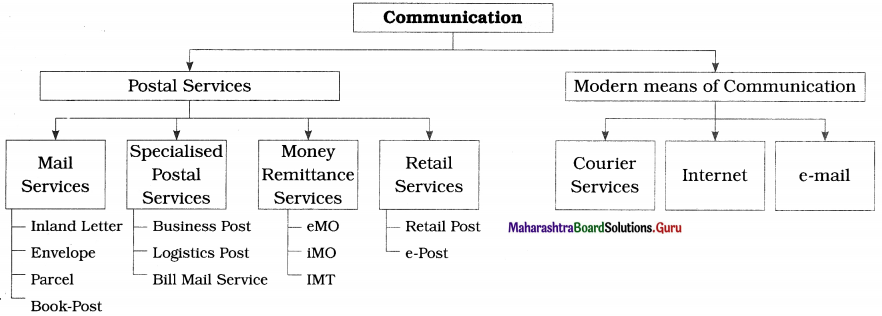
Maharashtra Board OCM 12th Commerce Solutions Chapter 4 Business Services 1
The different types of communication are explained below:
(I) Postal Services : The postal services in India are provided by the Department of Post which comes under Ministry of Communication and Information Technology. India has the largest postal network in the world with 1,54,965 post offices of which 1,49,067 are in the rural areas. The different types of postal services are explained below:
(1) Mail Services : The different types of mail services are described below:
(i) Inland letters : The inland letter is one of the cheapest means of conveying written message. It contains a blank sheet of paper of prescribed size and folding for writing messages. It is folded and sealed. Only names and addresses of the receiver and sender can be seen from outside. So, it ensures complete secrecy. Inland letters are used for transmission of messages within India only.

(ii) Envelopes : A postal envelope is a small size paper cover with postage stamps affixed on it having one side open to put in papers, written messages and enclosures like cheques, photos, resumes, etc. It ensures maximum secrecy. On the front outside space name and address of receiver are written and on the backside space name and address of sender are written.

(iii) Parcel : Parcels help to send small articles from one place to the other by post. Parcel post provides economical and reliable parcel delivery service. Parcels of specified weight and size can be sent at different places within the country as well as outside the country Anything except those items which are banned can be sent. Parcel can be insured by paying extra charges for insurance. In case of insured parcel is lost in transit post office pays insured amount.

(iv) Book post : Printed materials such as publications, newspapers, printed books, wedding, cards, greeting cards, periodicals, legal documents, etc. can be mailed as book post. The book post packets should simply be closed and should not be sealed. The words ‘Book Post’ should be written on the face of the cover.

(2) Specialised Postal Services : The following specialised postal services are provided by the post offices:
(i) Business Post : Business post arranges complete mailing services right from preparation of mail to delivery of mail. It is most suitable for small business and large companies. As per requirement, customers can select from a range of cost effective and professional mailing services ! which include printing, collating (comparing or examining), inserting, sealing and addressing. Indian post has established Business Post centres in major cities to handle business post consignment.

(ii) Logistics Post : Logistics post provides its business customers a cost-effective and timely solution that manages the entire value chain from collection to storage to transmission to distribution throughout the country.

(iii) Bill Mail Service : Communications in the nature of financial statements, bills, monthly account statements or any such other items of similar nature are sent by service providers to the customers by using bill mail service of post office. This service is used at least once in 90 days. Under this service, at a time minimum 5000 articles can be posted. The bill mail service does not include communication in the nature of letter mail or having personal communication or exclusive commercial publicity material. The mail is to be received at specified location provided. Bill mail is to be sorted pin code wide and bundled delivery post office wise.

(3) Money remittance services : The money remittance services are explained as follows:
(i) Electronic Money Transfer (eMO) : A money order is the most convenient method of remitting money to distant places. It is an order issued by one post office to another to pay a certain amount of money to a person specified therein. The person to whom money is to be paid is called ‘Payee’. Under this service of the post office, money is delivered at the house or the place of stay of the receiver.

(ii) Instant Money Order (iMO) : Instant Money Order (iMO) is an instant web based money transfer service by which minimum Rs 1000 and maximum Rs 50,000 can be transferred to distant places from designated iMO post offices. It is the instant on-line money transfer service which is safe, convenient, reliable and affordable. The money can be sent to close relative residing at distant place in India. It is simple, quick and economical to send and receive money.

(iii) International Money Transfer : International Money Transfer is the most convenient, quick and easy way of transferring personal remittances from foreign country to family members or other beneficiaries in India. Now this service is made available in all post offices in India by Department of Post, Government of India with the help of Western Union Financial Services. The remittances of money are permitted from around 195 countries to India.

(4) Retail services : The retail services are explained as follows:
(i) Retail post : Under retail post service, the department of post offers services to general public by making available some products and services of third party available in their areas through selected post offices. Under this, post offices offer a range of services including the collection of electricity bills, telephone bills, insurance premia, collection of taxes and fee for the government, etc. The post office also sells application form.

(ii) e-post : Recently, the department of posts has introduced e-post services, e-post service is service under which printed messages of customers are scanned and transmissed as email through internet. At the destination place or offices, these messages are printed, enveloped and delivered at the postal address. Thus, it is the combination of electronic transmission and physical delivery. Through e-post customers can send their messages to any address in India through network of more than 1,55,000 post offices. Corporate customers get special e-post rates and value additions.

(II) Modern means of communications : The modern means of communication are explained as follows:
(i) Courier Service : A courier service is a service that allows someone to send a parcel or consignment from one place to some other distant place. Usually, courier services are provided by a company and charge flat rates to the parties using the courier service regularly. Courier services differ from ordinary mail services in respect to speed, security, tracking, signature, delivery time, etc. Usually, premium courier services are more expensive as compared to ordinary mail services. DHL, DTDC, etc. are the examples of courier services.

(ii) Internet : The internet is one, in which users at one computer can, if it has permission, get information from other computer. It is a networking infrastructure. It connects millions of computers together globally, framing a network in which any computer can communicate with any other computer as long as they are both connected to internet. It is a network of networks that include of private, public, academic, business and government networks of local to global scope linked by a broad array of electronic, wireless and services such as world wide web, etc.

(iii) E-mail : E-mail stands for Electronic mail. E-mail refers to the transmission of information, from one computer terminal to another. It is a method of exchanging mail between the users of electronic devices. E-mail servers accept, forward, deliver and store messages. Users are not required to be online simultaneously. They are required to connect to a mail server briefly for as long as it takes to send or receive messages.

Question 6.
What is road transport. Explain its advantages and disadvantages.
Answer:
[A] Meaning : Road transport is the oldest mode of transport. It means and includes various means of transport which move on the surface of the earth without the use of railway tracks. Roads are the means which connect people and places on the surface of the land. It provides connectivity on any terrain (land) in comparison to other modes of transport. The different types of vehicles plying on the road include bullock carts, cycles, motor-cycles, autorickshaws, cars, tempos, trucks, buses, etc. They are called means of road transport.

[B] Advantages : The advantages of road transport are explained as follows:
(1) Cheaper mode of transport : As compared to other modes of transport, road transport is relatively cheaper mode of transport. Its operational cost is relatively low.

(2) Useful for perishable goods : Road transport is suitable and more useful to carry and deliver perishable goods such as milk, vegetable, fish, mutton, fruits, flowers, eggs, etc., over a short distance and that too at a faster speed.

(3) Flexible mode of transport : Road transport is flexible mode of transport because loading and unloading of goods are possible at any destination. Similarly, it is more flexible because of the choice of different routes, timings and types of vehicles.

(4) Door-to-Door service : Road transport facilitates door-to-door delivery of goods. It carries the goods and passengers directly to the godowns, factories and places of residence, i.e. user.

(5) Good reach : Roads constructed in plain areas and also in hilly areas can be used by different road vehicles such as trucks, tempos, motor cars and even carts driven by animals for carrying goods and passengers from one place to another. Wherever any other mode of transport cannot reach, road vehicles can easily reach and thus cover even hilly areas.

(6) Less capital investment : The cost of construction and maintenance of a road system is relatively less than that of railways.

Maharashtra Board OCM 12th Commerce Solutions Chapter 8 Marketing

[C] Disadvantages : The disadvantages of road transport are explained as follows:
(1) Not economical for long distance : In comparison to other modes of transport carrying capacity of road transport is very limited. High cost of fuel, tolls, etc. make the road transport uneconomical for long distance transportation.

(2) Not suitable for heavy and bulky goods : Road transport is not suitable for carrying heavy and bulky goods for any distance and involves high cost.

(3) Affected by adverse weather conditions : Road transport is affected more by adverse weather conditions such as fogs often greatly reducing visibility, heavy rain, floods, landslides, storm, etc.

(4) Accidents : The possibility of road accidents is frequent due to poor condition of roads and negligent drivers.

(5) Causes pollution : The vehicles plying on the road release smokes and gases. So, it creates air pollution which affect the health of the people.

OCM 12th Commerce Textbook Solutions Digest

12th OCM Chapter 3 Exercise Entrepreneurship Development Practical Problems Solutions Maharashtra Board

Entrepreneurship Development 12th OCM Chapter 3 Solutions Maharashtra Board

Balbharti Maharashtra State Board Organisation of Commerce and Management 12th Textbook Solutions Chapter 3 Entrepreneurship Development Textbook Exercise Questions and Answers.

Class 12 OCM Chapter 3 Exercise Solutions

1. (A) Select the correct options and rewrite the sentences

Question 1.
The word ‘entrepreneur’ is derived from the ……………… word ‘entreprende’.
(a) Japanese
(b) English
(c) French
Answer:
(c) French

Question 2.
‘Entreprende’ means to ………………..
(a) Undertake
(b) Enterprise
(c) Businessman
Answer:
(a) Undertake

Maharashtra Board OCM 12th Commerce Solutions Chapter 3 Entrepreneurship Development

Question 3.
Start Up India is an initiative of the ………………
(a) RBI
(b) Government of India
(c) World Bank
Answer:
(b) Government of India

Question 4.
………………. is the idea of bringing urban residents to rural areas, by empowering to local communities, both socially and economically.
(a) Agro tourism
(b) Medical tourism
(c) Entertainment
Answer:
(a) Agro tourism

1. (B) Match the pairs

Group A Group B
(A) Gap filling function (1) 2016
(B) Entrepreneur (2) Employment
(C) Agro tourism (3) Old methods of production
(D) Technology  (4) 2019
(E) Start up India (5) Self motivated
(6) Rural tourism
(7) Entrepreneurship
(8) Latest knowledge
(9) Necessity Based
(10) Medical tourism

Answer:

Group A Group B
(A) Gap filling function (7) Entrepreneurship
(B) Entrepreneur (5) Self motivated
(C) Agro tourism (6) Rural tourism
(D) Technology (8) Latest knowledge
(E) Start up India (1) 2016

1. (C) Give one word/phrase/term which can substitute each one of the following

Question 1.
An undertaking or adventure involving uncertainty and risk and requiring innovation.
Answer:
Enterprise

Question 2.
A function of creating something new for an economic activity.
Answer:
Innovation

Question 3.
A person who is an innovator who introduces new combinations of means of production.
Answer:
Entrepreneur

Question 4.
The process of enhancing entrepreneurial skills and knowledge through structured training and institution building programmes.
Answer:
Entrepreneur development

Question 5.
The process that motivates a person into action and induces him to continue the course of action for the achievement of goals.
Answer:
Motivation

Maharashtra Board OCM 12th Commerce Solutions Chapter 3 Entrepreneurship Development

Question 6.
An employee who has an authority and support of the organisation to implement his creative ideas.
Answer:
Intrapreneur

1. (D) State true or false

Question 1.
An entrepreneur should not be ready to work hard.
Answer:
False

Question 2.
Agritourism can support agricultural economy.
Answer:
True

Question 3.
Successful businessman takes calculated risk.
Answer:
True

Question 4.
Entrepreneurship is a full time job which requires dedication and hard work.
Answer:
True

Question 5.
Startup India is an initiative of the Government of France.
Answer:
False.

1. (E) Find the odd one

Question 1.
Communicator, Innovator, Self-starter, Inactive.
Answer:
Inactive

Question 2.
Trekking, Wildlife study, Horseback riding, Indoor games.
Answer:
Indoor games

Question 3.
Innovation, Lack of communication, Development of market, Determining the objectives.
Answer:
Lack of communication.

1. (F) Complete the sentences

Question 1.
An entrepreneur is a person who starts a …………………
Answer:
Business / Enterprise

Question 2.
‘Start-up’ India initiative was launched in ……………….
Answer:
2016.

1. (G) Select the correct option

(Innovation, Niche tourism, Agro tourism, Entrepreneurship)

Group A Group B
1. The idea of bringing Urban resident to agricultural farm —————
2. Agro tourism is a form of ————–
3. —————— To introduce new combination of products and features
4. —————– A full time job which requires, dedication and hard-work.

Answer:

Group A Group B
1. The idea of bringing Urban resident to agricultural farm Agro tourism
2. Agro tourism is a form of Niche tourism
3. Innovation To introduce new combination of products and features
4. Entrepreneurship. A full time job which requires, dedication and hard-work.

1. (H) Answer in one sentence

Question 1.
What is Agro tourism?
Answer:
Agro tourism is the idea to bring urban residents to rural areas for leisure travel and spending.

Question 2.
Who is ‘Entrepreneur’?
Answer:
Entrepreneur is a person who organises and operates a business or businesses, taking on greater than normal financial risks in order to do so.

Maharashtra Board OCM 12th Commerce Solutions Chapter 3 Entrepreneurship Development

Question 3.
Who described ‘Entrepreneurship’ as the founding of a private enterprise?
Answer:
John Sturt Mill, a famous economist, described ‘Entrepreneurship’ as founding of a private enterprise in 1948.

1. (I) Correct the underlined word and rewrite the sentences

Question 1.
The word ‘Entrepreneur’ comes from the German verb entreprendre, it means ‘to undertake’.
Answer:
French

Question 2.
Entrepreneurs try to make home a better place where the needs of consumers can be satisfied.
Answer:
market

Question 3.
The loan taken under stand-up India scheme is repayable in ten years.
Answer:
seven.

2. Explain the following term/concept

Question 1.
Entrepreneur.
Answer:
An entrepreneur is a person who starts a business and is willing to risk loss in order to make money. The entrepreneurs are passionate to invent, innovate, lead or pioneers with a disruptive product or technology. Entrepreneurs try to make market a better place where the needs of consumers can be satisfied. They have the courage to offer and share an idea or a product or a service with the world. A small businessman, founder of multi-billion company, freelancing carpenter are examples of entrepreneurs.

Question 2.
Agro tourism.
Answer:
Agro tourism is the idea of bringing urban residents to rural areas for leisure travel and spending. Agro tourism is a commercial enterprise at a working farm, ranch or agricultural plant conducted for the enjoyment of visitors that generates supplement income for the owner. Agrotourism activities include picking fruits, tending bees, milking cows and other educational pursuits. In short, Agro tourism provides the tourists a chance to reconnect with the land and provides a ‘hand on experience’ with local foods. Agro tourism can support agricultural economy when local producers can no longer complete economically.

Question 3.
Start-ups.
Answer:
A start-up is defined as an entity having its headquarter in India, which was opened less than 10 years ago and has an annual turnover of less than Rs 100 crores. It is an initiative of the Government of India, launched in 2016. It aims at building an ecosystem which will nurture start¬ups in the country. So that, sustainable economic growth and large scale employment opportunities can be generated. One of the objectives of the Indian Government is to make India a nation of job creator instead of job seekers.

Maharashtra Board OCM 12th Commerce Solutions Chapter 3 Entrepreneurship Development

Question 4.
Stand-ups.
Answer:
Stand-up India scheme is for financing SC/ST and/or women entrepreneurs. The objective of the stand-up India scheme is to facilitate bank loans between Rs 10 lakh and Rs 1 crore to at least one SC or ST borrower and at least one woman borrower per branch for setting up a greenfield enterprise. This enterprise maybe in manufacturing, services or the trading sector. In case of non-individual enterprise at least 51% of the share-holding and controlling stake should be held by either an SC/ST or woman, above 18 years of age.

Question 5.
Intrapreneur.
Answer:
Intrapreneurship is the entrepreneurship within an existing organisation. An intrapreneur is an employee who has the authority and support of his company/employer to implement his own innovative and creative ideas. His idea or products may or may not earn immediate revenue for the company. But the employee keeps receiving his salary. The company provides the infrastructure. Many large organisations have dedicated Research and Development Departments where employees are encouraged to use their creative abilities. These ideas or innovations may earn handsome profit to an organisation. So Intrapreneur is the entrepreneurship within an organisation.

3. Study the following case /situation and express your opinion

Mr. Soham is a young MBA degree holder, Mr. Navin is B.Com graduate. Mr. Soham is willing to start dairy farm at his village, Mr. Navin is willing to work as cashier in Private Company.

(i) Find out dream of Soham and Navin.
(ii) State anyone feature of Entrepreneur.
(iii) To become successful entrepreneur, which qualities Mr. Soham should have?
Answer:
(i) Dream of Soham is to become ; entrepreneur and dream of Navin is to take up job in a private company and get a fixed income as salary.
(ii) Entrepreneur is a person who is willing to take risk in order to earn money and start a business.
(iii) To become a successful entrepreneur Mr. Soham should have qualities like innovator, creator, reactive and risk bearer.

4. Answer in brief

Question 1.
Define Entrepreneur. Explain functions of entrepreneur.
Answer:
[A] Definition : According to Webster dictionary, “An entrepreneur is a person who starts a business and is willing to risk loss in order to make money.” The entrepreneurs are passionate to innovate, lend, invent or pioneer with a disruptive product or technology. A small businessman, a plumber or a founder of huge company are entrepreneurs.

[B] Functions : The functions of an entrepreneur are:
(1) Innovation : Usually, an entrepreneur has an innovative mind. He introduces new combination of means of production. He introduces something new or something different that would give his business a competitive advantage. Innovation sometimes involves problem solving and entrepreneur gets pleasure by using his talents to solve those problems.

(2) Determination of objectives : An entrepreneur is required to decide the aims and objectives of the business enterprise he intends to establish. He has to change those aims and ; objectives as per changing conditions or accept those which are beneficial to the enterprise as per the market situation.

(3) Development of market: An entrepreneur has to find new, different and innovative ways to market his products and services. As the markets are developing constantly, he has to conduct surveys, research to understand customer’s demand.

(4) New technology : Entrepreneur has to install new, advanced and efficient technology, new machinery, new and scientific methods of production to save overall cost and to improve the methods of production.

(5) Good relations : Prosperity, growth and development of enterprise mostly depend on the cordial and efficient relations of the superiors, subordinates and all employees. In this respect, co-ordination among the employees plays a significant role to make business enterprise successful.

(6) Organising funds : Finance is required to meet working capital and fixed capital needs of business. The entrepreneur has to raise adequate financial resources to keep enterprise in living condition. For this purpose, he has to keep good relation with the existing as well as potential investors.

(7) Taking decisions : Timely, correct and wise decisions are most important to run a successful business. An entrepreneur has to evaluate pros and cons of every business decision.

Maharashtra Board OCM 12th Commerce Solutions Chapter 3 Entrepreneurship Development

Question 2.
Define entrepreneur. Explain the qualities of successful entrepreneur.
Answer:
[A] Definition : According to Webster dictionary, “An entrepreneur is a person who starts a business and is willing to risk loss in order to make money.” The entrepreneurs are passionate to innovate, lend, invent or pioneer with a disruptive product or technology. A small businessman, a plumber or a founder of huge company are entrepreneurs.

[B] The qualities of a successful entrepreneur:
(1) Discipline : An entrepreneur has comprehensive strategies and tactics to accomplish the organisational goal. Successful entrepreneur is disciplined enough to take steps every day towards the attainment of his objectives. They eliminate any hindrance or distractions.

(2) Confidence : An entrepreneur is confident with the knowledge that he will make his businesses succeed. He shows the confidence in everything he does.

(3) Open-minded : An entrepreneur has the ability to look at everything around him and realises that every event and situation is a business opportunity. New ideas are constantly being generated about potential new business.

(4) Self starter : An entrepreneur is proactive, not waiting for someone to give him permission. Everything which needs to be done, he should start in himself. So, he sets parameters for the project.

(5) Competitive : An entrepreneur knows that he can do a job better than others. He needs to be competitive to win every game of the business.

(6) Creativity : An entrepreneur often comes up with solutions which are the synthesis of other item. He makes connections between two unrelated events or situations.

(7) Determination : An entrepreneur is determined to make all of their endeavours succeed, so will try again until it does. He sees opportunity for success in defeat.

(8) Strong communication skills : The entrepreneur has strong communication skill to sell the product and to motivate employees. He has to highlight benefits of situation and coach others to be successful.

(9) Strong work ethics : An entrepreneur mind is constantly on his work place to ensure that an outcome meets his expectations.

(10) Passion : Passion is the most important that of a successful entrepreneur. He genuinely loves his work because there is a joy that his business gives which goes beyond the money. He should always research and read to make his business grow and be better.

5. Justify the following statements

Question 1.
Entrepreneurship is the best source for self-employment.
Answer:
(1) Innovation : Entrepreneur need to be innovative. The essence of entrepreneurship is innovation. Innovation may take place in the following forms viz., the introduction of a new product in the market, the installation of new production technology, entry of specific product, the discovery of a new source of raw material, etc. In view of changing taste, preferences, etc., of the consumers, from time to time, entrepreneur undertakes research and development to manufacture products to satisfy the consumers’ needs.

(2) Economic activity: In order to satisfy human wants and as well as in exchange earn a better livelihood, an entrepreneur manufactures new products or modify the existing products as per the needs, preferences and demands of the consumers. For this purpose, he undertakes a systematic plan activity by using his skills, knowledge and experience. For this reason, entrepreneurship is considered as an economic activity.

(3) Creative activity : Innovation is a process of creating something new and creativity is most important for innovation. Therefore, innovation should be strongly supported by creativity, Innovation and creativity are supplement to each other. Introducing creativity in the production process is a challenging task before the entrepreneur. Hence, creativity is an essential element of entrepreneurship.

(4) Risk-bearing : An entrepreneur has to undertake many risks including fall in prices, changes in fashions, earthquake, etc. All these risks cannot be insured with insurance companies. A risk which cannot be insured against and measured is called uncertainty. Entrepreneur buys factors of production at certain prices to combine their contributions into the products and then sells those products at uncertain prices in future. Thus, entrepreneur is a risk-bearing agent of production.

Question 2.
Successful businessman takes calculated risk.
Answer:
[A] Definition : According to Webster dictionary, “An entrepreneur is a person who starts a business and is willing to risk loss in order to make money.” The entrepreneurs are passionate to innovate, lend, invent or pioneer with a disruptive product or technology. A small businessman, a plumber or a founder of huge company are entrepreneurs.

[B] Functions : The functions of an entrepreneur are:
(1) Innovation : Usually, an entrepreneur has an innovative mind. He introduces new combination of means of production. He introduces something new or something different that would give his business a competitive advantage. Innovation sometimes involves problem solving and entrepreneur gets pleasure by using his talents to solve those problems.

(2) Determination of objectives : An entrepreneur is required to decide the aims and objectives of the business enterprise he intends to establish. He has to change those aims and ; objectives as per changing conditions or accept those which are beneficial to the enterprise as per the market situation.

(3) Development of market: An entrepreneur has to find new, different and innovative ways to market his products and services. As the markets are developing constantly, he has to conduct surveys, research to understand customer’s demand.

(4) New technology : Entrepreneur has to install new, advanced and efficient technology, new machinery, new and scientific methods of production to save overall cost and to improve the methods of production.

(5) Good relations : Prosperity, growth and development of enterprise mostly depend on the cordial and efficient relations of the superiors, subordinates and all employees. In this respect, co-ordination among the employees plays a significant role to make business enterprise successful.

(6) Organising funds : Finance is required to meet working capital and fixed capital needs of business. The entrepreneur has to raise adequate financial resources to keep enterprise in living condition. For this purpose, he has to keep good relation with the existing as well as potential investors.

(7) Taking decisions : Timely, correct and wise decisions are most important to run a successful business. An entrepreneur has to evaluate pros and cons of every business decision.

Maharashtra Board OCM 12th Commerce Solutions Chapter 3 Entrepreneurship Development

Question 3.
Entrepreneur must be a good communicator.
Answer:
The following are the characteristics of entrepreneurship development:
(1) Innovation : Entrepreneur need to be innovative. The essence of entrepreneurship is innovation. Innovation may take place in the following forms viz., the introduction of a new product in the market, the installation of new production technology, entry of specific product, the discovery of a new source of raw material, etc. In view of changing taste, preferences, etc., of the consumers, from time to time, entrepreneur undertakes research and development to manufacture products to satisfy the consumers’ needs.

(2) Economic activity: In order to satisfy human wants and as well as in exchange earn a better livelihood, an entrepreneur manufactures new products or modify the existing products as per the needs, preferences and demands of the consumers. For this purpose, he undertakes a systematic plan activity by using his skills, knowledge and experience. For this reason, entrepreneurship is considered as an economic activity.

(3) Organisation building : Entrepreneurship is an activity of organising various factors of production and various resources such as financial, physical and human resources. By considering place utility, time utility, form utility, etc., entrepreneur has to assemble different factors j of production and resources under one roof for producing new products.

(4) Creative activity : Innovation is a process of creating something new and creativity is most important for innovation. Therefore, innovation should be strongly supported by creativity, Innovation and creativity are supplement to each other. Introducing creativity in the production process is a challenging task before the entrepreneur. Hence, creativity is an essential element of entrepreneurship.

(5) Managerial skill and leadership : The entrepreneur who has strong passion of doing or creating something new rather than just to earn profit will become a successful entrepreneur. Managerial skills and leadership are the most important features of successful entrepreneur. Other skills are not considered so important. Entrepreneur must be a good leader and manager of the groups working under him.

(6) Skilful management : The efficient and skilful management of the organisation is an important quality of entrepreneurship. With the help of professional management and skilled managers, entrepreneurship becomes easy and successful activity. The success of any entrepreneurship depends on its skilful management.

(7) Risk-bearing : An entrepreneur has to undertake many risks including fall in prices, changes in fashions, earthquake, etc. All these risks cannot be insured with insurance companies. A risk which cannot be insured against and measured is called uncertainty. Entrepreneur buys factors of production at certain prices to combine their contributions into the products and then sells those products at uncertain prices in future. Thus, entrepreneur is a risk-bearing agent of production.

(8) Gap filling function : Gap filling is considered as the most important feature of entrepreneur. It is the job of entrepreneur to find the gap and fill it or make up the deficiencies which always exist in the knowledge about the production function. Entrepreneur must have all the solutions of the problems.

Question 4.
An entrepreneur must be an innovator.
Answer:
Innovation is a dynamic change brought by entrepreneur by bringing new combinations of factors of production. Innovation by entrepreneur is must for development of an organisation. Entrepreneur can be an innovator in many ways. They are:
(1) Introduction of a new product: Entrepreneur through his dynamic skill and intelligence create new products by fulfilling innovation to commercialisation by embedding it in an environment where it did not exist previously.

(2) Introduction of a new method of production : By introducing new and latest technology an entrepreneur brings new life and energy in methods of production. Introduction of new technology, new machinery, scientific methods of production will save money and time of the organisation.

(3) Opening of a new market : An innovative idea with new products. It opens a new market which are not existing previously.

(4) Carrying out new forms of organisation for industry : An innovative entrepreneur is the one who discovers new methods and new materials. He utilises invention and discoveries in order to make new combinations. Thus, entrepreneur must be an innovator.

Question 5.
With creativity, farmers can expand their Agro tourism Business.
Answer:
With creativity, farmers can expand their Agro tourism business through recreation, fun, entertaining activities. The valuable activities which farmer can do creatively are:
(1) Outdoor recreation : Farmer can add value and can expand their agro tourism business by outdoor recreation like trekking, fishing, hunting, wild life study, horse back riding, etc. All such activities are the point of attraction for a tourist and this can be enjoyed with family and friends too.

(2) Educational experiences : Farmers can also be more creative in farming tours, rice plantation, cooking classes on chulha. All such activities help customer to get hands on experience which they enjoy with adding educational values.

(3) Entertainment : Entertainment through harvest festivals like Hurda Party’ in Maharashtra, local dances, folk songs are recreation also main attraction for a customer for agro tourism. Entertaining activities such as contest, adult and children classes, games, etc. can be arranged. This innovative touch helps farmer to expand his business.

(4) Hospitality services : Hospitality services like farm stays, guided forms makes customer more happy. Farmer can add value to guest experience by offering them refreshment, fresh fruits, juice, fresh food, etc.

Happy customer will definitely returns and also spread good word of mouth to their family and friends. Thus, with creativity, farmers can expand their agro tourism business.

6. Attempt the following

Question 1.
Explain the characteristics Entrepreneurship Development.
Answer:
The following are the characteristics of entrepreneurship development:
(1) Innovation : Entrepreneur need to be innovative. The essence of entrepreneurship is innovation. Innovation may take place in the following forms viz., the introduction of a new product in the market, the installation of new production technology, entry of specific product, the discovery of a new source of raw material, etc. In view of changing taste, preferences, etc., of the consumers, from time to time, entrepreneur undertakes research and development to manufacture products to satisfy the consumers’ needs.

(2) Economic activity: In order to satisfy human wants and as well as in exchange earn a better livelihood, an entrepreneur manufactures new products or modify the existing products as per the needs, preferences and demands of the consumers. For this purpose, he undertakes a systematic plan activity by using his skills, knowledge and experience. For this reason, entrepreneurship is considered as an economic activity.

(3) Organisation building : Entrepreneurship is an activity of organising various factors of production and various resources such as financial, physical and human resources. By considering place utility, time utility, form utility,etc., entrepreneur has to assemble different factors j of production and resources under one roof for producing new products.

Maharashtra Board OCM 12th Commerce Solutions Chapter 3 Entrepreneurship Development

(4) Creative activity : Innovation is a process of creating something new and creativity is most important for innovation. Therefore, innovation should be strongly supported by creativity, Innovation and creativity are supplement to each other. Introducing creativity in the production process is a challenging task before the entrepreneur. Hence, creativity is an essential element of entrepreneurship.

(5) Managerial skill and leadership : The entrepreneur who has strong passion of doing or creating something new rather than just to earn profit will become a successful entrepreneur. Managerial skills and leadership are the most important features of successful entrepreneur. Other skills are not considered so important. Entrepreneur must be a good leader and manager of the groups working under him.

(6) Skilful management : The efficient and skilful management of the organisation is an important quality of entrepreneurship. With the help of professional management and skilled managers, entrepreneurship becomes easy and successful activity. The success of any entrepreneurship depends on its skilful management.

(7) Risk-bearing : An entrepreneur has to undertake many risks including fall in prices, changes in fashions, earthquake, etc. All these risks cannot be insured with insurance companies. A risk which cannot be insured against and measured is called uncertainty. Entrepreneur buys factors of production at certain prices to combine their contributions into the products and then sells those products at uncertain prices in future. Thus, entrepreneur is a risk-bearing agent of production.

(8) Gap filling function : Gap filling is considered as the most important feature of entrepreneur. It is the job of entrepreneur to find the gap and fill it or make up the deficiencies which always exist in the knowledge about the production function. Entrepreneur must have all the solutions of the problems.

Question 2.
What is Entrepreneurship Development Programmes (EDP)?
Answer:
An entrepreneurship development
programme has been defined as “a programme designed to help a person in strengthening his entrepreneurial motive and in acquiring skills and capabilities necessary for playing his entrepreneurial role efficiently”.

EDP was first introduced in Gujarat in 1970 and was sponsored by the Gujarat Industrial Investment Corporation. EDP is basically a device through which people with entrepreneurial talents are identified, motivated to take up new industrial venture and guided in all aspects of starting a venture or an enterprise.

The following are the main objectives of EDP:
(1) Paster entreprenurial growth : The main objective is to increase the rate of all round entrepreneurial growth through training and educating them to develop the capability, talent and skills of existing entrepreneur.

(2) Optimum use of available resources : Another important objective is to use available resources to optimum level which result into minimisation of wastages and reduction in the overall cost of production. It also saves the invaluable resources for the future generation.

(3) Development of backward regions and improve economic status of socially disadvantage group : Its main objective is to establish different types of industries and business enterprise in the backward regions of the country. This leads to more employment opportunities and more income and savings of the people in backward group. By providing employment and other benefits to socially disadvantaged groups, EDP helps to improve their economic status.

(4) Generation of Employment opportunities : One of the important objectives of EDP is to generate employment opportunities for jobless people in the country by developing industries and business for them.

(5) Widening base for small and medium industries : The EDP helps to create, develop and widen the base for small and medium industries by strengthening them and create more and more entrepreneurs in the country. It helps in making country a job creator and not job seeker.

7. Answer the following

Question 1.
Define entrepreneur. Explain characteristics of entrepreneur.
Answer:
[A] Definition : According to Webster dictionary, “An entrepreneur is a person who starts a business and is willing to risk loss in order to make money.” The entrepreneurs are passionate to innovate, lend, invent or pioneer with a disruptive product or technology. A small businessman, a plumber or a founder of huge company are entrepreneurs.

[B] Characteristics : The characteristics of entrepreneur are as follows:
(1) Intellectual capabilities : An entrepreneur is a creative thinker. He always thinks more creatively and better than others. He always give innovative ideas which is the sign of his intellectual capabilities. He has ability to analyse any situation and take proper decision.

(2) Future vision : The entrepreneurs have the ability of foreseeing the future market conditions. He can take appropriate decision by considering recent market situations and changes in market conditions. He must have knowledge of external business environment. This enables them to take timely actions.

(3) Hard work : An entrepreneur is ready to work hard. Hard work is necessary in any type of venture or business activity to make it more successful. He is required to work more tediously, sincerely and seriously for long terms.

(4) Technical knowledge : The entrepreneur should have advance technical knowledge about the products and service, plans of production, etc. Entrepreneur should also update his technical knowledge from time to time to understand latest changes take place in technology.

(5) Communication skills : An entrepreneur needs to communicate effectively with different people like customers, suppliers, creditors, employees, etc. from time to time. He should have good communication skill and command over language he speaks, to be able to express his ideas and strategies effectively. Good communication skills mean proper understanding between sender and the receiver of the message.

(6) Highly optimistic : He should have positive thinking and positive approach in all the activities he undertakes. He is always hopeful and confident about the market situations even in failure or difficult times. It helps him to take the business out of difficulties and make it successful.

(7) Risk-bearing capacity : This is one of the main characteristics of an entrepreneur. He should be calculative in taking risk. He should be prepared to face challenges and look for opportunities in every adverse situation of business.

(8) Self confidence : He should be self confident to achieve his organisational goals. He I should always keep himself confident and motivated to face various obstacles and come out victorious every time in every challenge he faces.

Maharashtra Board OCM 12th Commerce Solutions Chapter 3 Entrepreneurship Development

Question 2.
Define entrepreneur. Explain its functions.
Answer:
[A] Definition : According to Webster dictionary, “An entrepreneur is a person who starts a business and is willing to risk loss in order to make money.” The entrepreneurs are passionate to innovate, lend, invent or pioneer with a disruptive product or technology. A small businessman, a plumber or a founder of huge company are entrepreneurs.

[B] Functions : The functions of an entrepreneur are:
(1) Innovation : Usually, an entrepreneur has an innovative mind. He introduces new combination of means of production. He introduces something new or something different that would give his business a competitive advantage. Innovation sometimes involves problem solving and entrepreneur gets pleasure by using his talents to solve those problems.

(2) Determination of objectives : An entrepreneur is required to decide the aims and objectives of the business enterprise he intends to establish. He has to change those aims and ; objectives as per changing conditions or accept those which are beneficial to the enterprise as per the market situation.

(3) Development of market: An entrepreneur has to find new, different and innovative ways to market his products and services. As the markets are developing constantly, he has to conduct surveys, research to understand customer’s demand.

(4) New technology : Entrepreneur has to install new, advanced and efficient technology, new machinery, new and scientific methods of production to save overall cost and to improve the methods of production.

(5) Good relations : Prosperity, growth and development of enterprise mostly depend on the cordial and efficient relations of the superiors, subordinates and all employees. In this respect, co-ordination among the employees plays a significant role to make business enterprise successful.

(6) Organising funds : Finance is required to meet working capital and fixed capital needs of business. The entrepreneur has to raise adequate financial resources to keep enterprise in living condition. For this purpose, he has to keep good relation with the existing as well as potential investors.

(7) Taking decisions : Timely, correct and wise decisions are most important to run a successful business. An entrepreneur has to evaluate pros and cons of every business decision.

OCM 12th Commerce Textbook Solutions Digest

12th OCM Chapter 2 Exercise Functions of Management Practical Problems Solutions Maharashtra Board

Functions of Management 12th OCM Chapter 2 Solutions Maharashtra Board

Balbharti Maharashtra State Board Organisation of Commerce and Management 12th Textbook Solutions Chapter 2 Functions of Management Textbook Exercise Questions and Answers.

Class 12 OCM Chapter 2 Exercise Solutions

1. (A) Select the correct options and rewrite the sentences

Question 1.
The functions of management start with ……………… function.
(a) organising
(b) planning
(c) co-ordinating
Answer:
planning

Question 2.
The functions of management end with ………………
(a) directing
(b) staffing
(c) controlling
Answer:
controlling

Maharashtra Board OCM 12th Commerce Solutions Chapter 2 Functions of Management

Question 3.
……………. sets out standards for controlling.
(a) Staffing
(b) Planning
(c) Co-ordinating
Answer:
Planning

Question 4.
Organizational function is important for execution of the plans which have been prepared by ……………. management.
(a) top level
(b) middle level
(c) lower level
Answer:
top level

Question 5.
……………… is the function which supports to activate the plans with the help of employees.
(a) Staffing
(b) Directing
(c) Co-ordinating
Answer:
Directing

Question 6.
………………. is the function of execution according to the plan and the organisational structure.
(a) Controlling
(b) Directing
(c) Staffing
Answer:
Directing

Question 7.
………………. arranges the work in such a way that minimum conflicts are raised.
(a) Co-ordinating
(b) Organizing
(c) Controlling
Answer:
Co-ordination.

1. (B) Match the pairs

Question 1.

Group A Group B
(A) Planning (1) It Is the process of instructing, guiding, communicating and motivating.
(B) Organizing (2) It is an integration and synchronization of the efforts of group.
(C) Staffing (3) Deciding In advance what to do, how to do, when to do and who Is to do it.
(D) Directing (4) Management is what manager does.
(E) Co-ordlnating (5) To focus on the role of manager.
(6) Decides the ways and means to achieve what has been planned.
(7) It Is the process of comparing the actual performance with the pre-determined standard performance.
(8) It Is a set of principles.
(9) It is the process of recruiting, selecting, placing and remunerating.
(10) To manage is to forecast and plan.

Answer:

Group A Group B
(A) Planning (3) Deciding In advance what to do, how to do, when to do and who Is to do it.
(B) Organizing (6) Decides the ways and means to achieve what has been planned.
(C) Staffing (9) It is the process of recruiting, selecting, placing and remunerating.
(D) Directing (1) It Is the process of instructing, guiding, communicating and motivating.
(E) Co-ordlnating (2) It is an integration and synchronization of the efforts of group.

1. (C) Give one word/phrase/term for the following statements

Question 1.
The right person at the job with right pay.
Answer:
Staffing

Question 2.
A person who shows the correct path as well as guides employees in solving the problems.
Answer:
Director

Question 3.
First function of management.
Answer:
Planning

Maharashtra Board OCM 12th Commerce Solutions Chapter 2 Functions of Management

Question 4.
Last function of management.
Answer:
Controlling

Question 5.
It is an intellectual process of logical thinking and rational decision-making.
Answer:
Planning

Question 6.
The term that is used to denote the structure.
Answer:
Organisation

Question 7.
It is the process of attracting, recruiting, selecting, placing, appraising and remunerating the people.
Answer:
Staffing

Question 8.
The process that leads the employees towards the accomplishment of organisational goals.
Answer:
Directing

Question 9.
It increases the team spirit of work place.
Answer:
Co-ordinating

Question 10.
It is the process of comparing the actual performance with the predetermined standard performance.
Answer:
Controlling.

1. (D) State whether the following statements are True or False

Question 1.
Every function of management is not based on planning.
Answer:
False

Question 2.
Specialization in activities leads to increase in organisational efficiency.
Answer:
True

Question 3.
Qualified, efficient and skilled work force is always an asset of the organization.
Answer:
True

Question 4.
Cooperation is not necessary for smooth flow of organisational activities.
Answer:
False

Question 5.
Co-ordination motivates the employees to take initiative while completing their assigned task.
Answer:
True

Question 6.
Standards are not set for every performance in controlling function.
Answer:
False

1. (E) Find the odd one

Question 1.
Planning, Organizing, Staffing, Writing.
Answer:
Writing

Question 2.
Selecting, Training, Co-ordinating, Placing
Answer:
Co-ordinating.

Maharashtra Board OCM 12th Commerce Solutions Chapter 2 Functions of Management

1. (F) Complete the sentences

Question 1.
The tasks of getting the things done by others is known as ……………..
Answer:
Management

Question 2.
The functions of manager start with …………………
Answer:
Planning

Question 3.
The …………….. function of management initiates action
Answer:
Directing

Question 4.
Recruitments are done under ……………….. function.
Answer:
Staffing

Question 5.
………………. is the fundamental function of management.
Answer:
Planning

Question 6.
………………. integrates departmental activities for achieving common goal of the organisation.
Answer:
Co-ordinating

Question 7.
……………… is the last function of management.
Answer:
Controlling

1. (G) Select the correct option from the bracket

Question 1.
Planning is a detailed programme of (present/ future/past) course of action.
Answer:
future

Question 2.
Directing is a responsibility of (manager/ workers/people) at all levels.
Answer:
manager

Question 3.
Qualified, efficient and skilled workforce is always an (liabilities/assets/expenses) of the organization.
Answer:
assets.

1. (H) Answer in one sentence

Question 1.
What is management?
Answer:
The tasks of getting the things done by others to achieve organisational goal is called management.

Question 2.
What is planning?
Answer:
Planning means deciding in advance what to do when to do, how to do, where to do it and who is to do it.

Question 3.
What is staffing?
Answer:
The process of attracting, recruiting, selecting, placing, appraising, remunerating, developing and retaining the best workforce is called staffing.

Question 4.
What is directing?
Answer:
Directing is the process of instructing, guiding, communicating, inspiring, motivating and supervising the employees to achieve the pre-determined goals of the organisation.

Question 5.
What is controlling ?
Answer:
Controlling is a function of comparing the actual performance with the predetermined standard performance to measure deviation if any, identifying causes of deviation and suggest corrective measures.

1. (I) Correct the underlined word and rewrite the following sentences

Question 1.
Factors of business environment are always fixed.
Answer:
Factors of business environment are always changing.

Question 2.
Staffing is concerned with machines.
Answer:
Staffing is concerned with humans.

Question 3.
Directing is a function of comparing the actual performance with the pre-determined performance.
Answer:
Controlling is a function of comparing the actual performance with the pre-determined performance.

Question 4.
Co-ordination helps to maximise the wastage of resources and controls the cost of work.
Answer:
Co-ordination helps to minimise the wastage of resources and controls the cost of work.

Question 5.
Controlling measures are rigid to some extent.
Answer:
Controlling measures are flexible to some extent.

Maharashtra Board OCM 12th Commerce Solutions Chapter 2 Functions of Management

1. (J) Arrange in proper order

Question 1.
Controlling, Organizing, Planning.
Answer:
Planning, Organising, Controlling.

Question 2.
Directing, Co-ordinating, Staffing.
Answer:
Staffing, Directing, Co-ordinating.

2. Explain the following terms/concepts

Question 1.
Management
Answer:
The task of getting the work done by others to achieve organisational goal is called management. According to L. A. Allen, ‘Management is what manager does. Management is a set of principles which relate to the various functions such as planning, organising, staffing, directing, co-ordinating, controlling, etc. which are helpful in achieving organisational goals.

Question 2.
Planning
Answer:
Planning is the basic function of management. Planning is an intellectual process of logical thinking and rational decision-making. It includes deciding the things to be done in advance. In short, planning is a detailed programme of future course of action. Proper planning and its implementation is key to achieve the objectives of an organisation.

Question 3.
Organising
Answer:
Organising is the process of identifying, bringing the required resources together such as men, money, material, machines and method and arranging them in proper manner to achieve the goals of an organisation. It is prepared by the top level management. Organising function decides the ways and means to achieve what has been planned. Organising is more important in executing the plan.

Question 4.
Staffing
Answer:
Staffing is the function of execution according to plan and organisational structure. It is the process of attracting, recruiting, training, developing, appraising, remunerating, developing and retaining the best workforce. Right person at right job with right pay is the basic principle of staffing. This function is concerned with managing humans and not material.

Question 5.
Directing
Answer:
Directing is the process of instructing, guiding, communicating, inspiring, motivating and supervising the employees to achieve pre-determined goals of an organisation. Director shows correct path as well as guides the employees in solving the problems wherever necessary. Directing is the soul of management function.

3. Study the following case/situation and express your opinion

Question 1.
Mr. Ram, an emerging entrepreneur has designed a structure of his business organization by taking into consideration the required resources such as land, money, machinery, workforce, etc. for his new business. He appointed Mr. Shyam as a manager. Mr. Ram has assigned the responsibilities such as recruitment, selection, training and development and to determine the remuneration of the employees to Mr. Shyam. Mr, Ram. has also appointed Mr. Shubham to supervise the work done by the employees according to the standards given to the employees, Mr. Shubham has also to suggest the remedies to the employees wherever necessary. On this context, find out the management functions performed by
(i) Mr. Ram
(ii) Mr. Shyam
(iii) Mr. Shubham
Answer:
(i) Mr. Ram performs the function of planning and organising. He is an emerging entrepreneur and plans the business structure and organises different resources.

(ii) Mr Shyam is performing the function of staffing as his main duty is to recruit, select, train and develop the employees and to decide their remuneration accordingly.

(iii) Mr. Subham is performing the function of controlling. He compares actual performances of employees with standard performance given. He discovers causes of deviations and suggests remedies to overcome deviations.

Question 2.
In XYZ Company, Mr. Lele gives instructions to the employees working under him, provide guidance and motivates them for their best performance. On the other hand, Mr. Sawed takes effort to harmonize the work done by the employees of different departments while achieving organisational goal. Mr. Desai is looking after the arrangement of required resources the business organization.
Mention the name of employee engaged in following functions :
(i) Organisation
(ii) Direction
(iii) Coordination
Answer:
(i) Mr Desai is engaged in the organising function as he is looking after arrangement of required resources for the business organisation.
(ii) Mr. Lele is engaged in the function of directing as he gives instructions to the employees working under him, provides guidance and motivates them for their best performance.
(iii) Mr. Sayyed is engaged in the function of co-ordination as he takes effort to harmonize the work done by the employees of different departments.

4. Distinguish between

Question 1.
Planning and Organising
Answer:

Planning Organising
1. Meaning Planning is a management function that decides in advance what to do, how to do, when to do, where to do and who is to do it. Organising refers to the process of putting together various resources and activities of the organisation into a system.
2. Objective The objective of planning is to set the goals and choose the means to achieve those goals. The main objective of organising is to identity and bring together all the resources.
3. Area of function Planning involves setting objectives, identifying alternative courses of actions and selecting the best plan for the organisation. Organising involves identifying the activities and grouping of relative activities of the organisation.
4. Order Planning is the first and foremost function of management. It precedes every other function. In organising function, internal as well as external factors are considered to make arrangement of resources.
5. Nature Planning is continuous in nature. It is related with those resources which are required for achieving the targets. Organising is related with all the available resources as they need to be properly arranged.
6. Levels of management Top management is responsible for preparing planning for the activities of the entire organisation. Usually, the function of organising is undertaken by the top level management and middle level management.

Question 2.
Organising and Staffing
Answer:

Organising Staffing
1. Meaning Organising refers to the process of putting together various resources and activities of the organisation into a system. Staffing is a process of recruitment through which competent employees are selected, properly trained, effectively developed and suitably rewarded.
2. Objective The main objective of organising is to identify and bring together all the resources. The main objective of the staffing is to obtain the most competent and efficient staff to improve the overall performance.
3. Area of function Organising involves identifying the activities and grouping of relative activities of the organisation. Staffing involves selection, recruitment, training, developing, promotion, transfer, etc. of employees.
4. Factors In organising function, internal as well as external factors are considered to make arrangement of resources. In staffing function, mostly internal factors such as human factor, finance, work load, etc. are considered.
5. Resources Organising is related with all the available resources as they need to be properly arranged. Staffing is related with human resources only.
6. Levels of management Usually, the function of organising is undertaken by the top level management and middle level management. Usually, the function of staffing is undertaken by the middle level management.

Question 3.
Staffing and Directing
Answer:

Staffing Directing
1. Meaning Staffing is a process of recruitment through which competent employees are selected, properly placed and trained, effectively developed and suitably rewarded. Directing means instructing, guiding, inspiring and motivating the subordinate employees so that their efforts result in the achievement of goals.
2. Objective The main objective of the staffing is to obtain the most competent and efficient people to improve the overall performance. The main objective of directing is to ensure that the employees at different levels accomplish their tasks according to plans.
3. Area of function Staffing involves recruitment, selection, training, promotion, development, transfer, etc. of employees. Directing involves guiding, instructing, inspiring, motivating and communicating with the subordinates.
4. Order Staffing function follows organising as human resources are required in an organisation. Directing function follows organising and staffing as direction is needed to guide and inspire the employees.
5. Targets Targets of staffing include allocation of human resources to achieve better results. Targets of direction include giving guidance and inspiration to employees to achieve better results.
6. Outcome Staffing function helps to select right persons for right jobs at right time. Directing function helps to maintain discipline among the staff.

Question 4.
Directing and Controlling

Maharashtra Board OCM 12th Commerce Solutions Chapter 2 Functions of Management

Question 5.
Co-ordination and Controlling
Answer:

Co-ordination Controlling
1. Meaning Co-ordination refers to the process of developing harmony and integration of different activities to achieve common organisational goals. Controlling is a managerial function that measures deviation of actual results from the standards set and takes necessary corrective actions.
2. Objective The main objective of co-ordination is to ensure unify of efforts of the employees and smooth functioning of the organisation. The main objective of controlling is to ensure that goals or targets must be accomplished as per plan.
3. Area of function Co-ordination involves efforts of top level, middle level and lower level management. Controlling involves fixation of standard, measurement of actual performance and finding deviations taking corrective actions to improve performance.
4. Factors In co-ordinating function only internal factors are considered to create unity of action. In controlling function internal as well as external factors are taken care for taking corrective actions.
5. Resources Co-ordination is related with human resources only. Controlling is related with all the resources as it helps to achieve the given targets.
6. Levels of management All levels of management are responsible for the co-ordination function to achieve given targets. Top level management and middle level managements are responsible for controlling of organisational activities.

Question 6.
Planning and Controlling
Answer:

Planning Controlling
1. Meaning Planning is a management function that decides in advance what to do, how to do, when to do, where to do and who is to do it. Controlling is a managerial function that measures deviation of actual performance from the standards set and takes corrective actions.
2. Objective The main objective of planning is to set the goals and choose the means to achieve those goals. The main objective of controlling is to ensure that goals or targets must be accomplished as per plan.
3. Area of function Planning involves setting objectives, identifying alternative courses of actions and selecting the best plan for the organisation. Controlling involves fixation of standard, measurement of actual performance and finding deviations taking corrective actions to improve performance.
4. Order In the sequence of managerial functions, planning is the first and foremost function. In the sequence of managerial functions, controlling is the last function of the management.
5. Resources Planning is related with those resources which are required for achieving the targets. Controlling is related with all the resources as it helps to achieve the given targets.
6. Levels of management Top management is responsible for preparing planning for the activities of the entire organisation. Top level management and middle level managements are responsible for controlling of organisational activities.

Question 7.
Organising and Directing

Question 8.
Organising and Co-ordinating
Answer:

Organising Co-ordinating
1. Meaning Organising refers to the process of putting together various resources and activities of the organisation into a system. Co-ordination refers to the process of developing harmony and integration of different activities to achieve common organisational goals.
2. Objective The main aim of organising is to identify and bring together all the required resources. The main aim of co-ordination is to ensure unity of efforts of employees and smooth functioning of the organisation.
3. Area of function Organising involves identifying the activities and grouping of relative activities of the organisation. Co-ordination involves deliberate or consistent efforts by the management to create harmony and unity of action.
4. Factors In organising function, internal as well as external factors are considered to make arrangement of available resources. In co-ordinating function, only internal factors are considered to create unity of action.
5. Resources Organising is related with all the resources which are required to be arranged in proper order. Co-ordination is related with human resources only.
6. Levels of management Top level management and middle level managements are responsible for the organising of resources to achieve desired objectives. All levels of management are responsible for the co-ordination to achieve the given targets.

5. Answer in brief

Question 1.
Explain any five points of importance of planning.
Answer:
Importance : The importance of planning is explained as follows:
(1) Helps to set clear objectives : Planning is the process of setting objectives, targets and formulating plans to achieve these objectives. With the help of proper planning, management can analyse the present condition of the organisation and can identify the ways of attaining the desired position in future.

(2) Provides path of action : Planning ensures that the goals or objectives are clearly set. It acts as a guide and provides direction for doing the right things at the right time and in a right way. It helps the employees to understand the organisational goals and what they must do to achieve the same.

(3) Planning improves performance : It helps manager to improve future performances of employees by setting clear objectives and selecting a right course of action. It leads to efficiency in working of the employees. Due to proper planning the employees can work according to guidelines which helps them to improve performance. This results into higher profitability of the organisation.

(4) Minimizes the risk : Planning is the process of looking into the future and anticipating the future changes. By deciding in advance the task to be performed, planning helps to deal with future changes and unforeseen events. Planning helps in anticipation of risk and decide preventive measures accordingly. Though changes or risks cannot be eliminated but proper planning minimizes them.

(5) Planning leads to optimum utilization of resources: Plans are made on the basis of availability of resources with proper allocation for various activities. Proper allocation of resources brings higher efficiency and desired results with minimum wastages.

Maharashtra Board OCM 12th Commerce Solutions Chapter 2 Functions of Management

Question 2.
Explain any five points of importance of organizing.
Answer:
Importance : The importance of organising is explained as follows:
(1) Facilitates administration as well as operation : Organising is the process of identifying, grouping and assigning the activities of administration and proceeding according to its operational activity. Due to proper grouping of the task and employees, there is a reduction in duplication of work results in effective delegation.

(2) Brings specialisation : Organising starts from dividing the total work into smaller units and assigning them to different individuals according to their qualification, capabilities and experience. It leads to increase in overall productivity.

(3) Defines job properly : In the organising function the employees are assigned different jobs according to their qualification, skill and experience and the managers clearly define the details of each job. It clearly spells out what exactly has to be done in every job by each employee.

(4) Clarifies authority and responsibility : The organising function clearly defines authority, power, position of every manager and responsibility, accountability of every employee. This enables proper execution of work and at the same time eliminates confusion, duplication, misunderstanding. It also helps to bring efficiency in working of managers.

(5) Establishes Co-ordination : Organising function helps in establishing co-ordination among different activities of different department. Organising defines clear cut relationship among various positions and ensures mutual co-operation amongst them. Organising helps in co-ordination between different levels of managers of different departments for smooth functioning of an organisation.

Question 3.
Describe any five points of importance of staffing.
Answer:
Importance : The importance of staffing is given as follows:
(1) Effective management function : Staffing is considered an effective managerial function as it deals with human resource. Employees appointed in the organisation through staffing function perform various activities in different areas of the organisation such as production, marketing, finance, etc.

(2) Effective utilization of Human Resources : A well organised staffing department discovers the talented, skilful, experienced and qualified staff. Proper care is taken at every stage of recruitment, selection, placement, etc. It ensures smooth functioning of all the managerial areas of the organisation.

(3) Builds relationship : A sound staffing policy creates a team spirit among the employees. Due to team spirit, a sense of belongingness among the employees is developed. This in turn leads to better communication and co-ordination of managerial efforts in an organisation. A smooth human relation is the key to better flow of co-ordination in an organisation.

(4) Helps Human Resource Development: Skilled and experienced employee is an asset of a business organisation. Staffing function of management is mainly concerned with human factor of production. Efforts are made to utilise the human resources more efficiently.

(5) Helps in effective use of technology and other resources : Staffing function trains employees to use latest technology, capital, material, and method of work more effectively. This brings competitive strength to the organisation. It also helps in improving standard of work and productively in terms of quality and quantity.

(6) Improve efficiency : Regular training and development programmes provide to employees to improve their performance levels. Through proper selection the organisation gets talented and quality employees.

Question 4.
Explain any five points of importance of directing.
Answer:
Importance : The importance of Directing is as follows:
(1) Initiates action : Direction initiates action. It activates employees to put in their best efforts, to achieve the goals. Without effective direction, other managerial functions like planning, organising, staffing, co-ordinating and controlling become ineffective. Managers have to stimulate action by issuing instructions like what to do, how to do, etc. to the subordinates and by supervising them from time to time.

(2) Integrates efforts: At every level of the management there are subordinates under managers. The work assigned to these subordinates is interrelated. The directing function integrates the activities of the subordinates by guidance, supervision and counselling. It results in achievement of organisational goals.

(3) Means of motivation: Objectives of an organisation can be achieved only if the people working in it are properly motivated through monetary and non-monetary incentives. It boosts the morale of employees, contribute their maximum efforts and motivates them to give their best.

(4) Provides stability: Effective direction through supervision, motivation, leadership and communication provides stability and maintains balance in the organisation. This in turn results in the growth of the enterprise at faster rate. For long term survival of the organisation, stability in the organisation are necessary.

(5) Coping up with the changes : Effective direction facilitates changes in the organisation. It enables the enterprise to adopt advance technology, new methods of production, modern techniques of management, etc. It is a direction function which helps the superiors to motivate the subordinates to adapt to the new changes, new challenges, etc. Adapting to the environmental changes is necessary for the growth of the organisation.

Question 5.
Describe any five points of importance of ! coordinating.
Answer:
Importance : The importance of Co-ordinating is explained as follows:
(1) Encourages Team Spirit : Co-ordination is concerned with integrated group efforts. Team work under the direction of the manager encourages the subordinates to work sincerely and give better performance to achieve organisational goals. Co-ordination helps to reduce the conflicts between the employees and departments regarding policies, roles, etc. and increase their team spirit.

(2) Gives Proper Direction : Group or combined efforts of all the employees in an organisation helps to co-ordinate with each other and achieve the desired goals. Thus, combined efforts of all the employees always help an organisation to remove its limitations and achieve organisational objectives. The interdependence of departments gives proper direction to the employees.

(3) Facilitates motivation : In the process of co-ordination the superiors motivate their subordinates by providing them with monetary and other incentives. An effective co-ordination increases efficiency and results in growth and prosperity of the organisation which encourages job security, high income, promotion and incentives.

(4) Optimum utilisation of resources : Proper and effective co-ordination helps to bring together all the resources of the organisation. This in turn helps to make the optimum possible use of available resources to achieve organisational goals. Co-ordination also helps to avoid wastage of resources and control the cost.

(5) Achieve organisational objectives : Proper coordination helps to reduce wastages, delays in completion of targets, departmental disputes, etc. of the organisation to a great extent. This ensures smooth working of the organisation in the process of achievement of objectives.

6. Justify the following statements

Question 1.
Planning is the first function of management.
Answer:
(1) Planning is the basic function of management. Every function of management is based on planning. Planning is an intellectual process of logical thinking and rational decision i making.

(2) Designing i.e. doing a proper planning and implementing it accordingly is the key of achieving the objectives of organisation.

(3) Planning means deciding in advance what to do, when to do, how to do, where to do and who is to do it. Thus, it is a detailed programme of future courses of action.

(4) Planning involves setting objectives, identifying alternative courses of action and selecting the best plan. It focuses on organisation’s objective and develop various course of action to achieve those goals.

Question 2.
Controlling is the last function of management.
Answer:
(1) It is important for am organisation to keep a check on whether things are moving as per plan or not. So controlling function comes as the last but indispensable function of management. The effectiveness of planning can be determined with the function of controlling.

(2) Controlling function helps in comparing the actual performance with the pre-determined standard and performance. It is the process of bringing about conformity of performance with planned action.

(3) Controlling function helps in measuring deviation, if any, identifies the course of deviation and suggests corrective measures. The process of controlling helps in formulation of future plans also.

(4) Controlling helps in checking and measuring performance at all the levels of management, as it compares and finds deviation, analyses the causes of deviation and suggests corrective measures. All planning may fail in the absence of proper controlling measures.

Maharashtra Board OCM 12th Commerce Solutions Chapter 2 Functions of Management

Question 3.
Organizing facilitates administration as well as operation of the organization.
Answer:
(1) Organising function is also called as ‘doing function’ i.e. putting the plan into action. Administration and operation both are doing function as organising is the process of putting together various resources and activities of the organisation into a system.

(2) Organising involves identifying the activities and grouping of relative activities of administration and operational department.

(3) Organising function defines, departmentalizes and assigns activities so that they can be most effectively executed for the smooth flow of administration.

(4) Due to proper grouping of the tasks and the employees, there is increase in production and reduction in wastage. The duplication of work can be avoided and effective delegation becomes possible.

Question 4.
Right person at right job with right pay is the basic principle of staffing.
Answer:
(1) The main function of staffing is to select the right person for the right job with right pay. Selecting the right person for the right job brings efficiency and specialisation in the organisation.

(2) It also bring job satisfaction as adequate remuneration increases morale of the employees. Training and development programmes and job security are the factors which are important in providing job satisfaction.

(3) Proper selection of qualified, efficient and skilful work force is always an asset of the organisation. Proper selection of employees contributes in the higher efficiency and leads to long term positive effects in the organisation.

(4) With proper selection process, right persons for right jobs are placed and regularly appraised on merit basis. The criteria of appraised are duly communicated which brings peace and harmony in the organisation.

Question 5.
Co-ordination between different functions and all levels of management is the essence of organisational success,
Answer:
(1) Co-ordination is an integration of different activities which is essential for their smooth flow. It establishes harmony among all the activities of an organisation in achieving desired goals. Co-ordination will not exist unless efforts are taken at all levels of management.

(2) Co-ordination is the synchronization of the efforts of a group so as to provide unity of action for organisational goals. It is a hidden force which binds all other functions at all levels of management.

(3) In an organisation, a number of persons are working together to achieve a common goal. Their work is closely linked with each other. Co-ordination function brings all the group efforts together and harmonise them carefully.

(4) Co-ordination is orderly arrangement of group efforts to provide unity of action to achieve common goals. Co-operation, team work and higher efficiency level lead to attainment of goals and thus, it is the essence of organisational success.

7. Attempt the following

Question 1.
Explain the importance of planning.
Answer:
Importance : The importance of planning is explained as follows:
(1) Helps to set clear objectives : Planning is the process of setting objectives, targets and formulating plans to achieve these objectives. With the help of proper planning, management can analyse the present condition of the organisation and can identify the ways of attaining the desired position in future.

(2) Provides path of action : Planning ensures that the goals or objectives are clearly set. It acts as a guide and provides direction for doing the right things at the right time and in a right way. It helps the employees to understand the organisational goals and what they must do to achieve the same.

(3) Planning improves performance : It helps manager to improve future performances of employees by setting clear objectives and selecting a right course of action. It leads to efficiency in working of the employees. Due to proper planning the employees can work according to guidelines which helps them to improve performance. This results into higher profitability of the organisation.

(4) Minimizes the risk : Planning is the process of looking into the future and anticipating the future changes. By deciding in advance the task to be performed, planning helps to deal with future changes and unforeseen events. Planning helps in anticipation of risk and decide preventive measures accordingly. Though changes or risks cannot be eliminated but proper planning minimizes them.

(5) Planning leads to optimum utilization of resources: Plans are made on the basis of availability of resources with proper allocation for various activities. Proper allocation of resources brings higher efficiency and desired results with minimum wastages.

Maharashtra Board OCM 12th Commerce Solutions Chapter 2 Functions of Management

Question 2.
Describe the importance of organizing.
Answer:
Importance : The importance of organising is explained as follows:
(1) Facilitates administration as well as operation : Organising is the process of identifying, grouping and assigning the activities of administration and proceeding according to its operational activity. Due to proper grouping of the task and employees, there is a reduction in duplication of work results in effective delegation.

(2) Brings specialisation : Organising starts from dividing the total work into smaller units and assigning them to different individuals according to their qualification, capabilities and experience. It leads to increase in overall productivity.

(3) Defines job properly : In the organising function the employees are assigned different jobs according to their qualification, skill and experience and the managers clearly define the details of each job. It clearly spells out what exactly has to be done in every job by each employee.

(4) Clarifies authority and responsibility : The organising function clearly defines authority, power, position of every manager and responsibility, accountability of every employee. This enables proper execution of work and at the same time eliminates confusion, duplication, misunderstanding. It also helps to bring efficiency in working of managers.

(5) Establishes Co-ordination : Organising function helps in establishing co-ordination among different activities of different department. Organising defines clear cut relationship among various positions and ensures mutual co-operation amongst them. Organising helps in co-ordination between different levels of managers of different departments for smooth functioning of an organisation.

Question 3.
Explain the importance of staffing.
Answer:
Importance : The importance of staffing is given as follows:
(1) Effective management function : Staffing is considered an effective managerial function as it deals with human resource. Employees appointed in the organisation through staffing function perform various activities in different areas of the organisation such as production, marketing, finance, etc.

(2) Effective utilization of Human Resources : A well organised staffing department discovers the talented, skilful, experienced and qualified staff. Proper care is taken at every stage of recruitment, selection, placement, etc. It ensures smooth functioning of all the managerial areas of the organisation.

(3) Builds relationship : A sound staffing policy creates a team spirit among the employees. Due to team spirit, a sense of belongingness among the employees is developed. This in turn leads to better communication and co-ordination of managerial efforts in an organisation. A smooth human relation is the key to better flow of co-ordination in an organisation.

(4) Helps Human Resource Development: Skilled and experienced employee is an asset of a business organisation. Staffing function of management is mainly concerned with human factor of production. Efforts are made to utilise the human resources more efficiently.

(5) Helps in effective use of technology and other resources : Staffing function trains employees to use latest technology, capital, material, and method of work more effectively. This brings competitive strength to the organisation. It also helps in improving standard of work and productively in terms of quality and quantity.

(6) Improve efficiency : Regular training and development programmes provide to employees to improve their performance levels. Through proper selection the organisation gets talented and quality employees.

Question 4.
Explain the importance of directing.
Answer:
Importance : The importance of Directing is as follows:
(1) Initiates action : Direction initiates action. It activates employees to put in their best efforts, to achieve the goals. Without effective direction, other managerial functions like planning, organising, staffing, co-ordinating and controlling become ineffective. Managers have to stimulate action by issuing instructions like what to do, how to do, etc. to the subordinates and by supervising them from time to time.

(2) Integrates efforts: At every level of the management there are subordinates under managers. The work assigned to these subordinates is interrelated. The directing function integrates the activities of the subordinates by guidance, supervision and counselling. It results in achievement of organisational goals.

(3) Means of motivation: Objectives of an organisation can be achieved only if the people working in it are properly motivated through monetary and non-monetary incentives. It boosts the morale of employees, contribute their maximum efforts and motivates them to give their best.

(4) Provides stability: Effective direction through supervision, motivation, leadership and communication provides stability and maintains balance in the organisation. This in turn results in the growth of the enterprise at faster rate. For long term survival of the organisation, stability in the organisation are necessary.

(5) Coping up with the changes : Effective direction facilitates changes in the organisation. It enables the enterprise to adopt advance technology, new methods of production, modern techniques of management, etc. It is a direction function which helps the superiors to motivate the subordinates to adapt to the new changes, new challenges, etc. Adapting to the environmental changes is necessary for the growth of the organisation.

Maharashtra Board OCM 12th Commerce Solutions Chapter 2 Functions of Management

Question 5.
Describe the importance of coordinating.
Answer:
Importance : The importance of Co-ordinating is explained as follows:
(1) Encourages Team Spirit : Co-ordination is concerned with integrated group efforts. Team work under the direction of the manager encourages the subordinates to work sincerely and give better performance to achieve organisational goals. Co-ordination helps to reduce the conflicts between the employees and departments regarding policies, roles, etc. and increase their team spirit.

(2) Gives Proper Direction : Group or combined efforts of all the employees in an organisation helps to co-ordinate with each other and achieve the desired goals. Thus, combined efforts of all the employees always help an organisation to remove its limitations and achieve organisational objectives. The interdependence of departments gives proper direction to the employees.

(3) Facilitates motivation : In the process of co-ordination the superiors motivate their subordinates by providing them with monetary and other incentives. An effective co-ordination increases efficiency and results in growth and prosperity of the organisation which encourages job security, high income, promotion and incentives.

(4) Optimum utilisation of resources : Proper and effective co-ordination helps to bring together all the resources of the organisation. This in turn helps to make the optimum possible use of available resources to achieve organisational goals. Co-ordination also helps to avoid wastage of resources and control the cost.

(5) Achieve organisational objectives : Proper coordination helps to reduce wastages, delays in completion of targets, departmental disputes, etc. of the organisation to a great extent. This ensures smooth working of the organisation in the process of achievement of objectives.

Question 6.
Explain the importance of controlling.
Answer:
Importance : The importance of controlling function is explained as follows:
(1) Fulfilling goals of organisation : Controlling helps to fulfil and achieve organisational goals. The controlling function ensures that the activities take place according to the plans and if there is any deviation, timely action is taken. When all the activities are conducted successfully, according to plan the organisational goals can be achieved as desired.

(2) Making efficient utilisation of resources : By using various control techniques, managers can keep a close watch over the utilisation of human, physical and financial resources. They can prevent the misuse or wastage of resources and ensure proper utilisation of the same.

(3) Accuracy of standards : Proper and efficient control system help the management to check the standards set are accurate or not. This system also keeps check on the changes taking place in the organisation from time to time. Controlling functions are flexible to some extent. This in turn facilitates the organisation to review the standards by considering such changes.

(4) Motivates Employees : A good control system gives information in advance about the standard performance and discovers efficient and inefficient employees. Efficient employees may be given Financial rewards or incentives to motivate them further. The manager may recommend motivational measures in case it finds that deviations are due to insufficient motivation.

(5) Ensures order and discipline : An efficient and good control system ensures order and discipline in the organisation. It prevents and reduces unnecessary behaviour on the part of employees. Under this system, regular checking is done by the managers or departmental heads and preventive measures are taken against deviation or indiscipline.

8. Answer the following

Question 1.
Define the term Planning and explain the importance of planning.
Answer:
[A] Meaning : Planning is the fundamental and basic function of management. It is a process of setting goals and choosing the means to achieve these goals. Planning means deciding the future course of action which determines what is to be done, how to do it, when to do it, who is to do it and how results are to be evaluated. It is a detailed programme in which all activities to be performed in future are mentioned keeping in mind the objectives. Thus, it is an intellectual process of logical thinking and rational decision-making.

[B] Importance : The importance of planning is explained as follows:
(1) Helps to set clear objectives : Planning is the process of setting objectives, targets and formulating plans to achieve these objectives. With the help of proper planning, management can analyse the present condition of the organisation and can identify the ways of attaining the desired position in future.

(2) Provides path of action : Planning ensures that the goals or objectives are clearly set. It acts as a guide and provides direction for doing the right things at the right time and in a right way. It helps the employees to understand the organisational goals and what they must do to achieve the same.

(3) Planning improves performance : It helps manager to improve future performances of employees by setting clear objectives and selecting a right course of action. It leads to efficiency in working of the employees. Due to proper planning the employees can work according to guidelines which helps them to improve performance. This results into higher profitability of the organisation.

(4) Minimizes the risk : Planning is the process of looking into the future and anticipating the future changes. By deciding in advance the task to be performed, planning helps to deal with future changes and unforeseen events. Planning helps in anticipation of risk and decide preventive measures accordingly. Though changes or risks cannot be eliminated but proper planning minimizes them.

(5) Planning leads to optimum utilization of resources: Plans are made on the basis of availability of resources with proper allocation for various activities. Proper allocation of resources brings higher efficiency and desired results with minimum wastages.

(6) Helps in decision-making : Planning helps the management to achieve to take a rational decision and to select best alternatives by considering all positive and negative outcomes of all the alternatives the decisions are taken after selecting the best suitable alternatives a predefined goals.

(7) Useful is setting the standards for controlling: Planning sets the standards of performance to be achieved and which can be measured with the actual performance for find out about any deviation. Such deviation can be taken care by controlling steps. Thus, planning provides basis for maintaining discipline in an organisation.

(8) Facilitates co-ordination of all activities : Proper planning reduces the overlapping among all activities of business which are closely linked with each other. Planning interrelates such activities of all department work as per overall plan and thus management co-ordination is achieved.

(9) Facilitates other functions : Planning is the primary function of all the functions of management. Every organisational function is set to achieve the organisational goals at the planning stage. Other management functions such as organising, staffing, etc. cannot be undertaken till the plan is ready.

(10) Promotes innovative ideas : Planning is the basic function. The process of decision-making involves promotion of innovative ideas after critical
thinking. It is the most challenging activity for the management as it guides all future activities and actions of an organisation. In the end, these innovative plans result in attainment of the organisation goals.

Maharashtra Board OCM 12th Commerce Solutions Chapter 2 Functions of Management

Question 2.
What is Organising? Explain the importance of organising.
Answer:
[A] Meaning: Organising is the process of putting together various activities, resource and people into a system so that people work together for achieving planned objectives. Organising means arranging everything in an orderly manner. It means making arrangements like money, machinery, materials, man-power and other physical resources to achieve the predefined goals. The synchronization and combination of workforce, physical, financial and information resources in the process of organising.

[B] Importance : The importance of organising is explained as follows:
(1) Facilitates administration as well as operation : Organising is the process of identifying, grouping and assigning the activities of administration and proceeding according to its operational activity. Due to proper grouping of the task and employees, there is a reduction in duplication of work results in effective delegation.

(2) Brings specialisation : Organising starts from dividing the total work into smaller units and assigning them to different individuals according to their qualification, capabilities and experience. It leads to increase in overall productivity.

(3) Defines job properly : In the organising function the employees are assigned different jobs according to their qualification, skill and experience and the managers clearly define the details of each job. It clearly spells out what exactly has to be done in every job by each employee.

(4) Clarifies authority and responsibility : The organising function clearly defines authority, power, position of every manager and responsibility, accountability of every employee. This enables proper execution of work and at the same time eliminates confusion, duplication, misunderstanding. It also helps to bring efficiency in working of managers.

(5) Establishes Co-ordination : Organising function helps in establishing co-ordination among different activities of different department. Organising defines clear cut relationship among various positions and ensures mutual co-operation amongst them. Organising helps in co-ordination between different levels of managers of different departments for smooth functioning of an organisation.

(6) Helps for effective administration : A sound organising structure facilitates in defining the right job to the right individual. Similarly, the functions, duties and role of each and every employee are well defined in the organising function. This facilitates effective administration and ultimately leads to efficient administration.

(7) Helpful for growth and diversification : Smooth and efficient functioning, clearly defined authority and responsibilities and smooth co-ordination leads to the growth of the organisation. Use of appropriate techniques of control brings efficiency and reduces wastages which ultimately leads to higher profitability of the organisation. All this is possible when the structure of the organisation is well defined.

(8) Creates sense of security: Organising function defines and clarifies the jobs, functions and roles, powers and authority assigned to every manager and employee. Clarity in job profile eliminates confusion and gives responsibility. It helps a lot in getting mental satisfaction and develops sense of security.

(9) Scope for innovation : The manager can use his talent, knowledge and experience to take decisions on various matters and problems. For instance, decision to adopt new technique of production in the organisation. Thus, his talent flourishes by adopting new changes in the methods of work.

(10) Optimum utilisation of resources : Organising function lays down the best possible uses of resources for a specific job. Thus, it is possible to use the available resources to their optimum level and thereby avoid wastage as well as their excessive use.

Question 3.
What do you mean by Staffing? Describe the importance of staffing.
Answer:
[A] Meaning : Right person at right job with right pay is the basic principle of staffing, Staffing is the process involved in attracting, identifying, assessing, recruiting, placing, evaluating and directing employees. It is recruitment, selection, development, training and compensation of employees. It is very challenging for the organisation to focus on best utilisation of workforce by using their talents and skills, retaining them and arranging training and t development programme.

[B] Importance : The importance of staffing is given as follows:
(1) Effective management function : Staffing is considered an effective managerial function as it deals with human resource. Employees appointed in the organisation through staffing function perform various activities in different areas of the organisation such as production, marketing, finance, etc.

(2) Effective utilization of Human Resources : A well organised staffing department discovers the talented, skilful, experienced and qualified staff. Proper care is taken at every stage of recruitment, selection, placement, etc. It ensures smooth functioning of all the managerial areas of the organisation.

(3) Builds relationship : A sound staffing policy creates a team spirit among the employees. Due to team spirit, a sense of belongingness among the employees is developed. This in turn leads to better communication and co-ordination of managerial efforts in an organisation. A smooth human relation is the key to better flow of co-ordination in an organisation.

(4) Helps Human Resource Development: Skilled and experienced employee is an asset of a business organisation. Staffing function of management is mainly concerned with human factor of production. Efforts are made to utilise the human resources more efficiently.

(5) Helps in effective use of technology and other resources : Staffing function trains employees to use latest technology, capital, material, and method of work more effectively. This brings competitive strength to the organisation. It also helps in improving standard of work and productively in terms of quality and quantity.

(6) Improve efficiency : Regular training and development programmes provide to employees to improve their performance levels. Through proper selection the organisation gets talented and quality employees.

(7) Long term effect : Sub-functions of staffing, namely, proper selection, training, development, motivation, etc. help to achieve long-term benefits such as increase in productivity and efficiency, loyalty of customers and employees, etc.

(8) Essential contribution : The selection of employees should be based on the ability of the prospective candidates to meet the future challenges. Selection is based on the ability of the prospective employee so that organisation can meet the future challenges wisely. Therefore, in staff selection, the selectors should take into account the contribution of the employees in their future roles.

(9) Provides job satisfaction : A good staffing policy creates job satisfaction in the minds of the employees. For instance, proper placement of the individuals according to their knowledge, experience and aptitude, timely promotions, training etc. give job satisfaction. Fair remuneration and job security are the factors which are important in providing job satisfaction.

(10) Maintains harmony: Proper staffing policy helps to develop good labour relations. The performances of employees are regularly appraised and promotions are made on merits. Due to this, employees develop positive attitude towards the management which, in turn, helps to bring about peace and harmony in the organisation.

Maharashtra Board OCM 12th Commerce Solutions Chapter 2 Functions of Management

Question 4.
Give the meaning of Directing and explain the importance of directing.
Answer:
[A] Meaning : Directing is the process of instructing, guiding, inspiring, motivating and supervising the employees to achieve pre-determined organisational goals. It is a continuous function started at top level and flows through the lower level of an organisation. It is continued through out the tenure of an organisation. A few philosophers called it as ‘Life spark of an Enterprise. Director shows the correct path as well as guides the employees in solving the problems.

[B] Importance : The importance of Directing is as follows:
(1) Initiates action : Direction initiates action. It activates employees to put in their best efforts, to achieve the goals. Without effective direction, other managerial functions like planning, organising, staffing, co-ordinating and controlling become ineffective. Managers have to stimulate action by issuing instructions like what to do, how to do, etc. to the subordinates and by supervising them from time to time.

(2) Integrates efforts: At every level of the management there are subordinates under managers. The work assigned to these subordinates is interrelated. The directing function integrates the activities of the subordinates by guidance, supervision and counselling. It results in achievement of organisational goals.

(3) Means of motivation: Objectives of an organisation can be achieved only if the people working in it are properly motivated through monetary and non-monetary incentives. It boosts the morale of employees, contribute their maximum efforts and motivates them to give their best.

(4) Provides stability: Effective direction through supervision, motivation, leadership and communication provides stability and maintains balance in the organisation. This in turn results in the growth of the enterprise at faster rate. For long term survival of the organisation, stability in the organisation are necessary.

(5) Coping up with the changes : Effective direction facilitates changes in the organisation. It enables the enterprise to adopt advance technology, new methods of production, modern techniques of management, etc. It is a direction function which helps the superiors to motivate the subordinates to adapt to the new changes, new challenges, etc. Adapting to the environmental changes is necessary for the growth of the organisation.

(6) Efficient utilisation of resources : Constant instructions can be given to the subordinates to make the maximum use of the available resources and to make every possible effort to minimize the wastages of resources. Thus, effective direction helps in optimum use of available resources such as men, materials, money and methods which helps to reduce cost and increase profit.

(7) Creates team spirit : The supervisors through proper direction can guide, lead and motivate their subordinates to co-ordinate the activities. Thus, team spirit is created which helps the employees to perform their activities more efficiently and on time. This results in faster achievement of organisational goals.

(9) Increases efficiency level : Effective direction and guidance results in better performance of the employees. It also enables the managers and other superiors to guide the subordinates as the leader while performing their jobs.

(8) Exploring capabilities of individuals: Every employee in the organisation has certain capabilities and potential. Through proper direction, motivation and encouragement manager can utilise them to their optimum level to achieve organisational goals and increases efficiency of organisation.

(10) Co-operation : Co-operation between different departments from top level to the bottom level and among the people within the department is must. Co-operation is essential for the success and achievement of organisational goals and for smooth flow of all organisational activities.

Question 5.
What is Coordinating? Describe the importance of coordinating.
Answer:
[A] Meaning : Co-ordination as a function of management refers to the task of developing harmony between various sections of departments and between various departments of the organisation. Thus, co-ordination is a hidden force which binds all other functions of the management integrating the group activities to accomplish the organisational goal efficiency. As the work of each one is linked in an organisation is necessary in co-ordination.

[B] Importance : The importance of Co-ordinating is explained as follows:
(1) Encourages Team Spirit : Co-ordination is concerned with integrated group efforts. Team work under the direction of the manager encourages the subordinates to work sincerely and give better performance to achieve organisational goals. Co-ordination helps to reduce the conflicts between the employees and departments regarding policies, roles, etc. and increase their team spirit.

(2) Gives Proper Direction : Group or combined efforts of all the employees in an organisation helps to co-ordinate with each other and achieve the desired goals. Thus, combined efforts of all the employees always help an organisation to remove its limitations and achieve organisational objectives. The interdependence of departments gives proper direction to the employees.

(3) Facilitates motivation : In the process of co-ordination the superiors motivate their subordinates by providing them with monetary and other incentives. An effective co-ordination increases efficiency and results in growth and prosperity of the organisation which encourages job security, high income, promotion and incentives.

(4) Optimum utilisation of resources : Proper and effective co-ordination helps to bring together all the resources of the organisation. This in turn helps to make the optimum possible use of available resources to achieve organisational goals. Co-ordination also helps to avoid wastage of resources and control the cost.

(5) Achieve organisational objectives : Proper coordination helps to reduce wastages, delays in completion of targets, departmental disputes, etc. of the organisation to a great extent. This ensures smooth working of the organisation in the process of achievement of objectives.

(6) Improve relations : Co-ordination brings develops good relations among the employees working at different levels of management. For instance, marketing department depends upon production department, production department : depends upon purchase department and so on. Proper co-ordination always helps employees to improve and build strong relations among the employees working in different departments.

(7) Leads to Higher Efficiency : Co-ordination facilitates the optimum use of physical and human resources. This leads to higher returns at lesser cost, thereby higher efficiency. Co-ordination ultimately leads to the optimum use of the resources, higher efficiency reduction in cost and reduction in wastages.

(8) Improves goodwill : Higher sales and higher profitability can be achieved due to synchronized efforts. It earns a name and goodwill in the corporate world. This leads to better value of shares in the stock exchange (market).

(9) Unity of direction : Co-ordinating function helps to bring together activities of different departments to achieve common goals and objectives of the organisation. Therefore, co¬ordination is needed to give proper direction to all the departments of the organisation.

(10) Specialisation : In every business organisation all departments are headed by qualified and specialised professionals in their respective field. The specialised knowledge of these departmental heads helps in various managerial decisions. Proper and efficient co-ordination among these professionals helps to achieve organisational goals (targets) as planned by the top management.

Question 6.
Define the term Controlling and explain the importance of controlling.
Answer:
[A] Meaning : Controlling is a function of comparing the actual performance with the predetermined standard performance. It measures deviation, if any, identifies the causes and suggest the corrective measures. It is performed by all levels of management. Controlling is an indispensable function at all levels of management.

[B] Importance : The importance of controlling function is explained as follows:
(1) Fulfilling goals of organisation : Controlling helps to fulfil and achieve organisational goals. The controlling function ensures that the activities take place according to the plans and if there is any deviation, timely action is taken. When all the activities are conducted successfully, according to plan the organisational goals can be achieved as desired.

(2) Making efficient utilisation of resources : By using various control techniques, managers can keep a close watch over the utilisation of human, physical and financial resources. They can prevent the misuse or wastage of resources and ensure proper utilisation of the same.

(3) Accuracy of standards : Proper and efficient control system help the management to check the standards set are accurate or not. This system also keeps check on the changes taking place in the organisation from time to time. Controlling functions are flexible to some extent. This in turn facilitates the organisation to review the standards by considering such changes.

(4) Motivates Employees : A good control system gives information in advance about the standard performance and discovers efficient and inefficient employees. Efficient employees may be given Financial rewards or incentives to motivate them further. The manager may recommend motivational measures in case it finds that deviations are due to insufficient motivation.

(5) Ensures order and discipline : An efficient and good control system ensures order and discipline in the organisation. It prevents and reduces unnecessary behaviour on the part of employees. Under this system, regular checking is done by the managers or departmental heads and preventive measures are taken against deviation or indiscipline.

(6) Facilitates co-ordination : Every manager or superior co-ordinates the activities of subordinates towards the process of controlling. Controlling reveals the weak points where co¬ordination falls short, so that the management can take timely action.

Maharashtra Board OCM 12th Commerce Solutions Chapter 2 Functions of Management

(7) Psychological pressure : Efficient control system puts psychological pressure on the employees to perform better. Their performance is measured and compared with standards set from time to time. All the employees know that their performance will be evaluated and hence they put on their best to perform well.

(8) Ensures Organisational Efficiency and Effectiveness : Efficient and proper control system ensures organisational efficiency and ; effectiveness. The factors of controlling such as motivation for better performance, achievement of co-ordination in the performance and managers’ responsibility ensure that the organisation works i more efficiently.

(9) Build good Corporate image : An efficient controlling system helps to improve overall efficiency and quality of work. As a result organisation achieves its goals according set standards. This in turn helps to build a good corporate image and develops reputation of the business.

(10) Acts as a Guide : Controlling function provides set of standard performance. All levels of managers and employees work according to it. They follow these standards to achieve desired results. The steps taken for controlling an activity guide the management while planning any future activity.

OCM 12th Commerce Textbook Solutions Digest
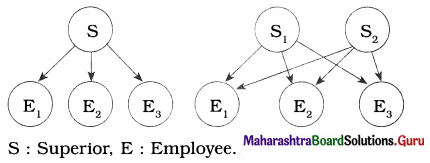
12th OCM Chapter 1 Exercise Principles of Management Practical Problems Solutions Maharashtra Board

Principles of Management 12th OCM Chapter 1 Solutions Maharashtra Board

Balbharti Maharashtra State Board Organisation of Commerce and Management 12th Textbook Solutions Chapter 1 Principles of Management Textbook Exercise Questions and Answers.

Class 12 OCM Chapter 1 Exercise Solutions

1. (A) Select the correct option and rewrite the sentence

Question 1.
………………… was regarded as the Father of Scientific Management.
(a) Henry Fayol
(b) F. W. Taylor
(c) Philip Kotler
Answer:
(b) F. W. Taylor

Question 2.
Principle of ……………… is based on ‘A place for everything and everything in its place.
(a) Discipline
(b) Order
(c) Equity
Answer:
(b) Order

Maharashtra Board OCM 12th Commerce Solutions Chapter 1 Principles of Management

Question 3.
Member of organization should receive orders from ………………..
(a) many superior
(b) one superior
(c) all superiors
Answer:
(b) one superior

Question 4.
Scalar chain means the hierarchy of …………….. from the top level to the lower level for the purpose of communication.
(a) discipline
(b) unity
(c) authority
Answer:
(c) authority

Question 5.
Taylor recommended total ……………….. foremen to control the various aspects of production.
(a) eight
(b) three
(c) two
Answer:
(a) eight

1. (B) Match the pairs

Group A Group B
A) Henry Fayol 1) Eight Foremen
B) Principle of Unity of Direction 2) F.W. Taylor
C) Principles of Management 3) Proper division of all activities
D) Scientific Management Theory 4) general guidelines
E) Functional Organization 5) A place for everything and everything in its place
6) One head-one plan
7) Low wage rate
8) Harmony between the employees and management
9) German engineer
10) Modern Management

Answer:

Group A Group B
A) Henry Fayol 1) Modern Management
B) Principle of Unity of Direction 2) One head-one plan
C) Principles of Management 3) general guidelines
D) Scientific Management Theory 4) F.W. Taylor
E) Functional Organization 5) Eight Foremen

1. (C) Give one word/phrase/term for the following statements:

Question 1.
The study of movement of an employee as well as machine while completing particular task.
Answer:
Motion Study

Question 2.
The technique of observing and recording the time required by an employee to complete a given task.
Answer:
Time Study

Question 3.
Study consists of an organised, systematic and critical assessment of various activities.
Answer:
Work Study

Question 4.
The principle which deals with ‘to do work with innovative way’.
Answer:
Principle of Initiative

Question 5.
The principle which is based on ‘a place for everything and everything in its place’.
Answer:
Principle of Order.

1. (D) State whether the following statements are True or False

Question 1.
The principles of management are universal in nature.
Answer:
True

Question 2.
Management principles are applied differently under different situations.
Answer:
True

Question 3.
Only some principles of management are important.
Answer:
False

Maharashtra Board OCM 12th Commerce Solutions Chapter 1 Principles of Management

Question 4.
Henry Fayol has given different techniques of management.
Answer:
False

Question 5.
F. W. Taylor has proposed 14 principles of management.
Answer:
False

Question 6.
Each member of organisation should receive orders only from one superior.
Answer:
True

1. (E) Find the odd one.

Question 1.
Principle of Authority and Responsibility, Motion Study, Principle of Division of Work, Principle of Discipline.
Answer:
Motion Study

Question 2.
Fatigue Study, Principle of Unity of Command, Work Study, Motion Study.
Answer:
Principle of unity of Command

1. (F) Answer in one sentence

Question 1.
What is principle of unity of command?
Answer:
Principal of unity of command implies that every employee should receive orders and instructions from one boss only and he should be responsible and accountable to him only.

Question 2.
What is standardization of tools and equipment?
Answer:
Standardisation of tools and equipment refers to providing the standard tools and equipment for production and maintaining standard working conditions and environment at the place of work.

Question 3.
What is differential wage rate?
Answer:
Differential wage rate means offering higher rate of wages to those employees who complete the work more than the standard quantity and lower rate of wages to those employees who perform below the standard fixed.

Question 4.
What is Subordination of Individual Interest into Organisational Interest?
Answer:
Subordination of individual interest into organisational interest means the interest of an individual must be given less importance than the interest of the organisation.

Question 5.
What is the meaning of principle?
Answer:
Principle means a fundamental truth or proposition that serves as the foundation for a system of belief or behaviour or for a chain of reasoning.

1. (G) Correct the underlined word and rewrite the following sentences.

Question 1.
Security in job always affects adversely on the efficiency of employees.
Answer:
Insecurity in job always affects adversely on the efficiency of employees.

Question 2.
Esprit de corps means ‘division is strength’.
Answer:
Esprit de corps means ‘unity is strength’.

Question 3.
Each member of organisation should receive orders from only one subordinate.
Answer:
Each member of organisation should receive orders from only one superior.

Question 4.
Decentralisation means concentration of powers and authorities at a specific position.
Answer:
Centralisation means concentration of powers and authorities at a specific position.

Question 5.
Management techniques are applied differently under different conditions.
Answer:
Management principles are applied differently under different conditions.

2. Explain the following terms/concepts

Question 1.
Motion Study
Answer:
(1) This is one of the important techniques f of scientific management developed by E W. Taylor. Motion study refers to the movements of employees, as well as movement of machine while completing . a particular task. The motion study helps the manager to know the movements required for a person to do a particular job.

(2) This study is useful to manager to eliminate the unnecessary movements or their sequence for doing the job. It also helps the manager to combine some actions or movements in the process. It increases efficiency and productivity of the employees and helps in reducing the wastage of time, raw material and improving the usefulness of resources.

Maharashtra Board OCM 12th Commerce Solutions Chapter 1 Principles of Management

Question 2.
Differential Piece Rate System.
Answer:
(1) According to F. W. Taylor, the differential piece wage rate plan is necessary to motivate the employees to attain higher standard performance and to earn remuneration at a higher rate. Differential piece wage rate plan suggests that remuneration should be fixed and paid in such a way that average worker is motivated to attain standard output.

(2) In differential piece wage rate plan, the. standard is determined for production by the management. The workers who produce more them the standard are to be paid more in the form of incentives and those who produce less than the standard are to be paid less by way of penalty. This technique encourages those who perform well and motivates those who have performed less than the standard required to improve their performance.

(3) Taylor suggested the differential piece wage system and further stated that the discrimination should be made between the efficient and inefficient workers. This technique explains that, efficient workers should be paid more remuneration in comparison to inefficient workers.

(4) Thus, the differential piece-rate wage plan technique motivates the able employees to attain higher performance and earn wages at higher rate.

Question 3.
Fatigue Study
Answer:
The term ‘fatigue’ implies physical or mental exhaustion. Long working hours with insufficient breaks, heavy working tools, target pressure and poor working conditions lead to fatigue. It reduces efficiency of the employees and creates adverse effect on their health. To reduce fatigue it is very important to keep and maintain the operational efficiency of the workers.

Question 4.
Time Study.
Answer:
(1) Time study is one of the important techniques of scientific management developed by E W. Taylor. Time study is useful to the manager to determine and record the time needed to complete a particular job or task. It is based on the speed of average worker.

(2) Under this technique of scientific management, every part of the entire work is considered in detail and the time required to complete each element of job or task is ascertained. On the basis of the time study, the manager determines the standard time required to complete a particular job. This also facilitates the manager to decide the remuneration to be paid and efficiency of the worker and to control the cost of work.

3. Study the following case/situation and express your opinion.

Question 1.
Mr. Harshad is an entrepreneur and engaged in production of eco-friendly utensils. Both male and female workers are working in his factory. All male employees are directly working on machines whereas female employees are working in Packaging Department. Mr. Sharath is working as Finance Manager while Mrs. Naina is working as HR Manager who is responsible for recruiting employees in the factory. On this basis:
(i) Identify any one principle of management in above case.
(ii) What is the designation of Mrs. Naina in this organisations?
(iii) Who is responsible for overall planning of the organisation?
Answer:
(i) In the above case, principle of Division of work is identified.
(ii) The designation of Mrs. Naina is Human Resource Manager.
(iii) Mr. Harshad, an entrepreneur of eco-friendly utensils, is responsible for overall planning ; of the organisation.

Question 2.
In ‘Fine Diamonds Ltd.’ 200 employees are working in three shifts. In first shift 60 employees, in second shift 60 employees and in third shift 80 employees are working without sufficient breaks except lunch break and shift change break. No employee is able to complete the work in designated time due to inappropriate time management which results into delay for next shift employees.
(i) Identify which scientific principle needs to be followed by the company.
(ii) Suggest two scientific techniques which can be used for smooth flow of work in ‘Fine Diamonds Ltd.
(iii) Why the work is not being completed in time?
Answer:
(i) In the above case, Principle of scientific management called Science, Not Rule of Thumb needs to be followed.
(ii) Work study based on the technique of fatigue study and Scientific task setting can be used for smooth flow of work in ‘Fine Diamonds Ltd.’
(iii) Reasons for non-completion of work in time are:

  1. Long working hours without sufficient breaks reduces the efficiency of labour.
  2. Inappropriate time management (planning) done by the departmental head (Functional Manager) result into delay for next shift employees.
  3. Standard required time and standard output are not defined by the manager or management of “Fine Diamonds Ltd.”

4. Answer in brief

Question 1.
Explain any five principles of management of Henry Fayol.
Answer:
(1) Principle of Division of Work : According to this principle, the entire work such as technical, financial, commercial, accounting, management and security operations should be assigned to different employees as per their qualification, qualities, capabilities and experience. It gives benefits of specialisation and improves efficiency and expertise of employees. This in turn helps to attain expected productivity level.

(2) Principle of Authority and Responsibility:
Authority implies right or freedom to take decisions. The manager should be given authority to get the work done systematically from the subordinates. Authority should always go with corresponding responsibility, e.g. if manager is given authority to complete a specific task within a given time, he would be held responsible for the same. Manager should have adequate authority to take managerial decisions on his own to achieve the goal.

(3) Principle of Discipline: Fayol insists that discipline is essential for smooth working of an organisation. It helps to achieve the goals set in the organisation. In relation to organisation, discipline means strictly obeying instructions of the superiors. There should be clear and utmost understanding between management and employees in respect to organisation’s rules. It is necessary to observe basic discipline at all levels of management.

(4) Principle of Unity of Command: According to this principle, every employee should receive orders and instructions from one boss only and he should be accountable to him only. If he receives orders from more them one boss at a time, he will not understand whose orders should be executed first. To avoid this, organisational hierarchy should be well defined and each employee in the organisation should know his immediate boss. He should receive orders and instructions from him only and should report to him only.
Maharashtra Board OCM 12th Commerce Solutions Chapter 1 Principles of Management 1

(5) Principle of Unity of Direction: Fayol advocates “One head for One plan”. It means that a group of employees working on similar activities should have common objectives and must work under one head (senior). All the objectives of the different groups should be in line with the objectives of the organisation. If this principle is followed there will be an effective co-ordination of the individual efforts and energies.

(6) Principle of Subordination of Individual Interest to Organisational Interest: According to this principle, the interest of the organisation must always be given greater importance than the interest of an employee or a group of employees. While taking decision, the manager should always consider the interest of whole group rather than the interest of an individual employee. Similarly, employees should surrender their personal goals or interests before that of an organisation e.g. while playing a game a team players should always play to win the game and not for his individual records.

Maharashtra Board OCM 12th Commerce Solutions Chapter 1 Principles of Management

Question 2.
Describe any four techniques of scientific management.
Answer:
(1) Work Study : Before allocating the work among the workers, systematic work study should be done by the management. Work study includes Em organised systematic and critical assessment of different activities or functions. It is based on the different techniques like time study, method study, motion study and fatigue study.
(i) Time Study : Under this method, the manager observes and record the time an employee takes to complete a particular job or task. This technique is useful to fix standard time needed to complete a specific task under given conditions. It measures the efficiency of an employee and helps to control the cost of work.

(ii) Method Study : In order to get best quality with cost effectiveness, it is important and challenging for a manager to identify the best method from various available methods to complete the specific job. This method is useful to reduce the wastage of time, raw material and to improve usefulness of the resources to achieve defined objectives. It is also useful to determine the methods to handle the raw materials, storage, inspection and transportation.

(iii) Motion Study : Motion study refers to the close study of the movements of employees as well as machines in completing a particular task. This technique is useful to manager to eliminate the unnecessary movements and to find out the best method of completing a specific task. It improves efficiency and productivity of the employees. This method is also useful to understand and decide about the elimination of some elements of a job or changing their sequence for smooth flow of work.

(iv) Fatigue Study : The term ‘fatigue’ implies physical or mental exhaustion. Long working hours with insufficient breaks, heavy working tools, target pressure and poor working conditions lead to fatigue. It reduces efficiency of the employees and creates adverse effect on their health. To reduce fatigue it is very important to keep and maintain the operational efficiency of the workers.

(2) Standardisation of Tools and Equipment:
On the basis of experiments conducted at work place, Taylor insisted to provide standard tools and equipment, standard working environment and standard methods of production. It helps to reduce spoilage and wastage of materials, cost of production, fatigue among the employees on the one hand and improves quality of work on the other hand.

(3) Scientific Task Setting : Taylor laid stress on the need for fixing a fair day’s work. The technique of scientific task setting is useful to restrain the employees from performing the task much below their capacity. As a result, they will complete their task according to the standards given and management will be able to keep proper control on the optimum use of available workforce.

(4) Scientific Selection and Training: By using scientific selection procedures, management easily select right persons for the right jobs. According to this technique, job specifications required to be fixed and employees are selected as per predetermined standards in an impartial way. After their selection, the management should arrange proper training programmes to increase efficiency.

(5) Functional Organisation : Taylor suggested that planning of the work is to be done by different people and actual work is to be supervised by different set of people. Every worker in the factory is to be supervised by two different sets of supervisors. He further suggested total eight foremen to control the various parts of the production. They are categorised as follows:
(A) At planning level:

  1. Route clerk : Explains the movement of work from one machine to other.
  2. Instruction clerk : Gives and records instructions to complete the work.
  3. Time and cost clerk : Decides the time to complete the work and work out the cost.
  4. Discipline : To see to it that workers work as per factory rules.

(B) At implementation level:

  1. Gang Boss : Gets the actual work done from employees.
  2. Speed Boss : Takes care that work is done in specified time.
  3. Repair Boss : Manages security and maintenance of mechanism.
  4. Inspector : Makes sure that work is completed as per specified standards.

5. Justify the following statements

Question 1.
Principles of management are flexible in nature.
Answer:
(1) Principles of management are the statements of fundamental truth which act as guidelines for managerial decision-making and action. They establish cause and effect relationship. They are evolved through observation, analysis and experiments.

(2) Principles of management although fundamental, are not rigid. They are flexible in nature in the sense they can be changed or modified according to the situation and requirements of the organisation. Managers can change these principles to suit the requirements of the organisation.

(3) Principles of management are flexible guidelines providing ample scope for making changes according to the nature of enterprise, its size, competitive situation, etc. For instance, in the context of present business scenario, at many places the ‘family management has been substituted by professional management’.

(4) Modern business world is dynamic. The situations in a business enterprise keep on changing continuously. No two circumstances are identical. Principles of management can be changed, adjusted or modified and used in the enterprise as per its changing needs and requirements. By identifying problems of business changes will be accepted.

Question 2.
Management principles are helpful in optimum utilization of resources.
Answer:
(1) Materials or abstract qualities that a person or organisation uses to perform the work is called resources, e.g. tools, stocks, time, employees, etc. In every organisation, two types of resources are used and they are: (i) Physical resources such as materials, machines, money, etc. and (ii) Human resources i.e. manpower.

(2) The different types of resources are used in the organisation to manufacture or produce different types of goods and services. The resources are scarce in relation to their demand and therefore resources should not be wasted and misused. They should be used carefully and up to their optimum capacity.

(3) The basic aim and function of management are to make and maintain proper balance and allocate these resources by putting them to maximum possible use and control on wastage of resources. Through the use of different techniques and management principles, management maintains discipline and healthy working environment to establish cordial relationship with the employees.

(4) It helps to increase the efficiency level of employees and to manage the administration effectively, e.g. use of modern and standard tools and machineries. It also helps to increase quality, productivity and level of efficiency of human resources.

Question 3.
Principle of equity is important.
Answer:
(1) The principle of equity suggests that employer should give kind, fair, just and equal treatment to the employees. Managers should be kind, impartial and fair to their subordinates.

(2) The principle of equity further states that there should not be any discrimination between the employees while making the payment of wages. The employees working on the same level but in different departments should be paid same wages.

(3) The wages payable to employees should not depend on the departments but the level at which they are working, e.g. Foremen should be paid higher wages than that is paid to employees working under them.

(4) The principle of equity also states that there should not be any discrimination between the employees while distributing work between them. As far as possible, there should be equal distribution of work. Thus, equality in treatment of employees boosts the morale and develops a sense of belongingness among the employees. It helps to develop loyalty of employees towards organisation and avoid conflicts.

Question 4.
Taylor emphasized on standardization of tools and equipment.
Answer:
(1) Fredrick Winslow Taylor published Principles of Scientific Management. His primary objective was to increase efficiency of employees by scientifically designing jobs. According to his views, management problems should be solved through experiments and use of scientific techniques rather than rules of thumb and triad and error approach.

(2) Taylor had conducted many experiments at workplace and as a result of those experiments, he advocated standardisation of tools and equipment. Standard here, means a level of quality or achievement, especially a level that is acceptable.

(3) According to him, standardised working environment and standardised methods of production tools and equipment help to reduce spoilage and wastage of materials. This in turn reduces the overall cost of production.

(4) Similarly use of standardised tools and equipment increases efficiency of employees and also helps to reduce fatigue among the workers. This improves the quality of work.

Maharashtra Board OCM 12th Commerce Solutions Chapter 1 Principles of Management

Question 5.
Differential piece wage rate plan is necessary.
Answer:
(1) According to F. W. Taylor, the differential piece wage rate plan is necessary to motivate the employees to attain higher standard performance and to earn remuneration at a higher rate. Differential piece wage rate plan suggests that remuneration should be fixed and paid in such a way that average worker is motivated to attain standard output.

(2) In differential piece wage rate plan, the. standard is determined for production by the management. The workers who produce more them the standard are to be paid more in the form of incentives and those who produce less than the standard are to be paid less by way of penalty. This technique encourages those who perform well and motivates those who have performed less than the standard required to improve their performance.

(3) Taylor suggested the differential piece wage system and further stated that the discrimination should be made between the efficient and inefficient workers. This technique explains that, efficient workers should be paid more remuneration in comparison to inefficient workers.

(4) Thus, the differential piece-rate wage plan technique motivates the able employees to attain higher performance and earn wages at higher rate.

6. Attempt the Following

Question 1.
Explain in detail any five Principles of Management given by Henry Fayol’s?
Answer:
(1) Principle of Division of Work : According to this principle, the entire work such as technical, financial, commercial, accounting, management and security operations should be assigned to different employees as per their qualification, qualities, capabilities and experience. It gives benefits of specialisation and improves efficiency and expertise of employees. This in turn helps to attain expected productivity level.

(2) Principle of Authority and Responsibility:
Authority implies right or freedom to take decisions. The manager should be given authority to get the work done systematically from the subordinates. Authority should always go with corresponding responsibility, e.g. if manager is given authority to complete a specific task within a given time, he would be held responsible for the same. Manager should have adequate authority to take managerial decisions on his own to achieve the goal.

(3) Principle of Discipline: Fayol insists that discipline is essential for smooth working of an organisation. It helps to achieve the goals set in the organisation. In relation to organisation, discipline means strictly obeying instructions of the superiors. There should be clear and utmost understanding between management and employees in respect to organisation’s rules. It is necessary to observe basic discipline at all levels of management.

(4) Principle of Unity of Command: According to this principle, every employee should receive orders and instructions from one boss only and he should be accountable to him only. If he receives orders from more them one boss at a time, he will not understand whose orders should be executed first. To avoid this, organisational hierarchy should be well defined and each employee in the organisation should know his immediate boss. He should receive orders and instructions from him only and should report to him only.
Maharashtra Board OCM 12th Commerce Solutions Chapter 1 Principles of Management 2

(5) Principle of Unity of Direction: Fayol advocates “One head for One plan”. It means that a group of employees working on similar activities should have common objectives and must work under one head (senior). All the objectives of the different groups should be in line with the objectives of the organisation. If this principle is followed there will be an effective co-ordination of the individual efforts and energies.

(6) Principle of Subordination of Individual Interest to Organisational Interest: According to this principle, the interest of the organisation must always be given greater importance than the interest of an employee or a group of employees. While taking decision, the manager should always consider the interest of whole group rather than the interest of an individual employee. Similarly, employees should surrender their personal goals or interests before that of an organisation e.g. while playing a game a team players should always play to win the game and not for his individual records.

Question 2.
Describe different techniques of scientific management.
Answer:
(1) Work Study : Before allocating the work among the workers, systematic work study should be done by the management. Work study includes Em organised systematic and critical assessment of different activities or functions. It is based on the different techniques like time study, method study, motion study and fatigue study.
(i) Time Study : Under this method, the manager observes and record the time an employee takes to complete a particular job or task. This technique is useful to fix standard time needed to complete a specific task under given conditions. It measures the efficiency of an employee and helps to control the cost of work.

(ii) Method Study : In order to get best quality with cost effectiveness, it is important and challenging for a manager to identify the best method from various available methods to complete the specific job. This method is useful to reduce the wastage of time, raw material and to improve usefulness of the resources to achieve defined objectives. It is also useful to determine the methods to handle the raw materials, storage, inspection and transportation.

(iii) Motion Study : Motion study refers to the close study of the movements of employees as well as machines in completing a particular task. This technique is useful to manager to eliminate the unnecessary movements and to find out the best method of completing a specific task. It improves efficiency and productivity of the employees. This method is also useful to understand and decide about the elimination of some elements of a job or changing their sequence for smooth flow of work.

(iv) Fatigue Study : The term ‘fatigue’ implies physical or mental exhaustion. Long working hours with insufficient breaks, heavy working tools, target pressure and poor working conditions lead to fatigue. It reduces efficiency of the employees and creates adverse effect on their health. To reduce fatigue it is very important to keep and maintain the operational efficiency of the workers.

Maharashtra Board OCM 12th Commerce Solutions Chapter 1 Principles of Management

(2) Standardisation of Tools and Equipment:
On the basis of experiments conducted at work place, Taylor insisted to provide standard tools and equipment, standard working environment and standard methods of production. It helps to reduce spoilage and wastage of materials, cost of production, fatigue among the employees on the one hand and improves quality of work on the other hand.

(3) Scientific Task Setting : Taylor laid stress on the need for fixing a fair day’s work. The technique of scientific task setting is useful to restrain the employees from performing the task much below their capacity. As a result, they will complete their task according to the standards given and management will be able to keep proper control on the optimum use of available workforce.

(4) Scientific Selection and Training: By using scientific selection procedures, management easily select right persons for the right jobs. According to this technique, job specifications required to be fixed and employees are selected as per predetermined standards in an impartial way. After their selection, the management should arrange proper training programmes to increase efficiency.

(5) Functional Organisation : Taylor suggested that planning of the work is to be done by different people and actual work is to be supervised by different set of people. Every worker in the factory is to be supervised by two different sets of supervisors. He further suggested total eight foremen to control the various parts of the production. They are categorised as follows:
(A) At planning level :

  1. Route clerk : Explains the movement of work from one machine to other.
  2. Instruction clerk : Gives and records instructions to complete the work.
  3. Time and cost clerk : Decides the time to complete the work and work out the cost.
  4. Discipline : To see to it that workers work as per factory rules.

(B) At implementation level:

  1. Gang Boss : Gets the actual work done from employees.
  2. Speed Boss : Takes care that work is done in specified time.
  3. Repair Boss : Manages security and maintenance of mechanism.
  4. Inspector : Makes sure that work is completed as per specified standards.

Question 3.
Elaborate Principles of Scientific Management.
Answer:
The principles of scientific management are as follows:

  1. Science, Not Rule of Thumb
  2. Harmony, Not Discord
  3. Mental Revolution
  4. Co-operation, Not Individualism
  5. Division of Responsibility
  6. Development of employer and employees for greater efficiency and maximum prosperity

1. Science, Not Rule of Thumb : Rule of thumb method is based on personal judgements of the manager which should be substituted with the methods developed through scientific analysis of work. Taylor emphasised more on the use of scientific method for every small job. This principle related with selecting the best way of doing a work after scientific analysis. Under this method, standard required time and standard output are defined by the manager. This method is useful to save time and human energy, to get expected standard output and to increase organisational efficiency.

2. Harmony, Not Discord : This principle states that, in every organisation these should be proper co-ordination and harmonious relations between the management and employees. This will help in minimising conflicts between them and in achieving the goals of the organisation. The perfect understanding between employees and management is also helpful in creating healthy work environment. Organisation should also think about the maximum prosperity of the employees.

3. Mental Revolution : The concept of ‘mental revolution’ was introduced by Taylor. This principle highlights on the complete change in the attitude of the management and employees toward each other. Both should recognise their equal importance in the organisation. They should co-operate with each other to achieve goals or objectives of the organisation. This in turn will increase productivity and profits.

4. Co-operation, Not Individualism : This principle states that there should be mutual co-operation between employees and management. Co-operation, trust, team spirit, etc. are important to avoid internal competition and to create healthy working environment. Management should always appreciate and consider the suggestions given by the employees in decision-making process. The management should treat the employees as an integral part of the organisation in all respects. Employees should also resist themselves from going on strikes and making unacceptable or unnecessary demands from the management. Thus, they should see each other as two pillars of the organisation.

5. Division of Responsibility : This principle states that while dividing the work there should be’ corresponding division of responsibility between the managers and employees. Major planning should be done by the top and middle level management and employees should concentrate on its execution. The reporting of the jobs should be done by the subordinates as per the instructions given by their superiors. For the best performances, the management should always help, encourage and guide the employees.

6. Development of employer and employees for greater efficiency and maximum prosperity : Profitability and best performance of any organisation mostly depend on the skills, intelligence and capabilities of its employees. Arranging and providing training and development programmes for the employees at regular interval or whenever required are absolutely important. It helps to increase profitability of the organisation. Proper opportunity should be given to each ; employee to attain his highest efficiency and ; maximum prosperity.

Maharashtra Board OCM 12th Commerce Solutions Chapter 1 Principles of Management

Question 4.
Explain nature (characteristics) of principles of management.
Answer:
The nature (characteristics) of principles of management is (are) explained as follows:
(1) Universal application : Management principles are universal in nature. They are applicable to all types of organisations irrespective of the type, size or nature, e.g. government, college, hospital, bank. etc. Their application may have to be modified, but they are suitable for all kinds of organisations, whether in private sector or public sector. Similarly, principles of management are applicable to all levels of management. For instance, the principle of division of labour is applicable to all types of organisations.

(2) General guidelines : Management principles give general guidelines to tackle the organisational situations wisely and to solve the problems systematically. They are not rigid. Application of management principles depend upon the situation, size and nature of organisation, e.g., when we say according to principle of remuneration, the employees must be paid fair remuneration. The term ‘fair’ may vary as per nature, size and financial ability of the organisation.

(3) Principles are formed by practice and experiments : The management principles are developed gradually with thorough research work, experiments and systematic observations. The results of such observations and experiments are developed after their practice in different organisations.

(4) Flexibility : Management principles, although fundamental are not rigid statements. They have to be applied differently under various conditions. It is possible to make suitable changes in their application according to the requirement of the organisation. Thus, Management principles are flexible guidelines providing ample scope for making changes according to the nature of enterprise, its size, competitive situation, etc.

(5) Behavioural in nature : Management is a teamwork or a group activity. Management principles aim at influencing individual efforts and directing them to achieve various objectives of the organisation. They are directed towards regulating human behaviour so that people give their best to the organisation. Thus, principles of management are designed to influence human behaviour.

(6) Cause and effect relationship : Management principles indicate cause and effect relationship. Each principle has a definite effect on the efficiency or working of management. For example, payment of good remuneration and incentives increases output. Similarly, effective advertisement given by the organisation increases the sale of a product.

(7) All principles are of equal importance : All the principles of management have equal importance and they also carry equal weightage with reference to their applicability in the organisation. For example, it cannot be said that the principle of division of labour is more important than the principle of unity of command or vice versa. Management principles are not static in nature. They are not absolute like principles of pure sciences like Chemistry, Mathematics, etc. They are the principles of social science. They are to be modified and applied according to the size and nature of the organisation, keeping in mind the requirements.

7. Answer the following questions

Question 1.
What are the techniques of scientific management? Explain in detail.
Answer:
The techniques of scientific management given by F. W. Taylor are explained as follows:
(1) Work Study : Before allocating the work among the workers, systematic work study should be done by the management. Work study includes Em organised systematic and critical assessment of different activities or functions. It is based on the different techniques like time study, method study, motion study and fatigue study.

(i) Time Study : Under this method, the manager observes and record the time an employee takes to complete a particular job or task. This technique is useful to fix standard time needed to complete a specific task under given conditions. It measures the efficiency of an employee and helps to control the cost of work.

(ii) Method Study : In order to get best quality with cost effectiveness, it is important and challenging for a manager to identify the best method from various available methods to complete the specific job. This method is useful to reduce the wastage of time, raw material and to improve usefulness of the resources to achieve defined objectives. It is also useful to determine the methods to handle the raw materials, storage, inspection and transportation.

(iii) Motion Study : Motion study refers to the close study of the movements of employees as well as machines in completing a particular task. This technique is useful to manager to eliminate the unnecessary movements and to find out the best method of completing a specific task. It improves efficiency and productivity of the employees. This method is also useful to understand and decide about the elimination of some elements of a job or changing their sequence for smooth flow of work.

(iv) Fatigue Study : The term ‘fatigue’ implies physical or mental exhaustion. Long working hours with insufficient breaks, heavy working tools, target pressure and poor working conditions lead to fatigue. It reduces efficiency of the employees and creates adverse effect on their health. To reduce fatigue it is very important to keep and maintain the operational efficiency of the workers.

(2) Standardisation of Tools and Equipment:
On the basis of experiments conducted at work place, Taylor insisted to provide standard tools and equipment, standard working environment and standard methods of production. It helps to reduce spoilage and wastage of materials, cost of production, fatigue among the employees on the one hand and improves quality of work on the other hand.

(3) Scientific Task Setting : Taylor laid stress on the need for fixing a fair day’s work. The technique of scientific task setting is useful to restrain the employees from performing the task much below their capacity. As a result, they will complete their task according to the standards given and management will be able to keep proper control on the optimum use of available workforce.

(4) Scientific Selection and Training: By using scientific selection procedures, management easily select right persons for the right jobs. According to this technique, job specifications required to be fixed and employees are selected as per predetermined standards in an impartial way. After their selection, the management should arrange proper training programmes to increase efficiency.

Maharashtra Board OCM 12th Commerce Solutions Chapter 1 Principles of Management

(5) Functional Organisation : Taylor suggested that planning of the work is to be done by different people and actual work is to be supervised by different set of people. Every worker in the factory is to be supervised by two different sets of supervisors. He further suggested total eight foremen to control the various parts of the production. They are categorised as follows:
(A) At planning level:

  1. Route clerk : Explains the movement of work from one machine to other.
  2. Instruction clerk : Gives and records instructions to complete the work.
  3. Time and cost clerk : Decides the time to complete the work and work out the cost.
  4. Discipline : To see to it that workers work as per factory rules.

(B) At implementation level:

  1. Gang Boss : Gets the actual work done from employees.
  2. Speed Boss : Takes care that work is done in specified time.
  3. Repair Boss : Manages security and maintenance of mechanism.
  4. Inspector : Makes sure that work is completed as per specified standards.

(6) Differential Piece – Rate Wage Plan : Taylor suggested that discrimination should be made between efficient and less efficient workers. In this technique, the standard is determined (fixed) for production. The workers who produce more than the standard output are to be paid remuneration at higher rates and those who produce less them the standard quantity are to be paid at lower rate of wages. This technique encourages the employees to attain higher standard performance to earn higher wages.

Question 2.
Explain 14 principles of Henry Fayol in detail.
Answer:
Henry Fayol, the Father of Modern Management developed the following 14 principles:
principles of management:

  1. Principle of Division of Work
  2. Principle of Authority and Responsibility
  3. Principle of Discipline
  4. Principle of Unity of Command
  5. Principle of Unity of Direction
  6. Principle of Subordination of Individual Interest to Organisational Interest
  7. Principle of Centralisation
  8. Principle of Remuneration
  9. Principle of Scalar Chain
  10. Principle of Order
  11. Principle of Equity
  12. Principle of Stability of Tenure
  13. Principle of Initiative
  14. Principle of Esprit de corpse (Team Work)

1. Principle of Division of Work: According to this principle, the entire work such as technical, financial, commercial, accounting, management and security operations should be assigned to different employees as per their qualification, qualities, capabilities and experience. It gives benefits of specialisation and improves efficiency and expertise of employees. This in turn helps to attain expected productivity level.

2. Principle of Authority and Responsibility: Authority implies right or freedom to take decisions. The manager should be given authority to get the work done systematically from the subordinates. Authority should always go with corresponding responsibility, e.g. if manager is given authority to complete a specific task w12. Principle of Stability of Tenure:ithin a given time, he would be held responsible for the same. Manager should have adequate authority to take managerial decisions on his own to achieve the goal.

3. Principle of Discipline: Fayol insists that discipline is essential for smooth working of an organisation. It helps to achieve the goals set in the organisation. In relation to organisation, discipline means strictly obeying instructions of the superiors. There should be clear and utmost understanding between management and employees in respect to organisation’s rules. It is necessary to observe basic discipline at all levels of management.

4. Principle of Unity of Command: According to this principle, every employee should receive orders and instructions from one boss only and he should be accountable to him only. If he receives orders from more them one boss at a time, he will not understand whose orders should be executed first. To avoid this, organisational hierarchy should be well defined and each employee in the organisation should know his immediate boss. He should receive orders and instructions from him only and should report to him only.
Maharashtra Board OCM 12th Commerce Solutions Chapter 1 Principles of Management 3

5. Principle of Unity of Direction: Fayol advocates “One head for One plan”. It means that a group of employees working on similar activities should have common objectives and must work under one head (senior). All the objectives of the different groups should be in line with the objectives of the organisation. If this principle is followed there will be an effective co-ordination of the individual efforts and energies.

6. Principle of Subordination of Individual Interest to Organisational Interest: According to this principle, the interest of the organisation must always be given greater importance than the interest of an employee or a group of employees. While taking decision, the manager should always consider the interest of whole group rather than the interest of an individual employee. Similarly, employees should surrender their personal goals or interests before that of an organisation e.g. while playing a game a team players should always play to win the game and not for his individual records.

Maharashtra Board OCM 12th Commerce Solutions Chapter 1 Principles of Management

7. Principle of Centralisation: Centralisation means concentration of authority or power in a few hands at the top level. As number of employees is less in a smaller organisation there is centralisation of authority. Decentralisation means even distribution of authority or power at every level of management. As number of employees and levels of management are more in a larger organisation, there must be decentralisation of some authorities for its smooth functioning. According to Fayol, there must be a proper balance between centralisation and decentralisation, depending upon the nature and size of an organisation.

8. Principle of Remuneration: According to this principle, the employees must be paid fair and appropriate remuneration to keep them satisfied financially and to retain them within the organisation for longer period of time. While fixing remuneration various factors such as the skill, knowledge, expertise, tenure, cost of living, market trend, profitability of organisation, etc. should be considered. It boosts the morale of employees and increases efficiency and productivity.

9. Principle of Scalar Chain: According to Fayol, in the organisation decisions, orders, instructions, messages, etc. must be passed through a chain, i.e. from the general manager to the respective functional manager, then to the supervisor, then to the foreman and then ultimately, to the workers. Similarly, suggestions, information, grievances, etc., must flow from the worker in the upward direction. This is called Scalar Chain. Sometimes, following a scalar chain becomes a lengthy process. In such cases, ‘Gang Plank’ is followed which permits speedy and direct communication between the employees working at the same level of authority. However, for this, permission of the proper authority is necessary.

10. Principle of Order: The principle of order is based on ‘a place for everything and everything in its place’. According to this principle, in every organisation there should be proper, systematic and orderly arrangement of men and materials. There should be a fixed place to keep every material and thing used in the organisation and a fixed place or a seat for every employee. The purpose of this principle is to reduce wastage of time and energy. This principle emphasises more I on the proper and optimum utilisation of physical and human resources.

11. Principle of Equity: This principle states that the management should be fair as well as friendly to the subordinate staff. There should be no discrimination of employees in regard to division of work, delegation of the authorities, deciding the monetary terms, etc. This principle also states that the remuneration should depend not on the department but at the level at which employees are working, It means the employees working on the same level but in separate departments must be paid equal wages. It will also help in avoiding conflicts in an organisation.

12. Principle of Stability of Tenure: According to this principle, at the time of recruitment of employees, the management should assure them about the stability of tenure (i.e. job security). This creates a sense of belonging among the employees. Job security increases efficiency of the employees and minimises employees turnover ratio.

13. Principle of Initiative: Initiative means to do the work in an innovative way in his or her personal capacity. According to this principle, managers should give freedom, opportunity or encourage the subordinates to take initiative while working on given job. Their suggestions and ideas should be invited before framing the plan. This can work as a morale booster for the employees and leads to timely achievement of organisational goals.

Maharashtra Board OCM 12th Commerce Solutions Chapter 1 Principles of Management

14. Principle of Esprit de corpse (Team Work): ‘Esprit de corpse’ means union is strength. This principle integrates and co-ordinates the individual and group efforts. It emphasizes the spirit of teamwork. The manager as a leader should create the feeling of team spirit and understanding among the various groups. When entire group of employees works as a team, their efforts get directed towards realising the goals of the organisation.

OCM 12th Commerce Textbook Solutions Digest
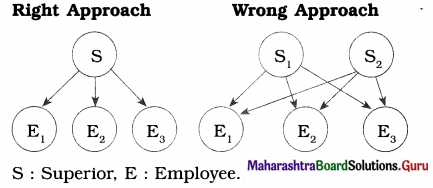
11th OCM Chapter 4 Exercise Forms of Business Organisation – I Practical Problems Solutions Maharashtra Board

Forms of Business Organisation – I 11th OCM Chapter 4 Solutions Maharashtra Board

Balbharti Maharashtra State Board Organisation of Commerce and Management 11th Textbook Solutions Chapter 4 Forms of Business Organisation – I Textbook Exercise Questions and Answers.

Class 11 OCM Chapter 4 Exercise Solutions

1. (A) Select the Correct option and rewrite the sentence

Question 1.
A sole trading concern ensures ……………….. business secrecy.
(a) maximum
(b) minimum
(c) limited
Answer:
(a) maximum

Question 2.
The members of Hindu undivided family business are called ………………..
(a) carpenter
(b) co-parcener
(c) parceners
Answer:
(b) co-parcener

Maharashtra Board OCM 11th Commerce Solutions Chapter 4 Forms of Business Organisation – I

Question 3.
The head of Joint Hindu Family Business is called as ………………..
(a) KARTA
(b) owner
(c) manager
Answer:
(a) KARTA

Question 4.
Registration of partnership firm is ………………. in Maharashtra.
(a) voluntary
(b) compulsory
(c) easy
Answer:
(b) compulsory

Question 5.
The liability of the shareholders in Joint Stock Company is ………………
(a) limited
(b) unlimited
(c) restricted
Answer:
(a) limited

Question 6.
A Joint Stock Company is an artificial person created by ………………….
(a) Law
(b) Articles
(c) Memorandum
Answer:
(a) Law

Question 7.
Registration of a Joint Stock Company is ………………..
(a) compulsory
(b) free
(c) not required
Answer:
(a) compulsory

Question 8.
Liability of member of a Co-operative Society is ………………
(a) limited
(b) restricted
(c) maximum
Answer:
(a) limited

Question 9.
Indian Co-operative Society’s Act was passed in ………………
(a) 1912
(b) 1913
(c) 1911
Answer:
(a) 1912

Question 10.
…………………. acts as a signature of the company.
(a) Common seal
(b) Common sign
(c) Common image
Answer:
(a) Common seal

1. (B) Match the pairs

Group A Group B
(a) Private Company (1) Karta
(b) Public Company (2) Local Market
(c) Common Seal (3) 1932
(d) Partnership Act (4) Maximum 200 members
(e) Joint Hindu Family Firms (5) One Man Show
(F) Subject-matter of insurance (6) Minimum Seven members
(7) Minimum 10 members
(8) Signature of Company
(9) Maximum 100 members
(10) Manager

Answer:

Group A Group B
(a) Private Company (4) Maximum 200 members
(b) Public Company (6) Minimum Seven members
(c) Common Seal (8) Signature of Company
(d) Partnership Act (3) 1932
(e) Joint Hindu Family Firms (1) Karta

1. (C) Give one word/phrase/term.

Question 1.
An elected body of representatives of co-operative Society for its day to day administrations.
Answer:
Managing Committee

Question 2.
The owner is the sole manager and decision maker of his business.
Answer:
Sole Trader

Question 3.
One man show type of business organisation.
Answer:
Sole trading concern

Question 4.
The members of the Joint Hindu Family firm.
Answer:
Co-parceners

Question 5.
A partner who gives his name to partnership firm.
Answer:
Nominal partner

Question 6.
There is free transferability of shares in this company.
Answer:
Public Company

Maharashtra Board OCM 11th Commerce Solutions Chapter 4 Forms of Business Organisation – I

Question 7.
A partnership agreement in writing.
Answer:
Partnership Deed

Question 8.
The motto of the co-operative society.
Answer:
Service

Question 9.
An organization which is service oriented.
Answer:
Co-operatives Society

1. (D) State True or False

Question 1.
Sole trader is the decision maker of the business.
Answer:
True

Question 2.
Sole trading concern operates in local markets.
Answer:
True

Question 3.
Sole proprietorship is useful for small business.
Answer:
True

Question 4.
The liability of KARTA is unlimited.
Answer:
True

Question 5.
The maximum number of members is unlimited in Joint Hindu Family Firm.
Answer:
True

Question 6.
Joint Stock company can raise huge amount of capital.
Answer:
True

Question 7.
There is a separation of ownership and management in Joint Stock Company.
Answer:
True

Question 8.
Board of Directors manage the business of Joint Stock Company.
Answer:
True

Question 9.
Partnership agreement may be oral or written.
Answer:
True

Question 10.
In partnership firm, the liability of every partner is limited, joint and several.
Answer:
False

Question 11.
The main motto of co-operative society is to render services to its shareholders.
Answer:
False

Question 12.
The membership of a co-operative society is compulsory.
Answer:
False

1. (E) Find the odd one

Question 1.
Sole proprietorship, Joint Hindu Family, Non-Government Organization (NGO), Partnership firm.
Answer:
NGO

Question 2.
Active partner, Shareholder, Nominal partner, Secret partner.
Answer:
Shareholder

1. (F) Complete the sentences

Question 1.
Private sector enterprises are owned and managed by the …………………
Answer:
Private entities

Question 2.
There is only one owner in …………………
Answer:
Sole Trading Concern

Question 3.
Admission of new individual into existing business has given birth to …………………
Answer:
Partnership Firm

Question 4.
A partner who takes active participation in the day to day working of the business is known as …………………
Answer:
active partner

Question 5.
When there is no provision in partnership agreement regarding time period for partnership then it is known as …………………
Answer:
Partnership at will

Question 6.
The property of JHF business is jointly owned by the …………………
Answer:
KARTA

Question 7.
The management of Co-operative society is based on …………………
Answer:
democratic principles

Question 8.
The rule for voting in Co-operative society is …………………
Answer:
one member one vote

Question 9.
The rule for voting in Joint Stock company is …………………
Answer:
one share one vote

Question 10.
The face value of the shares of Co-operative society is very …………………
Answer:
less

Maharashtra Board OCM 11th Commerce Solutions Chapter 4 Forms of Business Organisation – I

Question 11.
Consumer’s co-operatives are formed by the …………………
Answer:
consumers

Question 12.
Registration of Joint Stock Company is compulsory according to the Companies Act …………………
Answer:
2013

1. (G) Complete the following table

Question 1.
(Public company, Private company, Co-operative Society, Partnership Firm, Sole Trading Concern)

Group A Group B
(i) Minimum 2 and maximum 200 ……………..
(ii) Minimum 10 and maximum no limit …………….
(iii) ……………… Minimum 7 and maximum unlimited
(iv) Form of business organisation having only one member …………………
(v) Minimum 2 and maximum 50 ………………..

Answer:

Group A Group B
(i) Minimum 2 and maximum 200 Private Limited Compmay
(ii) Minimum 10 and maximum no limit Co-operative Society
(iii) Public company Minimum 7 and maximum unlimited
(iv) Form of business organisation having only one member Sole Trading Concern
(v) Minimum 2 and maximum 50 Partnership Firm

1. (H) Answer in one sentences

Question 1.
What is Sole Trading Concern?
Answer:
Sole Trading Concern is a type of business which is owned, managed and controlled by one person.

Question 2.
What do you mean by partnership firm?
Answer:
A business owned and managed by two or more persons sharing profits and losses is called a partnership firm.

Question 3.
What is the meaning of Joint Stock Company?
Answer:
Joint Stock Company is an artificial person created by law, having an independent legal status, owned by shareholders and managed by Board of Directors.

Question 4.
What is Joint Hindu Family business?
Answer:
A Joint Hindu Family is a form of business organization which runs from one generation to another according to the Hindu Law.

Question 5.
What do you mean by Co-operative Society?
Answer:
Co-operative Society is a voluntary association of individuals which is formed for providing services to members.

Question 6.
What do you mean by minor partner?
Answer:
A minor partner is a partner who is admitted into the partnership firm for the benefit of the firm with the consent of all partners.

Question 7.
What is Quasi Partner?
Answer:
Quasi partner is a partner of the partnership firm who has retired from the firm but has left his capital behind in the firm.

Question 8.
What do you mean by partner-in-profits only?
Answer:
A partner-in-profits only is a partner who gets into an agreement to share only the profits of the partnership firm and not the losses.

Question 9.
What do you mean by general partnership?
Answer:
General partnership is a form of partnership where, the liability of all the partners is unlimited, joint and several. Every partner has an equal right and it can be formed under the Partnership Act of 1932.

Question 10.
What is the meaning of Private company?
Answer:
A Private Limited company is a company which by its articles restricts the right to transfer share, limits the maximum number of members to 200.

Question 11.
What do you mean by Public company?
Answer:
A public company means a company which is not a private company.

1. (I) Correct the underlined word and rewrite the following sentences.

Question 1.
In Public company, shares are not freely transferable.
Answer:
In Private company, shares are not freely transferable.

Question 2.
In Private company, there are minimum 3 (Three) directors.
Answer:
In Private company, there are minimum 2 (Two) directors.

Maharashtra Board OCM 11th Commerce Solutions Chapter 4 Forms of Business Organisation – I

Question 3.
Registration of Joint Stock company is not compulsory.
Answer:
Registration of Joint Stock company is compulsory.

Question 4.
There is less secrecy in Sole Trading concern.
Answer:
There is maximum secrecy in Sole Trading concern.

Question 5.
In Partnership firm, minimum three members are required.
Answer:
In partnership firm, minimum two members are required.

Question 6.
In Joint Hindu Family business, the senior most member of family is called as Co-parcener.
Answer:
In Joint Hindu Family business, the senior most member of family is called as Karta.

Question 7.
Indian Partnership Act, 1940 is applicable in India.
Answer:
Indian Partnership Act, 1932 is applicable in India.

2. Explain the following terms/concepts

Question 1.
Sole Trading Concern.
Answer:

  1. It is a form of business organization which is owned, managed and controlled by one person.
  2. It need not be registered.
  3. It does not have a legal status i.e. It does not have a stable life.
  4. Maximum secrecy can be maintained in Sole Trading concern.

Question 2.
Partnership Firm.
Answer:

  1. It is a voluntary association of two or more persons with a common objective.
  2. It is formed by an agreement called Partnership deed.
  3. It is governed by Indian Partnership Act, 1932.
  4. Registration of partnership firm is optional as per Partnership Act, 1932.
  5. In Maharashtra, registration of partnership firm is made compulsory.

Question 3.
Joint Hindu Family Firm.
Answer:

  1. It is a form of business organization which is carried from one generation to another generation.
  2. It comes into existence by operation of Hindu Law.
  3. This form of organization is found in India only.
  4. The seniormost member of the family is called ‘Karta’ while other members are called ‘Co-parceners’.

Question 4.
Co-operative Society.
Answer:

  1. It is a voluntary association of individuals which is formed for providing services to members.
  2. Its main motto is ‘service’ rather than ‘profit’.
  3. It runs on principle of ‘One member One Vote’.
  4. It enjoys an independent legal status, distinct from its members.

Question 5.
Joint Stock Company.
Answer:

  1. It is an incorporated association created by law, having an independent legal status, owned by shareholders and managed by Board of Directors.
  2. The main motive of Joint Stock company is maximisation of profit.
  3. It works as principle of “One share One vote”.
  4. It has to follow Indian Companies Act, 2013.

Question 6.
Karta.
Answer:

  1. Karta is a seniormost member of the family, who runs the Joint Hindu Family Business.
  2. The Karta has unlimited liability in such type of business.
  3. Karta has the right to manage the business.
  4. Karta need not consult any body about business decisions.

Question 7.
Managing Committee.
Answer:

  1. Managing committee is a group of members of a Co-operative society, who looks after the working of Co-operative society.
  2. They are elected by the shareholders of Co-operative society.
  3. All important decisions are taken by the managing committee.
  4. In short, they look after day to day administration of the Society.

Question 8.
Nominal Partner.
Answer:

  1. A partner who only lends his name and reputation to the partnership firm is called as nominal partner.
  2. He is simply obliging his friends by allowing the firm to use his name as a partner.
  3. He may or may not be given any share in the profits of the firm.
  4. He does not contribute to the capital of the business.
  5. He is liable to the debts of the firm.

3. Study the following case/situation and express your opinion

1. Mr. Raghunath is running business from last 30 years. This business is ancestoral business of Mr. Raghunath. Kiran and Naman, two sons of Mr. Raghunath are helping him along with their wives.

Question 1.
Find out the type of business.
Answer:
Joint Hindu Family Firm.

Question 2.
Who is Raghunath?
Answer:
Raghunath is the Karta.

Maharashtra Board OCM 11th Commerce Solutions Chapter 4 Forms of Business Organisation – I

Question 3.
What Kiran and Naman are called?
Answer:
Kiran and Naman are called as co-parceners.

2. Mr. Sawant a Chartered Accountant by profession and Mrs. Tambe, an Architect by profession running a firm namely ‘ST Firms’ in Nagpur.

Question 1.
Identify the form of business organisation in the above examples.
Question 2.
Is it a registered organisation?
Question 3.
What is the Profession of Mr. Sawant?

4. Distinguish between the following

Question 1.
Private Limited Company and Public Limited Company
Answer:

Private Limited Company Public Limited Company
(1) Meaning A Private Limited Company is a company which by its articles, restricts the right to transfer share, limits the maximum number of members to 200 and prohibits the issue of prospectus. A Public Company means a company, which is not a Private Company.
(2) Name of the Company Name of the company must end with the word ‘Private Limited’. Name of the company must end with the word ‘Limited’.
(3) Number of Members There are minimum 2 members. Maximum members are 200. There are minimum 7 members. Maximum members are unlimited.
(4) Transfer of Shares Shares of the company are not freely transferable. Shares of the company are freely transferable.
(5) Issue of Prospectus The company cannot issue prospectus. Statement in lieu of prospectus is issued. The company has to issue prospectus compulsory.
(6) Number of Directors Minimum 2 Directors are needed in a Private Limited Company. Minimum 3 Directors are needed in a Public Limited Company.
(7) Statutory Meeting A Private Limited Company need not hold a Statutory Meeting. A Public Limited Company must hold a Statutory Meeting compulsorily.
(8) Capital Minimum paid up capital is one lakh rupees. Minimum paid up capital is five lakh rupees.
(9) Commencement of Business The business can be started after getting ‘Incorporation Certificate’. The business can be started after getting ‘Commencement Certificate’.

Question 2.
Sole Trading Concern and Partnership Firm.
Answer:

Sole Trading Concern Partnership Firm
(1) Meaning Sole proprietorship is owned and controlled by one person. Partnership firm is owned and controlled by two or more persons called as ‘Partners’.
(2) Formation Sole trading concern can be formed easily. It is started as soon as the owner decides. Partnership firm is formed by an agreement between two or more persons.
(3) Numbers of Members Sole trading concern is owned by a single person. Minimum 2 members are needed for starting business. The maximum number is 50.
(4) Registration There is no need for registration of sole trading concern. A partnership firm may or may not be registered. However, it is always desirable for the firm to be registered. It is compulsory in Maharashtra.
(5) Secrecy It is possible to have maximum business secrecy. Secrecy is shared among all the partners.
(6) Liability Liability of a sole trader is unlimited Liability of a partner is unlimited, joint and several.
(7) Management The sole trader looks after management of business. He is manager of the business. All partners take part in management of the firm according to their skills.
(8) Capital The entire capital is contributed by the sole trader, comparatively limited. Partners contribute capital to the firm, comparatively more.
(9) Act/Law There is no special Act governing the Sole Trading concern. Partnerships are governed by the Indian Partnership Act, 1932.
(10) Sharing of Profit The sole trader alone enjoys all the profits of business. Partners share the profits of business as per the ratio given in the agreement.
(11) Risk In this form of business organization, the risk is assumed by sole trader alone. In partnership firm, the risk is shared by all the partners.
(12) Disputes There is no room for disputes among owners, as there is only a single owner. There can be disputes among partners.

Question 3.
Partnership Firm and Joint Hindu Family.
Answer:

Partnership Firm Joint Hindu Family
(1) Meaning Partnership firm is controlled by two or more persons called as ‘Partners’. In Joint Hindu Family Firm, the Joint Hindu Family conducts business according to Hindu Laws.
(2) Number of Members Minimum two members are needed for starting business. The maximum number is fifty. Membership of the firm depends upon the birth and death in the family. There is no limit on membership. A person adopted into the family also becomes a member.
(3) Registration Registration is not compulsory in India, but it is compulsory in Maharashtra. Registration is not compulsory.
(4) Liability The liability of partners is unlimited, joint and several. Karta has unlimited liability and Co-parceners have limited liability.
(5) Capital Comparatively more, as it is contributed by all partners. The whole capital comes from ancestral property.
(6) Secrecy Secrets share by all partners. Secrecy can be maintained within family.
(7) Management All partners takes part in management of the firm according to their skills. Karta looks after the management of the business. All Co-parceners follow his decision.
(8) Stability Stability of business is affected by death, lunacy or insolvency of a partner. Comparatively, more stable as business is not affected by death of Karta or Co-parceners.
(9) Act Partnerships are governed by the Indian Partnership Act, 1932. Joint Hindu Family firm follows the Hindu Succession Act, 1956.
(10) Formation Partnership firm is formed by an agreement between two or more persons. Joint Hindu Family Firm comes into existence by operation of Hindu Laws.
(11) Sharing of Profits/ Losses The profits and losses are shared by partners as per the ratio given in the agreement. The profits and losses are shared between Karta and Co-parceners.
(12) Inspection of books of Accounts A partner has a right to inspect books of accounts of the firm. A co-parcener has no right to inspect books of accounts of the firm.
(13) Implied Authority Every partner has implied authority to act on behalf of the other partners. Karta has implied authority to act on behalf of the firm.

Maharashtra Board OCM 11th Commerce Solutions Chapter 4 Forms of Business Organisation – I

Question 4.
Co-operative Society and Joint Stock Company.
Answer:

Co-operative Society Joint Stock Company
(1) Meaning Co-operative Society is a voluntary association of individuals which is formed for providing services to members. Joint Stock Company is an incorporated association created by law, having an independent legal status, owned by shareholders and managed by board of directors.
(2) Number of Members Minimum ten members and maximum number of members is unlimited. Private company-

Minimum – 2

Maximum – 200

Public company-

Minimum – 7

Maximum – No limit

(3) Capital A Co-operative society has less capital as compared to Joint Stock company. Joint Stock company has large capital.
(4) Management Managing Committee manages Co-operative society. Board of Directors manages Joint Stock company.
(5) Act Co-operative Societies have to follow Co-operative Societies Act, 1912. In Maharashtra, the societies have to follow Maharashtra State Co-operative Societies Act, 1960. Companies have to follow Indian Companies Act, 2013.
(6) Formation Formation of a Co-operative society is comparatively cheaper and easier. Formation of a Joint Stock Company is costly, difficult and time – consuming.
(7) Voting Right The principle of “One member One vote” is followed. The principle of “One share One vote” is followed.
(8) Motto The main motto of a Co-operative society is to give services to the people. The main motto of Joint Stock company is to make maximum profit.
(9) Transferability of Shares Shares are not transferable. They can be surrendered to the society. Shares of a Public Company are freely transferable.
(10) Remuneration Members of Managing Committee work on honorary basis. Board of Directors are paid salary and given fees for attending board meetings.
(11) Area of Business Normally, the co-operatives have a limited area of business. Companies have a larger area of business operation.
(12) Proxies In a Co-operative society, proxies are not allowed in the meetings. In a Joint Stock company, proxies are allowed to vote in the meetings.

Question 5.
Joint Hindu Family Firm and Joint Stock Company.
Answer:

Joint Hindu Family Firm Joint Stock Company
(1) Meaning In Joint Hindu Family Firm, the Joint Hindu Family conducts business according to Hindu Laws. Joint Stock Company is an incorporated association created by law, having an independent legal status, owned by shareholders and managed by Board of Directors.
(2) Number of Members Membership of the firm depends upon the birth and death in the family. There is no limit on membership. Private company-

Minimum – 2

Maximum – 200

Public company-

Minimum – 7

Maximum – No limit

(3) Registration Registration is not required Registration is compulsory.
(4) Liability Karta has unlimited liability and Co-parceners have limited liability. The liability of shareholders is limited upto the extent of unpaid amount on shares by them.
(5) Capital The whole of ancestral property used as capital. The company has huge capital.
(6) Secrecy Secrecy can be maintained within the family. Books of accounts have to be published. Business secrecy cannot be maintained.
(7) Management Karta manages the business and he is assisted by co-parceners. Board of Directors manages the Joint Stock company.
(8) Government Control There is limited government interference. There is strict government control.
(9) Act Joint Hindu Family Firms are governed by the Hindu Succession Act, 1956. Joint Stock Companies are governed by Indian Companies Act, 2013.
(10) Formation It is comparatively easy to form. Formation of a Joint Stock Company is difficult, costly and time-consuming.
(11) Legal Existence A Joint Hindu Family firm does not have a separate legal existence independent of its members. A Joint Stock Company has a separate legal existence. It is distinct from its members.
(12) Minor Member Minors can become a member of the firm. Minors cannot become a member of the company.

Question 6.
Co-operative Society and Partnership Firm.
Answer:

Co-operative Society Partnership Firm
(1) Meaning Co-operative Society is a voluntary association of individuals which is formed for providing services to its members. Partnership firm is formed by two or more persons to do business and share profits.
(2) Number of Members Minimum ten persons and maximum no limit. Minimum two persons and maximum fifty persons.
(3) Registration It is compulsory. It is not compulsory in India, but compulsory is Maharashtra.
(4) Liability Liability of members is limited upto the extent of unpaid amount on shares held by them. Liability of partners is unlimited, joint and several.
(5) Secrecy It is not possible to maintain secrecy in a Co-operative Society. It is possible to maintain secrecy to some extent in the firm.
(6) Management Managing Committee manages the society according to its bye-laws. All partners are involved in the management of the firm.
(7) Stability Stability is not affected by death, insolvency or lunacy of a member. Stability of a firm is affected by death, insolvency or lunacy of a partner.
(8) Government Control There is a lot of government supervision and control. There is minimum government supervision for a partnership firm.
(9) Act Co-operative Societies have to follow Partnership firms are governed by the Indian Co-operative Societies Act, 1912. In Maharashtra, the societies have to follow Maharashtra Co-operative Societies Act, 1960. Indian Partnership Act, 1932.
(10) Motive The motive is to give maximum services to the people The motive is to earn profits.
(11) Legal Status A Co-operative Society enjoys an independent legal status, distinct from its members. Partnership firms do not have an independent legal status. Partners and the firm are one and the same.
(12) Transfer of Shares Members can surrender shares to the society. Partners cannot transfer the shares without the consent of other partners.

5. Answer in brief

Question 1.
State any four features of Sole Trading Concern.
Answer:
(i) Suitable for some Special Business : Sole trading concern is suitable for business where personal attention and individual skill is needed e.g., Beauty parlour, groceries, fashion designing, sweet shops, tailoring, restaurants etc.

(ii) Unlimited Liability : Liability of the sole trader is unlimited. In case business assets are not sufficient to meet business expenses, private property of the sole trader will be used. There is no difference made between private property and business property of sole trader.

(iii) No Sharing of Profits and Risks : A sole trader enjoys all the profits of business. As he is the single owner of business he assumes full responsibility in business. He alone bears all the losses or risks involved in business.

(iv) Business Secrecy : Maximum business secrecy can be maintained in a sole trading concern. A sole trader is responsible only to himself. He need not discuss any matter of business with outsiders. Moreover, there is no legal compulsion for sole trader to publish books of accounts of business.

Question 2.
State any four types of partners.
Answer:
The different types of partners are:
(i) Active or Working Partners : In practice one or two partners take active part in the management. Such partners are called active or working partners. They contribute capital, shares profits or losses, and has unlimited, joint and several liability. They take an active interest in the day to day working of the firm. These partners are also known as ordinary / general / actual partners.

(ii) Dormant or Sleeping Partners : A dormant or sleeping partner is one who contributes capital to the firm. He does not take any active part in the management of the firm. He shares the profits and losses of the firm like any other partner. He voluntarily surrenders the right of management. However, he is liable for the debts of the firm.

(iii) Nominal Partners : A nominal partner is one who does not contribute any capital to the firm. He lends his name to the firm. He is simply obliging his friends by allowing the firm to use his name as a partner. He may or may not be given any share in the profits of the firm. His goodwill is used to attract business. However, he is liable for the debts of the firm.

(iv) Minor as Partner : According to the Indian Contract Act 1872, a person below 18 years is called a minor. But according to the Indian Partnership Act 1932, a minor can be admitted for the benefit of the firm with the consent of all other partners. He has a right to inspect the books of accounts. Minor partner has limited liability and is not liable for losses. He has the option to continue as a full-fledged partner or discontinue as a partner on attaining the age of majority. If he wishes to discontinue, he must give a public notice within 6 months from the age of majority.

Question 3.
Describe any four types of Co-operative Society.
Answer:
Types of Co-operative Society are as follows:
(i) Consumer Co-operative Societies : A consumer co-operative is a business owned by its customers. They purchase in large quantities from wholesalers and supply in small quantities to customers. Goods are provided to buyers at reasonable prices and also provide services to them. Members get a share in the profit. The consumer society is formed to eliminate middlemen from distribution process e.g.-Apana Bazar, Sahakari Bhandar.

(ii) Credit Co-operative Societies : Members pool their savings together with the aim of obtaining loans from their pooled resources for productive purposes and non-productive purposes. They may be established in rural areas by agriculturist or artisans called as a Rural Credit Society. They may be established by salary earners or industrial areas called as Urban Banks, Salary Earners Society or Workers Society.

(iii) Marketing Co-operatives Societies : These co-operatives find better markets for members produce. They also provide credit and other inputs to increase members production levels. They perform marketing functions such as standardising, grading, branding, packing, advertising etc. The proceeds are then distributed among members depending on the quantities sold.

(iv) Co-operative Farming Societies: Farmers voluntarily come together and pool their land. The agricultural operations are carried out jointly. They make use of scientific method of cultivation.

Maharashtra Board OCM 11th Commerce Solutions Chapter 4 Forms of Business Organisation – I

Question 4.
State any four merits of Joint Hindu Family Firm.
Answer:
Merits of Joint Hindu Family are as follows:
1. Easy Formation : Joint Hindu Family Firm can be easily formed. The formation is simple. Registration is also not compulsory. There is no limit on minimum or maximum members in the business. Family members become co-parceners by birth in the family.

2. Quick Decision : Only the Karta is involved in the decision making process. This helps to take quick decisions in business. If decisions are taken quickly there can be prompt actions.

3. Business Secrecy : Complete business secrecy can be maintained. All decisions are taken by Karta only. Co-parceners cannot even inspect books of accounts. There is no compulsion to publish books of accounts.

4. Co-parceners Liability : The liability of co-parceners is limited. It is to the extent of their share in Joint Family Business. Private property of co-parceners cannot be attached to business property.

Question 5.
State any four demerits of Joint Stock Company.
Answer:
The demerits of Joint Stock Company are as follows:
1. Rigid Formation : The formation of a joint stock company is lengthy, difficult and time consuming. There are many legal formalities for starting business. Promoters have to prepare documents like Articles of Association, Memorandum of Association, etc. A private company has to go through two stages in formation. A public company has to go through four stages in formation.

2. Delay in Decision Making Process : In company form of organization no single individual can make a policy decision. All important decisions are taken by Board of Directors. Decision taking process is time consuming. Business may lose opportunities because of delay in decision making.

3. Lack of Secrecy : The management of companies remain in the hands of many persons. Everything is discussed in the meetings of Board of Directors. All important documents are available at registered office for inspection. Thus, there is no secrecy in business matters.

4. Excessive Government Control: A large number of rules are framed for the working of companies. The companies will have to follow rules for internal working. The government tries to regulate the working of the companies because large public money is involved. In case regulations are not complied with, large penalties are involved.

6. Justify the following statements

Question 1.
The Liability of a ‘Sole trader’ is Unlimited.
Answer:

  1. One of the main features of a sole traders is unlimited liability.
  2. If the sole trader becomes insolvent and if his business assets are insufficient to pay off his business debts, he will have to use his private property in order to pay off his creditors.
  3. There is no distinction between business property and private property in case of a sole trading concern.
  4. Thus, liability of a sole trader is unlimited.

Question 2.
Karta is the sole manager of‘Joint Hindu Family Business’.
Answer:

  1. The Karta is the eldest or senior most person in the family business.
  2. Karta has unlimited liability.
  3. He has the entire decision making power and he is not binding on the views of the co-parceners.
  4. Thus, the Karta is the sole manager of Joint Hindu Family business.

Question 3.
The main objective of Co-operative society is to provide services to its members.
Answer:

  1. The Co-operative Society is a voluntary association of persons formed for the purpose of promoting the interest of its members. It is different from all other organizations.
  2. The main objective of a co-operative organization is not to make profit but to give service to its members.
  3. The co-operative society is formed for the welfare of the people.
  4. Co-operative societies are rightly called as service oriented organization. Maximisation of profit is not the aim.
  5. Thus, the main objective of Co-Operative society is to provide services to its members.

Question 4.
A Joint Stock Company can raise huge capital.
Answer:

  1. A Joint Stock Company is an incorporated association.
  2. It has a legal status independent of its members.
  3. A Joint Stock Company has large membership. There is no maximum limit.
  4. Shares are available in the open market.
  5. Large number of investors are interested in buying shares.
  6. Shares are freely transferable and members have limited liability.
  7. Thus, a Joint Stock Company can raise huge capital.
  8. Capital can also be raised by company from financial institutions.

Question 5.
The liability of Co-parceners is limited in ‘Joint Hindu Family Business’.
Answer:

  1. In a Joint Hindu Family Business, there are two types of members – Karta and Co-parceners.
  2. The karta has unlimited liability and he is the only decision making authority. The co-parcerns have limited liability and therefore cannot take part in the management of the firm. They can only share the profit but cannot challenge decisions taken by the Karta.
  3. The liability of co-parceners is limited upto the extent of their share in the Joint Hindu Family Business.
  4. The personal property of co-parceners is not used for payment of the liability of the Joint Hindu Family business.
  5. Thus, the liability of Co-parcerners is limited in ‘Joint Hindu Family Business’.

Question 6.
Sole proprietorship is useful for small business.
Answer:

  1. Sole trading concern is owned by only one person.
  2. He uses his own skill and intelligence for his business.
  3. Sole trader brings capital from his own savings. He may borrow from friends and relatives. However, capital collected is limited.
  4. He alone takes decisions of business. Therefore, managerial ability is also limited.
  5. Because of limited capital and limited managerial ability, it is not possible to expand business beyond a certain limit.
  6. Thus, sole proprietorship is useful for small business where limited capital and less managerial ability is needed.

Question 7.
Co-operative society follows democratic principles.
Answer:

  1. The members of a Co-operative organisation form the general body which manages the co-operatives. This body exercises the power through annual general meetings. They elect their representatives who look after the day to day management which is collectively known as Managing Committee.
  2. ‘One member One vote’ is the principle followed by Co-operative Societies.
  3. All these denote that it follows democratic principles.
  4. Thus, Co-operative society follows democratic principles.

Question 8.
There is separation of ownership and management in Joint Stock Company.
Answer:

  1. The shareholders are the owners of the company. The company is managed by the Board of Directors who are elected representatives of the shareholders.
  2. There is separation of ownership and management because of the following reasons:
    (a) Scattered membership (b) Large membership (c) Disinterested shareholder (d) Heterogenous members (e) Separate legal entity.
  3. Thus, ownership is in the hands of shareholders and the management is with the Board of Directors who are paid employees of the company.

Question 9.
Shares of Private Limited company are not freely transferable.
Answer:

  1. According to the Companies Act, the right to transfer shares is restricted by its articles.
  2. Only a public limited company has right to transfer shares freely.
  3. Thus, shares of Private Limited company are not freely transferable.

Question 10.
All partners are joint owners of Partnership firm.
Answer:

  1. According to the Indian Partnership Act, 1932, all the partners are joint owners of the property of the partnership firm.
  2. No partner can use the property of the firm for his personal interest.
  3. No partner is allowed to take any decision without the consent of all the partners.
  4. No partners can make any secret profit in the business.
  5. Profits and losses are shared among the partners in the profit sharing ratio mentioned in the deed.
  6. Thus all partners are joint owners of Partnership firm.

Question 11.
Active partners take active part in day to day management of partnership firm.
Answer:

  1. Active partner is also called a working partner. He brings in capital and also takes active part in the business of the firm.
  2. He has unlimited liability and shares the profits and losses of the firm. He is also called a managing partner.
  3. Thus, active partners take active part in day to day management of partnership firm.

7. Attempt the following

Question 1.
Explain various types of Co-operative Society.
Answer:
Types of Co-operative Society are as follows:
(i) Consumer Co-operative Societies : A consumer co-operative is a business owned by its customers. They purchase in large quantities from wholesalers and supply in small quantities to customers. Goods are provided to buyers at reasonable prices and also provide services to them. Members get a share in the profit. The consumer society is formed to eliminate middlemen from distribution process e.g.-Apana Bazar, Sahakari Bhandar.

(ii) Credit Co-operative Societies : Members pool their savings together with the aim of obtaining loans from their pooled resources for productive purposes and non-productive purposes. They may be established in rural areas by agriculturist or artisans called as a Rural Credit Society. They may be established by salary earners or industrial areas called as Urban Banks, Salary Earners Society or Workers Society.

(iii) Producer’s Co-operatives : Producer’s Co-operatives are voluntary associations of small producers and artisans who come together to face competition and increase production. These societies are of two types:
(a) Industrial Service Co-operatives : This society supply raw materials, tools and machinery to the members. The producers work independently and sell their industrial output to the co-operative society. The output of members is marketed by the society.

(b) Manufacturing Co-operatives : In this type, producer members are treated as employees of the society and are paid wages for their work. The society provides raw material and equipment to every member. The members produce goods at a common place or in their houses. The society sells the output in the market and its profits is distributed among the members.

(iv) Marketing Co-operatives Societies : These co-operatives find better markets for members produce. They also provide credit and other inputs to increase members production levels. They perform marketing functions such as standardising, grading, branding, packing, advertising etc. The proceeds are then distributed among members depending on the quantities sold.

(v) Co-operative Farming Societies: Farmers voluntarily come together and pool their land. The agricultural operations are carried out jointly. They make use of scientific method of cultivation.

(vi) Housing Co-operative Societies : Housing Co-operatives are owned by residents. The society purchases land and develops it. Houses are constructed for residential purpose on ownership basis. They aim at establishing houses at fair and reasonable rents to members. For construction purposes loans are made available from Governmental or Non-Governmental sources. The society also looks after the maintenance of its buildings.

Maharashtra Board OCM 11th Commerce Solutions Chapter 4 Forms of Business Organisation – I

Question 2.
Explain the features of Joint Stock Company.
Answer:
The features of Joint Stock Company are as follows:
(i) Common Seal : A company being an artificial person cannot sign on its own. The law requires every company to have a seal and have its name engraved on it. Common seal is a symbol of company’s incorporate existence. As common seal is the signature of the company, it has to be affixed on all important documents of the company. When the seal is used it has to be witnessed by two Directors of the Company. The common seal is under the custody of Company Secretary.

(ii) Registration : The registration of Joint Stock Company is compulsory. All the companies have to be registered under Indian Companies Act, 2013. A private limited company can start its business immediately after getting ‘Incorporation Certificate’ while public limited company has to obtain. “Certificate of Commencement of Business” before it starts business.

(iii) Artificial Legal Person : A company is an artificial person created by law. It has an independent legal status. It has a separate name. It can enter into contracts, buy and sell property in its name. The company is distinct from its members.

(iv) Membership : A company is an association of persons. A private limited company must have atleast two persons and a public limited company must have atleast seven persons. The maximum limit of members for private company is 200. A public company can have unlimited members.

(v) Perpetual Succession : A Joint Stock company enjoys a long and stable life. There is continuity in existence, which means perpetual existence. Life of the company is not affected by life of the shareholders. If a shareholder dies, becomes insolvent or insane, the company will not be closed down. “Members may come and members may go but a company goes on forever”.

(vi) Separation of Ownership and Management: Persons investing in the shares of the company are called as shareholders. They are the owners of the company. They receive a share in the profits of the company called “dividend”. The large number of shareholders cannot manage business. They elect representatives who are collectively called as Board of Directors. They manage business of the Company.

(vii) Registered Office : Registered office of the company is a place where all the important documents of the company are kept e.g., Register of Members, Annual Returns, Minute Books, etc. All correspondence work of the company is done through registered office. The address of the registered office has to be mentioned in the domicile clause of the company.

(viii) Transferability of Shares : Shareholders are the owners of the company. Shares of a public limited company are freely transferable. There is a high degree of liquidity involved in buying shares of the company. Members can buy or sell shares as needed. However, there are restrictions on transferability of shares of a private company.

(ix) Voluntary Association : Any person can purchase shares and become a member of the company. The company is a voluntary association. No difference is made on the basis of religion, caste, creed, etc.

(x) Limited Liability : The liability of shareholders is limited. It depends upon the unpaid amount of shares held by them. Shareholders cannot be held personally liable for the debts of the company.

(xi) Separate Legal Status : The company is created by law. It has a separate legal entity. A company acts independently. The company can take legal action against anybody in its individual capacity.

Question 3.
Describe the features of Co-operative Society.
Answer:
(i) Limited Liability : The liability of members is limited. It depends upon the value of shares purchased by members. Therefore, their personal property is not used for payment of society’s debt.

(ii) Management : Elected representatives of members form the Managing Committee. The Managing Committee works according to bye-laws. Collective decisions are taken after conducting meetings. The organisation is managed on democratic principles.

(iii) Service Motive : The main motive of co-operative organisation is to give service to the people. It is not profit oriented. Utmost importance is given to the welfare of the people. In that sense, a co-operative society differs from other forms of organisation.

(iv) Surplus Profit: Profits are made in the course of business after payment of dividend to shareholders. A percentage of profit is always used for welfare of the people. Bonus is given to employees and as bonus on purchase made by members.

(v) Separate Legal Status : A Co-operative Society is formed according to Co-operative Societies Act, 1912, which gives it independent legal status. It is distinct from its members. Therefore it can enter into contract purchase property, etc. in its name.

(vi) Equal Voting Rights : All the members in a Co-operative Societies have equal voting rights irrespective of number of shares held by them.

(vii) Number of Members : Minimum 10 members are required for the formation of Co-operative Society. There is no limit on maximum number of members.

(viii) Democratic Principle : Democracy is followed in the working of co-operatives. Equality of voting rights is the main principle of the organisation. The principle of ‘One member One vote’ is followed. All members are equal in society.

(ix) Voluntary Association and Open Membership : Co-operative organisation is a voluntary association of individuals. Membership is voluntary. Any person can become a member of the organisation. No difference is made on the basis of language, religion, caste, etc. There is open membership. A person can become a member on his own free will and terminate membership whenever he wants.

(x) Registration : Registration of a Co-operative organisation is compulsory under Co-operative Society’s Act, 1912. Registration is done according to the Act of every state. In Maharashtra, Societies are registered under Maharashtra State Co-operative Societies Act, 1960.

(xi) State Support : Co-operatives receive support from the government. They are under the control and supervision of the State. All of them are registered under the Co-operative Societies Act, 1912. They get a corporate status. They get concessions from government in purchase of land, payment of tax etc. They get legal and financial assistance also.

8. Answer the following

Question 1.
Explain the features of Sole Trading Concern.
Answer:
A sole trading concern is one of the oldest and simplest form of organisation. An individual owns the entire business. The individual is the owner, controller and manager of the firm. Such an individual is called a Sole Trader or Sole Proprietor. This type of business is a one-man show.
(1) According to Prof. J. Hanse, “Sometimes known as one man business, it is a type of business unit where one person is solely responsible for providing the capital, for bearing the risk of the enterprise and for the risk of ownership”.

(2) According to Prof. James Lundy : “The sole proprietorship is an informal type of business owned by one person.” The features of Sole Trading Concern are as follows:
(i) Suitable for some Special Business : Sole trading concern is suitable for business where personal attention and individual skill is needed e.g., Beauty parlour, groceries, fashion designing, sweet shops, tailoring, restaurants etc.

(ii) Unlimited Liability : Liability of the sole trader is unlimited. In case business assets are not sufficient to meet business expenses, private property of the sole trader will be used. There is no difference made between private property and business property of sole trader.

(iii) No Sharing of Profits and Risks : A sole trader enjoys all the profits of business. As he is the single owner of business he assumes full responsibility in business. He alone bears all the losses or risks involved in business.

(iv) Business Secrecy : Maximum business secrecy can be maintained in a sole trading concern. A sole trader is responsible only to himself. He need not discuss any matter of business with outsiders. Moreover, there is no legal compulsion for sole trader to publish books of accounts of business.

(v) Local Market Operations : A sole trader has limited capital and limited managerial skills, which forces him to operates in local are market only.

(vi) Individual Ownership : A sole trader is the single owner of business. He owns all the property and assets of the concern. He brings in the required capital for business. A sole trading concern is a ‘One man show”.

(vii) No separate legal status : Sole trader and his business are considered one and the same in the eyes of . law. Thus, it does not enjoy separate legal status.

(viii) Direct Contacts with Customers and Employees : A sole trader directly deals with customers and employees. A sole trader can pay personal attention to his customers. This helps him to maintain good relations with his customers. He can serve customers according to their likes and dislikes. As there are less number of employees, he can build good relations with them. He can listen to their grievances and try to solve them.

(ix) Self-employment : Such business form is best suitable for self-employment. Instead of being remaining unemployed one can start such business as it requires low capital and has less legal formalities.

(x) Freedom in Selection of Business : A sole trader has freedom to select any type of business. Business selected must be allowed legally. A sole trader can use any method of maintaining books of accounts.

(xi) Minimum Government Regulations : Sole trading concern need not follow any special Act. There are not much legal formalities needed for forming and closing a sole trading concern. Only the general law of the country has to be followed.

Question 2.
Explain different types of Partnership Firms.
Answer:
Maharashtra Board OCM 11th Commerce Solutions Chapter 4 Forms of Business Organisation – I 1
(i) General Partnership : These partnership can be formed under the Indian Partnership Act, 1932, where the liability of all partners are unlimited, joint and several.
General Partnership can be divided into three Kinds:
(a) Partnership at will: Such partnership are formed and continued as per the will of the partners. They are formed for an indefinite period. Any partner can terminate the partnership by giving a notice to the firm. Such firms exists so long as there is mutual trust and co-operation among the partners.

(b) Partnership for a particular period : Such partnerships are formed for a particular period of time. On the completion of the duration, the partnership firm automatically dissolves irrespective of the venture being complete.

(c) Partnership for a venture or particular partnership : Such partnerships are formed for a particular venture or job. It comes to an end on the completion of the venture. For e.g. construction of roads, dams, bridges, buildings, etc.

(ii) Limited Liability Partnership : This kind of partnership is formed under the Limited Liability Partnership Act 2008. There are 2 kinds of partners.

  • Designated Partner : Limited liability partnership is one where there are atleast two partners of which one must be a resident of India.
  • General Partner : In limited liability partnership a apart from the designated partners all other partners have limited liability. They are called general partners.

Question 3.
Explain different types of Partners.
Answer:
The different types of partners are:
(i) Active or Working Partners : In practice one or two partners take active part in the management. Such partners are called active or working partners. They contribute capital, shares profits or losses, and has unlimited, joint and several liability. They take an active interest in the day to day working of the firm. These partners are also known as ordinary / general / actual partners.

(ii) Dormant or Sleeping Partners : A dormant or sleeping partner is one who contributes capital to the firm. He does not take any active part in the management of the firm. He shares the profits and losses of the firm like any other partner. He voluntarily surrenders the right of management. However, he is liable for the debts of the firm.

(iii) Nominal Partners : A nominal partner is one who does not contribute any capital to the firm. He lends his name to the firm. He is simply obliging his friends by allowing the firm to use his name as a partner. He may or may not be given any share in the profits of the firm. His goodwill is used to attract business. However, he is liable for the debts of the firm.

(iv) Minor as Partner : According to the Indian Contract Act 1872, a person below 18 years is called a minor. But according to the Indian Partnership Act 1932, a minor can be admitted for the benefit of the firm with the consent of all other partners. He has a right to inspect the books of accounts. Minor partner has limited liability and is not liable for losses. He has the option to continue as a full-fledged partner or discontinue as a partner on attaining the age of majority. If he wishes to discontinue, he must give a public notice within 6 months from the age of majority.

(v) Partner in Profits only : A partner may clearly state that he will have a share only in the profits of the firm and that he will not share losses. Such a partner is known as “Partner in Profits Only”. He has no rights of management. He may not take active participation in the management of the firm.

(vi) Partner with Limited Liability : A limited partner has limited liability. A partner whose liability depends upon the extent of investment is called a limited partner. He has no right to take part in the day to day work. But such a partnership must have at least one partner having unlimited liability.

(vii) Secret Partner : A person is a partner of the firm and not known to general public is a secret partner. Secret partners have all the features like other partners. He brings capital to the firm and also gets a share in profit. He has unlimited liability. He can take part in the working of the business.

(viii) Sub-Partner : A partner when agrees to share his own profit derived from the firm with third person, it is known as sub-partner. A sub-partner cannot call himself as a partner in the firm.

(ix) Quasi Partner : A retired partner leaving his capital with the firm is called as Quasi Partner. He does not participate in the working of the firm, but share profit of the firm. He is also liable for the debts of the firm.

Maharashtra Board OCM 11th Commerce Solutions Chapter 4 Forms of Business Organisation – I

Question 4.
Explain the five features of Joint Stock Company.
Answer:
The features of Joint Stock Company are as follows:
(i) Common Seal : A company being an artificial person cannot sign on its own. The law requires every company to have a seal and have its name engraved on it. Common seal is a symbol of company’s incorporate existence. As common seal is the signature of the company, it has to be affixed on all important documents of the company. When the seal is used it has to be witnessed by two Directors of the Company. The common seal is under the custody of Company Secretary.

(ii) Artificial Person : A company is an artificial person created by law. It has an independent legal status. It has a separate name. It can enter into contracts, buy and sell property in its name. The company is distinct from its members.

(iii) Registration: The Registration of Joint Stock Company is compulsory. All companies have to be registered under Indian Companies Act, 2013.

(iv) Membership : A company is an association of persons. A private limited company must have atleast two persons and a public limited company must have atleast seven persons. The maximum limit of members for private company is 200. A public company can have unlimited members.

(v) O wnership and Management: Persons investing in the shares of the company are called as shareholders. They are the owners of the company. They receive a share in the profits of the company called “dividend”. The large number of shareholders cannot manage business. They elect representatives who are collectively called as Board of Directors. They manage business of the Company.

(vi) Limited Liability : The liability of shareholders is limited. It depends upon the unpaid amount of shares held by them. Shareholders cannot be held personally liable for the debts of the company.

Question 5.
Explain the merits of a Co-operative Society.
Answer:
The merits of a Co-operative Society are as follow:
(i) E asy Formation: It is easy to form a Co-operative organisation. Minimum ten members are needed to form the organisation. It does not involve much legal formalities. It is compulsory to register the organisation. However, the procedure for registration is simple and the fees are nominal.

(ii) Tax Concession : Co-operatives always get support of the government. As they play an important role in economic and social development, government gives them concessions in payment of tax.

(iii) Open Membership : Membership of a Co-operative organisation is open to all. A person can become a member by purchasing shares. No difference is made on the basis of language, religion, caste, etc. A person can become a member whenever he wants and terminate membership at his own will. Membership is voluntary.

(iv) Stability : A Co-operative organisation enjoys a long and stable life. The life of the organisation is distinct from the life of its members. If any member dies, becomes insolvent or insane, business is not closed.

(v) Self Financing and Charity : After providing 15% dividend to members, surplus amount is used for self-financing by the Co-operative Societies. Some amount of leftover profit is used for charity, social activities and for the growth of the co-operative society.

(vi) Less O perating Expenses: Cost of operation is low as salary is not paid to members who manage business. Members of Co-operative organisations work on honorary basis. They are not given any remuneration for their services. There are no expenses on advertising and publicity. This helps to increase profit.

(vii) Limited Liability : The liability of members is limited. It depends upon the value of shares purchased by members. Therefore, people are interested in investing in a Co-operative organisation.

(viii) Democratic Management: Democracy is followed in the management of co-operative organisation. All members are equal. The principle of “One member One vote” is followed. Members elect representatives who form the managing committee. They work according to bye-laws. The managing committee looks after day to day administration. Decisions are taken collectively in meetings.

(ix) Supply of Goods at Cheaper Rate : Goods are sold at lesser price through a Co-operative store. This is because the organisation is service – oriented. The store does not make use of services of middlemen and there are no expenses on advertising. So goods are sold at cheap rates.

Question 6.
Explain the demerits of Partnership firm.
Answer:
The demerits of Partnership firm are as follows:
(i) Non-transferability of Interest: In a partnership firm no one partner can transfer his share of interest to another outsider without the consent of all the partners.

(ii) Limited Capital: There is a limitation in raising additional capital for business. The business resources are limited to personal funds of the partners. Borrowing capacity of partners is limited. The maximum number of partners is fifty only. So financial capacity is less.

(iii) Absence of Legal Status : The Indian Partnership Act, 1932 does not give a legal status to a partnership firm. There is no independent legal status. The firm and its partners are one and the same.

(iv) Problem of Continuity : The partnership firm is not a separate legal entity. The firm is dependent oh mutual trust between partners. If a partner dies, becomes insolvent or insane, the firm has to be dissolved compulsorily whether the partners wish or not.

(v) Risk of Implied Authority : A partner works in two capacities. He has a dual role – Principal and Agent. He acts as an agent of the business. He can enter into contract with third party. However, a wrong decision can result in heavy losses, which has to be borne by all partners.

(vi) Limitations on Number of Partners : No partnership can go beyond maximum number prescribed (i.e. 50 members) by Indian Partnership Act. This restriction effects the raising of capital for further expansion.

(vii) Disputes : It is difficult to maintain harmony among partners. They may have different opinions and may not agree on certain matters. Partners may have conflicts if some partners work for self interest. This reduces team spirit and may finally lead to dissolution of the firm.

(viii) Difficulty in Admission of Partner : As consent of all partners is required to take any decision in the partnership firm, it becomes difficult to admit a new partner. This is a disadvantage to the firm as it cannot bring in new talent if the other partners are not agreeing to it.

(ix) Unlimited Liability : The liability of partners is unlimited. There is no difference between business property and personal property of partners. If business assets are not enough to meet business expenses, personal property can be used.

(x) Problem of Secrecy : Partnership firms lack complete business secrecy as some secrets may be disclosed by some partner to the competitor for personal benefit.

Question 7.
Explain the merits of Joint Stock Company.
Answer:
The merits of Joint Stock Company are as follows:
(i) Transferability of Shares : Shares of a public company can be transferred easily and freely. There is a high degree of liquidity in shares. Permission of directors or members need not be taken for buying and selling shares. This helps to attract investors to public company.

(ii) Relief in Taxation : The tax burden in the company is less. Provisions of Income Tax Act says that companies have to pay tax at flat rate. This is less than taxes paid by individuals earning very high income. If company is started in backward areas, the company gets relief in the form of tax holding.

(iii) More Scope for Expansion : The capital raising capacity of the company is high. The company has a lot of funds at its disposal. A part of the profit is also ploughed back for business. This enables growth and expansion of business.

(iv) Public Confidence : Joint Stock Company has to publish books of accounts. Which is audited by CA. Annual reports of the company have to be published. The activities of the Company are regulated by the provision of Companies Act, 2013. Therefore, the company gets public support.

(v) Limited Liability : The liability of shareholders is limited. It is to the extent of unpaid value of shares. Shareholders cannot be liable for the debts of the company. Features of limited liability attract more investors to business.

(vi) Expert Services : Joint Stock Company an appoint experts for managing their huge business operations. They appoint experts like Legal advisors, management experts, auditors, consultants, etc.

(vii) Democratic Management: Management of a company is democratic. Shareholders elect representatives called as Board of Directors. They manage business. Directors are accountable to shareholders. Policy decisions are taken by Directors but have to be approved by shareholders. The shareholders can also remove inefficient Directors.

(viii) Perpetual Succession : Joint Stock Company enjoy long and stable life. Its stability is not affected by death insolvency or retirement, of any of its members.

(ix) Professional Management : Large funds are at the disposal of the companies. Therefore, experts can be appointed in different areas of business. As good salaries can be paid, highly qualified personnel like Cost Accountants, Sales Experts, Market Experts, etc. can be appointed. Even Board of Directors have competent persons who manage business efficiently.

(x) Large Amount of Capital: A company can collect large amount of capital. There is no limit on maximum number of members. Due to features of limited liability, transferability of shares and liquidity, many investors are attracted to become shareholders of the company. Loans are also available to Joint Stock Companies.

Question 8.
Explain the features of partnership firm.
Answer:
The features of partnership firm are as follows:
(i) Lawful Business : Business undertaken by partnership should be lawful. It cannot undertake business forbidden by state. The definition of partnership also does not permit any association like club or charitable institution. Illegal business like smuggling or gambling is not allowed.

(ii) Agreement : Partnership is a result of agreement between partners. There could be a written or oral agreement between partners. A written agreement is preferred so that it can be used as a proof in the court of law if needed.

(iii) Number of Partners : Minimum two members are needed to start a partnership firm. The maximum number of members is 50.

(iv) Dissolution : A Partnership Firm can be dissolved through agreement between partners. If a partner wants, he can dissolve the firm by giving 14 days notice to the firm. The firm can be dissolved if a partner dies, becomes insolvent or insane.

(v) Sharing of Profits and Losses : The purpose of partnership is to earn profit. Its object cannot be a charitable one. Partners have to share profits and losses according to the ratio given in the agreement. If the agreement is silent about the proportion then profit and loss sharing will be equal.

(vi) Termination of Partner : A partner may resign by giving proper notice in writing to the other partners. A partner can also be removed if he has been found doing any fraudulent activities.

(vii) Joint Ownership : Each partner is the joint owner of the property of the firm. All partners are equal owners of business property. No partner can use property for personal use.

(viii) Registration : It is not compulsory as per Indian Partnership Act, 1932. However, in the State of Maharashtra, it has been made compulsory to get register with ‘Registrar of Firms’ of the state.

(ix) Joint Management: All partners have equal rights in managing the firm. Some partners take interest in management of the firm and others voluntarily surrender their management rights. However, all partners are jointly responsible for the management of the firm.

(x) Unlimited Liability : The liability of partners is unlimited joint and several. If assets of business is not sufficient to pay liabilities, personal property of partners can be used. If any one of the partners is declared insolvent, his liability will be borne by the solvent partners.

(xi) Principal and Agent : Each partner works in two capacities – Principal and Agent. A partner acts as principal when within the firm and acts as an agent while dealing with outsider. The partners play a dual role.

(xii) Restriction on Transfer of Interest : A partner cannot transfer or sell his interests in the firm to outsider without the prior consent of all other partners in the firm.

Question 9.
Explain the types of co-operative societies.
Answer:
Types of Co-operative Society are as follows:
(i) Consumer Co-operative Societies : A consumer co-operative is a business owned by its customers. They purchase in large quantities from wholesalers and supply in small quantities to customers. Goods are provided to buyers at reasonable prices and also provide services to them. Members get a share in the profit. The consumer society is formed to eliminate middlemen from distribution process e.g.-Apana Bazar, Sahakari Bhandar.

(ii) Credit Co-operative Societies : Members pool their savings together with the aim of obtaining loans from their pooled resources for productive purposes and non-productive purposes. They may be established in rural areas by agriculturist or artisans called as a Rural Credit Society. They may be established by salary earners or industrial areas called as Urban Banks, Salary Earners Society or Workers Society.

(iii) Producer’s Co-operatives : Producer’s Co-operatives are voluntary associations of small producers and artisans who come together to face competition and increase production. These societies are of two types:
(a) Industrial Service Co-operatives : This society supply raw materials, tools and machinery to the members. The producers work independently and sell their industrial output to the co-operative society. The output of members is marketed by the society.

(b) Manufacturing Co-operatives : In this type, producer members are treated as employees of the society and are paid wages for their work. The society provides raw material and equipment to every member. The members produce goods at a common place or in their houses. The society sells the output in the market and its profits is distributed among the members.

(iv) Marketing Co-operatives Societies : These co-operatives find better markets for members produce. They also provide credit and other inputs to increase members production levels. They perform marketing functions such as standardising, grading, branding, packing, advertising etc. The proceeds are then distributed among members depending on the quantities sold.

(v) Co-operative Farming Societies: Farmers voluntarily come together and pool their land. The agricultural operations are carried out jointly. They make use of scientific method of cultivation.

(vi) Housing Co-operative Societies : Housing Co-operatives are owned by residents. The society purchases land and develops it. Houses are constructed for residential purpose on ownership basis. They aim at establishing houses at fair and reasonable rents to members. For construction purposes loans are made available from Governmental or Non-Governmental sources. The society also looks after the maintenance of its buildings.

Maharashtra Board OCM 11th Commerce Solutions Chapter 4 Forms of Business Organisation – I

Question 10.
Explain the demerits of Joint Stock Company.
Answer:
The demerits of Joint Stock Company are as follows:
1. Rigid Formation : The formation of a joint stock company is lengthy, difficult and time consuming. There are many legal formalities for starting business. Promoters have to prepare documents like Articles of Association, Memorandum of Association, etc. A private company has to go through two stages in formation. A public company has to go through four stages in formation.

2. Delay in Decision Making Process : In company form of organization no single individual can make a policy decision. All important decisions are taken by Board of Directors. Decision taking process is time consuming. Business may lose opportunities because of delay in decision making.

3. Lack of Secrecy : The management of companies remain in the hands of many persons. Everything is discussed in the meetings of Board of Directors. All important documents are available at registered office for inspection. Thus, there is no secrecy in business matters.

4. Excessive Government Control: A large number of rules are framed for the working of companies. The companies will have to follow rules for internal working. The government tries to regulate the working of the companies because large public money is involved. In case regulations are not complied with, large penalties are involved.

5. High Cost of Management : The management of joint stock company form of organization is costly. Services of experts like share brokers, underwriters, solicitors, bankers is needed which is costly. Highly qualified staff is needed. They are paid good salaries. Dissolution of the firm is also costly.

6. Reckless Speculation: Directors look after management of the company. They have full information about the progress of the company. They use these details for speculation in shares. This results in fluctuations in share prices. This affects public confidence.

7. No Personal Contact : There are large number of employees in the organization. There is no personal contact of owners and managers with employees. Lack of appreciation demotivates employees. Similarly, managers and directors are not able to maintain personal contacts with their customers. Thus, customers likes and dislikes are ignored.

8. No Direct Effort Reward Relationship : Joint Stock Company is owned by shareholders and managed – by Board of Directors. Board of Directors are paid for managing and profit is shared by shareholders. There is no direct relation between efforts and rewards. Directors may not take a lot of interest in the working of the company.

OCM 11th Commerce Textbook Solutions Digest
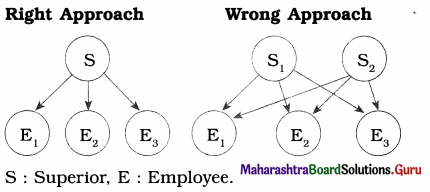
11th OCM Chapter 3 Exercise Small Scale Industry and Business Practical Problems Solutions Maharashtra Board

Small Scale Industry and Business 11th OCM Chapter 3 Solutions Maharashtra Board

Balbharti Maharashtra State Board Organisation of Commerce and Management 11th Textbook Solutions Chapter 3 Small Scale Industry and Business Textbook Exercise Questions and Answers.

Class 11 OCM Chapter 3 Exercise Solutions

1. (A) Select the Correct option and rewrite the sentence

Question 1.
The problem of ……………….. is becoming more serious in India.
(a) employment
(b) unemployment
(c) pollution
Answer:
(b) unemployment

Question 2.
India is ………………… abundant country.
(a) labour
(b) money
(c) material
Answer:
(a) labour

Question 3.
…………….. cost of power acquisition, frequent power cuts, irregular supply of power affect the productivity of SSI.
(a) Higher
(b) Lower
(c) Average
Answer:
(a) Higher

Maharashtra Board OCM 11th Commerce Solutions Chapter 3 Small Scale Industry and Business

Question 4.
Before setting up business, it is essential to study prevailing ………………. environment.
(a) business
(b) natural
(c) political
Answer:
(a) business

Question 5.
Small Scale Business are ………………… intensive.
(a) money
(b) power
(c) labour
Answer:
(c) labour

Question 6.
Occurring obscured idea in mind of entrepreneur is ……………….. stage of establishing business.
(a) first
(b) second
(c) third
Answer:
(a) first

Question 7.
Small scale industries contribute nearly ……………….. to the industrial exports of the country.
(a) 40%
(b) 60%
(c) 20%
Answer:
(a) 40%

1. (B) Match the pairs

Group A Group B
(a) Micro Manufacturing Sector (1) Handloom
(b) Traditional Small Scale business (2) Unskilled
(c) Registration (3) Does not exceed Rs. 25 lakhs
(d) Labour (4) 40% of exports of India
(e) Bicycle Parts (5) Does not exceed Rs. 1 lakhs
(6) DIC
(7) Marketing Problem
(8) Modern Small Scale business
(9) Project Appraisal
(10) Cost-efficiency

Answer:

Group A Group B
(a) Micro Manufacturing Sector (3) Does not exceed Rs. 25 lakhs
(b) Traditional Small Scale business (1) Handloom
(c) Registration (6) DIC
(d) Labour (2) Unskilled
(e) Bicycle Parts (8) Modern Small Scale business

1. (C) Give one word/phrase/term

Question 1.
A sector which is back bone of rural India.
Answer:
Small Scale Sector

Question 2.
An industry using power with less than 50 employees.
Answer:
Small Scale Industry

1. (D) State True or False

Question 1.
Small Scale industries should be developed in order to maintain, economic balance in a country.
Answer:
True

Question 2.
Majority Small Scale Industry uses advanced technology.
Answer:
False

Maharashtra Board OCM 11th Commerce Solutions Chapter 3 Small Scale Industry and Business

Question 3.
Small business easily get access to low interest rates.
Answer:
False

Question 4.
Small business cannot survive in the competition.
Answer:
True

1. (E) Find the odd one

Question 1.
Coir, Handicraft, Spare Parts, Hand-loom
Answer:
Spare Parts

Question 2.
Bicycle Parts, Sericulture, Electronic Appliances, Sewing Machine
Answer:
Sericulture

1. (F) Complete the sentences

Question 1.
…………….. industries plays an important role in developing countries.
Answer:
Small Scale

Question 2.
SSI is …………….. largest industry which creates huge employment opportunities.
Answer:
second

Question 3.
SSI enjoys the advantage of ……………… cost of the produce.
Answer:
low

Question 4.
SSI are ……………… intensive.
Answer:
labour

Question 5.
SSI requires ………………….. capital as compared to large scale industries.
Answer:
less

Question 6.
SSI produces consumer goods as well as …………………. components.
Answer:
industrial

1. (G) Select the correct option

(Small Manufacturing Sector, Micro Manufacturing Sector, Micro Services Sector, Medium Manufacturing Sector, Small Services Sector)

Group A Group B
(1) More than Rs 25 lakhs but does not exceed Rs 5 Crores —————-
(2) —————- Does not exceed Rs 25 lakhs
(3) More than Rs 5 crores but does not exceed Rs 10 crores —————
(4) —————- Does not exceed Rs 10 lakhs
(5) More than Rs 10 lakhs but does not exceed Rs 2 crores —————-

Answer:

Group A Group B
(1) More than Rs 25 lakhs but does not exceed Rs 5 Crores Small Manufacturing sector
(2) Micro Manufacturing sector Does not exceed Rs 25 lakhs
(3) More than Rs 5 crores but does not exceed Rs 10 crores Medium Manufacturing sector
(4) Micro Services Sector Does not exceed Rs 10 lakhs
(5) More than Rs 10 lakhs but does not exceed Rs 2 crores Small Services Sector

1. (H) Answer in one sentences

Question 1.
What is SSI?
Answer:
Traditionally the industries in India which are organised on a Small Scale and produces goods with the help of machines, labour and power are considered as Small Scale Industries.

Maharashtra Board OCM 11th Commerce Solutions Chapter 3 Small Scale Industry and Business

Question 2.
State the example of Traditional Small Scale Industry.
Answer:
Hand-loom, Handicraft, Coir, Sericulture, Khadi and Village Industries are the examples of Traditional Small Scale Industries.

Question 3.
Give examples of Modern Small Scale Industry.
Answer:
Bicycle Parts, Sewing Machines, Blades, Razors, Electric Appliances, Spare Parts are examples of Modern Small Scale Industries.

1. (I) Correct the underlined word and rewrite the following sentences.

Question 1.
The problem of employment has been becoming more serious in India.
Answer:
The problem of unemployment has been becoming more serious in India.

Question 2.
India is material abundant country.
Answer:
India is labour abundant country.

Question 3.
Small scale Industry uses advanced technology.
Answer:
Small scale Industry uses outdated technology.

Question 4.
SSI begin with large amount of capital.
Answer:
SSI begin with small amount of capital.

Question 5.
Business proposal is the first step in setting up of a small scale business.
Answer:
Decision of Business area is the first step in setting up of a small scale business.

1. (J) Arrange in proper order.

(a) Selection of a place
(b) Selection of a product
(c) Business proposal
(d) Selection of technology
Answer:
(a) Selection of a product
(b) Selection of a place
(c) Selection of technology
(d) Business proposal

2. Explain the following terms/concepts.

Question 1.
Small Scale Industry.
Answer:
Any Industrial Unit is regarded as Small Scale Industry, if the following condition is satisfied.
“Investment in fixed assets like plant and equipment either held on ownership terms or on lease or hire purchase should not be more than Rupees one crore. However, the unit in no way can be owned or controlled or auxiliary for any other industrial unit.”

Maharashtra Board OCM 11th Commerce Solutions Chapter 3 Small Scale Industry and Business

Question 2.
Service Sector.
Answer:
According to MSMED on the basis of investment Micro Service Sector ‘does not exceed Rs 10 lakhs’, Small Service Sector, ‘more than 10 lakhs but does not exceed 2 crores’ and Medium Service Sector ‘more than Rs 2 crores but does not exceed Rs 5 crores’.

Question 3.
Micro Small Scale Business.
Answer:
Micro small scale business is classified as Manufacturing sector and Services Sector. According to MSMED, Micro Manufacturing sector does not exceed Rs 25 lakhs and Micro Services sector does not exceed Rs 10 lakhs.

Question 4.
Traditional Industrial Sector.
Answer:
Small Scale Industries are further classified as Traditional Small Scale Industries and Modern Small Scale Industries. Handloom, Handicraft, Coir, Sericulture, Khadi and Village Industries are the examples of traditional SSI Industries.

Question 5.
Modern Industrial Sector.
Answer:
Small Scale Industries are further classified as Traditional Small Scale Industries and Modern Small Scale Industries. Bicycle Parts, Sewing Machines, Blades, Razors, Electric Appliances, Spare Parts are the examples of Modern Small Scale Industries.

3. Study the following case/situation and express your opinion.

1. Mr. Ram wants to start Small Scale business of manufacturing parts of bicycle or machinery.

Question 1.
Identify the first step or stage of setting up his Small Scale business.
Answer:
Ram has to first decide whether the setup will be corporation, proprietorship or partnership. He has to identify his strength and weaknesses which can help him to decide what type of business would be most suitable. He has to study the amount of capital requirement needed to start his business. Once he gets the idea of total capital requirement he can decide what type of business to start.

Question 2.
State the different ways of raising the capital for his business.
Answer:
If Ram decides to start as proprietorship than he has to raise all the capital by himself. He can get it from his own savings or borrow money form bank, financial institutions. He can also study the different government schemes and raise capital through those schemes.

If Ram decides to start partnership firm than he will have to find a person who is ready to invest in his partnership firm as well as he has knowledge about manufacturing parts of bicycle. They can raise capital by investing their savings, borrowing through financial institutions and friends. They can also take help from various government schemes and institutions set-up to help SSI.

If Ram decides to start corporation i.e. Pvt. Ltd. Company than he can raise capital by issuing equity shares privately. He has to sell the shares to his friends and relatives. He can also study of various government schemes and raise capital through those schemes. Ram can also borrow money from bank, financial institutes, etc. He can also accept deposits from public in the further stage of his business.

Maharashtra Board OCM 11th Commerce Solutions Chapter 3 Small Scale Industry and Business

Question 3.
‘Marketing is a necessary step of running a business.’ Comment on it.
Answer:
Goods are ultimately manufactured for consumers. There is competition among many manufacturers and traders to sale goods in the market.
Without selling the goods, manufacturer cannot earn profit. Profit is main motto of business.

To sale goods in market, advertising and publicity is required. To make your brand image in market, advertising with quality of goods is required. Branded goods are easily sold in the market. Marketing can be done through many ways like TV, Radio, Bill Boards, Internet, Websites, Salesman, etc.
Thus, marketing is a necessary step of running a business.

4. Answer in brief.

Question 1.
State any four points of importance of Small Scale Industry/Business.
Answer:
Importance of Small Scale Industry:
Job Opportunities
Regional Balance
Maximum use of Natural Resources
Reduces Migration

1. Job Opportunities : SSI is second largest industry which creates huge employment opportunities, because it can be operated with minimum amount of capital. SSI can be run with basic and potential skills. This is a boost for a labour surplus country like India.

2. Regional Balance : In India, all regions are not developed due to lack of industrialization. SSI can be setup with minimum amount of capital. Small industries manufactures product using simple technologies, local available resources, material and labour. Thus, they contribute significantly to the balanced development of the country.

3. Maximum use of Natural Resources : Small scale industries are labour intensive. They utilize available natural resources and raw materials from local areas. Such use of local natural resources minimizes the cost of production which result into reasonable price of goods.

4. Reduces Migration : Small Scale industries can create a large number of employment in rural area. SSI is also a best example of self-employment. Therefore, migration of people from rural to urban can be reduced or minimized.

Question 2.
Write any four advantages of Small Scale Industry.
Answer:
Advantages of Small Scale Industries:
1. Large Employment
2. Less Capital Requirement
3. Contribution to Export
4. Opportunities for Entrepreneurship

1. Large Employment: Small Scale Industries has huge potential to create employment opportunities. They are labour intensive and use more labour than other factors of production. Their gestation period is also low and can provide employment opportunities to large number of people.

2. Less Capital Requirement : SSI requires less capital as compared to large scale industries. SSI can be started by small entrepreneurs with limited capital resources.

3. Contribution to Export : Nearly 40% of the industrial exports are contributed by SSI. Product such as hosiery, knitwear, gems and jewellery, handicraft, coir products, woolen garments, processed food, chemical and allied products and a large number of engineering goods contribute substantially to India’s exports. Products produced by SSI are used in the manufacturing of products by large scale industries which are exported. It contributes directly and indirectly to exports and helps to earn valuable foreign exchange.

4. Opportunities for Entrepreneurship : Small Scale Industries provide opportunities for entrepreneurs with limited capital as it requires less capital and lower investment in technology and machines as compared to large scale enterprises. Therefore, small entrepreneurs can start small scale industries easily.

Question 3.
State any four challenges before Small Scale Industries.
Answer:
Challenges before Small scale industries:

  1. Inadequate Finance
  2. Problem of Raw Material
  3. Labour Problem
  4. Marketing Problem

1. Inadequate Finance : SSI generally begins with a small amount of capital. Many of the units in the small sector raise funds from capital market. These units frequently suffer from lack of adequate working capital.

2. Problem of Raw Material : Another major problem of Small Scale Industries is inadequate supply of raw materials. Due to that SSI have to compromise on the quantity and quality of raw material, or pay more, price for good quality of raw material.

3. Labour Problem : Small industries generally appoint unskilled and semi skilled worker on daily wages, This creates the problem of low labour productivity, higher absenteeism and poor job commitment. The wages are low due to financial limitations. This leads to labour dissatisfaction and increase the problem of labour turnover. Improper shifts and lack of job security makes employment in small industries unattractive and the talented work force does not opt for such job.

4. Marketing Problem : Marketing is a weaker part of small industries. SSI have to depend excessively on middlemen who at times exploit them by paying low prices and delayed payments. Further, direct marketing may not be feasible for small business firms as they lack the necessary infrastructure.

5. Justify the following statements.

Question 1.
Generally Small Scale Industries are sick.
Answer:

  1. There are many problems faced by Small Scale Industries. These problems may be internal problems or external problems.
  2. Internal Problems are like unskilled labour or untrained labour, lack of managerial skills and marketing skills, lack of modernisation, etc.
  3. External problems like shortage of working capital, inadequate loans, delayed payments, shortage of raw material, etc.
  4. According to RBI a sick unit is that which has incurred a cash loss for one year, is likely to continue it for current year as well as following year.
  5. Thus, mainly due to financial problem, industrial units are unable to sustain themselves and are called as sick units.

Maharashtra Board OCM 11th Commerce Solutions Chapter 3 Small Scale Industry and Business

Question 2.
Small Scale Industry require less amount of capital.
Answer:

  1. The production of Small Scale Industries is less.
  2. General unskilled labours are employed.
  3. As production is less raw material requirement is also less.
  4. In a place like India, where capital formation is low, small business is suitable.
  5. Due to small in size, such form of business can easily adapt to changing atmosphere. This promotes flexibility. It can easily change their working style without much loss as compared to large businesses.
  6. Thus, SSI requires less amount of capital.

Question 3.
Small Scale Industries have problems.
Answer:
Small scale industries have to face many problems:

  1. Lack of Adequate Finance : Due to small scale of production and sale, Banks and Financial Institutions are afraid to give loans.
  2. Problem of Raw material : Due to inadequate finance they cannot purchase raw material at a time. Thus, the cost of raw material increases.
  3. Labour Problem : Due to inadequate finance, they cannot employ skilled labour which affects the production.
  4. Marketing Problem: The goods manufactured if not marketed properly can be risky as it will affect the sales,
  5. Problem of Transport: Transportation cost increases the cost of the product which hampers the sale as large scale industries cost may be less.
  6. Sickness : Due to financial problem industrial units are unable to sustain themselves and finally turn to sick units.
  7. Thus, Small Scale Industries have problems

6. Attempt the following.

Question 1.
Explain the meaning of Small Scale Industries.
Answer:
Small Scale Industries are those industries where fixed assets i.e. plant and machinery which is owned or hired or taken on lease basis, does not exceed more than one crore.

MSMED has classified Small Scale Industries into Manufacturing sector and Services sector, and further into three categories of business i.e. Micro business, Small business and Medium business.
Subsequently over a period of time, a new definition was introduced by MSMED Act, 2006 (Micro Small and Medium Enterprises Development) is as follows
(A) Manufacturing Enterprises:

  1. A micro enterprise, where the investment in plant and machinery is less than Rs 25 lakh.
  2. A small enterprise, where the investment is more than Rs 25 lakh but less than Rs 5 crore.
  3. A medium enterprise, where the investment in plant and machinery is more than Rs 5 crore but less than Rs 10 crore.

(B) Service Enterprises:

  1. A micro enterprise, where the investment in equipment is less than Rs 10 lakh.
  2. A small enterprise, where the investment in equipment is more than Rs 10 lakh but less than Rs 2 crores.
  3. A mediuiri enterprise where the investment in equipment is more than Rs 2 crore but less than Rs 5 crores.
  4. An industrial unit can be categorised as small business if it fulfills the above capital investment criteria.

Question 2.
State importance of small business.
Answer:
Following are the importance of Small Business:
(i) Supply of Raw Materials to Large Industries : Finished goods of Small Scale Industries is raw material – for large scale industries. E.g., head lights supplied to automobile industries. Small Scale Industries supply raw materials to large scale industries and they get easy market available to their product.

(ii) Balanced Development between Rural and Urban Areas : With the help of locally available raw materials and labour, more and more Small Scale Business can be started in rural areas. This helps to reduced regional imbalance between urban and rural areas.

(iii) Opportunities to Young Generation : Young generations by using their creative skills make product unique in the market. Small scale business gives an opportunity to youngster to show their creativity and abilities to prove themselves and achieve success in development.

(iv) Large Employment : India is second largest populated country after China, which faced problem of unskilled and semi skilled labour. Small Scale Industries operate with more labour and less capital, which can accommodate more man power to solve employment problem.

(v) Utilisation of Domestic Resources : Small farmers can start their own unit of small industry by using locally available raw materials. He can get self employment and involve his family members too.

Question 3.
Explain in brief the impact of capital, on Small Scale industries.
Answer:
Major problem faced by small scale industries is insufficient capital, which creates following difficulties with them.
(i) Borrowings of Capital from Landlords and Money Lenders : Nationalised and Co-operative banks are not ready to finance Small Scale Industries without security. Thus, they are forced to borrow from money lenders, where they have to pay very high rate of interest.

(ii) Storage of Raw material: Small Scale Industries are agro based. Raw material is available seasonally. To stock goods they required huge finance. Due to lack of finance, they run industry only in seasons.

(iii) Lack of Skilled Labour : Only unskilled and semi skilled labourer are available. Small Scale Industries cannot afford labour cost of skilled labourer which affect quality and quantity of production and profitability.

(iv) Outdated technology : Due to insufficient capital, production methods used by SSI are old, which results in poor quality and quantity of output.

(v) Weaker Marketing Skill : In todays world marketing plays an important role. Rural area is facing marketing problem due to lack of facilities and knowledge and they are exploited by middlemen too.

Maharashtra Board OCM 11th Commerce Solutions Chapter 3 Small Scale Industry and Business

Question 4.
State the problem faced by Small Scale industries.
OR
Explain in detail the challenges faced by Small Scale Industries.
Answer:
Problems faced by Small Scale Industries:
(i) Outdated Technology : Traditional methods of productions are used due to lack of finance and knowledge about latest technology. This results in poor quality of production with low output.

(ii) Problems of Infrastructure: Problems of infrastructure faced by small business are power cuts, improper transport facility, problem like congestions, bottlenecks, strikes, rise in freight charges, inadequate space, bad repair of premises, unsuitable location, high rent, etc. These problems definitely affects smooth working of small business.

(iii) Underutilization of Capacity : Small Scale Industries cannot utilize optimum resources and capacity due to lack of marketing skills, lack of demand, etc. This lead to increase the cost of product and wastage of resources.

(iv) Lack of Capital: Nationalised and Co-operative banks are not ready to provide finance without securities. Owners of Small Scale Industries don’t have any option other than borrowings funds from landlords and money lenders where they have to pay very high rate of interest.

(v) Problem of Skilled Labourers : Mostly unskilled and semi skilled labourers are available to Small Scale Industries as they cannot afford the wages to highly skilled labourer. This affect quality and quantity of output which result in less price for sales.

Question 5.
Explain the role of Small Scale Industries in employment generation.
Answer:
Small Scale Industries play very important role in generation of employment as follows:

  1. Small Scale Industries are Labour Intensive : There is shortage of capital with small scale industries. They are labour intensive. They use more man power than machines, they creates more opportunities for rural employment.
  2. Employment to Unskilled and Semiskilled Labourer : Small Scale Industries are using old and traditional method of production where they need unskilled and semi-skilled labourer.
  3. Employment of Rural Land Less Labourer : Small Scale Industries are set-up in rural areas. They provide employment to local labourers. They have potential to create opportunities to large scale employment to mass population in villages.
  4. Decrease in Migration of Labourers : Migration means movement of labourers from village to city in search of job. Due to increase in small scale industries in village areas migration of labour is reduced. Labourers are getting good employment at their own villages.

7. Answer the following

Question 1.
Explain the challenges before Small business.
Answer:
Small scale business are playing very important role in development of developing countries. They faced following challenges / difficulties:
(i) Problems of Marketing : Small business organizations depend excessively on middlemen who many times exploit them by paying low price and delayed payment. Further direct marketing may not be possible for them as they lack necessary infrastructure. Major marketing problem are lack of advertising, non-branding of products, poor quality, transportation problem, local difficulties, competition, etc.

(ii) Infrastructural Problem : Problems of infrastructure faced by small business are power cuts, improper transport facility, problem like traffic congestions, bottlenecks, strikes, rise in freight charges, inadequate space, bad repair of premises, unsuitable location, high rent, etc. These problems definitely affects smooth working of small business.

(iii) Credit and Finance : Lack of finance is the major problem faced by small business. Artisans or Craftsmen running cottage industry take credits from mahajans or traders who charge large amount of interest from them. For small scale industries, institutional source of finance (e.g. banks) is also available, but the funds allocated to this sector are inadequate.

(iv) Delayed Payment: They face problem of delayed payment by large firms and Government departments.

(v) Sickness Problem: According to RBI a sick unit is that which has incurred a cash loss for one year, is likely to continue it for current year as well as following years and unit has an imbalance in financial structure. Sickness is generally seen in small business industries like cotton, jute, sugar, textile, etc. Internal causes of sickness are lack of skill labour, faulty planning, problem of recovery, etc. External causes of sickness are shortage of capital, inadequate loans, shortage of raw material, etc. However, rehabilitation of sick unit is a costly affair.

(vi) Personal Problems : Personal problems like spending long hours to work and less time with family and the rewards have not been favourable.

(vii) Shortage of Raw Material : Shortage of raw material often take place due to reasons like natural calamities, transport problem, industrial strikes, poor quality of raw material, exploitation done by traders, etc. Traders or agents who supply raw material often exploit the owner by charging higher prices. They also insist on buying finished products at lower rate. Thus, small business owners are subject to double exploitation.

(viii) Outdated Technology : Use of low-grade technical know-how and skills have resulted in low productivity in small business industries. Many units in small business make use of primitive methods of production, this leads to increase in cost of production, whereas productivity is low. Small units often do not care about the changing tastes and fashions of customers.

(ix) Underutilization of Capacity : Small business units cannot utilize optimum resources and capacity due to lack of marketing skills, lack of demand, they work below full capacity, etc. This lead to increase the cost and wastage of resources.

(x) Labour Problem : It includes highly demanding employees, absenteeism, lack of skilled workers and transportation of workers, strikes, high wage rates, inefficiency, etc.

Maharashtra Board OCM 11th Commerce Solutions Chapter 3 Small Scale Industry and Business

Question 2.
Write down the benefits or advantages of small business.
Answer:
Small scale business plays very important role in the economic development of the country.
The following are the benefits or advantages of small business:
(i) Cost Savings : Small scale business used micro production method which results into quality product at low cost of production. Production cost of small business is much more less compared to large scale industries due to low cost of operation.

(ii) Adaptability : Small scale business can change themselves as per the market requirement. They can change product, line of product as per market changes, like fashions, new product, demand, etc.

(iii) Limited Capital : As small business is labour intensive they requires very small amount of capital for plant and equipments.

(iv) Low Gestation Period : To start a new business requires very short period as compared to large scale industries. Small scale business can start production of good in very short period of time and can increase the scale of production.

Labour Intensive : Small business units use less machines and more labours. Absorption of local labour helps to solve problem of absolute poverty and control inequality of income.

(vi) Opportunities to Rural Youth : New generation youth has smart creativity. With available technology and raw materials, rural youth can start their own business unit. Small business unit plays very important role in developing countries.

(vii) Upliftment of Economy : Majority of small scale business used traditional method of productions. Rural craftsman and artisans do have their own talents and skills which they have learnt from their forefathers. Such products are very much demanded in market which results in high income.

(viii) Decentralised Economy : Small scale business prevents concentration of economic power in the few hands. Income is divided equally among large number of people.

(ix) Export Earning : Small business contributes remarkable to country’s export. 40% of India’s exports are contributed by small business like textiles, handicraft, handloom, embroidery, etc.

(x) Regional Balance : There is wide gap between urban and rural India. Small scale business helps to reduce gap between developed and underdeveloped or developing areas.

Question 3.
Explain the process of establishment of Small Scale Industries.
Answer:
In todays world, youth are more attracted towards business opportunities rather than employment.
To start a small scale industries following stages to be followed:
(i) Idea to Setup a Business : This is a first step to start a small scale industry. The prospective entrepreneur with his own capacity decide the sized and type of business like sole proprietorship, partnership or corporation.

(ii) Analysis of Business Surrounding : It is necessary to understand different business surrounding and policies before starting any business. They are competitors, legal, economical, industrial, technological, etc.

(iii) Choice of Product : Entrepreneurs has to decide his sector of production i.e. Manufacturing or Service sector. After doing market survey and understanding advantages and disadvantages one should decide line of product or services.

(iv) Location for Business : Entrepreneur has to select location to start business. It plays very important role in success of business while selecting location many factors are to be taken into consideration like availability of labour, raw materials, power supply, transportation, etc.

(v) Technology Selection : An entrepreneur has to select available and suitable technology for his business. He should select technology he is familiar to use.

(vi) Project Appraisal : It means the study and assessment of a project. One should study the project very carefully from the point of view regards to economy, finance, marketing and profitability.

(vii) Capital Requirement : The entrepreneur has to plan for capital requirement and sources available for capital. It can be self finance, loan from relatives or banks.

(viii) Incorporation / Registration : It is compulsory for every small scale industry to registered with the respective Government Authorities. A printed application form is available with District Industries Centre (DIC). Entrepreneur has to duly filled the information with his signature in the form and submit to DIC.

(ix) Implementation of Resources : After registration of business entrepreneur has to start with production process:

  • Financial Resources : The entrepreneur has to collect finance and make necessary arrangement for capital.
  • Factor Set up : The entrepreneurs has to allocate space for various operations, purchase of machinery and tools and installation of it.
  • Electric power and water supply : The entrepreneur has to calculate total electric power requirement in KW (Kilowatt) and get connection from the authority and supply for water connection.
  • Appointment of staff : Small scale industries are labour, intensive. One has to appoint unskilled and semi-skilled staff as per requirement to start production.

(x) Manufacturing and Selling of Product : After assembling all financial and physical resources goods are manufactured and send to market for sale. Advertising and publicity plays very important role in marketing and selling of product.

(xi) Customer’s Feedback : Customer satisfaction is very important in business. Regular feedback from customers is helping to make qualitative changes in product.

Question 4.
Explain the importance of small business.
Answer:
Following are the importance of Small Business:
(i) Supply of Raw Materials to Large Industries : Finished goods of Small Scale Industries is raw material – for large scale industries. E.g., head lights supplied to automobile industries. Small Scale Industries supply raw materials to large scale industries and they get easy market available to their product.

(ii) Balanced Development between Rural and Urban Areas : With the help of locally available raw materials and labour, more and more Small Scale Business can be started in rural areas. This helps to reduced regional imbalance between urban and rural areas.

(iii) Opportunities to Young Generation : Young generations by using their creative skills make product unique in the market. Small scale business gives an opportunity to youngster to show their creativity and abilities to prove themselves and achieve success in development.

(iv) Large Employment : India is second largest populated country after China, which faced problem of unskilled and semi skilled labour. Small Scale Industries operate with more labour and less capital, which can accommodate more man power to solve employment problem.

(v) Utilisation of Domestic Resources : Small farmers can start their own unit of small industry by using locally available raw materials. He can get self employment and involve his family members too.

Question 5.
It is clear that the absence of capital and raw material is the main reason for the short term sickness. Explain it.
Answer:
Industrial sickness means the industry which has financial losses over period of time. Short term sickness is a temporary phenomenon.
Followings are the main capital and raw material reasons for short term sickness:
Financial / Capital:
(i) Non availability of Finance from Banks : Nationalised and Co-operative banks are not ready to finance SSI as there is less possibility of recovery of loans. Banks demand securities against loans, which is difficult to arrange for the small businessman.

(ii) Loans from Money lenders : As bank finance is difficult to raise, small businessman borrow capital from money lenders who charged very high rate of interest.

(iii) Shortage of Working Capital : Majority of small scale industries are depend on local source of raw material which is seasonal. They have to buy large quantity of raw materials to be used through out the years which needs large finance.

(iv) Unawareness of various Government Schemes : Due to lack of awareness among the owners of SSI about various Government Scheme for capital marketing, subsidies, etc. suffer capital problems.

Maharashtra Board OCM 11th Commerce Solutions Chapter 3 Small Scale Industry and Business

Raw Material:
(i) Local source of raw material : Majority of small scale industries are depends on local supply of raw materials. Local suppliers of raw materials make artificial scarcity for supply of raw materials which make increase in product cost for the businessman.

(ii) Seasonal supply of raw materials : Small scale industries are using local supply of raw materials. The supply of raw material is seasonal. They don’t have huge capital to stock large quantity of raw materials due to this they have to stop production of goods after season ends and face problem of short term sickness.

(iii) Shortage of raw material : There may be short supply of raw materials due to natural calamities, transport strike, etc. affect the running of small scale industries.

(iv) Poor quality of raw material : There is no grading or standardizing of raw materials supply to small scale industry. This affect product quality and quantity.

OCM 11th Commerce Textbook Solutions Digest
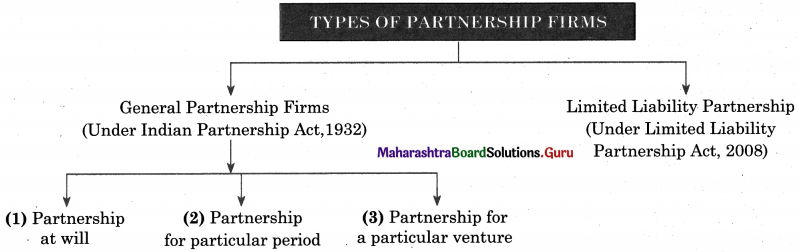
11th OCM Chapter 2 Exercise Trade Practical Problems Solutions Maharashtra Board

Trade 11th OCM Chapter 2 Solutions Maharashtra Board

Balbharti Maharashtra State Board Organisation of Commerce and Management 11th Textbook Solutions Chapter 2 Trade Textbook Exercise Questions and Answers.

Class 11 OCM Chapter 2 Exercise Solutions

1. (A) Select the correct option and rewrite the sentence.

Question 1.
……………. is the link between producer and retailer.
(a) Consumer
(b) Wholesaler
(c) Manufacturer
Answer:
(b) Wholesaler

Question 2.
Price charged by retailers is generally ………………..
(a) higher
(b) lower
(c) fixed
Answer:
(a) higher

Question 3.
A wholesaler invests……………… capital in the business.
(a) small
(b) large
(c) less
Answer:
(b) large

Question 4.
The retailer is the …………….. link in the chain of distribution.
(a) first
(b) last
(c) second
Answer:
(b) last

Maharashtra Board OCM 11th Commerce Solutions Chapter 2 Trade

Question 5.
Retailers supply information to the …………………. through wholesalers.
(a) manufacturer
(b) government
(c) consumers
Answer:
(a) manufacturer

Question 6.
Major items ……………… are chemicals, crude oil and petroleum products, edible oils, electronic goods, gold and silver, pearl and precious stone.
(a) exported by India
(b) not exported by India
(c) imported by India
Answer:
(c) imported by India

Question 7.
For customs clearance the ……………… is prepared by the exporter.
(a) carting order
(b) letter of credit
(c) shipping bill
Answer:
(c) shipping bill

Question 8.
……………… carry goods on their head in basket or containers.
(a) Hawkers
(b) Peddlers
(c) Cheap Jacks
Answer:
(b) Peddlers

Question 9.
………………… open their shops on market days i.e. on fixed days.
(a) Street Traders
(b) Market Traders
(c) Peddlers
Answer:
(b) Market Traders

Question 10.
……………… retailers deal in particular goods.
(a) General Stores
(b) Specialty Shop
(c) Second Hand Good Shops
Answer:
(b) Specialty Shop

Question 11.
………………… is known as self – service store.
(a) Departmental Store
(b) Super Market
(c) Multiple Store
Answer:
(b) Super Market

1. (B) Match the pairs

Question 1.

Group A Group B
(a) Departmental store (1) Carry goods on heads
(b) Market traders (2) Uniform price
(c) General shops (3) Business on market day
(d) One price shop (4) Most common shop
(e) Peddlers (5) Huge capital
(6) Distribution through branches
(7) Carry goods on carts
(8) Sale used articles
(9) Specialized goods
(10) Authorized dealers

Answer:

Group A Group B
(a) Departmental store (5) Huge capital
(b) Market traders (3) Business on market day
(c) General shops (4) Most common shop
(d) One price shop (2) Uniform price
(e) Peddlers (1) Carry goods on heads

Question 2.

Group A Group B
(a) Import trade (1) First step in import
(b) Registration (2) Goods not for own country
(c) Entrepot trade (3) Buying goods from other country
(d) Letter of Credit (4) No restrictions
(e) Large Turnover (5) Selling goods to other country
(6) Credit worthiness of importer
(7) Recovery of dues
(8) Wholesaler
(9) Retailer
(10) Credit worthiness of exporter

Answer:

Group A Group B
(a) Import trade (3) Buying goods from other country
(b) Registration (1) First step in import
(c) Entrepot trade (2) Goods not for own country
(d) Letter of Credit (7) Recovery of dues
(e) Large Turnover (8) Wholesaler

1. (C) Give one word/phrase/term

Question 1.
A person who move daily from place to place to sell goods.
Answer:
Itinerant retailer

Question 2.
The middleman between wholesaler and customer.
Answer:
Retailer

Question 3.
A retail shop which operates through branches.
Answer:
Chain stores

Maharashtra Board OCM 11th Commerce Solutions Chapter 2 Trade

Question 4.
A shop where all goods are available at same price.
Answer:
One price shop

Question 5.
A retailer who display his goods on the load.
Answer:
Street traders

Question 6.
An order placed by an importer for the supply of certain goods.
Answer:
Indent

1. (D) State True or False

Question 1.
Wholesaler keeps large stock of goods.
Answer:
True

Question 2.
Wholesaler deals in small quantity.
Answer:
False

Question 3.
A retailer has no direct contact with consumers.
Answer:
False

Question 4.
Super market shops offer home delivery facilities to customer.
Answer:
False

Question 5.
Departmental store located out of the city.
Answer:
False

Question 6.
Customers cannot bargain in one price shop.
Answer:
True.

Question 7.
Letter of Credit is required for obtaining export license.
Answer:
True

Question 8.
Buying goods from other country is known as export trade.
Answer:
False

Question 9.
Maintaining high quality is necessary to sustain in export business.
Answer:
True

1. (E) Find the odd one.

Question 1.
Itinerant Retailers
General Stores, Hawkers, Cheap Jacks, Peddlers.
Answer:
General Stores

Question 2.
Large Scale Retailers
Departmental Stores, Chain Stores, Market Trader, One Price Shop.
Answer:
Market Trader

Question 3.
Small Scale Retailers
Specialty Shops, Second hand Goods Shops, Malls, Authorised Dealers.
Answer:
Malls

1. (F) Complete the sentences.

Question 1.
The original form of trade was ……………
Answer:
barter

Question 2.
Trade establishes a link between producers and …………….
Answer:
consumers

Question 3.
The wholesaler provides valuable services to manufacturers and ……………….
Answer:
retailers

Question 4.
The wholesaler purchases a large quantity of goods from the ………………..
Answer:
manufacturers

Question 5.
The wholesaler bears the risk of ……………… and market fluctuations.
Answer:
price

Question 6.
The wholesaler provides financial support to retailers by way of ………………. facility.
Answer:
credit

Question 7.
The retailer is the connecting link between the wholesaler and …………………..
Answer:
consumers

Question 8.
……………… is a large retail organization which mainly sells wide range of food and grocery items on the basis of ‘Self-service’.
Answer:
Super market

Question 9.
……………….. are retail stores owned by a single organization
Answer:
Chain store

Question 10.
The shop where the price of all products or goods are same is known as ……………..
Answer:
One price shop

Question 11.
A modern shopping mall is an ………………. term.
Answer:
American

Question 12.
The Letter of Credit is the safest method of payment in ………………. trade.
Answer:
foreign

1. (G) Select the correct option

Question 1.
Wholesaler deals in (small / large) quantity.
Answer:
Large

Question 2.
Departmental stores are located (in / out of) the city.
Answer:
in

Question 3.
Customer cannot bargain in (General stores / One Price shop).
Answer:
One price shop

Question 4.
Retailer operates in (global / local) market.
Answer:
local

Maharashtra Board OCM 11th Commerce Solutions Chapter 2 Trade

Question 5.
Departmental store is a (large / small) scale retail shop.
Answer:
large

Question 6.
Supermarket shop requires (limited / large) capital.
Answer:
large

Question 7.
Chain stores are retail store owned by (many / single) organization.
Answer:
single

Question 8.
The shop where the price of all the product or goods are (different / same) is known as one price shop.
Answer:
same

1. (H) Answer in one sentence

Question 1.
What do you mean by internal trade?
Answer:
Trade carried on within the geographical boundaries of a country is called internal trade or domestic trade.

Question 2.
Who is known as hawkers?
Answer:
A trader who carries the goods on the back of animals or wheel cart for the purpose of selling is called an hawker.

Question 3.
What is the meaning of Peddlers?
Answer:
Mobile retailer who carry goods on their head or back and move from one place to another for selling are called Peddlers.

Question 4.
What do you mean by fixed shop retailers?
Answer:
Fixed shop retailers are those retailers who have a fixed place for their business.

Question 5.
What do you mean by small scale fixed retailers?
Answer:
Small scale fixed retailers are those who conduct their business operations on a small scale with variety of goods at a fixed place.

Question 6.
What do you mean by large scale fixed retailer?
Answer:
Large scale fixed retailers operate on large scale business at a fixed place.

Question 7.
What is departmental store?
Answer:
A departmental store is a large scale retail organisation situated in a central place in the city. It is divided into a number of small retail shops known as departments, selling different goods under one roof. .

Question 8.
What is meant by supermarket shop?
Answer:
It is a large scale retail organization which sells a wide variety of goods to customers on the basis of self service.

Question 9.
What do you mean by chain store?
Answer:
Chain store is a retail shop owned and controlled by a single organization located in different parts of the city, with a particular kind of goods.

Question 10.
What is one price shop?
Answer:
One price shops are shops where all articles are sold at one standard and fixed price.

Question 11.
What is a mall?
Answer:
A mall is a large enclosed shopping complex comprising of various stores business cinema theaters and restaurants.

1. (I) Correct the underlined word and rewrite the following sentences

Question 1.
When the trade activities are conduct between two or more countries, it is called as internal trade.
Answer:
When the trade activities are conduct between two or more countries, it is called as external trade.

Maharashtra Board OCM 11th Commerce Solutions Chapter 2 Trade

Question 2.
Export trade refers to the purchase of goods and services from foreign country.
Answer:
Import trade refers to the purchase of goods and services from foreign country.

Question 3.
The price charged in departmental stores is comparatively less.
Answer:
The price charged in departmental stores is comparatively high.

Question 4.
Wholesaler requires less capital.
Answer:
Retailer requires less capital.

Question 5.
Tariff rates of various countries affect the internal trade.
Answer:
Tariff rates of various countries affect the external trade.

1. (J) Arrange in proper order

Question 1.
Retailer, Consumer, Producer, Wholesaler.
Answer:
Producer, Wholesaler, Retailer, Consumer.

Question 2.
International Market, Local Market, National Market, State Market.
Answer:
Local Market, State Market, National Market, International Market.

Question 3.
Import Stage, Pre-import Stage, Post-import Stage, Preliminary Stage.
Answer:
Preliminary Stage, Pre-import Stage, Import Stage, Post-import Stage.

2. Explain the following terms /concepts.

Question 1.
Wholesale Trade.
Answer:

  1. When goods are purchased in large quantity from the manufacturers or producers for the purpose of resale to retailers, then it is called as wholesale trade.
  2. The person doing wholesale business is called wholesaler.
  3. Wholesaler acts as a link between manufacturer and retailer.

Question 2.
Retail Trade.
Answer:

  1. When goods are sold in smaller quantities to the final consumers, then it is called as retail trade.
  2. The person doing retail trade is called as retailer.

Question 3.
Foreign Trade.
Answer:

  1. Trade carried on between two or more foreign countries is called foreign trade.
  2. Foreign trade depends as political relations between two countries.
  3. Procedure of foreign trade is complex, difficult and lengthy.
  4. It consists of import trade and export trade.

Question 4.
Letter of Credit.
Answer:

  1. A letter of credit is a guarantee issued by the importers bank that it will honour the payment upto certain amount of export bills to the bank of the exporter.
  2. It is generally demanded by the exporter country.
  3. It gives assurance to exporter country about its payment of goods exported.

Question 5.
One price shop.
Answer:

  1. One price shop are shops where all the articles are sold at one standard and fixed price.
  2. Such shops sells variety of goods of daily use.
  3. Goods at such shops are sold at lower prices.
  4. E.g. of goods sold at such shops are – watches, shampoos, household articles, crockery, etc.

Question 6.
Departmental Store.
Answer:

  1. Departmental store is a large scale retail shop having different departments and sections for different type of goods in the same building.
  2. It sells large variety of goods under one roof.
    E.g. Shopper stop.

Question 7.
General store.
Answer:

  1. General store is a retail shop which deals in a wide variety of goods located in a residential locality.
  2. Such store sells goods of daily needs like food grains, soaps, stationery, medicines, oils, biscuits, etc.
  3. They provide home delivery to their customers.
  4. They buy goods from the wholesalers or directly from the manufacturers.

Question 8.
Mall.
Answer:

  1. A mall is a large enclosed shopping complex having various stores, restaurant, cinema hail and other business.
  2. E.g. Phoenix Mall, Inorbit Mall, etc.
  3. It is an American term in which one or move building from a complex.

3. Study the following case/situation and express your opinion.

1. Sonupant purchases his grocery material every month from nearest Nandulal grocery shop and he purchase wheat, rice and pulses in bulk for whole year from Gorhe and Son’s Market yard.

Question 1.
Who is wholesaler?
Answer:
Gorhe and Son’s Market yard.

Question 2.
Who is retailer?
Answer:
Nandulal grocery shop is the retailer.

Maharashtra Board OCM 11th Commerce Solutions Chapter 2 Trade

Question 3.
Any one difference between wholesaler and retailer?
Answer:
Goods are sold to retailer for the purpose of sale by wholesaler.
Goods are sold to customer for consumption by the retailer.

2. Anurag is selling goods to Japan. Kavita is buying goods from USA where as Ganesh is buying raw material from South Africa and after processing it sells finished goods to Malaysia.

Question 1.
Who is exporter?
Answer:
Anurag is the exporter.

Question 2.
Who is importer?
Answer:
Kavita is an importer.

Question 3.
What is Entrepot Trade?
Answer:
Enterpot trade is re-exporting of the goods to another country, with or without processing or re-packaging, e.g. Ganesh buying raw materials from South Africa and processing it and selling it to Malaysia.

4. Distinguish between the following

Question 1.
Wholesaler and Retailer.
Answer:

Wholesaler Retailer
(1) Meaning A person who conducts the wholesale trade is called as wholesaler. A person who conducts retail trade is called as retailer.
(2) Capital/Finance Wholesaler needs large amount of capital Retailer needs small amount of capital.
(3) Link It is a link between manufacturer and retailer. It is a link between wholesaler and customers.
(4) Location It is located in central market of the city. It is located in various local markets in the city.
(5) Profit margin Wholesaler works on less profit margin. Retailer works on more profit margin.
(6) Sales of goods Goods are sold to retailer for the purpose of resale. Goods are sold to final customers for their consumption.
(7) Credit Facility Wholesaler offers credit facility to retailers. Retailer offers credit facility only to his regular customers.
(8) Prices It sales goods at lower prices to retailers. It sales goods at higher prices to customers.
(9) Specialisation They are specialised in one or few line of goods. They are specialised in variety of goods.
(10) Warehousing Requires warehousing facilities as the stock of goods are on large scale. He does not require separate warehousing due to small scale purchasing.
(11) Home Delivery Wholesaler offers delivery of goods to retailers at their shops. Retailer offers home delivery of goods to regular customers.

Question 2.
Itinerant Retailers and Non-Itinerant Retailers (Fixed shop retailers).
Answer:

Itinerant Retailers Non-Itinerant Retailers/ Fixed Shop Retailers
(1) Meaning Itinerant retailers are those retailers who do not have a fixed places for their business. Fixed shop retailers are those retailers who have a fixed place for their business.
(2) Capital It requires limited capital. It requires higher capital investment.
(3) Stock of Goods They keep limited stock of goods. They keep large stock of goods.
(4) Quality of Goods They sell low quality goods. They sell quality goods.
(5) Variety of Goods They do not offer variety of goods to customers. They offer variety of goods to customers.
(6) Prices Prices of goods is lower due to absence of fixed cost. Prices of goods is higher than itinerant retailers.
(7) Credit Facility Credit facility is not given to customers. Credit facility is given only to regular customers.
(8) Choice of Goods Customers have no scope for choice of goods. Customers have more scope for choice of goods.
(9) Door to Door Service They offer door to door service to their customers. They do not offer door to door services to their customers.
(10) After Sales Service They do not provide after sales service to customers. They provide after sales service to customers.
(11) Types of Goods It deals in goods of daily need and more perishable nature. It deals in all types of goods as per the needs of the customers.

Question 3.
General Stores and Specialty Stores.
Answer:

General Stores Speciality Stores
(1) Meaning It is a shop which deals in wide variety of goods. It is a shop which deals in specialised products of goods.
(2) Location It is located in the residential areas of the city. It is located in busy shopping centers of the city.
(3) Prices Prices of goods are generally low. Prices of goods are generally high.
(4) Sales Goods are sold on cash basis as well as on credit basis. Goods are sold on cash basis only.
(5) Variety of Products Customers have limited choice of goods. Customers have maximum choice in one line of goods.
(6) Types of Goods Goods sold as per customers day to day need. Specialised goods are sold to customers.
(7) Advertisement Do not spend much expenses on advertisement. Spend more expenses on advertisement due to specialisation.

Question 4.
Departmental Stores and Chain Stores.
Answer:

Departmental Stores Chain Stores
(1) Meaning It is a large scale retail store having different departments and sections for different type of goods under a same roof. It is a retail shop owned and controlled by a single organization located in different parts of the city.
(2) Variety of Goods It deals with large variety of goods. It deals with goods of a particular manufacturer only.
(3) Location It is located at central place of city. It is located in the residential area of the city.
(4) Capital it requires large amount of capital. It requires less amount of capital than Departmental store.
(5) Choice of Goods It deals in the variety of goods and offers wide choice to customers. It deals in particular product of goods and offer the wide choice to customers.
(6) Home Delivery It provides home delivery to customers. It do not provide home delivery to customers.
(7) Operation Operations of departmental store are rigid in nature. Operation of Chain Stores are flexible in nature.
(8) Motto Motto of departmental store is to attract customers. Motto of Chain Store is to approach the customers.
(9) Price It generally charges high price. It charges comparatively less price.
(10) Cost of operating Cost of operating departmental store is high. Cost of operating chain store is low.

Maharashtra Board OCM 11th Commerce Solutions Chapter 2 Trade

Question 5.
Import Trade and Export Trade
Answer:

Import Trade Export Trade
(1) Meaning It refers to buying of goods and services from foreign country. It refers to sale of goods and services to foreign country.
(2) Person Involved The person doing import trade is called importer. The person doing export trade is called exporter.
(3) Example India buying bananas from Sri Lanka. India selling mangoes to Sri Lanka.
(4) Effect as Currency It reduces foreign currency. It increase foreign currency.
(5) Stages It includes following stages:

(a) Preliminary stage

(b) Pre-shipment stage

(c) Shipment stage

(d) Post-shipment stage

It includes following stage:

(a) Preliminary stage

(b) Pre-import stage

(c) Import stage

(d) Post-import stage.

5. Answer in brief.

Question 1.
State any four feature of one price shop.
Answer:
Features of One Price Shop:

  1. Location: One price shops are located in busy centers of the city such as busy trade centers, near railway stations, bus stops and other crowded places.
  2. Variety of Goods: In one price shop, the customers are given wide scope to make selection of goods of their choice. However, the price is uniform but quality of the goods may be different.
  3. Cash Sales : In this shop goods are sold on cash basis only. No credit facility is given to the customers. So there is no risk of bad debts.
  4. Low Priced Articles: In one price shop, the goods are sold to customers for domestic use at lower prices e.g. stationery, cutlery, toys, plastic goods, etc.
  5. Uniform Prices : All the articles of goods are sold in one price shop at the same price. The customers have no scope for bargain in this shop.
  6. Business Policy: In one price shop, the policy of buying and selling of goods of all the shops are the same one.

Question 2.
State any four features of wholesalers to manufacturers.
Answer:
Services of Wholesalers to Manufacturers:

  1. Provide Finance : Wholesaler provides advance to the manufacturers so they can do bulk production. Manufacturer can maintain continuous flow of production.
  2. Collecting Order and Distribution of Goods : Wholesaler collects small orders of goods from the retailers then he collects the goods from manufacturer and distributes it to retailers.
  3. Goods Sale on Large Scale : Wholesaler sells goods to the retailers on large scale on behalf of manufacturers.
  4. Economy in Production : Large scale of production is made possible because production of goods is done continuously by the manufacturer.
  5. Market Information : Wholesaler provides latest information of market condition to manufacturer. On the basis of this information manufacturer changes his production policies and regulates production activities.
  6. Storage : The wholesaler provides storage facilities for the manufacturers product of goods. This helps them to fill up the time gap between production and consumption of goods.

Question 3.
Write any four services of retailers to consumers.
Answer:
1. Variety of Goods : Retailer keep different brands of goods which helps the customer to choose.

2. After Sales Services : After sales services are given for a particular period, which is known as guarantee period for costly and durable goods such as refrigerators, TV. etc. Such services create confidence in minds of consumers for further purchases.

3. Regular Supply of Goods : Retailer stocks the goods sufficiently which are required by the customers and customers purchases the goods whenever needed.

4. Credit Facilities : Retailers provides credit facility to customer which helps him to grow up sales and also it is convenient for the customers to purchase goods.

5. Home Delivery : Retailer provides home delivery service to the customers which helps him to maintains permanent relationship with the customers.

Question 4.
State any two types of small scale fixed shop retailer.
Answer:
Types of Small Scale Shop Retailers:
(i) General Store Retailer : These shops are found in residential areas and offers shopping convenience to the customers. They deal in wide variety of goods so there is scope for choice. They deal in almost all household articles and goods of daily use. They provide credit facilities and have personal relation with their customers. They have fixed place of business so the customers have faith and confidence in dealing with them.

(ii) Second Hand Goods Dealers : As the name indicates these shops deal in used or old goods and articles. They buy goods from individual and not from manufacturers or wholesalers. They repair or overhaul the items. They display them in their shops. Generally people from poor communities prefer to buy from these shops.

Question 5.
Explain preliminary stage of import procedure.
Answer:
Ist Stage : Preliminary Stage:
(1) Registration : In order to carry out import, the importer has to get himself registered with the authorities given below:

  • Director General Foreign Trade (DGFT) in order to get an Import-Export Certificate Number.
  • The Income Tax department to obtain Permanent Account Number.
  • To carry out GST formalities.

(2) Negotiation or Trade enquiry : The importer must collect information from overseas suppliers regarding the goods he wants to import of a product. It contains details like-

  • Price
  • Delivery schedule,
  • Credit period and
  • Terms and conditions of sale, payment and delivery.

Question 6.
Explain post-shipment stage of export procedure.
Answer:
Post-shipment Stage:

  1. Shipment Advice : On the dispatch of the goods, the exporter sends shipment advice to the importer. Along with it, he also sends the packaging list, commercial invoice and non-negotiable copy of loading.
  2. Presentation of Documents : The necessary documents are presented to the bank for negotiation and realisation of export proceeds.
  3. Realisation of Export incentive : Various incentive like duty drawbacks, refunds of GST if paid, etc. is given to the exporter by the concerned authorities.
  4. Follow up : Exporter has to follow up and find out the buyers reaction on the goods he receives. This concludes the export procedure.

6. Justify the following statements

Question 1.
Wholesaler sells goods in large quantities.
Answer:

  1. Wholesaler buys goods in large quantities from the manufacturer and sells it to the retailers according to their orders.
  2. Thus, wholesaler sells goods in large quantities.

Question 2.
Wholesaler maintains price stability.
Answer:

  1. A wholesaler is both a buyer and a seller.
  2. He is in a position to maintain price stability by balancing supply and demand factors.
  3. By suppling regular goods to the retailer, he solves the risk of shortage and price fluctuation is reduced. Thus, wholesaler maintains price stability.

Maharashtra Board OCM 11th Commerce Solutions Chapter 2 Trade

Question 3.
Retailer provide home delivery of goods to customers.
Answer:

  1. Retailer is a person who buys goods on smaller quantities.
  2. Retailer provides home delivery of goods to customer at nominal cost or free of cost.
  3. This helps them to improve relations with the customers and maintain permanent relations with the customers.
  4. Thus, retailer provide home delivery of goods to customers.

Question 4.
Wholesaler performs various marketing functions.
Answer:

  1. The wholesaler carries various marketing functions like warehousing, advertisings, sales promotion, etc. on behalf of the manufacturers.
  2. They also perform various marketing functions like assembling, warehousing, transporting, grading, packing, advertising and financing.
  3. These functions help the retailers and a manufacturers as they can concentrate on the production and selling activities.
  4. Thus, wholesaler performs various marketing functions.

Question 5.
Authorized dealer do not have other product of other manufacturers.
Answer:

  1. An authorized dealer only deals with one line of products from one manufacturers.
  2. They do not have products of other manufacturers.
  3. They promote the goods by providing window display, advertising and also having attractive schemes for selling the goods.
  4. Thus, authorized dealer do not have other product of other manufacturers.

Question 6.
General stores are generally situated near residential areas.
Answer:

  1. General stores are found in residential areas and offer shopping convenience to the customers.
  2. They deal in wide variety of goods.
  3. They deal with day to day useful goods.
  4. Thus, general stores are generally situated near residential areas.

Question 7.
Departmental store has centralized management system.
Answer:

  1. Departmental stores are generally established by joint stock companies.
  2. Various departments which look like specialized shops are controlled and managed by single management.
  3. The management of departmental store is centralized.
  4. All departmental store is centralized.
  5. All departments are independent but they are centrally owned managed are controlled.
  6. Thus, departmental store has centralized management system.

Question 8.
Packing plays an important role in selling product in the supermarket.
Answer:

  1. Packing plays an important role in selling products in the supermarket.
  2. Goods are duly packed by giving details of quantity, quality, weight, price, contents, date of manufacturing and date of expiry.
  3. This is helpful in handling the goods and also makes the goods more attractive and durable.
  4. Thus, packing plays an important role in selling product in the supermarket.

Question 9.
Chain store sell a limited range of goods.
Answer:

  1. Each branch of a chain store deals in the same commodity or in the same line of products.
  2. This enables the store to give better guidelines to the customers.
  3. Thus, chain store sell a limited range of goods.

Question 10.
There is no scope for bargaining in one price shop.
Answer:

  1. The goods are priced at one price which is fixed.
  2. There is a fixed and uniform price. ,
  3. The price are fixed in advance, so there is no scope for bargaining.
  4. Thus, there is no scope for bargaining in one price shop.

7. Answer the following

Question 1.
What are the main features of Wholesaler?
Answer:
(A) Meaning:

  1. Wholesalers are those who engage themselves in wholesale trade.
  2. It is concerned with the buying of goods in large quantities from producers and reselling the same in small quantities to the retailers.
  3. Wholesaler is a connecting link between producers on one hand and retailers on the other.

(B) Definitions:
Philip Kotler “wholese,lling includes all activities involved in selling goods or services to those who buy for resale or for business use.

(C) Features of Wholesaler:

  1. The wholesaler generally deals in one or few items of goods.
  2. Wholesaler requires a large amount of capital to be invested in the business.
  3. Wholesaler buys goods from the manufacturer in large scale.
  4. Wholesaler sells the goods to retailers as per their requirement.
  5. Wholesaler has direct contact with manufacturer.
  6. Wholesaler is located in the same area for convenience of the retailer.
  7. Wholesaler acts as a real risk bearer in the process of distribution,
  8. Wholesaler performs various marketing functions.

Question 2.
Explain the services of retailers to wholesalers.
Answer:
Services of Retailers to Wholesalers:

  1. Create demand: Retailers attracts consumers attention towards new products and arrivals in the market through personal salesmanship.
  2. Helps to Distribute : Retailer helps distributing perishable goods which are having short life. He also performs assembling, grading and packing function.
  3. Marketing: Retailers sometimes carry marketing function for the wholesalers i.e. handling transportation, solving shortage problems, advertise goods, etc.
  4. Financing: Wholesaler collects order from customers and take advances from them. Then places order to manufacturer. Retailer collects sales proceeds from customers and passes it to the wholesaler and finally it reaches the manufacturer.
  5. Attracts Consumers : Retailer makes an advertising of goods by displaying in the showroom and thus promote sales. This activity directly helps the wholesaler to sell the product.
  6. Provides Information: Retailer provides information to the wholesaler regarding market and demand of goods by the customers, likes and dislikes of customers, etc.
  7. Connecting Link : Retailer purchases goods from wholesaler and sells it to the customer and thus act as a middleman.
  8. Increase Sales : Retailers help the wholesaler to increase his sales by buying goods from him regularly and at short intervals.

Maharashtra Board OCM 11th Commerce Solutions Chapter 2 Trade

Question 3.
Explain small scale fixed shop retailers.
Answer:
Small Scale Fixed Shop Retailers:
Small scale fixed retailers usually run their business operations on a small scale and deal in limited fine of goods. Such shops are run by their owners with the help of assistants. These shops are situated in residential areas.

Types of Small Scale Shop Retailers:
(i) General Stores : These shops are found in residential areas and offers shopping convenience to the customers. They deal in wide variety of goods so there is scope for choice. They deal in almost all household articles and goods of daily use. They provide credit facilities and have personal relation with their customers. They have fixed place of business so the customers have faith and confidence in dealing with them.

(ii) Second Hand Goods Shops : As the name indicates these shops deal in used or old goods and articles. They buy goods from individual and not from manufacturers or wholesalers. They repair or overhaul the items. They display them in their shops. Generally people from poor communities prefer to buy from these shops.

(iii) Authorised Dealers : These retailers have an authorized dealership of a particular manufacturer’s goods. They sell of consumers requirement goods like T.V. sets, mobile phones, washing machine, etc.

(iv) Speciality Shops : These retailers deal in particular line of goods. They keep a wide variety of items within the same line of products. They offer goods at reasonable prices. They are popular in cities and towns. They provide wide choice to customers. Normally they carry on business on cash basis.

Question 4.
Explain the services of wholesalers.
Answer:
Wholesaler provides services to:
(A) Manufacturers and (B) Retailers
(A) Services of Wholesalers to Manufacturers:

  1. Finance Assistance : Wholesaler provides advance to the manufacturers, so they can do bulk production. Thus, manufacturer can maintain continuous flow of production.
  2. Collecting Order and Distribution of Goods : Wholesaler collects small orders of goods from the retailers then he collects the goods from manufacturer and distributes it to retailers.
  3. Large Purchase : Wholesaler purchases goods on large scale from the manufacturers and sells it to the retailers on behalf of the manufacturers.
  4. Transportation: Wholesaler sometimes carry the transportation function of manufacturer by himself. So cost and time of manufacturer is saved.
  5. Risk Bearing: He takes a risk of buying goods in big quantity and storing them. This may sometimes lead him to loss.
  6. Provide Market Information : Wholesaler provides latest information of market condition to manufacturer. On the basis of this information manufacturer changes his production policies and regulates production activities.
  7. Marketing Function: Wholesaler carries many marketing functions like warehousing, advertising, sales promotion, etc. on behalf of manufacturer.
  8. Storage : The wholesaler provides storage facilities for the products manufacture by the producers. This helps them to fill up the time gap between production and consumption of goods.

(B) Services of Wholesaler to Retailers:

  1. Financial Support: Wholesaler provides credit facility, discount facility and financial assistance to their retailers.
  2. Market Information : Wholesaler provides market information to retailers as he has link with various manufacturers. This information is very useful to retailers for purchase of goods.
  3. Risk Bearing : Retailer holds limited stock of goods and avoids the risk of spoilage of goods. Retailer get protected from increase or decrease of prices of goods and fluctuation of demand.
  4. Stock of Goods : Wholesaler stores the stock of goods for retailers, then retailer supply these goods to customers as per their demands.
  5. Warehousing and Transport: Wholesaler provides the facility of storing of goods as well as transport facility to retailers. They also do home delivery of goods to retailers.
  6. Regular Supply : Wholesaler assures regular supply of goods to the retailers. Risk of shortage of goods and price fluctuation is reduced.
  7. Sales Promotion : Wholesaler provides promotional facility to the retailer. He advertises on behalf of retailers and this helps the retailers to increase the sales.

Question 5.
Explain the different services of retailers.
Answer:
Retailers provides services to:
(A) Customers and
(B) Wholesaler

(A) Services of Retailers to Customers:
1. Variety of Goods : Retailer keep different brands of goods which helps the customer to choose.

2. After Sales Services : After sales services are given for a particular period, which is known as guarantee period for costly and durable goods such as refrigerators, TV. etc. Such services create confidence in minds of consumers for further purchases.

3. Regular Supply of Goods : Retailer stocks the goods sufficiently which are required by the customers and customers purchases the goods whenever needed.

4. Credit Facilities : Retailers provides credit facility to customer which helps him to grow up sales and also it is convenient for the customers to purchase goods.

5. Home Delivery : Retailer provides home delivery service to the customers which helps him to maintains permanent relationship with the customers.

6. Information : Retailer is a link between manufacturer and consumer. He provides valuable information from the customers to the manufacturer so that he can modify the product as per the likes and dislikes of the customers. Corpplaints regarding defects in goods, improper functioning of the product, constant break down, etc. are passed on to the manufacturers.

7. Local Convenience : Retailers are generally located near residential areas. Hence, customers can buy the goods whenever they require.

8. Improves Standard of Living : Retailers help customers to increase their standard of living by making available all the latest types of goods produced.

9. Sale of Perishable Goods : Perishable goods like milk, meat, fish, vegetables, etc. require quick distribution. Hence, retailer provides this facility as per customers requirement.

(B) Services of Retailers to Wholesaler:

  1. Create demand: Retailers attracts consumers attention towards new products and arrivals in the market through personal salesmanship.
  2. Helps to Distribute : Retailer helps distributing perishable goods which are having short life. He also performs assembling, grading and packing function.
  3. Marketing: Retailers sometimes carry marketing function for the wholesalers i.e. handling transportation, solving shortage problems, advertise goods, etc.
  4. Financing: Wholesaler collects order from customers and take advances from them. Then places order to manufacturer. Retailer collects sales proceeds from customers and passes it to the wholesaler and finally it reaches the manufacturer.
  5. Attracts Consumers : Retailer makes an advertising of goods by displaying in the showroom and thus promote sales. This activity directly helps the wholesaler to sell the product.

Question 6.
Define import trade. Explain its procedure in detail.
Answer:
Import trade refers to buying of goods and services from another country or countries i.e. a foreign country. The procedure of import trade varies from one country to another country depending upon the policy implemented in that country. Import of goods and services is controlled by the government in most of the countries. India follows the following import procedure, which is divided into four stages.

[A] Ist Stage : Preliminary Stage :
(1) Registration : In order to carry out import, the importer has to get himself registered with the authorities given below:

  • Director General Foreign Trade (DGFT) in order to get an Import-Export Certificate Number.
  • The Income Tax department to obtain Permanent Account Number.
  • To carry out GST formalities.

(2) Negotiation or Trade enquiry : The importer must collect information from overseas suppliers regarding the goods he wants to import of a product. It contains details like-

  • Price
  • Delivery schedule,
  • Credit period and
  • Terms and conditions of sale, payment and delivery.

[B] IInd Stage : Pre-import Stage :
(i) Import License / Quota Certificate : The Export Import (EXIM) Policy of our country indicates which goods need license for import and which can be imported freely. For goods that require a license, the importer should get a quota certificate and acquire the license. At the time of importing goods, the IEC number is to be mentioned.

(ii) Foreign Exchange Clearance : The exporter has to be paid in foreign exchange by the importer as he resides in a foreign country. For this the Indian currency has to be exchanged for foreign currency. This is done by Exchange Control Department of the Reserve Bank of India (RBI). The importer has to get the foreign exchange sanctioned. For this he applies in a prescribed form to a bank authorised by RBI. After scrutiny of the documents, the necessary foreign exchange is sanctioned.

(iii) Placing an Order : Once the foreign exchange clearance is obtained from RBI the importer places an import order with the exporter for supply of goods. This order contains information on all aspects relating to the goods to be imported. These include quality, quantity, size, grade, price, packing and shipping, ports of shipment, insurance, delivery schedule and modes of payment. This order is called as indent.

(iv) Letter of Credit : If the exporter agrees to a letter of credit, then the importer obtains it from his bank and forwards it to the exporter. It minimises the risk of non-payment for the exporter. At the same time, the importer should arrange for sufficient funds to be paid on delivery of the goods.

(v) Clearing and Forwarding Agent : The importer then appoints C & F agent to look after the various customs formalities and documentation work with respect to import of goods.

(vi) Shipment Advice: Once the goods are loaded on the vessel, the exporter sends a shipment advice to the importer. This document contains details about the goods, invoice number, bill of lading and name of the vessel, the port of export and date of sailing of the vessel. This will help the importer for custom clearance and unloading of goods.

[C] IIIrd Stage : Import Stage:
(1) Receipt of Document : The importer receives the documents sent by the exporter through his bank. They are as follows Bill of Lading, Certificate of Origin, Certificate of Inspection, Packing List, Commercial Invoice, etc.

(ii) Bill of Entry : The clearing and forwarding agents, then prepare a bill of entry. This bill is presented to the dock superintendent for release of goods. The bill of entry has details like number of packages, quality of good and price of goods.

(iii) Delivery Order : For taking delivery of the goods a delivery order is needed. This is obtained from the shipping company by the C & F agent. Once this is received the freight charges are paid and goods are allowed to be unloaded from the ship.

(iv) Customer Clearance : The importer has to present the Bill of Lading, Bill of Entry and Packing List to the customer authority who will certify it and give customs clearance.

[D] IVth stage : Posts Import Stage:
Various duties have to paid in order to take the goods out of port are:

  1. Port Trust Dues : The clearing and forwarding agent has to make the payment of port trust dues.
  2. Customer Duty : Also paid by the clearing and forwarding agent to the custom authorities.
  3. Insurance Premium : Under the FOB (Free of Board) impact, the importer has to make the payment of Insurance Premium.
  4. Payment of Freight: The shipping contract will lay down the amount of freight to be paid and it has to be paid by the importer for getting clearance of goods.
  5. Exporters Payment: The exporter draws a Bill of Exchange on the importer according to the terms and conditions of the contract.
  6. Follow Up : It is the duty of the importer to take a follow up of the goods. If there are any discrepancies in the order or goods it has to be intimated to the exporter. Thus, the procedure of importing goods comes to an end.

Maharashtra Board OCM 11th Commerce Solutions Chapter 2 Trade

Question 7.
What is export trade? Explain its procedure in detail.
Answer:
Trade between two countries is called International Trade. It can be import or export trade. Export trade refers to selling of goods and services to other country or foreign countries.

Export procedure is as follows:
There are four stages which help in simplify the export procedure.
[A] Preliminary Stage : This is the first stage which includes the following steps.
(1) Registration : The exporter gets himself registered with various authorities in order to conduct export trade like-

  • Director General of Foreign Trade in order to obtain Import Export Certificate Number.
  • Income Tax Authority to obtain Permanent Account Number.
  • Export Promotion Council (EPC) and GST authority.

(2) Appointment of Agent: The exporters are supposed to appoint an agent in the foreign country who will look after the order or book order for the exporter.

[B] Pre-shipment Stage:

  1. Receipt of Order : When the exporter receives an order he has to check the details of the order. He also check the restriction of import in the importer’s country.
  2. Letter of Credit: The exporter has to obtain a letter of credit from the importer, which is used to clear the foreign exchanges and other restrictions.
  3. Pre-shipment Finance : The exporter has to meet his working capital needs and for that he has to obtain the pre-shipment finance from his bankers.
  4. Production of goods : If the exporter is a manufacturer, then he has to produce the goods according to the order placed by the importer, otherwise he has get the necessary goods arranged from his suppliers.
  5. Packaging : Packaging plays a very important role in export business. Goods have to be packed as per the requirement of the importer and it should protect the goods in transit, preserve the quality of goods and carry out promotion of goods.
  6. ECGC Cover (Export Credit and Guarantee Corporation) : In order to protect the goods and cover the credit risks, the exporter must obtain an cover of ECGC. The ECGC covers the risk upto 90%, if the importer fails to make the payment.
  7. GST formalities (Goods and Service Tax): All formalities regarding GST must be complied with by the exporter.
  8. Marine Insurance : For exporting the goods, it is mandatory for the exporter to take a marine insurance policy for the goods exported. This insurance is under CIF (Cost,Insurance and freight) contract.
  9. Clearing and Forwarding Agents (C & F agents): The exporter has to appoint a clearing and forwarding agent to carry out the necessary formalities of customs. They are also called custom house agents.

[C] Shipment Stage:
(i) Processing of Document: The exporter prepares the shipping bill and gets all the documents processed at the customs house as required for the export of good.

(ii) Examination of Goods : The clearing and forwarding agents obtain1 a document called ‘carting order’ from the Port Trust Authorities, which allows the exporter to take the goods inside the dock area.

(iii) Loading of Goods : On examination of the goods, the ‘Customs Examiner’ issues order called ‘Let Export’ order. This is given to the clearing and forwarding agent by the ‘Customers Preventative Officer’ (CPO). The goods are then loaded on the ship and the captain of the ship issue a receipt called the ‘Mates Receipt’. Then the C & F agent obtain the Bill of Lading.

[D] Post-shipment Stage:

  1. Shipment Advice : On the dispatch of the goods, the exporter sends shipment advice to the importer. Along with it, he also sends the packaging list, commercial invoice and non-negotiable copy of loading.
  2. Presentation of Documents : The necessary documents are presented to the bank for negotiation and realisation of export proceeds.
  3. Realisation of Export incentive : Various incentive like duty drawbacks, refunds of GST if paid, etc. is given to the exporter by the concerned authorities.
  4. Follow up : Exporter has to follow up and find out the buyers reaction on the goods he receives. This concludes the export procedure.

OCM 11th Commerce Textbook Solutions Digest
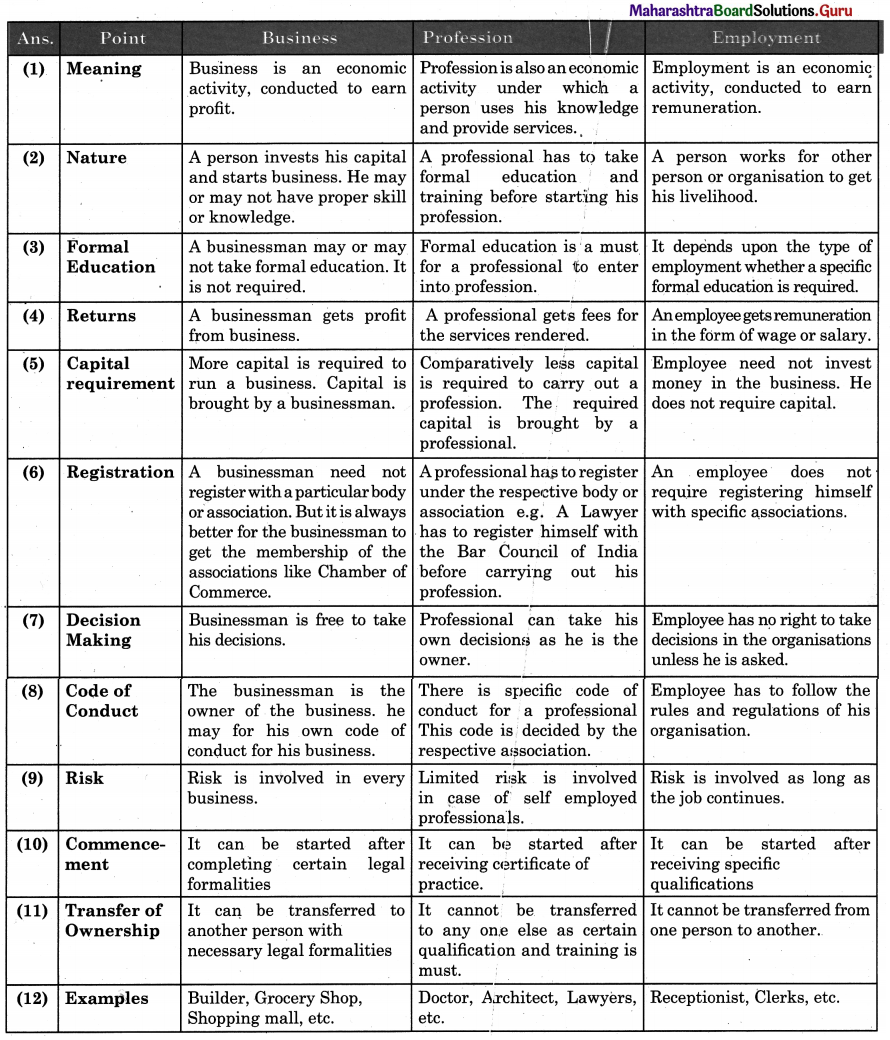
11th OCM Chapter 1 Exercise Introduction of Commerce and Business Practical Problems Solutions Maharashtra Board

Introduction of Commerce and Business 11th OCM Chapter 1 Solutions Maharashtra Board

Balbharti Maharashtra State Board Organisation of Commerce and Management 11th Textbook Solutions Chapter 1 Introduction of Commerce and Business Textbook Exercise Questions and Answers.

Class 11 OCM Chapter 1 Exercise Solutions

1. (A) Select the correct option and rewrite the sentence.

Question 1.
A Lawyer is ……………..
(a) a professional person
(b) a businessman
(c) an employee
Answer:
(a) a professional person

Question 2.
Raw material is converted into finished product by…………….. industry.
(a) genetic
(b) extractive
(c) manufacturing
Answer:
(c) manufacturing

Question 3.
Actual buying and selling of goods is known as ………………..
(a) profession
(b) trade
(c) industry
Answer:
(b) trade

Maharashtra Board OCM 11th Commerce Solutions Chapter 1 Introduction of Commerce and Business

Question 4.
National level code of conduct is prepared for ……………….
(a) professionals
(b) businessmen
(c) employees
Answer:
(a) professionals

Question 5.
Construction of dams is an activity done under ……………….. industry.
(a) primary
(b) secondary
(c) tertiary
Answer:
(b) secondary

Question 6.
The problem of distance is solved by ………………..
(a)bank
(b) transport
(c) warehousing
Answer:
(b) transport

Question 7.
Commerce is a branch of ………………
(a) business
(b) industry
(c) trade
Answer:
(a) business

Question 8.
Return in business is called ………………
(a) fees
(b) salary
(c) profit
Answer:
(c) profit

Question 9.
A business unit depends upon ………………… for selling its output.
(a) industry
(b) society
(c) employees
Answer:
(b) society

Question 10.
Warehousing creates ……………… utility of goods.
(a) place
(b) time
(c) form
Answer:
(b) time

1. (B) Match the pairs

Question 1.

Group A Group B
(a) Helping disabled person (1) Social objective
(b) Genetic industry (2) Foreign trade
(c) Local Currency (3) Sericulture
(d) Solve social problems (4) Non-economic activity
(e) Employment (5) Internal trade
(6) Mining
(7) Profit
(8) Economic activity
(9) Business
(10) Home trade

Answer:

Group A Group B
(a) Helping disabled person (4) Non-economic activity
(b) Genetic industry (3) Sericulture
(c) Local Currency (5) Internal trade
(d) Solve social problems (1) Social objective
(e) Employment (8) Economic activity

1. (C) Give one word, phrase or term

Question 1.
A regular activity concerned with production and distribution of goods and services for profits.
Answer:
Business activity

Question 2.
Human activities that are conducted for earning money.
Answer:
Economic activities

Question 3.
Buying and selling of goods against money or money’s worth.
Answer:
Trade

Question 4.
Activities that remove all the difficulties in trade.
Answer:
Auxiliaries to trade

Maharashtra Board OCM 11th Commerce Solutions Chapter 1 Introduction of Commerce and Business

Question 5.
The type of industries that creates immovable wealth.
Answer:
Construction industry

Question 6.
Name the business activity which is concerned with production of goods and services.
Answer:
Industry

Question 7.
Name the business activity which is concerned with distribution of goods and services.
Answer:
Commerce

Question 8.
The activity which provides mobility to men and material.
Answer:
Transport

Question 9.
An aid to trade which creates time utility.
Answer:
Warehousing

Question 10.
An occupation by which a person agrees to provide expert services for fees.
Answer:
Profession

1. (D) State True or False

Question 1.
Business is an economic activity.
Answer:
True

Question 2.
Every profession is practiced for earning money.
Answer:
True

Question 3.
Primary industries are concerned with nature.
Answer:
True

Question 4.
Trade includes commerce.
Answer:
False

Question 5.
Warehousing removes difficulty of time.
Answer:
True

Question 6.
Trade includes buying and selling of goods and services.
Answer:
True

Question 7.
Profit leads to increase in overall efficiency of the organisation.
Answer:
True

Question 8.
Plant nursery is an example of extractive industry.
Answer:
False

Question 9.
Industry creates form utility.
Answer:
True

Question 10.
Retailer is the link between manufacturer and wholesaler.
Answer:
False

1. (E) Find the odd one

Question 1.
Agriculture industry, Extractive industry, Genetic industry, Manufacturing industry.
Answer:
Manufacturing industry

Question 2.
Import trade, Export trade, Wholesale trade, Entrepot trade.
Answer:
Wholesale trade

Maharashtra Board OCM 11th Commerce Solutions Chapter 1 Introduction of Commerce and Business

Question 3.
Banking, Insurance, Transport, Manufacturing.
Answer:
Manufacturing

Question 4.
Tea, Milk, Coffee, Machinery.
Answer:
Machinery

1. (F) Complete the sentences

Question 1.
Economic activities are those activities which are conducted to ………………
Answer:
earn money

Question 2.
……………… Includes marketing of goods and services.
Answer:
commerce

Question 3.
Business is an ……………….. activity.
Answer:
economic

Question 4.
The basic purpose to is to ………………… earn profit.
Answer:
business

Question 5.
Professional charges …………………… in exchange of expert services.
Answer:
fees

Question 6.
……………… is the person who offers the work.
Answer:
employer

Question 7.
………………. is considered as a reward for assuming several business risks.
Answer:
profit

Question 8.
Industry creates ………………… utility.
Answer:
form

Question 9.
In ………………. trade, goods, are purchased and sold in bulk.
Answer:
wholesale

Question 10.
……………….. is the link between wholesaler arid customer.
Answer:
Retailer

1. (G) Select the correct option

Question 1.
(Export trade, Foreign trade, Wholesaler, Import Trade, Economic objective of business)

Group A Group B
(i) Trade between different countries —————
(ii) Purchase of goods and services from another country ————–
(iii) ————– Selling of goods and services to foreign customer
(iv) ————– Link between producer and retailer
(v) Spending money on Research and Development for development of business ——————–

Answer:

Group A Group B
(i) Trade between different countries Foreign Trade
(ii) Purchase of goods and services from another country Import Trade
(iii) Export Trade Selling of goods and services to foreign customer
(iv) Wholesaler Link between producer and retailer
(v) Spending money on Research and Development for development of business Economic objective of business.

1. (H) Answer in one sentence

Question 1.
What is an economic activity?
Answer:
Activity done for earning money is an economic activity.

Question 2.
What is a non-economic activity?
Answer:
Activities are done to satisfy human wants other than monetary demands.

Question 3.
What do you mean by wholesale trade?
Answer:
Trade conducted on large scale is wholesale trade.

Question 4.
What is the meaning of retail trade?
Answer:
Trade conducted on small scale is retail trade.

Maharashtra Board OCM 11th Commerce Solutions Chapter 1 Introduction of Commerce and Business

Question 5.
What do you mean by import trade?
Answer:
When the goods or services are bought from other countries, to home country it is called import trade.

Question 6.
What do you mean by export trade?
Answer:
When the goods or services are sold to other countries, form home country it is called export trade.

Question 7.
What is an entrepot trade?
Answer:
Goods brought in the country from one country and sold to some other country, it is called entrepot trade.

Question 8.
What is meant by auxiliaries to trade?
Answer:
Auxiliaries to trade are the services which help the smooth conduct of trade.

Question 9.
What is trade?
Answer:
Buying and selling of goods and services is called trade.

Question 10.
What do you mean by commerce?
Answer:
Commerce is a part of business activity which is concerned with the distribution of goods and services.

Question 11.
What is primary industry?
Answer:
Industry which depends upon nature for production is called primary industry.

Question 12.
What is secondary industry?
Answer:
Industry which depends upon primary industry for production is called secondary industry.

Question 13.
What do you mean by genetic industry?
Answer:
Genetic industry means the industry engaged in reproduction and multiplication of plants.

1. (I) Correct the underlined word and rewrite the following sentences

Question 1.
Profession can be transferred to other person.
Answer:
Profession cannot be transferred to other person.

Question 2.
Capital is required for employment.
Answer:
Capital is required for business.

Maharashtra Board OCM 11th Commerce Solutions Chapter 1 Introduction of Commerce and Business

Question 3.
Industry creates place utility.
Answer:
Transport creates place utility.

Question 4.
Commerce represents supply side of market.
Answer:
Industry represents supply side of market.

Question 5.
The basic purpose of business is to provide services.
Answer:
The basic purpose of business is to make profit.

Question 6.
Business is non-economic activity.
Answer:
Business is an economic activity.

Question 7.
Barter exchange is an exchange with money.
Answer:
Barter exchange is an exchange with goods.

2. Explain the following terms/concepts

Question 1.
Business.
Answer:

  1. Business is one of the economic activities.
  2. Business is done to earn profit.
  3. It is done by individuals or organisations.
  4. Business includes all those activities done for production, processing and distribution of goods.
  5. Business has a risk involved.

Question 2.
Profession.
Answer:

  1. Profession is a part of economic activity.
  2. A person who practices profession is called a professional.
  3. A professional has to acquire particular knowledge under formal education system.
  4. He practices and obtain skill in his profession. E.g. Doctors, Lawyers, Chartered Accountants, Architects etc.
  5. A professional gets fees for his services.

Question 3.
Employment.
Answer:

  1. Employment is an economic activity.
  2. A person works for others to earn his livelihood.
  3. A person who works is called an employee and a person who offers work is an employer.
  4. Employee gets remuneration after certain period which is called salary or wages.

Question 4.
Home Trade.
Answer:

  1. Trade means buying and selling of goods and services.
  2. Trade conducted within the boundaries of the country i.e. buying and selling of goods and services within the country is called home trade or internal trade.
  3. Home trade is divided into two parts; Wholesale trade and retail trade.

Question 5.
Foreign Trade.
Answer:

  1. Buying and selling of goods and services is called trade.
  2. Trade can be conducted within the country or with other countries.
  3. Trade conducted with other countries is called foreign or external trade.
  4. Foreign trade is divided into three parts; they are import, export and entrepot trade.

Question 6.
Economic Activity.
Answer:

  1. Human beings are engaged in various activities throughout the day.
  2. Some activities are done to earn money or livelihood.
  3. These activities are called economic activities.
  4. Economic activities are of three types; they are business, employment and profession.
  5. Because of the economic activities a person can earn for himself and his family.
  6. These activities are required for the survival of a human being.

Question 7.
Non-economic Activity.
Answer:
(i) Human activities are divided into two types – economic and non-economic activities.

(ii) Non-economic activities are those which are conducted by a person to satisfy his non monetary requirements. They include personal, social, cultural, religious activities, etc. E.g. singing, playing games, gardening etc.

3. Study the following case/situation and express your opinion.

1. Jaysukh oil mills produce refined oil. The entire production is purchased by Rupesh Oil Depot, who in turn sells it to various retailers. Mrs. Prachi purchased 2kg oil from Balaji Groceries.

Question 1.
Wholesaler
Answer:
Wholesaler – Rupesh Oil Depot

Question 2.
Retailer
Answer:
Retailer – Balaji Groceries

Question 3.
Consumer
Answer:
Consumer – Mrs. Prachi

2. Mr. Pranav is a tin manufacturer in India. Mr. Jack of England sells goods to M/s Frank Corporation in North America and Mr. Williams of USA buys various goods from Brazil.

Question 1.
Who is the importer?
Answer:
Importer – M/s Frank Corporation in North America, Mr. Williams in USA

Maharashtra Board OCM 11th Commerce Solutions Chapter 1 Introduction of Commerce and Business

Question 2.
Who is the manufacturer?
Answer:
Manufacturer – Mr. Pranav

Question 3.
Who is the exporter?
Answer:
Exporter – Mr. Jack

4. Distinguish between the following

Question 1.
Industry and Commerce.
Answer:

Industry Commerce
(1) Meaning Industry is engaged in the production of goods and services. Commerce looks after the distribution of goods and services.
(2) Location Industries are located in the industrial belts which are usually away from residential areas. Infact there is no particular location of commerce. It gives its services at any location.
(3) Utility Industries create form utility. Commerce creates place, time and possession utility.
(4) Resources Industries require mainly machinery, materials and man power for production Commerce mainly works with the help of man power.
(5) Capital Industries require huge capital. It mainly depends upon the size of industry. Activities of commerce comparatively require less capital.
(6) Interdependence Industries depend on commerce for the supply of raw materials and carrying finished goods to markets. Commerce cannot function unless supported by the goods provided by the industries.
(7) Conducted by Manufacturers Traders or mercantile agents
(8) Classification Industries are divided into Primary, secondary and tertiary types. Commerce is divided into Trade and auxiliaries to trade.
(9) Market Force Industries represent supply side of the market. Commerce represents demand side of markets.
(10) Status It has primary importance. It has secondary importance.

Question 2.
Business and Commerce.
Answer:

Business Commerce
(1) Meaning It is an economic activity engaged in production and distribution of goods and services. Commerce takes care of distribution of goods and services.
(2) Concept Business is a wider term than business. Commerce is a narrower term than business.
(3) Part of Business is a part of economic activity. Commerce is a part of business.
(4) Skill Industries require more of technical, managerial and marketing skills. Commerce mainly require managerial and marketing skills.
(5) Classification Business is classified into two parts industry and commerce. Commerce is divided into two parts trade and auxiliaries to trade.
(6) Capital It requires large capital. It requires limited capital.
(7) Investment Heavy investment is required. Less investment is required.

Question 3.
Business and Profession.
Answer:

Business Profession
(1) Meaning It is an economic activity where goods and services are produced and distributed. Profession is also an economic activity under which a person uses his knowledge and provide expect services.
(2) Nature A person invests his capital and starts business. He may or may not have proper skill or knowledge. A professional has to take formal training before starting his profession.
(3) Special education Business does not require special formal education though it is advisable. Professional is required to take formal education to practice a profession.
(4) Returns A businessman gets profit. A professional gets fees from clients.
(5) Registration A businessman need not register with a particular body or association. A professional has to register under the respective body or association eg. A Lawyer has to register himself with the Bar Council of India before carrying out his profession.
(6) Capital requirement More capital is required to run a business. Capital is brought by a businessman. Comparatively less capital is required to carry out a profession. The required capital is brought by a professional.
(7) Code of conduct There is no specific code of conduct for the businessmen. They are the owners so they may form the code of conduct for their organisation. There is specific code of conduct for a professional. This code is decided by the respective association.
(8) Examples Manufacturer of textiles, retailer, courier service provider, etc. Doctor, Lawyer, Architect, Chartered Accountant, etc.

Question 4.
Employment and Profession.
Answer:

Employment Profession
(1) Meaning Business is an economic activity, conducted to earn remuneration. Profession is also an economic activity under which a person uses his knowledge and provide services.
(2) Nature A person works for other person or organisation to get his livelihood. A professional has to take formal training before starting his profession.
(3) Special education It depends on the nature of employment. Some type of employment requires a specific type of education. Whereas in some cases any education is acceptable. Professional is required to take formal education to practice a profession.
(4) Returns An employee gets remuneration in the form of wages or salary. A professional gets fees from clients.
(5) Registration An employee does not require registering himself with specific associations. A professional has to register under the respective body or association eg. A Lawyer has to register himself with the Bar Council of India before carrying out his profession.
(6) Capital requirement Employee need not invest money in the business. He does not require capital. Comparatively less capital is required to carry out a profession. The required capital is brought by a professional.
(7) Code of conduct Employee has to follow the rules and regulations of his organisation. There is specific code of conduct for a professional. This code is decided by the respective association.
(8) Decisionmaking Employee has no right to take decisions in the organisations unless he is asked. Professional can take his own decisions as he is the owner.
(9) Tenure Every employment has a specific tenure. It means the maximum period for which an employee can remain in the employment is fixed. The employee has to retire after that period. Professional can work throughout his life also.

5. Answer in brief

Question 1.
State any four features of profession.
Answer:
Profession is a part of economic activity. A professional acquires formal knowledge to practice profession. Following are the features of profession:
(i) Qualification : A particular qualification is required to practice a profession. A professional needs to acquire knowledge through formal education. Unless he gets a formal knowledge and training, he cannot practice profession, e.g. A Doctor cannot prescribe medicines without having a degree in medicine.

(ii) R eturns: A professional charges fees for the services rendered to the clients, The fees charged by a professional depends on different factors like his knowledge, experience, skill etc. His income is not fixed.

(iii) Capital : Professional requires capital to set up or run his practice. The amount of capital depends upon the nature of practice a professional wants to do.

(iv) Work Nature : A professional who is expert in a particular field, provides services in his field of expertise, eg. an architect will provide his services in the field of building houses.

Beside the above features, there are other features like-

  1. Aim
  2. Registration and Membership
  3. N on transferability

Question 2.
State any two types of industries.
Answer:
Industries is a part of business. They look after the production of goods and services. Industries creates form utility. There are various types of industries. They can be broadly divided into three categories.
(i) Primary Industry :
These are the industries which depend on nature for their production. They include agriculture, mining, fishing, wood cutting etc. Primary industries are further divided into three types; agriculture industry, extractive industry and genetic industry.

(ii) Secondary Industry :
These are the industries which depend upon primary industries for their production. They mainly categorized as manufacturing industries and construction industries. Secondary industries use the raw materials of primary industries and convert them into finished products which is then sold in the market.

Maharashtra Board OCM 11th Commerce Solutions Chapter 1 Introduction of Commerce and Business

Question 3.
Give two types of Foreign Trade.
Answer:
Trade with other countries is called foreign trade. Foreign trade is of three types.

  1. Import trade : When the goods or services are purchased from other countries it is called import trade,
  2. Export trade : When the goods are sold to other countries, it is called export trade.
  3. Entrepot trade : It is also called re-exporting. In this case goods are first brought from one country and again resale to other country, e.g. A buyer from India imports goods from France and exports them to Australia.

Question 4.
State any four auxiliaries to trade.
Answer:
Auxiliaries to trade are all those services which help in the smooth conduct of trade. There are different types of services which help trade. They are explained below.
(i) Warehousing: Warehousing helps to store the goods safely. There is a gap between the time of production and the time of consumption. Warehousing fills up this gap by conveniently storing the goods till they are demanded in the market. Warehousing, thus, creates time utility. Care is taken that the goods do not get damaged in the warehouse.

(ii) Advertising : Advertising is an important tool in the hands of a businessman to communicate to potential buyers. In today’s world producer/seller is situated at one place and consumers are spread over wider area. Through advertisement, producer or seller can contact the consumers. There are different mediums of advertisement, e.g. T.V., Radio, Hoardings, Print etc.

(iii) Insurance : Business is exposed to many risks. A businessman has to be careful about the risks. Some risks can be avoided, some can be minimized and some can be transferred. Insurance is an auxiliary which helps the businessman to handle the risk. Businessman can transfer some of the risks to insurance company. Insurance company, by accepting premium from the businessman, assures him to pay compensation in case of loss.

(iv) Transport: Transport is an important auxiliary to trade. Transport carries raw materials and people to place of production and brings finished goods to markets. Thus transport creates place utility. Transport can be conducted by different modes e.g. rail, road, water or air.

Beside the above features, there are other features like-

  1. Banking
  2. Mercantile Agents
  3. Communication

Question 5.
State any four features of employment.
Answer:
Employment is an economic activity. A person works for others to earn his livelihood.
Following are the features of employment:
(i) Aim : The main aim of person accepting employment is to earn money.

(ii) Qualification : Qualifications are required depending upon the nature of employment. Some types of work require educational qualifications, some require some specific skill, some require both. But qualifications are necessary for employment.

(iii) Monetary returns : The person who accepts employments and work for the employer gets remuneration after specific intervals. Remuneration can be wages or salary. Usually wages are paid daily or weekly and salaries are paid monthly.

(iv) Capital: Capital is not required for the person who is in employment.

Question 6.
Write any four objectives of business.
Answer:
Business is done with some objectives. These can be divided as (a) Economic objectives and (b) Social objectives. Following are the Economic Objectives:

  1. Earning Profit: Business is done with the main objective of earning profit. Profit is always a motivating factor for a businessman.
  2. Searching New Customers : To maximize profit a business organisation has to search new customers. It is required to expand the business. It is also important to retain the old customers.
  3. Best possible use of Resources : Making best use of available resources is the objective of business. This ensures avoiding of wastage and saving valuable money. This ultimately leads to increase in profit.
  4. Innovation : One of the important objectives of business is to make innovations for the development of business. Therefore research and development becomes an important part of the working of any business organisation.

Question 7.
State any four features of business.
Answer:
Business is an economic activity which is done to earn profit.
Following are the features of business:
(i) An economic activity : Business is an economic activity. Because it is done to earn profit for livelihood.

(ii) Two parties : Business is mainly concerned with the production and distribution of goods and services. It means business transactions involve exchange and in any exchange two parties are involved. Thus business involves two parties.

(iii) Profit motive: Every business is done with a motive of making profit. Therefore all the activities of business revolve around profit. A businessman is not satisfied with the profit he gets, but he tries to maximize the profit either by increasing the production or by reducing the cost. He tries to find out new customers and new markets.

(iv) Production of Goods and Services : Business includes the production of goods and services. Raw materials are used and the finished goods are produced.

Question 8.
State any two types of primary industry.
Answer:
Primary industries are those industries which depend on nature for production. Primary industries are of three types which are given below.

  1. Agriculture industry: Agriculture includes cultivation of land. It is an important primary sector industry.
  2. Extractive industry : Extractive industry draws out the produce from natural resources like land, river or sea etc. The products extracted are usually in raw form they are converted into finished products and sold in the market.
  3. Genetic industry : Genetic industries are engaged in the reproduction and multiplication of plants and animals e.g. poultry, plant nursery, etc.

6. Justify the following statements.

Question 1.
Retailer is in direct contact with ultimate consumers.
Answer:

  1. Retailer in a trader operating in the chain of distribution.
  2. He deals with the ultimate consumer.
  3. Retailer is the last link in the chain of distribution.
  4. Goods flow from the producer to consumer in the following way:
    Producer → Wholesaler → Retailer → Consumer
  5. Thus, retailer comes into direct contact with the ultimate consumer.

Maharashtra Board OCM 11th Commerce Solutions Chapter 1 Introduction of Commerce and Business

Question 2.
Commerce is a wider term than trade.
Answer:

  1. Commerce is a part of business. Business is divided into two parts; industry and commerce,
  2. Commerce is concerned with the distribution of goods.
  3. Commerce is divided into two parts. One is trade and the other is auxiliaries to trade.
  4. Trade is concerned with buying and selling of goods and services.
  5. Trade is’a part of commerce.
  6. Along with trade, commerce also includes auxiliaries or services to trade.
  7. These services help in the smooth running of trade.
    Thus, it clearly indicates that commerce is a wider term than trade.

Question 3.
Risk is inevitable in business activities.
Answer:

  1. Every business is exposed to various risks. A businessman cannot avoid risks in the business.
  2. These risks include goods remaining unsold due to changes in fashions, risks of losses due to fire or theft, damage to goods during transportation or warehousing, risks of bad debts, etc.
  3. A businessman has to be prepared to handle these risks.
  4. These risks cannot be totally eliminated. But they can be minimized or transferred to insurance company.
  5. A businessman must be ready for the risks as they are inevitable.
  6. Thus, risk is inevitable in business activities.

Question 4.
Combination of import-export trade is entrepot trade.
Answer:

  1. Import, export and entrepot trade are the parts of foreign trade.
  2. When the goods are purchased from other countries it is called import trade.
  3. When the goods are sold to other countries it is called export trade.
  4. A combination of import and export trade is called entrepot trade.
  5. In case of entrepot trade goods are first purchased from one country i.e. imported and then sold to or exported to other country.
  6. E.g. Indian trader purchased some computers from Japan and sold them to Sri Lanka will be included in entrepot trade.
  7. Thus, entrepot trade is a combination of import and export trade.

Question 5.
Transport creates place utility.
Answer:

  1. Transport is one of the important auxiliaries to trade.
  2. Transport brings raw materials and people to the place of production and carries finished products to markets.
  3. There are different modes of transport through it carries goods and people from one place to another. They are rail, road, water and air.
  4. If goods are produced at one place, it may not have demand at that place only.
  5. Transport carries them to other place where they are demanded and create place utility.
  6. Thus, we can say that transport creates place utility.

Question 6.
Industrial activities take place before commerce starts its role.
Answer:

  1. Industry and commerce are the two parts of business.
  2. Both the parts are complimentary to each other.
  3. One cannot function without other.
  4. Industries look after the production of goods and services and commerce takes care of the distribution of the goods produced.
  5. Obviously production of goods comes first and it is followed by distribution or selling of goods.
  6. Thus, industrial activities take place before commerce starts its role.

Question 7.
Available resources should be used to its maximum.
Answer:

  1. Resources are always scarce. The demand for resources is more and the availability of resources is less.
  2. Similarly, resources belong to the society but the businesses use them for production and provide the finished products to the society.
  3. So it is necessary to use the resources carefully.
  4. Wastage of resources should be avoided.
  5. Wherever possible, recycling and reusing the resources should be considered by the businesses.
  6. Thus, whatever resources available should be used to its maximum.

Question 8.
Wholesalers is a link between retailer and manufacturer.
Answer:

  1. Wholesaler and retailer are the important intermediaries in trade.
  2. They help to bring the goods from the manufacturer to ultimate consumer.
  3. Wholesaler is a trader who deals in large quantities i.e. the wholesaler purchases the goods in bulk from the manufacturer and sells it to retailer in small quantities.
  4. Both the wholesalers and retailers are the part of chain of distribution, which is shown below.
    Producer → Wholesaler → Retailer → Consumer
  5. Thus, it is true that wholesaler is the link between the manufacturer and retailer.

Question 9.
Business is a part of economic activities.
Answer:

  1. Economic activities are those activities which are done with the intention of making money.
  2. A person has to earn money for his livelihood.
  3. However all economic activities are not same. They can be conducted mainly in three different ways.
    (a) Employment (b) Profession and (c) Business.
  4. Business is conducted to earn profit.
  5. businessman invests his own capital, takes decisions and carries out business activities.
  6. He also takes risk for carrying business activities.
  7. Thus, a businessman is responsible for the business activities. The profit earned is enjoyed by the businessman. So business is a part of economic activity.

Question 10.
Changing fashions is one of the important causes of business risk.
Answer:

  1. Business is exposed to various kinds of risk.
  2. The risks can be due to the loss of goods by fire or theft, bad debts, changes in government policies, goods remaining unsold etc.
  3. Goods remaining unsold due to changes in fashion, is also an important type of risk in the business.
  4. Due to this risk businessman can suffer loss.
  5. However this risk is there in case of some goods only e.g. clothes, footwear, jewellery, accessories, sun glasses etc.
  6. This risk is not there in case of food grains or vegetables as they are essentials and their demand remains somewhat constant.
  7. Thus, changes in fashion is an important risk in the business.

7. Answer the following questions

Question 1.
What do you mean by commerce ?
Answer:
Commerce involves distribution of goods and services. Commerce is a part of business. Business is divided into two parts. They are (i) industry and (ii) commerce. Industries are concerned with the distribution of goods and commerce does the distribution of those goods in the market. Commerce helps in bringing the goods from the manufacturer to consumer by making uninterrupted flow of goods. Commerce includes main two activities – (i) Trade and (ii) Auxiliaries to trade.
(i) Trade means buying and selling of goods and services. Any buying and selling is included in trade. It can be industrial goods, consumer goods or buying and selling of services, etc.

(ii) Auxiliaries of trade are all those supportive services which help in the smooth conduct of trade. They include transport, banking, insurance, advertising, etc.

Question 2.
What is the meaning of export trade?
Answer:
Trade is divided into two parts, (i) Home trade and (ii) Foreign trade. Home trade is a trade conducted within the country where as foreign trade is trade with other countries. When the goods are purchased from and sold to other countries it is included in foreign trade.

Foreign trade is divided into three parts, (i) Import trade, (ii) Export trade and (iii) Entrepot trade. In case of export trade goods are sold to other countries e.g. A garment trader from India selling his garments to England will be included in export trade. Export trade plays an important role in the economy of any country, It helps a country to get valuable foreign exchange for the country, It also helps to enhance the reputation of the country in the foreign market.

Maharashtra Board OCM 11th Commerce Solutions Chapter 1 Introduction of Commerce and Business

Question 3.
State the role of auxiliaries to trade in trading activities.
Answer:
Role of auxiliaries to trade:

  1. Auxiliaries to trade are all the services which help trade.
  2. Trade means buying and selling of goods. However buying and selling is not possible unless it is supported by different services which will make the trade easy.
  3. There are different auxiliaries or services which support buying and selling. They are : transport, warehousing, banking, insurance, advertising, etc.
  4. These services help the trader as well as the buyers. They remove the hindrances in the process of distribution and ensure smooth flow of goods from the manufacturer to consumer.
  5. In modern world, the manufacturers and’ consumers stay away from each other. It becomes very difficult for the manufacturer to contact the buyers and sell goods directly to them.
  6. In this regard auxiliaries to trade help in establishing a link between the manufacturer or seller to consumer.

Question 4.
What are the different types of secondary industries?
Answer:
Secondary industries are those which depend upon primary industry for production. Secondary industries take raw materials from primary industries and carry out their production.
Secondary industries are of two types:
(i) Manufacturing industry : These industries are engaged in the manufacturing of various types of goods. They may be consumer goods or industrial goods. These industries convert raw materials into finished products. They make use of men, material and money for production. The examples of these industries include chemical industry, electronics industry, textile industry, paper industry.

(ii) Construction industry : These types of secondary industries are engaged in the construction activities such as dams, bridges, buildings, roads, tunnels etc. In case of other industries the goods are produced at one place but sold at different places. However in case of construction industry the construction takes place at one place only. Thus this industry creates immovable property.

Question 5.
State the types of human activities.
Answer:
There are various activities conducted by a person in a day. These activities can be divided into two parts.
Human Activities:
Economic activities
Non-economic activities

1. Economic activities : These activities are conducted to earn money. A human being requires money for livelihood. Economic activities are divided into three types.

  • Business
  • Profession
  • Employment

Business is done to earn profit. Profession is done by acquiring special knowledge to provide services to people. A professional gets fees for the services rendered. Whereas when a person works for other person or” organisation to earn wage or salary, is called employment.

2. Non-economic activities : Non-economic activities are conducted by the person to satisfy their needs other than financial needs. These activities include cultural, social, religious, sports, health related etc.

Question 6.
Describe the scope of internal trade.
Answer:
Internal trade is a part of trade. It includes buying and selling of goods within the country. Internal trade is further divided into two parts.
(i) Wholesale Trade : Wholesale trade is a trade conducted on large scale. A wholesaler purchases goods in bulk from the manufacturer and sells them to the retailers. Wholesaler forms a large network through which he helps to distribute goods at distant places. Wholesaler is an expert trader in his field. He acts as a link between the manufacturer and the retailer.

(ii) Retail Trade : Retail trade is a trade conducted on small scale. He purchases goods from the wholesalers and sells them to the consumers in required quantities. Retailer comes into direct contact with the consumers. A retailer caters to the needs of consumers by providing them various goods in whatever quantities they want.

Question 7.
How does banking and insurance help trading?
Answer:
Commerce includes trade and auxiliaries to trade. Trade means buying and selling of goods and services. But buying and selling is not possible unless it is supported by the auxiliaries of trade. Thus auxiliaries to trade are the services which help trade. Banking and insurance are two important auxiliaries to trade.
(i) Banking : Banking services help traders in many ways. Branches of banks are spread over wider areas. Traders can open an account in bank and take the advantage of various banking services. Banks offer loans, overdrafts, transfer of money, letter of credit, foreign exchange facilities to the traders.

(ii) Insurance : There are various kinds of risks in the business. A businessman can transfer some risks on the insurance company. Goods can be destroyed by fire, theft or damaged in transportation. The businessman can transfer these risks on the insurance company. He has to pay premium to the insurance company and make a contract with the insurance company. In case of loss, insurance company pays compensation to the trader.

(iii) Thus, the risks cannot be avoided completely but can be minimized by taking insurance policy.

8. Answer the following in details.

Question 1.
Give comparative analysis of business, profession and employment.
Answer:
Business, profession and employment are the part of economic activities. These activities are conducted to earn money. However the nature of all the three activities is different. A comparative analysis of all the three activities is given below:
Maharashtra Board OCM 11th Commerce Solutions Chapter 1 Introduction of Commerce and Business 1

Question 2.
Define business. Explain its features.
Answer:
Business is a part of economic activities. Business is done to earn profit. It is done by an individual or a group of individuals. Business can be defined in many ways by thinkers. Some of them are given below:
Prof. Haney : “ Business activities are all those activities which are directed towards the production and processing of wealth”.
Prof. Pride, Huges and Kapoor: “The organised efforts of individuals to produce and sell for a profit, the goods and services that satisfy society’s needs”.

The term business also refers to the organised efforts and activities of individuals to produce and sell goods and services for profit.

Following are the features of business:
1. Continuity in Dealings : Continuity is most important in case of any business. Business requires regularity. Business activity should be carried on for a Longer time. A transaction carried on only for one time or few times cannot be called as a business activity, e.g. Sale of own old motor car cannot be considered as a business activity.

2. Uncertain Returns : The returns in any business are not fixed. They are uncertain and fluctuating. The profit of business is not fixed or guaranteed.

3. Risk Element: Business is exposed to many risks. These risks arise out of some unforeseen circumstances or wrong decisions or misjudgements of the businessman. A businessman cannot avoid the risks but he can minimize the risks by taking proper steps. Some risks can be transferred to insurance company.

4. Satisfaction : Customer is an integral part of any business activity. Without a customer there cannot be buying or selling. Businesses need customers to fulfil their monetary objective and therefore customer satisfaction is the most important part of any business activity. Modern thinking on business gives top most priority to customer satisfaction. If the customers are satisfied, there will be more sale and profit to the business.

5. Two Parties : Business includes production and distribution. Every business transaction involves exchange. For carrying out any exchange two parties are required. These two parties are the seller and the buyer. There is an oral or written agreement between the buyer and the seller to buy or sell the goods or services.

6. Economic Activity : Business is an economic activity. The intention of carrying out any business is to earn money. Business is not conducted for satisfying sentimental needs of a person. Business activity is purely monetary.

7. Profit Motive : Business is basically conducted to earn profit. Every businessman tries to get maximum profit out of the business. Profit is required for the businessman to earn the livelihood and also for the survival of the business. It is also required for the expansion of business. Thus profit plays a vital role in business.

8. Production of Goods and Services :: Business has two aspects. One is production of goods and services and distribution of them. Goods are produced by the industries. Providing of services also form an important part of business activities.

9. Exchange of Goods and Services : Goods and services are exchanged for money or money’s worth. It is a business activity as there is a seller and a buyer and they exchange goods or services for a value. In modern days almost all the transactions are carried out with money as a medium of exchange. In case of very few transactions, goods are exchanged for goods.

10. Dealings in Goods and Services : In case of business, goods or services are bought and sold. There cannot be business without the exchange of goods or services. Goods can be consumer goods or industrial goods. Services are of different types like banking, insurance etc. Services are also exchanged for a value.

Maharashtra Board OCM 11th Commerce Solutions Chapter 1 Introduction of Commerce and Business

Question 3.
Describe various objectives of a business.
Answer:
Business is an economic activity which includes production and distribution of goods and services. Business is done to get profit. Even though business is done with the intention of making profit, that is not the only objective of the business. There are other objectives of business.
The objectives of business are explained below:

A. Economic Objectives:
(i) Searching of New Customers : Business needs expansion. So that it can earn more profit. Therefore searching new customers or new markets becomes an important economic objective of business.

(ii) Earning Profit: Making profit always becomes the main economic objective of any business.

(iii) Best possible Use of Resources : It is the responsibility of any businessman to make proper use of available resources. It is because resources are limited and the demand for resources is more. When a businessman uses resources carefully and economically, he can save his money. It will ultimately result in the increase of profit.

(iv) Innovation : Business needs change according to current situation. New products, new processes should be found out to remain in the competition in the market. Then only a business can survive and continue making profit. Therefore making innovations is one of the economic objectives of the business.

(B) Social Objectives:
Following are the social objectives:
(i) Contributing to the Welfare of the Society : Social objectives incliude the working for the betterment of the society in general. It is the responsibility of the business to work for the welfare of the society by carrying out social welfare programmes.

(ii) Avoiding Unfair Trade Practices : Unfair trade practices are those practices which are not advisable in business. They include black marketing, hoarding, adulteration, wrong representation, false advertisements etc. Unfair trade practices make adverse effect on the business. Therefore one of the important social objective of business is to keep itself away from such practices.

(iii) Supplying Quality Products : It is the social objective of business, to provide quality products to the customers. Customer is the important part of any business. Without customers, a business cannot function. Therefore it is the responsibility of the business to provide safe, non ad ulterated, durable products to the customers.

(iv) Help to Solve Social Problems : In modern world many social problems are occurring in the society. Business is a part of the society and therefore one of the social objectives of business is to help solving the social problems.

(v) Employment Generation : A business can provide employment to many people. It becomes the social objective of the business to generate more and more employment. This will help to reduce the problem of poverty and unemployment.

(vi) Welfare of Employees : Employees is an integral part of any organisation. Business cannot function without the employees. It is therefore the responsibility of the businessman to provide better working conditions to employees. Better working conditions help to improve the productivity of the employees.

Question 4.
Explain the importance of profit in business.
Answer:
Business is such activity which involves earning profit. Any business organisation, whether small or large, production unit or service industry; works for getting maximum profit. Profit plays a very important role in business.
The role of profit is explained below:
(i) Growth and Expansion : Profit acts as an internal source of raising funds. Business can keep aside excess profit and use it for its own expansion or diversification purpose. Expansion results into more profit, which can be used for other purposes.

(ii) Research and Development : When a business gets good profits it can spend money on research and development. Research and development helps to find out the processes that help to reduce the cost of production and provide better quality products. This helps to increase the production ultimately resulting in increase in profit.

(iii) Returns to lnvestors: The owner of business needs returns on the money he has invested in the business. These returns are in the form of profit. If there are good profits, the businessman gets fair returns on his investment.

(iv) Means of Livelihood : A biusiness is mainly carried on for getting the livelihood. A result of business is profit. Thus the main role of profit is to help the businessman earn his living.

(v) Increasing Efficiency : Profit acts as a motivating factor. A businessman who is working hard for the business and gets substantial profits gets a motivation to work hard. Profit thus helps in increasing the efficiency. Similarly an employer can give good remuneration to the employees when there is good profit. This helps to increase the efficiency of the employee also.

(vi) Reward for Risks : Every business is exposed to various types of risks. A businessman has to consider these risks. As a businessman takes risks and performs business activities, buyers get the necessary commodities. The result of these business activities is profit. Profit in this case acts a reward for the risk taken by the businessman.

Maharashtra Board OCM 11th Commerce Solutions Chapter 1 Introduction of Commerce and Business

(vii) Survival: The most important role of profit is to help the business to carry on the activities continuously. Survival of business depends upon the continuous supply of finance. Profit enables business to continue with the uninterrupted supply of funds.

Thus profit plays a vital retie in the business. Profit is an inevitable part in every business. It helps a businessman to earn his livelihood, carry on research and development activities and most importantly survival of the business.

OCM 11th Commerce Textbook Solutions Digest
Class 11 Hindi Chapter 17 E Adhyayan Nai Drishti Question Answer Maharashtra Board

Std 11 Hindi Chapter 17 E Adhyayan Nai Drishti Question Answer Maharashtra Board

Balbharti Maharashtra State Board Hindi Yuvakbharati 11th Digest Chapter 17 ई-अध्ययन : नई दृष्टि Notes, Textbook Exercise Important Questions and Answers.

Hindi Yuvakbharati 11th Digest Chapter 17 ई-अध्ययन : नई दृष्टि Questions And Answers

11th Hindi Digest Chapter 17 ई-अध्ययन : नई दृष्टि Textbook Questions and Answers

पाठ पर आधारित

प्रश्न 1.
विद्यार्थी जीवन में ई-अध्ययन का महत्त्व स्पष्ट कीजिए।
उत्तर :
आज तक विद्यार्थी केवल हाथ में पुस्तक लेकर ही ज्ञान प्राप्त कर सकते थे परंतु ई-अध्ययन शिक्षा-क्षेत्र में कई सकारात्मक बदलाव ला सकता है। आज इंटरनेट पर कई सारी वेबसाइट्स से ज्ञान के दरवाजे खुले हैं। एक बटन दबाते ही ज्ञान का भंडार छात्र के सामने बैठे-बिठाए प्रस्तुत हो जाता है।

कंप्यूटर विद्यार्थी के लिए ज्ञान का स्त्रोत है जिसके सहारे पढ़ाई हो सकती है। दृक्-श्राव्य माध्यम से उसकी पढ़ाई रोचक बन जाती है। मनोरंजन और ज्ञान का सुंदर समन्वय ई-अध्ययन में होता है।

आज का युग प्रतियोगिता का युग है। विद्यार्थियों को कई सारी प्रतियोगिताएँ, परीक्षा की तैयारियाँ करनी होती हैं और इनके लिए ई-अध्ययन एक वरदान है। हर विषय का ज्ञान, सामान्य ज्ञान, खेल-कूद, संगीत, राजनीति आदि की जानकारी भी छात्र ई-अध्ययन द्वारा प्राप्त कर स्वयं को अद्यतन रख सकता है।

समय, श्रम और अर्थिक बचत भी बड़े पैमाने पर होती है। ज्ञान के साथ-साथ करियर का अवसर भी प्राप्त हो सकता है। सचमुच ई-अध्ययन का विद्यार्थी जीवन में बड़ा महत्त्व है।

Maharashtra Board Class 11 Hindi Yuvakbharati Solutions Chapter 17 ई-अध्ययन : नई दृष्टि

प्रश्न 2.
ई-ग्रंथालय की जानकारी लिखिए।
उत्तर :
आज इंटरनेट पर ई-ग्रंथालय वेबसाइट उपलब्ध है। यह ग्रंथालय शुल्क सहित तथा नि:शुल्क दोनों तरीके से उपलब्ध है। ऐसे ग्रंथालयों में ई-पुस्तकें, ई-वीडियो, वार्तापट आदि द्वारा ज्ञान उपलब्ध होता है। यह सुविधा हर दिन, हर समय उपलब्ध होती है यानि समय का बंधन नहीं होता।

सबसे बड़ी बात यह है कि यहाँ केवल हमारे देश के लेखकों का ही साहित्य नहीं तो विदेशी लेखकों के साहित्य को पढ़ने का लाभ उठा सकते हैं।

आज कई सारे प्रकाशक पुस्तक बनते ही वेबसाइट पर ई-पुस्तक द्वारा उपलब्ध करवाते हैं। ई-पुस्तक वापस लौटाने की जरूरत नहीं होती। पुस्तक को संभालकर रखने, गुम हो जाने या फट जाने की संभावना भी नहीं होती है।

मनचाहे पुस्तक को अपने कंप्यूटर में, मोबाइल में या टैब में संकलित कर सुरक्षित रख सकते हैं।

प्रश्न 3.
‘आज के विद्यार्थी अध्ययन के लिए कंप्यूटर पर निर्भर हैं –
पाठ के आधार पर इस कथन की पुष्टि कीजिए।
उत्तर :
वर्तमानकालीन विद्यार्थी मोबाइल, इंटरनेट आदि आधुनिक तकनीक के अधीन हो गए हैं। हर क्षेत्र में तंत्रज्ञान के माध्यम से क्रांति हुई है। सूचना एवं तकनीकी क्रांति से शिक्षा क्षेत्र भी प्रभावित हुआ है। अध्ययन-अध्यापन में ई-अध्ययन ने नई दृष्टि प्रदान की है।

आज से पहले विद्यार्थी केवल हाथ में पुस्तक लेकर ज्ञान प्राप्त कर सकते थे, परंतु आज एक बटन दबाते ही ज्ञान का भंडार उसके सामने बैठे-बिठाए प्रस्तुत होता है। आज इंटरनेट की कई सारी वेबसाइट्स से ज्ञान के दरवाजे खुले हैं। कंप्यूटर हमारे जीवन का एक हिस्सा बन गया है।

आज के विद्यार्थी इस ज्ञान देने वाले कंप्यूटर को ज्ञान के स्त्रोत के रूप में देख रहे हैं। उसके सहारे उनकी बहुत सारी पढ़ाई आसानी से हो जाती है।

कठिन से कठिन जानकारी कंप्यूटर द्वारा विद्यार्थी तक पहुंच रही है। परीक्षा की तैयारी करनी हो या प्रतियोगिता के लिए तैयार होना हो कंप्यूटर पर उपलब्ध ज्ञान विद्यार्थी के लिए वरदान सिद्ध हो रहा है।

समय, श्रम और धन की बड़े पैमाने पर बचत होना भी अन्य लाभ है जो विद्यार्थी बखूबी उठाते हैं इसीलिए अपने अध्ययन के लिए कंप्यूटर पर निर्भर होते हैं।

Maharashtra Board Class 11 Hindi Yuvakbharati Solutions Chapter 17 ई-अध्ययन : नई दृष्टि

व्यावहारिक प्रयोग

प्रश्न 1.
अपने महाविद्यालय में मनाए गए हिंदी दिवस का वृत्तांत लेख समाचार पत्र के संपादक को मेल कीजिए।
उत्तर :
प्रति : ggnnbt@gmail.com
विषय : हिंदी दिवस वृत्तांत
श्री. संपादक (editor) महोदय, हमारे महाविद्यालय में मनाए गए हिंदी दिवस का वृत्तांत लेख समाचार पत्र में पब्लिश करने हेतु साथ में भेजा है। कृपया आवश्यक कार्रवाई करें और समाचार पत्र में पब्लिश करके हमें उपकृत (obliged) करें।

धन्यवाद !
भवदीय,
अनघा कुलकर्णी।
(विद्यार्थी प्रतिनिधि, युनिक महाविद्यालय, श्रीवर्धन।)
anghakulkarni2000@gmail.com

युनिक महाविद्यालय में हिंदी दिवस धूमधाम से संपन्न
‘हिंदी है जन-जन की भाषा,
हिंदी हमारे हृदय की भाषा,
हिंदी विश्व की सबसे बड़ी भाषा।’

युनिक महाविद्यालय के सभागार में हिंदी दिवस बड़े उत्साह के साथ प्रधानाचार्य श्री. शिवकुमार की अध्यक्षता में मनाया गया। कार्यक्रम का संचालन 12वीं कक्षा की छात्रा शुभा ने किया। इस कार्यक्रम में हिंदी भाषा के महत्त्व पर अध्यापक तथा छात्रों ने अपने विचार प्रकट किए।

इस अवसर पर दोहों की प्रतियोगिता रखी गई थी जिसकी वजह से कार्यक्रम जोश और उल्लास से सराबोर हो गया। विजेता संघ को सर्टिफिकेट दिए गए। अपने अध्यक्षीय संबोधन में प्रधानाचार्य जी ने उन छात्रों की भूरी-भूरी प्रशंसा की और हिंदी को देश को जोड़ने वाली कड़ी के रूप में गौरवान्वित किया।

उनका मानना है कि हिंदी राष्ट्र भाषा की गंगा से विश्व भाषा का महासागर बन रही है। हिंदी अति उदार, समझ में आने जैसी सरल, सहिष्णु (tolerant) है, साथ ही भारत की राष्ट्रीय चेतना की संवाहिका भी है। प्राचार्य जी के इस उद्बोधन (message) पर तालियों की गूंज आसमान तक पहुँची।

अध्यापक वृंद, कर्मचारी वर्ग तथा विद्यार्थियों ने इस कार्यक्रम को सफल बनाया। इस दिन महाविद्यालय का कामकाज भी हिंदी भाषा में किया गया जिसके कारण महाविद्यालय ‘हिंदीमय’ बन गया था। (विद्यार्थी प्रतिनिधि द्वारा)

Maharashtra Board Class 11 Hindi Yuvakbharati Solutions Chapter 17 ई-अध्ययन : नई दृष्टि

प्रश्न 2.
पर्यावरण दिन’ पर प्रकल्प के लिए नेट से जानकारी प्राप्त करके उसका पावर प्वाइंट प्रेजेंटेशन कक्षा में प्रस्तुत कीजिए।
उत्तर:
Maharashtra Board Class 11 Hindi Yuvakbharati Solutions Chapter 17 ई-अध्ययन नई दृष्टि 2

  • पर्यावरण परि + आवरण शब्दों के मेल से बना है जिसका अर्थ है आस-पास का वातावरण।
  • पर्यावरण और मानव का बड़ा गहरा नाता है। इसे स्वच्छ और सुंदर रखना हमारा कर्तव्य है।
  • हमारा कर्तव्य है कि हम वन, झील, नदी, वन्य जीव, पेड़-पौधे, पशु-पक्षी आदि का संरक्षण करें।
  • हम अपने आस-पास के वातावरण को जितना सहेजकर रखेंगे हमारा जीवन उतना ही उत्कृष्ट, आनंदमय एवं सुखमय होगा।
  • प्रकृति के विभिन्न अंग नदी, पर्वत, वृक्ष, जीव, प्राणी, भूमि आदि की पूजा हमारी प्राचीन परंपरा रही है।
  • पर्यावरण का अपमान बाढ़, भूकंप, त्सुनामी, अतिवृष्टि या सूखा जैसे अभिशापों को दावत देना है।
  • प्रदूषण के दुष्परिणाम, ग्लोबल वॉर्मिंग, जलवायु बदलाव के खतरे लगातार दस्तक दे रहे हैं।
  • बेतहर कल के लिए पर्यावरण संरक्षण एक ही विकल्प है।
  • आओ वन-उपवन विकसित करें और प्रकृति के प्रति कृतज्ञता व्यक्त करें।

Maharashtra Board Class 11 Hindi Yuvakbharati Solutions Chapter 17 ई-अध्ययन नई दृष्टि 3Maharashtra Board Class 11 Hindi Yuvakbharati Solutions Chapter 17 ई-अध्ययन नई दृष्टि 4

Maharashtra Board Class 11 Hindi Yuvakbharati Solutions Chapter 17 ई-अध्ययन : नई दृष्टि

ई-अध्ययन : नई दृष्टि Summary in Hindi

ई-अध्ययन : नई दृष्टि पाठ परिचय :

प्रस्तुत पाठ एक आलेख है। जिसमें ई-अध्ययन की संकल्पना, संसाधन, उसके प्रयोग की विधियाँ, प्रयोग करते समय बरती जाने वाली सावधानियाँ आदि के बारे में महत्त्वपूर्ण जानकारी दी है। साथ ही भविष्य में ई-अध्ययन की आवश्यकता को भी स्पष्ट किया है।

आज ई-संसाधनों का उपयोग हर-जगह, हर क्षेत्र में हो रहा है। शिक्षा क्षेत्र भी इससे अछूता नहीं है। इंटरनेट, मोबाइल, टैब, कंप्यूटर आदि का प्रयोग कर विद्यार्थी ज्ञान अर्जित कर रहे हैं और स्मार्ट बन रहे हैं यही बात स्पष्ट करने की कोशिश पाठ में की गई है।

ई-अध्ययन : नई दृष्टि पाठ का सारांश :

हर चीज के सकारात्मक और नकारात्मक पहलू होते हैं। मोबाइल तथा आधुनिक तकनीक भी इससे अछूती नहीं है। विद्यार्थी को उसके सकारात्मक पहलू का सदुपयोग करके ज्ञानार्जन का लाभ उठाना चाहिए। एक बटन दबाते ही ज्ञान का भंडार उसके सामने प्रस्तुत हो जाता है।

आज इंटरनेट की कई सारी वेबसाइट्स से ज्ञान के दरवाजे खुले हैं।

‘कम समय में बहुत सारा काम’ यह कंप्यूटर की विशेषता है। विद्यार्थी को इसे ज्ञान के स्त्रोत के रूप में देखकर पढ़ाई के लिए उपयोग में लाना चाहिए।

इंटरनेट (अंतरजाल) एक ऐसी व्यवस्था है जो सारे संसार के सरकारी, निजी, व्यावसायिक संस्था, विश्वविद्यालय के लाखों कंप्यूटर को व्यक्तिगत कंप्यूटर से जोड़ती है। डाटा और सूचनाओं का आदान-प्रदान तुरंत करती है।

भारत में अनेक राज्य और अनेक भाषाएँ है इसीलिए इंटरनेट संचालन के लिए अंग्रेजी के साथ-साथ हिंदी तथा अन्य प्रादेशिक भाषाओं के सॉफ्टवेअर तैयार किए गए हैं। ‘डिजिटल इंडिया’ के लिए वाकई में सुखद स्थिति है।

Maharashtra Board Class 11 Hindi Yuvakbharati Solutions Chapter 17 ई-अध्ययन : नई दृष्टि

ई-लर्निंग तथा ई-अध्ययन में विद्यार्थी रुचि रखते हैं। दृक्-श्राव्य माध्यम से पढ़ाई रोचक बनती है। मनोरंजन और ज्ञान का सुंदर समन्वय देखने मिलता है। ई-बुक, ई-मैगजिन की सहायता से जहाँ चाहे, जब चाहे वहाँ पढ़ना संभव हो जाता है।

पुस्तक सँभालना नहीं पड़ता, फटने या गुम होने की संभावना नहीं रहती। ई-अध्ययन से शिक्षा की तरफ देखने की नई दृष्टि मिल गई है। आज ई-ग्रंथालय भी इंटरनेट पर उपलब्ध हैं जहाँ नि:शुल्क या शुल्क देकर देश-विदेश के लेखकों का साहित्य पढ़ा जा सकता है।

ई-ग्रंथालयों में ई-पुस्तकें, ई-वीडियो, वार्तापट आदि द्वारा ज्ञान उपलब्ध होता है।

आज का युग प्रतियोगिता का युग है और इसमें टिके रहने के लिए ई-अध्ययन एक वरदान है। हर विषय का ज्ञान, सामान्य ज्ञान, खेल-कूद पर्यावरण आदि की जानकारी ई-अध्ययन से हम ले सकते हैं। ऐसा एक भी क्षेत्र नहीं जिसकी जानकारी हमें ना मिलती हो।

कभी-कभी कुछ वेबसाइट में हमें अकाउंट खोलना पड़ता है और लॉग इन करके अध्ययन करना पड़ता है। ज्ञानमनोरंजन-करियर का त्रिवेणी संगम ई-अध्ययन है जो हमारा ज्ञान अद्यतन रखता है। समय, श्रम और आर्थिक बचत भी बड़े पैमाने पर होती है। बस निम्न सावधानियाँ हमें बरतनी चाहिए :

Maharashtra Board Class 11 Hindi Yuvakbharati Solutions Chapter 17 ई-अध्ययन नई दृष्टि 1

ई-अध्ययन : नई दृष्टि शब्दार्थ :

  • तंत्रज्ञान = तकनिकी (technical knowledge),
  • अंतर जाल = (internet),
  • प्रतिष्ठान = संस्था (foundation),
  • दृक-श्राव्य = एक साथ देखा और सुना जा सकने वाला (audio-visual),
  • वार्तापट = बातचीत (chat),
  • विवरण = विस्तृत जानकारी (description),
  • पंजीकरण = शासन या सरकार द्वारा किया जाने वाला प्रमाणीकरण, मान्यीकरण (Registration),
  • अद्यतन = नवीनतम विचारों और मान्यताओं के अनुकूल (up to date),
  • प्रतियोगिता = होड़ (competition), Maharashtra Board Class 11 Hindi Yuvakbharati Solutions Chapter 17 ई-अध्ययन : नई दृष्टि
  • पर्यावरण = जैव मंडल, वातावरण (environment),
  • विवादास्पद = विवादग्रस्त (controversial),
  • प्रतिबंधित = जिसपर प्रतिबंध लगा हो (restricted),
  • संबोधन = पुकारना, बोध कराना (exhortation),
  • गौरवान्वित = सम्मानित, महिमायुक्त (glorified),
  • स्त्रोत = उद्गम स्थान, उत्पत्ति स्थान, आगार (source)

Hindi Yuvakbharati 11th Digest Maharashtra Board