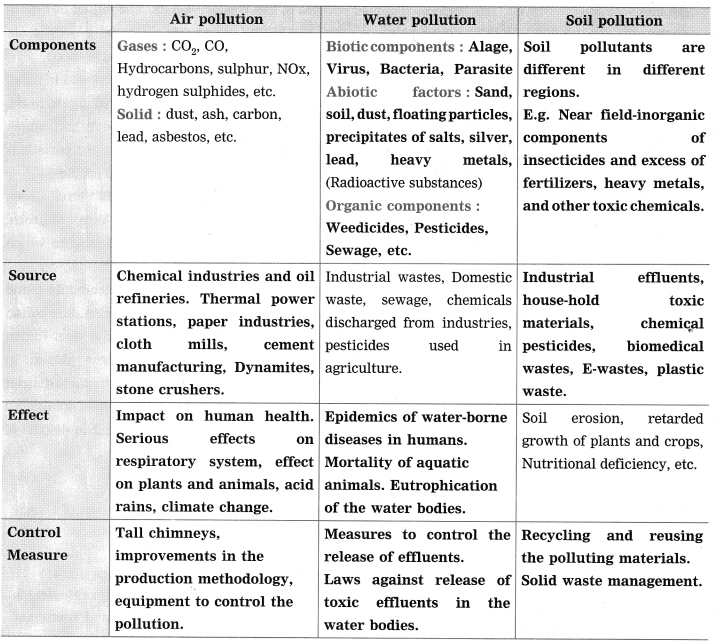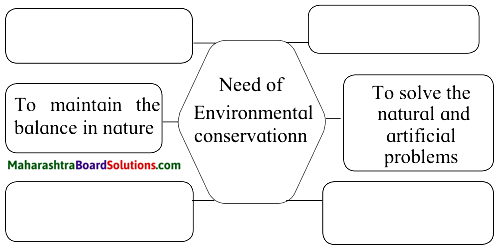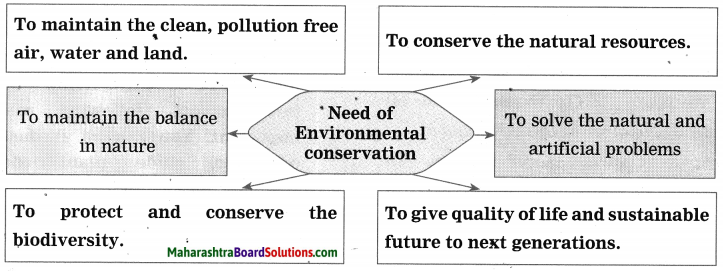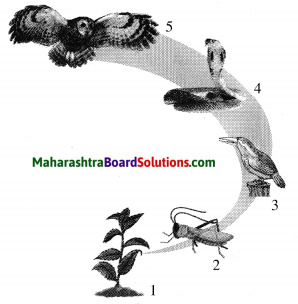
Heredity and Evolution Class 10 Questions And Answers Maharashtra Board

Class 10 Science Part 2 Chapter 1

Balbharti Maharashtra State Board Class 10 Science Solutions Part 2 Chapter 1 Heredity and Evolution Notes, Textbook Exercise Important Questions and Answers.

Std 10 Science Part 2 Chapter 1 Heredity and Evolution Question Answer Maharashtra Board

Class 10 Science Part 2 Chapter 1 Heredity and Evolution Question Answer Maharashtra Board

Question 1.
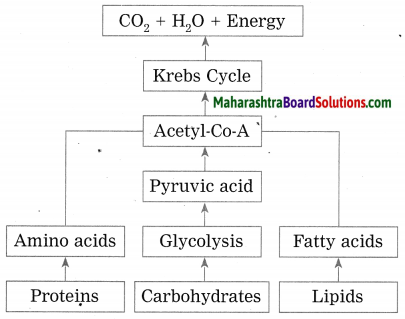
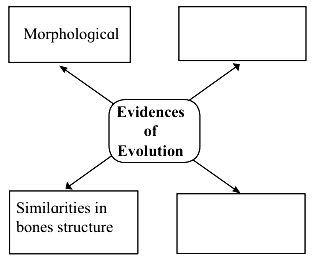
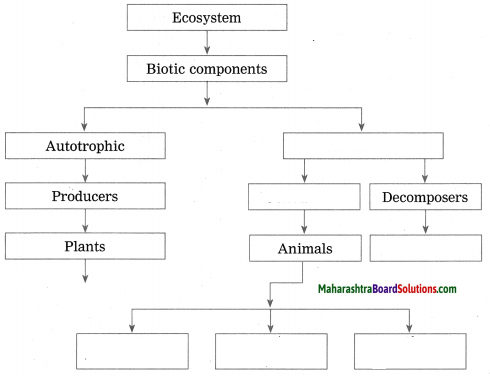
Complete the following diagram.
Maharashtra Board Class 10 Science Solutions Part 2 Chapter 1 Heredity and Evolution 1
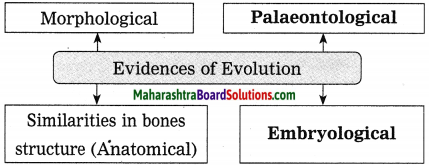
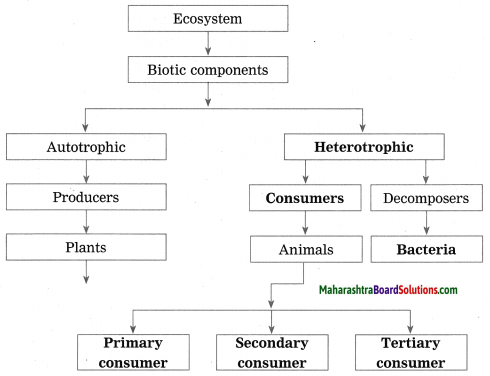
Answer:
Maharashtra Board Class 10 Science Solutions Part 2 Chapter 1 Heredity and Evolution 2

Question 2.
Read the following statements and justify same in your own words with the help of suituble examples.
a. Human evolution began approximately 7 crore years ago.
Answer:

  • Approximately around 7 crore years back the ice age began on the earth. In such conditions, dinosaurs became extinct. The evolution and diversity of mammals started during this time. Due to change in climate the forest cover also declined rapidly.
  • Ancestors of monkey-like animals were Lemur like animals which evolved during this time period.
  • The tails of these monkey-like creatures started vanishing very gradually around 4 crore years ago.
  • The body and brain both increased in volume forming first ape like animals. The monkey like ancestors gave rise to two evolutionary links to apes and human like animals.
  • Later, the human evolution took place by changes in the brain volume, the ability to walk upright, excessive use of hand for manipulations.
  • This journey of human evolution began 7 crore years ago. But the true wise and intelligent man arose around 50,000 years ago.

b. Geographical and reproductive isolation of organisms gradually leads to speciation.
Answer:

  • Every species survives in specific geographical conditions. The requirements of food and habitat, is specific for each species. Their reproductive ability and period is also different.
  • Therefore, the individuals from one species cannot reproduce with individuals from other species.
  • When they are separated by a distance or geographical barriers they are said to be isolated geographically.
  • When they cannot reproduce with each other, they are said to be isolated reproductively.
  • The ancestor species of both these subspecies may be the same but due to isolation over a very long-time duration, there is genetic variation between the two. Therefore, the isolation leads to speciation.

c. Study of fossils is an important aspect of study of evolution.
Answer:
Answer:

  • Fossils offer palaeontological evidence for the evolutionary process.
  • Due to some natural calamities the organisms get buried during ancient times.
  • The impressions and remnants of such organisms remain preserved underground. The hot lava also traps some organisms or their impressions. All such formations form fossils.
  • Study of fossils help the researcher to understand the characteristics of the organisms that existed in the past.
  • Carbon dating method also helps in finding out exact age of the fossil. According to the structure of earth’s crust the fossils are obtained at specific depths.
  • The oldest ones are obtained at the depth while the relatively recent ones occupy the upper surface. Thus fossils of invertebrates were seen in very old Palaeozoic era. Later were seen fossils of Pisces, Amphibia and Reptilia. The Mesozoic era was dominated by reptiles while Coenozoic era showed presence of mammals.
  • In this way, study of fossils unfold the evolutionary secrets.

d. There is evidences of fatal Science among chordates.
[Please read the above question as: Among different chordates there are embryological evidences.]
Answer:

  • Very young embryos of fish, amphibians, reptiles, birds and mammals show quite similar structure in the early stages.
  • As the further growth takes place, they acquire different patterns.
  • The initial similarity between the vertebrate embryos is an evidence that during evolution, there was a common ancestor for all the vertebrate classes.
  • This is called embryological evidence for vertebrate evolution.

Maharashtra Board Class 10 Science Solutions Part 2 Chapter 1 Heredity and Evolution

Question 3.
complete the statements by choosing correct options from bracket.
(Genes, Mutation, Translocation, Transcription, Gradual development, Appendix)
a. The causality behind the sudden changes was understood due to ………… principle of Hugo de Vries.
Answer:
Mutation

b. The proof for the fact that protein synthesis occurs through ……….. was given by George Beadle and Edward Tatum.
Answer:
Genes

c. Transfer of information from molecule of DNA to mRNA is called as …………… process.
Answer:
Transcription

d. Evolution means ………….
Answer:
Gradual development

e. Vestigial organ ……….. present in human body is proof of evolution.
Answer:
Appendix

Question 4.
Write short notes based upon the information known to you.
a. Lamarckism.
Answer:
(1) Lamarckism consists of two theories which were proposed by Jean Baptiste Lamarck. These are as follows: (a) Use and disuse of the organs (b) Inheritance of acquired characters.
(2) In theory of use and disuse of organs, Lamarck says : The characters of organs develop because specific activities that the organisms perform. If such organ is not used it gets degenerated. Thus the morphological changes take place due to activities or inactivity of a particular organism.
(3) To emphasise this theory, he quoted following examples. Due to constant extension of neck to eat foliage from the top of the trees, giraffe’s neck became long. Similarly blacksmith has strong arms due to constant work. Flightless ostrich and emu did not fly and hence their wings became useless. Aquatic birds like swan and duck made their feet suitable for swimming by living in water. Snake lost limbs as it tried burrowing mode.
(4) Such acquired characters are passed from one parental generation to the offspring. This is called inheritance of acquired characters.
(5) The theory of inheritance of acquired characters is not accepted as such transmission of acquired character does not take place. Only genetic characters are transmitted.

b. Darwin’s theory of natural selection.
Answer:

  • Charles Darwin proposed the theory of natural selection after making many observations on different specimens. He published a concept ‘Survival of the fittest’.
  • Darwin explains this concept as follows: All the organisms reproduce prolifically. Therefore, there is always a competition for food, mate, etc. Only adaptations for sustaining this struggle.
  • Natural selection plays important role by selecting only those organisms which are fit to live. Those that do not have better adaptations, perish. Selected sustaining organisms then perform reproduction and form new species in a very long period of time.
  • Darwin published his views in the book titled ‘Origin of Species’.

c. Embryology.
Answer:

  • Embryology is the study of developing embryos.
  • These embryos in their initial stages are very similar to each other.
  • These similarities decrease later in the development.
  • This similarity in initial stages indicate that these vertebrates have originated from a common ancestor.
  • In evolutionary science, comparative study of embryos of various vertebrates provide evidence for evolution.

d. Evolution.
Answer:

  • The sequential changes in the groups of living organisms that take place very gradually is called evolution.
  • Evolution is also described as the formation of new species due to natural selection.
  • The process of evolution takes millions of years for development and speciation of different organisms.
  • Changes in stars and planets in space and the changes in biosphere occurring on the Earth are all included under study of evolution.
  • Due to evolution organisms become fit, biodiversity is increased, and new species are created.
  • Different scientists have put forth theories to explain the process of evolution. Among these Charles Darwin’s theory of natural selection and speciation is accepted worldwide.

e. Connecting link.
Answer:
Some living organisms possess some characters in them which are the distinctive features of different groups or phyla. Such individuals connect these two groups by sharing the characters of both and hence they are known as connective links.

Examples: (1) Peripatus: Peripatus is the connecting link between Annelida and Arthropoda. It shows characters of both animal phyla. Like annelid worm, it shows segmented body, thin cuticle and parapodia. Like an arthropod, it shows open circulatory system and tracheal system for respiration.
(2) Duck Billed platypus: This is a connecting link between reptiles and mammals. Like reptiles it lays eggs but like mammals it has mammary glands and hairy skin.
(3) Lung fish: Lung fish is a connecting link between fishes and amphibians. Though a fish, it shows lungs for respiration as in amphibian animals.
(4) Connecting links indicate the direction and hierarchy of evolution.

Maharashtra Board Class 10 Science Solutions Part 2 Chapter 1 Heredity and Evolution

Question 5.
Define heredity. Explain the mechanism of hereditary changes.
Answer:
(1) Heredity: Heredity is the process by which the biological characters from parental generation are transmitted to the next generation through genes.

(2) The mechanism of hereditary changes:

  • Mutation: Sudden change in the parental DNA can cause mutations. This results into changes in the hereditary characters.
  • At the time of meiosis, the crossing over takes place. This creates new recombination of the genetic information. Therefore, the haploid gametes produced carry changed hereditary characters.

Question 6.
Define vestigial organs. Write names of some vestigial organs in human body and write the names of those animals in whom same organs are functional.
Answer:

  • Vestigial organs are degenerated or underdeveloped organs of organisms which do not perform any function.
  • According to the principle of natural selection, such organs are on the verge of disappearance. But it takes many millions of years for its complete vanishing.
  • The vestigial organs in one animal may be of use but to other kind of the animal as they still perform regular functions.
  • Appendix is vestigial for humans, it does not perform any function but in ruminant animals it is concerned with digestion.
  • Ear muscles are vestigial for us but in monkeys and cattle they are functional.
  • Names of vestigial organs in human body-Appendix, tail-bone or coccyx, wisdom teeth and body hair.

Question 7.
Answer the following questions.
a. How are the hereditary changes responsible for evolution?
Answer:
Hereditary characters are transmitted from parental generation to the offspring. These characters are maintained through inheritance. But the genes which are beneficial for the organisms in helping them to adapt to the environment are transmitted to the next generations in a greater proportion. This happens due to natural selection.

The process of evolution happens at a very slow pace. The favourable genes are preserved in the species as they bring about better survival of the individuals. Such individual reproduces more efficiently and evolve. The individuals with unfavourable genes are not selected by nature and are thus removed from the population through natural death. The fuel for evolution is thus truly supplied by the hereditary changes.

b. Explain the process of formation of complex proteins.
Answer:
The proteins are synthesised in following steps, viz. transcription, translation and translocation. Protein synthesis takes place according to the sequence of nucleotides present on the DNA molecule with the help of RNA molecules. This is known as central dogma of protein synthesis.

1. Transcription: In the process of transcription, mRNA is produced as per the nucleotide sequence on the DNA. For this the two strands DNA are separated. Only one strand participates in the formation of mRNA. The sequence of nucleotides which is complementary to that of present on DNA is copied on mRNA. Instead of thymine present in DNA, uracil is added on the mRNA. Transcription takes place in nucleus but the mRNA leaves nucleus, carries the genetic code and enters the cytoplasm. This genetic code is always in triplet form arid hence is known as triplet codon. The code for each amino acid always consists of three nucleotides.

2. Translation: Each mRNA may carry thousands of codons. But each codon is specific for only one amino acid. The tRNA molecule brings the required amino acid as per the code present on mRNA. There is anticodon on each tRNA which is complementary to the codon on mRNA. This process is known as translation.

3. Translocation: In translocation, the ribosome keeps on moving from one end of mRNA molecule to other end by distance of one triplet codon. While this process is taking place, rRNA, helps in joining the amino acids together by peptide bonds. The peptide chains later come together to form complex protein molecules.

c. Explain the theory of evolution and mention the proof supporting it.
Answer:
1. Theory of evolution:

  • According to the theory of evolution, first living material was in the form of protoplasm which was formed in ocean.
  • Gradually, it gave rise to unicellular organisms. Changes took place in these unicellular organisms which made them evolve into larger and more complex organisms.
  • All evolutionary changes were very slow and gradual taking about 300 crore years to happen.
  • Different types of organisms were developed as the changes and development that occurred in living organisms wefts all round and multi-dimensional.
  • Hence, this overall process of evolution is called organizational and progressive.
  • Variety of plants and animals developed from the ancestors having different structural and functional organization during the process of evolution.

2. Proof here means evidences of evolution.
These evidences are as follows:

  • Morphological evidences
  • Anatomical evidences
  • Vestigial organs
  • Palaentological evidences
  • Connecting links
  • Embryological evidences.

d. Explain with suitable examples importance of anatomical evidences in evolution. (July 2019)
Answer:

  • There are similarities in the structure and anatomy of different animal groups. E.g. human hand, forelimb of bull, patagium of bat and flipper of whale are all similar in their internal anatomy. There is similarity in the bones and joints of all these specimens.
  • External morphology does not show any similarity. Use of each of the organ is also different in different animals. Structurally, they may not be related.
  • However, the similarities in the anatomy is an evidence that they may have a common ancestor.
  • In this way, the anatomical evidence throws light on the process of evolution.

e. Define fossil. Explain importance of fossils as proof of evolution.
Answer:

  • Fossils offer palaeontological evidence for the evolutionary process.
  • Due to some natural calamities the organisms get buried during ancient times.
  • The impressions and remnants of such organisms remain preserved underground. The hot lava also traps some organisms or their impressions. All such formations form fossils.
  • Study of fossils help the researcher to understand the characteristics of the organisms that existed in the.past.
  • Carbon dating method also helps in finding out exact age of the fossil. According to the structure of earth’s crust the fossils are obtained at specific depths.
  • The oldest ones are obtained at the depth while the relatively recent ones occupy the upper surface. Thus fossils of invertebrates were seen in very old Palaeozoic era. Later were seen fossils of Pisces, Amphibia and Reptilia. The Mesozoic era was dominated by reptiles while Coenozoic era showed presence of mammals.
  • In this way, study of fossils unfold the evolutionary secrets.

f. Write evolutionary history of modern man.
Answer:
(1) Ancestors of humans developed from animals which resembled lemur like animals.
(2) Around seven crore years ago, monkey-like animals evolved from some of these lemur like animals.
(3) Then after about 4 crore years ago, in Africa the tails of these monkey like creatures very gradually disappeared.
(4) Simultaneously, there was enlargement in their body and brain volume too. The hands also improved and were provided with opposable thumb. In this way, ape-like animals were evolved.
(5) These ape-like animals independently gave rise to two lines of evolution, one giving rise to apes like gibbon and orangutan in the South and North-East Asia and gorilla and chimpanzee which stayed in Africa around 2.5 crores of years ago.
(6) The other line of evolution gave rise to human like animals around 2 crore years ago.
(7) The climate became dry and this resulted into reduction of forest cover. This made arboreal apes to descend on the land and start terrestrial mode.
(8) Due to this, there were changes in the pefvic
girdle and vertebral column. The hands were also freed from locomotion and thus they became more manipulative.
(9) Later, journey of hominoid species started from around 2 crores years ago. The first record of human like animal is ‘Ramapithecus’ ape from East Africa.
(10) Ramapithecus → Australopithecus → Neanderthal man → Cro-Magnon are the important steps in human evolution.
(11) Neanderthal man was said to be the first wise man. The increasing growth of brain made man more and more intelligent and thinking animal.
(12) Later, more than biological evolution, it was cultural evolution, when man started agriculture, animal , rearing. There was development of civilizations, arts and science etc. About 200 years ago there were industrial inventions and thus man now rules the earth.

Project:

Project 1.
Make a presentation on human evolution using various computer softwares and arrange a group disscussion over it in the class room.

Project 2.
Read the book – ‘Pruthvivur Manus Uparcich’ written by Late Dr. Sureshchandra Nadkarni and note your opinion on evolution.

Maharashtra Board Class 10 Science Solutions Part 2 Chapter 1 Heredity and Evolution

Can you recall? (Text Book Page No. 1)

Question 1.
Which component of the cellular nucleus of living organisms carries hereditary characters?
Answer:
The chromosomes made up of nucleic acids and proteins, present in the nucleus of the cell are the components that carry hereditary characters in living organisms.

Question 2.
What do we call the process of transfer of physical and mental characters from parents to the progeny?
Answer:
The process of transfer of physical and mental characters from parents to the progeny is called inheritance or heredity.

Question 3.
Which are the components of the DNA molecule?
Answer:
DNA molecule is made up of two helical strands consisting of deoxyribose sugar, phosphoric acid and pairs of nitrogenous bases. These three together is called a nucleotide.

Choose the correct alternative and write its alphabet against the sub-question number:

Question 1.
Darwin has published a book titled …………..
(a) Natural selection
(b) Mutation
(c) Fall of a sparrow
(d) Origin of species
Answer:
(d) Origin of species

Question 2.
The …………. man evolved about 50 thousand years ago.
(a) Cro Magnon
(b) Neanderthal
(c) Java man
(d) Ramapithecus
Answer:
(a) Cro Magnon

Question 3.
About 10 thousand years ago, ………….. started to practise agriculture.
(a) Gorilla
(b) wise man
(c) Ramapithecus
(d) Australopithecus
Answer:
(b) wise man

Question 4.
………………. can be considered as the first example of wise-man.
(a) Australopithecus
(b) Ramapithecus
(c) Cro Magnon
(d) Neanderthal man
Answer:
(d) Neanderthal man

Question 5.
………. is a connecting link between Annelida and Arthropoda. (March 2019)
(a) Duck-billed platypus
(b) Peripatus
(c) Lung fish
(d) Whale
Answer:
(b) Peripatus

Question 6.
………… years ago human brain was sufficiently evolved to call him wise man.
(a) 50,000
(b) 30,000
(c) 20,000
(d) 10,000
Answer:
(a) 50,000

Question 7.
The process by which the gene in the nucleotide suddenly changes its position is called ………. (Board’s Model Activity Sheet)
(a) translation
(b) translocation
(c) mutation
(d) transcription
Answer:
(c) mutation

Maharashtra Board Class 10 Science Solutions Part 2 Chapter 1 Heredity and Evolution

Question 8.
…………. is not the vestigial organ in the human body. (Board’s Model Activity Sheet)
(a) appendix
(b) Coccyx
(c) Canine
(d) Wisdom teeth
Answer:
(c) Canine

Write whether the following statements are true or false with proper justification for your answer:

Question 1.
It takes thousands of years for a useful structure to disappear.
Answer:
False. (The useful structures of the body do not disappear. The functioning of the body is easier due to such organs. It takes thousands of years for a functionless organ to disappear.)

Question 2.
Dr. Har Govind Khorana was awarded Nobel prize for his invention and publication in the journal Radio carbon.
Answer:
False. (Willard Libby was awarded Nobel prize for his invention and publication in the journal Radio carbon.)

Question 3.
Mesozoic era was dominated by variety of mammals.
Answer:
False. (Mesozoic era dominated by variety of reptiles.)

Question 4.
It seems that invertebrates have been slowly originated from vertebrates.
Answer:
False. (Vertebrates have been slowly originated from invertebrates in course of evolution. The primitive type of organisms always give rise to complex life forms. The invertebrates from Palaeozoic era gradually gave rise to vertebrates.)

Question 5.
The decaying process of C-12 occurs continuously from the dead remains of living organisms.
Answer:
False. (The decaying process of C-14 occurs continuously from the dead remains of living organisms. C-12 is not radioactive and hence it does not show decaying process.)

Question 6.
The theory of natural selection which mentions ‘Survival of fittest’ is given by Lamarck.
Answer:
False. (The theory of natural selection which mentions ‘Survival of fittest’ is given by Darwin.)

Question 7.
Changes acquired during life time are transferred to next generation.
Answer:
False. (Changes acquired during life time are not heritable. They are not transferred to next generation. Only the genes are transferred to the next generation.)

Question 8.
Each species grows in specific geographical conditions and has specific food, habitat, reproductive ability and period.
Answer:
True. (Each species has specifically evolved characters due to evolution and speciation.)

Question 9.
Humans walking with upright posture were confined to Africa only during prehistoric period.
Answer:
False. (Humans walking upright existed in Africa and China, Indonesia of Asian continent too.)

Maharashtra Board Class 10 Science Solutions Part 2 Chapter 1 Heredity and Evolution

Question 10.
Industrial society was established about 200 years ago.
Answer:
True. (After the development and specialization of human brain, he started indulging in science and technology. Before; this period the idea of industrialization was not existing.)

Match the columns:

Question 1.

Scientist Discovery
(1) Johann Gregor Mendel (a) Chromosomes of grasshopper
(2) Hugo de Vries (b) DNA is genetic material
(c) Pioneer of the modern genetics
(d) Mutational theory

Answer:
(1) Johann Gregor Mendel – Pioneer of the modern genetics.
(2) Hugo de Vries – Mutational theory.

Question 2.

Scientist Discovery
(1) Walter, Sutton (a) Chromosomes of grasshopper
(2) Mclyn McCarthy (b) DNA is genetic material
(c) Pioneer of the modern genetics
(d) Mutational theory

Answer:
(1) Walter, Sutton – Chromosomes of grasshopper.
(2) Mclyn McCarthy – DNA is genetic material.

Question 3.

Evidences of evolution Examples
(1) Morphological evidences (a) Duck billed Platypus and Peripatus
(2) Anatomical evidences (b) Remnants and impressions
(c) Human hand and fore limb of bull
(d) Shape and venation of leaf

Answer:
(1) Morphological evidences – Shape and venation of leaf.
(2) Anatomical evidences – Human hand and fore limb of bull.

Maharashtra Board Class 10 Science Solutions Part 2 Chapter 1 Heredity and Evolution

Question 4.

Evidences of evolution Examples
(1) Palaeontological evidences (a) Duck billed Platypus and Peripatus
(2) Connecting links (b) Remnants and impressions
(c) Coccyx and wisdom tooth
(d) Human hand and fore limb of cat

Answer:
(1) Palaeontological evidences – Remnants and impressions.
(2) Connecting links – Duck billed Platypus and Peripatus.

Find the odd one out:

Question 1.
Transcription, Translation, Translocation, Mutation
Answer:
Mutation. (All others are stages of protein synthesis.)

Question 2.
Bones of the hands, structure of nostrils, position of eyes, structure of ear pinnae
Answer:
Bones of the hands. (All the others are morphological evidences.)

Question 3.
Venation, Shape of seeds, Leaf petiole, Leaf shape
Answer:
Shape of seeds. (All the others are morphological evidences in plants.)

Question 4.
Human hand, wing of cockroach, forelimb of bull, flipper of whale
Answer:
Wing of cockroach. (All others are anatomical evidences, they are homologous organs.)

Identify the correlation between the first two words and suggest the suitable words in the fourth place:

Question 1.
mRNA : Transcription :: tRNA :…………
Answer:
Translation

Question 2.
Peripatus : Connecting link :: Appendix :……….
Answer:
Vestigial organs

Question 3.
Open circulatory system : Arthropods :: Thin cuticle and parapodia :………..
Answer:
Annelida

Question 4.
Between Annelida and Arthropoda : Peripatus ::……….: Lungfish
Answer:
Pisces/Fish and Amphibia

Question 5.
Theory of natural selection : Charles Robert Darwin :: Theory of inheritance of acquired characters :…………
Answer:
Jean Baptiste Lamarck

Maharashtra Board Class 10 Science Solutions Part 2 Chapter 1 Heredity and Evolution

Question 6.
Survival of fittest : Darwin :: Acquired characters :……….
Answer:
Lamark

Question 7.
Wisdom teeth : Vestigial organs :: Lungfish :………..
Answer:
Connecting link.

Define the following:

Question 1.
Heredity.
Answer:
The transfer of biological characters from one generation to another through genes is called heredity.

Question 2.
Transcription.
Answer:

Question 3.
Translation.
Answer:
The process of bringing tRNA possessing anticodon that is complementary to the codon on mRNA for protein synthesis is called translation.

Question 4.
Translocation.
Answer:
The process of movement of the ribosome from one end of mRNA to other end by the distance of one triplet codon is called translocation.

Question 5.
Mutation.
Answer:
Sudden and drastic change that occurs in the genetic material is called mutation.

Question 6.
Species.
Answer:
The group of organisms that cap produce fertile individuals through natural reproduction is called a species.

Name the following:

Question 1.
Three Scientists who proved that except viruses, all living organisms have DNA as genetic material.
Answer:
Oswald Avery, Mclyn McCarthy and Colin MacLeod.

Question 2.
Genetic disorder caused due to mutation:
Answer:
Sickle cell anaemia.

Question 3.
Fish that can breathe with help of lungs:
Answer:
Lung fish.

Question 4.
Vestigial organs in human beings:
Answer:
Appendix, tail-bone or coccyx, wisdom teeth and body hair.

Maharashtra Board Class 10 Science Solutions Part 2 Chapter 1 Heredity and Evolution

Question 5.
Important stages in the journey of human evolution:
Answer:

  • Animals like Lemur
  • Egyptopithecus
  • Dryopithecus
  • Ramapithecus
  • Australopithecus
  • Skilled Human
  • Homo erectus i.e. Man with erect posture
  • Neanderthal man
  • Cro-Magnon man.

Distinguish between the following:

Question 1.
Transcription and Translation.
Answer:
Transcription:

  1. In the process of transcription, the sequence of nucleotides present on the DNA molecule is copied
    and carried to the cytoplasm by mRNA.
  2. The process of transcription takes place in nucleus.
  3. During transcription, RNA is produced from DNA.
  4. Only mRNA takes part in transcription.

Translation:

  1. In the process of translation, the specific amino acids are picked up according to the codons brought by mRNA.
  2. The process of translation takes place in ribosomes located in cytoplasm.
  3. During translation, proteins are produced with the help of RNA.
  4. mRNA, tRNA and rRNA take part in translation.

Question 2.
Ape and Human.
Answer:
Ape:

  1. Brain of the apes is smaller in size.
  2. Ape cannot walk upright.
  3. Ape is less intelligent as compared to human.
  4. Apes are arboreal in their habitat and they spend more time on the trees.
  5. The forelimbs of ape are longer than the hind limbs.

Human:

  1. Brain of humans is larger in size.
  2. Humans can walk upright.
  3. Human is considered to be the most intelligent animal.
  4. Humans are terrestrial in their habitat. They cannot stay on the trees.
  5. The forelimbs of humans are shorter than the hind limbs.

Give scientific reasons:

Question 1.
Some of the characters of parents are seen in their offspring.
Answer:

  • The parental genes are transferred to their progeny through male and female gametes.
  • These genes carry hereditary characters.
  • Since they are transmitted from the parents to their offspring, one can see the parental characters in their offspring.

Question 2.
Darwin’s work on evolution has been a milestone.
Answer:
(1) Darwin has proposed two very important theories of evolution, viz. Theory of natural selection and Theory of origin of species.
(2) The evolution has taken place on the earth for last many crores of years.
(3) The exact nature and process of these evolutionary changes become clear after studying Darwinism. (4) The observations made by Darwin at that time are now tested according to the modern development in science and are found to be correct. Thus, his work is said to be a milestone.

Question 3.
Peripatus is said to be a connecting link between Annelida and Arthropoda.
Answer:

  • Peripatus shows segmented body, thin cuticle, and parapodia-like organs.
  • These characters are typical of Annelids.
  • Similarly, it also shows tracheal respiration and open circulatory system which is a characteristic feature of Arthropods.
  • Since Peripatus shares both these characters, it is said to be a connecting link between j Annelida and Arthropoda.

Question 4.
Vertebrates have been slowly originated from invertebrates.
Answer:

  • When the carbon dating method was used to assess the age of fossils, it was understood that invertebrates were present on the earth much before the vertebrates.
  • The fossils of invertebrates are present in lower layers of earth’s strata.
  • They were seen in Palaeozoic era of geological time period. Vertebrates dominated during Coenozoic era.
  • Their fossils are seen in the upper strata of the earth’s crust.
  • The structural complexity also increased in vertebrates. All these facts indicate that Vertebrates have slowly originated from invertebrates.

Question 5.
During human evolution the hands became available for use.
Answer:

  • During human evolution, the climate of earth started becoming dry.
  • This resulted in loss of forest cover.
  • The apes which were arboreal on the trees thus descended and started walking on land.
  • The lumbar bones underwent change and the apes started walking upright on the grasslands.
  • The vertebral column also underwent change. Due to upright posture the forelimbs were freed from locomotion.
  • The legs started bearing the weight of the body and the hands became available for use.

Read the following statements and justify the same in your own words with the help of suitable examples:

Question 1.
Geographical and reproductive isolation of organisms gradually leads to speciation.
Answer:

  • Every species survives in specific geographical conditions. The requirements of food and habitat, is specific for each species. Their reproductive ability and period is also different.
  • Therefore, the individuals from one species cannot reproduce with individuals from other species.
  • When they are separated by a distance or geographical barriers they are said to be isolated geographically.
  • When they cannot reproduce with each other, they are said to be isolated reproductively.
  • The ancestor species of both these subspecies may be the same but due to isolation over a very long-time duration, there is genetic variation between the two. Therefore, the isolation leads to speciation.

Maharashtra Board Class 10 Science Solutions Part 2 Chapter 1 Heredity and Evolution

Question 2.
Study of fossils is an important aspect of study of evolution.
Answer:
(1) Fossils offer palaeontological evidence for the evolutionary process.
(2) Due to some natural calamities the organisms get buried during ancient times.
(3) The impressions and remnants of such organisms remain preserved underground. The hot lava also traps some organisms or their impressions. All such formations form fossils.
(4) Study of fossils help the researcher to understand the characteristics of the organisms that existed in the.past.
(5) Carbon dating method also helps in finding out exact age of the fossil. According to the structure of earth’s crust the fossils are obtained at specific depths.
(6) The oldest ones are obtained at the depth while the relatively recent ones occupy the upper surface. Thus fossils of invertebrates were seen in very old Palaeozoic era. Later were seen fossils of Pisces, Amphibia and Reptilia. The Mesozoic era was dominated by reptiles while Coenozoic era showed presence of mammals.
(7) In this way, study of fossils unfold the evolutionary secrets.

Question 3.
There is evidences of fatal Science among chordates.
[Please read the above question as: Among different chordates there are embryological evidences.]
Answer:

  • Very young embryos of fish, amphibians, reptiles, birds and mammals show quite similar structure in the early stages.
  • As the further growth takes place, they acquire different patterns.
  • The initial similarity between the vertebrate embryos is an evidence that during evolution, there was a common ancestor for all the vertebrate classes.
  • This is called embryological evidence for vertebrate evolution.

Question 4.
Human evolution began approximately 7 crore years ago.
Answer:

  • Approximately around 7 crore years back the ice age began on the earth. In such conditions, dinosaurs became extinct. The evolution and diversity of mammals started during this time. Due to change in climate the forest cover also declined rapidly.
  • Ancestors of monkey-like animals were Lemur like animals which evolved during this time period.
  • The tails of these monkey-like creatures started vanishing very gradually around 4 crore years ago.
  • The body and brain both increased in volume forming first ape like animals. The monkey like ancestors gave rise to two evolutionary links to apes and human like animals.
  • Later, the human evolution took place by changes in the brain volume, the ability to walk upright, excessive use of hand for manipulations.
  • This journey of human evolution began 7 crore years ago. But the true wise and intelligent man arose around 50,000 years ago.

Answer the following questions:

Question 1.
Answer the following questions: (March 2019)
(a) What do you mean by central dogma?
Answer:
Information about protein synthesis is present in DNA. As per this information, proteins are produced by DNA through RNA molecules. This is called central dogma.

(b) What is transcription?
Answer:
The process of synthesis of mRNA as per the nucleotide sequence present in DNA is called transcription. The nucleotide sequence on mRNA is complimentary to that of the single DNA strand used in synthesis. Instead of thymine, mRNA possesses uracil.

(c) What is meant by triplet codon?
Answer:
The code for each amino acids always consists of three nucleotides which is known as triplet codon.

Question 2.
Which animal is called a connecting link between Reptiles and Mammals? (Board’s Model Activity Sheet)
Answer:
Duck billed platypus is called a connecting link between Reptiles and Mammals.

Question 3.
In which way is science of heredity useful these days?
Answer:
The science of heredity is useful in the following ways:

  • For diagnosis of hereditary disorders.
  • For treatment of hereditary disorders
  • For prevention of hereditary disorders
  • For production of hybrid varieties of animals and plants
  • For using microbes in the industrial processes.

Maharashtra Board Class 10 Science Solutions Part 2 Chapter 1 Heredity and Evolution

Question 4.
What is meant by carbon dating method?
Answer:
(1) Carbon dating method is technique used for determining the age of fossils.
(2) After the death of the organisms, their consumption of carbon stops. But right from that moment the decaying process of C-14 occurs continuously.
(3) This results in change in the ratio between C-14 and C-12. C-12 is not radioactive as C-14.
(4) Thus the time passed since the death of a plant or animal is calculated by measuring the radioactivity of C-14 and ratio of C-14 to C-12 present in their body.
(5) The points noted during carbon dating are:

  • The period after the organism has been dead.
  • The activity of C-14 in the dead organism.
  • Ratio between C-14 and C-12.

Question 5.
Answer the following questions:
(a) Describe briefly the Darwin’s theory of natural selection.
Answer:
Charles Darwin (1809-1882) proposed the theory of natural selection.
Theory of natural selection: ‘The survival of fittest’, i.e., organisms which are fit for survival, evolve while those that are not, perish. The natural selection thus acts to produce new species.

(b) What were the objections raised against Darwinism?
Answer:
Objections raised against Darwinism:

  1. There are other factors too for evolution and just not the Natural Selection.
  2. Arrival of useful and useless modifications were not explained by Darwin, though he said about the survival of the fittest.
  3. He has not given any explanation about slow changes and abrupt changes occurring during evolution.

(c) Which book was published by Darwin to explain this theory? (Board’s Model Activity Sheet)
Answer:
Charles Darwin wrote the book ‘Origin of Species’.

Question 6.
What were the objections raised against Darwinism?
Answer:
Some of the main objections raised against Darwinism are as follows:

  • There are other factors too for evolution and just not the Natural Selection.
  • Arrival of useful and useless modifications were not explained by Darwin, though he said about the survival of the fittest.
  • He has not given any explanation about slow changes and abrupt changes occurring during evolution.

Question 7.
Answer the following questions:
(a) Explain in brief-Lamarck’s principle of ‘use or disuse of organs’.
Answer:
The theory of use and disuse of organs says that the morphological characters of organism develop because of specific activities that the organisms perform. If some organ is not used it gets degenerated. If excessively, used, it develops. Thus, the morphological changes take place due to activities or non-working of a particular body parts in an organism.

(b) Give two examples.
Answer:
Due to constant extension of neck to eat foliage from the top of the trees, giraffe’s neck became long. Similarly, blacksmith has strong arms due to constant work. The flightless ostrich and emu did not fly and hence their wings became useless. Aquatic birds like swan and duck made their feet suitable for swimming by living in water. Snake lost limbs as it tried burrowing mode.

(c) What are acquired characters?
Answer:
Acquired characters are those characters which are obtained during the life time by any organism and passed on to next generations.

Write short notes:
(OR)
Write short notes based upon the information known to you:

Question 1.
Theory of evolution.
Answer:

  • According to the theory of evolution, first living material was in the form of protoplasm which was formed in ocean.
  • Gradually, it gave rise to unicellular organisms. Changes took place in these unicellular organisms which made them evolve into larger and more complex organisms.
  • All evolutionary changes were very slow and gradual taking about 300 crore years to happen.
  • Different types of organisms were developed as the changes and development that occurred in living organisms was all round and multi-dimensional.
  • Hence, this overall process of evolution is called organizational and progressive.
  • Variety of plants and animals developed from the ancestors having different structural and functional organization during the process of evolution.

By choosing appropriate words given in the bracket, complete the paragraph:

Question 1.
(translation, anticodon, tRNA, mRNA, amino acids, triplet codon, transcription, DNA)
The …….. formed in nucleus comes in cytoplasm. It brings in the coded message from DNA. The message contains the codes for amino acids. The code for each amino acid consists of three nucleotides. It is called as ‘………..’. Each mRNA is made up of thousands of triplet codons. As per the message on mRNA, ……… are supplied by the ………. For this purpose, tRNA has ‘…………’ having complementary sequence to the codon on mRNA. This is called ‘………..’.
Answer:
The mRNA formed in nucleus comes in cytoplasm. It brings in the coded message from DNA. The message contains the codes for amino acids. The code for each amino acid consists of three nucleotides. It is called as ‘triplet codon’. Each mRNA is made up of thousands of triplet codons. As per the message on mRNA, amino acids are supplied by the tRNA. For this purpose, tRNA has ‘anticodon’ having complementary sequence to the codon on mRNA. This is called ‘translation’.

Maharashtra Board Class 10 Science Solutions Part 2 Chapter 1 Heredity and Evolution

Question 2.
(Cultural, agriculture, fire, brain, Cro-Magnon, Homo sapiens, Neanderthal)
Evolution of upright man continued in the direction of developing its ………. for the period of about 1 lakh years and meanwhile he discovered the ………. Brain of man, 50 thousand years ago had been sufficiently evolved to the extent that it could be considered as member of the species ………… Neanderthal man can be considered as the first example of wise-man. The ……….. man evolved about 50 thousand years ago and afterwards, this evolution had been faster than the earlier. About 10 thousand years ago, wise-man started to practise the ………. It started to rear the cattle-herds and established the cities. ………..development took place later.
Answer:
Evolution of upright man continued in the direction of developing its brain for the period of about 1 lakh years and meanwhile he discovered the fire. Brain of man 50 thousand years ago had been sufficiently evolved to the extent that it could be considered as member of the species Homo sapiens. Neanderthal man can be considered as the first example of wise-man. The Cro-Magnon man eyolved about 50 thousand years ago and afterwards, this evolution had been faster than the earlier. About 10 thousand years ago, wise-man started-to practise the agriculture. It started to rear the cattle-herds and established the cities. Cultural development took place later.

Read the paragraph and answer the questions given below:

With the help of RNA, the genes present in the form of DNA participate in the functioning of cell and thereby control the structure and functioning of the body. Information about protein synthesis is stored in the DNA and synthesis of appropriate proteins as per requirement is necessary for body. These proteins are synthesized by DNA through the RNA. This is called ‘Central Dogma’. mRNA is produced as per the sequence of nucleotides on DNA. Only one of the two strands of DNA is used in this process. The sequence of nucleotides in mRNA being produced is always complementary to the DNA strand used for synthesis. Besides, there is uracil in RNA instead of thymine of DNA. This process of RNA synthesis is called ‘transcription’.

Questions and Answers:

Question 1.
Which part of the cell control the structure and functioning of the body?
Answer:
Genes present in the form of DNA along with RNA control the structure and functioning of the body.

Question 2.
How is a specific protein synthesised in the cell?
Answer:
The information of protein synthesis is stored in the DNA which is utilised as per the requirement of the body. Later the proteins are synthesised by DNA through the RNA.

Question3.
What is the similarity between mRNA and DNA?
Answer:
The sequence of nucleotides on DNA is copied on mRNA. The nucleotide sequence on mRNA is thus complementary to DNA.

Question 4.
Give one difference between RNA and DNA.
Answer:
RNA has uracil instead of thymine which is present in DNA.

Question 5.
Define central dogma.
Answer:
Central dogma is the concept that proteins are synthesised by DNA through the RNA.

Diagram-based questions:

Question 1.
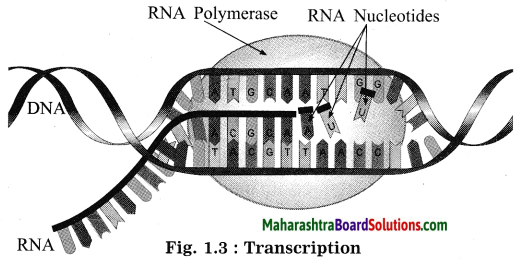
Observe the figure 1.3 of transcription given on page 9 in this chapter and answer the following questions:
Maharashtra Board Class 10 Science Solutions Part 2 Chapter 1 Heredity and Evolution 3
(1) What is the sequence of nucleotides present on one strand of the DNA?
Answer:
A T G C A A T T

(2) According to the above sequence on DNA, what will be the transcribed sequence on the mRNA molecule?
Answer:
U A C G U U A A

(3) Which enzyme is taking part in the above process of transcription?
Answer:
RNA polymerase takes part in the process of transcription.

Maharashtra Board Class 10 Science Solutions Part 2 Chapter 1 Heredity and Evolution

Question 2.
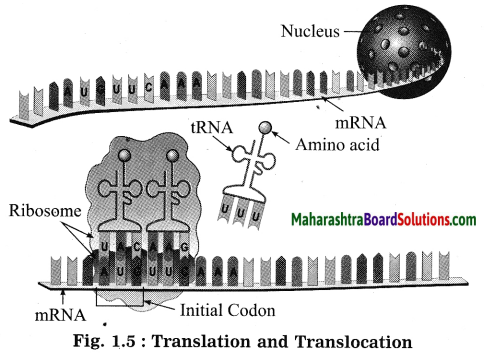
Observe the figure 1.5 of translation and translocation, given on page 9 this chapter and answer the following questions:
Maharashtra Board Class 10 Science Solutions Part 2 Chapter 1 Heredity and Evolution 4
(1) Which is the initiation codon? Where is it present?
Answer:
AUG is the initiation codon, which is present on the mRNA.

(2) What are the types of RNA present inside the ribosome? Which triplet codon is present on it?
Answer:
There are two molecules of tRNA present inside the ribosome. The triplet codons present on them are UAC and AAG respectively.

(3) Which genetic code is present on mRNA that is leaving the nucleus? What must be the sequence on the DNA to have such code on mRNA?
Answer:
The mRNA that leaves the nucleus has genetic code: A U G U U C A A A
The genetic code on DNA therefore should be as follows: T A C A A G T T T

Question 3.
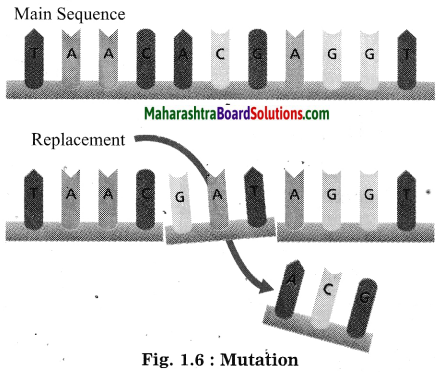
Observe the figure 1.6 given on page 10 from this chapter. Answer the following question based on your observations:
Maharashtra Board Class 10 Science Solutions Part 2 Chapter 1 Heredity and Evolution 5
What is the significance of this figure from the viewpoint of evolution? Explain in brief.
Answer:
In the figure, the process of mutation is shown. The original nucleotide sequence of TGC is replaced by new mutated sequence GAT. The change in the nucleotide sequence will change the DNA.

This will result in the change in genes and then changing the hereditary characters. Due to such change in genes, the evolution proceeds. The mutation so formed can be minor or major. The greater the impact of the change, the evolution takes place rapidly. The mutation thereby produce recombinations leading to diversity.

Question 4.
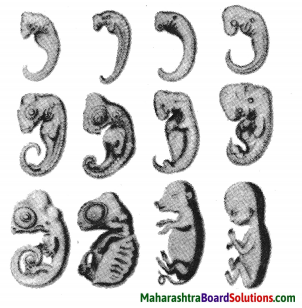
Observe the picture and answer the following questions:
Maharashtra Board Class 10 Science Solutions Part 2 Chapter 1 Heredity and Evolution 6
(1) Which evidence of evolution is shown in the picture?
Answer:
Embryological evidences of evolution are shown in this picture.

(2) What can be proven with this proof?
Answer:
The similarities in the initial embryonic stages of different vertebrates shows that there was a common origin of all of them. Thus embryological evidences prove that there was common vertebrate ancestor.

(3) Give one more example of evidence of evolution.
Answer:
Palaeontological evidences such as vestigial organs and connecting links are another examples of evolutionary evidences.

Maharashtra Board Class 10 Science Solutions Part 2 Chapter 1 Heredity and Evolution

Question 5.
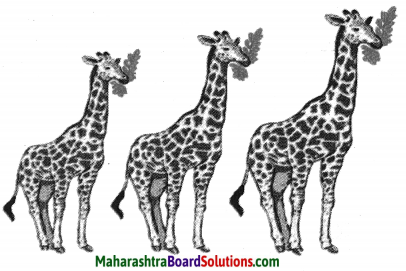
Which concept/theory do you remember after seeing this picture of Giraffes? Describe it in brief.
Maharashtra Board Class 10 Science Solutions Part 2 Chapter 1 Heredity and Evolution 7
Answer:

  • The picture is based on the Lamarck’s principle of ‘use and disuse of organs’.
  • The morphological characters of organism develop because of specific activities that the organisms perform.
  • If some organ is not used it gets degenerated. If excessively used, it develops further.
  • Thus, the morphological changes take place due to activities or non-working of a particular body parts in an organism. Due to constant extension of neck to eat foliage from the top of the trees, giraffe’s neck became long.

Activity-based Questions:

Try this: (Text Book Page No. 4)
Maharashtra Board Class 10 Science Solutions Part 2 Chapter 1 Heredity and Evolution 8
Observe the above images and note the similarities between given animal images and plant images.
Answer:
The above pictures of the animals show similarities such as structure of mouth, position of eyes, structure of nostrils and ear pinnae and body fur. In pictures of plants there are similarities in characters like leaf shape, leaf venation, leaf petiole, etc.
These above morphological evidences show that there may be a common ancestor for all of the species shown.

Observe and Discuss:

Question 1.
Observe the pictures given below. (Text Book Page No. 5)
Maharashtra Board Class 10 Science Solutions Part 2 Chapter 1 Heredity and Evolution 9
Answer:
(1) Fossils offer palaeontological evidence for the evolutionary process.
(2) Due to some natural calamities the organisms get buried during ancient times.
(3) The impressions and remnants of such organisms remain preserved underground. The hot lava also traps some organisms or their impressions. All such formations form fossils.
(4) Study of fossils help the researcher to understand the characteristics of the organisms that existed in the.past.
(5) Carbon dating method also helps in finding out exact age of the fossil. According to the structure of earth’s crust the fossils are obtained at specific depths.
(6) The oldest ones are obtained at the depth while the relatively recent ones occupy the upper surface. Thus fossils of invertebrates were seen in very old Palaeozoic era. Later were seen fossils of Pisces, Amphibia and Reptilia. The Mesozoic era was dominated by reptiles while Coenozoic era showed presence of mammals.
(7) In this way, study of fossils unfold the evolutionary secrets.

Question 2.
Observe the pictures given and discuss the characters observed. (Text Book Page No. 6)
Maharashtra Board Class 10 Science Solutions Part 2 Chapter 1 Heredity and Evolution 10
Answer:
Some living organisms possess some characters in them which are the distinctive features of different groups or phyla. Such individuals connect these two groups by sharing the characters of both and hence they are known as connective links.

Examples: (1) Peripatus: Peripatus is the connecting link between Annelida and Arthropoda. It shows characters of both animal phyla. Like annelid worm, it shows segmented body, thin cuticle and parapodia. Like an arthropod, it shows open circulatory system and tracheal system for respiration.
(2) Duck Billed platypus: This is a connecting link between reptiles and mammals. Like reptiles it lays eggs but like mammals it has mammary glands and hairy skin.
(3) Lung fish: Lung fish is a connecting link between fishes and amphibians. Though a fish, it shows lungs for respiration as in amphibian animals.
(4) Connecting links indicate the direction and hierarchy of evolution.

Maharashtra Board Class 10 Science Solutions Part 2 Chapter 1 Heredity and Evolution

Project: (Do it your self)

Project 1.
Internet is my friend: (Text Book Page No. 3)
Collect the information from the internet about Big-Bang theory related with the formation of stars and planets and present it in your class.

Project 2.
Use of ICT: (Text Book Page No. 4)
Collect the information of geological dating and present it in the classroom.

Project 3.
Use of ICT: (Text Book Page No. 5)
Find how the vestigial organs in certain animals are functional in others. Present the information in your class and send it to others.

Project 4.
Internet is my friend: (Text Book Page No. 8)
Collect the pictures and information of various species of monkeys from internet.

Class 10 Questions And Answers

10th Std Science Part 2 Questions And Answers:

Living World and Classification of Microbes Class 8 Science Chapter 1 Questions And Answers Maharashtra Board

Class 8 Science Chapter 1

Balbharti Maharashtra State Board Class 8 Science Solutions Chapter 1 Living World and Classification of Microbes Notes, Textbook Exercise Important Questions and Answers.

Std 8 Science Chapter 1 Living World and Classification of Microbes Question Answer Maharashtra Board

Class 8 Science Chapter 1 Living World and Classification of Microbes Question Answer Maharashtra Board

1. Use Whittaker method to classify bacteria, protozoa, fungi, algae, prokaryotic, eukaryotic, microbes.

Living World And Classification Of Microbes Exercises  Question 1.
Use Whittaker method to classify bacteria, protozoa, fungi, algae, prokaryotic, eukaryotic, microbes.
Answer:

  • Bacteria: Kingdom Monera
  • Protozoa: Kingdom Protista
  • Fungi: Kingdom Fungi
  • Algae: If unicellular, Kingdom Protista. If multicellular, Kingdom Plantae
  • Prokaryotic: Kingdom Monera
  • Eukaryotic: Any kingdom other than Monera.
  • Microbes: Kingdom Monera or Protista.

2.  Complete the five kingdom method of classification using-living organism, prokaryotes, eukaryotes, multicellular, unicellular, protista, animals, plants, fungi.

Living World And Classification Of MicrobesQuestion 1.
Complete the five kingdom method of classification using-living organism, prokaryotes, eukaryotes, multicellular, unicellular, protista, animals, plants, fungi.
 Living World And Classification Of Microbes
Answer:
Maharashtra Board Class 8 Science Solutions Chapter 1 Living World and Classification of Microbes 2

3. Find out my partner 

Question 1.
Maharashtra Board Class 8 Science Solutions Chapter 1 Living World and Classification of Microbes 3
Answer:

A B
1. Fungi Candida
2. Protozoa Amoeba
3. Virus Bacteriophage
4. Algae Chlorella
5. Bacteria Prokaryotic.

Maharashtra Board Class 8 Science Solutions Chapter 1 Living World and Classification of Microbes

4. State whether the following statements are True or False. Explain your statement:

Question a.
Lactobacilli are harmful bacteria.
Answer:
False.
Explanation Lactobacilli are useful bacteria. They are used for curdling the milk. They are also used for preparing variety of milk products.

Question b.
Cell wall of fungi is made up of chitin.
Answer:
True.
Explanation The cell wall of the plants is made up of cellulose while the cell wall of fungi is made up of complex sugar called chitin. Inside the fungal cell wall there is cytoplasm which contains many nuclei.

Maharashtra Board Class 8 Science Solutions Chapter 1 Living World and Classification of Microbes

Question d.
Organ of locomotion in amoeba is pseudopodia.
Answer:
True.
Explanation Amoeba is a protozoan, primitive organism which possesses pseudopodia as the organ for locomotion.

Question e.
Tomato wilt is a viral disease.
Answer:
True.
Explanation: Tomato wilt is a viral disease. These viruses are able to infect only plant cells.

5. Give answers

Question a.
State the merits of Whittaker’s method of classification.
Answer:
For the answer of Merits of Whittaker’s method refer to point I of answer given on this Digest’s page no. 11; under “Use your brain power!”

Question b.
Write the characteristics of viruses.
Answer:
1. Viruses are extremely minute of the size range of 10 nrn to 100 nm. They are on the borderline of living and non-living. They are 10 to 100 times smaller than bacteria and are visible only through the electron microscope.

2. Though they are not considered as living, they can make replica of their own.
3. They exist in the form of independent particles. They are long molecules of DNA or RNA which are covered by a protein coat.

4. Their survival is possible only inside the living plant or animal cells. When they infect the host cells, they produce their own proteins with the machinery of the host cell. These proteins form many replicas of the infecting virus.

5. This infection destroys the host cell and the virus replicas are released. These free replicas re-infect the other adjoining cells of the host.
6. Most of the viruses are pathogenic, they cause diseases in plants and animals.

Maharashtra Board Class 8 Science Solutions Chapter 1 Living World and Classification of Microbes

Question c.
Explain the nutrition in fungi.
Answer:
Most of the fungi are saprophytic in their nutrition. They absorb the nourishment from dead and decaying matter. By taking the organic matter from dead bodies of plants and animals, fungi survive. In this process they degrade the organic matter completely.

Question d.
Which living organisms are included in the kingdom Monera?
Answer:

  1. All the living organisms belonging to Kingdom Monera are unicellular.
  2. The mode of nutrition in them is either autotrophic or heterotrophic.
  3. All of them are prokaryotic and thus they do not have well-formed nucleus. The nuclear membrane and the cell organelles are absent in them.
  4. Kingdom Monera consists of different types of bacteria and blue-green algae.

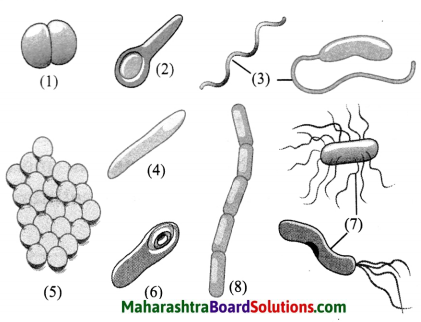
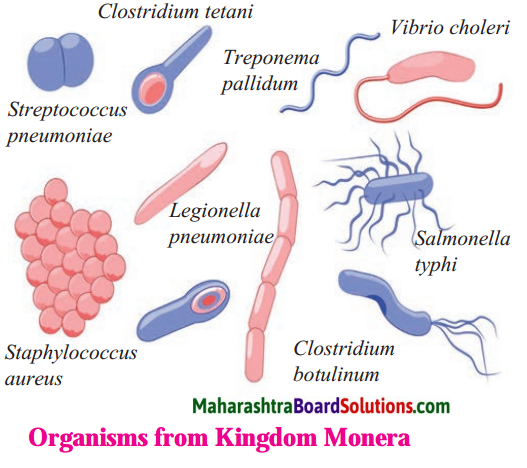
E.g. Bacteria Clostridium titani, Vibrio choleri, Treponema pallidum, Streptococcus pneumoniae, Legionella pneumoniae, Salmonella typhi, Staphylococcus aureus, Clostridium botulinum.

6. Who am I?

Question a.
I don’t have true nucleus, cell organelles or plasma membrane.
Answer:
Microbe from Monera

Question b.
I have nucleus and membrane bound cell organelles.
Answer:
Protozoan from Protista/I am any one of Eukaryote

Maharashtra Board Class 8 Science Solutions Chapter 1 Living World and Classification of Microbes

Question c.
I live on decaying organic matter.
Answer:
Fungus

Question d.
I reproduce mainly by cell division. (*Binary fission)
Answer:
Bacteria and some Protozoa.

Question e.
I can produce my replica.
Answer:
Virus

Question f.
I am green, but don’t have organs.
Answer:
Algae

7. Draw neat and labelled diagrams.

Question a.
Different types of bacteria:
Answer:
Maharashtra Board Class 8 Science Solutions Chapter 1 Living World and Classification of Microbes 4

Question b.
Paramoecium:
Answer:
Maharashtra Board Class 8 Science Solutions Chapter 1 Living World and Classification of Microbes 5

Question c.
Bacteriophage
Answer:
Maharashtra Board Class 8 Science Solutions Chapter 1 Living World and Classification of Microbes 6

8. Arrange the following in ascending order of size Bacteria, Fungi, Viruses, Algae.

Question a.
Arrange the following ¡n ascending order of size Bacteria, Fungi, Viruses, Algae.
Answer:
Viruses, Bacteria, Fungi, Algae.

Maharashtra Board Class 8 Science Solutions Chapter 1 Living World and Classification of Microbes

Project:

Question 1.
Prepare a chart showing infectious bacteria and the diseases caused by them.

Question 2.
Visit a nearby pathology lab. Get the information about pathogenic microbes, methods to observe them, different microscopes from the technicians there.

Class 8 Science Chapter 1 Living World and Classification of Microbes Additional Important Questions and Answers

Rewrite the sentences after filling the blanks:

Question 1.
The process of dividing living organism into groups and subgroups is called …………… .
Answer:
Biological classification.

Question 2.
Organisms with cell wall but not able to perform photosynthesis are called …………… .
Answer:
Fungi.

Question 3.
Most of the fungi are …………… .
Answer:
saprotrophic.

Question 4.
Viruses can be seen only with …………… .
Answer:
electron microscope.

Question 5.
…………… viruses attack bacteria.
Answer:
Bacteriophage

Maharashtra Board Class 8 Science Solutions Chapter 1 Living World and Classification of Microbes

Question 6.
In fungi the cell wall is made up of j tough and complex sugar called …………… .
Answer:
‘Chitin’.

State whether the following statements are True or False. Explain your statement:

Question 1.
Plasmodium causes dysentery.
Answer:
False.
Explanation Plasmodium causes malaria. Entamoeba histolytica causes amoebic dysentery or amoebiasis.

Find out my partner

Question 1.

Scientist Pattern of classification
1. Carl Linnaeus (a) 5 groups of living organisms
2. Haeckel (b) 2 groups as Prokaryotes and Eukaryotes
3. Chatton (c) 4 groups as Monera, Protista, Plants and Animals
4. Kopland (d) 3 kingdoms – Protista, Plants and Animals.
5. Whittaker (e) 2 kingdoms of living organisms

Answer:

Scientist Pattern of classification
1. Carl Linnaeus  (e) 2 kingdoms of living organisms
2. Haeckel (d) 3 kingdoms – Protista, Plants and Animals.
3. Chatton (b) 2 groups as Prokaryotes and Eukaryotes
4. Kopland (c) 4 groups as Monera, Protista, Plants and Animals
5. Whittaker (a) 5 groups of living organisms

Maharashtra Board Class 8 Science Solutions Chapter 1 Living World and Classification of Microbes

Question 2.

 Living organism Group
1. Clostridium titani (a) Heterotrophic Protista
2. Paramoecium (b) Fungi
3. Chlamydomonas (c) Bacteria belonging to Monera
4. Baker’s yeast (d) Algae
(e) Virus

Answer:

 Living organism Group
1. Clostridium titani (c) Bacteria belonging to Monera
2. Paramoecium (a) Heterotrophic Protista
3. Chlamydomonas (d) Algae
4. Baker’s yeast ((b) Fungi
(e) Virus

Question 3.

Microbes Size
1. Virus (a) 1 μm to 10 μm
2. Algae (b) 200 μm
3. Protozoa (c) 10 μm to 100μm
4. Bacteria (d) 10 nm to 100 nm

Answer:

Microbes Size
1. Virus (d) 10 nm to 100 nm
2. Algae (c) 10 μm to 100 μm
3. Protozoa (b) 200 μm
4. Bacteria (a) 1 μm to 10 μm

Name the following/ Give examples

Question 1.
Three organs of locomotion in Protista
Answer:

  1. Pseudopodia
  2. Cilia
  3. Flagella

Maharashtra Board Class 8 Science Solutions Chapter 1 Living World and Classification of Microbes

Question 2.
Two autotrophic Protista
Answer:

  1. Euglena
  2. Volvox

Question 3.
Institute in India which is involved in research on viruses
Answer:
National Institute of Virology, Pune

Question 4.
Two methods of asexual reproduction in Fungi
Answer:

  1. Binary fission
  2. Budding

Question 5.
Two pathogenic protozoans and the diseases caused by them
Answer:

  1. Entamoeba histolytica causes amoebiasis
  2. Plasmodium vivax – causes malaria.

Answer the following questions in one sentence:

Question 1.
What are the types of living organisms according to their lifestyle?
Answer:
Producers, consumers and decomposers are the types of living organisms according to their lifestyle.

Question 2.
What are the characteristics of prokaryotic cells?
Answer:
Absence of nuclear membrane, well- formed nucleus and lack of cell organelles are the characteristics of the prokaryotic cells.

Maharashtra Board Class 8 Science Solutions Chapter 1 Living World and Classification of Microbes

Question 3.
When do virus destroy the host cells?
Answer:
After synthesising their own proteins and creating numerous replica of their own type, then the virus destroys the host cells.

Give answers:

Question 1.
Which criteria were considered for classification method of Whittaker?
Answer:
The criteria considered for classification by Whittaker are as follows:
1. Complexity of cell structure: Whether the cells of the organisms are prokaryotic or eukaryotic.

2. Complexity of organisms Whether the organisms are unicellular or multicellular is considered.

3. Mode of nutrition Whether the organism is autotrophic and is performing photosynthesis on its own or it is heterotrophic is considered. Plants are autotrophic, fungi are saprotrophic while animals use food from plants or other animals and hence they are heterotrophic.

4. Lifestyle According to nutrition, every living organism is at certain trophic level. This is called lifestyle. Plants are producers, animals are consumers while fungi are decomposers.

5. Phylogenetic relationship When the evolution proceeded gradually, there was transition from prokaryotes to eukaryotes, unicellular to multicellular. In this order the different groups of living organisms were evolved. This is known as phylogenetic relationship.

Use your brain power!
(Textbook page 3)

Question 1.
Explain merits and demerits of Whittaker’s classification.
Answer:
I. Merits of Whittaker’s classification:

  1. The classification system that Whittaker has adapted is totally based on scientific foundation.
  2. Prokaryotes are placed separately in a different kingdom. The prokaryotic organisms are different from other organisms, thus placing them separately is justified.
  3. All unicellular eukaryotic organisms are clubbed together in one kingdom named, Protista. This has helped to solve the placement of Euglena.
  4. Euglena has chloroplasts like plants but as animals it has flagella and thus there was conflict about such species during previous classification systems. It was placed in protozoa previously.
  5. Fungi are saprophytic and hence they are placed separately in a unique kingdom.
  6. According to five kingdom classification, the cell structure, organization of cell, mode of nutrition, lifestyle and phylogenetic relationship are taken into consideration.
  7. Therefore the system of 5 kingdom classification becomes most authentic system of biological classification.

II. Demerits of Whittaker’s method of classification:

1. Some organisms belonging to Monera and Protista have ability to perform photosynthesis. Thus they show mode of nutrition as autotrophic, while others are heterotrophic. Similarly some monerans have cell wall and some Protists also have cell wall. This becomes confusing during their placement.

2. In kingdom Protista, organisms show varied characteristics. In spite of this they are placed together.

3. In kingdoms, Plantae, Animalia and Fungi the organisms having primitive characters and were initial examples during evolution are not included. E.g. In Kingdom Animalia, amoeba is not included though it is said to be unicellular animal. This creates confusion.

4. Similarly if algae are unicellular, they are placed in kingdom Protista and if they are multicellular they are placed in kingdom Plantae. In reality, unicellular and multicellular algae both show much similarity. But due to Whittaker’s classification system they are placed away from each other.

5. Species of algae such as Chlorella, Chlamydomonas are not included in Kingdom Protista.

6. Viruses are not included in any of the kingdoms by Whittaker. Their classification has become a point of debate among the biologists.

Write short notes:

Question 1.
Characteristics of Fungi.
Answer:

  1. The organisms which are placed in kingdom Fungi are multicellular, heterotrophic, non-green, and eukaryotic in nature.
  2. Most of the fungi are saprophytic and they sustain on the dead and decaying organic matter.
  3. The cell wall of the fungal cells is made up of chitin. Chitin is the tough and complex sugar.
  4. Fungi have thread like body. The cytoplasm of the fungal cells contain many nuclei.
  5. The reproduction in Fungi is either sexual or asexual. Asexual reproduction is by fission or by budding.
  6. Examples Baker’s yeast, Candida, Mushroom, Aspergillus (Fungus on corn), Penicillium

Maharashtra Board Class 8 Science Solutions Chapter 1 Living World and Classification of Microbes

Question 2.
Characteristics of Bacteria.
Answer:

  1. Bacteria are microscopic, unicellular, prokaryotic organisms belonging to the kingdom Monera.
  2. Some bacteria are solitary with independent existence. Some are colonial forms.
  3. The bacterial cell lacks well-formed nucleus with nuclear membrane and cell organelles.
  4. Reproduction is by binary fission.
  5. In favourable conditions, bacteria duplicate with a great speed. Within 20 minutes they can double in number.
  6. Bacteria may be round as in Cocci, elongated as in Bacillus, comma shaped as in Vibrio and spiral shaped as in Spirillum.

Question 3.
Characteristics of Protozoa.
Answer:

  1. Protozoa are unicellular, eukaryotic organisms belonging to kingdom, Protista.
  2. They are microscopic of the size of about 200 pm.
  3. They have different organs of locomotion such as pseudopodia, cilia and flagella.?
  4. Reproduction is by asexual method, usually by binary fission. .
  5. Protozoa are seen in varied habitats such as soil, fresh water and marine water.
  6. Some protozoans are parasitic and cause various types of illness in hosts. E.g. Entamoeba histolytica is a species of amoeba that causes amoebiasis. Malaria is caused by Plasmodium vivax.
  7. Protozoa show different modes of nutrition.

E.g. Euglena is autotrophic as it does photosynthesis with the help of 5 chloroplasts present in its body. Amoeba and Paramoecium are heterotrophic and free living seen in contaminated water.

Complete the paragraph using the words given in the brackets

[Monera, Euglena, autotrophic, cell organelles, chitin, nuclear, prokaryotic, viruses, replicas, saprotrophic, viral particles]

In Kingdom ……….. bacteria were included but not ………….. Viruses are on the border line of living and non-living. Do we really call them living? If they are making …………. of their own type, are they not considered as living? Throughout the world they spread hazardous epidemics. Antibiotics do not act on ………… However, bacteria can be controlled by antibiotics. All the living organisms belonging to Monera are with …………… cell. They do not have ………….. membrane and neither they have ……………… But a nice nucleus is seen in …………….., Euglena is ………… protist. The fungi with cell wall of …………….. are ………….. in their mode of nutrition.
Answer:
In Kingdom Monera bacteria were included but not viruses. Viruses are on the border line of living and non-living. Do we really call them living? If they are making replicas of their own type, are they not considered as living? Throughout the world they spread hazardous epidemics. Antibiotics do not act on viral particles. However, bacteria can be controlled by antibiotics. All the living organisms belonging to Monera are with prokaryotic cell. They do not have nuclear membrane and neither they have cell organelles. But a nice nucleus is seen in Euglena. Euglena is autotrophic protist. The fungi with cell wall of chitin are saprotrophic in their mode of nutrition.

Maharashtra Board Class 8 Science Solutions Chapter 1 Living World and Classification of Microbes

Complete the chart:

Question 1.
Draw a chart showing different types of Microorganisms.
Answer:
Maharashtra Board Class 8 Science Solutions Chapter 1 Living World and Classification of Microbes 7

Draw neat and labelled diagrams: 

Question 1.
Fungi:
Answer:
Maharashtra Board Class 8 Science Solutions Chapter 1 Living World and Classification of Microbes 8

Question 2.
Euglena:
Answer:
Maharashtra Board Class 8 Science Solutions Chapter 1 Living World and Classification of Microbes 9


Question 3.
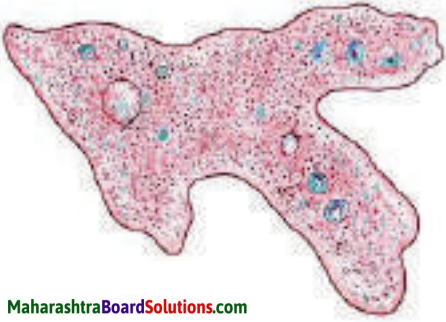
Amoeba:
Answer:
Maharashtra Board Class 8 Science Solutions Chapter 1 Living World and Classification of Microbes 10

Question 4.
Correctly label the various organisms shown in the Kingdom Monera:
Maharashtra Board Class 8 Science Solutions Chapter 1 Living World and Classification of Microbes 11
Answer:
Maharashtra Board Class 8 Science Solutions Chapter 1 Living World and Classification of Microbes 12

  1. Streptococcus pneumoniae
  2. Clostridium titani
  3. Vibrio choleri
  4. Treponema pallidum
  5. Staphylococcus aureus
  6. Legionella pneumoniae
  7. Salmonella typhi
  8. Clostridium botulinum

Activity-based questions

1. Try this:
Activity Take a small drop of curd or buttermilk on a clean glass slide. Dilute it with a little water. Carefully keep a coverslip. Observe it under high power of compound microscope. What did you see?
Answer:
In the slide we can see Lactobacilli \ bacteria.

2. Try this: 
Activity Prepare a temporary mount of one drop of pond water on a glass slide. Observe it under low power and high power microscope.
Answer:
The drop on the slide shows motile microscopic organisms which have irregular shape. They are amoeba.

Maharashtra Board Class 8 Science Solutions Chapter 1 Living World and Classification of Microbes

3. Try this: 
Activity Take a moist piece of bread or bhakri and keep it in a container with lid for 2-3 days. After 2-3 days a fine cotton thread like tuft is found growing on the surface of the bread. Prepare a temporary mount of few threads from this culture and observe it under the microscope.
Answer:
Upon observation of thread like structures the fungal hyphae ( fibre like body) are seen.

MCQs based on experiments:

Choose the appropriate alternative of the following:

Experiment 1: To observe lactobacilli in curd/buttermilk.

Question 1.
Which of the following bacterium is used to make curds from milk?
(a) Streptococcus
(b) Lactobacillus
(c) Staphylococcus
(d) Clostridium
Answer:
(b) Lactobacillus

Question 2.
In which kingdom is Lactobacillus included?
(a) Monera
(b) Protista
(c) Fungi
(d) Plantae
Answer:
(a) Monera

Maharashtra Board Class 8 Science Solutions Chapter 1 Living World and Classification of Microbes

Question 3.
Which is the other organism that has been added in kingdom Monera in addition to bacteria?
(a) Virus
(b) Blue-green algae
(c) Fungi
(d) Protozoa
Answer:
(b) Blue-green algae

Experiment 2: To observe fungus on the bread

Question 1.
In which kingdom is fungus growing on the bread included?
(a) Fungi
(b) Protozoa
(c) Monera
(d) Protista
Answer:
(a) Fungi

Question 2.
What are dark coloured particles which are seen when the fungus is growing on the bread?
(a) Sporangiophore
(b) Rhizoids
(c) spores
d) Columella
Answer:
(c) spores

Maharashtra Board Class 8 Science Solutions Chapter 1 Living World and Classification of Microbes

Question 3.
Why is there growth of fungus on all the stale food?
(a) Fungus has affinity for food.
(b) Fungus grows on decaying organic matter.
(c) As food is open, the fungus drops on it and starts growing.
(d) None of the alternative is correct.
Answer:
(b) Fungus grows on decaying organic matter.

Class 8 Questions And Answers

8th Std Science Questions And Answers:

Environmental management Class 10 Questions And Answers Maharashtra Board

Class 10 Science Part 2 Chapter 4

Balbharti Maharashtra State Board Class 10 Science Solutions Part 2 Chapter 4 Environmental management Notes, Textbook Exercise Important Questions and Answers.

Std 10 Science Part 2 Chapter 3 Environmental management Question Answer Maharashtra Board

Class 10 Science Part 2 Chapter 3 Environmental managementQuestion Answer Maharashtra Board

Question 1.
Reorganize the following food chain. Describe the ecosystem to which it belongs.
Grasshopper – Snake – Paddy field – Eagle – Frog.
Answer:

  • Correct food chain: Paddy field → Grasshopper → Frog → Snake → Eagle.
  • Such food chain is seen in the terrestrial ecosystem. There are many biotic factors in the terrestrial ecosystem, such as insects, birds, mammals etc.
  • The above example mentions about paddy field, so it must be in vicinity of coastal lands. There is water logging in the paddy fields. Therefore, it offers a habitat to the frogs.
  • In the above example, paddy fields are producers in the ecosystem. The primary consumer is grasshopper. Secondary consumer is frog, tertiary consumer is snake and the apex consumer is eagle. On every trophic level the bacteria, fungi and some scavenging worms can act as the decomposers.
  • In this ecosystem. the solar energy is transferred from the paddy crops to eagle in a step wise food
    chain.

Maharashtra Board Class 10 Science Solutions Part 2 Chapter 4 Environmental management

Question 2.
Explain the statement – ‘We have got this Earth planet on lease from our future generations and not as an ancestral property from our ancestors.’
Answer:

  • The earth was inhabited by older generations before us. We have replaced them.
  • But during their life time, they have created hazardous impact on the earth. The industrialization, the quest for more and more natural resources, wars fought, the construction activities such as dams, roads and bridges, extensive deforestation, etc. were their thoughtless activities.
  • All these activities were for development of mankind. But most of them have destroyed the delicate balance between the producers and different levels of consumers.
  • Due to ever increasing population of human beings there is shortage of food, clothing and shelter. To procure these basic needs, we have exploited many natural resources causing destruction of the earth’s natural ecosystem.
  • Now it is our turn to protect the earth as on the same planet the next generations have to survive. We have to hand over the ecosystems of the earth which are in perfect balance to the new generations.
  • The future generations need a good quality of air, water and land along with all other living organisms.
  • Due to problems like climate change, global warming, pollution, droughts, etc. the environment is impacted, thus in order to keep sustainability of earth, we have to remember that the earth has not been obtained only as ancestral property but we have to save it for future generations.

Question 3.
Write short notes.
a. Environmental conservation.
Answer:
Due to natural and man-made causes, there are many environmental problems on the earth. These problems affect the existence of various living organisms. In order to save these organisms and maintain the environmental balance, there is need for environmental conservation. If this is not done then there will not be any quality of life for the resident humans. For environmental conservation, the Government has formulated acts and rules. UN has established UNEP for the conservation programs.

The people’s participation in the conservation movement is essential. From school age, the environmental values are inculcated in the young minds. Conservation of environment is the social responsibility of everyone. Judicial use of natural resources conservation also way of environmental conservation.

b. Chipko Movement of Bishnoi.
Answer:
Chipko Movement of Bishnoi or Bishnoi Andolan:
Khejarli or Khejadli is a village in Rajasthan, where Bishnoi community is located. The name of the town is derived from Khejri trees.

The first event of Chipko Movement took place in Khejadli village in 1730 AD. In this village 363 Bishnois, led by Amrita Devi sacrificed their lives for protecting the trees of Khejri trees, which trees are considered as sacred by Bishnoi.

Amrita Devi said, “if a tree is saved even at the cost of one’s head, it’s worth it”. She was killed with the axes that were brought to chop off the trees. The three young daughters Asu, Ratna and Bhagubai also sacrificed their lives for trees.

83 Bishnoi villages came together and villagers sacrificed their lives after hearing about Amrita Devi’s sacrifice. Three hundred and sixty-three Bishnois were killed as they opposed the king. After realizing the mistake, the king ordered stoppage of the felling of trees. Honouring the courage of the Bishnoi community, the ruler of Jodhpur, Maharaja Abhay Singh, apologized. He issued a royal decree to protect trees and wild life.

Chipko movement of 20th century in Uttar Pradesh also followed the same pattern of embracing the trees and saving them from cutting.

c. Biodiversity.
Answer:
Biodiversity means the diverse life forms that inhabit any area. Biodiversity is seen due to variety of life forms and different ecosystems that lodge these organisms. In nature there is biodiversity on the three different levels, viz. genetic diversity, species diversity and ecosystem diversity. This means that there is diversity in the individuals belonging to the same specips due to genetic reasons, there is diversity among the different species of organisms and there is also a diversity in the ecosystems that are present in any region.

Due to development of mankind, the biodiversity is threatened. There are special efforts taken to restore the lost and threatened biodiversity. Some of these are establishing sanctuaries, National Parks, biodiversity hotspots and reserves etc. Certain endangered species are protected by carrying out conservation projects.

d. Sacred Groves.
Answer:
Sacred grove is the green patch of the forest which is conserved by local people in the name of God. It does not belong to forest department. It is like a sanctuary that is conserved by the common people and tribals in the area. It is rich in the biodiversity.

It is conserved as there is a faith that God or deity reside in the sacred grove. Hence in local language, they are known as Deorai. Due to this reason, people do not fell the trees. Also hunting of any wild life is not done here. More than 13000 sacred groves have been reported in India. Most of these are in Western Ghats in Maharashtra, Karnataka and Kerala. Also, in remaining parts of India sacred groves are reported. Role of sacred grove is tremendous in conserving the biodiversity.

e. Disaster and its management.
Answer:

  • To save human life from disasters. To help them for moving away from the place of disasters by rapid action.
  • To supply essential commodities to the affected people. This helps to reduce the gravity of disaster. People are given grains, water and clothes and other basic necessities under this objective.
  • To bring back the conditions of affected people to normalcy.
  • To rehabilitate the affected and displaced victims.
  • To think and execute the protective measures in order to develop capability to face the disasters in
    future.

Question 4.
How will you justify that overcoming the pollution is a powerful way of environmental management?
(OR)
“Solving the problem of pollution is an effective way of environmental management.” Justify the statement.
Answer:
1. Pollution is created only due to human activities. Air, water, soil, noise, radiation, thermal, light, plastic are different types of pollution.
2. All types of pollution affect environment and particularly threatening the survival of living organisms.
3. Pollution must be controlled in order to have good quality of the environment. E.g. When plastic is thrown anywhere, it causes pollution of the land, it clogs the rain water drains, it affects feeding of the animals. Plastic pollution can be completely stopped by us through proper management of plastic waste. By recycling or reusing, we can overcome the plastic pollution. This would be a powerful way of environmental management.
4. Similarly, when we reduce pollution of different types, we automatically help to regain the environmental health.

Question 5.
Which projects will you run in relation to environmental conservatioh? How?
(OR)
Write six strategies implemented by you for conservation of the environment.
Answer:
Initially, assessment of the environmental problems will be done. The nature and severity of these problems will be understood by detailed study of the same. Then the projects can be undertaken to combat these problems.

1. Tree plantation is one such easier project that can be undertaken to conserve environment. The further nurturing of the tree will also be our responsibility. While selecting the tree, the local and sturdy varieties will be selected. Such trees can survive in polluted environment too and even under the pressure of urbanization.

2. Solid waste management is another very important project that should be undertaken by every society, colony or school. Segregation of waste into dry and wet types and then its proper disposal will be taught to all the people in the neighbouring area.

3. To ban the plastic and make people aware about harmful effects of plastic is another very significant project.

4. Fossil fuels are non-renewable and polluting. Therefore, their use should be reduced as far as possible. Therefore, using bicycle, or walking down for shorter distances or using public transport systems are the better alternatives. The awareness drive about these facts will be taken up as a project.

5. To take care of stray animals, provide shelter, feeding endangered birds like sparrows and allowing them to survive with our support is also one of the essential act to conserve other species.

6. Attempts will be made for bringing awareness among minds of everyone. Such small acts can bring about major shift in the attitude of the people. This will certainly help in the environmental conservation.

Maharashtra Board Class 10 Science Solutions Part 2 Chapter 4 Environmental management

Question 6.
Answer the following:
a. Write the factors affecting environment.
Answer:

  • The biotic and abiotic- factors affect the environment. Among abiotic factors, the physical and chemical factors can alter the conditions of the environment.
  • Abiotic factors are either natural or man-made.
  • The various interrelationships between different living organisms can also affect environment.
  • The natural disasters such as earthquake, forest fires, cyclones, cloud bursting, drought, etc. change the environment.
  • The human activities such as deforestation, urbanisation, constructions etc. cause permanent damage to the ecosystems. Due to man-made impact, there can be large scale changes in the environment.

b. Human beings have important place in environment.
Answer:

  • Man came last on the earth during evolution of animals. But due to his intelligence, imagination, critical thinking and memory, he made progress in all fields.
  • By virtue of these qualities he became the supreme.
  • All the natural resources on the earth were very rapidly exploited by man.
  • Under the pretext of technology and. development he made degradation of almost all¬natural ecosystems.
  • He never obeys the rules of nature.
  • Phenomena like pollution, urbanization, industrialization and deforestation are exclusively his creations.
  • Hunting and poaching other animals were his contribution to the extinction of many other animals.
  • Except man no other organism on the earth can change the ecosystems in such a drastic way. Therefore, it is rightly said that human beings have important place in environment.

c. Write the types and examples of biodiversity.
Answer:
Biodiversity is documented on the following three levels, viz. genetic diversity, species diversity and ecosystem diversity.
1. Genetic Diversity: Diversity seen among the organisms of same species due to genetic differences is called genetic diversity. E.g. The individual human beings are different from each other. No two animals or plants are exactly alike.

2. Species Diversity: The difference between the different species is the species diversity, e.g. All the species of plants, animals and microbes which are seen in any natural environment.

3. Ecosystem Diversity: In one region there may be different ecosystems, such diversity in the ecosystems is called ecosystem diversity. Ecosystems are natural or artificial. Every region shows different types of ecosystems such as aquatic, terrestrial, desert or forest ecosystems. Each ecosystem has its own habitats with resident flora and fauna.

d. How the biodiversity can be conserved?
Answer:
Biodiversity can be conserved by the following ways:

  • Protection of the rare species of plants and animals.
  • Creating habitats for the animals and plants by establishing National Parkland Sanctuaries.
  • Declaration of bioreserves, the areas which are protected through conservation.
  • Conservation projects for protecting special species.
  • Conservation of all flora and fauna.
  • Strict observance of the acts and rules.
  • Use of traditional knowledge and maintaining record of traditional knowledge.

e. What do we learn from the story of Jadav Molai Payeng? (Board’s Model Activity Sheet)
Answer:
Jadav Molai Payeng is a common man who was just a simple forest worker. But he has conscience about plants and tree plantations. He single-handedly planted thousands of trees. He converted a barren patch of land into forest which is spread over 1360 acres. For these plantations he continuously worked.

He has shown that a single determined person, can establish a new forest! We understand the values of
hard work, sincerity and devotion to the nature through the story of Jadav Molai Payeng. Even a common man can contribute a lot for the conservation and protection of the environment by learning the story of Payeng.

f. Write the names of biodiversity hot spots.
Answer:

  • In entire world, 34 highly sensitive biodiversity spots are reported.
  • These hotspots occupied 15.7% area of the Earth.
  • However, currently about 86% of the sensitive areas are already destroyed.
  • Now about 2.3% area of the Earth still has such sensitive biodiversity spots.
  • There are 1,50,000 plant species which are about 50% of the species in the world.
  • In India, out of 135 species of animals, 85 species are found in the jungles of eastern region.
  • There are about 1,500 endemic plant species in Western Ghats.
  • About 50,000 plants species out of the total plants in the world are said to be endemic.

g. Which are the reasons for endangering the many species of plants and animals? How can we save those diversity?
Answer:

  • The animals and plants species are endangered majorly due to man-made causes.
  • Some natural disasters like earthquakes, climate change, forest fires, drought and cyclones also affect the living organisms due to lack of food and water.
  • In man-made causes, hunting and poaching are the main reasons.
  • Also animal-human conflicts occur due to invasion of human settlements into the habitats of wild animals.
  • Construction of dams, roads, and colonies destroy the habitats of wild life.
  • Industrialization, urbanization and population explosion of humans are putting severe pressure on all the existing biodiversity.
  • In order to save and protect the biodiversity, many scientists and naturalists come together. A stretch of land is protected by declaring it as the sanctuary or a national park by the Government. Even the locals can protect it as a sacred grove.
  • Various acts and rules have been formulated to protect the organisms. The violators of such rules are punished accordingly.

Question 7.
What are the meanings of the following symbols? Write your role accordingly. (July ’19; Board’s Model Activity Sheet)
(OR)
What do these symbols indicate? Explain your opinion about those symbols.
Maharashtra Board Class 10 Science Solutions Part 2 Chapter 4 Environmental management 1
Answer:
1. The first symbol is for giving the message, “Reduce, reuse and recycle”. This is important mantra for the utilization of natural resources.
The second symbol gives the message about ‘Save water’.
The third symbol advocates the use of solar energy.

2. These symbols inculcate the importance of being eco-friendly. The first symbol is essential to maintain the natural resources by reusing and recycling them. As far as possible, one should reduce the excessive use of resources by preventing consumerism.

3. Water problems persist in many major cities and villages. In villages it results in drought like conditions. It also reflects into loss of agricultural produce. Therefore, the message about saving water or to make judicious use of water should be spread far and wide.

4. The solar energy is the renewable energy option which is very easily available in country like India. By using solar energy, we can replace the polluting and exhaustible fuels. Thereby, pollution will also be reduced.

Due to such symbols, important messages about environment conservation reach, us and we can change ourselves into more eeofriendly persons.

Project: (Do it your self)

Project 1.
Make a presentation on pollution of Gangci and Yamuna Rivers and effects of air pollution on Taimuhal.

Maharashtra Board Class 10 Science Solutions Part 2 Chapter 4 Environmental management

Can you recall? (Text Book Page No. 36)

Question 1.
What is ecosystem? Which are its different components?
Answer:
In any environment, there are biotic and abiotic components. There are interactions among these components. All such interactions make an ecosystem.

The different components in the ecosystem are as follows:
Abiotic components : Air, water, soil, sunlight, temperature, humidity, etc.
Biotic components: All the types of living organisms, like bacteria, fungi, plants and animals.

Question 2.
Which are the types of consumers? What are the criteria for their classification?
Answer:
Primary consumers, secondary consumers, tertiary consumers or apex consumers are the different types of consumers. These types are according to the trophic level to which they belong.

Question 3.
What may be the relationship between lake and birds on tree?
Answer:
The birds on the tree depend on the aquatic organisms in the lake for their feeding. Birds stay on the trees which are in the vicinity of the lake, so that it is easier for them to capture fishes, frogs, etc. They must also be using the same lake water for drinking.

Question 4.
What is difference between food chain and food web?
Answer:
In every ecosystem, there are always interactions between producers, consumers and decomposers. This sequence of feeding interactions is called food chain. In every food chain there are links between four to five trophic levels constituting the producers, primary consumers, secondary consumers, tertiary consumers, etc. The links of food chain are in linear sequence. But food web is a complex network of many small food chains. In fact, food web is the collection of many small food chains. Thus, when many food chains are interwoven, they form food web.

Think and Answer! (Text Book Page No. 36)

Question 1.
Write the name and category of each of the component shown in picture.
Answer:
By utilizing the solar energy, the green plants perform photosynthesis. Thus, they are producers of the food chain. This food is consumed by the grasshopper. Thus, it is primary consumer. Frog is secondary consumer as its diet consists of insects like grasshopper. Snake is tertiary consumer as it feeds on frogs, while the hawk is apex consumer as it can kill the snake and feed on it. Last picture in the food chain is of fungi which are acting as decomposers. Few bacteria are shown in the picture, act on all the levels and bring about decomposition.
Maharashtra Board Class 10 Science Solutions Part 2 Chapter 4 Environmental management 2

Maharashtra Board Class 10 Science Solutions Part 2 Chapter 4 Environmental management

Question 2.
What is necessary to convert this picture into food web? Why?
Answer:
If this food chain has to be converted into a food web, there should be interactions between the different components. Any living organism can be prey to different predators. Moreover, a predator can also be a prey for other. Frog eats different insects. The same frog can be either eaten by snake or by hawk.

Use your brain power. (Text Book Page No. 40)

Question 1.
Why is it said that pollution control is important?
Answer:
The quantity of pollutants and severity of their effects on the ecosystem have to be taken into consideration constantly. The different methods of pollution control have to be used for checking the hazardous effects of pollution on the living organisms. Especially the impact of pollution on health of human beings is assessed from time to time.

The young children and senior citizens are affected to greater extent by the pollution. If the air and water required for the survival of the people is affected, then exercising the pollution control is to be done immediately. Thus, it is said that pollution control is important.

Enlist and discuss (Text Book Page No. 43)

Question 1.
Find the meaning of given symbols in relation to environment conservation. Make a list of other such symbols.
A. Maharashtra Board Class 10 Science Solutions Part 2 Chapter 4 Environmental management 3
Answer:
This symbol tells us to keep our wastes carefully. The garbage should not be strewn anywhere. But it should be properly managed. Waste if managed properly can be a wealth.
B. Maharashtra Board Class 10 Science Solutions Part 2 Chapter 4 Environmental management 4
Answer:
This symbol tells us to save electricity. If electricity is carefully used, we can save our natural resources. This message is given through this picture.
C. Maharashtra Board Class 10 Science Solutions Part 2 Chapter 4 Environmental management 5
Answer:
Use of bicycle means use of green energy. By riding on a bicycle we save on fuel and use our own muscular energy. It is the best eeofriendly, non polluting vehicle.

Observe and fill the information: (Text Book Page No. 8)

Question 1.
Observe the environment around you. Complete the following flow chart.
Maharashtra Board Class 10 Science Solutions Part 2 Chapter 4 Environmental management 6
Answer:
Maharashtra Board Class 10 Science Solutions Part 2 Chapter 4 Environmental management 7

Maharashtra Board Class 10 Science Solutions Part 2 Chapter 4 Environmental management

Complete the Chart: (Text Book Page No. 39)

Question 1.
We have studied the air pollution, water pollution and soil pollution in detail in earlier classes. Based on that, complete the following chart.
Maharashtra Board Class 10 Science Solutions Part 2 Chapter 4 Environmental management 8
Answer:
Maharashtra Board Class 10 Science Solutions Part 2 Chapter 4 Environmental management 9

Complete the Chart: (Text Book Page No. 40)

Question 1.
Now a day, we are observing the environmental degradation everywhere. Complete the flow chart given besides with the help of environment.
Maharashtra Board Class 10 Science Solutions Part 2 Chapter 4 Environmental management 10
Answer:
Maharashtra Board Class 10 Science Solutions Part 2 Chapter 4 Environmental management 11

(Text Book Page No. 43)

Question 1.
Where are such sacred groves in Maharashtra? Make a list and visit with your teachers.
Answer:
Sacred groves: Sacred groves form an important landscape feature in the deforested hill ranges of the Western Ghats. The felling of timber and the killing of animals in sacred groves is not allowed by the locals. It is considered as taboo.

In Maharashtra, sacred groves are found in tribal as well as non-tribal areas. The sacred groves in the western part are called Devrai or Devrahati, which means the abode of the gods. In eastern parts it is called Devegudi by the madiya tribal people.

In Maharashtra 2820 Devrais have been documented. Maruti, Vaghoba, Vira, Bhiroba, Khandoba and Shirkai are some deities to which sacred groves are dedicated.

In the sacred groves, the most commonly found plant species are Portia tree, Casuarina, Silk cotton tree, Indian laurel, Indian Elm, Bead tree, Indian butter tree, Turmeric and Japanese ginger. In Maharashtra, sacred groves are maximum in district of Sindhudurg, (More than 1500 out of total 2820) followed by Ratnagiri, then Pune and in district of Satara.

Choose the correct alternative and write that alphabet against the sub-question number:

Question 1.
Paddy fields are frequently attacked by
(a) goats
(b) birds
(c) grasshoppers
(d) monkeys
Answer:
(c) grasshoppers

Question 2.
Basic functional unit to study the ecology is termed as ……………
(a) environment
(b) niche
(c) ecosystem
(d) food chain
Answer:
(c) ecosystem

Question 3.
As per ……….. trading of rare animals has been completely banned.
(a) clause 48A
(b) clause 49B
(c) clause 49A
(d) all the above
Answer:
(c) clause 49A

Question 4.
(4) The jungle in Kokilamukh of Jorhat district of Assam is well known as ………….
(a) Molai jungle
(b) Rhino jungle
(c) Rhino forest
(d) Payang jungle
Answer:
(a) Molai jungle

Question 5.
Maintaining record of ………. knowledge is very necessary.
(a) modern
(b) mythical
(c) vedic
(d) traditional
Answer:
(d) traditional

Question 6.
………… is world’s largest organization engaged in environmental activities.
(a) Greenpeace
(b) Hariyali
(c) B. N. H. S.
(d) I. I. T.
Answer:
(a) Greenpeace

Question 7.
……….. sanctuary of West Bengal is reserved for tigers.
(a) Gir
(b) Sunderban
(c) Molai
(d) Corbett
Answer:
(b) Sunderban

Maharashtra Board Class 10 Science Solutions Part 2 Chapter 4 Environmental management

Question 8.
World Biodiversity Day is celebrated on ……… every year.
(a) 22nd April
(b) 5th June
(c) 16th September
(d) 22nd May
Answer:
(d) 22nd May

Question 9.
Out of the total plant species in the entire world, 50,000 are ……………
(a) extinct
(b) endangered
(c) endemic
(d) rare
Answer:
(c) endemic

Question 10.
Giant squirrel is an ………… species.
(a) indeterminate
(b) rare
(c) endemic
(d) endangered
Answer:
(a) indeterminate

Question 11.
In a food chain, autotrophic plants are present at the ……….. level. (March 2019)
(a) tertiary nutrition
(b) secondary nutrition
(c) producer
(d) apex
Answer:
(c) producer

Question 12.
……….. from Manas sanctuary in Assam is under threat. (Board’s Model Activity Sheet)
(a) one horned rhino
(b) Lion
(c) Musk deer
(d) Giant squirrel/Shekru
Answer:
(a) one horned rhino

Write whether the following statements are true or false, giving suitable explanation for the same:

Question 1.
Only abiotic factors play very important role in the ecosystem.
Answer:
False. (Both abiotic and biotic factors play very important role in the ecosystem. Only abiotic factors will not decide the working of an ecosystem.)

Question 2.
Paddy fields are frequently attacked by frogs.
Answer:
False. (Paddy fields are frequently attacked by grasshoppers. Frogs feed on grasshoppers and control the population of these insects that cause destruction of the crops.)

Question 3.
Environmental pollution is necessary and acceptable change in the surrounding environment.
Answer:
False. (Environmental pollution is never acceptable. It is always harmful to the entire ecosystem and thus never necessary.)

Question 4.
X-rays and radiations from atomic energy plants are natural radiations.
Answer:
False. (X-rays are not present in natural radiations. Infra-red and ultra-violet rays are present in natural radiations.)

Question 5.
The person breaching the Environmental Conservation Act is entitled for either one year imprisonment or fine up to ₹ 5 lakh.
Answer:
False. (The person breaching the Environmental conservation Act is fined upto ₹ 1 lakh. He is also entitled to imprisonment for five years.)

Question 6.
Many people come together to establish arnew forest but a single person, if determined can destroy the entire forest!
Answer:
False. (When anything constructive has to be done even a single man can start such action. In case of ‘Molai jungle’, this statement holds true. But when destructive actions are done, many people come together and cause damage.)

Maharashtra Board Class 10 Science Solutions Part 2 Chapter 4 Environmental management

Question 7.
There are clusters of thick forests only in Western Ghats of India.
Answer:
False. (Entire India is rich in biodiversity. Just not in Western Ghats but in entire India one can observe the clusters of thick forests and this is mainly due to suitable tropical climate.)

Question 8.
86 highly sensitive biodiversity spots are reported all over the world.
Answer:
False. (As per the latest information and available data, there are 34 highly sensitive biodiversity spots.)

Question 9.
Flow of nutrients in an ecosystem is unidirectional.
Answer:
False. (Flow of energy in an ecosystem is unidirectional. Flow of nutrients is cyclic.)

Match the columns:

Question 1.

Column I Column II
(1) Physical, chemical and biological factors together form (a) Biodiversity
(2) The science of interactions between biotic and abiotic factors (b) Ecosystem
(c) Ecology
(d) Environment

Answer:
(1) Physical, chemical and biological factors together form – Environment.
(2) The science of interactions between biotic and abiotic factors – Ecology.

Question 2.

Column I Column II
(1) Basic functional unit in the environment (a) Biodiversity
(2) Different types of living organisms (b) Ecosystem
(c) Ecology
(d) Environment

Answer:
(1) Basic functional unit in the environment – Ecosystem.
(2) Different types of living organisms – Biodiversity.

Question 3.

Rules/Act Year
(1) Sound Pollution (Control and Prevention) Rule (a) 1980
(2) Biomedical Waste (Management and Handling) Rule (b) 2011
(c) 1998
(d) 2000

Answer:
(1) Sound Pollution (Control and Prevention) Rule – 2000.
(2) Biomedical Waste (Management and Handling) Rule – 1998.

Question 4.

Rules/Act Year
(1) Forest Conservation Act (a) 1980
(2) Environmental Conservation Act (b) 1986
(c) 2011
(d) 2000

Answer:
(1) Forest Conservation Act – 1980.
(2) Environmental Conservation Act – 1986.

Question 5.

Species Examples
(1) Endangered (a) Red panda, Musk deer.
(2) Rare (b) Tiger, Lion.
(c) Lion tailed monkey, lesser florican.
(d) Monkey, squirrel

Answer:
(1) Endangered Species – Lion tailed monkey, lesser florican.
(2) Rare Species – Red panda, Musk deer.

Question 6.

Species Examples
(1) Vulnerable (a) Giant squirrel (Shekhru)
(2) Indeterminate (b) Red panda, Musk deer
(c) Tiger, Lion
(d) Lesser florican, sparrow

Answer:
(1) Vulnerable Species – Tiger, Lion.
(2) Indeterminate Species – Giant squirrel (Shekhru).

Find the odd one out:

Question 1.
Ash, Carbon dioxide, Lead, Asbestos
Answer:
Carbon dioxide. (All others are solid particulate pollutants.)

Question 2.
Manas sanctuary, Sunderbans sanctuary, The Western Ghats, Tadoba National Park
Answer:
Tadoba National Park. (All others are endangered heritage places of India.)

Question 3.
Lion tailed monkey, White rats, Musk deer, Tiger
Answer:
White rats. (All others are species that are threatened.)

Maharashtra Board Class 10 Science Solutions Part 2 Chapter 4 Environmental management

Question 4.
Conservation, Regulation, Pollution, Prohibition
Answer:
Pollution. (All others are ways of environmental protection.)

Question 5.
IPCC, UNEP, IUCN, BNHS
Answer:
BNHS. (All others are international organizations. BNHS is Bombay Natural History Society.)

Find the correlation:

Question 1.
Rare species : Musk deer : : ………… : Lesser florican.
Answer:
Endangered species

Question 2.
Red panda : Rare species : : Giant Squirrel : …………
Answer:
Indeterminate species

Question 3.
Nitrogen, Oxygen : Gaseous cycle : : Soil and Rocks : …………
Answer:
Sedimentary cycle

Question 4.
Manas : One horned Rhino : : Gir : ………..
Answer:
Asiatic lion

Question 5.
Mumbai : Bombay Natural History Society : : TehriGarhwal : ………….
Answer:
Chipko centre.

Answer the following questions in detail:

Question 1.
Answer the following questions:
If frog population in paddy field declines all of a sudden,
(a) What will be the effect on paddy crop?
Answer:
If the population of frog declines, then there will be rise in the population of grasshoppers. The paddy fields will hence be infested with insect pests.

(b) Number of which consumers will decline and which will increase?
Answer:
The food chain if altered, results in imbalance in the ecosystem. ‘Paddy → Grasshoppers → Frog → Snake’, this food chain is natural. When by any reason there is dec1ine in the number of frogs, thus secondary consumer will also decline. Due to this decline, snake which is at tertiary consumer level will also decline. Theprimary consumers i.e. grasshoppers will increase as there is now no check on their population. Due to increase in their population the paddy production will be reduced. Due to reduced number of snakes, rats and other rodents from neighbouring areas would also rise, which are also secondary consumers.

(c) Name the Indian states where paddy is cultivated on a large scale.
Answer:
West Bengal, Uttar Pradesh, Haryana, Punjab, Tamil Nadu, Andhra Pradesh, Bihar, Chhattisgarh, Odisha, Assam and Maharashtra.

Question 2.
What is radioactive pollution? What are its effects?
Answer:
(1) The radiations emitted either through the natural sources or through man-made sources cause radioactive pollution.
(2) The natural radiations is in the form of ultra violet and infrared radiations.
(3) Artificial or man-made radiations are X-rays and radiations from atomic energy plants.
(4) All radiations are highly hazardous for the living organisms. The impact of radiation is also for a very long time.
(5) It has brought about major accidental mishaps at Chernobyl, Windscale, qpd Three Miles Island. These disasters have affected thousands of people.
(6) Some other effects of radiations are as follows – (i) Due to higher radiations of X-rays, cancerous ulceration occurs, (ii) Radiations destroy the body tissues, (iii) Radiations cause mutations and thus genetic changes occur, (iv) There is adverse effect on the vision.

Question 3.
Give one word for “The forest conserved in the name of God.” (Board’s Model Activity Sheet)
Answer:
Deorai.

Give scientific reasons:

Question 1.
Certain scavenging caterpillars, termites and insects found in the dung are important.
Answer:

  • Scavenging caterpillars and insects are decomposers. They seem to be Worthless due to filthy surrounding in which they thrive.
  • But they carry out most important task of decomposition of complex organic substances into simple inorganic elements.
  • This recycling is possible only due to decomposers.
  • If they are not present, there will be huge accumulation of garbage. Therefore, these living organisms are important.

Question 2.
Destroying trees is to destroy everything.
Answer:

  • When a single huge tree is felled many living organisms which are dependent on it, are exterminated.
  • Many insects, fungi, birds, etc. lose their habitat.
  • Trees take up carbon dioxide from the atmosphere and release oxygen. These natural cycles are also hindered due to loss of trees.
  • Due to trees there is shade, cooler atmosphere and increase in the rainfall. When such trees are destroyed all the components in the ecosystem are destroyed too.

Question 3.
There is no definite information about indeterminate species.
Answer:

  • Indeterminate species do not have substantial information about them.
  • The organisms belonging to such species appear to be endangered due to their some behavioural habits.
  • They are shy and do not come in open so that they can be observed keenly.
  • For example, animals like Giant squirrel also do not provide such information.

Question 4.
Tigers from Sunderbans and Rhinos from Manas are under threat.
Answer:

  • Manas is in the area-of Assam where there are many dams and Indiscriminate use of water.
  • This area is also flood affected. Therefore, rhinos are under threat.
  • In Sunderbans, there are also problems such as deforestation, dams, excessive fishing, and dug out trenches.
  • All of these cause dangers to the tiger population.

Question 5.
There are clusters of thick forests in the Western Ghats of India.
Answer:

  • There are many sacred groves in the region of Western Ghats of India.
  • These forests are not conserved by Government Forest Departments but are cared for by the local people, in the name of God.
  • Due to such faith in the people, the forests are conserved like sanctuaries.
  • Such many clusters are in Western Ghats of Maharashtra.

Maharashtra Board Class 10 Science Solutions Part 2 Chapter 4 Environmental management

Question 6.
We can see biodiversity on three levels.
Answer:

  1. There is biodiversity in the living organisms belonging to the same genus.
  2. This diversity is due to different heredity pattern. This is called genetic biodiversity.
  3. The organisms occupying the same area and belonging to the same species also show diversity due to different species. This is species biodiversity.
  4. The organisms occupying different ecosystems also show differences, which is called ecosystem biodiversity. Therefore, we observe biodiversity on three different levels.

Questions based on diagrams:

Question 1.
What is shown in the picture? Write name and trophic level of each component.
Maharashtra Board Class 10 Science Solutions Part 2 Chapter 4 Environmental management 12
Answer:
In this picture, food chain having rive trophic levels is shown.
(1) Trophic level 1 = Producers : Green plant.
(2) Trophic level 2 = Primary consumer (Herbivore): Grasshopper.
(3) Trophic level 3 = Secondary consumer (Carnivore): Bird.
(4) Trophic level 4 = Tertiary consumer (Carnivore) : Snake.
(5) Trophic level 5 = Top or Apex consumer (Carnivore) : Owl.

Question 2.
Explain the meaning of following symbols A and B and C.
A.
Maharashtra Board Class 10 Science Solutions Part 2 Chapter 4 Environmental management 13
Answer:
The symbol show types of green energy such as solar energy and wind energy. It also expresses that people
should use such sources of energy for their use.

B.
Maharashtra Board Class 10 Science Solutions Part 2 Chapter 4 Environmental management 14
Answer:
This symbol is giving the message “Save water”. Sustainable use of water is necessary for our future.

C.
Maharashtra Board Class 10 Science Solutions Part 2 Chapter 4 Environmental management 15
answer:
The symbols of WWF and BNHS are shown here. BNHS stands for Bombay Natural History Society. This institute works for the conservation and documentation of flora and fauna.

WWF means World Wild Life Fund. Also known as World Wide Life Fund. This International Institute is looking after the welfare of wildlife through different conservation projects. WWF symbol shows Panda while BNHS symbol has Giant Hornbill.

Question 3.
(a) Identify the following symbols and state their significance: (March 2019)
Maharashtra Board Class 10 Science Solutions Part 2 Chapter 4 Environmental management 16
Answer:
(i) This symbol is giving the message “Save water”. Sustainable use of water is necessary for our future.
(ii) Use of bicycle means use of green energy. By riding on a bicycle we save on fuel and use our own muscular energy. It is the best ecofriendly, non polluting vehicle.

(b) How can biodiversity be conserved?
Answer:
Biodiversity can be conserved by the following ways:

  • Protection of the rare species of plants and animals.
  • Creating habitats for the animals and plants by establishing National Park and Sanctuaries.
  • Declaration of bio reserves, the areas which are protected through conservation.
  • Conservation projects for protecting special species.
  • Conservation of all flora and fauna.
  • Strict observance of the acts and rules.
  • Use of traditional knowledge and maintaining record of traditional knowledge.

Activity based questions:

Question 1.
Questions based on the charts.
Complete the flow chart: (July 2019)
Maharashtra Board Class 10 Science Solutions Part 2 Chapter 4 Environmental management 17
Answer:
Maharashtra Board Class 10 Science Solutions Part 2 Chapter 4 Environmental management 18

Maharashtra Board Class 10 Science Solutions Part 2 Chapter 4 Environmental management

Question 2.
Collect more information about locations of these hotspots present in the world. (Textbook page no. 44)
Answer:
Students should collect this information.

Question 3.
Where are such sacred groves in Maharashtra? Make a list and visit with your teachers. (Textbook page no. 43)
Answer:
Sacred groves: Sacred groves form an important landscape feature in the deforested hill ranges of the Western Ghats. The felling of timber and the killing of animals in sacred groves is not allowed by the locals. It is considered as taboo.

In Maharashtra, sacred groves are found in tribal as well as non-tribal areas. The sacred groves in the western part are called Devrai or Devrahati, which means the abode of the gods. In eastern parts it is called Devegudi by the madiya tribal people.

In Maharashtra 2820 Devrais have been documented. Maruti, Vaghoba, Vira, Bhiroba, Khandoba and Shirkai are some deities to which sacred groves are dedicated.

In the sacred groves, the most commonly found plant species are Portia tree, Casuarina, Silk cotton tree, Indian laurel, Indian Elm, Bead tree, Indian butter tree, Turmeric and Japanese ginger. In Maharashtra, sacred groves are maximum in district of Sindhudurg, (More than 1500 out of total 2820) followed by Ratnagiri, then Pune and in district of Satara.

Maharashtra Board Class 10 Science Solutions Part 2 Chapter 4 Environmental management

Projects: (Do it your self)

Project 1.
Let’s Discuss: (Text Book Page No. 41)
Collect the information about Chipko Movement and discuss between two groups of your class about its importance in present situation.

Project 2.
Collect more information on the organization of Greenpeace. (Text Book Page No. 43)
Answer:
Students are expected to write this answer to this question.

Project 3.
There should be positive attitude of human being towards the environment for welfare of entire living world. For this purpose, following roles are important. You can be a conservator, organizer, guide, plant-friend, etc. Describe about the role you wish to perform and your plans for that role. (Text Book Page No. 42)

Project 4.
Survey the plants and animals in your area. Maintain a record about their characteristics. (Text Book Page No. 45)
Answer:
Students can conduct such surveys with the help of elders.

Project 5.
Internet is my friend! (Collect the information Textbook page no. 41)
(1) Sound Pollution (Control and Prevention) Rule, 2000.
(2) Biomedical Waste (Management and Handling) Rule, 1998.
(3) E-waste (Management and Handling) Rule, 2011.

10th Std Science Part 2 Questions And Answers:

Std 8 History Chapter 14 Questions And Answers Formation of State of Maharashtra Maharashtra Board

Balbharti Maharashtra State Board Class 8 History Solutions Chapter 14 Formation of State of Maharashtra Notes, Textbook Exercise Important Questions and Answers.

Class 8 History Chapter 14 Formation of State of Maharashtra Questions And Answers Maharashtra Board

Formation of State of Maharashtra Class 8 Questions And Answers Chapter 14 Maharashtra Board

Class 8 History Chapter 14 Formation of State of Maharashtra Textbook Questions and Answers

1. Rewrite the statements by choosing the appropriate options:

Question 1.
The State of …………….. was formed on 1 May, 1960.
(a) Goa
(b) Karnataka
(c) Andhra Pradesh
(d) Maharashtra
Answer:
(d) Maharashtra

Question 2.
…………….. put forth the proposal of Samyukta Maharashtra with Mumbai in the Mumbai Municipal Corporation.
(a) G. T. Madkholkar
(b) Acharya Atre
(c) D. V. Potdar
(d) Shankarrao Dev
Answer:
(b) Acharya Atre

Question 3.
…………….. accepted the responsibility as first Chief Minister of Maharashtra.
(a) Yashwantrao Chavan
(b) Pruthviraj Chavan
(c) Shankarrao Chavan
(d) Vilasrao Deshmukh
Answer:
(a) Yashwantrao Chavan

2. Explain the following statements with reasons:

Question 1.
Samyukta Maharashtra Samiti came to be established.
Answer:

  1. The demand for a state of Marathi speaking people of all regions was put forth in the Nagpur Pact in 1953.
  2. There was no positive response from the Central Government for formation of Samyukta Maharashtra with Mumbai.
  3. The agitation was made severe through strikes, demonstrations, rallies, etc. which were organised from time to time.
  4. As the issue of the demand of Marathi speaking people started becoming complicated, discontent spread throughout the state.
  5. A meeting was held under the leadership of Keshavrao Jedhe on 6 February, 1956 at Tilak Smarak Mandir in Pune and the Samyukta Maharashtra Samiti was formed.

Question 2.
The role of newspapers was important in Samyukta Maharashtra Movement.
Answer:

  1. The role of newspapers was equally important in Samyukta Maharashtra Movement. They worked to awaken the people.
  2. Navyug, Prabhat, Navakal, Sakai, Prabodhan, Kesari are newspapers which played important role.
  3. The ‘Maratha’ newspaper by Acharya Atre had a significant role in Samyukta Maharashtra movement.
  4. Balasaheb Thackeray took pen name ‘Mavla’ and drew caricatures in ‘Navyug’.
  5. Lokshahir Annabhau Sathe, Shahir Amar Sheikh and Shahir D. N. Gavankar aroused public awakening on a large scale through their writings.

Maharashtra Board Class 8 History Solutions Chapter 14 Formation of State of Maharashtra

3. Write short notes:

Question 1.
Samyukta Maharashtra Parishad:
Answer:

  1. On 12 May 1946, a resolution was passed regarding Samyukta Maharashtra in the Sahitya Sammelan at Belgaon.
  2. On this background, Maharashtra Ekikaran Parishad was convened under the leadership of Shankarrao Dev at Mumbai on 28 July.
  3. A resolution was passed that all Marathi speaking regions should be united in one state.
  4. It should include the regions of Mumbai, Central provinces Marathwada and Gomantak.

Question 2.
Contribution of Samyukta Maharashtra Samiti:
Answer:
Samyukta Maharashtra Samiti f contributed in the following way to form Samyukta Maharashtra.
1. Samyukta Maharashtra movement spread throughout the state and reached in rural areas.
2. Common people also joined the movement spontaneously.
3. When it was clear that Mumbai will not be included in Maharashtra, Samiti held demonstrations to protest and arouse public agitation.
4. The grand success of Samyukta Maharashtra Samiti in Lok Sabha, Vidhan Sabha and Mumbai Municipal Corporation in 1957 made it clear that the voters were in favour of Samyukta Maharashtra.
5. The agitations led by Samyukta Maharashtra Samiti during the visit of Prime Minister Pandit Jawaharlal Nehru made the approach of Central Government favourable in the formation of Maharashtra state.

4. Complete the following diagram.

Question 1.
Maharashtra Board Class 8 History Solutions Chapter 14 Formation of State of Maharashtra 1
Answer:
Maharashtra Board Class 8 History Solutions Chapter 14 Formation of State of Maharashtra 2

Do you Know?

Maharashtra Board Class 8 History Solutions Chapter 14 Formation of State of Maharashtra 3

Contribution of Marathi newspapers and Shahirs: In this movement the role of newspapers was important. Prabodhan, Kesari, Sakal, Navakal, Navyug, Prabhat many such newspapers worked for awakening of the people. Acharya Atre started the ‘Maratha’ newspaper which played an important role in Samyukta Maharashtra Movement.

Balasaheb Thackeray took up the pen name ‘Mavia’ and drew caricatures to make the movement comprehensive. Lokshahir Annabhau Sathe, Shahir Amar Sheikh and Shahir D.N.Gavankar through their writings aroused public awakening on a large scale.

Maharashtra Board Class 8 History Solutions Chapter 14 Formation of State of Maharashtra

Project:

Collect information about the personalities who greatly contributed to the formation of Maharashtra and prepare a project based on it with the help of your teachers.

Class 8 History Chapter 14 Formation of State of Maharashtra Additional Important Questions and Answers

Rewrite the statements by choosing the appropriate options:

Question 1.
………………… organised rallies to protest against the report of JVP Committee.
(a) Sane Guruji
(b) P. K. Atre
(c) Senapati Bapat
(d) Prabodhankar Thackeray
Answer:
(c) Senapati Bapat

Question 2.
…………….. established Dar Commission for forming linguistic province.
(a) Morarji Desai
(b) Pandit Jawaharlal Nehru
(c) Dr. Rajendra Prasad
(d) Yashwantrao Chavan
Answer:
(c) Dr. Rajendra Prasad

Question 3.
According to 1953 Pact, Assembly session would be held once in a year at …………….
(a) Pune
(b) Mumbai
(c) Nagpur
(d) Aurangabad
Answer:
(c) Nagpur

Maharashtra Board Class 8 History Solutions Chapter 14 Formation of State of Maharashtra

Question 4.
Police used lathi charge and tear …………….. gas on the March led by
(a) Bhai Madhavrao Bagal
(b) Comrade Shripad Amrut Dange
(c) S.M. Joshi
(d) Senapati Bapat
Answer:
(d) Senapati Bapat

Question 5.
Acharya Atre started the newspaper …………….. which played an important role in Samyukta Maharashtra Movement.
(a) Navyug
(b) Prabodhan
(c) Maratha
(d) Navakal
Answer:
(c) Maratha

Name the following:

Question 1.
Demanded reconstruction of a state based on language in 1915.
Answer:
Lokmanya Tilak

Question 2.
Commission which advocated bilingual Mumbai.
Answer:
‘Commission for Reconstruction of States’

Question 3.
Samiti established at Tilak Smarak Mandir, Pune.
Answer:
Samyukta Maharashtra Samiti

Maharashtra Board Class 8 History Solutions Chapter 14 Formation of State of Maharashtra

Question 4.
The Act passed by the Parliament in April 1960.
Answer:
Mumbai Reorganisation Act.

Answer the following questions in one sentence:

Question 1.
What was the appeal made by Shankarrao Dev in the meeting held on Kamgar Maidan?
Answer:
Shankarrao Dev appealed to the people in the following words, “We will oppose the separation of Mumbai from Maharashtra up to our last breath.”

Question 2.
What was the suggestion given by the Commission for Reconstruction of States?
Answer:
The Commission for Reconstruction of States suggested creation of bilingual Mumbai State.

Question 3.
What was the resolution proposed by S. M. Joshi on 7 November, 1955 at the meeting of labourers?
Answer:
At the meeting of the labourers on 7 November, 1955 S. M. Joshi proposed a resolution that Samyukta Maharashtra should be created with Mumbai and Vidarbha.

Maharashtra Board Class 8 History Solutions Chapter 14 Formation of State of Maharashtra

Question 4.
Where was the memorial of 106 martyrs erected? What is it called?
Answer:
The memorial of 106 martyrs was erected in Mumbai near Flora Fountain. It is called ‘Flutatma Smarak.’

Question 5.
Who played an important role in establishing Samyukta Maharashtra Samiti?
Answer:
Acharya P K. Atre, Madhu Dandavate, Prabodhankar Keshav Thackeray, Y. K. Souni played important role in establishing Samyukta Maharashtra Samiti.

Question 6.
Name the lokshahirs who aroused awakening among people during Samyukta Maharashtra Movement.
Answer:
Lokshahirs Annabhau Sathe, Shahir Amar Sheikh and Shahir D. N. Gavankar aroused public awakening among the people during Samyukta Maharashtra Movement.

Do as Directed:

Complete the following diagram:

Question 1.
Maharashtra Board Class 8 History Solutions Chapter 14 Formation of State of Maharashtra 4
Answer:
Maharashtra Board Class 8 History Solutions Chapter 14 Formation of State of Maharashtra 5

Question 2.
Maharashtra Board Class 8 History Solutions Chapter 14 Formation of State of Maharashtra 6
Answer:
Maharashtra Board Class 8 History Solutions Chapter 14 Formation of State of Maharashtra 7

Complete the table:

Question 1.

Foundation year Name of the Commission/Samiti Name of the President
1. 28 July ………………………………………. Shankarrao Dev
2. ………………………… Dar Commission Justice S. R. Dar
3. 29 December, 1943 ……………………………………….. Justice Fazal Ali
4. 6 February, 1956 Samyukta Maharashtra Samiti …………………………….

Answer:

Foundation year Name of the Commission/Samiti Name of the President
1. 28 July Maharashtra Ekikaran Parishad Shankarrao Dev
2. 17 June, 1947 Dar Commission Justice S. R. Dar
3. 29 December, 1943 Commission for Reconstruction of States Justice Fazal Ali
4. 6 February, 1956 Samyukta Maharashtra Samiti Comrade Shripad Amrut Dange

Write short notes:

Question 1.
Dar Commission:
Answer:

  1. The President of Constituent Assembly, Dr. Rajendra Prasad established the Dar Commission on 17 June, 1947.
  2. The Commission started the work under the leadership of Justice S. K. Dar to form states on linguistic basis.
  3. On 10 December, 1948, the report of Dar Commission was published but the issue remained unsolved.

Maharashtra Board Class 8 History Solutions Chapter 14 Formation of State of Maharashtra

Question 2.
Commission for Reconstruction of States:
Answer:

  1. Indian Government appointed a ‘Commission for Reconstruction of States’ on 29 December, 1953.
  2. It was formed under the Chairmanship of Justice Fazal Ali.
  3. In the proposal presented by the commission on 10 October, 1955, a creation of bilingual Mumbai State was advocated.

Answer the following questions in brief:

Question 1.
What started the demand for an independent state of Marathi speaking people?
Answer:

  1. The demand for an independent Marathi speaking state started before independence.
  2. N. C. Kelkar presented the idea that the entire Marathi speaking population should be under one dominion.
  3. In 1915, Lokmanya Tilak demanded the reconstruction of a state based on language.
  4. An important resolution regarding Samyukta Maharashtra was passed in the Sahitya Sammelan at Belgaon. It began the movement to form Independent state of Marathi speaking people.

Question 2.
Write information on the workers meeting held on 7 November, 1955.
Answer:

  1. The struggle of Marathi speaking people for formation of Maharashtra with Mumbai had started.
  2. On 7 November, 1955 a meeting of labourers was held.
  3. Labour Organisation or Communists, Praja Socialists, Socialists, Peasants and Workers Party, Janasangh, etc. participated in the meeting.
  4. Comrade Shripad Amrut Dange was the President of this meeting.
  5. S. M. Joshi proposed a resolution to create a Samyukta Maharashtra with Mumbai and Vidarbha.

Maharashtra Board Class 8 History Solutions Chapter 14 Formation of State of Maharashtra

Question 3.
What were the provisions in the Nagpur Pact?
Answer:
The following provisions were made in the Nagpur Pact:

  1. Samyukta Maharashtra should be formed including Western Maharashtra 8 and Vidarbha along with Marathwada.
  2. Assurance was given regarding equitable financial provisions for development.
  3. Ample finance will be provided for technical and vocational education.
  4. Government services will be provided in accordance with the population in the region.
  5. Once in a year an Assembly session will be held at Nagpur.

Question 4.
What happened on the day a grand march was taken to Vidhan Sabha?
Answer:

  1. For the formation of Samyukta Maharashtra, a grand march was taken to the Vidhan Sabha led by Senapati Bapat.
  2. The government declared a ban.
  3. The police started lathi charge and used tear gas on the protestors who broke the ban.
  4. On the same evening, Comrade Shripad Dange guided a mob of fifty thousand on Kamgar Maidan.
  5. To give impetus to the Samyukta Maharashtra Movement, it was further decided to hold one day strike on 21 November, 1955.

Question 5.
Which events took place in the final stages of establishment of Maharashtra state?
Answer:
The following events took place in the final stages of establishment of Maharashtra state:

  1. Due to agitation of Samyukta Maharashtra Movement, central government gave consent to the formation of two linguistic states.
  2. The Congress President, Indira Gandhi also supported the Samyukta Maharashtra Movement.
  3. In April 1960, the Parliament passed the Mumbai Reorganisation Act.
  4. According to this act, Maharashtra State was formed on 1st May, 1960.
  5. Pandit Nehru on the occasion of Labour Day made a formal announcement of the formation of Maharashtra State at a special ceremony at Raj Bhavan.
  6. Yashwantrao Chavan accepted the responsibility of first Chief Minister of Maharashtra.

Explain the following statements with reasons:

Question 1.
Severe response was seen 9, throughout Maharashtra against JVP Committee report.
Answer:

  1. The Congress appointed a three ministers committee on 29 December, 1948 to study the conditions of creating linguistic provinces.
  2. The report suggested that Congress accepted the concept of linguistic state in principle but the time was not proper for it.
  3. Due to this, severe response of the people was seen throughout Maharashtra against JVP Committee report.

Answer the following questions in detail:

Question 1.
How did the Central Government favour Maharashtra’s movement under the leadership of Samyukta Maharashtra Samiti?
Answer:

  1. Pandit Jawaharlal Nehru was going to unveil statue of Chhatrapati Shivaji Maharaj mounted on a horse on Pratapgad on 30 November, 1957.
  2. Under the leadership of Bhai Madhavrao Bagal, Samyukta Maharashtra Samiti held huge demonstrations.
  3. Leaders like S. M. Joshi, N. G. Gore, Jayantrao Tilak, R K. Atre participated in the protest at Pasarni Ghat and Poladpur.
  4. Pandit Nehru became aware of sentiments of the Marathi speaking people.
  5. The Congress President Indira Gandhi supported the Samyukta Maharashtra Movement.
  6. Finally, the Central government gave consent for formation of two states-Gujarat and Maharashtra from former Mumbai (Bombay) state

Maharashtra Board Class 8 History Solutions Chapter 14 Formation of State of Maharashtra

Question 2.
Observe the given picture and identify. Write about his contribution in Samyukta Maharashtra.
Maharashtra Board Class 8 History Solutions Chapter 14 Formation of State of Maharashtra 8
Answer:

  1. This picture is of Acharya R K. Atre. He made important contribution to Samyukta Maharashtra Movement.
  2. He played important role in formation of Samyukta Maharashtra Samiti.
  3. He presented and supported the pro- united Maharashtra Movement through his newspaper ‘Maratha’.
  4. He was in the forefront of the demonstrations at Pasarni Ghat and Poladpur during the visit of Prime Minister Pandit Nehru at Pratapgad.

Question 3.
What are the advantages and disadvantages of linguistic reorganisation of states?
Answer:
Advantages:

  1. The feeling of unity is very strong among the people speaking common language.
  2. It guarantees social security.
  3. It facilitates communication between people.
  4. It helps in achieving linguistic and cultural unity.

Disadvantages:

  1. Linguistic reorganisation may narrow perspective of the people.
  2. Excessive pride in one’s language creates hatred towards other language.
  3. Learning other languages and enjoying the literature never takes places.
  4. It creates hurdles in social and cultural development.

8th Std History Questions And Answers:

Disaster Management Class 10 Questions And Answers Maharashtra Board
Class 10 Science Part 2 Chapter 10

Balbharti Maharashtra State Board Class 10 Science Solutions Part 2 Chapter 10 Disaster Management Notes, Textbook Exercise Important Questions and Answers.

Std 10 Science Part 2 Chapter 10 Disaster Management Question Answer Maharashtra Board

Class 10 Science Part 2 Chapter 10 Disaster Management Question Answer Maharashtra Board

Question 1.
Complete the table.
Maharashtra Board Class 10 Science Solutions Part 2 Chapter 10 Disaster Management 1
Answer:
Maharashtra Board Class 10 Science Solutions Part 2 Chapter 10 Disaster Management 2
Maharashtra Board Class 10 Science Solutions Part 2 Chapter 10 Disaster Management 3
Maharashtra Board Class 10 Science Solutions Part 2 Chapter 10 Disaster Management 4
Maharashtra Board Class 10 Science Solutions Part 2 Chapter 10 Disaster Management 5

Maharashtra Board Class 10 Science Solutions Part 2 Chapter 10 Disaster Management

Question 2.
Write notes.
a. Disaster Management Authority.
Answer:
Disaster Management Authority is the body that works at the level of government from national level to village level. This work is basically about management of any disaster and tackling the problems of the affected people. At National level there is National Disaster Management Authority for which the Prime Minister is the chairman. For every state there is State Disaster Management Authority, where the chief minister of every state is the chairman. Under the state level, there are district level units where district collector is responsible for disaster management and implementation of rehabilitation schemes. Below district level authority there are Taluka and then Village Disaster Management Committees.

The Tahsildar is the chairman for Taluka level while the Sarpanch of the village is responsible for management of disasters at village level. Collector of each district helps in planning, coordinating and controlling the implementation of rehabilitation programme and also gives essential instructions and reviews the entire system.

b. Nature of disaster management.
Answer:
Disaster management involves either prevention of disasters (Pre-disaster management) or creating preparedness to face them (Post-disaster management). The action plans are prepared for managing disasters. This is done after studying the different aspects such as preventive measures, rehabilitation and reconstruction plans. The disasters are tackled by executing action plans in the following steps: Preparation, redemption, preparedness, action during actual disaster, response, resurgence and restoration. At every level there are other voluntary organizations and Government meteorological institutions for their help.

c. Mock drill.
Answer:

  • Mock drill is the practice to check whether there is preparedness for dealing with the sudden attack of disaster.
  • For this purpose, virtual or apparent situations that simulate the disaster are created.
  • The reaction time for any type of disaster is checked by such activity. In the presence of trained personnel, the execution of the rescue plans are observed.
  • People also understand their responsibilities at the time of actual disaster.
  • The experts also check execution of plan designed for disaster redressal.
  • By such mock drills, the efficacy of the system can be understood. In future, when actual calamity strikes, there is already preparation for disaster redressal. Therefore, mock drill is useful.

d. Disaster Management Act, 2005.
Answer:
Government of India has made Disaster Management Act in 2005. The affected people are given all necessary help as per this act. With the humanitarian view, people are rehabilitated and helped them to come back to normalcy after the disaster.

As per this Act, National Disaster Response Force has been established. This force consists of 12 divisions in entire India which are attached with Indian Army. The headquarter is located in Delhi, but the action is taken all over the country with the help of army. As per the Act, in Maharashtra National Disaster Response Force is in action through State Reserve Polioe Force. The personnel of this force are trained accordingly, and they take part in the rescue work during different disasters.

Question 3.
Answer the following questions.
a. Explain the role of district disaster control unit after occurrence of any disaster.
Answer:
(1) District control unit looks after the ; disaster management of the district.
(2) It is immediately formed either after the impact of disaster or if warning is given about some upcoming disaster.

District-wise Disaster Control Unit performs following role:

  • The review of various aspects of disasters is done.
  • Through the disaster control unit there is continuous contact established with various agencies like army, air force, navy, telecommunication department, paramilitary forces, etc. for obtaining help.
  • The unit also coordinates with various voluntary organizations for their help in disaster management.

b. Give the reasons for increase in human disasters after the World War-II.
Answer:

  • After Second World War, the feelings of peace and brotherhood among the global citizens were lost. The geographic, religious, racial and ethnic differences sprang up tremendously.
  • Atrocities that Nazi has performed made deep impact on the minds of people. Terrorism, abduction, robberies and social unrest increased in almost all the countries.
  • The financial losses had incurred in the World War II. The misuse of science and technology was done to retrieve these deficits.
  • At the end of World War II, the atomic bombs were dropped in Japan. This has created health problems in the entire world.
  • Social inequality, economic disparity, racial and religious differences were some adversaries that created unrest in the country.
  • Later, the neighbouring nations kept on fighting. The geographical boundaries were changed. People always had feelings of insecurity. The terrorism flourished. All such instances gave rise to man-made disasters.

c. What are the objectives of disaster management?
(OR)
State any four objectives of disaster management. (March ’19)
Answer:
Objectives of disaster management:

  • To save human life from disasters. To help them for moving away from the place of disasters by rapid action.
  • To supply essential commodities to the affected people. This helps to reduce the gravity of disaster. People are given grains, water and clothes and other basic necessities under this objective.
  • To bring back the conditions of affected people to normalcy.
  • To rehabilitate the affected and displaced victims.
  • To think and execute the protective measures in order to develop capability to face the disasters in future.

d. Why is it essential to get the training of first aid? (July ’19)
Answer:
When there is a disaster, we need to immediately help the victim. Till the medical help arrives, one should be in position to treat the injured and save his or her life. In such cases; knowing first- aid is essential. Such kind of a need may arise in case of our parents, our siblings at home or with friends in school. Those who are injured should be treated at once. If we know about techniques of first aid, we can save such person before the medical help arrives. Therefore, it is essential to get the training of the first aid.

e. Which different methods are used for transportation of patients? Why?
Answer:
For the transportation of patients following methods are used:

  • Cradle method: This method is used for children and persons with less weight.
  • Carrying piggy back: This method is useful in carrying the unconscious persons.
  • Human crutch method: If one leg of the person is injured, then the victim is supported with minimum load on the other leg. This is called human crutch method.
  • Pulling or lifting method: For carrying an unconscious person for a short distance this method is used.
  • Carrying on four-hand chair: This method is used when the support is needed for a part below waist region.
  • Carrying on two-hand chair: Patients that cannot use their hands but can hold their body upright, are carried by such method.
  • Stretcher: By making temporary stretcher in case of emergency, the unconscious patient can be moved. Such temporary stretchers are made by using bamboos, blanket, etc.

Maharashtra Board Class 10 Science Solutions Part 2 Chapter 10 Disaster Management

Question 4.
On the basis of the structure of disaster management authority, form the same for your school.
Answer:
Maharashtra Board Class 10 Science Solutions Part 2 Chapter 10 Disaster Management 6

Question 5.
Write down the reasons, effects and remedial measures taken for any two disasters experienced by you.
Answer:
Students are expected to write the answer based on their own experiences.

Question 6.
Which different aspects of disaster management would you check for your school? Why?
Answer:
For the pre-disaster management at school following aspects would be inspected.

  • Are the telephones 6f the school working properly?
  • Is there a first-aid box in each class?
  • Are there any basic medicines in the school?
  • Is the team ready for rescue of smaller children from lower classes?
  • Has monitor or prefect participated in a mock drill? Does he/she know about first aid?
  • Is the contact of parent representative available in emergency situations?
  • Is the Medical Officer/Doctor present on the school campus?
  • Is there enough drinking water and some dry snacks available in the school?
  • Are the staircases and corridors suitable for quick evacuation of the children?

Maharashtra Board Class 10 Science Solutions Part 2 Chapter 10 Disaster Management

Question 7.
Identify the type of disaster.
a. Terrorism.
Answer:
Man-made, intentional.
Due to the activities of terrorism, many innocent lives are lost. Many are seriously injured. Some become crippled for their entire life. Buildings, monuments, vehicles everything is completely destroyed. There is rift between different religions or sects. The peaceful atmosphere is disturbed. The entire society is under the constant fear of insecurity.

b. Soil erosion.
Answer:
Natural, geophysical, geological.
When the upper fertile layer of soil is lost, it becomes barren. The trees are uprooted. The fertility of the area is lost. The land becomes unsuitable for cultivation or farming. Due to wind, flowing water or grazing animals the naturally occurring soil erosion becomes hazardous for the environment.

c. Hepatitis.
Answer:
Natural, biological, animal-origin.
Hepatitis is a viral disease which spreads through the contaminated food and water. The outburst of epidemic of hepatitis is difficult to control. As in big cities the quality of road side food is often consumed, the spread of hepatitis is. fast. People suffer due to hepatitis.

d. Forest fire.
Answer:
Natural, biological, plant-origin.
Due to heat and wind, the dry grass and the shrubs catch fire in the forests, resulting in forest fires. Such rapidly spreading forest fire can finish the biodiversity within a very short span of time. It is difficult to extinguish the naturally lit forest fires. Many trees and other vegetation, animals and birds along with their habitats are destroyed due to forest fire. The smoke emanating causes the air pollution.

e. Famine.
Answer:
Natural, climatic.
Due to famine there is severe water scarcity. In absence of water, the fields and farms become barren as the crops cannot grow without water. There is shortage of food grains. The cattle dies due to want of water and grass. Local people have to migrate in search of food, water and shelter.

f. Theft.
Answer:
Man-made, intentional.
Theft causes economic loss for the one whose money or valuables are looted. The person who suffers the loss also undergo mental and emotional shock. Sometimes the thief may also cause physical harm. It may cost on life too.

Question 8.
Some symbols are given below. Explain those symbols. Which disasters may occur if those symbols are ignored?
Maharashtra Board Class 10 Science Solutions Part 2 Chapter 10 Disaster Management 7
Answer:
The above signs are warning symbols which should never be ignored.
The meaning of each is given below. They are giving warnings about explosive, inflammable, oxidizing, compressed gas, corrosive, toxic, irritant, environmentally hazardous and health hazard.

(1) Explosive: Some materials are explosive. While handling such materials care should be taken. We should not take anything that would cause fire leading to explosion. If explosion occurs, there would be a major disaster causing great loss of life and property. Thus if this sign is seen, great care has to be taken.

(2) Inflammable: Similar to explosive substances, the inflammable materials can also catch fire easily. Therefore, to warn people such sign is given on materials that can cause hazard by burning.

(3) Oxidizing: Some chemical substances are oxidizing. They carry out chemical reactions with a rapid speed. E.g. If potassium permanganate falls on the cloth, it starts the reaction on its C-C bonds. Due to such property of carrying out reactions, the cloths may catch fire. Therefore, oxidizing substances should be handled with care.

(4) Compressed: Compressed substances are filled under pressure in some container. If mishandled, they can come out of the container by bursting it open. This can cause some injuries.

(5) Corrosive: The corrosive substances are very reactive. The mere touch of corrosive substances can cause destruction of skin, eyes, respiratory passages, digestive organs, etc. rapidly. Just touching or smelling of such substances can cause major injury and thus warning sign of corrosive substance should never be ignored.

(6) Toxic: To taste a toxic substance or even to smell it, can lead to death. The packing of these substances are therefore marked as dangerous. They should be avoided as far as possible.

(7) Irritant: When skin or any delicate part of the body comes in contact with the irritant substance, it can cause harmful reaction. Especially, eyes, nasal mucosa and skin are affected by contact with corrosive substances.

(8) Environmentally hazardous: Many sub¬stances cause harm to the environment due to their toxicity. Air, water or soil can be polluted due to such pollutants. When environment is affected, ultimately these hazardous effects come back to human species. Therefore, such substances should be carefully used. Their use should be judicious and controlled.

(9) Health hazard: The substances that can cause hazard to our health should always be distanced from us. Such substances should not be kept in proximity. As far as possible they should be kept away and handled with great care if needed for any work. Materials marked with health hazard can cause severe toxicity.

Maharashtra Board Class 10 Science Solutions Part 2 Chapter 10 Disaster Management

Question 9.
Explain that why is it said like that?
a. Mock drill is useful.
Answer:

  • Mock drill is the practice to check whether there is preparedness for dealing with the sudden attack of disaster.
  • For this purpose, virtual or apparent situations that simulate the disaster are created.
  • The reaction time for any type of disaster is checked by such activity. In the presence of trained personnel, the execution of the rescue plans are observed.
  • People also understand their responsibilities at the time of actual disaster.
  • The experts also check execution of plan designed for disaster redressal.
  • By such mock drills, the efficacy of the system can be understood. In future, when actual calamity strikes, there is already preparation for disaster redressal. Therefore, mock drill is useful.

b. Effective disaster management makes us well prepared for future.
Answer:

  • Disaster can strike any time. The sudden disasters can be man-made with some bad intentions or may be accidental.
  • When natural calamity strikes suddenly with a huge impact, large scale devastation of property and general environment degradation occurs along with substantial mortality of people and animals.
  • Therefore, it is most appropriate to have the preparedness to reduce the impact of any future disasters.
  • We cannot control the onset of the natural disaster, but we can definitely reduce the harsh effects of the disaster by following disaster management plan.

Question 10.
Complete the following chart.
Maharashtra Board Class 10 Science Solutions Part 2 Chapter 10 Disaster Management 8
Answer:
Maharashtra Board Class 10 Science Solutions Part 2 Chapter 10 Disaster Management 9

Question 11.
Following are the pictures of some disasters. How will be your pre and post-disaster management in case you face any of those disasters?
Maharashtra Board Class 10 Science Solutions Part 2 Chapter 10 Disaster Management 10
Answer:
In the pictures given, following disasters are shown:
(1) Two groups of children are fighting with each other.
(2) There is gas leakage from the LPG cylinder.
(3) There is heavy downpour due to cloud bursting which has led to waterlogging in the town.
(4) There is cyclone causing a tornado. (Commonly called a twister)
Maharashtra Board Class 10 Science Solutions Part 2 Chapter 10 Disaster Management 11
Maharashtra Board Class 10 Science Solutions Part 2 Chapter 10 Disaster Management 12

Projects:

Project 1.
Demonstrate the activities shown on page no. 106 of Std. IX Science and Technology textbook in front of the students of other classes. Make a video clip and send it to others.

Project 2.
Form a group of students from your school to demonstrate the mock drill and demonstrate it in the school

Maharashtra Board Class 10 Science Solutions Part 2 Chapter 10 Disaster Management

Can you recall? (Text Book Page No. 109)

Question 1.
What is disaster?
Answer:
Disaster is the incidence that occurs suddenly causing heavy damage to life and property. The disaster can be man-made or due to natural reason.

Question 2.
Which disasters have you experienced in your area?
Answer:
On September 2019, there was a heavy downpour in Pune. This disaster has been experienced recently.
On 26th November 2008 there was attack at several places by the Pakistani terrorists. The stories about the deaths and damage caused by this disaster were seen in films and learnt about this from our elders.

Question 3.
What are the effects of that disaster on local and surrounding conditions?
Answer:
Due to a heavy downpour in Pune, there was waterlogging in all the shallow areas. All the transport systems collapsed on that day. Large trees fell down injuring the people. The water logging caused condition like floods. Schools, colleges and offices were shut down. People were caught in troublesome situation.

On 26th November 2008 many innocent people lost their lives. There was tremendous damage caused to some of the important places like Taj Palace Hotel and Chabad house.

Use your brain power: (Text Book Page No. 111)

Question 1.
Depending upon information given on page 111, explain the various effects of the disaster of railway accident.
Answer:
The effects of disastrous railway accident:
The effect will be dependent upon the nature of the accident that has occurred. Whether, it is a collapse of bridge or due to derailment of the train, or due to collision of two moving trains, whether it is due to failure in signaling system, due to land slide or due to obstacle in the tunnel, that has to be understood. The impact of such railway accident will be dependent on the way that accident has occurred. Based on this impact the effects will take place.

(1) Environmental The entire surroundings will show destruction.
(2) Administrative/ Managerial The railway department will have stress and the time table will collapse. The regular use of tracks will hamper, resulting into delay in railway traffic.
(3) Political Ministry of railways is considered to be responsible for the accident. Sometimes the Railway Minister resigns.
(4) Medical The passengers commuting in the train die or suffer from serious injuries.
(5) Economic The railways suffer huge financial loss.
(6) Social The railway traffic is disturbed. Passengers are troubled as they get held up at some place.

Observe/Discuss:
Let’s Discuss: (Text Book Page No. 110)
Question 1.
observe the images on textbook page no. 110. whether the places of disasters are known to you? Discuss the emfects of these disasters on public lire. How people could lave been saved from these disasters? Discuss with your friends in the classroom.
Answer:
Students should discuss the disasters given in the pictures by themselves after collecting the information.

Maharashtra Board Class 10 Science Solutions Part 2 Chapter 10 Disaster Management

Observe: (Text Book Page No. 114)

Question 1.
Observe the disaster cycle given below and explain each aspect of the disaster of earthquake.
Answer:
The main aspects of disaster cycle to tackle disaster of earthquake are as follows:
(1) Preparation : With the help of seismograph, the warning about forthcoming earthquake can be obtained these days. The intensity of the earthquake is also predicted with the help of technology. If the estimate of the Richter scale is on the higher sides, there would be more preparatory measures taken to tackle the forthcoming problem of earthquake.

(2) Redemption: Once this information is obtained the possible impact of the earthquake on the houses, buildings, people can be studied by the geological experts. The meetings of the Disaster Management Authority will be organized for same.

(3) Preparedness: What the general public should do and what action the reserved forces should take, will be decided in case of actual incidence of the earthquake. The schemes and plans will be made ready in this direction.

(4) Impact of Earthquake: In case of disaster of earthquake, people will be helped to safety. The trapped people will be rescued. First aid and other necessary help will be provided. The data about the losses and the intensity of this disaster will be noted and reported for the further process.

(5) Response: In this phase the response of the people as well as the action of Government can be well studied. The response should be quick and positive. The maximum lives and property should be saved by such responses. The disaster of earthquake should be managed with positivity and through help given to the sufferers.

(6) Resurgence: Earthquakes can destroy the entire households or even entire community. Such homeless people should be given the place to stay. Resurgence is important phase for the national welfare. If the citizens of India are cared for, the nation too will progress.

(7) Restoration: The earthquake victims should be settled by providing them with new settlements. Sometimes, entire village is to be settled. E.g. In Latur or Kutch, there twas very large scale devastation. But Government of India as well as some NGOs helped to reconstruct the houses. In such earthquake-prone areas, houses are built in specific pattern to withstand any possible future calamities.

Observe: (Text Book Page No. 117)

Question 1.
Give the reference of following pictures and explain importance of each of those in disaster management. Which are other such activities ?
Maharashtra Board Class 10 Science Solutions Part 2 Chapter 10 Disaster Management 13
Answer:
The actions shown in the above pictures are as follows:
(a) The patient is made to lie on the stretcher. He must be unconscious and injured to greater extent, so that he cannot move by himself.
(b) The patient is helped by giving artificial respiration. Probably the victim is suffocated and needs oxygen supply.
(c) and (d) The patient is being picked up. Most probably the patient is unconscious.
The unconscious person who cannot move by himself is carried by these two methods. In method ‘c’, the weight of the patient is less and hence he can be lifted as shown in the picture. In picture ‘d’ the victim has to be lifted in other way, may be due to his greater body weight.
(e) The patient is carried on the back as in ‘carrying piggy back’ position. He too is unconscious and needs to be shifted for medical treatment.
(f) The patient in this picture is carried by ‘human crutch method’. When victim’s one leg is injured, he cannot walk without support. Hence, he needs to be carried in such a way.

In all the above methods, the injured person at the time of disaster is transported to hospital or dispensary for further medical help. The primary first-aid is given to the victim. Now the volunteer is taking him for further treatment. Such rescue activities depend upon the type of disaster and the extent of the injury. Hence the methods will be of different nature.

Maharashtra Board Class 10 Science Solutions Part 2 Chapter 10 Disaster Management

Let’s Think: (Text Book Page No. 111)

Question 1.
What will be the effect on yourself and surrounding, if any accident-like disaster occurs during the sports on playground or in school?
Answer:
When in school, there is an accident, first of all we get scared. But with caring help of the teacher, we will give the first aid to the injured friends by using first aid kit. If the injury is serious, we will take him to the medical centre of the school. While playing or during sports event, children flock around and make unnecessary crowding. In case of such accident, first of all the crowd will have to be dispersed. If there is major disaster, one should not fumble but manage the disaster in a wise way with the help of teachers.

Let’s Think: (Text Book Page No. 112)

Question 1.
Explain the nature and scope of the disaster of flood with the help of six points given on text book page no. 112.
Answer:
The nature and the scope of the disaster of flood can be described according to the six points:
(1) Pre-disaster phase: Due to Indian Meteorological Department the warning predictions are received before any climatic disaster strikes. If the scope of the flood is predicted to be high, then the people who may be affected by the calamity are relocated to a safer area.

(2) Warning phase: In the warning phase the Government warns the general public about the forthcoming disaster of floods through mass media like radio, television, newspapers, etc. In recent times, even the cellphone messages are sent to people for warning them. The people living in coastal areas will be worst affected and hence such people are given greater care and they are immediately made to leave their houses. They are taken to the safe places.

(3) Emergency phase: When the flood waters actually start rising up, the low-lying areas are submerged. Houses, roads and shops everything goes under water. The rescue operations are carried out by army men from National Disaster Rescue Force. They take every possible effort to rescue the trapped people. The emergency continues till the water does not recede. Later after the water starts receding, people who had been taken to places on heights, start coming back. During this phase, search, rescue operations, medical treatment, and first aid are all the aspects on which the attention is focussed.

(4) Rehabilitation phase: The people affected due to floods are given emotional and financial support. The fields, farms, houses or cattle-shed are under water. Such people are given transient accommodations. Many cattle and other animals die by drowning. Their rotting carcasses have to be disposed as soon as possible because the decaying process spreads epidemics of diseases. People are given vaccinations to protect them from diseases of such kind. Special care of young children and senior citizens is taken during this period. Supply of food and drinking water is also very important task during this time.

(5) Recovery phase: During recovery phase, the life comes gradually back to normalcy. The removal of dead, decaying material and the debris is the first priority. The water connections and electricity is restored back. Various NGOs or Government organizations provide help of various kind to the affected people. This help is to be distributed to those who are in real need. This work is also done by Disaster Management Department.

(6) Reconstruction phase: The houses and building that collapse due to floods are built back. Agricultural activities start again. Roads and water supply is once again normalized. Schools and colleges start once again. Thus, the once flood affected area comes back to routine functioning again.

Let’s Think: (Text Book Page No. 117)

Question 1.
Following are some pictures of disasters. Which precautions would you take during those disasters?
Maharashtra Board Class 10 Science Solutions Part 2 Chapter 10 Disaster Management 14
Answer:
The pictures shown above are showing earthquake, fire and snake bite respectively.
In the above disasters, the initial precautions to be taken are as follows:
(1) Earthquake: In case of earthquake, one should immediately come out of house and stand in the open ground. If this is not possible, one has to go below table or any other cover. During collapse of the building, there should not be a head injury. This precaution is basically for prevention of dangerous injuries and saving our life. Switch off the power supply. If in journey, stay inside the vehicle.

(2) Fire: First and foremost is to save ourselves from fire. Then one can help others in rescue operations. Help others to extinguish fire. Call the fire department for immediate action.

(3) Snake bite: Many a times the biting snake can be non-venomous too. But the victim is psychologically affected too. The tourniquet should be tied in the region above the snake bite. The rope, piece of cloth or even handkerchief can be used for this purpose, so that the venom, if any should not rise and reach vital organs. The wound should be made near the bite-wound so that the blood will ooze out and some venom can automatically flow out. Though these are first-aid measures, the victim should be rushed to a qualified doctor for an injection of antivenin.

Choose the correct alternative and write its alphabet against the sub-question number:

Question 1.
Disasters definitely affect the ………… of the nation.
(a) people
(b) economy
(c) security
(d) employment
Answer:
(b) economy

Question 2.
If local ………… is not strong enough, citizens become confused.
(a) leadership
(b) women
(c) politicians
(d) cattle
Answer:
(a) leadership

Question 3.
…………… problems arise diming the disaster.
(a) Local
(b) Global
(c) Administrative
(d) Private
Answer:
(c) Administrative

Question 4.
Stinking pollution caused due to decomposing corpses of humans and other animal is ………… disaster.
(a) environmental
(b) health
(c) necessary
(d) effective
Answer:
(a) environmental

Maharashtra Board Class 10 Science Solutions Part 2 Chapter 10 Disaster Management

Question 5.
After the subsidence of any type of disaster, rehabilitation work is started in ………… phase.
(a) later
(b) transitional
(c) terminal
(d) ultimate
Answer:
(b) transitional

Question 6.
…………. phase is highly complicated phase.
(a) Reconstruction
(b) Recycling
(c) Reuse
(d) Redevelopment
Answer:
(a) Reconstruction

Question 7.
There had been a huge ……….. in the village Malin, Tal. Ambegaon in 2014.
(a) earthquake
(b) storm
(c) landslide
(d) change
Answer:
(c) landslide

Question 8.
The atomic energy plant at Chernobyl was used only for generating ………….
(a) electricity
(b) solar power
(c) atomic energy
(d) agriculture
Answer:
(a) electricity

Question 9.
Supply of essential ………….. to the affected people can reduce the effect of the disaster.
(a) food
(b) water
(c) commodities
(d) money
Answer:
(c) commodities

Question 10.
Keeping …………. ready is a practice to check the preparedness of facing the disaster.
(a) First aid
(b) Mock drill
(c) Ambulance
(d) Fire brigade
Answer:
(b) Mock drill

Question 11.
Which of the following is man-made disaster. (March, July ’19)
(a) Earthquake
(b) Flood
(c) Meteor
(d) Leakage of toxic gases
Answer:
(d) Leakage of toxic gases

Question 12.
What should be done if gas cylinder at your house catches fire?
(a) Water should be sprinkled
(b) Sand, soil should be put on it
(c) Cylinder should be covered with wet blanket
(d) one should run away
Answer:
(c) Cylinder should be covered with wet blanket

Which type of disaster is described in the following statements:

Question 1.
On 26th July 2005, entire suburban Mumbai was waterlogged.
Answer:
Cloudbursting and severe downpour

Question 2.
Elephants in the Bandipur forest started running helter and skelter due to smoke.
Answer:
Forest fires

Question 3.
Many innocent people died in the bomb blast that occurred on 11th July 2006 in local trains.
Answer:
Bomb explosion-Terrorism

Question 4.
In Kutch, suddenly many school children were buried under the rubble.
Answer:
Earthquake

Maharashtra Board Class 10 Science Solutions Part 2 Chapter 10 Disaster Management

Question 5.
Because of lack of crops, people from Vidarbha are migrating to other regions.
Answer:
Dry famine

Question 6.
The huge waves in Chennai engulfed many human lives in December 2004.
Answer:
Tsunami.

Find the correlation:

Question 1.
Earthquake in recent times : Gujarat, Latur : : Devastating floods in 2018 : ………….
Answer:
Earthquake in recent times : Gujarat, Latur : : Devastating floods in 2018 : Kerala/Assam

Question 2.
Toxic gas leakage: Accidental disaster : : war : …………..
Answer:
Toxic gas leakage: Accidental disaster : : war : Intentional

Question 3.
Sun spots : Atmospheric type of disaster : : Salinization : …………..
Answer:
Sun spots : Atmospheric type of disaster : : Salinization : Geological type of disaster

Question 4.
Pre-disaster management : Preparation and warning : : Post-disaster management : ………..
Answer:
Pre-disaster management : Preparation and warning : : Post-disaster management : Resurgence and restoration.

Match the columns:

Question 1.

Column A: Disaster Column B: Type
(1) Earthquake and volcano (a) Animal origin
(2) Snowfall and snowstorms (b) Geological
(c) Climatic
(d) Terrorism

Answer:
(1) Earthquake and volcano – Geological.
(2) Snowfall and snowstorms – Climatic.

Maharashtra Board Class 10 Science Solutions Part 2 Chapter 10 Disaster Management

Question 2.

Column A: Disaster Column B: Type
(1) Aquatic weeds (a) Animal origin
(2) Attack by locusts (insects) (b) Plant origin
(c) Geological
(d) Climatic

Answer:
(1) Aquatic weeds – Plant origin
(2) Attack by locusts (insects) – Animal origin.

Question 3.

Column A: Disaster Column B: Type
(1) Atomic tests (a) Intentional
(2) Terrorism (b) Unintentional
(c) Geological
(d) Animal origin

Answer:
(1) Atomic tests – Unintentional
(2) Terrorism – Intentional.

Question 4.

Column A: Effect Column B: Effect
(1) Contamination of water (a) Economical
(2) Collapsing of transport system (b) Environmental
(c) Administrative
(d) Geological

Answer:
(1) Contamination of water – Environmental
(2) Collapsing of transport system – Administrative.

Question 5.

Column A: Effect Column B: Problem
(1) Spread of epidemics (a) Economical
(2) Shortage of funds (b) Administrative
(c) Medical
(d) Physical

Answer:
(1) Spread of epidemics – Medical
(2) Shortage of funds – Economical.

Question 6.

Column A: Effect Column B: Problem
(1) Rift due to religions (a) Economical
(2) Citizens getting confused (b) Social
(c) Political
(d) Environmental

Answer:
(1) Rift due to religions – Social
(2) Citizens getting confused – Political.

Identify the type of disaster and describe the effects of the same in brief:

Question 1.
Accident at Chernobyl.
Answer:
Man-made, unintentional. At Chernobyl in Russia there was the atomic energy plant, where disastrous accident took place. The radiations emitted through the reactors caused tremendous radiation pollution. These hazardous effects are even seen today.

Give reasons:

Question 1.
When there are riots, the cities, towns or villages show signs of tense atmosphere.
Answer:

  • During riots, there is financial loss for all the rioting groups.
  • The belongings, houses, shops, etc. are destroyed or damaged.
  • Property is looted. There is no guarantee of safety and security for anyone.
  • Women and children suffer the most as they are easily victimized. Therefore, when there are riots, the cities, towns or villages show signs of tense atmosphere.

Answer the following questions in detail:

Question 1.
which are the disaters that make Impact for longer duration? Give examples.
Answer:
Those disasters that make the impact for long duration and those disasters, whose after-elfbcts are either severe are long term disasters. Their severity increases with thme. Such disasters are famine, various problems of growth of crop, strikes of workers, rising levels of oceans, desertification, etc.

Question 2.
What types of disaster are the following? Explain their impacts.
(a) Floods (b) War. (Board’s Model Activity Sheet)
Answer:
(a) Flood is geophysical climatic disaster.
(b) War is man-made intentional disaster.

Impact of flood : The low-lying and the coastal areas are seen to be submerged. The entire region is waterlogged.
Impact of war: Tremendous destruction causing loss. Many lives are lost. The costs of all the items rise due to war conditions. Entire nation faces insecurity.

Maharashtra Board Class 10 Science Solutions Part 2 Chapter 10 Disaster Management

Question 3.
Explain in brief the sensitive issues of general public about disaster.
(OR)
Which are the three aspects of disaster tjiat are important for common citizens?
Answer:
The phase of emergency, transitional phase and reconstruction phase are the three phases of disaster that are important for common citizens.

(1) Phase of emergency: If timely and rapid action is taken during this phase, maximum lives can be saved. Search and rescue operations, medical help, first aid, restoring communication services, removing the people from affected area are done during this phase. The gravity of disaster can be estimated during this phase.

(2) Transitional Phase: The disaster subsides and then the work of transitional phase starts. The main concern is rehabilitation work for the affected and displaced people. This work includes clearing of debris, restoring water supply, repairing roads, etc. to bring normalcy in public life. Help from different voluntary and Government institute is taken to offer the monetary provision and essential commodities to affected victims. Permanent means of livelihood is given to the people to reduce their mental and emotional stress. The victims are truly rehabilitated.

(3) Reconstruction Phase: Reconstruction phase is a highly complicated phase which actually overlaps with transition stage. Help is offered to people to reconstruct their buildings. Other facilities like roads and water supply are restored. Farming practices are restarted. It is a very gradual phase that makes the victims to completely rehabilitate.

Question 4.
What are the objectives of mock drill?
Answer:
Objectives of Mock Drill:

  • To evaluate the response of the people to the disaster.
  • To improve the coordination between various departments of disaster control.
  • To identify one’s own abilities if disaster approaches.
  • To improve the ability to quick response to disaster and taking rapid action.
  • To check the competency of the planned actions.
  • To identify the possible errors and risks while dealing with disasters.

Question 5.
Write down the names of international organizations that work for disaster management.
Answer:
Following international organizations work for disaster management.

  • United Nations Disaster Relief Organization
  • United Nations Centre for Human Settlements
  • Asian Disaster Reduction Centre.
  • Asian Disaster Preparedness Centre.
  • World Health Organization.
  • United Nations Educational, Scientific and Cultural Organization.

Question 6.
The building in which you are residing ( has caught fire on the ground floor. What necessary rescue steps will you take? (July ’19)
Answer:

  • We shall call out for help.
  • We shall immediately call fire brigade.
  • We shall try to extinguish fire with the help of other people.
  • We will give first aid to people who are injured, fill the medical help arrives.
  • We will cover our nose and mouth with moist cloth to prevent suffocation.

Write short notes:

Question 1.
Pre-disaster management.
Answer:
The management measures taken before onset of a disaster is called pre-disaster management.
In pre-disaster management, complete preparation and planning to face any type of disaster is done. For this purpose, following steps are taken.

  • Identifying the areas where the disaster can strike. Such disaster-prone areas are to be thoroughly studied.
  • Through predictive intensity maps and hazard maps, the information is collected about the intensity of disaster and probable sites of disasters respectively.
  • Special training for disaster management is given to the concerned people.
  • The mass awareness is created about disaster management through training programmes, mass media and internet, etc.

Maharashtra Board Class 10 Science Solutions Part 2 Chapter 10 Disaster Management

Question 2.
Post-disaster management.
Answer:
The management measures taken after the striking of a disaster is called post-disaster management.
Following steps are taken during post-disaster management:

  • Helping the victims of disasters by giving all possible help needed for their survival.
  • Local people are trained to take part in the disaster management so that affected people can be saved rapidly.
  • Establishing the help centres that could provide all the necessary help. Such centres will be different in case of different disasters.
  • Collection and categorization of the material received from control centre for helping the victims. Distributing the same and reviewing the measures continuously.
  • Disaster rescue programmes are mainly focused.

Some symbols are given below. Explain those symbols. Which disasters may occur if those symbols are ignored?

Question 1.
Write what the signs indicate:
Maharashtra Board Class 10 Science Solutions Part 2 Chapter 10 Disaster Management 15
Answer:

  • Figure A indicates inflammable substances. They can catch fire if they come in contact with oxygen-rich air.
  • Figure B indicates corrosive substances which can cause damage to tissues of skin, eyes and other delicate organs etc.
  • Both the symbols are warning signs for people to keep away or handle carefully such substances.

Maharashtra Board Class 10 Science Solutions Part 2 Chapter 10 Disaster Management

Question 2.
What does the symbols below indicate? Write in brief. (Board’s Model Activity Sheet)
Maharashtra Board Class 10 Science Solutions Part 2 Chapter 10 Disaster Management 16
Answer:
(1) Symbol ‘A’ indicates Irritant. When skin or any delicate part of the body comes in contact with the irritant substance, it can cause harmful reaction. Especially, eyes, nasal mucosa and skin are affected by contact with corrosive substances.
(2) Symbol ‘B’ indicates toxic substance. To taste a toxic substance or even to smell it, can lead to death. The packing of these substances are therefore marked as dangerous. They should be avoided as far as possible.

Complete the paragraph by choosing the appropriate words given in the brackets:

(Capability, Rehabilitation, Commodities, Human, objectives, normalcy, amusements)
The ………. of disaster management comprise of the following aspects …………. life is saved from the disasters. People are helped to move away from the place of disasters. They are given essential ……….. by the government so that the gravity of disaster is reduced. The disaster conditions are brought back to ………… of the affected and displaced victims is done. Moreover, protective measures for future are also planned to develop ………… among the people to face any possible disasters in future.
Answer:
The objectives of disaster management, comprise of the following aspects. Human life is saved from the disasters. People are helped to move away from the place of disasters. They are given essential commodities by the government so that the gravity of disaster is reduced. The disaster conditions are brought back to normalcy. Rehabilitation of the affected and displaced victims is done. Moreover, protective measures for future are also planned to develop capability among the people to face any possible disasters in future.

Paragraph based questions:

1. Read the paragraph and answer the questions given below:
Disasters can be properly classified into three categories, viz. natural disasters, technological disasters and man-made disasters. The forces that cause natural disasters cannot be controlled. Moreover, they are becoming more frequent in the current years due to phenomena of climate change. On and off incidences of cyclones, cloud bursting, floods, etc. am creating havoc in the lives of people. Technological disasters are due to improper and callous behaviour at the different processes carried out in technical establishments. Man-made disasters are conflicts arising due to different religions, regions and-terrorism.

Questions and Answers:

Question 1.
What are three broad areas of disasters?
Answer:
Natural disasters, technological disasters and manmade disasters are three broad areas of disasters.

Question 2.
Which disasters cannot be controlled? Why?
Answer:
Natural disasters cannot be controlled as they are due to natural phenomena beyond the human power to stop them.

Question 3.
Which type of disasters were very common in Western Maharashtra in recent times? Why?
Answer:
Cloud bursting and floods were very common in Western Maharashtra caused due to climate change.

Question 4.
Give any one example of technological disaster that shook the entire India.
Answer:
Bhopal gas tragedy that occurred in 1984 was a worst disaster that shook the entire India.

Question 5.
Which types of disasters can be controlled in order to lead happy, peaceful and secured life? How?
Answer:
We have to control manmade disasters such as wars, riots, terrorism, etc. by having peaceful negotiations, respect for each human being and feeling of brotherhood among all.

Maharashtra Board Class 10 Science Solutions Part 2 Chapter 10 Disaster Management

Questions based on tables and charts:

Question 1.
Complete the chart: (Text Book Page No. 111)
Different problems occur with disasters. In the concept map different effects are mentioned. Read it and fill the blank places.
Answer:
(Answers are given directly in bold.)
Maharashtra Board Class 10 Science Solutions Part 2 Chapter 10 Disaster Management 17

Question 2.
Complete the chart: (Text Book Page No. 117)
Complete the chart as per the objectives of the first aidr:t
Answer:
(Answers are given directly in bold.)
Maharashtra Board Class 10 Science Solutions Part 2 Chapter 10 Disaster Management 18

Activity based questions:

Question 1.
Observe the images ‘A’ and ‘B’ and answer the following questions.
Maharashtra Board Class 10 Science Solutions Part 2 Chapter 10 Disaster Management 19
(i) Which disasters are shown in the images ?
Answer:
Image A is showing damage due to earthquake. Image B is showing house on fire.

(ii) Which primary precautions will you take in case of disaster shown in ‘A’?
Answer:
In the above disasters, the initial precautions to be taken are as follows :
Earthquake: In case of earthquake, one should immediately come out of house and stand in the open ground. If this is not possible, one has to go below table or any other cover. During collapse of the building, there should not be a head injury. This precaution is basically for prevention of dangerous injuries and saving our life. Switch off the power supply. If in journey, stay inside the vehicle.

(iii) Which type of first-aid is offered to the injured people in disaster ‘B’?
Answer:
First aid given to burn victim:

  • The person who is injured by fire should be dotised with cold water on his/her body. This will extinguish fire and give some relief caused due to inflammation. Do not break the blisters. Give water to drink.
  • Cover the burnt part by wet and moist cloth. Wash the wounds with antiseptic solution.
  • If the person is severely burnt, transfer him/her immediately to hospital.

Question 2.
Correct the following diagram:
Maharashtra Board Class 10 Science Solutions Part 2 Chapter 10 Disaster Management 20
Answer:
Maharashtra Board Class 10 Science Solutions Part 2 Chapter 10 Disaster Management 21

Maharashtra Board Class 10 Science Solutions Part 2 Chapter 10 Disaster Management

Projects:

Project 1.
Can you tell? ( Textbook page no. 118)
Whether there had been mock drill by fire fighters under the disaster management scheme in your school? Which techniques did you see during the drill?

Project 2.
Try this: (Textbook page no. 115)
Which factors will you consider while designing the pre-disaster management plan for your school/home? Prepare a survey report with the help of your teacher.

Project 3.
Get information:
(1) Visit the district collector or Taluka Tehasildar office and collect the information about disaster management. (Textbook page no. 115)
(2) Meet the medical officer/doctor from your village and collect information about providing the first aid. (Textbook page no. 118)

Project 4.
Internet is my friend:
(1) Search for the video clips of disasters. Discuss in your class about effects of disasters and remedies over it. (Textbook page no. 110)
(2) Find out more about the activities of international organizations that work for disaster management.
(Textbook page no. 116)
1. United Nations Disaster Relief Organization.
2. United Nations Centre for Human Settlements.
3. Asian Disaster Reduction Centre.
4. Asian Disaster Preparedness Centre.
5. World Health Organization.
6. United Nations Educational, Scientific and Cultural Organization.

10th Std Science Part 2 Questions And Answers:

Periodic Classification of Elements Class 10 Questions And Answers Maharashtra Board
Class 10 Science Part 1 Chapter 2

Balbharti Maharashtra State Board Class 10 Science Solutions Part 1 Chapter 2 Periodic Classification of Elements Notes, Textbook Exercise Important Questions and Answers.

Std 10 Science Part 1 Chapter 2 Periodic Classification of Elements Question Answer Maharashtra Board

Class 10 Science Part 1 Chapter 2 Periodic Classification of Elements Question Answer Maharashtra Board

Periodic Classification Of Elements Question 1.
Rearrange the columns 2 and 3 so as to match with the column 1.

Column 1 Column 2 Column 3
i. Triad a. Lightest and negatively charged particle in all the atoms 1. Mendeleev
ii. Octave b. Concentrated mass and positive charge 2. Thomson
iii. Atomic number c. Average of the first and the third atomic mass 3. Newlands
iv. Period d. Properties of the eighth element similar to the first 4. Rutherford
v. Nucleus e. Positive charge on the nucleus 5. Dobereiner
vi. Electron f. Sequential change in molecular formulae 6. Moseley

Answer:

Column 1 Column 2 Column 3
i. Triad Average of the first and the third atomic mass Dobereiner
ii. Octave Properties of the eighth element similar to the first Newlands
iii. Atomic number Positive charge on the nucleus Moseley
iv. Period Sequential change in molecular formulae Mendeleev
v. Nucleus Concentrated mass and positive charge Rutherford
vi. Electron Lightest and negatively charged particle in all the atoms Thomson

Maharashtra Board Class 10 Science Solutions Part 1 Chapter 2 Periodic Classification of Elements

Periodic Classification Of Elements Class 10 Maharashtra Board Question 2.
Choose the correct option and rewrite the statement:
(a) The number of electrons in the outermost shell of alkali metals is…….
(a) 1
(b) 2
(c) 3
(d) 7
Answer:
(a) 1

(b) Alkaline earth metals have valency 2. This means that their position in the modern periodic table is in…….
(a) Group 2
(b) Group 16
(c) Period 2
(d) d-block
Answer:
(a) Group 2

(c) Molecular formula of the chloride of an element X is XCl. This compound is a solid having high melting point. which of the following elements be present in the same group as X.
(a) Na
(b) Mg
(c) Al
(d) Si
Answer:
(a) Na

(d) In which block of the modem periodic table are the nonmetals found?
(a) s-block
(b) p-block
(c) d-block
(d) f-block
Answer:
(b) p-block

Class 10 Science Chapter 2 Periodic Classification Of Elements Notes Question 3.
An element has its electron configuration as 2, 8, 2. Now answer the following questions.
a. What is the atomic number of this element?
Answer:
The atomic number of this element is 12.

b. What is the group of this element?
Answer:
The group of this element is 2.

c. To which period does this element belong?
Answer:
This element belongs to period 3.

d. With which of the following elements would this element resemble? (Atomic numbers are given in the brackets)
N(7), Be(4), Ar(18), Cl(17)
Answer:
This element resembles Be(4).

Class 10 Science 1 Chapter 2 Periodic Classification Of Elements Question 4.
Write down the electronic configuration of the following elements from the given atomic numbers. Answer the following question with explanation.

a. 3Li, 14Si, 2He, 11Na, 15P which of these elements belong to be period 3?
Answer:

Elements Electronic configuration
(i) 3Li 2,1
(ii) 14Si 2, 8,4
(iii) 2He 2
(iv) 11Na 2, 8, 1
(v) 15P 2, 8, 5

Elements belong to the 3rd period: 14Si, 11Na and 15P.

b. 1H, 7N, 20Ca, 16S, 4Be, 18Ar. Which of these elements belong to the second group?
Answer:

Elements Electronic configuration
(i)  1H 1
(ii) 7N 2, 5
(iii) 20Ca 2, 8, 8, 2
(iv) 16S 2, 8, 6
(v) 4Be 2, 2
(iv) 18Ar 2, 8, 8

Elements belongs to the 2nd group: 4Be and 20Ca.

c. 7N, 6C, 8O, 5B, 13Al Which is the most electronegative element among these?
Answer:

Elements Electronic configuration
(i) 7N 2,5
(ii) 6C 2,4
(iii) 80 2,6
(iv) 5B 2,3
(v) 13A1 2, 8,3

Among these, 8O is the most electronegative element.

d. 4Be, 6C, 8O, 5B, 13Al Which is the most electropositive element among these?
Answer:

Elements Electronic configuration
(i) 4Be 2, 2
(ii) 6C 2, 4
(iii) 8O 2, 6
(iv) B 2, 3
(v) 11Al 2, 8, 3

Among these, 13Al is the most electropositive element.

e. 11Na, 15P, 17Cl, 14Si, 12Mg which of these has largest atoms?
Answer:

Elements Electronic configuration
(i) 11Na 2, 8, 1
(ii) 15P 2, 8, 3
(iii) 17Cl 2, 8, 7
(iv) 14Si 2, 8, 4
(v) 12Mg 2, 8, 2

11Na has the largest atomic size.

f. 19K, 3li, 11Na, 4Be Which of these atoms has smallest atomic radius?
Answer:

Elements Electronic configuration
 (i) 19K 2, 8, 8, 1
(ii) 3Li 2, 1
(iii) 11Na 2, 8, 1
(iv) 4Be 2, 2

4Be has smallest atomic radius.

g. 13Al, 14Si, 11Na, 12Mg, 16S Which of the above elements has the highest metallic character?
Answer:

Elements Electronic configuration
(i) 13Al 2, 8, 3
(ii) 14Si 2, 8, 4
(iii) 11Na 2, 8, 1
(iv) 12Mg 2, 8, 2
(v) 16S 2, 8, 6

11Na has the highest metallic character.

h. 6C, 3Li, 9F, 7N, 8O Which of the above elements has the highest nonmetallic character?
Answer:

Elements Electronic configuration
(i) 6C 2, 4
(ii) 3Li 2, 1
(iii) 9F 2, 7
(iv) 7N 2, 5
(v) 8O 2, 6

9F has the highest non metallic character.

Maharashtra Board Class 10 Science Solutions Part 1 Chapter 2 Periodic Classification of Elements

Science 1 Chapter 2 Class 10 Maharashtra Board  Question 5.
write the name and symbol of the element from the description.
a. The atom having the smallest size.
Answer:
Helium(He).

b. The atom having the smallest atomic mass.
Answer:
Hydrogen(H2).

c. The most electronegative atom.
Answer:
Fluorine(F2).

d. The noble gas with the smallest atomic radius.
Answer:
Helium(He).

e. The most reactive nonmetal.
Answer:
Fluorine(F2).

Class 10 Science Chapter 2 Periodic Classification Of Elements  Question 6.
Write short notes.
a. Mendeleev’s periodic law.
Answer:
when the elements are arranged in the order of their increasing atomic masses, Mendeleev found that the elements with similar physical and chemical properties repeat after a definite interval. On the basis of these finding Mendeleev stated the periodic law. The physical and chemical properties of elements are a periodic function of their atomic masses.

b. Structure of the modern periodic table.
Answer:
(1) In the modern periodic table, the elements are arranged in the order of their increasing atomic number. In the modern periodic table there are seven horizontal rows called periods and eighteen vertical columns (1 to 18) called groups. The arrangement or the periods and groups results into formation of boxes. Atomic numbers are serially indicated in the upper part of these boxes.

(2) Each box represents the place for one element. Apart from these seven rows, there are two rows of elements placed separately at the bottom of the periodic table. They are lanthanides and actinides series. There are 118 boxes in the periodic table including the two series that means there are 118 places for elements in the modern periodic table.

The formation of a few elements was established experimentally very recently and thereby the modern periodic table is now completely filled with 118 elements.

(3) On the basis of the electronic configuration, the elements in the modern periodic table are divided into four blocks, viz. s-block, p-block, d-block and f-block. The s-block constitute groups 1 and 2. The groups 13 to 18 constitute the p-block. Groups 3 to 12 constitute the d-block, while the lanthanide and actinide series at the bottom form the f-block. The d-bloclçelements are called transition elements.

A zig-zag line shown in the p-block of the periodic table. This zig-zag line shows the three traditional types of elements, i.e. metals, nonmetals and metalloids. The metalloid elements lie along the border of zig-zag line. All the metals lie on the left side of the zig-zag line while all the nonmetals lie on the right side.

c. Position of isotopes in the Mendeleev’s and the modern periodic table.
Answer:
Isotopes were discovered long time after Mendeleev put forth the periodic table. A challenge was posed in placing isotopes in Mendeleev’s periodic table, as isotopes have the same chemical properties but different atomic masses. Isotopes do not find separate places in this table.

Moseley found out that atomic number is a fundamental property of an element rather than its atomic mass. The atomic number of any element is increased by one unit (number) from the atomic number or subsequent element. In the modern periodic table, the elements are arranged in the order of their increasing atomic numbers, that time the problem or discrepancy in the pairs or isotopes of elements observed in Mendeleev’s periodic table was solved. The isotopes or 17Cl35 and 17Cl37 were placed in the same group as both have the same atomic number.

Maharashtra Board Class 10 Science Solutions Part 1 Chapter 2 Periodic Classification of Elements

Periodic Classification Of Elements Class 10 State Board Question 7.
Write scientific reasons.
a. Atomic radius goes on decreasing while going from left to right in a period.
Answer:
(1) In a period while going from left to right, atomic radius goes on decreasing and the atomic number increases one by one, that means positive charge on the nucleus increases by one unit at a time.

(2) However, the additional electron is added to the same outermost shell. Due to the increased nuclear charge the electrons are pulled towards the nucleus to a greater extent, as a result the size of atom decreases i.e., atomic radius decreases.

b. Metallic character goes on decreasing while going from left to right in a period.
Answer:
(1) Metals have a tendency to lose the valence electrons to form cations. This tendency of an element is called the metallic character of the element.

(2) while going from left to right within a period the outermost shell remains the same and electrons are added to the same shell. However, the positive charge on the nucleus goes on Increasing while the atomic radius goes on decreasing and thus the effective nuclear charge goes on increasing. As a result of this the tendency of atom to lose electrons decreases, i.e., electropositivity decreases. Thus, metallic character goes on decreasing within a period from left to right.

c. Atomic radius goes on increasing down a group.
Answer:
The size of an atom is indicated by its radius. while going down a group a new shell is added. Therefore, the distance between the outermost electron and the nucleus goes on increasing. These electrons experience lesser pull from the nucleus. Thus, atomic radius goes on increasing down a group.

d. Elements belonging to the same group have the same valency.
Answer:
(1) The valency of an element is determined by the number of valence electron in the outermost shell of an atom of an element.

(2) All the elements in a group have the same number of valence electrons. Therefore, elements in the same group should have the same valency. For example, the elements of group I contain only one valence electron: the valency of elements of group I is one. Similarly for group II, the valency is two.

e. The third period contains only eight elements even through the electron capacity of the third shell is 18.
Answer:
(1) In the modern periodic table, there are seven horizontal rows called periods. In a periods elements are arranged in an increasing order of their atomic numbers. The third row contains 8 elements and the electron capacity of the third shell is 18.

(2) In the third period, while moving from left to right, atomic number increases, number of electrons increases in the shell. The number of elements present in 3rd period is decided on the basis of electronic configuration and octet rule.

Atomic number 11 12 13 14 15 16 17 18
Elements Na Mg Al Si P S Cl Ar

Argon (Ar) is the last element of the third period and has a capacity of maximum 18 electrons. Its octet of electrons is completed and as argon belongs to zero group, the third shell contains 18 electrons.

Periodic Classification Of Elements Exercise Question 8.
Write the names from the description.
a. The period with electrons in the shells, K, L and M.
Answer:
Third period.

b. The group with valency zero.
Answer:
Group 18.

c. The family of nonmetals having valency one.
Answer:
Halogen family.

d. The family of metals having valency one.
Answer:
Group 1.

e. The family of metals having valency two.
Answer:
Group 2.

f. The metalloids in the second and third periods.
Answer:
Boron, Silicon.

g. Nonmetals in the third period.
Answer:
Phosphorous, sulfur and chlorine and argon.

h. Two elements having valency 4.
Answer:
Carbon, silicon.

Maharashtra Board Class 10 Science Solutions Part 1 Chapter 2 Periodic Classification of Elements

Project:
Do it your self.
1. Find out the applications of all the inert gases, prepare a chart and display it in the class.
2. Find out the properties and uses of group 1 and group 2 elements.
3. Find out the properties and uses of period 2 and period 3 elements.

Can you recall? (Text Book Page No. 16)

Science 1 Chapter 2 Periodic Classification Of Elements Question 1.
What are the types of matter?
Answer:
The types of matter are solid, liquid, gas and plasma.

Class 10 Science Chapter 2 Periodic Classification Of Elements Exercise Question 2.
what are the types of elements?
Answer:
The types of elements are metals, nonmetals and metalloids.

Periodic Classification Of Elements Class 10 Solutions Question 3.
What are the smallest particles of matter called?
Answer:
The smallest particles are called atoms.

Periodic Classification Of Elements Question 4.
what is the difference between the molecules of elements and compounds?
Answer:

  1. Elements contain only one kind of atoms in the free state or combined state.
  2. An element cannot be decomposed into simple substances by any chemical reaction or simple physical process, e.g. copper, iron, oxygen.
  3. A compound is produced by a chemical reaction of two or more elements.
  4. The constituents of a compound can be separated by a chemical process, e.g. salt, water and sugar.

Can you tell? (Text Book Page No.16)

Identify Dobereiner’s triads from the following groups of elements having similar chemical properties:
(i) Mg (24.3), Ca (40.1), Sr (87.6)
(ii) S (32.1), Se (79.0), Te (127.6)
(iii) Be (9.0), Mg (24.3), Ca (40.1)
Answer:
Dobereiner’s triads
(i) S (32.1), Se (79.0), Te (127.6)
(ii) Be (9.0), Mg (24.3), Ca (40.1)

Use your brain power! (Text Book Page No. 20)

Class 10 Periodic Classification Of Elements Solutions Question 1.
write the molecular formulae of oxides of the following elements by referring to the Mendeleev’s periodic table. Na, Si, C, Rb, P, Ba, Cl, Sn.
Answer:

Elements Oxides of Elements
Na Na2O Sodium oxide
Si SiO2 Silicon oxide
C CO2 Carbon dioxide
Rb Rb2O Rubidium oxide(yellow solid)
P P2O5 Phosphorous pentaoxide
Ba BaO Barium oxide
Cl Cl2O Chlorine monoxide
Sn SnO2 Tin oxide(stannic oxide)

Maharashtra Board Class 10 Science Solutions Part 1 Chapter 2 Periodic Classification of Elements

Periodic Classification Of Elements Class 10 Question 2.
Write the molecular formulae of the compounds of the following elements with hydrogen by referring to the Mendeleev’s periodic table. C, S, Br, AS, F, O, N, Cl.
Answer:

Elements  Compounds (with hydrogen)
C CH4 Methane
S H2S Hydrogen sulphide
Br HBr Hydrogen bromide
As AsH3 Arsine
F HF Hydrogen fluoride
O H2O Water
N NH3 Ammonia
Cl HCl Hydrogen chloride

Can you tell? (Text Book Page No. 22)

Periodic Classification Of Elements Class 10 Question And Answers Question 1.
Go through the modern periodic table and write the names one below the other of the elements of group 1.
Answer:
Maharashtra Board Class 10 Science Solutions Part 1 Chapter 2 Periodic Classification of Elements 1

Periodic Classification Of Elements Class 10 Short Notes Question 2.
Write the electronic configuration of first four elements in this group.
Answer:

Elements Electronic configuration
Hydrogen 1
Lithium 2, 1
Sodium 2, 8, 1
Potassium 2, 8, 8, 1

Periodic Classification Of Elements Solutions Question 3.
Which similarity do you find in their configuration?
Answer:
The similarity is observed in valence electrons of these elements. The valence electron in these elements is one.

10th Science Part 1 Chapter 2 Periodic Classification Of Elements Question 4.
How many valence electrons are there in each of these elements?
Answer:
There is one valence electron in all these elements.

Can you tell? (Text Book Page No. 23)

Question 1.
On going through the modern periodic table it is seen that the elements Li, Be, B, C, N, O, F and Ne belong to the period-2. write down electronic configuration of all or them.
Answer:

Elements Electronic configuration
Li 2, 1
Be 2, 2
B 2, 3
C 2, 4
N 2, 5
O 2, 6
F 2, 7
Ne 2, 8

Question 2.
Is the number of valence electrons same for all these elements?
Answer:
The number of valence electrons is different for all these elements.

Maharashtra Board Class 10 Science Solutions Part 1 Chapter 2 Periodic Classification of Elements

Question 3.
Is the number of shells the same in these?
Answer:
The number of shells is the same.

Can you tell? (Text Book Page No. 24)

Question 1.
The elements in the third period, namely, Na, Mg, Al, Si, P, S, Cl and Ar have electrons in the three shells, K, L, M. Write down the electronic configuration of these elements.
Answer:

Elements K Shell L Shell M Shell Electronic configuration
Na 2 8 1 2, 8, 1
Mg 2 8 2 2, 8, 2
Al 2 8 3 2, 8, 3
Si 2 8 4 2, 8, 4
P 2 8 5 2, 8, 5
S 2 8 6 2, 8, 6
Cl 2 8 7 2, 8, 7
Ar 2 8 8 2, 8, 8

(Think about it) (Text Book Page No.19)

Question 1.
There are some vacant places in Mendeleev’s periodic table. In some of these places, the atomic masses are seen to be predicted. Enlist three of these predicted atomic masses along with their group and period.
Answer:

Atomic mass Group Period
44 III 4
72 IV 5
100 VII 6

Question 2.
Due to uncertainty in the names of some of the elements, a question mark is indicated before the symbol in the Mendeleev’s period table. What are such symbols?
Answer:
Symbols : Yt, Di, Ce, Er, La.

Use your brain power! (Text Book Page No. 19)

Question 1.
Chlorine has two isotopes, viz. cl-35 and Cl-37. Their atomic masses are 35 and 37 respectively. Their chemical properties are same. where should these be placed in Mendeleev’s periodic table? In different places or in the same place?
Answer:
The arrangement of elements is done on the basis of atomic mass. Since the atomic masses of chlorine (isotopes) are different i.e. 35 and 37, they should be kept in different places in Mendeleev’s periodic table.

Use your brain power! (Text Book Page No.21)

Question 1.
How is the problem regarding the position of cobalt (59CO) and nickel (59Ni) in Mendeleev’s periodic table resolved in modern periodic table?
Answer:
Mendeleev arranged the elements in their increasing order of atomic masses. But some elements with higher atomic masses are placed before those having lower atomic masses, e.g. cobalt (CO) with atomic mass 58.93 is placed before nickel (Ni) having atomic mass 58.71. Moderm periodic table was prepared on the basis of the atomic number of elements. The atomic number of CO is 27 and that of Ni is 28. So nickel is placed after cobalt.

Question 2.
How thd the position of \({ }_{17}^{35} \mathrm{Cl}\) get fixed in the modern periodic table?
Answer:
In Mendeleev’s periodic table, the difference between atomic masses of two consecutive elements is not the same 35Cl and 35Cl. Moseley found out the atomic number of the elements. The atomic number of any element is increased by one unit (number) from the atomic number of subsequent element.

Isotopes \({ }_{17}^{35} \mathrm{Cl}\) and \({ }_{17}^{37} \mathrm{Cl}\) occupy the same position in the modern periodic table. Both isotopes have the same atomic number.

In the modern periodic table, the elements are arranged in the order of their increasing atomic numbers, that the problem of discrepancy in the pairs of isotopes elements observed in Mendeleev’s periodic table was solved. The isotopes of \({ }_{17}^{35} \mathrm{Cl}\) and \({ }_{17}^{37} \mathrm{Cl}\) were placed in the same group as both have the same atomic number.

Question 3.
Can there be an element with atomie mass 53 or 54 in between the two elements, chromium \({ }_{24}^{52} \mathrm{Cr}\) and manganese \({ }_{25}^{55} \mathrm{Mn}\)?
Answer:
In Mendeleev’s periodic table, the difference between atomic masses of two consecutive elements is not the same (52Cr and 55Mn). Moseley found out the atomic number of the elements. The atomic number of any element is increased by one unit (number) from the atomic number of subsequent element. \({ }_{24}^{52} \mathrm{Cr} \rightarrow{ }_{25}^{55} \mathrm{Mn}\) that means in between two elements (Cr aind Mn), element with mass 53 or 54 do not exist.

Question 4.
what do you think? Should hydrogen be placed in the group 17 of halogens or group 1 of alkali metals in the modern periodic table?
Answer:
(1) Hydrogen is placed in group 1 and in group 17 as it resembles alkali metals as well as halogens. Thus, no fixed position was given to hydrogen in Mendeleev’s periodic table.

(2) On the other hand, hydrogen easily donates the electron and forms a stable cation (H+), but it does not easily form a stable anion (H), hydride ion. Hence, it is better placed in group 1 rather than in group 17 in the modern periodic table.

Use your brain power! (Text Book Page No. 24)

Question 1.
The elements in the second period : Li, Be, B, C, N, O, F and Ne have electrons in the two shells K and L. Write down the electronic configuration of these elements.
Answer:

Element Electronic configuration
K shell L shell
Li 2 1
Be 2 2
B 2 3
C 2 4
N 2 5
O 2 6
F 2 7
Ne 2 8 Octet complete

Question 2.
The elements in the third period: Na, Mg, Al, Si, P, S, Cl and Ar have electrons in the third shell K, L and M. write down the electronic configuration of these elements.
Answer:

Elements K Shell L Shell M Shell Electronic configuration
Na 2 8 1 2, 8, 1
Mg 2 8 2 2, 8, 2
Al 2 8 3 2, 8, 3
Si 2 8 4 2, 8, 4
P 2 8 5 2, 8, 5
S 2 8 6 2, 8, 6
Cl 2 8 7 2, 8, 7
Ar 2 8 8 2, 8, 8

Think about it (Text Book Page No. 24)

Question 1.
what is the relationship between the electronic configuration of an element and its valency?
Answer:
The valency of an element is determined by the number of electrons in the outermost shell.

Question 2.
The atomic number or beryllium is 4. while that of oxygen is 8. Write down the electronic configuration of the two and deduce the valency from the same.
Answer:

Element Atomic number Electronic configuration Valency
Beryllium 4 2, 2 2
Oxygen 8 2, 6 2

Question 3.
The table given below is based on modern periodic table. write in it the electronic configuration of the first 20 elements below the symbol and write the valency (as shown in a separate box)
Answer:
Group
Maharashtra Board Class 10 Science Solutions Part 1 Chapter 2 Periodic Classification of Elements 2

Question 4.
what is the periodic trend in the variation of valency while going from left to right within a period? Explain your answer with reference to period 2 and period 3.
Answer:
Maharashtra Board Class 10 Science Solutions Part 1 Chapter 2 Periodic Classification of Elements 3
(1) In a period, change in valency of an element varies electronic configuration. The number of valence electrons is different in these elements. However, the number of shells is the same.
(2) In a period, while going from left to right, the atomic number increases by one at a time and the number of valence electrons also increases by one at a time.
(3) In periods 2 and 3, while going from left to right, valency varies.

Elements Li Be B C N O F Ne
Valancy 1 2 3 4 3 2 1 0
Elements Na Mg Al Si P S Cl Ar
Valancy 1 2 3 4 3 2 1 0

Maharashtra Board Class 10 Science Solutions Part 1 Chapter 2 Periodic Classification of Elements

Question 5.
What is the periodic trend in the variation of valency while going down a group?
Explain your answer with reference to the group 1, group 2 and group 18.
Answer:
Maharashtra Board Class 10 Science Solutions Part 1 Chapter 2 Periodic Classification of Elements 4
(1) The valency of an element is determined by the number of valence electron in the outermost shell of an atom of an element.

(2) All the elements in a group have the same number of valence elements. Therefore, elements in the same group should have the same valency. For example, the elements of group 1 (H, Li, Na, K etc.) contain only one valence electron. the valency of elements of group 1 is one. Similarly for group 2, (Be, Mg, Ca) contain two valence electrons, the valency of elements of group 2 is two.

(3) The elements of group 18 1 (Ne, Ar) contain 8 electrons (exception, Helium contain 2 electrons). Since the octet is completed their valency is zero.

Use your brain power! (Text Book Page No. 25)

Element K Na Rb Cs Li
Atomic radius (pm) 231 186 244 264 152

Question 1.
By referring to the modern periodic table find out the groups to which above the elements belong.
Answer:
The above elements belong to group 1.

Question 2.
Arrange the above elements vertically downwards in an increasing order of atomic radii.
Answer:
The above elements arranged vertically downward in an increasing order or atomic radii:

Li Na K Rb Cs
152 186 231 244 262

Question 3.
Does this arrangement match with the pattern of the group 1 of the modern periodic table?
Answer:
This arrangement match with the pattern of the group 1 of the modern periodic table in an increasing order of atomic radii.

Question 4.
Which of the above elements have the biggest and the smallest atom?
Answer:
The biggest atom : Cs
The smallest atom : Li

Question 5.
What is the periodic trend observed in the variation of atomic radii down a group?
Answer:
while going down a group, atomic number increases, atomic radius increases. Therefore atomic size gradually increases.

Use your brain power! (Text Book Page No. 26)

Question 1.
Look at the elements of third period. Classify them Into metals and nonmetals.
Answer:
Third row: Na, Mg, Al, Si, P, S, Cl, Ar
Metals: Na, Mg, Al
Nonmetals: P, S, Cl, Ar

Question 2.
On which side of the period are the metals? Left or right?
Answer:
Left side of the period are the metals.

Question 3.
On which side of the period did you find the nonmetals?
Answer:
Right side of the period are the nonmetals.

(Use your brain power !) (Text Book Page No. 27)

Question 1.
What is the cause of non-metallic character of elements?
Answer:
The tendency of an element to form anion or electronegativity is the nonmetallic character of element.

Question 2.
what is the expected trend in the variation of nonmetallic character of elements from left to right in a period?
Answer:
In a period, as the atomic number increases from left to right, electronegativity increases, non-metallic character increases. This is due to a decrease in the atomic size.

Question 3.
What would be the expected trend in the variation of nonmetallic character of elements down a group?
Answer:
In a group as the atomic number increases, electropositivity increases while electronegativity decreases, nonmetallic character decreases.

Full in the blanks:

Question 1.
Using Dobereiner’s law of triads, find the missing number.
Maharashtra Board Class 10 Science Solutions Part 1 Chapter 2 Periodic Classification of Elements 5
Answer:
Using Dobereiner’s law or triads, the missing number is
Maharashtra Board Class 10 Science Solutions Part 1 Chapter 2 Periodic Classification of Elements 6

Question 2.
In the Mendeleev’s periodic table, properties of elements are periodic function of their ……..
Answer:
In the Mendeleev’s periodic table, properties of elements are periodic function of their atomic masses.

Question 3.
The vertical columns in the Mendeleev’s periodic table are called …….
Answer:
The vertical columns in the Mendeleev’s periodic table are called groups.

Question 4.
Eka-aluminium is called ……..
Answer:
Eka-aluminium is called gallium

Question 5.
Zero group elements are called ……..
Answer:
Zero group elements are called noble gases.

Question 6.
In the modern periodic table, the elements are the periodic functions of ……..
Answer:
In the modern periodic table, the elements are the periodic functions of atomic numbers.

Question 7.
The d-block elements are called ……..
Answer:
The d-block elements are called transition elements.

Question 8.
The group …….. contains the members of the halogen family.
Answer:
The group 17 halogen the members of the halogen family.

Question 9.
…….. is the distance between the nucleus of the atom and its outermost shell.
Answer:
Atomic radius is the distance between the nucleus of the atom and its outermost shell.

Question 10.
The number of electrons in an atom is equal to the same of ……..
Answer:
The number of electrons in an atom is equal to the same of atomic number.

Question 11.
Henry Moseley shows that the atomic number (Z) of an element corresponds to the positive charge on the nucleus or the number of ………
Answer:
Henry Moseley showed that the atomic number (Z) of an element corresponds to the positive charge on the nucleus or the number of protons.

Question 12.
The ……. block contains the group 1 and 2.
Answer:
The s-block contains the group 1 and 2.

Question 13.
The elements are arranged in such a way that …… are on left side of zig-zag line and …….. on the right side.
Answer:
The elements are arranged in such a way that metals are on left side or zig-zag line and nonmetals on the right side.

Maharashtra Board Class 10 Science Solutions Part 1 Chapter 2 Periodic Classification of Elements

Choose the correct option and rewrite the statement:

Question 1.
which of the following ti-lads does not follow Dobereirier’s law of triads?
(a) Li, Na, K
(b) Ca, Sr, Ba
(c) Be, Mg, Ca
(d) Cu, Ag, Au
Answer:
(d) Cu, Ag, Au

Question 2.
During Newlands time …….. elements were known.
(a) 56
(b) 65
(c) 63
(d) 36
Answer:
(a) 56

Question 3.
Halogens belong to group …….. in the modern periodic table.
(a) 15
(b) 16
(c) 17
(d) 18
Answer:
(c) 17

Question 4.
Noble gases belong to group …….. in modern periodic table.
(a) 15
(b) 16
(c) 17
(d) 18
Answer:
(d) 18

Question 5.
The law of octaves was given by ……..
(a) Dobereiner
(b) Newlands
(c) Mendeleev
(d) Moseley
Answer:
(b) Newlands

Question 6.
Eka-boron was subsequently named as ……..
(a) gallium
(b)germanium
(C) scandium
(d) molybdenum
Answer:
(C) scandium

Question 7.
The halogen which is liquid at room temperature is ………   (Practice 4ctivity Sheet — 3)
(a) fluorine
(b) astatine
(C) bromine
(d) iodine
Answer:
(C) bromine

Question 8.
……… is used in balloons and in scuba diving.
(a) Helium
(b) Oxygen
(c) Nitrogen
(d) Ozone
Answer:
(a) Helium

State whether the following statements are True or False. Rewrite the correct statement:

Question 1.
Newlands was the first to classify elements having similar chemical properties into groups
of three.
Answer:
False. (Dobereiner was the first to classify elements having similar chemical properties into groups of three.)

Question 2.
Dobereiner named the group of elements having similar properties as Triads.
Answer:
True.

Question 3.
Dobereiner stated the law of octet.
Answer:
False. (Doberemer stated the law of triads.)

Question 4.
Newlands stated the law of triads.
Answer:
False. (Newlands stated the law of octaves.)

Question 5.
Eka-aluminium was later named as germanium.
Answer:
False. (Eka-aluminium was later named as gallium.)

Question 6.
Mendeleev’s periodic table is more useful because it gives information about known and unknown elements.
Answer:
True.

Question 7.
Mendeleev arranged elements in the increasing order of their atomic masses.
Answer:
True.

Question 8.
Mendeleev was the first who successfully classified all known elements.
Answer:
True.

Question 9.
In the modern periodic table, properties of the elements are a periodic function of their atomic numbers.
Answer:
True.

Question 10.
The d-block elements are called transition elements.
Answer:
True.

Question 11.
There are 7 periods in the long form of the periodic table.
Answer:
True.

Question 12.
Elements are classified on the basis of their atomic numbers.
Answer:
False. (Elements are classified on the basis of their electronic configuration.)

Question 13.
The chemical properties of the elements in the same group show similarity.
Answer:
True.

Question 14.
Lanthanides and actinides are also called the d-block elements.
Answer:
False. (Lanthanides and actinides are also called the f-block elements.)

Question 15.
All the elements of a group have the same number of valence electrons.
Answer:
True.

Question 16.
In a period, atomic sizes increases from left to right.
Answer:
False. (In a period, atomic size decreases from left to right.)

Question 17.
In a period, the metallic character increases from left to right.
Answer:
False. (In a period. the metallic character decreases from left to right.)

Question 18.
In a group, the metallic character decreases from top to bottom.
Answer:
False. (In a group, the metallic character increases from top to bottom.)

Question 19.
The zig-zag line separates the metals from nonmetals in the periodic table i.e. metals are on the left side and nonmetals are on the right side.
Answer:
True.

Maharashtra Board Class 10 Science Solutions Part 1 Chapter 2 Periodic Classification of Elements

By observing the correlation in the first pair, complete the second pair:

Question 1.
Dobereiner : Triad : : Newlands law :………
Answer:
Octaves

Question 2.
Mendeleev’s periodic table : Atomic mass :: Modern periodic table :……..
Answer:
Atomic number

Question 3.
Group-1 : Alkali metals: :…….: Halogens.
Answer:
Group 17

Question 4.
Solid : Iodine : : …….. : Bromine.
Answer:
Liquid

Question 5.
Chlorine : 2, 8, 7 :: Fluorine : ……..
Answer:
2, 7

Question 6.
Horizontal row Periods : :…….: Groups.
Answer:
Vertical columns

Find the odd one out and give reasons:

Question 1.
Newlands, Moseley, Dobereiner, Mendeleev.
Answer:
Moseley. (Moseley brought out the importance of atomic number, while the other tried to classify the elements on the basis or atomic mass.)

Question 2.
Fluorine, Sulphur. Bromine, Iodine.
Answer:
Sulfur. (Others are halogens.)

Question 3.
Sodium, Aluminium, Chlorine, Carbon.
Answer:
Carbon. (Carbon belongs to the second row, while the others belong to the third row.)

Question 4.
Nitrogen, Neon, Argon, Helium.
Answer:
Nitrogen. (The others are inert gases.)

Maharashtra Board Class 10 Science Solutions Part 1 Chapter 2 Periodic Classification of Elements

Match the columns:

Question 1.

Column I Column II
(1) Modern periodic table (a) Group 17
(2) Vertical columns (b) Period 2
(3) Halogen (c) Atomic number
(4) Smallest period (d) Group
(e) Period 3

Answer:
(1) Modern periodic table – Atomic number
(2) Vertical columns Group
(3) Halogen – Group 17
(4) Smallest period – Period 2.

Question 2.

Column I Column II
(1) Dobereiner (a) Atomic number
(2) New lands (b) Triads
(3) Moseley (c) Atomic mass
(4) Mendeleev (d) Octaves
(e) Sodium

Answer:
(1) Dobereiner – Triads
(2) Newlands – Octaves
(3) Moseley – Atomic number
(4) Mendeleev – Atomic mass.

Question 3.

Column I Column II
(1) Eka-silicon (a) Scandium
(2) Eka-boron (b) Gallium
(3) Eka-aluminum (c) Germanium
(d) Cesium

Answer:
(1) Eka-silicon – Germanium
(2) Eka-boron – Scandium
(3) Eka-aluminium – Gallium.

Question 4.

Column I Column II
(1) Noble gas (a) 18 elements
(2) First period (b) Eight elements
(3 ) Second period (c) Two elements
(4) 3rd period (d) Helium
(e) Six electrons in the last orbit

Answer:
(1) Noble gas – Helium
(2) First period – Two elements
(3) Second period – Eight elements
(4) 3rd period – 18 elements.

Question 5.

Column I Column II
(1) s-block elements (a) Lanthanides and actinides
(2) p-block elements (b) Groups 1, 2
(3) d-block elements (c) Groups IIIA to VIIA and zero group
(4) f-block elements (d) Groups 3 to 12
(e) Zero group elements
(f) Groups 13 to 18

Answer:
(1) s-block elements – Groups 1, 2
(2) p-block elements – Groups 13 to 18
(3) d-block elements – Groups 3 to 12
(4) f-block elements – Lanthanides and actinides.

Question 6.

Column I Column II
(1) Helium (a) Alkali metal
(2) Horizontal row (b) Alkaline earth metal
(3) Group I (c) Period
(4) Group II (d) Zero group
(e) Metalloid

Answer:
(1) Helium – Zero group
(2) Horizontal row – Period
(3) Group I – Alkali metal
(4) Group II – Alkaline earth metal.

Write the names from the description:

Question 1.
The period with electrons In the shells K, L and M.
Answer:
Third period.

Question 2.
The group with valency zero.
Answer:
Group 18.

Question 3.
The family of nonmetals having valency One.
Answer:
Halogen family.

Question 4.
The family of metals having valency two.
Answer:
Group 2.

Question 5.
The metalloids in the second and third period.
Answer:
Boron, silicon.

Question 6.
The family of metals having valency one.
Answer:
Group 1.

Question 7.
Nonmetals In the third period.
Answer:
Phosphorus, sulfur and chlorine, and argon.

Question 8.
Two elements having valency 4.
Answer:
Carbon. silicon.

Maharashtra Board Class 10 Science Solutions Part 1 Chapter 2 Periodic Classification of Elements

Question 9.
First three noble gases.
Answer:
Helium, neon, and argon.

Name the following:

Question 1.
Horizontal rows In modern periodic table.
Answer:
Periods.

Question 2.
Two elements having a single electron in their outermost shell.
Answer:
Hydrogen, sodium.

Question 3.
Three elements with filled outermost shell.
Answer:

  1. Helium
  2. Neon
  3. Argon.

Question 4.
Three elements having 7 electrons in their outermost shell.
Answer:

  1. Fluorine
  2. Chlorine
  3. Bromine.

Question 5.
An alkali metal in period 2.
Answer:
Lithium.

Question 6.
An alkaline earth metal in period 3.
Answer:
Magnesium.

Question 7.
Halogen in period 3.
Answer:
Chlorine.

Question 8.
Three nonmetallic elements in period 2.
Answer:

  1. Nitrogen
  2. Oxygen
  3. Fluorine.

Question 9.
The element with electronic configuration (2, 7).
Answer:
Fluorine.

Question 10.
The elements in periods 2 and 3 having stable electronic configuration.
Answer:

  1. Neon
  2. Argon.

Question 11.
The three metals in the third period of the modern periodic table.
Answer:

  1. Sodium
  2. Magnesium
  3. Aluminum.

Answer the following questions: (Practice Activity Sheet – 3)
An element has its electron configuration as 2,8,8,2.

Question 1.
What is the atomic number of this element?
Answer:
The atomic number of this element is 20.

Question 2.
what is the group of this element?
Answer:
The group of this element is 2.

Question 3.
To which period does this element belong?
Answer:
The element belongs to period 4.

Answer the following questions in one sentence each:

Question 1.
In Dobereiner’s triad containing L, Na, K, if atomic masses of 1ithium and potassium are 6.9 and 39.1, then what will be the atomic mass of sodium? (Practice Activity Sheet – 3) (March 2019)
Answer:
The atomic mass of sodium is the average of the atomic masses or Li and K i.e., \(\frac{6.9+39.1}{2}\) = 23.

Question 2.
who was the first scientist to prepare the periodic table?
Answer:
Mendeleev was the first scientist to prepare the periodic table.

Maharashtra Board Class 10 Science Solutions Part 1 Chapter 2 Periodic Classification of Elements

Question 3.
State the number of groups and periods in the modern periodic table.
Answer:
There are 18 groups and 7 periods in the modern periodic table.

Question 4.
How many elements are there in the second and the third periods of the periodic table?
Answer:
There are eight elements in the second and the third periods of the periodic table.

Question 5.
State the number of elements in the shortest period.
Answer:
There are two elements in the shortest (first period) period.

Question 6.
State the number of elements in the modern periodic table.
Answer:
There are 118 elements in the modern periodic table.

Question 7.
which column is known as the zero group in the modern periodic table?
Answer:
The last column, i.e. 18th column on the right side of the modern periodic table is known as the zero group in the modern periodic table.

Question 8.
which group elements have seven electrons in the outermost shell?
Answer:
Group 17 elements have seven electrons in the outermost shell.

Question 9.
How many electrons are there in the outermost shell of group 2 elements?
Answer:
There are 2 electrons in the outermost shell of group 2 elements.

Question 10.
How many electrons are there in the outermost shell of group 18 elements?
Answer:
There are 8 electrons mn the outermost shell or group 18 elements, except He, which has 2 electrons.

Question 11.
which block or the modern periodic table separates metals and nonmetals with the help of zig-zag line?
Answer:
p-block of the modern periodic table separates metals and nonmetals with the help of zig-zag line.

Question 12.
Name an alkali metal in the second period.
Answer:
Lithium is an alkali metal in the second period.

Question 13.
Name the halogen in the second period.
Answer:
Fluorine is the halogen in the second period.

Question 14.
Name a metalloid in the third period.
Answer:
Silicon is a metalloid in the third period.

Question 15.
Name the group to which sodium and lithium belong.
Answer:
Sodium and 1ithium belong to group IA or the periodic table.

Question 16.
Name the group to which magnesium and calcium belong.
Answer:
Magnesium and calcium belong to group IIA of the periodic table.

Question 17.
Name the group to which the most reactive metals belong.
Answer:
The most reactive metals belong to group IA.

Question 18.
Name the element having one shell and one valence electron.
Answer:
Hydrogen has one shell and one valence electron.

Question 19.
How many valence electrons are there in the outermost shell of silicon?
Answer:
There are four valence electrons present in the outermost shell of silicon.

Question 20.
State the electronic configuration of nitrogen and phosphorus.
Answer:
Electronic configuration of nitrogen (N) : 2, 5.
Electronic configuration of phosphorus (P) : 2, 8, 5.

Question 21.
write the electronic configuration: 13Al (Practice Activity Sheet – 1)
Answer:
Electronic configuration of 13Al : 2, 8, 3

Question 22.
Name the group containing highly reactive nonmetals only.
Answer:
Group 17 contains highly reactive non-metals, namely, fluorine, chlorine, bromine, and iodine.

Question 23.
Name the last three elements of the second period in increasing order of atomic number.
Answer:
The last three elements of the second period in increasing order of atomic number are oxygen, fluorine, and neon.

Question 24.
Name the three nonmetals in the second period of the modern periodic table.
Answer:
The three nonmetals in the second period of the modern periodic table are nitrogen, oxygen, and fluorine.

Answer the following questions:

Question 1.
State Doberelner’s law of triads giving one example.
Answer:
Dobereiner made groups of three elements each, having similar chemical properties and called them triads. He arranged the three elements in a triad in an increasing order of atomic mass and showed that the atomic mass of the middle element was approximately equal to the mean or the atomic masses of the other two elements.
Examples : Lithium (Li), Sodiun (Na), Potassium (K) form Dobereiner’s triad.

Question 2.
Give a suitable illustration of Dobereiner’s law of triads.
Answer:
(1) Lithium, sodium, and potassium form Doberemer’s triad. They show similar chemical properties. Their atomic masses are as follows:

Element Li Na K
Atomic mass 6.9 23 39.1

According to Dobereiner’s law or triads, the atomic mass of the middle element is approximately the arithmetic mean of the atomic masses of the other two elements.
\(\frac{6.9+39.1}{2}\) which is approximately the 23.0 atomic mass of sodium.
Thus. the atomic mass of sodium (23) is the average of the atomic masses or lithium (6.9) and potassium 39.1.

(2) Another triad of elements: Calcium (40.1), strontium (87.6) and barium (137.3).

Question 3.
(A, B, C) is a Dobereiner’s triad. complete the following chart and give reason for the answer:

Element A B C
Atomic mass 10.08 12.01

Answer:

Element A B C
Atomic mass 10.08 12.01 13.94

Let the atomic mass of C be x. As (A, B, C) is a Dobereiner’s triad, \(\frac{x+10.08}{2}\) = 12.01
∴ x = 24.02 – 10.08 = 13.94
∴ atomic mass of C = 13.94.

Question 4.
From the following set of the elements and their atomic masses obtain Dobereiner’s triad:

Element Br K I Cl
Atomic mass 35.5 79.9 126.9 35.5

Answer:
Among the given four elements, the three elements in the increasing order of atomic masses and having similar properties are

Element Br K I
Atomic mass 35.5 79.9 126.9

Hence, the above three elements represent Dobereiner’s triad.

Question 5.
State the limitations of Dobereiner’s law of triads.
Answer:

  1. During Dobereiner’s period, all elements were not known and also atomic mass was not known accurately.
  2. Dobereiner discovered few triads among all the elements.
  3. He could not classify aul known elements into triads.

Maharashtra Board Class 10 Science Solutions Part 1 Chapter 2 Periodic Classification of Elements

Question 6.
State Newlands’ law of octaves.
Answer:
When the elements are arranged in an increasing order of their atomic masses, the properties of the eighth element are similar to those of the first.
It is found that Na is the eighth element from Li and both of them have similar properties.

Question 7.
Illustrate Newlands’ law of octaves with a suitable example.
Answer:
(1) Newlands’ law of octaves states that when the elements are arranged in the order of their increasing atomic masses, every eighth element has properties similar to those of the first.

(2) Illustration: If the first 21 elements, except inert gases, are arranged in the order of their increasing atomic masses we have octaves as given below:

H Li Be B C N O
F Na Mg Al Si P S
Cl K Ca Cr Ti Mn Fe

It is found that Na is the eighth element from Li and both of them have similar properties. Similarly, the elements, in the following pairs show similar properties: C and Si, Na and K, Mg and Ca, F and Cl.

Question 8.
Explain the limitations of Newlands’ law of octaves.
Answer:
(1) Newlands’ law of octaves i.e. applicable to only the first few elements i.e., only up to calcium out of total 56 elements known at that time.

(2) Newlands placed two elements each in some boxes to accommodate all known elements e.g. CO and Ni, Ce and La. He placed some elements with different properties under the same note in the octave. For example, Co and Ni under the note Do along with halogens, while Fe having similarity with CO and Ni away from them along with the nonmetals O and S under the note Ti.

(3) Newland’s octaves did not have provision to accommodate the newly discovered elements.

Question 9.
Describe the merits of Mendeleev’s periodic table. (March 2019)
Answer:
(1) To give the proper place in the periodic table, atomic masses of some elements were revised in accordance with their properties. For example, the previously determined atomic mass or beryllium, 14.09, was changed to the correct value 9.4, and beryllium was placed before boron.

(2) Mendeleev had kept some vacant places in the periodic table for elements that were yet to be discovered. Three of these unknown elements were given the names eka-boron, eka-aluminum and eka-silicon from the known neighbors and their atomic masses were indicated as 44, 68 and 72, respectively. Their properties were also predicted.

Later on, these elements were discovered subsequently and were named as scandium (SC), gallium (Ga) and germanium (Ge) respectively. The properties of these elements matched well with those predicted by Mendeleev. Due to this success all were convinced about the importance of Mendeleev’s periodic table.

(3) There was no place reserved for noble gases in Mendeleev’s original periodic table. when noble gases such as helium, neon and argon were discovered, Mendeleev created the ‘zero group’ without disturbing the original periodic table in which the noble gases were placed very well.

Question 10.
What are the demerits of Mendeleev’s periodic table?
Answer:
(1) The elements cobalt (CO) and nickel (Ni) have the same whole number atomic mass. As a remit there was an ambiguity regarding their sequence in Mendeleev’s periddic table.

(2) Isotopes were discovered long time after Mendeleev put forth the periodic table. A challenge was posed in placing isotopes in Mendeleev’s periodic table as isotopes have the same chemical properties but different atomic masses.

(3) The rise in atomic mass does not appear to be uniform when elements are arranged in an increasing order of atomic masses. It was not possible, therefore, to predict how many elements could be discovered between two heavy elements.

(4) Position of hydrogen: Hydrogen shows similarity with halogens (group VII). For example, the molecular formula of hydrogen is H2 while the molecular formulae of fluorine and chlorine are F2 and Cl2, respectively. In the same way, there is a similarity in the chemical properties of hydrogen and alkali metals (group I). There is a similarity in the molecular formulae of the compounds of hydrogen alkali metals (Na, K, etc.) formed with chlorine and oxygen. On considering the above properties it is difficult to decide the correct position of hydrogen whether it is in the group of alkali metals (group I) or in the group of halogens (group VII).

Compounds Of H Compounds Of Na
HCl  NaCl
H2O Na2O
H2S Na2S

Similarly in hydrogen and alkali metals.

Element (Molecular formula) Compounds with metals Compounds with non-metals
H2  NaH CH4
Cl2 NaCl CCl4

Question 11.
write a short note on: Moseley’s contribution and the modern periodic table.
Answer:
The English scientist Henry Moseley demonstrated, with the help of the experiments done using X-ray tube, that the atomic number (Z) of an element corresponds to the positive charge on the nucleus or the number of the protons in the nucleus of the atom or that element. He suggested that ‘atomic number’ is more. fundamental property of an element rather than its atomic mass. On the basis of this research, elements were arranged in the order of their increasing atomic numbers in a more systematic way. Accordingly, the statement of the modern periodic law was stated.

Maharashtra Board Class 10 Science Solutions Part 1 Chapter 2 Periodic Classification of Elements

Question 12.
State the modern periodic law.
Answer:
The chemical and physical properties of elements are a periodic function of their atomic numbers.

Question 13.
what is meant by modern periodic table?
Answer:
The classification of elements resulting from an arrangement of the elements in an increasing order of their atomic numbers (Z) is the modern periodic table.

Question 14.
write the answers to the questions with reference to the structure of the periodic table.
Maharashtra Board Class 10 Science Solutions Part 1 Chapter 2 Periodic Classification of Elements 7
(a) Which points are considered for the modern periodic table?
(b) How are blocks indicated?
(c) Which elements are present near the zig-zag line?
(d) Draw the electronic configuration of the second-row elements of first group in the periodic table.
(e) In a periodic table while going from left to right atomic radius decreases. Explain.  (Practice Activity Sheet – 1)
Answer:
(a) In the modern periodic table, the elements are arranged in the order of their increasing atomic number. In the modern periodic table there are seven horizontal rows called periods and eighteen vertical columns (1to 18) called groups. The arrangement of the periods and groups results into formation of boxes. Atomic numbers are serially indicated in the upper part of these boxes.

(b) On the basis of the electronic configuration, the elements in the modern periodic table are divided into four blocks, viz. s-block, p-block and f-clock, The s-block constitutes the groups 1 and 2. Groups 13 to 18 constitute the p-block. Groups 3 to 12 constitute the d-block, while the lanthanide and actinide series at the bottom form the f-block. The d-block elements are called transition elements. A zig-zag line is shown in the p-block of the periodic table.

(c) The zig-zag line shows the three traditional types of elements, i.e. metals, nonmetals and metalloids. The metalloid elements lie along the border of the zig-zag line. All the metals lie on the left side of the zig-zag line while all the nonmetals lie on the right side.

(d) The electronic configuration of the second row elements of the first group in the periodic table is shown below:
Maharashtra Board Class 10 Science Solutions Part 1 Chapter 2 Periodic Classification of Elements 8

(e) (1) In a period while going from left to right, atomic radius goes on decreasing and the atomic number goes on increasing one by one. It means the positive charge on the nucleus increases by one unit at a time.

(2) However, the additional electron gets added to the same outermost shell. Due to the increased nuclear charge the electrons are pulled towards the nucleus to a greater extent. As a result, the size of the atom decreases i.e. the atomic radius decreases.

Question 15.
Observe the figure and answer the following questions.
Maharashtra Board Class 10 Science Solutions Part 1 Chapter 2 Periodic Classification of Elements 9
(a) Identify the block shown by box A and write an electronic configuration of any one element of this block.
(b) Identify the block of element denoted by letter B and write its period number. (Practice Activity Sheer – 3)
Answer:
(a) The block shown by box A is the s-block.
Electronic configuration of Mg: 2, 8, 2.

(b) The block of element denoted by letter B is the d-block and its period number is 4.

Question 16.
Give two examples of metalloids.
Answer:
Metalloids: Boron (B) and Silicon (Si).

Question 17.
write a short note on the zig-zag line in the modern periodic table.
Answer:

  • A zig-zag line is shown in the p-block of the periodic table.
  • The zig-zag 1ine shows the three traditional types of elements is metals, nonmetals and metalloids.
  • The metalloid elements lie along the border or this zig-zag line.
  • All the metals lie on the left side of the zig-zag line.
  • All the nonmetal’s lie on the right side of the zig-zag line.

Question 18.
Classify the following elements into group 1, 16 and 17 :
Chlorine, Hydrogen, Oxygen: Bromine.
Answer:
Group 1 : Hydrogen.
Group 16 : Oxygen.
Group 17 : Chlorine and Bromine.

Question 19.
Classify the following elements into Alkali metals, Halogens, Alkaline earth metals:
(Cl Br I), (Ca, Sr, Mg), (Li, Na, K).
Answer:
Alkali metals : (Li, Na, K)
Halogens : (Cl Br I).
Alkaline earth metals : (Ca, Sr, Mg).

Question 20.
Classify the following elements into Metals, Nonmetals, Metalloids :
(P, C, N), (Ca, Fe, Al), (Si, Ge, Sn), (K. Mg, Na).
Answer:
Metals : (Ca, Fe, Al), (K, Mg, Na).
Nonrnetals : (P, C, N).
Metalloids : (Si, Ge, Sn).

Question 21.
Identiry the electronic configuration of the Inert gas elements, third row elements, seventeen group elements, second group elements:
(i) (2, 8, 2), (ii) (2, 8, 8), (iii) (2, 8, 1), (iv) (2, 7), (v) (2, 2), (vi) (2, 8), (vii) (2, 8, 7).
Answer:
Inert gas elements : (2, 8, 8), (2, 8).
Third row elements : (2, 8, 2), (2, 8, 7), (2, 8, 8).
Second group elements : (2, 8, 2), (2, 2).
Seventeen group elements : (2, 7), (2, 8, 7).

[Note: (1) The outermost shell of all noble gases contain 8 electrons (except He). (2) Atoms or all 3rd row elements contain 3 shells. Out of which first shell contains 2 and 2nd shell contains 8 electrons. (3) The elements of group 17 contains 7 electrons in the outermost shell. (4) The elements or group 2 contains 2 electrons in the outermost shell.]

Maharashtra Board Class 10 Science Solutions Part 1 Chapter 2 Periodic Classification of Elements

Question 22.
Define : (i) Group (ii) Period.
Answer:
(i) Group : The vertical column of elements in the periodic table or elements is called a group.
(ii) Period : The horizontal row bf the elements in the periodic able of the elements is called a period.

Question 23.
write the numbers of vertical columns (groups) and horizontal rows (periods) in the long form of the periodic table.
Answer:
There are 18 vertical columns or groups and seven horizontal rows or periods of the elements in the long form of the periodic table.

Question 24.
Depending on electronic configuration the properties of the elements vary in different groups. Explain why?
Answer:
(1) There are 18 vertical columns in the modern periodic table and are called groups. These groups are 1 and 2, 13 to 18 and 3 to 12.

(2) The number of valence electrons in all these elements from the group 1, i.e., the family of alkali metals, is the same. Similarly, the elements from any other group, the number of their valence electrons to be the same. For example, the elements beryllium (Be), magnesium (Mg) and calcium (Ca) belong to the group 2, i.e. the family of alkaline earth metals. There are two electrons in their outermost shell the number of valence electrons are 2.

Similarly, there are seven electrons in the outermost shell of the elements such as fluorine (F) and chlorine (Cl) from the group 17, i.e. the family of halogens the number of valence electron is 1. As a result, all elements belonging to the same group have the same valence electrons and show similar chemical properties.

(3) while going from top to bottom within any group, one electronic shell is added at a time. Atomic radius and atomic size increases and hence shows gradation of properties of the elements down the group. From this, the electronic configuration of the outermost shell is characteristic of a particular group.

Question 25.
Depending on electronic configuration the properties of elements vary in different periods. Explain why?
Answer:
(1) In the modern periodic table, there are seven horizontal rows called periods.

(2) In a period, change in valency of an elements varies electronic configuration.

(3) The number of valence electrons is different in these elements. However, the number of shells is the same. In a period, while going from left to right, the atomic number increases by one at a time and the number of valence electrons also increases by one at a time. In a period, there is gradation in properties of elements.

(4) The elements with the same number of shells occupied by electrons belong to the same period. The elements in the second period, namely, Li, Be, B, C, N, O, F and Ne have electrons in the two shells, K and L. The elements in the third period, namely, Na, Mg, Al, Si, P, S, Cl, and Ar have electrons in the three shell6: K, L and M.

(5) The chemical reactivity of an element is determined by the number of valence electrons in it and the shell number of the valence shell. In a period, while going from left to right, the atomic number increases by one at a time as a result atomic radius gradually decreases. Hence, atomic size decreases.

Question 26.
What is meant by periodic trends in the modern periodic table?
Answer:
when the properties of elements in a period or a group of the modern periodic table are compared, certain regularity is observed in their variations. it is called the periodic trends in the modern periodic table. The periodic trends are observed in properties of elements, namely, valency, atomic size and metallic-nonmetallic character.

Question 27.
What is meant by valency?
Answer:
The valency of an element is determined the number of electrons present in the outermost shell of its atoms, i.e. valence electrons.

Question 28.
Define atomic size. How does it vary in a period and a group?
Answer:
(1) The distance between the centre of the atom and the outermost shell of the atom is called the atomic radius. The size of an atom is indicated by its radius. Atomic radius is expressed in unit picometre (pm). (1 pm = 10-12 m). The size or atom depends on number of shells, more the number of shells larger is the atomic size.

(2) In a group, while going down a group the atomic size goes on increasing because while going down a group newer shells are successively added. This increases the distance between the outermost electron and the nucleus. Hence, the nuclear attraction on these electrons goes on decreasing. Thus in a group atomic size increases.

(3) while going from left to right within a period, atomic radius goes on decreasing and the atomic number goes on increasing one by one. The positive charge on the nucleus increases by one unit at a time. However, the additional electron gets added to the same outermost shell. Due to the increased nuclear charge, the electrons are pulled towards the nucleus to a greater extent, as a result, the size of the atom decreases.

Question 29.
Discuss the trends in the variation of metallic and nonmetallic properties In a period and in a group.
Answer:
(1) Metals have a tendency to loose the valence electrons to form cations having a stable noble gas configuration. This tendency of an element is called electropositivity is the metallic character of that element.

(2) Nonmetals have a tendency to accept the valence electrons to form anions having a stable noble gas configuration. This tendency of an element is called electronegativity is the nonmetallic character of that element.

(3) In a group, while going down a group a new shell is added, resulting in an increase in the distance between the nucleus and the valence electrons. This results in lowering the effective nuclear charge and thereby lowering the attractive force on the valence electrons. As a result of this the tendency of the atom to lose electrons increases.

Also, the penultimate shell becomes the outermost shell on losing valence electrons. The penultimate shell is a complete octet. Therefore, the resulting cation attains special stability. The metallic character of an atom is its tendency to lose electrons. Therefore, the following trend is observed: The metallic character of elements increases while going down the group.

(4) while going from left to right within a period the outermost shell remains the same. However, the positive charge on the nucleus goes on increasing while the atomic radius goes on decreasing and thus the effective nuclear charge goes on increasing. Therefore, valence electrons are held with greater attractive force. This is called electronegativity. As a result of this the tendency of atom to lose valence electrons decreases within a period from left to right, i.e., electronegativity increases. Thus, non-metallic character of elements increases within a period from left to right.

Maharashtra Board Class 10 Science Solutions Part 1 Chapter 2 Periodic Classification of Elements

Question 30.
Name the elements, group, formulae and physical state belonging to the halogen family.
Answer:

Group Elements Formula Physical state
17 Fluorine F2 Gas
Chlorine Cl2 Gas
Bromine Br2 Liquid
Iodine I2 Solid

Question 31.
Considering the elements of period 3 in the moderm periodic table, answer the following questions:
(a) Name the ‘element’ in which all the shells are completely filled with electrons.Answer:
Answer:
The element in which all the shells are completely filled with electrons is argon. (2, 8, 8).

(b) Name the element which has one electron in the outermost shell.
Answer:
The element which has one electron in the outermost shell is sodium (2, 8, 1).

(c) State the most electronegative element in this period.
Answer:
The most electronegative element in this perod is chlorine (cl).

Question 32.
The atomic number of aluminium is 13. With the help of diagram, write the electronic configuration and valency.
Maharashtra Board Class 10 Science Solutions Part 1 Chapter 2 Periodic Classification of Elements 10
Answer:
The electronic configuration aluminium = 2, 8, 3
The valency of aluminium = 3

Question 33.
Observe the following diagram and answer the following questions:
Maharashtra Board Class 10 Science Solutions Part 1 Chapter 2 Periodic Classification of Elements 11

(i) Identify elements X and Y.
Answer:
An element X is Sodium (Na).
An element Y is Lithium (Li).

(ii) Do these elements belong to the same group? Explain.
Answer:
Yes, these elements belong to the same group as they have the same number of valence electrons.

(iii) which element is more electropositive in nature? Why?
Answer:
Element X is more electropositive than Y. This is because while going down the group, electropositivity increases with increase in atomic size.

Taking into consideration the period of the elements given below, answer the following questions: (March 2019)

Element O B C N Be Li
Atomic radius (pm) 66 68 77 74 111 152

Question 1.
Arrange the above elements in decreasing order of their atomic radii.
Answer:
The above elements are arranged in decreasing order of their atomic radii:

Li Be B C N O
152 111 88 77 74 66

Question 2.
State the period to which the above elements belong.
Answer:
The above elements belong to period 2.

Question 3.
why this arrangement of elements is similar to the above period of the modern periodic table?
Answer:
As we move from left to right within a period, the atomic number increases one by one means the position charge on the nucleus increases by one unit at a time, but the electrons are added to the same orbit thereby increasing the pull towards the nucleus which decreases the size of the atom.

Question 4.
Which of the above elements have the biggest and the smallest atom?
Answer:
The biggest atom: Lithium (Li)
The smallest atom: Oxygen (O)

Question 5.
What is the periodic trend observed in the variation of atomic radius while going from left to right within a period?
Answer:
while going from left to right in a period, the atomic number increases, atomic radius decreases. Therefore, atomic size gradually decreases.

Write scientific reasons:

Question 1.
Zero group elements (inert gases) are called noble gases.
Answer:
(1) In the atoms of the inert gas elements (zero group elements), all the electronic shells, including the outermost shell, are completely filled.

(2) The electronic configuration is stable, and these elements do not lose or accept electrons. These elements do not take part in chemical reactions. These elements are gases. Hence, they are called noble gases.

Question 2.
while going down the second group, the reactivity of the alkaline earth metals increases.
Answer:
The reaction of alkaline earth metal with water is M + 2H2O → M(OH)2 + H2. while going down the second group as Be → Mg → Ca → Sr → Ba, the gradation in this chemical property or the alkaline earth metals is seen. while going down the second group the reactivity of the alkaline earth metals goes on increasing thereby the ease with which this reaction takes place also goes on increasing.

Thus, Beryllium (Be) does not react with water. Mg (Magnesium) reacts with steam. whereas calcium (Ca), strontium (Sr) and barimm (Ba) reacts with water at room temperature with increasing rates.

Question 3.
Fluorine is the most reactive among the halogens.
Answer:

  • Fluorine has the electronic configuration (2, 7).
  • It requires only one electron to complete the octet.
  • The atomic size of fluorine is the smallest among the halogens. Hence, the nuclear attraction on the outermost electrons is maximum. Hence, fluorine is the most reactive among the halogens.

Maharashtra Board Class 10 Science Solutions Part 1 Chapter 2 Periodic Classification of Elements

Question 4.
Sodium is more metallic than aluminium.
Answer:

  • Metals give electrons. Sodium has electronic configuration (2, 8, 1). It has only one electron in the outermost shell.
  • It can easily give a single electron in the outermost shell. Hence, Sodium is a strong metal.
  • Aluminium has an electronic configuration (2,8,3). It has three electrons in the outermost shell.
  • Donation of three electrons is more difficult than the donation of one electron. Hence, sodium is more metallic than aluminium.

Distinguish between the following:

Question .1
Mendaleev’s periodic table and Modern periodic table.
Answer:
Mendaleev’s periodic table:

  1. In this table, the elements are arranged in the order of their increasing atomic weights
  2. In this table, the position of an element is based on its properties and atomic weight.
  3. There are 8 groups in this table.
  4. In this table, some elements having similar properties are found in different groups, while those having different properties are sometimes found in the same group.
  5. Isotopes do not find separate places in this table.

Modern periodic table:

  1. In this table, the elements are arranged in the order of their increasing atomic number.
  2. In this table, the position of an element, is based on its electronic configuration.
  3. There are 18 groups in this table.
  4. In this table, the elements belonging to the same group show similar chemical properties.
  5. Isotopes of an element can be placed at the same place as their atomic number is the same.

Question 2.
Groups and periods
Answer:
Groups:

  1. The vertical columns of elements in the modern periodic table are called groups.
  2. The group number indicates the number of electrons in the outermost shell of an atom of an element belonging to that group.
  3. The elements in the same group show similar chemical properties

periods:

  1. The horizontal row of elements in the modern periodic table are called periods.
  2. The period number indicates the number of electronic shells present in an atom of an element belonging to that period.
  3. The elements in the same period do not show similar properties, but their chemical properties gradually change from left to right in a period.

Maharashtra Board Class 10 Science Solutions Part 1 Chapter 2 Periodic Classification of Elements

Question 3.
s-block elements and p-block elements
Answer:
s-block elements:

  1. The groups IA (1) and IIA (2) elements together with hydrogen constitute the s-block.
  2. They have one or two electrons in the outermost shell.
  3. The elements of the s-block, except hydrogen, are all metals.

p-block elements :

  1. The group III A (13) – VII A (17) and the zero group (18) elements constitute the p-block.
  2. They have three to eight electrons in the outermost shell.
  3. The elements of the p-block include a few metals, all metalloids and all nonmetals.

10th Std Science Part 1 Questions And Answers:

Std 8 History Chapter 9 Questions And Answers Last Phase of Struggle for Independence Maharashtra Board
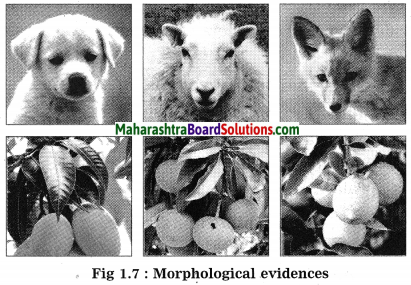
Balbharti Maharashtra State Board Class 8 History Solutions Chapter 9 Last Phase of Struggle for Independence Notes, Textbook Exercise Important Questions and Answers.

Class 8 History Chapter 9 Last Phase of Struggle for Independence Questions And Answers Maharashtra Board
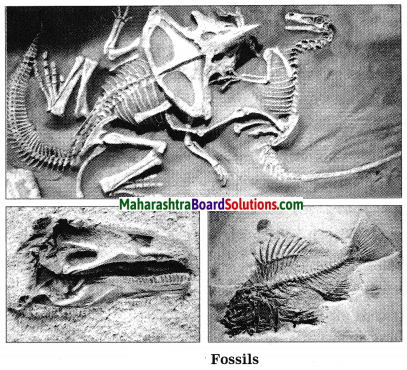
Last Phase of Struggle for Independence Class 8 Questions And Answers Chapter 9 Maharashtra Board
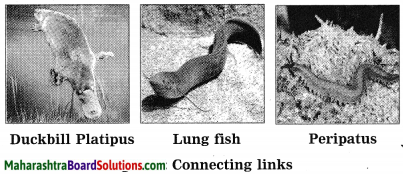
Class 8 History Chapter 9 Last Phase of Struggle for Independence Textbook Questions and Answers

1. Rewrite the statements by choosing the appropriate options :
(Andaman and Nicobar, August Kranti, Vinoba Bhave, Sane Guruji, Indian National Congress)

Question 1.
……………….. was the first satyagrahi of individual satyagraha.
Answer:
Vinoba Bhave

Maharashtra Board Class 8 History Solutions Chapter 9 Last Phase of Struggle for Independence

Question 2.
The nation wide movement of 1942 is also called ……….. .
Answer:
August Kranti

Question 3.
In November 1943, Japan conquered ………. islands and handed them over to Azad Hind Government.
Answer:
Andaman and Nicobar

2. Explain the following statements with reasons:

Question 1.
In November 1939, provincial ministers of Indian National Congress gave their resignations.
Answer:

  1. Viceroy Lord Linlithgo declared in 1939 that India had joined the Second World War on the side of England, without consulting the Indian leaders.
  2. England claimed that it was fighting to save democracy in Europe.
  3. Thereupon, the Congress claimed that if that claim is true then England should grant Independence to India immediately. ’
  4. So the provincial ministries of the Indian National Congress resigned in November 1939 as England did not accept this demand.

Question 2.
The Indian National Army had to lay down their arms.
Answer:

  1. The Indian National Army fought against the British in adverse circumstances under the leadership of Subhash Chandra Bose.
  2. The Imphal Campaign of Indian National Army remained incomplete as the Japanese stopped helping the Indian National Army.
  3. In the same period, Japan accepted defeat in the Second World War.
  4. On 18 August 1945, Subhash Chandra Bose died in a plane crash.

Under these circumstances, the soldiers of the Indian National Army had to lay down their arms.

Maharashtra Board Class 8 History Solutions Chapter 9 Last Phase of Struggle for Independence

Question 3.
The Parallel Government became a source of inspiration to the people.
Answer:
1. During the Quit India Movement, parallel governments were established in many parts of India.
2. It rendered great service by doing work like :

  • Opposition to money lenders
  • Prohibition of liquor
  • Spread of literacy

3. Opposition to caste distinctions, etc. Due to this, the Parallel Government became a source of inspiration for the public.

3. Complete the following table.

Question 1.
Maharashtra Board Class 8 History Solutions Chapter 9 Last Phase of Struggle for Independence 1
Answer:

Organisation Founder
Forward Bloc Subhash Chandra Bose
Indian Independence League Rash Behari Bose
Toofan Sena Krantiagrani G.D. alias Bapu Lad

4. Answer the following questions in brief:

Question 1.
Why did the British Prime Minister send Sir Stafford Cripps to India?
Answer:

  1. During the Second World War, England sided with America against Japan.
  2. As England was ruling India, there was possibility of Japan attacking India.
  3. The Japanese forces came closer to the eastern border of India.
  4. It was necessary to have co-operation of India to resist Japanese invasion.

Therefore, the British Prime Minister, Winston Churchill sent Sir Stafford Cripps to India in March 1942.

Maharashtra Board Class 8 History Solutions Chapter 9 Last Phase of Struggle for Independence

Question 2.
What kind of reaction was seen during the spread of news of arrest of main leaders of the Indian National Congress?
Answer:

  1. Quit India Resolution moved by Pandit Jawaharlal Nehru, was passed on 8th August with an overwhelming majority.
  2. On the same night, the leaders of the Indian National Congress were arrested.
  3. The news of these arrest aroused strong resentment.
  4. The angry people took out processions, tried to take control of government offices and attacked jails, police stations and railway stations.
  5. School children took out processions and shouted slogan “Vande Mataram”.
  6. Even though the police resorted to lathi charge and firing, the people were not afraid. The young and old showed determination and courage.

Question 3.
What appeal did Mahatma Gandhi make in the Quit India session of Indian National Congress?
Answer:
Gandhiji made the following appeal to the people of India during the Quit India session of Indian National Congress at Mumbai:

  1. Everyone of you, should from this moment onwards, consider yourself a free man or woman.
  2. Everyone should behave like a citizen of free India.
  3. Either we shall free India or die in the attempt.
  4. Through the appeal he stated that Indians should be ready to make a sacrifice with the feeling of ‘Do or Die’.

Do you Know?

Maharashtra Board Class 8 History Solutions Chapter 9 Last Phase of Struggle for Independence 2
Inspirational account of brave children:

  1. Under the leadership of Shirishkumar, school children carried out procession holding the tricolour at Nandurbar in Maharashtra.
  2. The slogan of Vande Mcrtaram was given.
  3. In the police firing, along with Shirishkumar, Dhansukhlal, Shashidhar, Ghanashyam, Laldas became martyrs.

Maharashtra Board Class 8 History Solutions Chapter 9 Last Phase of Struggle for Independence

Let us Know….:

Maharashtra Board Class 8 History Solutions Chapter 9 Last Phase of Struggle for Independence 3.1
Individual Satyagraha:

  1. As the British government was constantly neglecting the demands, the Indian National Congress decided to start anti war propaganda.
  2. Instead of a collective movement every person should individually disobey the law. This is called Individual Satyagraha.
  3. Acharya Vinoba Bhave was the first individual Satyagrahi.
  4. After him, nearly 25,000 Satyagrahis participated in individual Satyagraha and were imprisoned.

Project:

Question 1.
Prepare a timeline of the events of the struggle of Indian National Army.

Question 2.
With the help of internet collect the pictures of Quit India Movement of 1942 and organise an exhibition on occasion of a national day.

Class 8 History Chapter 9 Last Phase of Struggle for Independence Additional Important Questions and Answers

1. Rewrite the statements by choosing the appropriate options :

Question 1.
Provincial Ministers of …………… resigned in November, 1939.
Answer:
Indian National Congress

Question 2.
Songs of ……………. inspiration during the movement.
Answer:
Sane Guruji

Maharashtra Board Class 8 History Solutions Chapter 9 Last Phase of Struggle for Independence

Identify the wrong pair :

Organisation – Founder
1. Azad Dasta – Bhai Kotwal
2. Lai Sena – General Awari
3. Azad Radio – Aruna Asaf Ali
4. Azad Hind Government – Subhash Chandra Bose
Answer:
Wrong pair: Azad Radio
– Aruna Asaf Ali

Corrected pair: Azad Radio
– Usha Mehta.

Rewrite the statements by choosing the appropriate options :

Question 1.
In 1937 elections, the Indian National Congress gained a majority in ……………
provinces and came to power.
(a) seven
(b) two
(c) eight
(d) three
Answer:
(c) eight

Question 2.
Parallel government was formed by …………… in Satara.
(a) Krantisinh Nana Patil
(b) N.G. Gore
(c) Rashtrasant Tukdoji Maharaj
(d) S.M. Joshi
Answer:
(a) Krantisinh Nana Patil

Question 3.
Netaji founded the …………… in 1943 in Singapore.
(a) Free India Centre
(b) Azad Hind Sena
(c) Parallel Government
(d) Azad Hind Government
Answer:
(d) Azad Hind Government

Question 4.
…………… tried to destroy the railway along with his campaigners in Sindh.
(a) Khudiram Bose
(b) Ashfaqulla Khan
(c) Hemu Kalani
(d) Maganlal Bagdi
Answer:
(c) Hemu Kalani

Maharashtra Board Class 8 History Solutions Chapter 9 Last Phase of Struggle for Independence

Question 5.
…………… had formed the Azad Hind Sena with the help of Captain Mohan Singh.
(a) Rash Behari Bose
(b) Subash Chandra Bose
(c) Anand Mohan Bose
(d) S.M. Gore
Answer:
(a) Rash Behari Bose

Name the following:

Question 1.
Viceroy who announced India’s involvement in Second World War.
Answer:
Lord Linlithgo

Question 2.
President of Mumbai session of Indian National Congress.
Answer:
Maulana Abul Kalam Azad

Question 3.
Leader who put forth Quit India Movement resolution at the Mumbai session of the Congress.
Answer:
Pandit Jawaharlal Nehru

Question 4.
The outburst of Navy and Air Force on this British warship.
Answer:
Talwar

Question 5.
His songs inspired the National Movement.
Answer:
Rashtrasant Tukdcji Maharaj.

Answer the following in one sentence each:

Question 1.
State the resolution passed by the Congress Working Committee in the Wardha session.
Answer:
The Congress Working Committee at its Wardha session passed the resolution that

  • the British rule in India should be ended immediately and
  • India be given independence.

Question 2.
What was the warning given by the Congress Working Committee in the Wardha session?
Answer:
The Congress Working Committee had given the warning that if the demand for complete independence was not met, it would launch a non-violent movement for the freedom of India.

Maharashtra Board Class 8 History Solutions Chapter 9 Last Phase of Struggle for Independence

Question 3.
Why did the British Government imprison Subhash Chandra Bose?
Answer:
The British Government imprisoned Subhash Chandra Bose because through his speeches he made appeal to the people of India to revolt against the British rule.

Question 4.
What did the British Government realise after the Navy and Air Force revolted?
Answer:
After the revolt of Navy and Air Force, the British Government realised that their rule in India was about to end.

Do as Directed:

Complete the graphical presentation:

Question 1.
Maharashtra Board Class 8 History Solutions Chapter 9 Last Phase of Struggle for Independence 4
Answer:
Maharashtra Board Class 8 History Solutions Chapter 9 Last Phase of Struggle for Independence 5

Question 2.
Maharashtra Board Class 8 History Solutions Chapter 9 Last Phase of Struggle for Independence 6
Answer:
Maharashtra Board Class 8 History Solutions Chapter 9 Last Phase of Struggle for Independence 7

Question 3.
Maharashtra Board Class 8 History Solutions Chapter 9 Last Phase of Struggle for Independence 8
Answer:
Maharashtra Board Class 8 History Solutions Chapter 9 Last Phase of Struggle for Independence 9

Question 4.
Maharashtra Board Class 8 History Solutions Chapter 9 Last Phase of Struggle for Independence 10
Answer:
Maharashtra Board Class 8 History Solutions Chapter 9 Last Phase of Struggle for Independence 11

Prepare a Timeline of the events of the struggle of Azad Hind Sena:

Question 1.
Maharashtra Board Class 8 History Solutions Chapter 9 Last Phase of Struggle for Independence 12
Answer:
Maharashtra Board Class 8 History Solutions Chapter 9 Last Phase of Struggle for Independence 13

Write short notes :

Question 1.
Provincial Cabinets :
Answer:

  1. According to the Act of 1935, working of the British administered provinces were transferred to the elected representatives.
  2. Although not satisfied with the act. Congress contested elections to the Provincial Legislatures of eleven provinces in 1937.
  3. Indian National Congress gained a majority in eight provinces.
  4. Congress ministries did a lot of useful work for the benefit of the people.
  5. As the British government refused their demand of Independence the Congress ministries resigned in November 1939.

Maharashtra Board Class 8 History Solutions Chapter 9 Last Phase of Struggle for Independence

Question 2.
Individual Satyagraha :
Answer:

  1. As the British government was constantly neglecting the demands the Indian National Congress decided to start anti-war propaganda.
  2. Instead of a collective movement they decided every person should individually disobey the law. This is known as Individual Satyagraha.
  3. Acharya Vinoba Bhave was the first Individual Satyagrahi.
  4. After him nearly 25,000 satyagrahis participated in individual satyagraha and were imprisoned.

Question 3.
Rash Behari Bose :
Answer:

  1. Rash Behari Bose was living in Japan since 1915.
  2. He had established the ‘Indian Independence League’ by organizing the Indian patriots living in the South East Asia.
  3. Japan conquered the territories of South-East Asia controlled by the British.
  4. Rash Behari Bose, with the help of Captain Mohan Singh, formed the Indian

National Army or Azad Hind Sena from the Indian prisoners of war captured by Japan.

Question 4.
Revolt of Indian Navy and Air Force :
Answer:

  1. Inspired by the heroics of the Indian National Army, the soldiers on the British warship ‘Talwar’ revolted on 8th February 1946.
  2. They hoisted the tricolour flag on the ship and raised slogans against the British Government.
  3. The exchange of fire between the rebels and the British army took place.
  4. The workers and common people extended their support.
  5. To support this uprising, the Air Force from Delhi, Lahore, Karachi, Ambala, Meerut went on strike.
  6. The naval soldiers laid down their arms after the mediation by Sardar Vallabhbhai Patel.

Answer the following questions in brief:

Question 1.
What work did the Azad Radio Centre do during the 1942 underground movement?
Answer:
During the 1942 underground movement Vitthal Zaveri, Usha Mehta and her companions established a secret transmission centre, ‘Azad Radio’.
The work done:

  • News of agitations in the country were broadcast on it.
  • Patriotic songs were sung.
  • Patriotic speeches were telecast.

This gave inspiration to the agitators during the Quit India Movement.

Maharashtra Board Class 8 History Solutions Chapter 9 Last Phase of Struggle for Independence

Question 2.
Explain the significance of the Quit India Movement.
Answer:
1. On 8th August 1942, in the Mumbai session, the Indian National Congress gave the order of ‘Quit India’ to the British government. This was the beginning of a nationwide agitation.
2. To fulfill the objective of independence, lakhs of Indians sacrificed their lives in this movement.
3. The number of people who participated were so large that even all prisons in the country were not enough to contain them.
4. The movement shook the foundation of British rule in India.

Question 3.
State the impact of the events from 1942 to 1946 on the British rule.
Answer:
Many important events took place between 1942 to 1946. The following effects were seen on the British rule :

  1. It shook the foundation of British rule in India.
  2. The Quit India agitation manifested the strong anti-British feeling of the Indian people.
  3. The Army, Navy and Air Force considered to be backbone of the British power revolted against it.
  4. The British rulers realised that now their rule will not last long in India.

Explain the following statements with reasons:

Question 1.
The plan of federation mentioned in 1935 Act did not materialise.
Answer:

  1. The Act of 1935 provided for the formation of a federation of the British administered provinces and the Indian princely states.
  2. The working of the British administered provinces were transferred to the Indian representatives.
  3. On joining the federation, the princely states would lose their autonomy.
  4. So, the proposal of federation did not materialise as the rulers of the princely states refused to join the federation.

Question 2.
The Cripps proposal was rejected.
Answer:

  1. The Indian National Congress rejected the Cripps’ proposal because there was no clear mention of the grant of complete independence to India.
  2. The Muslim League rejected the Cripps’ proposal as it had no mention of creation of Pakistan.

Maharashtra Board Class 8 History Solutions Chapter 9 Last Phase of Struggle for Independence

Question 3.
Subhash Chandra Bose resigned from the office of Congress President.
Answer:
1. Subhash Chandra Bose became the President of Indian National Congress twice.
2. He became the President of Congress when Second World War had commenced. He was of the opinion that as England was engaged in war, the Congress should intensify the agitation by taking advantage of this situation.
3. If needed, India should seek the help of the enemies of England.
4. Other senior leaders of the Congress did not agree with this view.
As a result, Subhash Chandra Bose resigned from the office of the Congress President.

Question 4.
The British government suspended the punishment of INA officers.
Answer:

  1. After surrender of the soldiers of the Indian National Army, the British government charged them with treason.
  2. Expert lawyers like Pandit Nehru, Bhulabhai Desai and Tej Bahadur Sapre defended the INA officers.
  3. But the military tribunal held them guilty and sentenced them to life imprisonment.
  4. There was severe unrest in the minds of the Indian people against the British Government.

So, they had to suspend the punishment given by the military tribunal.

Answer the following in detail:

Question 1.
Write about the Session of Indian National Congress held in Mumbai in August 1942.
Answer:

  1. On 14th July, 1942 the Congress Working Committee passed the Quit India Resolution at Wardha.
  2. It warned the British government of launch of a non-violent struggle for India’s independence.
  3. With this background, Quit India Session of the Indian National Congress began at Gowalia Tank (Kranti Maidan) in Mumbai on 7th August, 1942.
  4. Maulana Abul Kalam Azad presided over this session.
  5. The resolution passed at Wardha § session was finally approved in the Mumbai session.
  6. On 8th August, Quit India Resolution, moved by Pandit Jawaharlal Nehru was passed with an overwhelming majority.
  7. Congress decided to launch a nationwide non-violent movement under the leadership of Gandhiji.
  8. Gandhiji gave inspiring message of ‘Do or Die’ to the people and appealed them to be ready to sacrifice for the nation.

Maharashtra Board Class 8 History Solutions Chapter 9 Last Phase of Struggle for Independence

Question 2.
Give detailed information about Underground Movement.
Answer:

  1. At the end of 1942, the young socialist leaders started the Underground Movement.
  2. S. M. Joshi, Dr. Ram Manohar Lohia, Jayprakash Narayan were among the many leaders who led the movement.
  3. Aruna Asaf Ali, Usha Mehta, Sucheta Kriplani were the women leaders who led the movement.
  4. The activists disrupted transport and communication by breakdown of railway routes, cutting telephone lines, blowing up 8 bridges, etc.
  5. Hemu Kalani tried to destroy railway carrying British troops and supply, in Sindh province.
  6. Groups like Azad Dasta of Bhai Kotwal in Karjat and Lai Sena of General Awari in Nagpur made the government helpless and witless for months.
  7. Usha Mehta and Vitthal Zaveri started a secret transmission centre of Azad Radio in Mumbai.
  8. Many such centres operated at Kolkata, Delhi and Pune.
  9. Krantisinh Nana Patil formed parallel government in Satara.
  10. Parallel governments were formed in Midnapore in Bengal, Ballia and Azamgrah in Uttar Pradesh and Purnia in Bihar.
  11. Krantiagrani GD (Bapu Lad) established ‘Toofan sena’ at Kundal.

Question 3.
Identify the given picture and write information about the work done by him.
Maharashtra Board Class 8 History Solutions Chapter 9 Last Phase of Struggle for Independence 14
Answer:
The given picture is of Netaji Subhash Chandra Bose.

  1. Subhash Chandra Bose became the President of Indian National Congress twice.
  2. He was of the view to intensify the agitation and seek help from the enemies of England during the Second World War.
  3. He had difference of opinion with other senior leaders on these points.
  4. Therefore, he resigned from the office of the Congress President and formed a party, ‘Forward Bloc’.
  5. Subhash Chandra Bose was imprisoned by the British because he made an appeal to the people of India to revolt against the British.
  6. He was interned in his house by the British but he managed to escape in disguise and reached Germany in April 1941.
  7. He founded the ‘Free India Centre’ in Germany.
  8. He made an appeal to the people of India to join in the armed struggle for the independence of India from Berlin radio station.
  9. On the invitation of Rash Behari Bose, he went to Japan and led the Indian National Army.
  10. He formed the Azad Hind Government in Singapore in 1943.
  11. Under his leadership, Azad Hind Army captured the Aarakan province in Myanmar and posts on the eastern border of Assam.
  12. Netaji appealed to the people of India : ‘You give me blood and I will give you independence’.
  13. On 18 August, 1945 Netaji died in a plane crash.

Maharashtra Board Class 8 History Solutions Chapter 9 Last Phase of Struggle for Independence

Question 4.
How do you find the contribution of Shirishkumar to be inspirational?
Answer:

  1. Under the leadership of Shirishkumar, the school children took out a procession holding the tricolour flag at Nandurbar.
  2. ‘Vande Mataram’ was the slogan given to them.
  3. The police fired on them. In the firing Shirishkumar and many other children became martyrs.
  4. His sacrifice gives inspiration to us to do work for the society and country.
  5. Gaining independence is no more our objective but to keep the environment clean, to maintain unity among people, and collectively solve the problems is our responsibility.
  6. As all this is equally challenging we get inspiration from courage and determination of Shirishkumar.
  7. Shirishkumar inspires us to do our work fearlessly without being a victim of injustice and oppression.
  8. He also inspires us to make sacrifice, have faith in work and determination. 1

8th Std History Questions And Answers:

Std 8 History Chapter 2 Questions And Answers Europe and India Maharashtra Board
Balbharti Maharashtra State Board Class 8 History Solutions Chapter 2 Europe and India Notes, Textbook Exercise Important Questions and Answers.

Class 8 History Chapter 2 Europe and India Questions And Answers Maharashtra Board
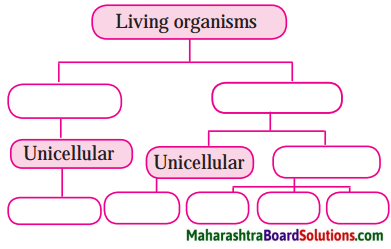
Europe and India Class 8 Questions And Answers Chapter 2 Maharashtra Board
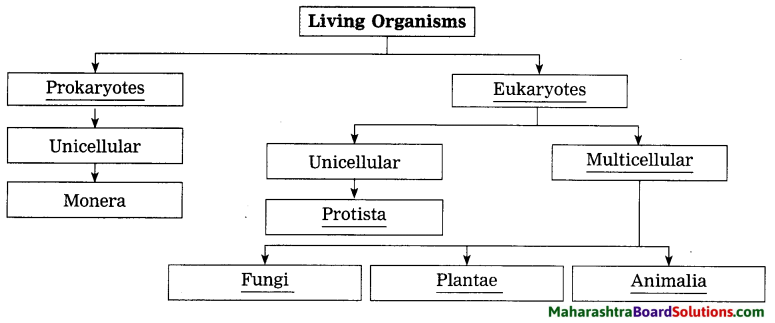
Class 8 History Chapter 2 Europe and India Textbook Questions and Answers

1. Rewrite the statements by choosing the appropriate options:

Question 1.
In 1453, the city of was conquered by Ottoman Turks.
(a) Venice
(b) Constantinople
(c) Rome
(d) Paris
Answer:
(b) Constantinople

Question 2.
The Industrial Revolution began in
(a) England
(b) France
(c) Italy
(d) Portugal
Answer:
(a) England

Maharashtra Board Class 8 History Solutions Chapter 2 Europe and India

Question 3.
…….. tried to put restrictions on the illegal trade of British.
(a) Siraj-ud-Daulah
(b) Mir Kasim
(c) Mir Jafar
(d) Shah Alam
Answer:
(b) Mir Kasim

2. Explain the following concepts:

Question 1.
Colonialism:
Answer:
1. Exploitation of one country by another and making it into a colony is called Colonialism.
2. On the basis of economic and military strength one country occupies a region of another country and establishes its political supremacy.
3. Many European nations established their colonies in various parts of the continents of America, Asia, Africa and Australia.
4. They grabbed the power by using force to exploit the colonies systematically. This gave rise to Imperialism.

Question 2.
Imperialism:
Answer:

  1. Imperialism means a powerful country controls other country by establishing its overall domination.
  2. The objective of imperialism is to establish more and more colonies.
  3. European countries with strong military power and imperialist aspirations enslaved the countries in Asia and Africa.
  4. Imperialism gained momentum after industrial revolution and came to an end in twentieth century.

Maharashtra Board Class 8 History Solutions Chapter 2 Europe and India

Question 3.
Age of Renaissance:
Answer:
(1) Renaissance literally means rebirth or revival. In the latter phase of medieval Europe, reformation, religious reform movement and geographical discoveries gained momentum.
(2) It was a comprehensive movement which touched all aspects of human life. The Greek and Roman traditions in art, architecture and philosophy were revived in the Age of Renaissance.
(3) Humanitarianism got great impetus.
(4) Renaissance inspired all round progress and ushered a new era in the history of world.
(5) This developments took place from 13th century to 16th century in Europe. This period is known as the Age of Renaissance.

Question 4.
Capitalism:
Answer:
1. Many traders participated in the competition for trade with Asia after the discovery of the new sea routes to the east.
2. As it was not possible to carry out trade single-handedly, it was decided by the traders to pool their resources to raise capital for trade.
3. Many trading companies like the East India Company were formed.
4. Trade with Oriental countries was very profitable and responsible for economic prosperity.
5. The ruling powers gave protection and trade concessions to these companies.
6. This led to the accumulation of wealth in Europe. This wealth was used as capital for trade and commerce which gave rise to capitalism in Europe.

3. Explain the following statements with reasons:

Question 1.
Siraj-ud-Daulah was defeated in the Battle of Plassey.
Answer:
1. The officers of the British East India Company misused the trade concessions and built fortification around the factory in Kolkata.
2. Siraj-ud-Daulah captured the factory at Kolkata.
3. This created discontent in England.
4. Robert Clive diplomatically bribed Mir Jafar, Commander in Chief of Nawab’s army and promised to make him Nawab of Bengal.
5. So. the Army of Siraj-ud-Daulah under the command of Mir Kasim did not join the battle against the British at Plassey in 1757 AD.
6. Thus, the British won the battle of Plassey by treachery and deceit.

Maharashtra Board Class 8 History Solutions Chapter 2 Europe and India

Question 2.
The European countries felt the necessity of finding new sea routes to Asia.
Answer:

  1. The Ottoman Turks captured Constantinople. the capital of Byzantine Empire. in 1453 AD.
  2. All land trade routes joining Asia and Europe passed through this city.
  3. It stopped the flow of valuable goods from the countries in the east. Therefore, the European countries felt the necessity of finding new sea routes to Asia.

Question 3.
European rulers started giving military protection and trade concessions to the trading companies.
Answer:
1. With the discovery of new sea routes to the east, trade with oriental countries became very profitable. Thus, European trade prospered.
2. Competition for trade began among many European nations.
3. The traders pooled their resources and formed trading companies like the East India Company.
4. As this trade brought economic prosperity, the European rulers started giving military protection and trade concessions to these trading companies.

4. Complete the following table.

Question 1.
Maharashtra Board Class 8 History Solutions Chapter 2 Europe and India 1
Answer:
Maharashtra Board Class 8 History Solutions Chapter 2 Europe and India 2

Leonardo Da Vinci :

Maharashtra Board Class 8 History Solutions Chapter 2 Europe and India 3

  1. A famous personality of the Renaissance period who was well versed in different branches of science and arts.
  2. He had mastery over varied subjects such as sculpture, architecture, mathematics, engineering, music, astronomy, etc.
  3. His paintings ‘Monalisa’ and ‘The Last Supper’ became immortal.

Maharashtra Board Class 8 History Solutions Chapter 2 Europe and India

Let us Know:

Maharashtra Board Class 8 History Solutions Chapter 2 Europe and India 4

Project:

Collect information and pictures about the work of famous painters, writers, scientists during renaissance period with the help of reference books and internet. Present a project on it in the classroom.

Class 8 History Chapter 2 Europe and India Additional Important Questions and Answers

Rewrite the statements by choosing the appropriate options:

Question 1.
American colonies organised the army under the leadership of and won against England.
(a) Thomas Jefferson
(b) Robert Clive
(c) George Washington
(d) Johannes Gutenberg
Answer:
(c) George Washington

Maharashtra Board Class 8 History Solutions Chapter 2 Europe and India

Question 2.
The British East India Company established its factory at
(a) Kolkata
(b) Cochin
(c) Mumbai
(d) Surat
Answer:
(d) Surat

Question 3.
Siraj-ud-Daulah was defeated because diplomatically bribed Mir Jafar.
(a) Robert Clive
(b) Lord Wellesley
(c) Lord Dalhousie
(d) Lord Cornwallis
Answer:
(a) Robert Clive

Question 4.
Tipu Sultan died in the battle of in 1799.
(a) Mysore
(b) Bengaluru
(c) Srirangapatna
(d) Buxar
Answer:
(c) Srirangapatna

Question 5.
The chieftain of rose against the British.
(a) Multan
(b) Bengal
(c) Carnatic
(d) Jhansi
Answer:
(a) Multan

Maharashtra Board Class 8 History Solutions Chapter 2 Europe and India

Question 6.
was the first Portuguese sailor who landed on the western coast of India.
(a) Christopher Columbus
(b) Bartolomeu Días
(c) Vasco-da- Gama
(d) Leonardo da Vinci
Answer:
(c) Vasco-da- Gama

Question 7.
England established colonies on the eastern coast of America.
(a) ten
(b) thirteen
(c) eight
(d) seventeen
Answer:
(b) thirteen

Maharashtra Board Class 8 History Solutions Chapter 2 Europe and India

Name the following:

Question 1.
Invented printing press
Answer:
Johannes Gutenberg

Question 2.
Empire of Ottoman Turks
Answer:
Byzantine

Question 3.
The Bill which laid limitations on powers of the King in England.
Answer:
Bill of Rights

Maharashtra Board Class 8 History Solutions Chapter 2 Europe and India

Question 4.
Mughal Emperor who gave permission to Britishers to establish factory at Surat.
Answer:
Emperor Jahangir

Question 5.
Came to be known as ‘World Factory’.
Answer:
England.

Answer the following in one sentence:

Question 1.
Which period in the history of Europe is known as Period of Renaissance?
Answer:
In the history of Europe, the last phase of medieval period i.e. 13th to century in Europe is known as the Period of Renaissance.

Question 2.
Name the developments that laid the foundation of modern era.
Answer:
The Renaissance, the Reformation and the geographical discoveries laid the foundation of the modern era.

Maharashtra Board Class 8 History Solutions Chapter 2 Europe and India

Question 3.
State the significance of the invention of printing press.
Answer:
It became possible to take new ideas, new concepts and knowledge to all the sections of society due to the invention of the printing press.

Question 4.
What was the effect of the Reformation movement in the area of religion?
Answer:
Individual freedom and rationalism gained importance in the area of religion due to the Reformation movement.

Question 5.
State the principles that the French Revolution gave to the world.
Answer:
The French Revolution gave the principles of liberty equality and fraternity to the world.

Question 6.
Why did the British establish East India Company?
Answer:
The British established the East India Company to carry out trade in India.

Maharashtra Board Class 8 History Solutions Chapter 2 Europe and India

Question 7.
What was the outcome of the American War of Independence?
Answer:
Due to American War of Independence, a new nation known as the United States of America with a federal government, written constitution and based on the principles of democracy was formed.

Do as Directed: 

1. Complete the concept Map:

Question 1.
Maharashtra Board Class 8 History Solutions Chapter 2 Europe and India 5
Answer:
Maharashtra Board Class 8 History Solutions Chapter 2 Europe and India 6

Question 2.
Maharashtra Board Class 8 History Solutions Chapter 2 Europe and India 7
Answer:
Maharashtra Board Class 8 History Solutions Chapter 2 Europe and India 8

2. Arrange the following events in chronological order on timeline:
1. Battle of Srirangapatna
2. Second Anglo-Sikh War
3. Battle of Buxar
4. Battle of Plassey
Answer:
Maharashtra Board Class 8 History Solutions Chapter 2 Europe and India 9

Write short notes:

Question 1.
Leonardo-da-Vinci:
Answer:

  1. Leonardo-da-Vinci is regarded as an all round personality of the Renaissance period.
  2. He was well versed with the different branches of science and art.
  3. He had mastery over varied subjects such as sculpture, architecture, mathematics, engineering, music, astronomy, etc.
  4. But he became world-famous as a painter.
  5. His paintings ‘Monalisa’ and ‘The Last Supper’ became immortal.

Question 2.
Carnatic Wars :
Answer:

  1. There was competition among the European nationals to secure monopoly of trading rights in India.
  2. Due to this three Cainatic wars were fought between England and France.
  3. England defeated France in the third Carnatic War.
  4. Alter this, there was no strong European competitor for British East India Company in India.

Maharashtra Board Class 8 History Solutions Chapter 2 Europe and India

Question 3.
The Battle of Buxar:
Answer:

  1. Mir Kasim was replaced by Mir Jafar when he tried to put restrictions on illegal practices of the British.
  2. Mir Kasim, the deposed Nawab of Bengal, Shuja-ud-Daulah, the Nawab of Ayodhya and Mughal Emperor Shah Alam formed an affiance.
  3. They undertook a campaign to restrain the activities of the British in Bengal.
  4. They were defeated by the British in the Battle of Buxar in 1764 in Bihar.
  5. The Treaty of Allahabad was signed after the Battle of Buxar. The British secured the right to collect revenue from Bengal province by this treaty.

Explain the following statements with reasons:

Question 1.
The period between 18th and 19th century came to be known as ‘Age of Revolutions’.
Answer:
1. The British Parliament passed The Bill of Rights in 1689. It established sovereignty of Parliament and curtailed powers of the King.
2. This gave momentum to the development of Parliamentary Democracy in England.
3.  The thirteen British colonies in America won the War of Independence in 1783.
4. These thirteen colonies established the first federal republic, known as the United States of America.
5. The people of France revolted against the unjust and uncontrolled monarchy and feudalism. They established a Republic.
6. The Industrial Revolution in Europe in the latter part of the 18th century brought revolutionary changes in Europe.
7. These changes had long-lasting effect on the entire world.
8. All these revolutionary events took place during 18th and 19th century period. Hence it is known as the ‘Age of Revolutions’.

Question 2.
England was described as World Factory.
Answer:

  1. There were many revolutionary changes in the latter part of the 18th century in Europe.
  2. Many technological innovations in Europe gave enormous outputs
  3. Goods were produced with the help of machines running on steam and later on electricity. It was the dawn of the age of machines.
  4. Though the industrial revolution started in England it gradually spread to other ports of the western world.
  5. During this period. England enjoyed industrial prosperity and was described as World Factory.

Maharashtra Board Class 8 History Solutions Chapter 2 Europe and India

Question 3.
The British captured Sindh in 1843.
Answer:

  1. The British were afraid of Russian aggression on India via Afghanistan.
  2. They decided to bring Afghanistan under their control to ensure the safety of their Indian Empire.
  3. The province of Sindh was located at the Northwest frontier.
  4. All routes to Afghanistan passed through Sindh.
  5. Realising its strategic importance, the British captured Sindh in 1843.

Answer the following questions in 25 to 30 words:

Question 1.
Write about the Religious Reform Movement.
Answer:

  1. The independent intellectuals attacked the old religious ideologies and beliefs of Roman Catholic Church.
  2. The Christian priests used to give undue importance to religious rites and practices by taking advantage of the ignorance of the people.
  3. They robbed people in the name of religion.
  4. The movement which started against this is known as Religious Reform Movement.

Question 2.
What is Intellectual Revolution?
Answer:

  1. Due to Renaissance, the European society stepped out of past ignorance and blind faith.
  2. The pre-determined customs and traditions came to be seen from a critical point of view.
  3. These changes are addressed as Intellectual Revolution.

Question 3.
State the significance of French Revolution.
Answer:

  1. The French Revolution was the first event in world history in which the might of the people’s power was witnessed.
  2. It had put an end to uncontrolled and unjust monarchy and the feudalism.
  3. France became a Republican state. It gave the world principles of liberty, equality and fraternity.
  4. The spread of democratic form of government began with the French Revolution.

Question 4.
What were the changes brought about by the Industrial Revolution in the system of production?
Answer:

  1. The latter part of 18th century saw many technological innovations in Europe.
  2. The production started with the help of machines running on steam.
  3. The big factories replaced cottage industries.
  4. Handlooms were replaced by machines.
  5. New modes of transport like railways and steamer were available.

Maharashtra Board Class 8 History Solutions Chapter 2 Europe and India

Question 5.
How did the conflict between Siraj- ud-Daulah and the British start?
Answer:

  1. Siraj-ud-Daulah became the Nawab of Bengal in 1756.
  2. The British traders misused trade concessions and fortified their factories in Kolkata without seeking permission from the Nawab.
  3. So, Siraj-ud-Daulah captured the factory. This was the beginning of conflict between Siraj-ud-Daulah and the British.

Question 6.
Why were the Sikhs defeated in the First Anglo-Sikh War?
Answer:

  1. Ranjitsingh, the ruler of Punjab was succeeded by his minor son Duleep Singh.
  2. Queen Jindan assumed the reins of administration on behalf of her minor son.
  3. Taking advantage of the inability of Queen Jindan to control the officers, the British lured some of them to their side.
  4. The Sikhs attacked the British under the impression that the British would invade Punjab.
  5. Thus, the Sikhs were defeated in the first Anglo-Sikh war.

Question 7.
What brought an end to the Sikh rule in Punjab in 1849?
Answer:

  1. After the First Anglo-Sikh War Duleep Singh remained on throne, but the power rested in the hands of the British.
  2. The Sikhs could not accept the growing impact of the British over Punjab.
  3. The growing influence of the British led to the revolt by Mulraj, the chieftain of Multan.
  4. Thousands of Sikh soldiers participated in this war.
  5. The British defeated the Sikhs in the Second Anglo-Sikh war and annexed the whole of Punjab in 1849.

Answer the following questions in detail: (4 marks each)

Question 1.
Give detailed account of Renaissance.
Answer:
The foundation of Renaissance period was laid between 13th century and 16th century in Europe.

  1. It revived the Greek and Roman traditions.
  2. The changes were seen in the field of art, architecture and philosophy in Europe.
  3. Humanitarianism gained great momentum.
  4. There was a change in the outlook of treating each other as a human being.
  5. Man became the centre of all ideologies instead of religion.
  6. The sentiments and emotions of human being found expressions in the art and literature.
  7. The reform movement could be found in science and different art forms.
  8. Literature was produced in local languages for the better understanding of the people.
  9. Renaissance was a comprehensive movement which pervaded all sectors of human life.

Maharashtra Board Class 8 History Solutions Chapter 2 Europe and India

Question 2.
Give information about American War of Independence.
Answer:
1. After the discovery of American continent, the imperialist European powers took control of different regions of America and established their colonies.
2. England established 13 colonies on the East coast of America.
3. Initially, England kept nominal domination but later British Parliament laid oppressive restrictions and taxes on the colonies.
4. This created discontent among the people and the colonies revolted.
5. George Washington led the American army in the war against England.
6. The colonies won the war and established the first federal democratic republic, known as the United States of America.
7. USA became the first country in the world to have a written constitution and was based on the principles of Democracy.

Question 3.
What according to you are the advantages of Religious Reform Movement?
Answer:
With changing times we find changes in every field. Religious reforms are part of this process. I feel the following are the advantages of Religious Reforms Movement.

  1. Superstitions give way to rational thinking.
  2. Priest cannot take advantage of people’s ignorance.
  3. People will not indulge in unnecessary rituals.
  4. They will engage themselves in constructive work which will help them eventually.
  5. Some people take advantage in the name of religion and exploit others. Religious Reforms will stop such malpractices.

8th Std History Questions And Answers:

Std 8 History Chapter 13 Questions And Answers Fulfillment of Struggle for Independence Maharashtra Board
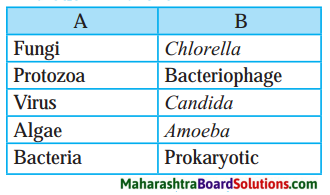
Balbharti Maharashtra State Board Class 8 History Solutions Chapter 13 Fulfillment of Struggle for Independence Notes, Textbook Exercise Important Questions and Answers.

Class 8 History Chapter 13 Fulfillment of Struggle for Independence Questions And Answers Maharashtra Board
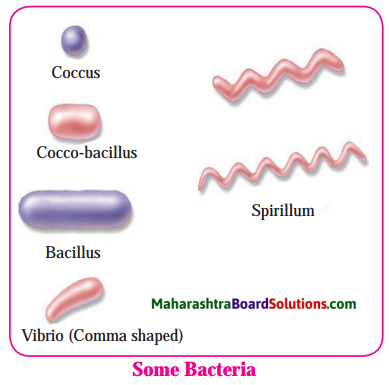
Fulfillment of Struggle for Independence Class 8 Questions And Answers Chapter 13 Maharashtra Board
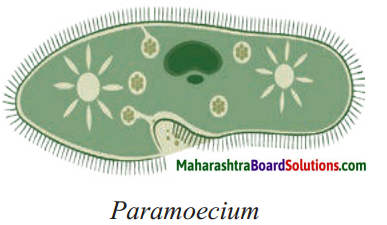
Class 8 History Chapter 13 Fulfillment of Struggle for Independence Textbook Questions and Answers

1. Rewrite the statements by choosing the appropriate options:

Fulfillment Of Struggle For Independence Question 1.
There were more than six hundred small and big …………….. in India.
(a) states
(b) villages
(c) princely states
(d) cities
Answer:
(c) princely states

Fulfillment Of Struggle For Independence Class 8 Question 2.
All the princely states merged with India except the states of Junagad, ……………. and Kashmir.
(a) Aundh
(b) Jhansi
(c) Vadodara
(d) Hyderabad
Answer:
(d) Hyderabad

2. Explain the following statements with reasons :

Struggle Chapter 13 Question 1.
Junagad merged with India.
Answer:

  1. Junagad was a princely state in Saurashtra.
  2. The Nawab of Junagad wanted to merge the state with Pakistan.
  3. It was opposed by the people vigorously as they wanted the merger with India.
  4. Due to this, the Nawab fled to Pakistan and Junagad was merged with India in February, 1948.

Maharashtra Board Class 8 History Solutions Chapter 13 Fulfillment of Struggle for Independence

13 Fulfillment Of Struggle For Independence Question 2.
The Indian government started police action against the Nizam.
Answer:

  1. Hyderabad State Congress passed a resolution for a merger of Hyderabad state with India in July 1947.
  2. The Nizam took an anti-India stand and tried for a merger with Pakistan.
  3. The Razakar organisation of Kasim Rizvi committed atrocities on Hindus as well as Muslims who supported the democratic movement.
  4. The Nizam did not respond to the appeal of the Government of India for peaceful negotiations.
  5. At last, the Government of India started police action on 13 September, 1948 and the state of Hyderabad was merged with India.

Class 8 History Chapter 13 Questions And Answers Question 3.
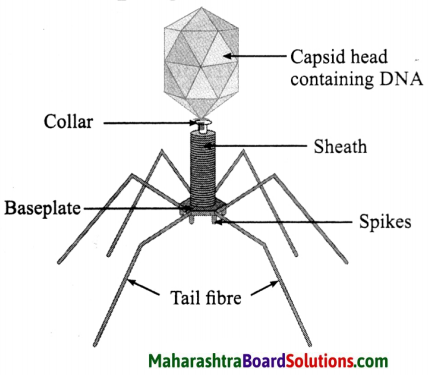
Hari Singh signed the Instrument of Accession with India.
Answer:

  1. Hari Singh the ruler of Kashmir, had decided to retain the independence of Kashmir.
  2. Pakistan was keen to secure the merger of Kashmir with itself.
  3. So, Pakistan began to put pressure on Hari Singh for this purpose.
  4. At the instigation of Pakistan, the armed intruders attacked Kashmir in October, 1947.

Therefore, Hari Singh signed the ‘Instrument of Accession’ with India.

3. Answer the following in Brief:

Question 1.
Explain the contribution of Sardar Vallabhbhai Patel in the integration of the Princely States in India.
Answer:

  1. The problem of the merger of the princely states was very tactfully handled by Sardar Vallabhbhai Patel, the then Home Minister of India.
  2. He convinced the Princes that the merger of their states with India was in their interest.
  3. He prepared the ‘Instrument of Accession’, acceptable to all.
  4. The Princes accepted the proposal and all the states except Junagad, Kashmir and Hyderabad were merged with India.
  5. These three states, too, were merged with India subsequently.
  6. Thus, he took a firm stand and solved the issue of merger of princely states.

Maharashtra Board Class 8 History Solutions Chapter 13 Fulfillment of Struggle for Independence

Question 2.
Explain the contribution of Swami Ramananda Tirth in the struggle for liberation of Hyderabad.
Answer:

  1. Hyderabad was the largest princely state in India.
  2. The autocratic ruler, Nizam had denied civil and political rights to the people.?
  3. In 1938, Swami Ramananda Tirth formed Hyderabad State Congress.
  4. As Nizam banned his organisation, a struggle began for getting recognition to Hyderabad State Congress and democratic rights.
  5. In July, 1947 a resolution was passed by the Hyderabad State Congress for its merger with India.
  6. Swami Ramananda Tirth was assisted by Narayan Reddy and Siraj-ul-Hasan Tirmiji in his efforts.

Project:

Gather information and pictures related to the struggle for liberation of Hyderabad. Organise a Poster Exhibition based on it in the history department.

Class 8 History Chapter 13 Fulfillment of Struggle for Independence Additional Important Questions and Answers

Rewrite the statements by choosing the appropriate options:

Question 1.
Due to the influence of …………….., there was beginning of political awakening among the princely states.
(a) Champaranya Satyagraha
(b) Civil Disobedience Movement
(c) Non-Co-operation Movement
(d) Quit India Movement
Answer:
(c) Non-Co-operation Movement

Maharashtra Board Class 8 History Solutions Chapter 13 Fulfillment of Struggle for Independence

Question 2.
Junagadh was a princely state in ……………… .
(a) Kutch
(b) Saurashtra
(c) South Gujarat
(d) East Gujarat
Answer:
(b) Saurashtra

Question 3.
Through ‘Vande Mataram’ movement ……………… participated in the struggle for liberation of Hyderabad.
(a) farmers
(b) workers
(c) students
(d) Nizam’s army
Answer:
(c) students

Question 4.
……………… is celebrated as ‘Marathwada Mukti Din’.
(a) 13 September
(b) 19 December
(c) 2 August
(d) 17 September
Answer:
(d) 17 September

Question 5.
There was significant contribution of ……………… Samaj in the Hyderabad Mukti Sangram.
(a) Arya
(b) Satyashodhak
(c) Brahmo
(d) Prarthana
Answer:
(a) Arya

Question 6.
The youth of Azad Gomantak Dal made an armed attack and liberated the territories of ……………… from Portuguese rule.
(a) Diu and Daman
(b) Goa
(c) Dadra and Nagar Haveli
(d) Chandianagai and Mahe
Answer:
(c) Dadra and Nagar Haveli

Maharashtra Board Class 8 History Solutions Chapter 13 Fulfillment of Struggle for Independence

Question 7.
In 1949, France held a plebiscite in ………………
(a) Mahe
(b) Karaikal
(c) Puducheri
(d) Chandranagar
Answer:
(d) Chandranaga

Question 8.
……………… was an aggressive leader in this struggle for liberation of Goa.
(a) Swami Ramananda Tilth
(b) Govindbhai Shioff
(c) Mohan Ranade
(d) Babasaheb Paianjpe
Answer:
(c) Mohan Ranade

Name the following:

Question 1.
Founder of ‘Razakar’ in Princely state of Hyderabad.
Answer:
Kasim Rizvi

Question 2.
Founder of Hyderabad State Congress.
Answer:
Swami Ramananda Tirth

Question 3
Founder of Goa Congress Committee.
Answer:
Dr. T.B. Cunha

Question 4.
Took a firm stand in solving the issue of Princely States.
Answer:
Sardar Vallabhbhai Patel.

Answer the following questions in one sentence :

Question 1.
Which European powers had control over some parts of India after Independence?
Answer:
The Portuguese and French powers had control over some parts of India after Independence.

Maharashtra Board Class 8 History Solutions Chapter 13 Fulfillment of Struggle for Independence

Question 2.
What are Praja Mandals?
Answer:
People formed organisations like Prajamandals which worked for people’s interests in the princely states and for securing political rights for them.

Question 3.
Which languages were spoken in the princely state of Hyderabad?
Answer:
Telugu, Kannada and Marathi were the languages spoken in the princely state of Hyderabad.

Question 4.
What is ‘Operation Polo’?
Answer:
Indian government started the police action against the Nizam to merge the princely state of Hyderabad with India. It was symbolically called ‘Operation Polo’.

Maharashtra Board Class 8 History Solutions Chapter 13 Fulfillment of Struggle for Independence

Question 5.
Which organisations were formed by people to secure civil and political rights in princely state of Hyderabad?
Answer:
To secure civil and political rights in Hyderabad princely state, people formed organisations such as Andhra Parishad in Telangana region, Maharashtra Parishad in the Marathwada region and Karnataka Parishad in the Karnataka region.

Do as Directed :

Complete the concept map :

Question 1.
Maharashtra Board Class 8 History Solutions Chapter 13 Fulfillment of Struggle for Independence 1
Answer:
Maharashtra Board Class 8 History Solutions Chapter 13 Fulfillment of Struggle for Independence 2

Question 2.
Maharashtra Board Class 8 History Solutions Chapter 13 Fulfillment of Struggle for Independence 3
Answer:
Maharashtra Board Class 8 History Solutions Chapter 13 Fulfillment of Struggle for Independence 4

Show the events during merger of Hyderabad princely states on timeline:

Question 1.
Maharashtra Board Class 8 History Solutions Chapter 13 Fulfillment of Struggle for Independence 5
Answer:
Maharashtra Board Class 8 History Solutions Chapter 13 Fulfillment of Struggle for Independence 6

Answer the following in Brief :

Question 1.
Write about contribution of Marathwada in the struggle for liberation of Hyderabad.
Answer:
The contribution of Marathwada in the liberation of Hyderabad is as follows :

  1. To secure civil and political rights of the people in the region, MaharashtraParishad was formed.
  2. Many eminent leaders like Ved Prakash, Govind Pansare, etc. from Marathwada led the Hyderabad liberation struggle.
  3. Through ‘Vande Mataram’ Movement many students participated in the movement.
  4. Many sacrificed their lives in this historical struggle.
  5. The people and leaders of Marathwada had a lion’s share in Hyderabad liberation struggle.

Question 2.
Why was the struggle for independence not over in spite of India gaining independence?
Answer:

  1. When India got independence, there were more than six hundred princely states.
  2. The French and Portuguese powers too controlled some parts of India.
  3. It was essential to merge these regions with India.

Therefore, the struggle for independence continued in spite of India gaining independence.

Maharashtra Board Class 8 History Solutions Chapter 13 Fulfillment of Struggle for Independence

Question 3.
Write about the contribution of Dr. T. B. Kunha for the liberation of Goa.
Answer:

  1. Dr. T. B. Kunha was in the forefront of the struggle to liberate Goa from the Portuguese rule.
  2. He worked to bring about awakening among the people against the Portuguese Government.
  3. With an objective of carrying out the struggle, he founded the Goa Congress Committee.
  4. He founded the Goa Youth League in Mumbai in 1945.
  5. He entered Goa in 1946 and was sentenced to eight years imprisonment for the violation of the ban on public speeches.

Explain the following statements with reasons :

Question 1.
Merger of the Princely States was essential.
Answer:

  1. When India got independence there were more than six hundred princely states in India.
  2. If the princely states had remained independent, India would have been split into hundreds of territorial fragments.
  3. The dream of Indian National Congress of undivided India would have remained incomplete.
  4. Moreover, the organisations in the princely states had started movements to secure rights.
  5. It was necessary to free the people from the autocratic rule in the princely states.
  6. Some princely states started carrying out movements for merging with Pakistan.

Question 2.
All India States People’s Conference was formed in 1927.
Answer:

  1. There was political awakening among the people of princely states due to influence of non-co-operation movement.
  2. Praja Mandals were formed to secure the political rights for the people in the Princely states and to work for their interest.
  3. All the Praja Mandals came together and formed an “All India States People’s Conference, in 1927 which gave an impetus to the freedom movement.

Question 3.
Many organisations were formed in the Hyderabad Princely State.
Answer:

  1. There were Telugu, Kannada and Marathi speaking regions in princely state of Hyderabad.
  2. There was absence of civil and political rights under the autocratic rule of the Nizam.
  3. To secure these rights organisations were formed in the princely states of Hyderabad.

Maharashtra Board Class 8 History Solutions Chapter 13 Fulfillment of Struggle for Independence

Answer the following in detail:

Question 1.
Give information about Goa Liberation Movement.
Answer:

  1. Portuguese refused to hand over territories under its possession to India.
  2. Dr. T. B. Kunha was in the forefront to lead the struggle.
  3. He formed the organisation like ‘Goa Congress Committee’ and ‘Goa Youth League’.
  4. He worked to bring about an awakening of the people against the Portuguese government.
  5. He was arrested and imprisoned in 1946 for violating a ban on public speeches.
  6. Dr. Ram Manohar Lohia started a Satyagraha for liberation of Goa.
  7. He was deported by the Portuguese as he violated a ban and delivered a public speech at Madgaon in Goa in 1946.
  8. The youths of the Azad Gomantak Dal liberated Dadra and Nagar Haveli from the Portuguese rule on 2 August, 1954.
  9. The Portuguese rulers committed unlimited tyranny and atrocities on the Satyagrahis sent by Goa Mukti Samiti from Maharashtra in 1954.
  10. As the negotiations between the Government and the Portuguese did not succeed, the Indian government unwillingly took the decision of using military force.
  11. On 19 December, 1961, Goa was finally liberated from the dominion of the Portuguese.

Question 2.
How was the integration of the French occupied territories brought about?
Answer:

  1. Even after the independence of India, the regions of Chandranagar, Puduchcheri, Karaikal, Mahe and Yaman were in the possession of the French.
  2. People were keen to merge with India.
  3. The Indian Government demanded that these territories should be handed over to it.
  4. In 1949, the French-occupied territory of Chandranagar was transferred to India in view of the result of the plebiscite undertaken there.
  5. Thereafter, the remaining territories in the French possession were also handed over to India without any problem.

Question 3.
What would have happened if the Princely States would not have merged with India?
Answer:
Had the Princely States remained independent, the following could have been the result :

  1. The people in the princely states would never have got freedom and they would have faced injustice.
  2. The feeling of unity would have never developed among Indians due to the independent princely states.
  3. They would have created trouble in the development of India.
  4. Even the boundaries of India would not have remained safe.
  5. Injustice on the population, encroachment by the princely states and many other issues would have risen.
  6. Thus, It would have threatened the peace and security of India.

8th Std History Questions And Answers:

Std 9 History Chapter 5 Question Answer Maharashtra Board

Balbharti Maharashtra State Board Class 9 History Solutions Chapter 5 Education Notes, Textbook Exercise Important Questions and Answers.

Education Class 9 Questions And Answers Maharashtra Board
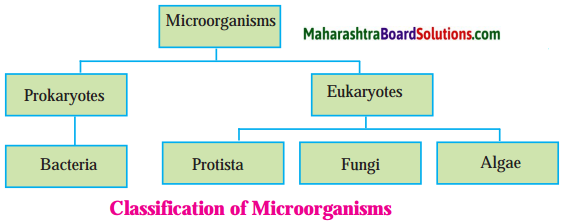
Class 9 History Chapter 5 Education Questions And Answers Maharashtra Board
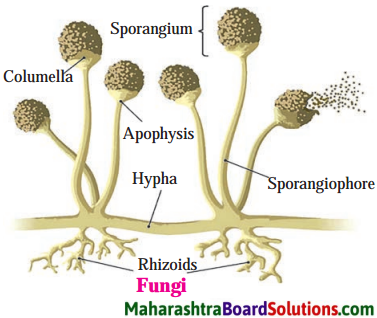
History Class 9 Chapter 5 Question Answer Maharashtra Board

1. Choose the right option and rewrite the sentence:

Question 1.
The Scientist who developed the Param – 8000 supercomputer _________.
(a) Dr Vijay Bhatkar
(b) Dr R. H. Dave
(c) P. Parthasarathy
(d) None of the above
Answer:
(a) Dr. Vijay Bhatkar

Maharashtra Board Class 9 History Solutions Chapter 5 Education

Question 2.
The magazine Jeevan Shikshan is published by _______.
(a) Balbharati
(b) University Education Commission
(c) MSCERT
(d) NCERT
Answer:
(c) MSCERT

Question 3.
The educational institution called IIT is famous for educational in the area of _______.
(a) Agriculture
(b) Medicine
(c) Skilled managers
(d) Engineering
Answer:
(d) Engineering

2. Do as directed.

Question 1.
Complete the table below with details about individuals in the education field and their work.

Individual Work
First education minister of India Maulana Abul Kalam Azad.
—————– Chairman of the University Education Commission
Prof Sayyad Rauf …………..
…………………….. Kosbad Project

Answer:

Individual Work
First education minister of India Maulana Abul Kalam Azad.
Dr. Sarvapalli Radhakrishna Chairman of the University Education Commission
Prof Sayyad Rauf Preparation of common state-wide curriculum for Std. I to VII for Maharashtra.
Anutai Wagh Kosbad Project

Maharashtra Board Class 9 History Solutions Chapter 5 Education

Question 2.
Obtain information about the National Council of Educational Research and Training, from the internet, and present it in the form of a timeline.
Answer:

1st September 1961 The National Council of Educational Research and Training (NCERT) was established in Delhi.
27th January 1967 The Maharashtra State Bureau of Textbook Production and Curriculum Research (Balbharati) was established in Pune.
1986 The National Policy on Education was adopted.
1988 The ‘Primary Education Curriculum was prepared.
1995 The Competency-based primary education curriculum.
1975 India met with success in its attempt to use a satellite for the purpose of education.
1970 The United Nations declared the year 1970 as the International Education Year. A seminar was organised in New Delhi and led to the establishment of an open university.
1974 The government appointed a committee under the chairmanship of P. Parthasarathy

3. Explain the following statements giving reasons for your answer:

Question 1.
The District Primary Education Programme was undertaken.
Answer:
(i) In 1994, the District Primary Education Programme (DPEP) was started with the objective of universalisation of primary education. It was implemented in seven States including Maharashtra.

(ii) The plan envisaged 100% attendance in primary schools, arresting student drop-out, education for girls and for the physically handicapped.

(iii) It included programmes such as research on and evaluation of primary education, alternative education, creating societal awareness, etc.

Question 2.
The NCERT was established.
Answer:
(i) National Council of Educational Research and Training (NCERT) was established in Delhi on the 1st of September 1961.

(ii) Its main objective is to help the Central Government in matters of school education in the context of a comprehensive policy and in implementing educational schemes. The NCERT was given the responsibility of educational research and development, training, extension, educational programmes, restructuring of school curriculum and textbooks.

(iii) It has played a central role in designing school curricula and textbooks with the cooperation of the Central Board of Secondary Education (CBSE).

(iv) It provides guidance and cooperation in the area of primary and secondary education to the state governments.

(v) It has been involved in designing workbooks and handbooks for teachers, in teacher training, in developing teaching-learning techniques and conducting talent search examinations at the national level.

Question 3.
The farmers were benefited by the Indian Agricultural Research Institute.
Answer:
(i) The Indian Agricultural Research Institute was given the status of a University in 1958 and work began in departments such as the development of the agriculture sector, research, well-equipped laboratories, soil science, agricultural sciences, economic botany and other departments.

(ii) Research also began on wheat, pulses, oilseeds, vegetables and many other problems.

(iii) Its most significant achievement is the fundamental research it has conducted on the methods of taking multiple crops in a year, which has been of great benefit to farmers.

4. Write notes:

Question 1.
Indira Gandhi National Open University
Answer:
(i) Indira Gandhi National Open University (IGNOU) was established with the objective that the stream of education should make
its way into every average household of the country.

(ii) The United Nations had declared 1970 as the International Education Year. In the same year, a seminar was organised in New Delhi on the subject of Open University by the Government of India Departments of Education and Social Welfare, Information and Broadcasting, University Grants Commission along with UNESCO. The idea of establishing an open university evolved in this seminar.

(iii) In 1974, the government appointed a committee under the chairmanship of P. Parthasarathy and the Open University took shape on 20 September, 1985 in accordance with its recommendations and suggestions. It was named after Prime Minister Indira Gandhi. Those who are unable to get a college education in the formal way are given concessions in eligibility criteria, age and other conditions for admission to this university.

(iv) In 1990, the IGNOU started an audio-visual distance education programme through Akashvani and Doordarshan. It conducted more than one thousand curricula of various branches.
It provides facilities for education through 58 training centres in the country and 41 centres in foreign countries.

Maharashtra Board Class 9 History Solutions Chapter 5 Education

Question 2.
Kothari Commission
Answer:
(i)In 1964 a Commission was appointed under the Chairmanship of Dr D. S. Kothari. Dr J. P. Naik made valuable contributions to the work of this Commission.

(ii)The Commission also recommended the 10+2+3 pattern for secondary, higher secondary and university education. This system was implemented from 1972.

(iii)The Commission also suggested a uniform national system of education, the inclusion of the mother tongue, Hindi and English in education, as well as continuing education, adult education, education by correspondence and open universities to make education trickle down to the lowest rungs of society.

(iv)It also recommended increased provision in the government’s budget for expenditure on education of neglected sections like the scheduled castes and tribes. Maharashtra government adopted the 10+2+3 pattern in 1972 and conducted the first Std X Board exam in 1975.

Question 3.
Bhabha Atomic Research Centre
Answer:
(i) Bhabha Atomic Research Centre (BARC) has conducted valuable research in the fields of nuclear physics, solid state physics, spectroscopy, chemical and life sciences.

(ii) It also started a school to train scientists for setting up nuclear reactors.

Question 4.
Balbharati
Answer:
(i) The Maharashtra State Bureau of Textbook Production and Curriculum Research (Balbharati) was established in Pune on 27 January 1967.

(ii) Balbharati prepares textbooks for school children. Textbooks are made in eight languages, namely, Marathi, Hindi, English, Urdu, Kannad, Sindhi, Gujarati and Telugu. ‘Kishor’, a monthly magazine for children, is also published by Balbharati.

5. Answer the following questions in detail:

Question 1.
Which programmes were included in the Operation Blackboard scheme?
Answer:
(i) The government made funds available to help improve the standard of the schools and to fulfil minimum educational needs such as at least two proper classrooms, toilets, one of the two teachers to be female, a blackboard, maps, laboratory apparatus, a small library, a playground, sports equipment, etc. This scheme helped the primary education system to gain some momentum.

(ii) In 1994, this scheme was expanded and provision was made for one additional classroom and for appointing one more teacher in schools with an enrolment of more than 100 students, with priority given to girls’ schools, schools with a majority of scheduled caste and tribe students and schools in rural areas.

(iii) It was also made binding upon the State government to appoint female teachers to fifty per cent of the posts in schools.

Question 2.
What role do agriculture schools/colleges play in the development of agriculture?
Answer:
(i) The Indian Agricultural Research Institute was given the status of a University in 1958 and work began in departments such as the development of the agriculture sector, research, well-equipped laboratories, soil science, agricultural sciences, economic botany and other departments. Research also began on wheat, pulses, oilseeds, vegetables and many other problems.

(ii) Its most significant achievement is the fundamental research it has conducted on the methods of taking multiple crops in a year, which has been of great benefit to farmers.

Question 3.
Describe with examples of the progress that India has made in the field of medicine.
Answer:
(i) The Indian Council for Medical Research (ICMR) was established for conducting research in the medical field. It was given the responsibility of cooperating with universities, medical colleges, government and non-government research institutes and giving them guidance and financial support for research activities.

(ii) Twenty-six centres were started in different parts of the country for research on various diseases. Their research has made it possible to control tuberculosis and leprosy.

(iii) The All India Institute of Medical Sciences (AIIMS) was established to give further impetus to advanced education and research in medicine.

(iv) It was given the responsibility of undergraduate and postgraduate courses in medicine. Colleges for undergraduate and postgraduate education in most branches of medicine, good research facilities and well- equipped hospitals are the significant features of this institute.

(v) The institute also provides medical treatment to the common people at nominal rates. It has established special colleges for training in nursing, and super-speciality centres for treatment of disorders of the heart, brain and eyes.

(vi) For further development of the medical field, the Medical Council of India was restructured in 1958 and was entrusted with the task of determining criteria for quality of medical education, its supervision and inspection.

(vii) These institutes have the responsibility of conducting research on various diseases, developing tests and standardisation of medicines.

Maharashtra Board Class 9 History Solutions Chapter 5 Education

Question 4.
Write a note on the curricular and co-curricular activities conducted in your school.
Answer:
(i) Languages – Our school motivates us to participate in theatres or plays organised on works of Shakespeare and Munshi Premchand. We also take part in elocution and poetry recitation competitions to enhance public speaking. Our school makes every child read the newspaper headlines from Marathi and English dailies in the auditorium turn wise.

(ii) Maths and Science – Scientific experiments mentioned in our textbook are practically performed by each of us under the supervision of our teachers. On Sundays, our Math teachers take special classes on Vedic Maths. Our school has also organised trips to Nehru Planetarium and ‘Jantar Mantar’ to give us an understanding of the astronomical aspects of science. Every year our school conducts Homi Bhabha scholarship exam. A display of the best 25 science projects is done in the school hall.

(iii) Social Studies – Field studies are taken up to explain to us the topography of Indian landscapes. The school library holds a large number of book and documentaries over world history trips to museums and historical places.

Class 9 History Chapter 5 Education Additional Important Questions and Answers

Choose the correct option from the given options and rewrite the statements:

Question 1.
In 1995, the _____ scheme was started to provide proper nourishment for the students.
(a) free ration
(b) foodgrain subsidy
(c) mid-day meal
(d) medical-check up
Answer:
(c) mid-day meal

Question 2.
_______was the first education minister of Independent India.
(a) Vallabhbhai Patel
(b) Maulana Abdul Kalam Azad
(c) Sachchidanand Sinha
(d) J.B.Kriplani
Answer:
(b) Maulana Abdul Kalam Azad

Question 3.
_____ recommended increased provision in government’s budget for expenditure on education of neglected sections like the SC/ST.
(a) University Education Commission
(b) Mudaliar Commission
(c) National Council of Educational Research and Training
(d) Kothari Commission
Answer:
(d) Kothari Commission

Question 4.
_______, a scientist with ISRO played an important role in providing satellite education.
(a) K. Kasturirangan
(b) Eknath Chitnis
(c) A. S. Kirankumar
(d) G. Madhavan Nair
Answer:
(b) Eknath Chitnis

Question 5.
In 1990 _____ started an audio-visual distance education programme through Akashwani and Doordarshan.
(a) ISRO
(b) NCERT
(c) IGNOU
(d) CSIR
Answer:
(c) IGNOU

Question 6.
The National Institute for Research in Mathematical and Physical Sciences’ in ______ was established in 1962.
(a) Chandigarh
(b) Kerala
(c) Karnataka
(d) Tamil Nadu
Answer:
(d) Tamil Nadu

Maharashtra Board Class 9 History Solutions Chapter 5 Education

Question 7.
India’s first IIT was setup at _______ at West Bengal in 1951.
(a) Kharagpur
(b) Midnapore
(c) Hooghly
(d) Howrah
Answer:
(a) Kharagpur

Identify and write the wrong pair in the following sets:

Question 1.
(1) TCS – obtained an American contract for software production.
(2) FTII – Systematic training in all aspects of film-making.
(3) C-DAC – developed Param – 8000
(4) IIM – imparting training in industrial design.
Answer:
Wrong Pair : IIM – imparting training in industrial design.

Question 2.
(1) The Advanced Centre for Treatment Research and Education in Cancer – Branch of Tata Memorial Centre
(2) AIIMS – advanced education and research in medicine.
(3) DPEP – Charts showing learning competencies upto Std.V
(4) National Policy on Education 1986 – Common core curriculum was framed for all states.
Answer:
Wrong Pair : DPEP – Charts showing learning competencies upto Std.

Question 3.
(1) National Institute of Design – Ahmedabad
(2) Maharashtra State Board of Secondary and Higher Secondary Education – Pune
(3) The National Institute for Research in the Mathematical and Physical Science – Delhi
(4) Indian Institute of Technology – West Bengal
Answer:
Wrong Pair: The National Institute for Research in the Mathematical and Physical Science – Delhi

Question 4.
(1) J.P. Naik – Kothari Commission
(2) P. Parthasarthy – Committee on Open University
(3) Sayyad Rauf – Drafted common state wide curriculum
(4) Dr. Sarvapalli Radhakrishnan – Director of NCERT.
Answer:
Wrong Pair : Dr. Sarvapalli Radhakrishnan Director of NCERT.

Question 5.
(1) Dave Committee – minimum levels of learning.
(2) The Art Department – designing workbooks and hand books.
(3) Kosbad project – Education of Adivasis
(4) Council of Scientific and Industrial Research – Promote scientific research.
Answer:
Wrong Pair : The Art Department – designing workbooks and hand books.

Question 6.
(1) MSCERT – Jeevan Shikshan
(2) Balbharati – Kishor
(3) The Maharashtra State Board of Secondary and Higher Secondary Education – Countrywide classroom.
(4) SITE – Satellite Education.
Answer:
Wrong Pair : The Maharashtra State Board of Secondary and Higher Secondary Education – Countrywide classroom

Question 7.
(1) Tarabai Modak – Kuranshalas
(2) Anutai Wagh – Kosbad Projects
(3) Eknath Chitnis – Education Minister
(4) R. H. Dave – Competency based Primary Education Curriculum.
Answer:
Wrong Pair: Eknath Chitnis – Education Minister

Complete the concept maps:

Question 1.
Objectives of Education:
Answer:
Maharashtra Board Class 9 History Solutions Chapter 5 Education 1

Maharashtra Board Class 9 History Solutions Chapter 5 Education

Question 2.
Central Council for Research in Indian Medicine and Homeopathy:
Answer:
Maharashtra Board Class 9 History Solutions Chapter 5 Education 2

Question 3.
Departments of the Indian Agricultural Research Institute:
Answer:
Maharashtra Board Class 9 History Solutions Chapter 5 Education 3

Question 4.
Role of Dave Committee:
Answer:
Maharashtra Board Class 9 History Solutions Chapter 5 Education 4

Question 5.
Features of the IIT
Answer:
Maharashtra Board Class 9 History Solutions Chapter 5 Education 5

Question 6.
IIMs in India
Answer:
Maharashtra Board Class 9 History Solutions Chapter 5 Education 6

Question 7.
Concept map of basic responsibilities of NCERT
Answer:
Maharashtra Board Class 9 History Solutions Chapter 5 Education 11

Maharashtra Board Class 9 History Solutions Chapter 5 Education

Write short notes:

Question 1.
AIIMS
Answer:
(i) The All India Institute of Medical Sciences (AIIMS) was established to give further impetus to advanced education and research in medicine.

(ii) It was given the responsibility of undergraduate and post-graduate courses in medicine.

(iii) Colleges for undergraduate and postgraduate education in most branches of medicine, good research facilities and well-equipped hospitals are the significant features of this institute.

(iv) The institute also provides medical treatment to the common people at nominal rates.

(v) It has established special colleges for training in nursing, and super-speciality centres for treatment of disorders of the heart, brain and eyes.

(vi) For further development of the medical field, the Medical Council of India was restructured in 1958 and was entrusted with the task of determining criteria for quality of medical education, its supervision and inspection.

Question 2.
Achievements of CSIR
Answer:
(i) In the post-independence period in 1950, the Council of Scientific and Industrial Research (CSIR) was established with the objective to promote scientific research in the country and to take the benefits of the research to all the people.

(ii) The achievements of the CSIR include making the ink used for marking voters’ fingers during elections, medicines for malaria, elephantiasis and tuberculosis, water purification technology, reduction in the time required for bamboo production.


(iii) It also used DNA fingerprinting for the first time in India, conducted a genetic study of the Adivasis of the Andamans and proved that those tribes are 60,000 years old and developed the earthquake early warning system.

(iv) It has also played an important role in the use of neem as a pesticide, use of turmeric for healing wounds and in the case of the patents for varieties of rice.

(v) The CSIR has prepared a digital encyclopedia of Indian traditional knowledge and made it available in eight international languages.

Question 3.
NCERT
Answer:
(i) National Council of Educational Research and Training (NCERT) was established in Delhi on the 1st of September 1961.

(ii) Its main objective is to help the Central Government in matters of school education in the context of a comprehensive policy and in implementing educational schemes. The NCERT was given the responsibility of educational research and development, training, extension, educational programmes, restructuring of school curriculum and textbooks.
(iii) It has played a central role in designing school curricula and textbooks with the cooperation of the Central Board of Secondary Education (CBSE). ’

(iv) It provides guidance and cooperation in the area of primary and secondary education to the state governments.

(v) It has been involved in designing workbooks and handbooks for teachers, in teacher training, in developing teaching-learning techniques and conducting talent search examinations at the national level.

Maharashtra Board Class 9 History Solutions Chapter 5 Education

Read the passage and answer the questions and answer the questions based on it.

Passage I

National Council of Educational Research and Training. This body was established in Delhi on the 1st of September 1961. Its main objective is to help the Central Government in matters of school education in the context of a comprehensive policy and in implementing educational schemes. The NCERT was given the responsibility of educational research and development, training, extension, educational programmes, restructuring of school curriculum and textbooks. It has played a central role in designing school curricula and textbooks with the cooperation of the Central Board of Secondary Education (CBSE). It provides guidance and cooperation in the area of primary and secondary education to the state governments. It has been involved in designing workbooks and handbooks for teachers, in teacher training, in developing teaching-learning techniques and conducting talent search examinations at the national level.
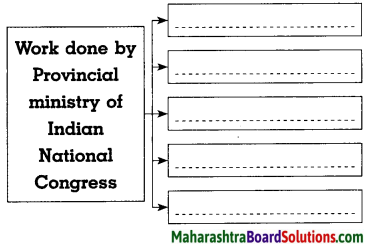
SCERTs were established in all States on the lines of the NCERT. The Maharashtra State Council of Educational ‘Research and Training was established in Pune, This institute performs various functions such as , improving the standard of primary education, in service training of teachers, training in the areas of syllabii and evaluation, vocational guidance for students after Std X and Std XII exams and other , educational functions This institute is known as the , academic authority. It brings out a periodical called Jeevan Sikshan. ‘

Question 1.
What was the main objective behind establishment of NCERT?
Answer:
The main objective behind establishment of NCERT is to help the central government in matters of school education in the context of a comprehensive policy and in implementing educational schemes.

Question 2.
SCERT was established only in Maharashtra State on the lines of the NCERT. Identify True or False.
Answer:
False.

Question 3.
State 4 research institutes in India.
Answer:
Following are the 4 research institutes in India:

  • Council of Scientific & Industrial Research.
  • Bhabha Atomic Research Centre.
  • Indian Council of Medical Research.
  • Indian Agricultural Research Institute.

Passage II

National Policy on Education 1986: According to this policy, certain changes of a fundamental nature were brought about in primary, secondary and higher , secondary education in keeping with the changing needs of society. Under this policy, a common core curriculum was framed for all States. The expectation , is that, by this means, all students in India will get equal educational opportunity. There is scope in the national curriculum for individual States to bring in flexibility in accordance with their cultural, geographical and historical needs.
The ‘Primary Education Curriculum 1988’ was prepared on the basis of the plan of action designed at the national level for the effective implementation of the National Policy on Education 1986. The competency based primary Education curriculum 1995: Even as the Primary Education Curriculum , 1988 was being implemented, a Committee was formed at the national level with Dr. R. H. Dave as its Chairman, to determine minimum levels of learning, The Dave as Committee developed charts of minimum , levels of learning in language, mathematics and environmental studies up to Std V. The charts showed the sequence of learning of the competencies meant for each class.
Use of a satellite: In 1975, India met with success in its attempt to use a satellite for the purpose of education, Eknath Chitnis, a scientist with ISRO, played an , important role in it.
SITE (Satellite Instructional Television Experiment) , was undertaken for educational purposes under the leadership of the Space Applications Centre at Ahmedabad. The concept of satellite education came , out of this experiment. America had helped India in , this programme. The programme helped to make provisionsforagoodstandardofeducationinruralareas.

Maharashtra Board Class 9 History Solutions Chapter 5 Education

Question 1.
What was done to implement the National Policy on Education 1986?
Answer:
For the effective implementation of National Policy on Education 1986, the Primary Education Curriculum 1988 was prepared on the basis of the action plan formulated at the National level.

Question 2.
How did the Dave committee determine the minimum levels of learning?
Answer:
To determine the minimum levels of learning the Dave committee developed charts in language, mathematics and environmental studies upto Std. V. Sequential learning competencies were depicted on these charts to set standards through levels of learning.

Question 3.
Who is your favourite educationist? State his/ her educational ideas which impacted the society.
Answer:
(i) My favourite educationist are Rabindranath Tagore, Dr. Annie Besant and Dr. Sarvapalli Radha Krishnan.

(ii) They all enlightened the society with their educational ideas and deeds. Dr. Annie Besant in particular was iconic.

(iii) Her ideas of education were imbibed with political freedom, women’s liberation and universal brotherhood. Her teachings of ‘Home Rule’ and ‘theosophy’ impacted our society during British Rule. She taught these ideas through political lectures to motivate the youth.

Answer the following questions in detail:

Question 1.
What does the District Primary Education Programme envisage?
Answer:
(i) In 1994, the District Primary Education Programme (DPEP) was started with the objective of universalisation of primary education. It was implemented in seven States including Maharashtra.

(ii) The plan envisaged 100% attendance in primary schools, arresting student drop-out, education for girls and for the physically handicapped.

(iii) It included programmes such as research on and evaluation of primary education, alternative education, creating societal awareness, etc.

Question 2.
State the contribution of Tarabai Modak in educating adivasis.
Answer:
(i) Tarabai Modak began work in the field of education in Bordi and Kosbad.
(ii) She started Anganwadis for Adivasi children.
(iii) She worked hard to bring in the Teaming by doing’ method, to start kuranshalas (meadow schools) and to spread vocational technical education.

Question 3.
What purpose did the Kosbad Project serve?
Answer:
(i) Anutai Wagh established an institution at Kosbad for the progress of Adivasis in Thane district.
(ii) It is known as the Kosbad Project.
(iii) She started creches, nurseries, primary schools, adult education classes, balsevika training schools, etc. for the education of Adivasis.

Question 4.
What was proposed by the Mudaliar Commission?
Answer:
(i) In 1952-53, the Mudaliar Commission was appointed.
(ii) At that time, the pattern of education consisted of 11 + 4 years for the first degree or of 11 + 1 + 3 years.
(iii) The Commission studied secondary education, the nature of the curriculum, medium of instruction, teaching methodology and made certain recommendations.
(iv) This Commission proposed the concept of Higher Secondary Education. However, it was found difficult to implement it all over the country.

Maharashtra Board Class 9 History Solutions Chapter 5 Education

Question 5.
State the recommendation of Kothari Commission.
Answer:
(i) The Kothari Commission recommended the 10+2+3 pattern for secondary, higher secondary and university education. This system was implemented from 1972.

(ii) The Commission also suggested a uniform national system of education, the inclusion of the mother tongue, Hindi and English in education, as well as continuing education, adult education, education by correspondence and open universities to make education trickle down to the lowest rungs of society.

(iii) It also recommended increased provision in the government’s budget for expenditure on education of neglected sections like the scheduled castes and tribes.

Question 6.
What do you know about the Education Board of your state?
Answer:
(i) The Maharashtra State Board of Secondary and Higher Secondary Education was established on the 1st of January 1966 at Pune.
(ii) This Board conducts the school leaving examinations of Std. X and Std. XII.
(iii) It also publishes a periodical called ‘Shikshan Sankraman’.

Question 7.
State the functions of MSCERT.
Answer:
(i) The Maharashtra State Council of Educational Research and Training was established in Pune.
(ii) This institute performs various functions such as improving the standard of primary education,
in-service training of teachers, training in the areas of syllabi and evaluation, vocational guidance for students after Std X and Std XII exams and other educational functions.

Question 8.
How did the concept of satellite education evolve in India?
Answer:
(i) SITE (Satellite Instructional Television Experiment) was undertaken for educational purposes under the leadership of the Space Applications Centre at Ahmedabad.
(ii) The concept of satellite education came out of this experiment. America had helped India in this programme.
(iii) The programme helped to make provisions for a good standard of education in rural areas.

Question 9.
Discuss the responsibilities of Indian Council for Medical Research.
Answer:
(i) Indian Council for Medical Research (ICMR) was established for conducting research in the medical field.
(ii) It was given the responsibility of cooperating with universities, medical colleges, government and non-government research institutes and giving them guidance and financial support for research activities.

Question 10.
Which institute works for advanced research in cancer?
Answer:
The Advanced Centre for Treatment, Research and Education in Cancer is a branch of the Tata Memorial Centre. It functions as the national centre for treatment, research and education in relation to cancer.

Observe the pictures/personality and write relevant information:

Question 1.
Maharashtra Board Class 9 History Solutions Chapter 5 Education 8
Answer:
(i) Kothari Commission recommended the 10+2+3 pattern for secondary, higher secondary and university education.
(ii) The objectives of Education were :

  • Modernisation of Education.
  • Social and national integration.
  • Nurture of social, moral, spiritual values.
  • Education and Productivity.
  • Securing and strengthening of democracy.

(iii) The following are the other recommendations made by the Kothari commission:

  • A uniform national system of education
  • inclusion of mother tongue (along with Hindi and English)
  • Continuing education
  • Adult education
  • Education by correspondence
  • Open Universities.

Maharashtra Board Class 9 History Solutions Chapter 5 Education

Question 2.
Maharashtra Board Class 9 History Solutions Chapter 5 Education 9
Answer:
(1) The open university was established with the objective that the stream of education should make its way into every average household of the country.

(2) In 1974, the government appointed a committee under the chairmanship of P. Parthasarthy and open university took shape on 20th September 1985 in accordance with its recommendations and suggestions.
It was named after Prime Minister – Indira Gandhi.

(3) In 1990, IGNOU started an audio-visual distance education programme through Akashwani and Doordarshan.

(4) It provides facilities for education through 58 centres in the country and 41 centres in foreign countries.

Question 3.
Maharashtra Board Class 9 History Solutions Chapter 5 Education 10
Answer:
(1) CSIR was established with the objective to promote scientific research in the country and to take the benefits of the research to all the people.

(2) CSIR conducted research in fields like:

  • Physics, chemistry, pharmaceuticals, food processing and mining

(3) The achievements of CSIR include:

  • Making the ink used for marking voter’s fingers during elections
  • Medicines for malaria, elephantiasis and tuberculosis
  • water purifying technology
  • DNA fingerprinting for the first time in India.

(4) CSIR has prepared a digital encylopoedia of Indian traditional knowledge and made it available in eight international languages.

9th Std History Questions And Answers: